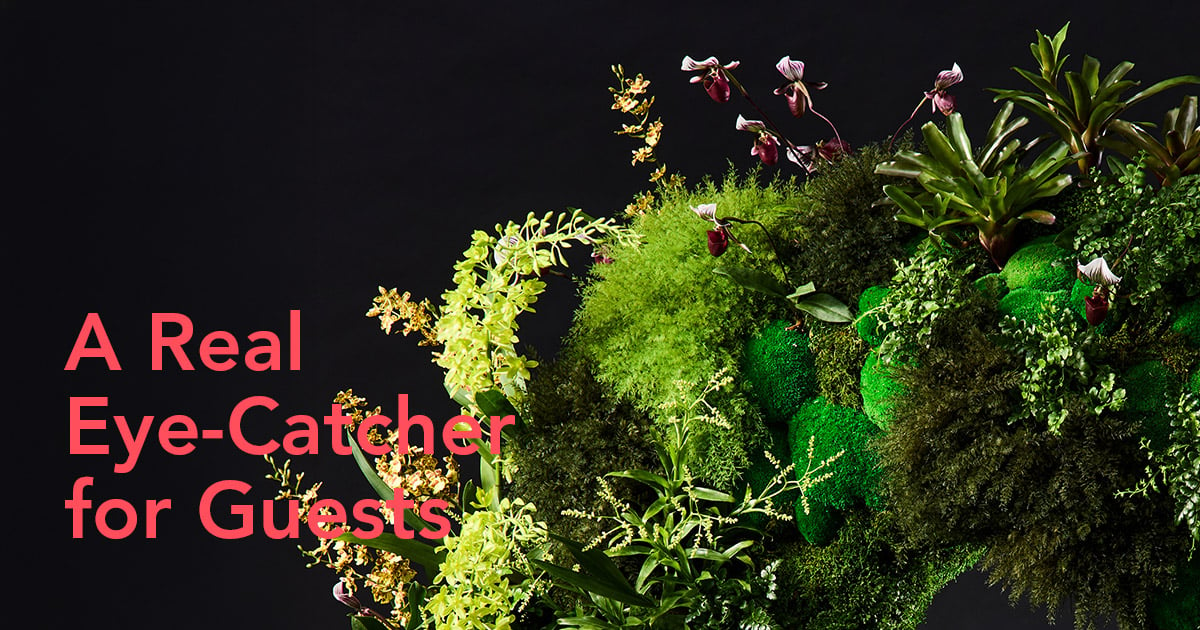
A hotel in Denmark's capital, Copenhagen, called for something green, sculptural, and built to last for their dark-style restaurant. It still had to be a real eye-catcher for guests. My answer was a rainforest: a circular world of moss, ferns, orchids, and deep layers of foliage that brings a little piece of the wild indoors.
A Rainforest for a Restaurant
I am a boy from the country, so nature is never very far away in my thinking. Give me a dark room and an empty space, and sooner or later I will probably start bringing plants into it.
The restaurant itself has a very modern interior, with many dark colors. That immediately gave me something to work with. Instead of trying to compete with the surroundings by adding lots of bright flowers or strong colors, I wanted to create a contrast with green. Something dense, organic, and almost a little mysterious. Before I knew it, I was building a rainforest.
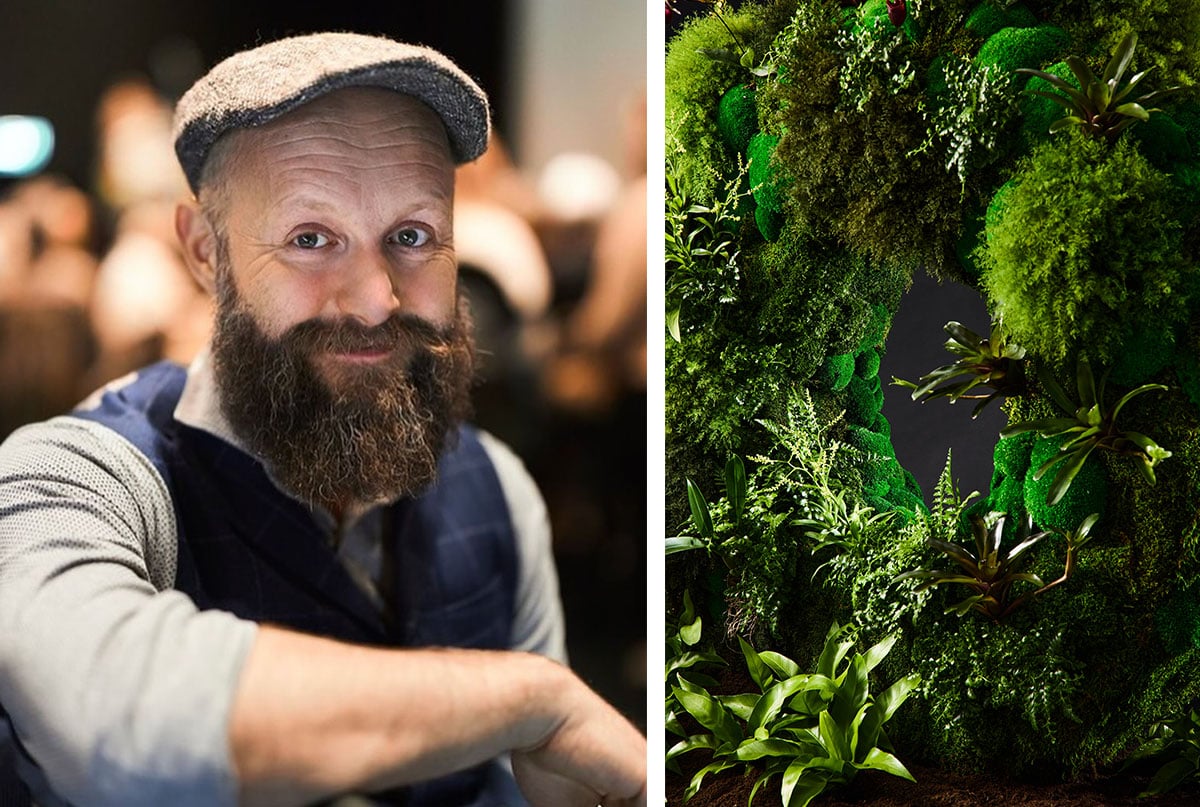
The construction is based on a large round shape with an opening in the middle. The base was made from polystyrene foam, which we call "flamingo" in Denmark. From there, I built up the surface with different materials, particularly moss, asparagus foliage, and several other green textures.
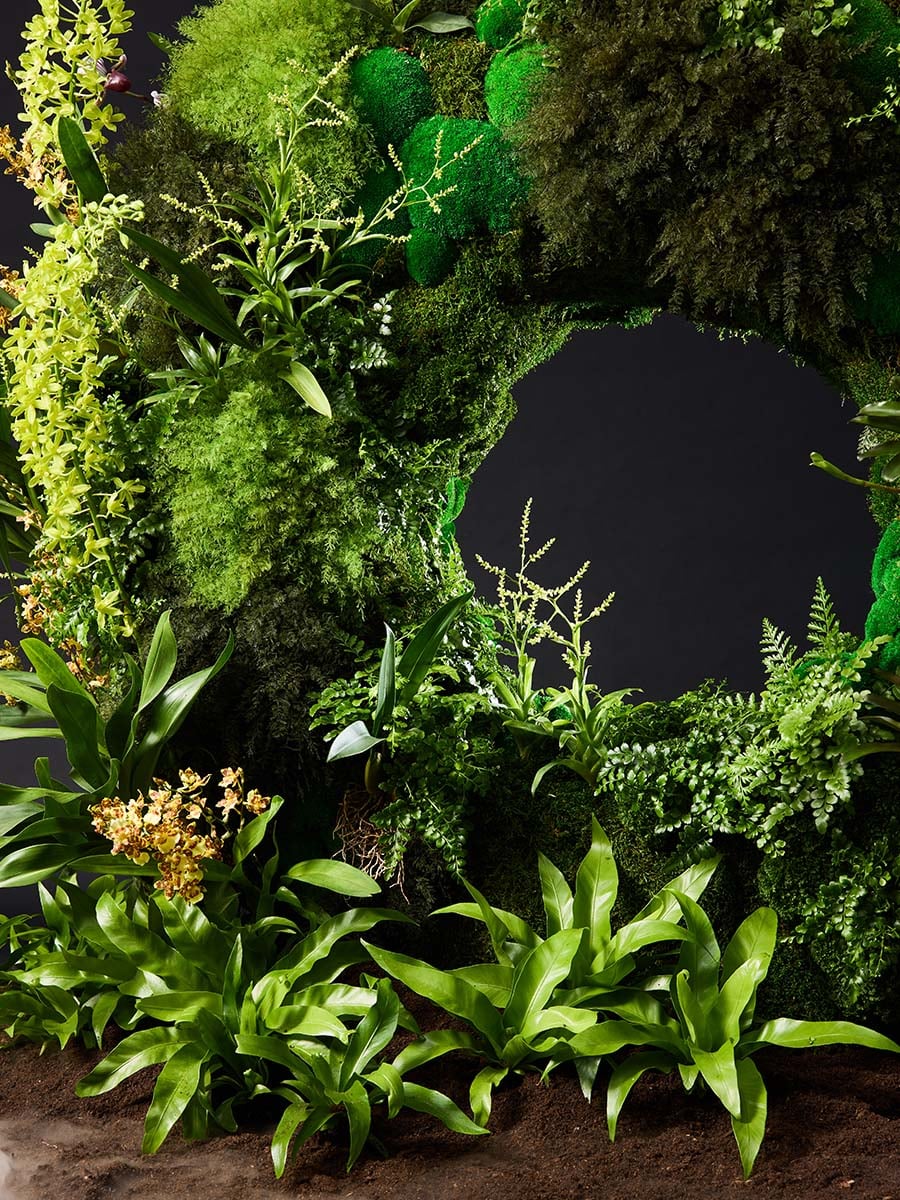
The hole in the center became an important part of the design. I didn't want to create one solid green mass. By leaving this dark space open, you can look into and sometimes even through the piece. It gives the arrangement depth and makes you curious about what might be hiding behind the next layer.
That is also what I like about a real rainforest. You never see everything at once.
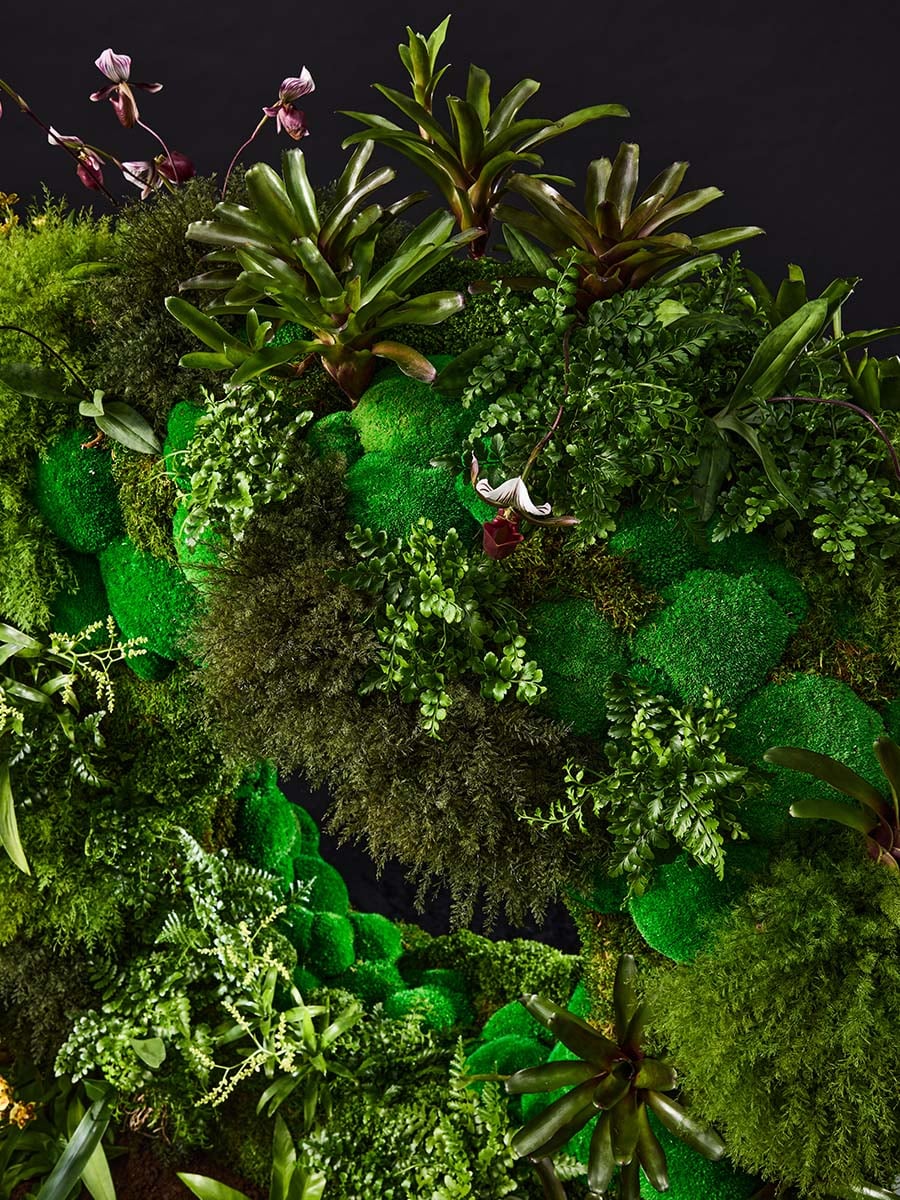
When you look at the design closely, there isn't really one main flower or plant demanding attention. Instead, your eye moves around. There are compact cushions of moss, feathery foliage, long leaves, rosette-shaped plants, and small details appearing between them. Some areas are almost completely covered, while elsewhere the dark background remains visible.
That difference between open and closed spaces makes the whole construction feel bigger than it actually is.
Fresh Plants for the Photos
For the photo shoot, I added fresh plants, including orchids, ferns, and other tropical-looking foliage. The orchids are deliberately used in small numbers. They appear here and there rather than sitting prominently on top of the arrangement.
I think that makes them more interesting.
You have to discover them between all the greens, just as you might suddenly notice a small flower while walking through dense vegetation. The different shades of green also become very important: bright fresh greens, darker leaves, almost brown-green textures, and the intense green of the moss.
The result is not meant to copy a real rainforest botanically. It is my impression of one. I wanted to capture the feeling of abundance, layers, shadows, and vegetation growing in every possible direction.
Making the Rainforest Last
Of course, there is a practical side to making floral work for a hotel. A restaurant decoration has a completely different job from an arrangement made for an event or photo shoot. It needs to stay attractive day after day without requiring constant replacement or maintenance.
For the final installation in the hotel, the fresh plants were therefore replaced by high-quality silk plants. Combined with the moss and permanent structure, they allow the rainforest to keep its appearance for a much longer period.
This is something we regularly consider at Bo Büll: how can we bring the feeling and shapes of nature into an interior while also thinking about the location, maintenance, and lifespan of the work? Sometimes fresh flowers are exactly what a space needs. In other situations, a permanent or semi-permanent botanical installation makes much more sense.
Have you ever wondered how our campaign images are created? Here's a little behind-the-scenes glimpse that shows how creatively they think to create the beautiful visual effect:
Let the Light Do Its Work
Lighting was the final ingredient.
The rainforest is illuminated by spotlights in the restaurant, and that changes the installation completely. Light catches the different leaf shapes and moss surfaces, while other areas remain almost black. Suddenly, all those layers become much more visible.
The darker interior of the restaurant actually helps the design. Instead of disappearing into the room, the greens seem to come forward. Shadows create extra depth, and every angle gives you a slightly different view.
During the day, it is a large green object. Under the spotlights, it starts to feel like its own little landscape.
And that was exactly what I wanted.
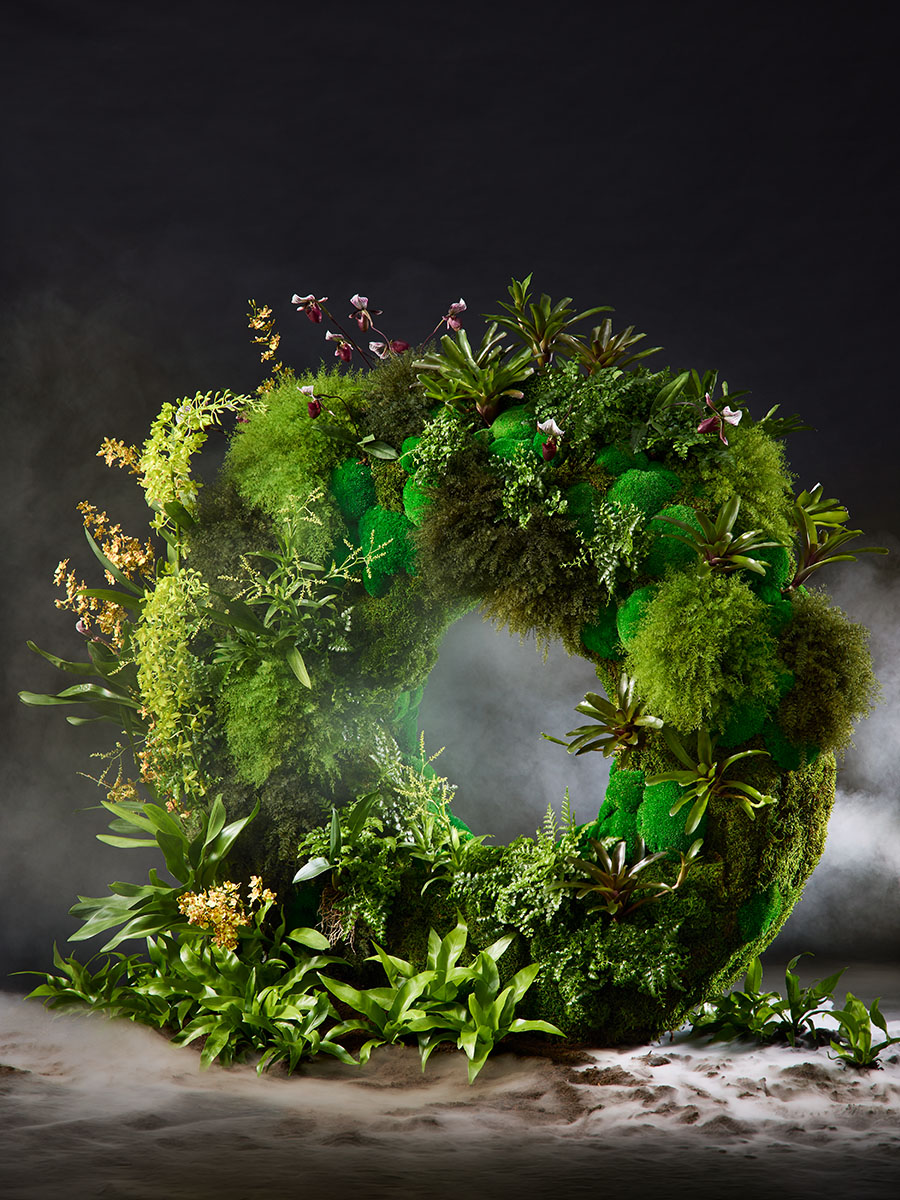
Not simply a decoration placed on a long table, but something that gives hotel guests a reason to look twice. A small piece of imagined rainforest, sitting right in the middle of Copenhagen.