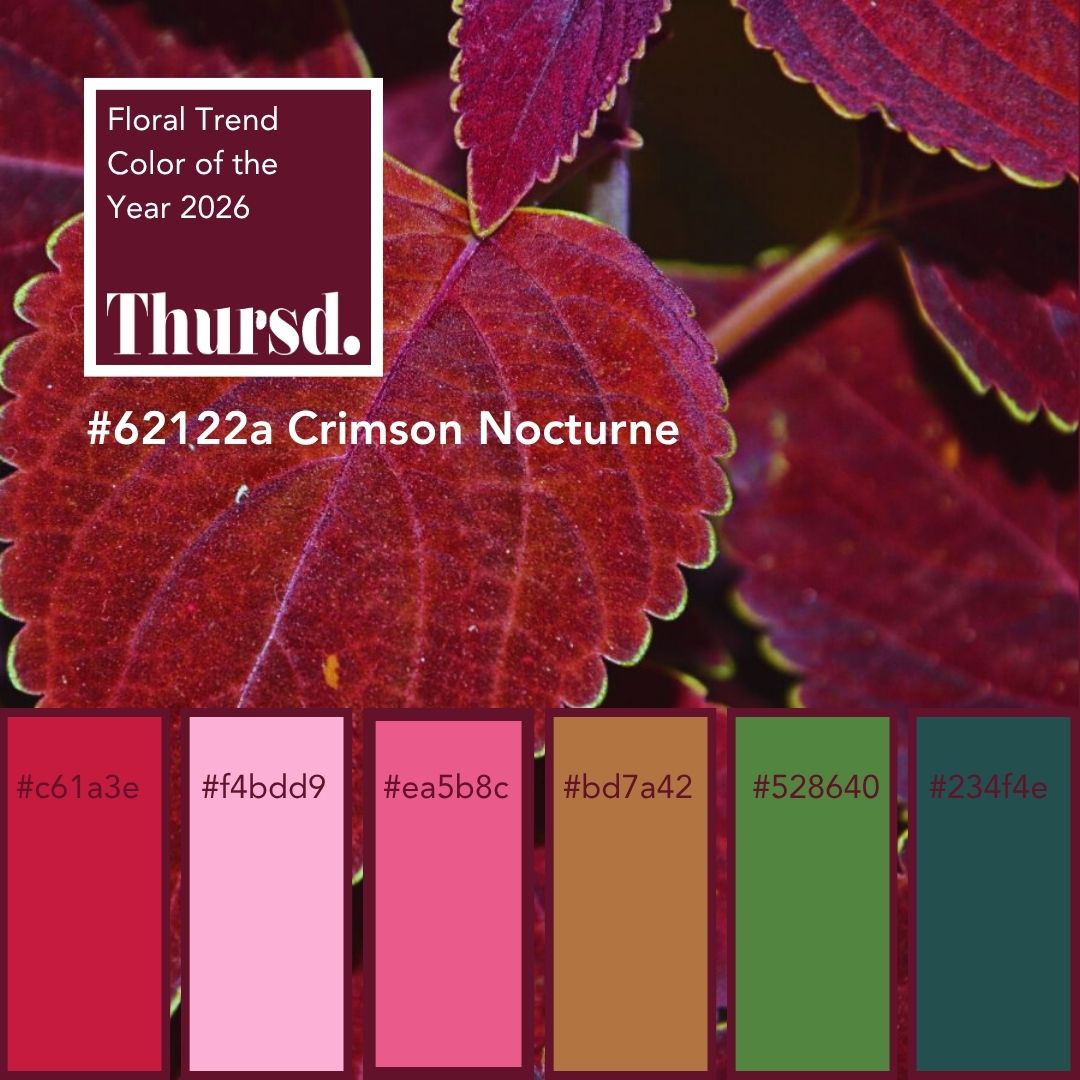
Coleus (Coleus scutellarioides), also called painted nettle, is a mint-family plant grown for its patterned leaves in lime, burgundy, pink, and copper. It is a summer annual outdoors and a houseplant indoors in bright light, hardy outside only in zones 10 and 11.
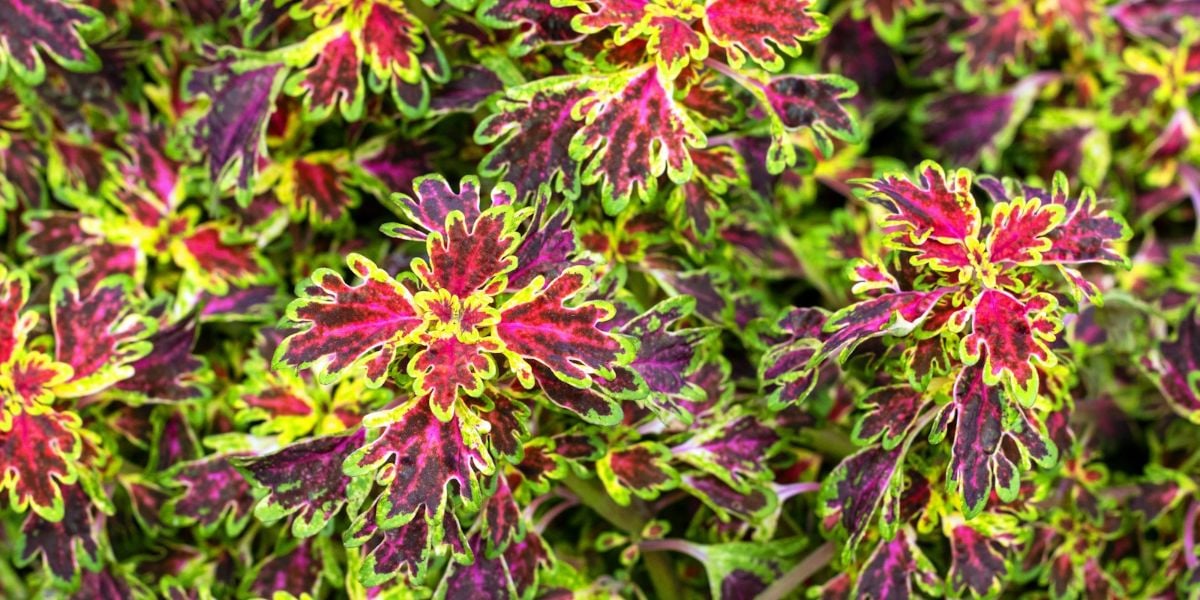
Coleus (Coleus scutellarioides) is grown for its leaves, not its flowers. A Coleus plant can carry lime, burgundy, pink, copper, and almost-black foliage, often all on one leaf. It is a member of the mint family, Lamiaceae, native to tropical and subtropical Asia and northern Australia. Outside the tropics it is grown as a summer annual in beds and containers, and it also does well indoors as a houseplant in bright light. You may still see it labeled Solenostemon scutellarioides, Plectranthus scutellarioides, or Coleus blumei: botanists moved it back to the genus Coleus.
Common Names
Coleus
Painted nettle
Flame nettle
What a Coleus Looks Like
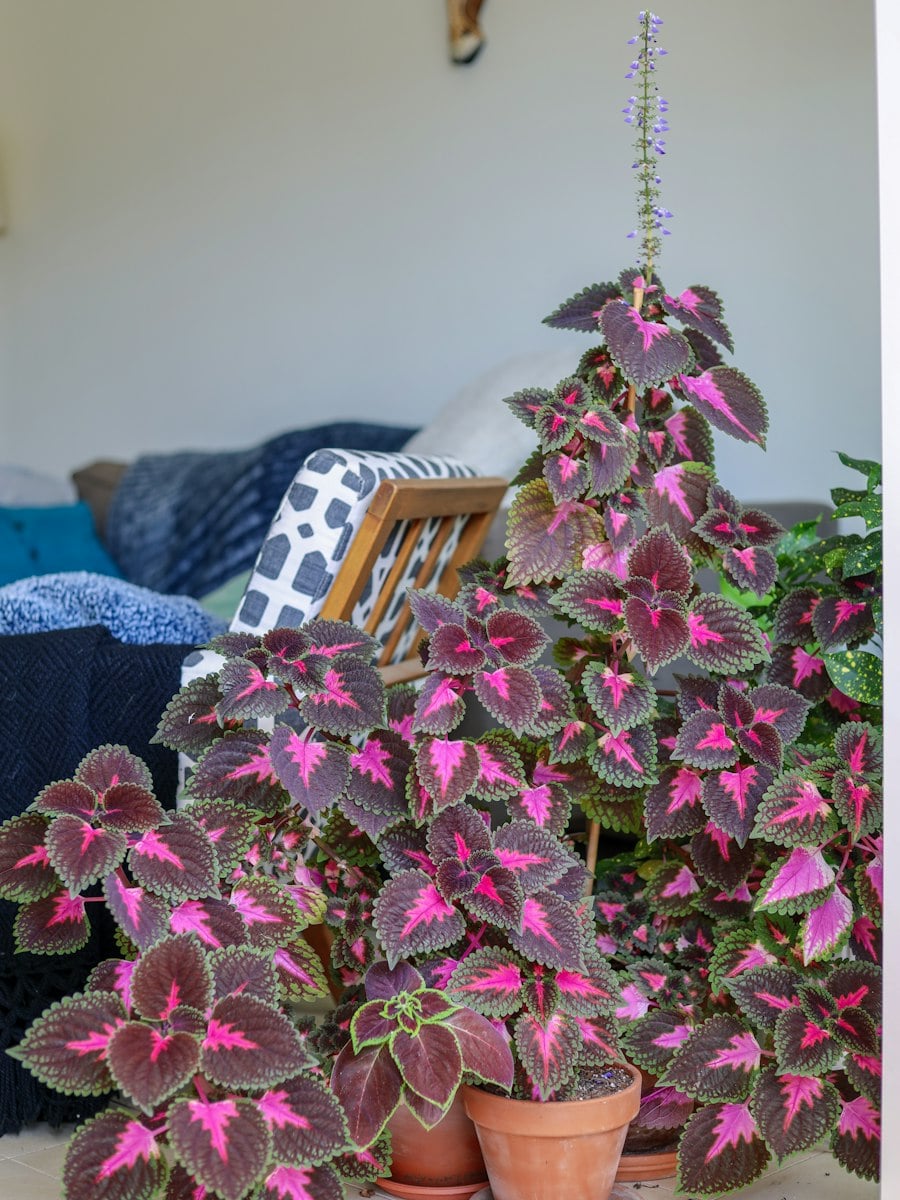
The stems are square, like those of mint, and the leaves sit in opposite pairs. Leaf edges range from gently scalloped to deeply cut, and the patterns go from simple borders to splashes and veins in two or three colors. Plants reach about 90 cm (3 ft) tall and wide. In late summer a Coleus sends up slender spikes of small blue-violet flowers. They are not showy, and most growers remove them.
Potted Coleus by a sofa in Tel Aviv, with a flower spike starting at the top. Photo by Mor Shani on Unsplash.
Can Coleus Be an Indoor Plant?
Yes, as long as it gets bright light: NC State Extension notes that a Coleus grown as a houseplant needs a bright spot. Indoor plants are also where aphids, whiteflies, and spider mites turn up most, so check under the leaves now and then. Outdoors, Coleus is hardy only in USDA zones 10 and 11. Everywhere else the first frost kills it, and the University of Minnesota calls it very cold sensitive, among the first plants to suffer when nights turn cold. Because cuttings root so easily, a favorite can spend the winter indoors as a rooted cutting on a bright windowsill.
How to Grow Coleus
Light: most Coleus do best in part shade or dappled light. Sun-tolerant cultivars exist, but a shade type in full sun bleaches or wilts, so check the label.
Water: do not let the plant dry out. After it settles in, water when the top 2.5 cm (1 in) of soil is dry, and keep water off the leaves. Good drainage is a must.
Feeding: a soluble all-purpose fertilizer in summer. Avoid fertilizers made for flowering plants, which push the plant into bloom and make it leggy.
Pinching: pinch young shoot tips often for a bushier plant, and pinch or shear off the flower spikes. A Coleus that sets seed goes downhill.
Propagation: stem cuttings root easily in water or clean potting soil. Do not propagate patented cultivars, marked PP or PPAF on the label. Some cultivars grow from seed, sown uncovered indoors at 21 to 24 °C (70 to 75 °F); they sprout in 10 to 15 days.
Problems: mealybugs, aphids, and whiteflies, plus downy mildew, stem rot, and root rot. Wet leaves and soggy soil invite the diseases.
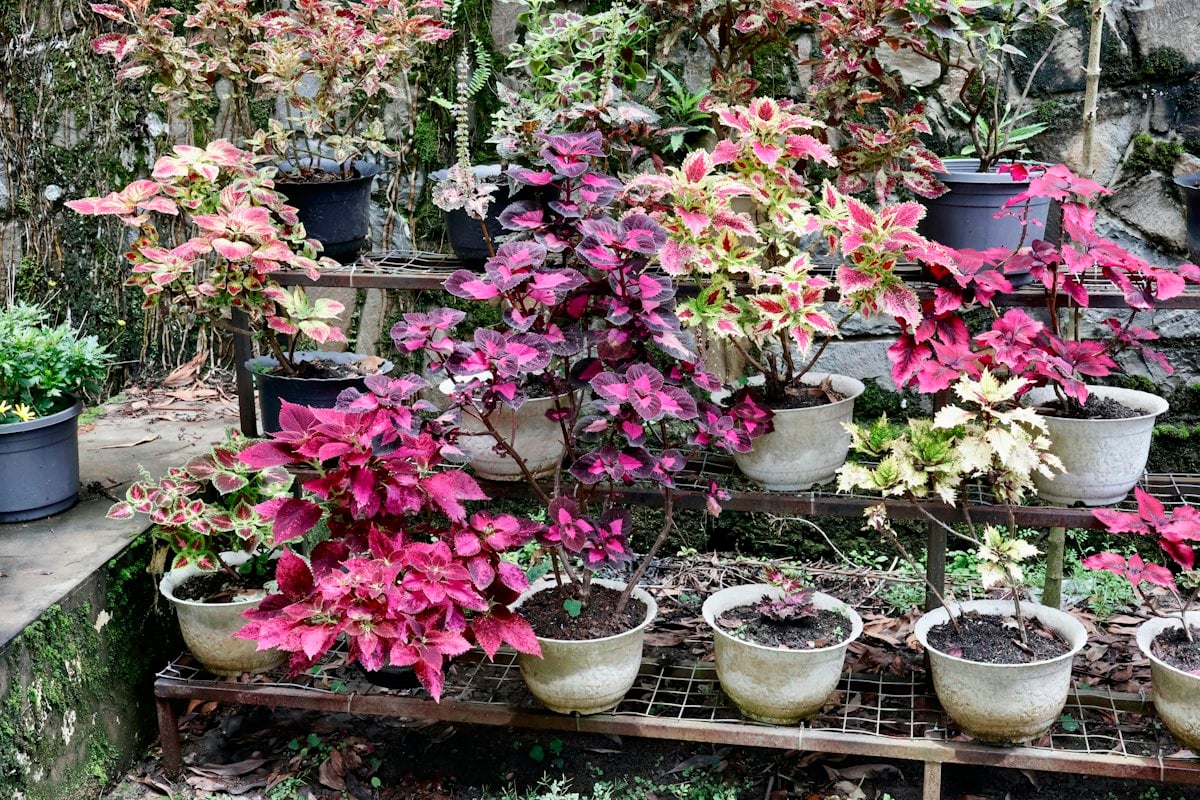
Coleus cultivars in pots on garden shelves in Ranau, Malaysia. Photo by You Le on Unsplash.
Is Coleus Toxic to Pets or People?
NC State Extension rates painted Coleus as low severity. The leaves contain diterpenes, coleonol and coleon O, that can cause minor skin irritation, and repeated, frequent handling can lead to allergic dermatitis with a red rash. Wear gloves if you take a lot of cuttings.
For pets, the ASPCA lists "Coleus" as toxic to dogs, cats, and horses, with vomiting, diarrhea, depression, and loss of appetite as signs. Its entry, however, is a relative, the herb Indian borage (Coleus amboinicus), and there is no separate ASPCA entry for painted Coleus. Keep pets from chewing the plant, and call your vet or the ASPCA Animal Poison Control Center at (888) 426-4435 if one does and seems unwell.
Sources: NC State Extension Gardener Plant Toolbox (Coleus scutellarioides); Clemson Cooperative Extension Home and Garden Information Center (Coleus); University of Minnesota Extension (Coleus); National Parks Board Singapore, Flora and Fauna Web (Coleus scutellarioides); ASPCA Animal Poison Control Center (Coleus).