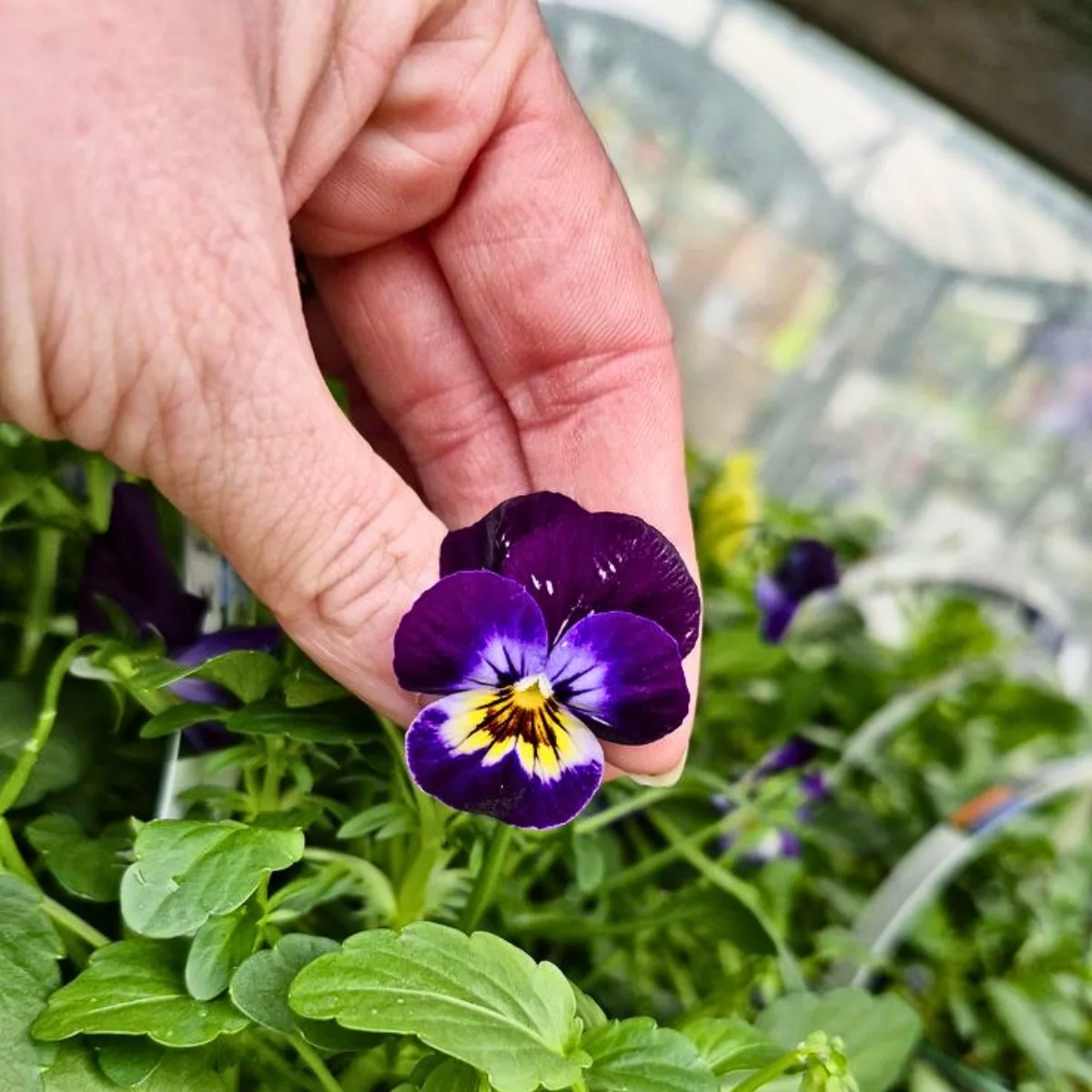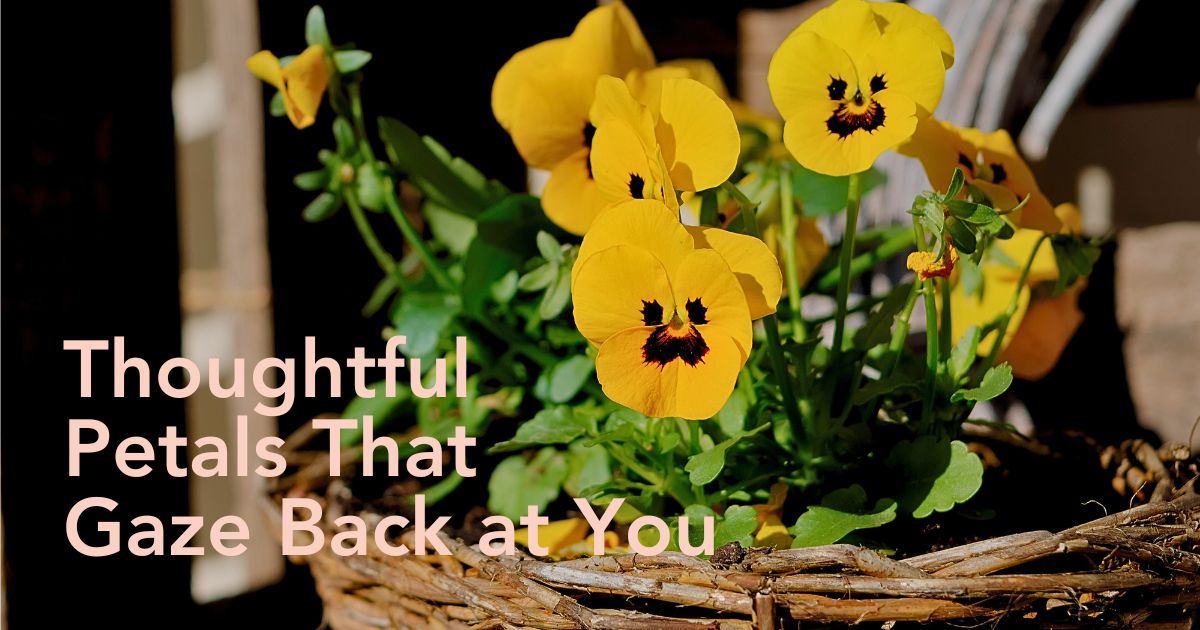
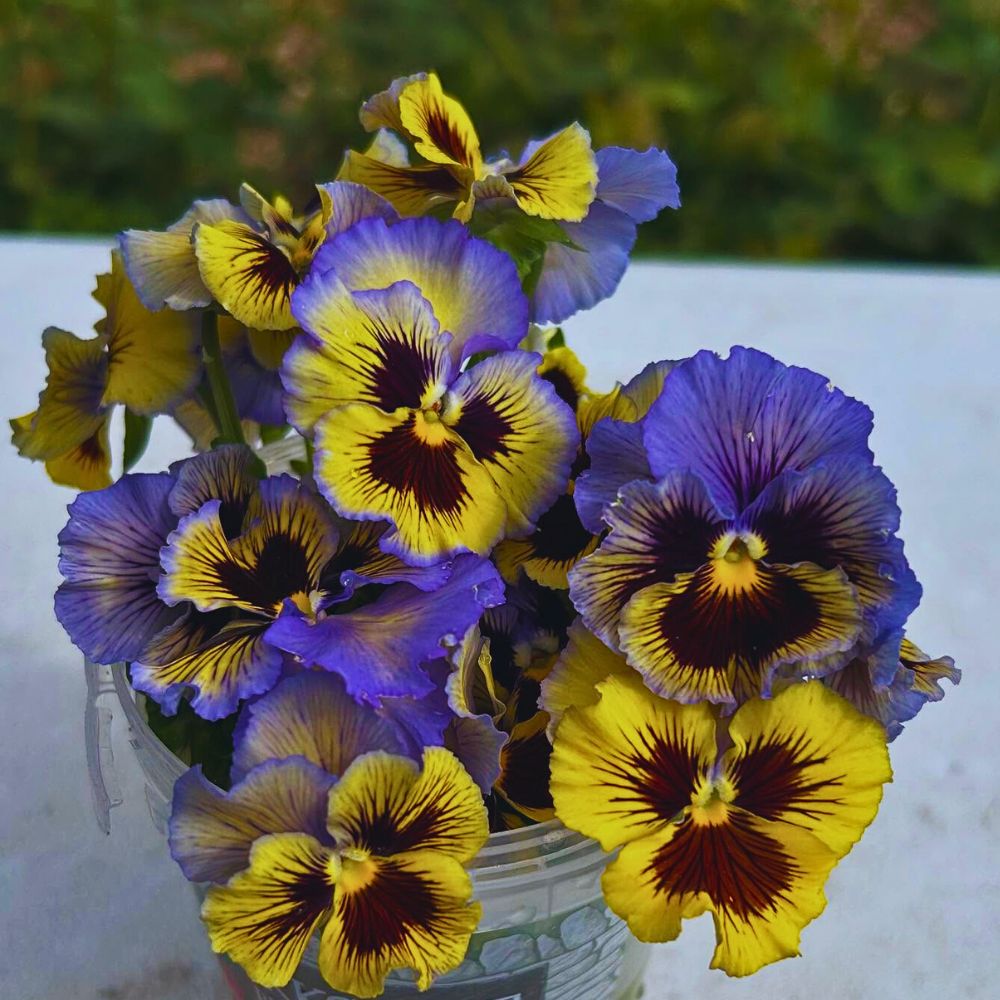
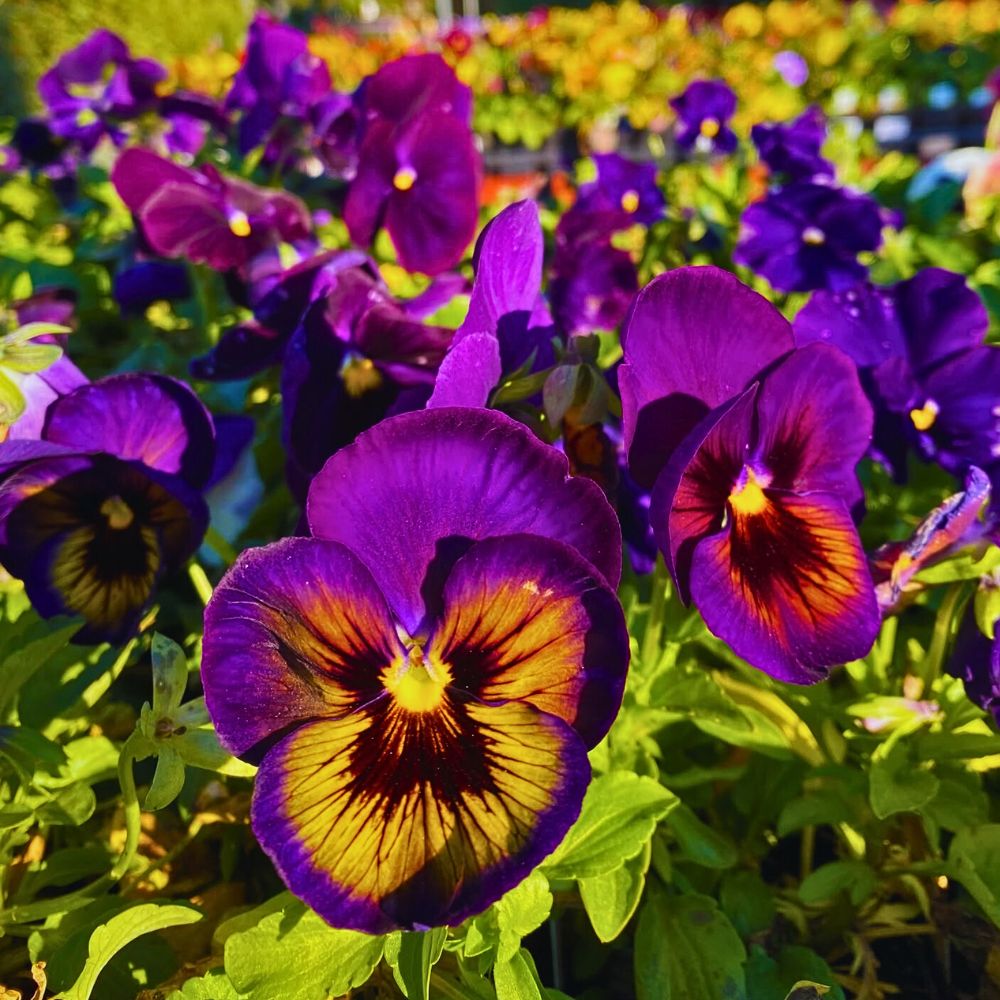
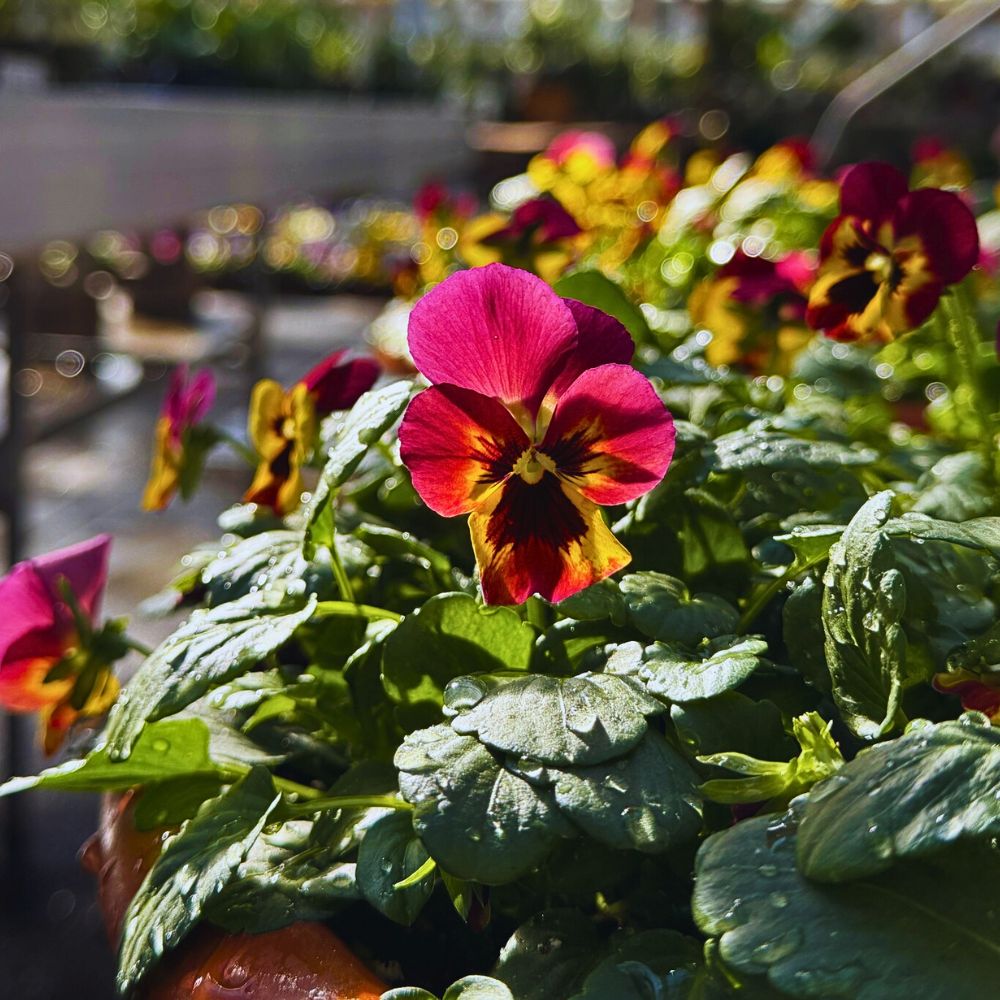
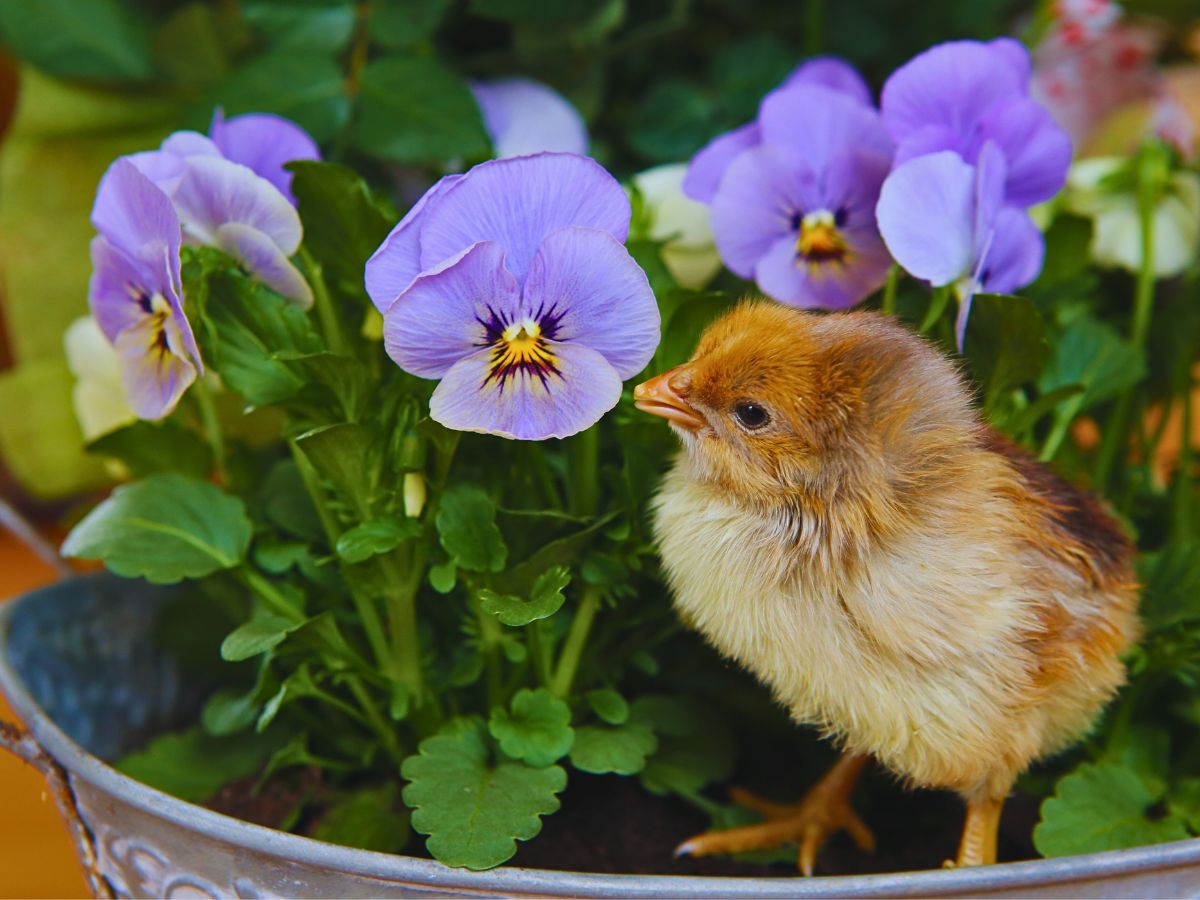
Walk past a tray of pansies in a garden center in March and you will feel watched. The dark blotch in the center of each flower, the two side petals like cheeks, the lower lip: no other bedding plant looks back at you. That face is why the pansy (Viola x wittrockiana) has collected more folklore, poetry and coded messages than almost any other cool-season flower. Pansy flower meaning starts with one word, thought, and spreads from there into remembrance, free thinking, loyalty and love that could not be spoken out loud.
This is a guide to what pansies mean, where those meanings came from, what each color signals, and how the plants on sale today were bred out of a wild European violet.
Where Pansies Come From
Pansies belong to the genus Viola, which holds around 500 species of violets, several species of them garden plants in their own right, one of the February birth flowers, and violas spread across the temperate world. The garden pansy is not a wild plant at all. It was bred in England in the 1810s and 1820s, when gardeners crossed the wild pansy Viola tricolor (heartsease, or love-in-idleness) with the yellow mountain pansy Viola lutea and a Russian species, Viola altaica. Within twenty years the small wildflower had become a show flower with a full round face, and by the 1840s several hundred named cultivars were being exhibited.
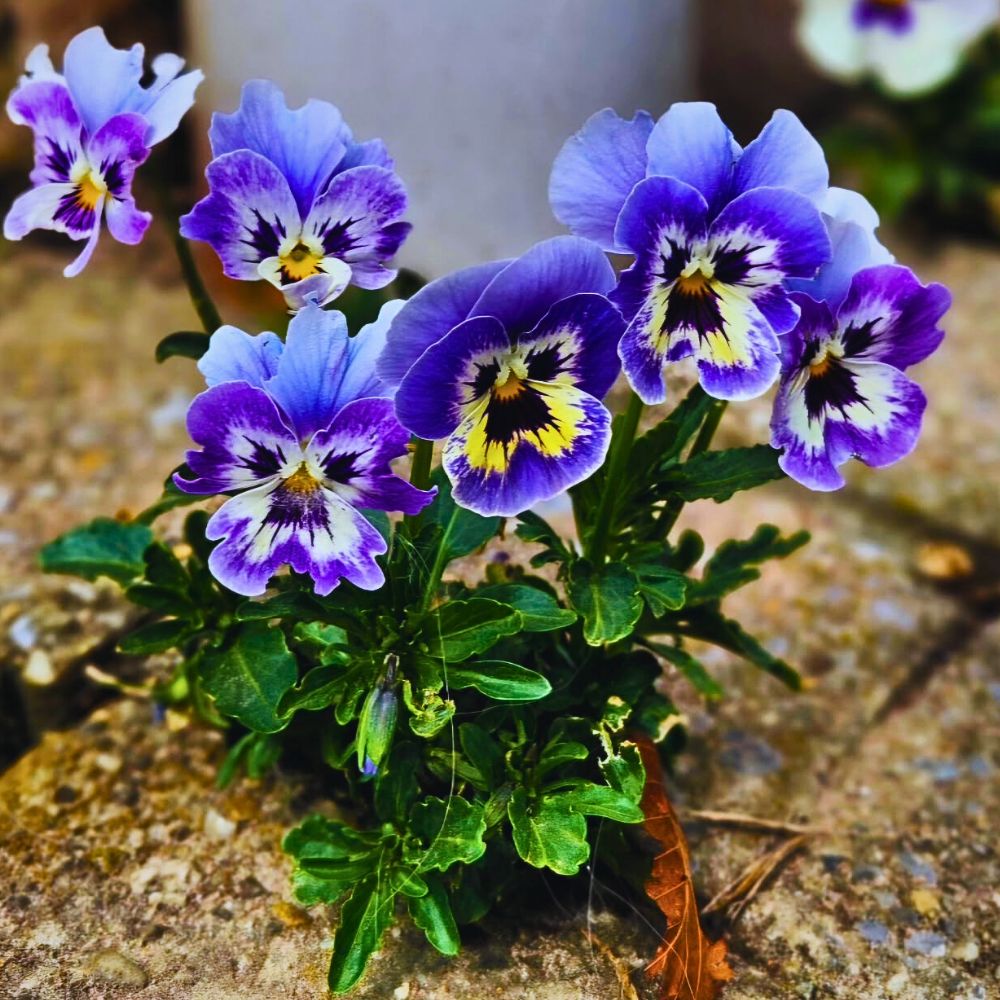
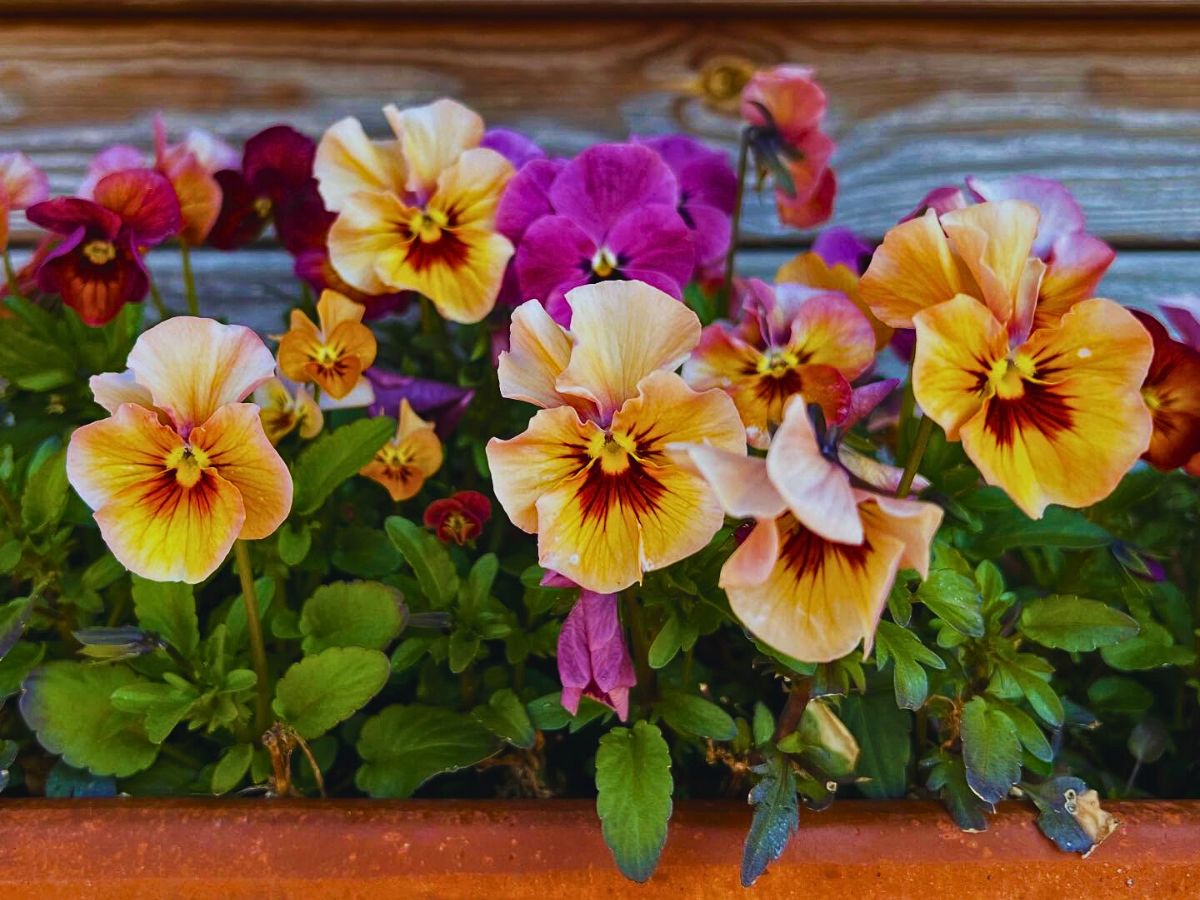
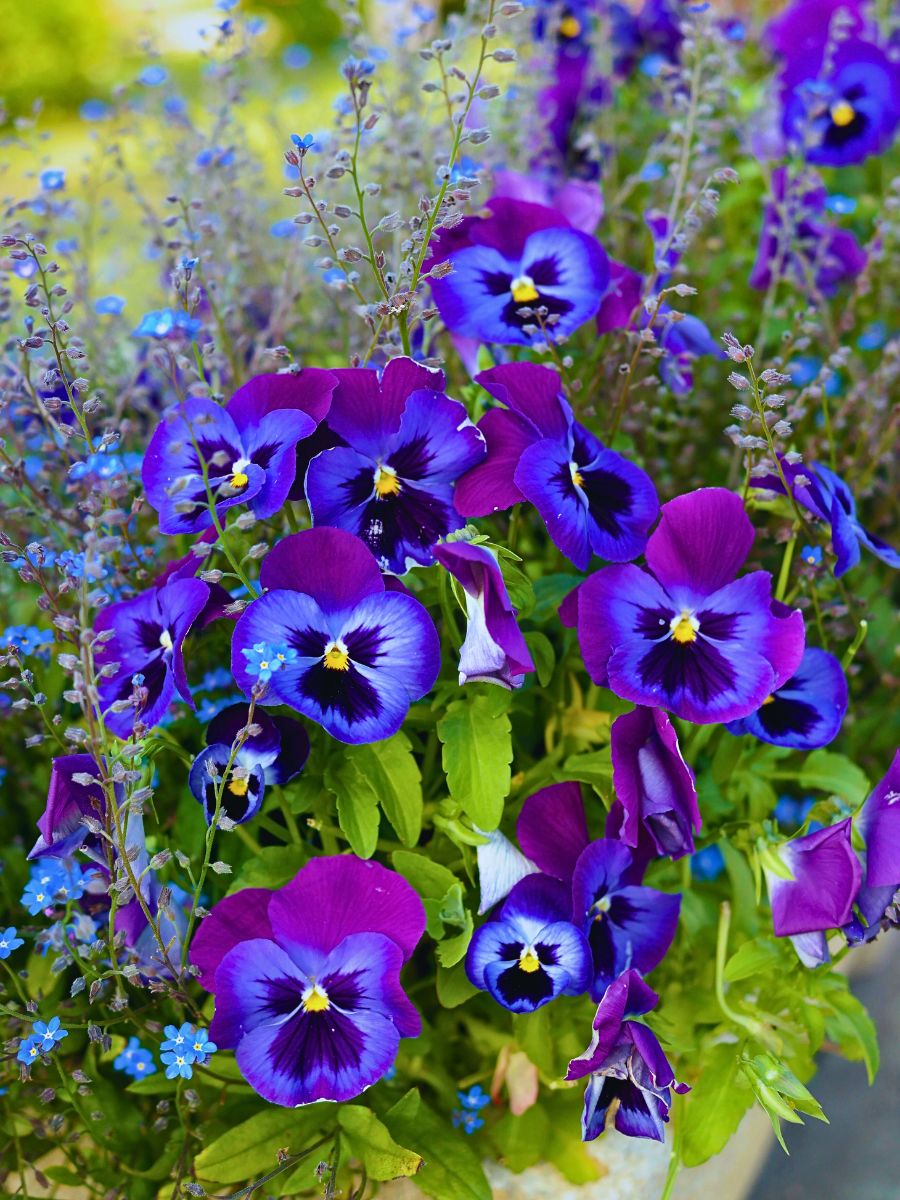
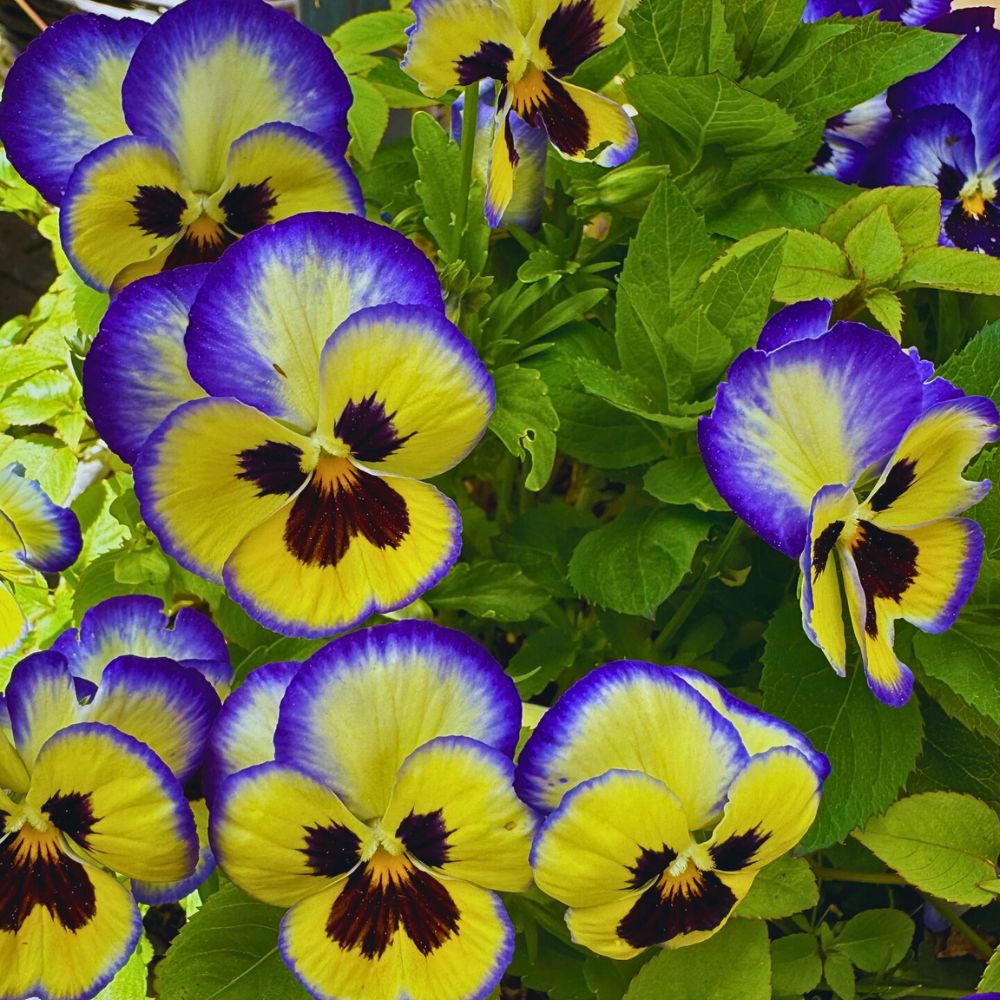
The wild ancestors grow in meadows, field edges and disturbed ground across Europe and western Asia, in cool, damp conditions on slightly acidic soil. That inheritance still shows. A modern pansy is a short-lived perennial that most growers treat as a cool-season annual: it blooms best in cool weather between 4 and 15°Celsius (40 to 60° Fahrenheit), tolerates frost, and sulks in summer heat. Cooler temperatures are what it wants; a warm spell it will tolerate for a week or two, no more. Plants stay compact at 15 to 30 centimeters (6 to 12 inches) tall. The flowers measure 5 to 7 centimeters (2 to 3 inches) across and are built from five petals, four petals pointing up and out, with the two petals at the top overlapping, and one lower petal pointing down, in every color from near black to pure white and orange, with or without the dark blotch and whisker patterns that give the flower its face. Pink pansies, blue pansies and yellow pansies with a black face are the ones most commonly sold; the specific colors change with fashion, the face does not.
What Does the Pansy Mean?
The meaning of the pansy is built into its name. Pansy comes from the French pensée, thought, and the flower was named for the way its nodding head looks like someone lost in contemplation. So when a Victorian sent pansies, the message was literal: I am thinking of you. From that root the symbolism grew several branches that still hold today.
- Loving thoughts and remembrance. The core meaning. Pansies were, and are, planted in memorial gardens and given to friends you have not seen for a while.
- Free thinking. In late 19th-century France the pansy became the emblem of the free thought movement, worn by people who questioned church and state. A flower called thought was an obvious badge.
- Loyalty and faithfulness, especially in the blue and purple shades.
- Humility. The bowed head reads as modesty, which is why older flower dictionaries also list the pansy for pious humility.
- Love that had to stay quiet. In the Victorian language of flowers, pansies carried feelings that convention would not let people say out loud, which is why they turn up so often in the small coded bouquets of that era.
The face is what makes all of this stick. A flower that appears to be thinking is easy to read as a small philosopher of the border, and every culture that adopted the pansy read something into that expression.
Pansy Meaning by Color
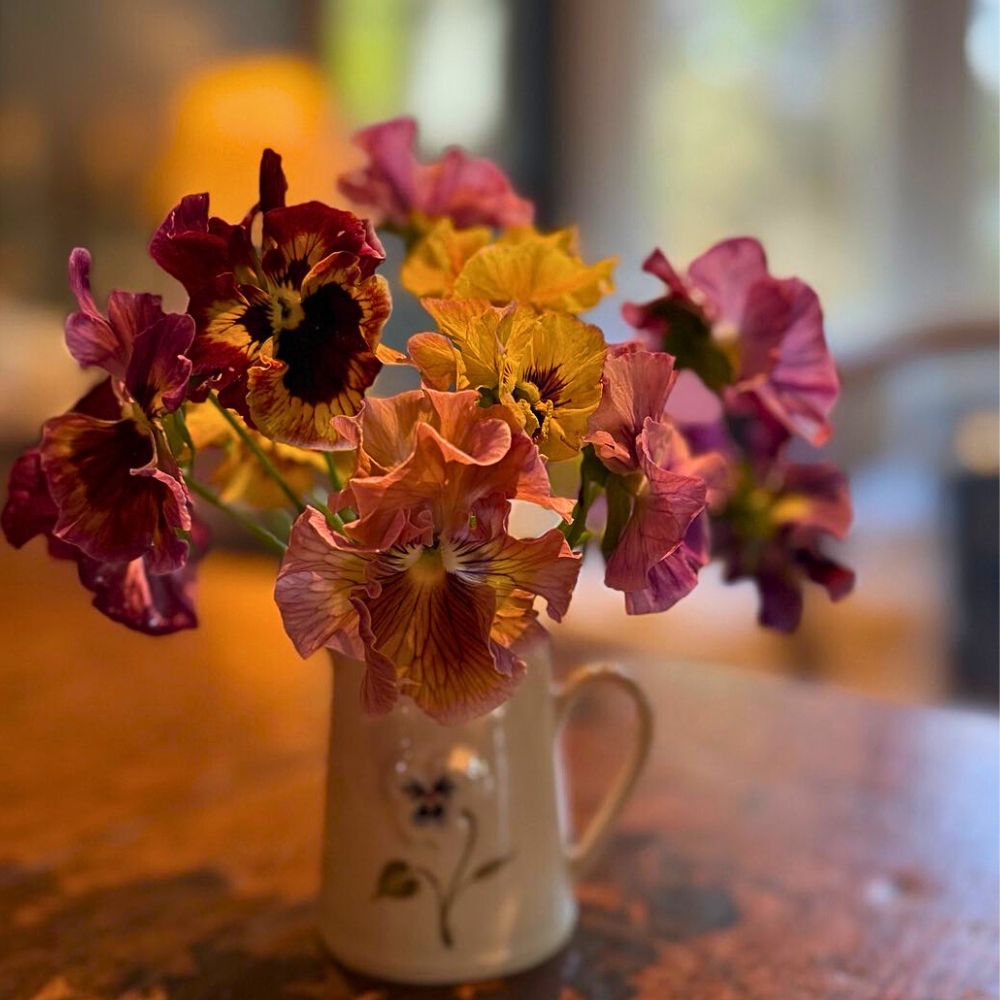
The general meaning is thought and remembrance; the color adds the tone of voice. These are the readings florists most often work with when someone asks what the different colored pansies mean, and a few of the colorful flowers on the bench have no traditional reading at all, pink pansies among them, so florists borrow from their nearest relative.
- Purple pansies stand for dignity, admiration and accomplishment. They suit a congratulation or a thank you to someone you respect.
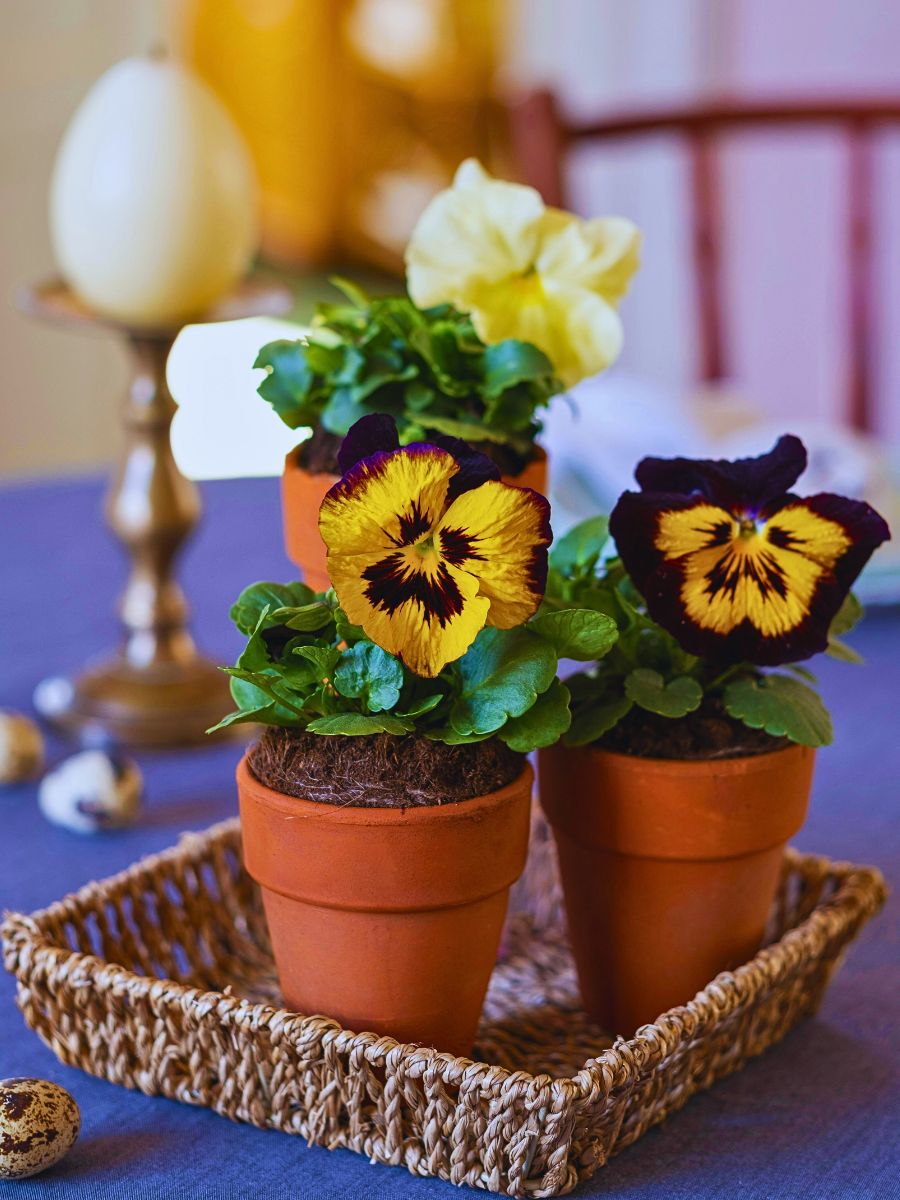
- Yellow pansies mean happy memories, cheerfulness and optimism. The color for a friend who needs a lift, or for remembering good times.
- White pansies carry purity, innocence and a spiritual note, which puts them in wedding work and in sympathy arrangements depending on the setting.
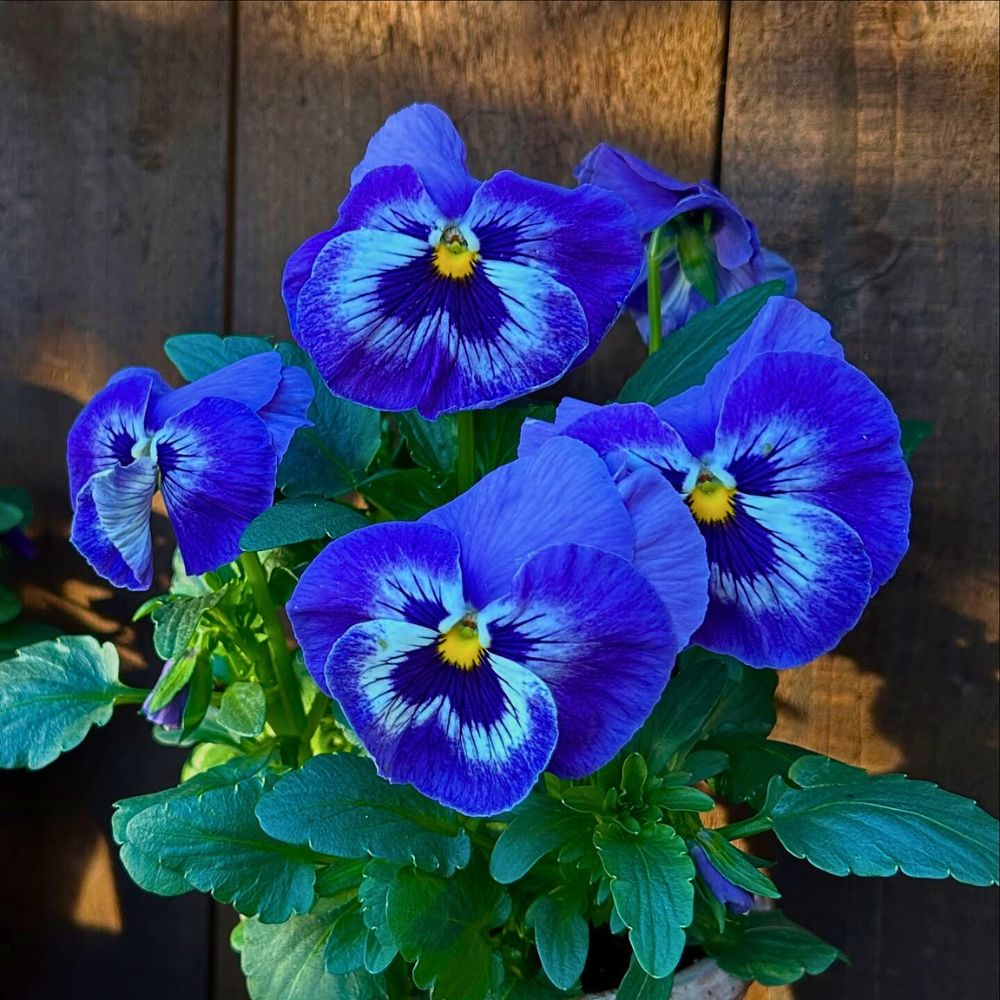
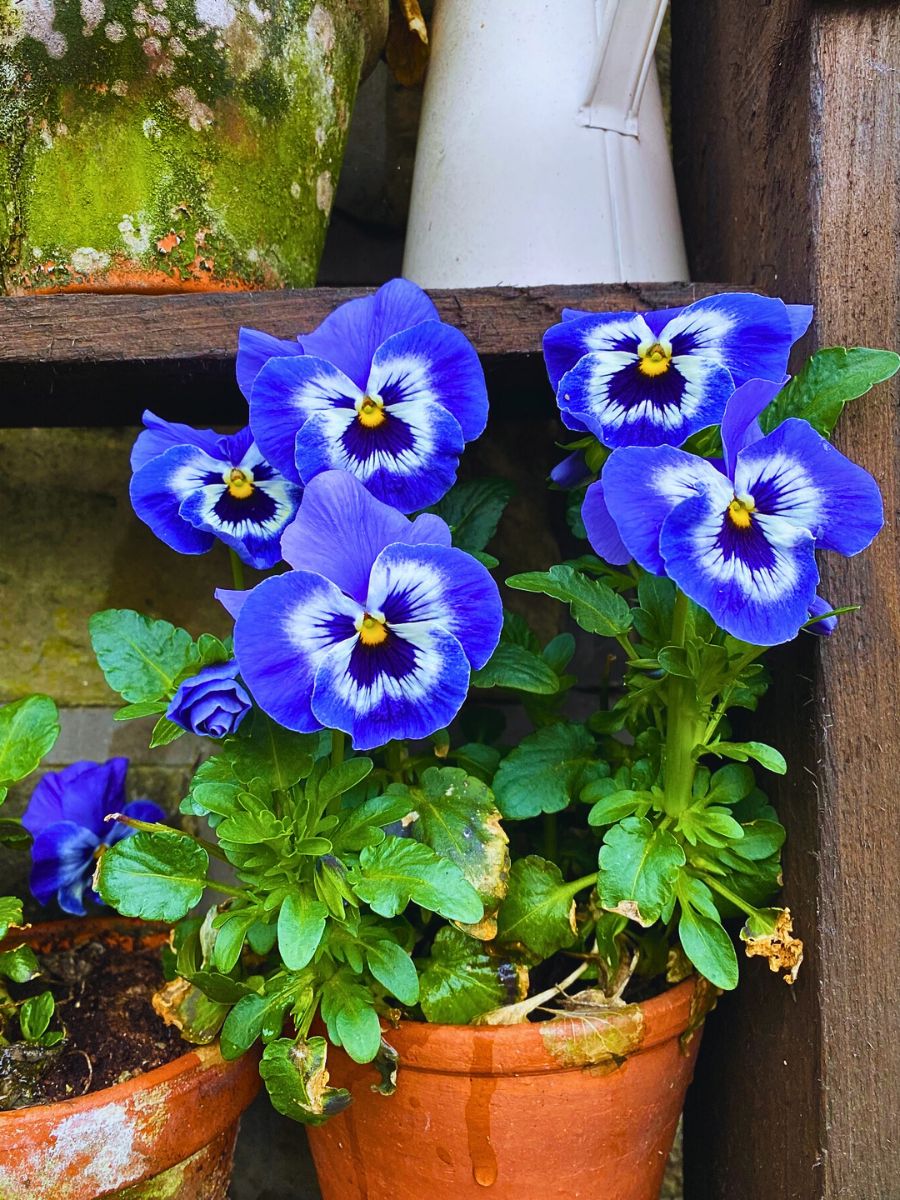
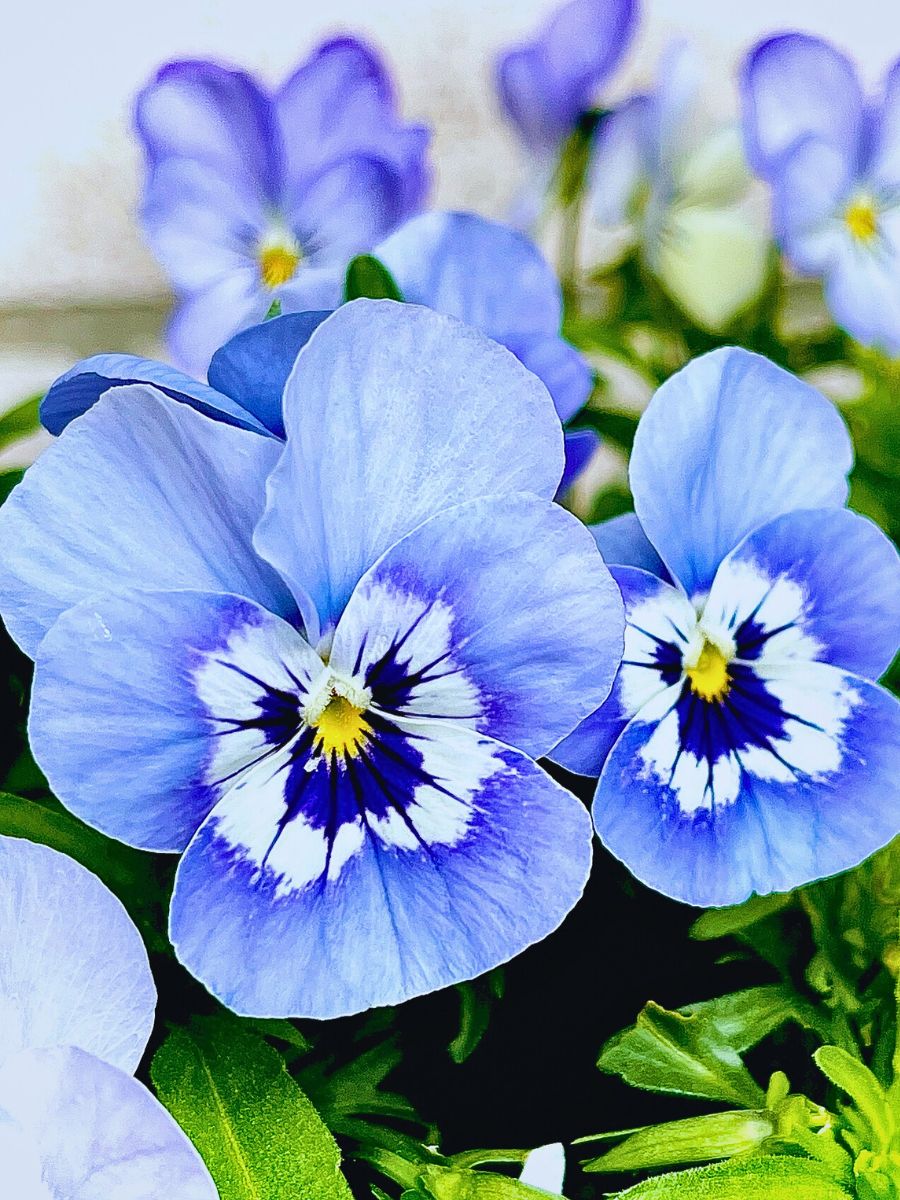
- Blue pansies signal faithfulness, loyalty and constancy. They are the classic choice for a long partnership or a steadfast friendship.
- Orange pansies read as energy, enthusiasm and warmth, good for a celebration.
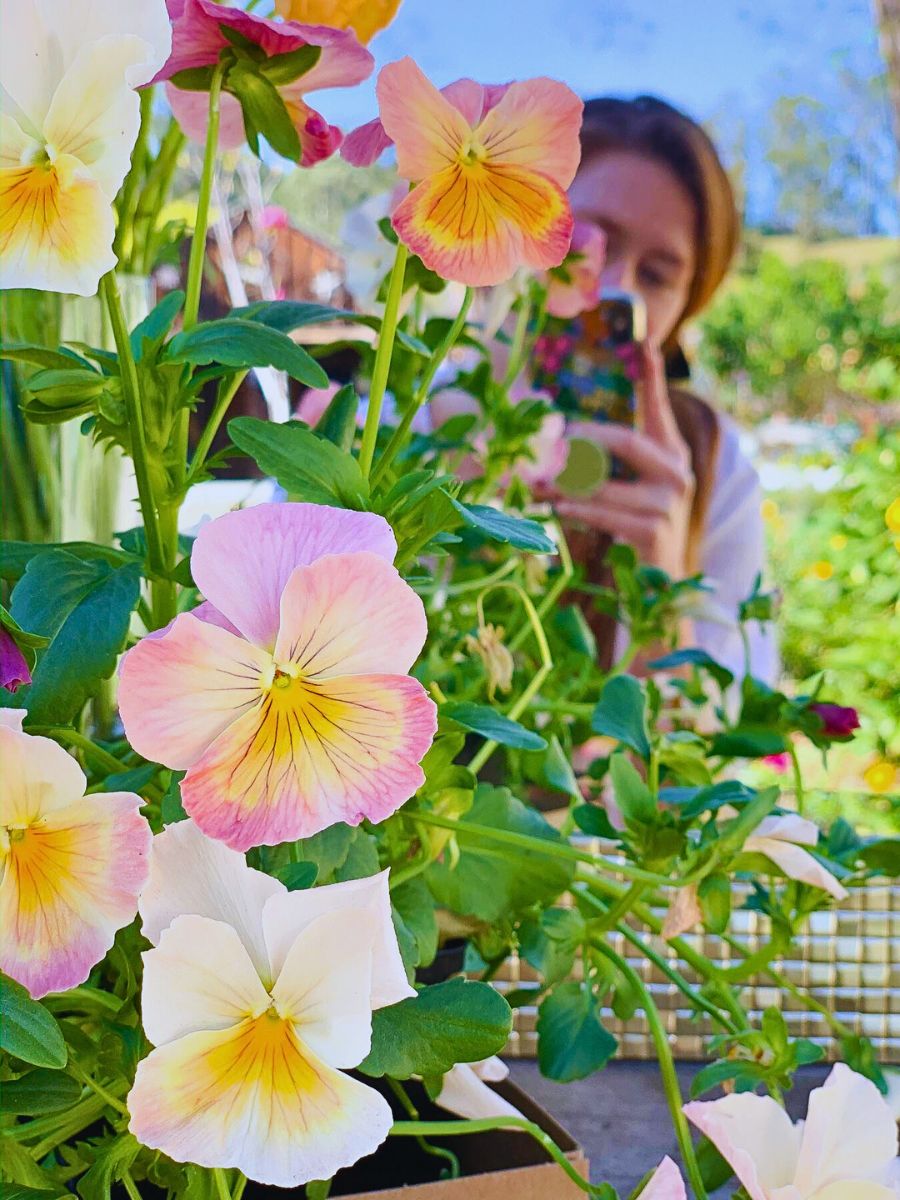
- Pink pansies are a modern breeding color with no Victorian entry; they borrow from the pink rose and read as gentle affection and gratitude.
- Red and burgundy pansies lean toward passion and deep romantic feeling, though they are rarer than the other colors.
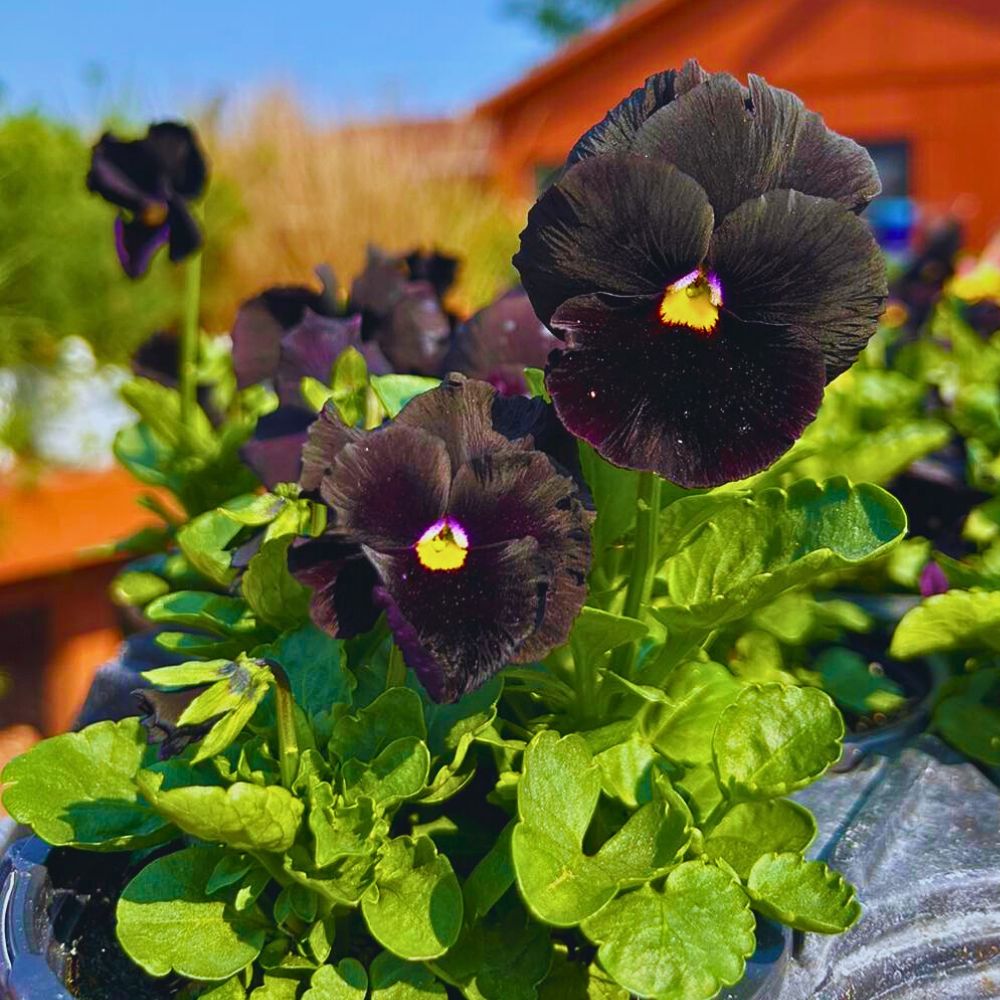
- Black pansies, in truth a very deep purple, mean mystery, elegance and sometimes farewell. They are the ones designers reach for in a gothic or dramatic palette.
Pansies in Myth, Folklore and Literature
Greek mythology gives the pansy a divine origin. Zeus, the story goes, made the first pansies as food for Io, the priestess he had turned into a white heifer to hide her from Hera; the flowers sprang up wherever she wandered so she would never go hungry. A second classical tale has all pansies white until one of Cupid's arrows missed its mark and struck a flower, which bruised purple with love and has carried the color, and a certain power over hearts, ever since.
Shakespeare used both ideas. In A Midsummer Night's Dream, Oberon squeezes the juice of love-in-idleness, the wild pansy, onto sleeping eyelids to make people fall in love with the first thing they see. In Hamlet, Ophelia hands out pansies "for thoughts" in her flower scene, which is where the remembrance meaning gets its most famous line.
Medieval European folklore treated pansies as a small love charm: pick one with the dew still on it and slip it under a pillow, and the sleeper would dream of their true love. Celtic tradition saw the faces as fairy faces, or as windows through which the fair folk watched the human world, so you asked permission before picking. In Germany the flower is Stiefmütterchen, little stepmother, after a folk reading of the petals: the big lower petal is the stepmother sitting on two chairs, the side petals are her own daughters on one chair each, and the two small upper petals are the stepdaughters squeezed onto a single seat.
The Victorian language of flowers gave every color its own message and put pansies at the center of the tussie-mussie, the tight little nosegay that couples exchanged when conversation was chaperoned. In Christian symbolism the three colors of the wild pansy, purple, yellow and white, were read as the Trinity. And on the other side of the Atlantic, pansies became a fixture of American cemetery planting for exactly the reason the Victorians loved them: they remember, and they smile while doing it.
Pansy, Viola or Violet?
Retail shorthand blurs the three, so here is the working distinction. A pansy is the big-flowered hybrid, Viola x wittrockiana, with overlapping petals and usually a face. A viola in the trade means the smaller-flowered types, often Viola cornuta hybrids, which carry more flowers per plant, take heat and cold a little better, and are the ones that spill out of hanging baskets. A violet is one of the wild or woodland species, Viola odorata above all, small, often scented and the flower that February is named for. Same genus, same care, different jobs. Pansies give you the big splash of color; violas give you the volume; violets give you the perfume.
Pansy Varieties and the Breeders Behind Them
Pansy cultivars are sorted by flower size, habit and breeding series, and the series name on the label tells a grower most of what they need to know. Large-flowered types carry flowers of 8 to 10 centimeters (3 to 4 inches) on compact plants; multiflora types trade size for numbers, with many smaller flowers that hold up better in rain; trailing types spread 60 centimeters (2 feet) or more and are bred for hanging baskets and walls. All of them are technically short-lived perennials, and nearly all of them are grown as annuals, replaced each planting time rather than nursed through a summer. Within those groups a handful of series dominate the world market, and two of the breeders behind them sit inside Thursd's own network.
Syngenta Flowers, whose European seed business is based in Enkhuizen in the Netherlands, says it is number one in pansies worldwide. Its Delta series is the workhorse of the northern European bedding market, uniform and early, and the Viola Delta Pure Orange on Thursd's product pages is one of the clear-faced, blotchless colors that series is known for; Colossus, from the same house, is the large-flowered line, with flowers of 10 to 12 centimeters (4 to 5 inches) on plants only 13 centimeters (5 inches) tall. Benary, the six-generation family seed house in Hann. Münden, Germany, has bred pansies and violas since the 19th century, with its Inspire series among the core assortments next to its Begonias. From the American side, PanAmerican Seed's Matrix series, 20 centimeters (8 inches) tall and wide, sets the standard for the big fall pansy, its Frizzle Sizzle series gives the ruffled, crinkled petals (Frizzle Sizzle flowers are about 8 centimeters, or 3 inches, across on plants of 15 to 23 centimeters, or 6 to 9 inches), and its Cool Wave trailing pansies are the ones spilling out of winter baskets.
What all of those breeders select for explains what you see on the shelf: uniform flowering so a whole tray opens together, a compact habit that survives the trolley and the truck, cold tolerance for autumn planting, healthy foliage that stays green under snow, resistance to the leaf spots that plague old strains, and a color range that runs from the old blotched faces to the modern clear colors and the near-black and bronze tones that fashion asks for every few years. Notably, a pansy that blooms reliably at 5 degrees Celsius in November is a breeding achievement, not an accident of nature. The wild Viola tricolor never did that on demand.
Pansies in Floral Design and the Kitchen
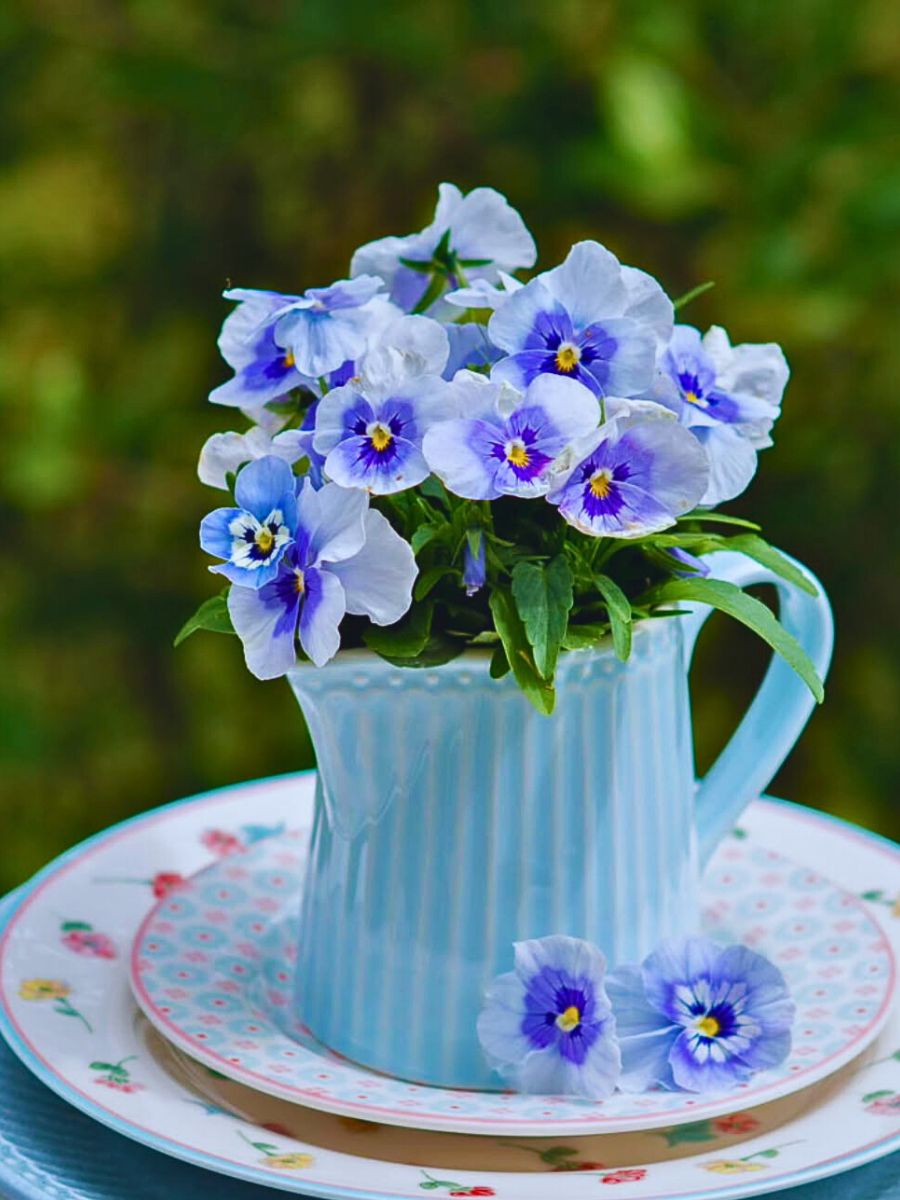
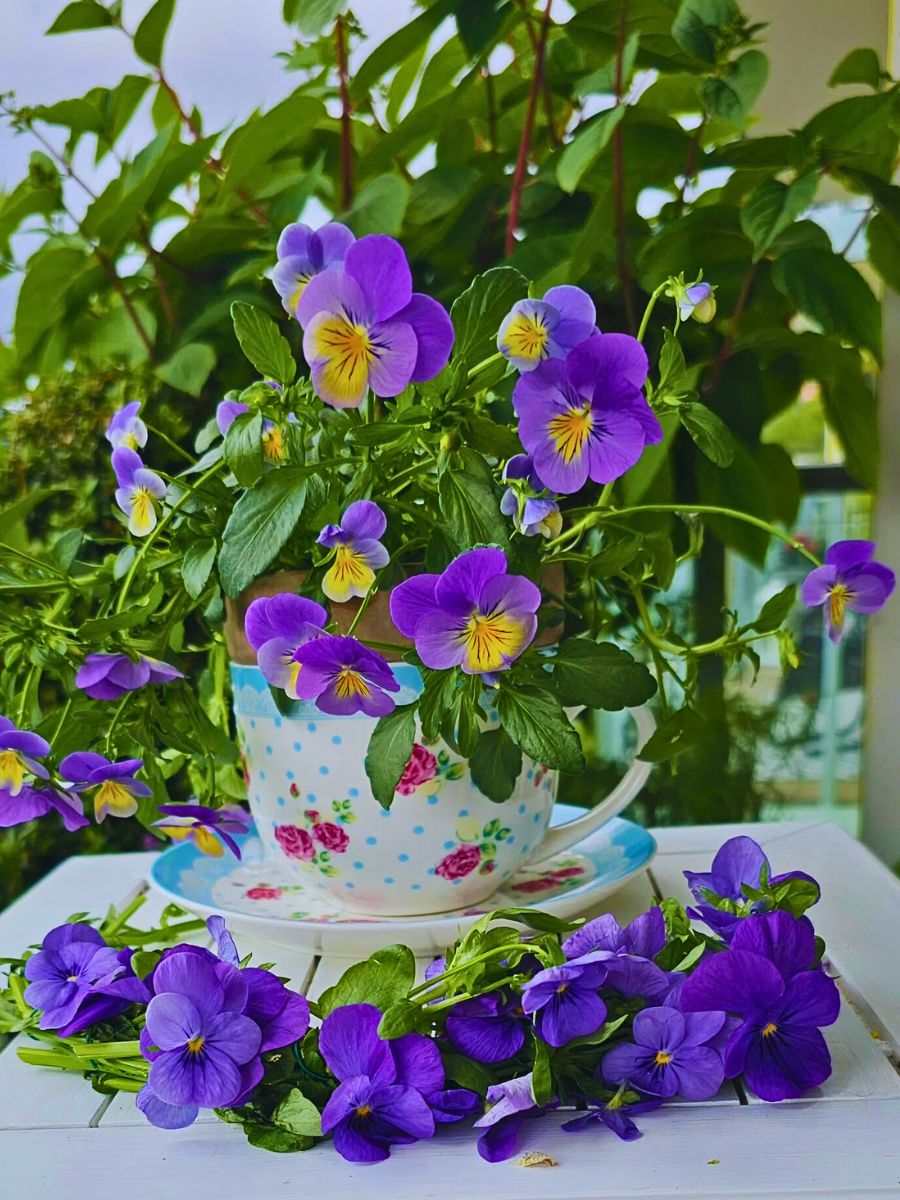
Pansies are not only bedding plants. The flat face photographs well, presses well and floats well, which is why they turn up in pressed flower art, botanical illustration and craft work. Cut with short stems they last about five to seven days in water, longer than most people expect, and they sit happily in a spring bouquet next to Ranunculus, tulips and sweet peas. A few faces floating in a shallow bowl is the simplest table decoration there is.
Deanna Balmer named her Toronto studio The Wild Pansy after the flower, and her reasoning applies to the whole genus. "Flowers have the ability to summon happiness, joy, comfort, nostalgia, and many other positive feelings," she told Thursd. "They can also completely transform a space." Pansies do that at the smallest scale a florist works with: one face in a teacup on a windowsill.
The whole flower is also edible, with a mild, faintly grassy sweetness. Candied pansies decorate cakes, fresh ones go into salads and cocktails, and because the meaning is thought and memory they suit a celebration cake or a memorial table rather well. Use only flowers grown without pesticides, rinse them, and use them the same day.
How to Grow Pansies
Pansies are cool-weather plants, and almost every growing problem comes from forgetting that. Pansy plants want cooler temperatures, and they reward the gardener who works with the calendar instead of against it. Get the season right and they are among the easiest flowers in the garden; get it wrong and they stretch, stop blooming and collapse in the first hot week. Here is the grower's version.
Planting Time: Spring and Fall Gardens
There are two windows, which is why pansies are the signature plant of spring and fall gardens. Plant in early spring, as soon as the soil can be worked and roughly four to six weeks before the last frost date, for flowers from spring into early summer. Or plant in late summer and fall, about six weeks before the first frost date, for a display that runs through fall, pauses in the hardest weeks of winter and comes back for spring. Fall gardens in mild regions, and anywhere pansies are winter hardy, get the longer show: in USDA zones 4 to 8 a fall planting will overwinter and bloom again, and in zones 8 and warmer pansies flower right through the winter. Pansy plants can survive light freezes and short snow cover without harm; it is the long, hard freeze that finishes them. In hot summer climates, treat them strictly as a fall, winter and spring plant.
Sun, Soil and Spacing
Pansies want full sun to partial sun, at least four to six hours a day, with afternoon shade in warm regions. The soil should be rich, moist and well draining, rich in organic matter, with plenty of organic matter dug in; a layer of mulch keeps the roots cool and the soil evenly damp. Space plants 15 to 30 centimeters (6 to 12 inches) apart in beds and borders, closer for compact cultivars, so they knit into a solid carpet of color. Their flowers attract butterflies and other early pollinators, and the plants make a good ground cover at the front of a border and pair naturally with spring bulbs pushing up through them, with sweet alyssum at their feet, the classic edging partner, and with the ornamental kale and cabbages of the fall garden.
Containers and Hanging Baskets
Pansies are the classic container plant for the cool seasons, and the most colorful flowers you can put in a pot in October, in window boxes, pots by the door and hanging baskets. Use a quality potting mix, give containers full sun, and remember that pots dry out and freeze faster than garden soil: water more often, and move baskets somewhere sheltered in a hard freeze. Trailing series are bred for baskets and will cover the sides of one in a few weeks. For a small pot, three plants; for a 30-centimeter (12-inch) basket, five to seven.
Watering and Feeding
Water pansies thoroughly about once a week, more in containers and in warm spells, and let the top of the soil dry slightly between waterings; soggy roots are the one thing they will not tolerate. Feed every two weeks with a balanced liquid fertilizer during the blooming period to keep the flowers coming. Deadhead faded flowers by pinching them off at the base of the stem: a pansy that is allowed to set seed stops blooming, and one that is deadheaded regularly produces more flowers for months.
Growing Pansies From Seed
Pansy seeds are slow, which is why most gardeners and every florist buy plugs or finished plants instead. Seeds of the big series are sold as pelleted seeds for the plug trays commercial growers use, and packets of the same seeds reach garden centers a season later. If you do sow, start 10 to 12 weeks before planting out. Pansy seeds germinate in 10 to 20 days at 18 to 21 degrees Celsius (65 to 70 degrees Fahrenheit), and they need darkness to germinate, so cover the seed lightly and keep the tray out of direct light until the seedlings show. Grow the seedlings on cool, around 13 to 15 degrees Celsius (55 to 60 degrees Fahrenheit), pinch once for bushy plants, and harden them off for a week before they go outside.
Pests and Problems
Healthy pansy plants in cool weather have few troubles, and the modern series resist most of what the old strains suffered from. Aphids cluster on new growth in spring and can be hosed off or treated with insecticidal soap. Slugs and snails chew ragged holes in the petals and leaves overnight, especially in damp borders; pick them off, trap them or use a wildlife-safe pellet. Leaf spot and gray mold show up on the foliage in crowded, wet plantings, so give plants air and water at the base rather than over the foliage. And the commonest problem of all is not a pest at all: pansies that turn leggy and stop flowering in early summer are simply telling you the heat has arrived. Pull them, and plant again in the fall.
So, back to the question, what do pansies mean? Thought, first and always; then remembrance, loyalty, free thinking and a love that keeps its voice down. Essentially, the pansy is a flower that makes you think and then refuses to take itself too seriously. That is a rare combination in a plant, and a rarer one in people.
Feature image by @the_little_end_cottage. Header image by HansLinde.
About the author: Brian Okinda is an editor at Thursd and a trained journalist specializing in agriculture, science, and sustainable floriculture. He covers the flower industry from the inside, from farms and expos to the people behind the flowers. Connect with Brian on LinkedIn.