Sago palm (Cycas revoluta) is a slow-growing cycad from southern Japan, not a palm. Every part is toxic to dogs, cats, and people, the seeds most of all, so keep it out of reach of pets and children and call a vet at once if an animal chews it.
The sago palm (Cycas revoluta) is not a palm. It is a cycad, from a plant line that goes back some 200 million years, and it is sold everywhere as a tough, slow houseplant and patio plant. It is also one of the most dangerous plants you can keep around a dog or a cat. Every part contains cycasin, a toxin that attacks the liver, and the seeds carry the most.
If you have pets, that is the first thing to know before you buy one.
Common Names
Sago palm
King sago palm
Japanese sago palm
Sago cycad
A Cycad, Not a Palm
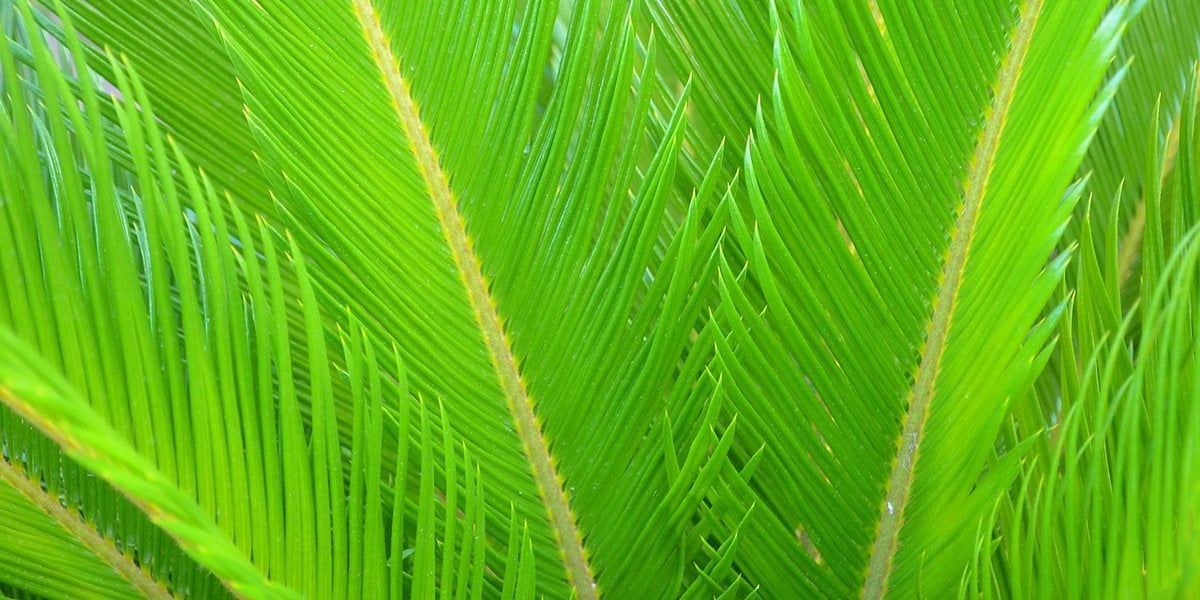
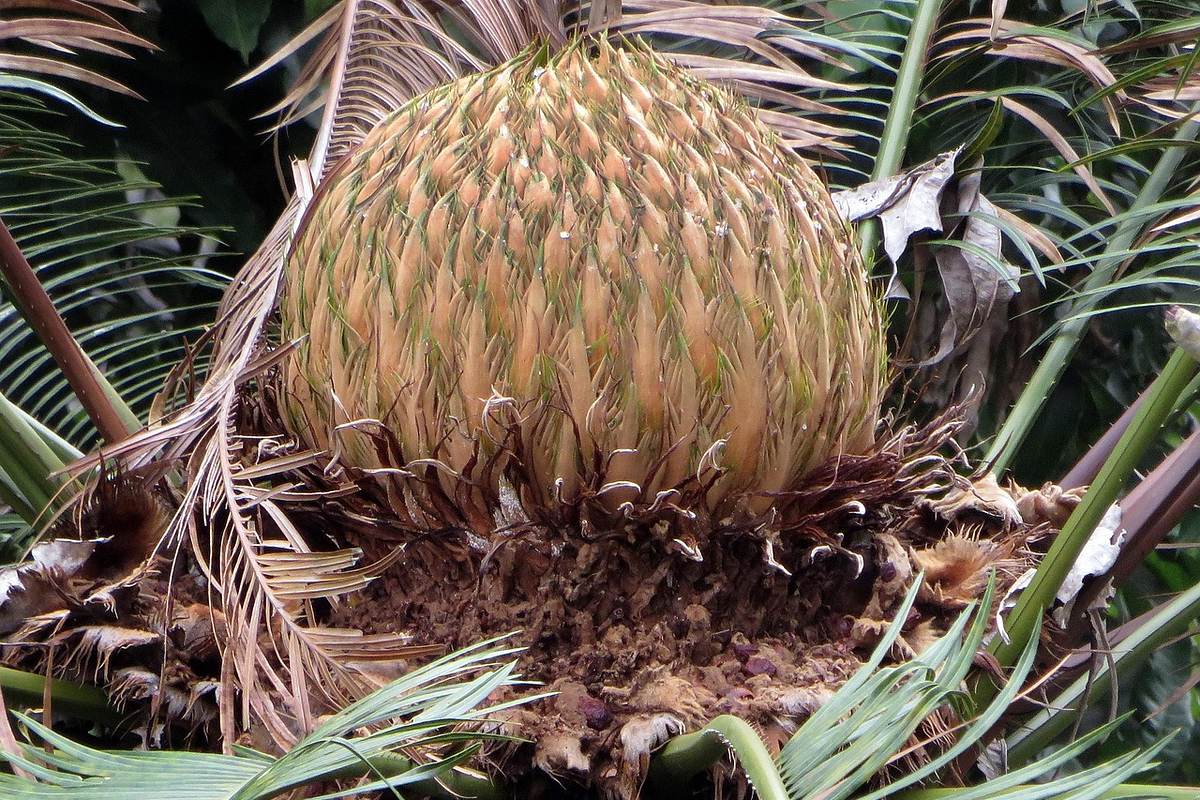
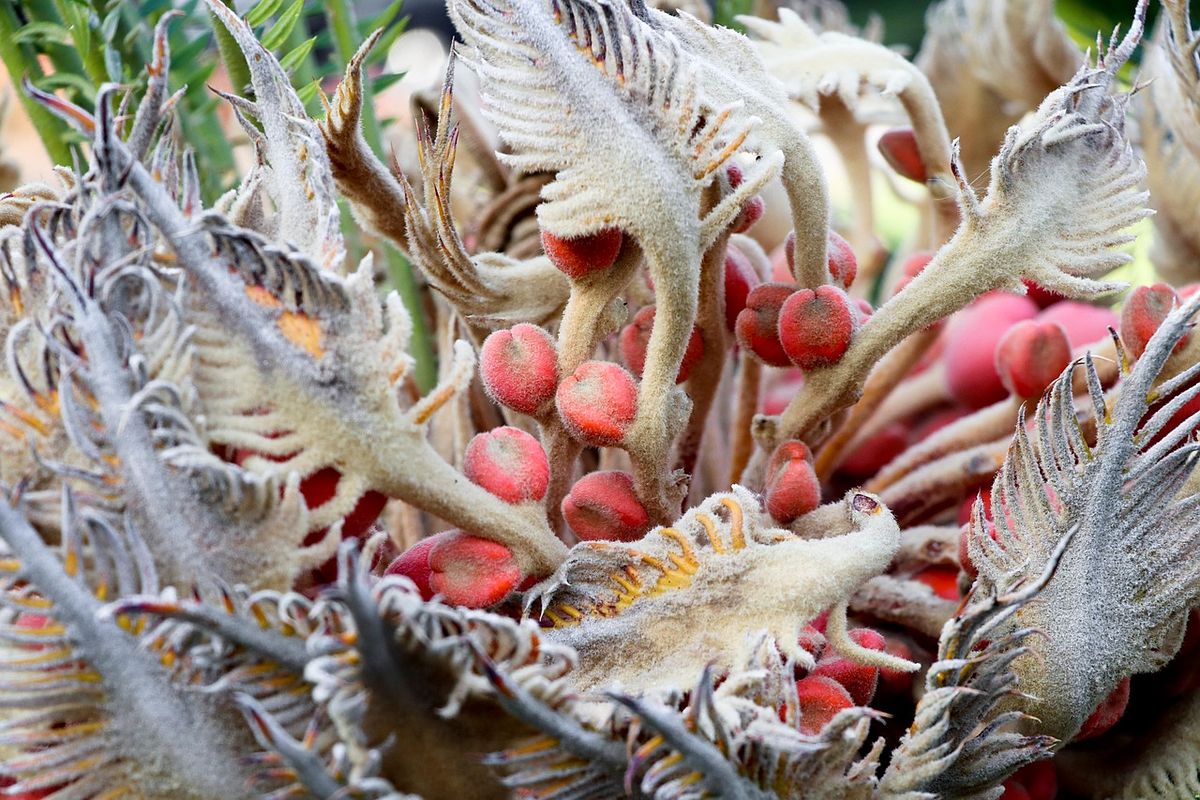
Sago palm grows wild on Kyushu and the Ryukyu Islands in southern Japan and in southern China. It looks like a small palm: a thick, shaggy trunk under a crown of stiff, dark green, feather-shaped leaves. But cycads have no flowers, and each plant is either male or female. A male plant raises an upright golden cone shaped like a pineapple. A female plant forms a round, felted head where the seeds develop, turning orange to red as they ripen.
It grows slowly. NC State Extension notes that it can take 50 years or more to reach 3 m (10 ft).
A female sago palm forms a round, felted head where the seeds develop. Photo by DEZALB on Pixabay.
Is Sago Palm Poisonous to Dogs and Cats?
Yes, and badly so. The ASPCA lists sago palm as toxic to dogs, cats, and horses. All parts of the plant contain cycasin, but the seeds have the highest concentration, according to NC State Extension, and Pet Poison Helpline names the seed, or nut, as the most dangerous part.
Signs listed by the ASPCA include vomiting, black and tarry stool, yellowing of the gums and eyes (jaundice), increased thirst, bloody diarrhea, bruising and bleeding, liver damage, liver failure, and death. People are at risk too: eating the plant can cause vomiting, diarrhea, seizures, and liver failure, with permanent internal damage or death possible, NC State Extension warns.
Do not keep a sago palm where a dog or cat can reach it, indoors or out.
If you already have one, pick up fallen seeds and cut off the seed head of a female plant before the seeds ripen. Wash your hands after handling them.
If a pet has chewed any part of the plant, call your vet or an animal poison control line at once, even if the animal seems fine. If a child has eaten any of it, call a poison control center.
Related cycads sold as coontie and cardboard palm (Zamia) are on the same ASPCA entry. Treat them the same way.
Ripening sago palm seeds on a female plant. The seeds hold the highest concentration of cycasin. Photo by shanghaistoneman on Pixabay.
How to Grow Sago Palm Safely
Outdoors, sago palm suits USDA zones 9 to 12. Anywhere colder, it lives in a pot and spends winter inside. Indoors, give it bright, indirect light, with four to six hours of filtered sun a day. Plant it in sandy, loamy soil that drains fast, slightly acidic to neutral. It tolerates drought once it is established. Too much water is what usually kills it, through root rot.
Watch for scale insects. Cycad aulacaspis scale, a white armored scale that reached Miami in 1996 and spread from there, can cause serious damage: leaves turn yellow, then brown, and a heavily infested plant can die. Mealybugs are the other common pest.