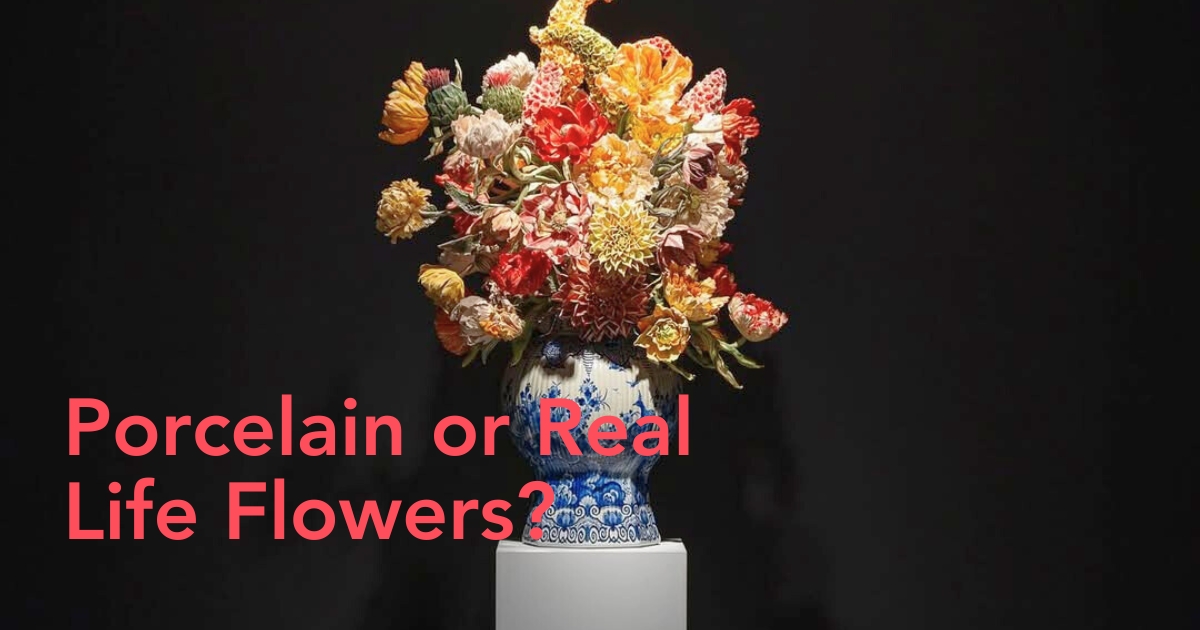
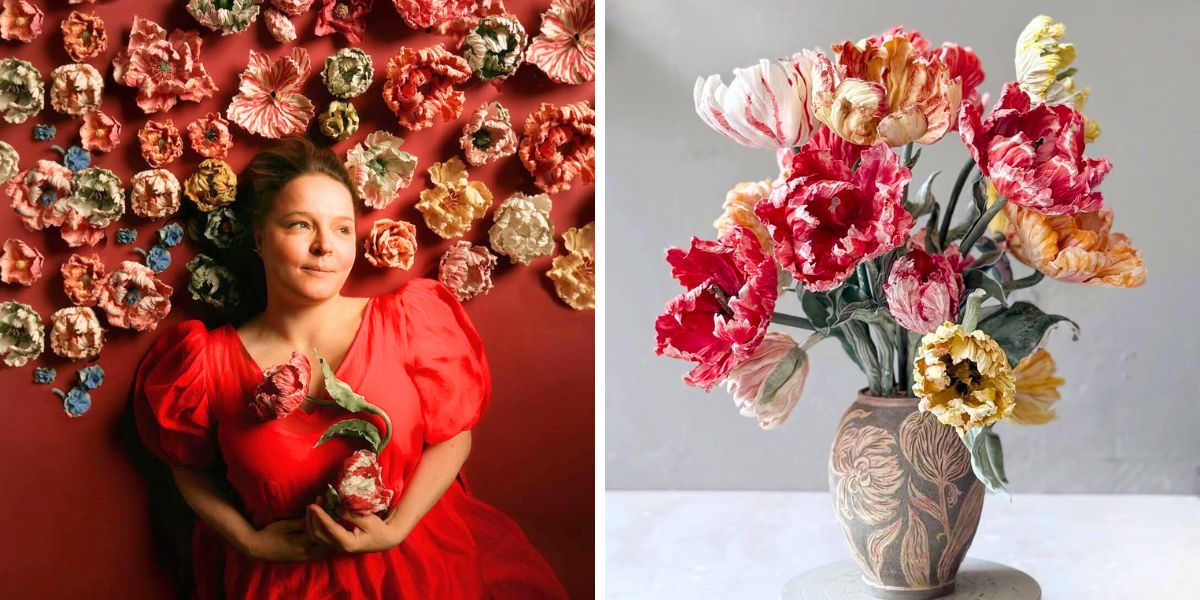
Anna Volkova's journey into porcelain and ceramics was established during her studies at the Rietveld Academy in the Netherlands. With limitless access to lab materials and encouraged to experiment, she struggled at first with the endless sea of possibilities for creativity. This came in sharp contrast with a more rigid style of teaching she had previously experienced in St. Petersburg, Russia. This period culminated in a ceramic explosion of creative output for Anna. And most importantly, she became the master of tulip porcelain art.
Life-Like Porcelain Flowers by Anna Volkova
In the process, she discovered and tried out various Chinese recipes, which led to her developing her very own porcelain recipe. This allows her more time to work on making petals longer and thinner. Inspired by Dutch Golden Age still lifes, her tulips and flowers are porcelain sculptures that capture the fragile elegance of flowers, as though plucked straight from an Ambrosius Bosschaert bouquet.
Anna working on a piece
About her work and what she loves most, she shares:
"The process of experimentation. When I am not concentrating on the result, I am like a child, sketching and trying things out. When an idea is formed, the moment is magical, pure creativity."
The Love for Porcelain Flowers
Her porcelain pieces pay homage to the hundreds of years that flowers have inspired many artists and designers. She finds flowers fascinating because of their diversity in form and color, ephemeral existence, and fragility. Because porcelain is clean, flexible, and translucent, she chose it in an attempt to capture their beauty. It greatly conveys the elegance of flowers and stands for both richness and purity.
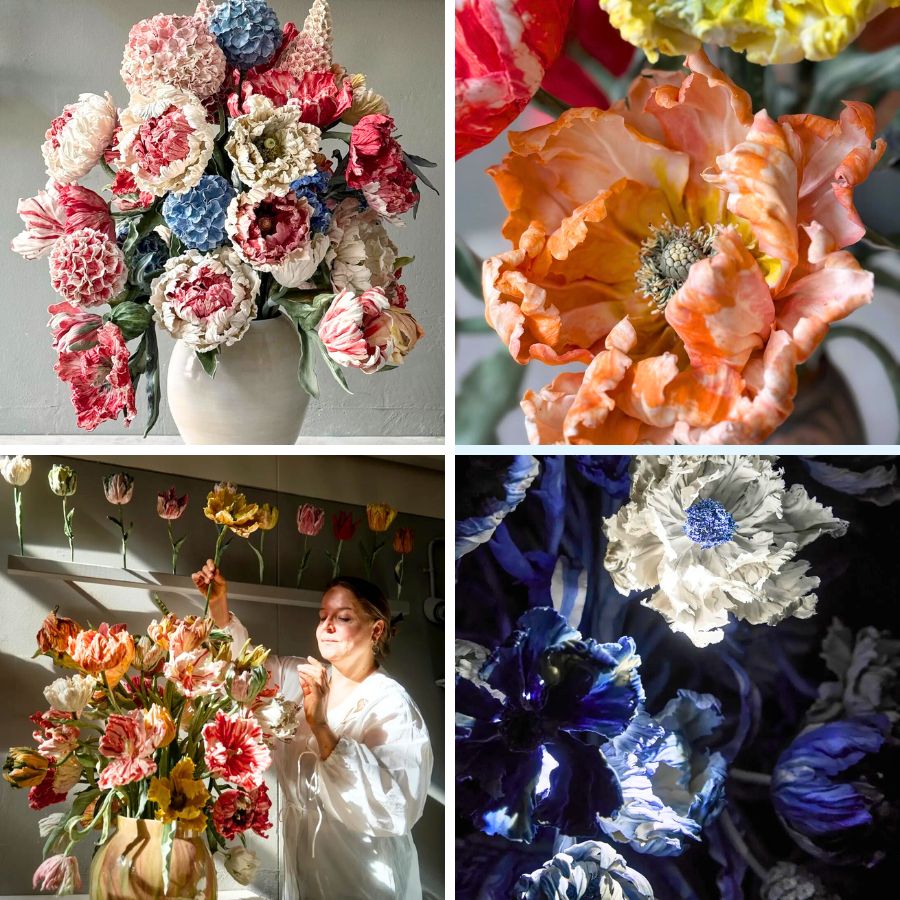
She created several methods based on traditional Chinese recipes and experimented with porcelain to create incredibly thin and translucent items. Every flower is crafted by hand and given a unique appearance after being fired at a high temperature. The flower resembles jewelry due to its delicate surface and curled, almost baroque appearance.
Anna doing a porcelain garden
Back to the Roots of the Artist
Anna's roots originate from St. Petersburg, the city with an immense cultural heritage that has greatly influenced the artist. Volkova's father played a major role in the development of her artistry. He was a known talented Russian documentary filmmaker, who taught at the State University of Culture and Arts, and later a photographer liaised with the world-famous Hermitage. He encouraged three-year-old Anna to make daily sketches, so she would practice drawing, composing, and painting.
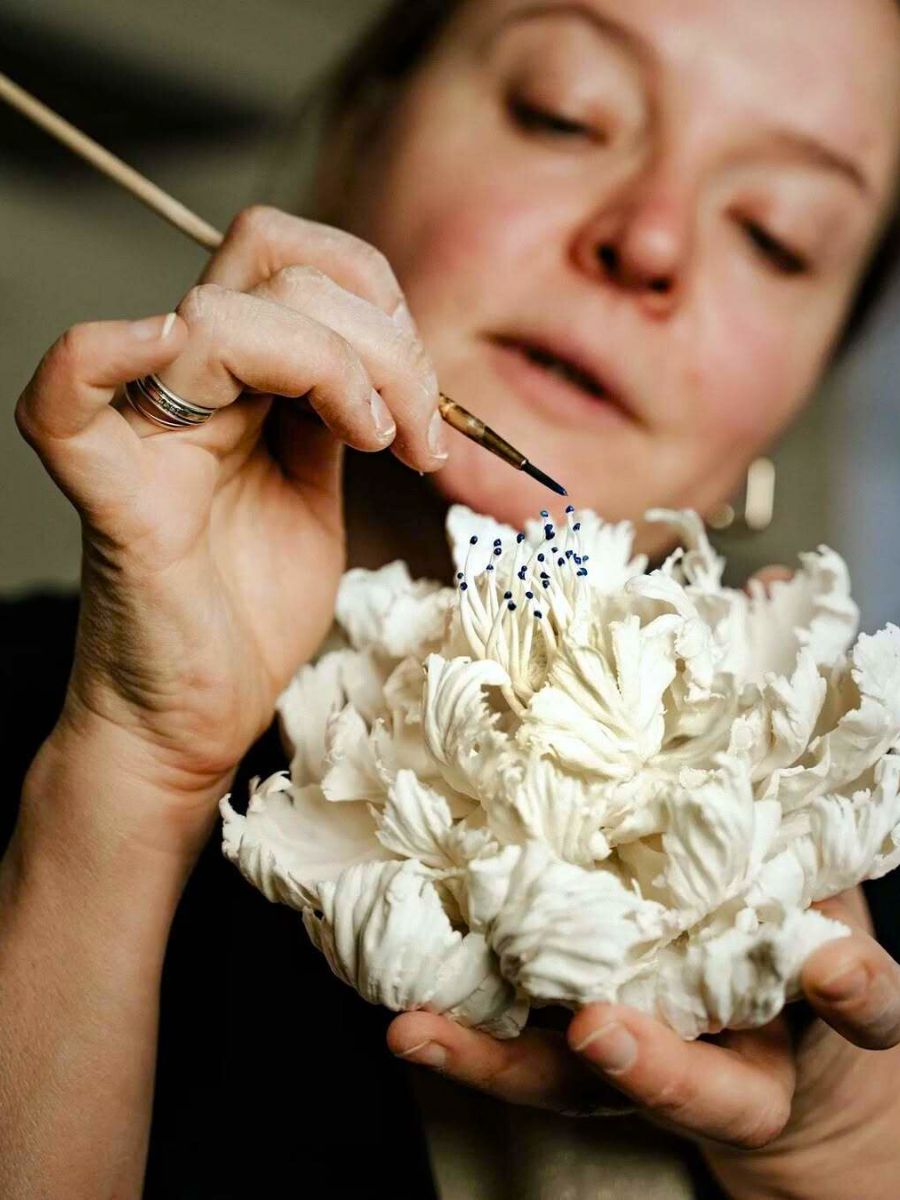
Anna obtained both a classical and modern art education, and the combination of the two approaches can be seen in her masterfully executed artworks. Volkova is mainly acknowledged for her porcelain and mosaic works, tiles, and window installations, which can be found in various museums, public spaces, and private collections.
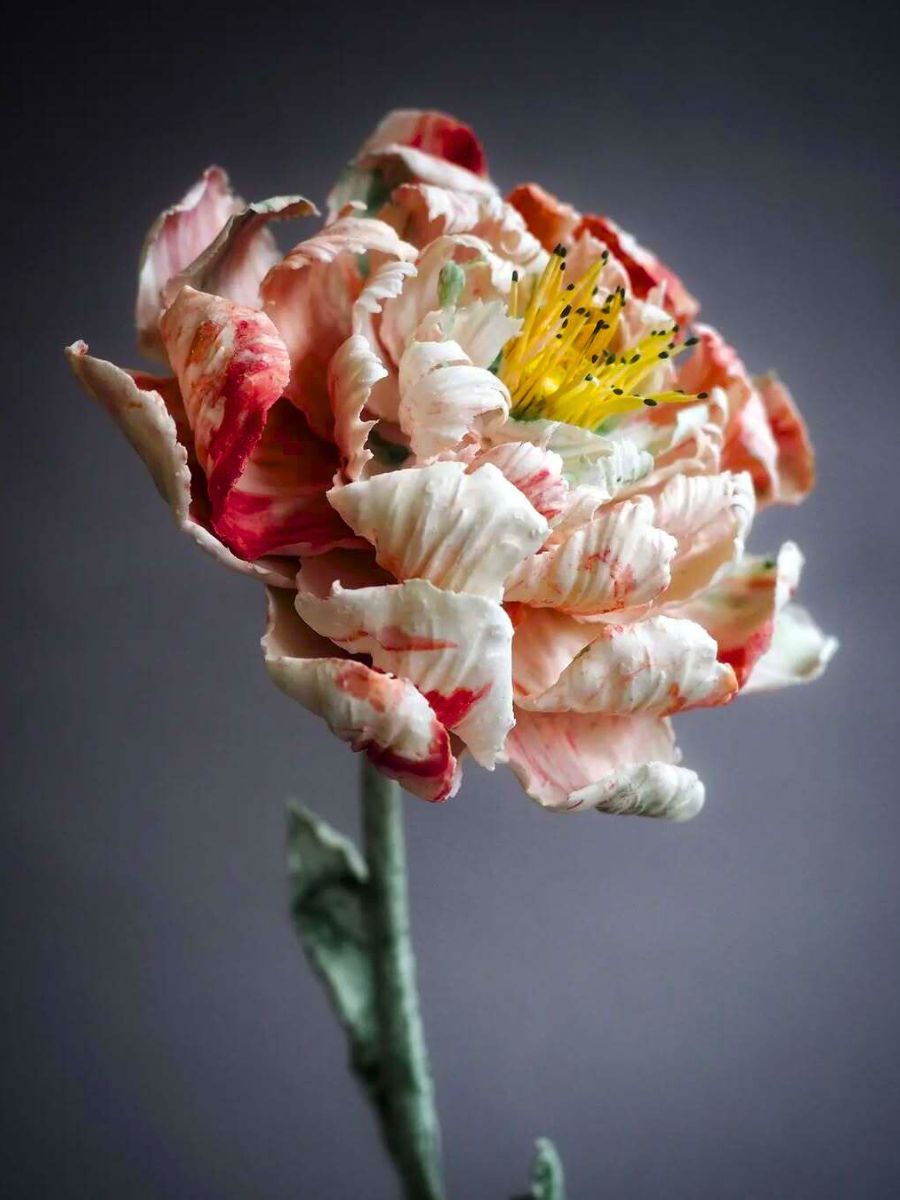
The artist has spent years studying and experimenting with different materials. She developed unique methods in porcelain techniques and polyurethane castings, which enable her to create extraordinary pieces of art. Each flower is hand-sculpted from tinted or white porcelain and fired at a high temperature. The non-glazed treatment allows for a gentle matte texture, giving the appearance of a real flower.
Curious to see more? Visit Anna's Instagram account!
Photos and videos by: @porcelain.tulip.