BLOGS

Hourglass of Bloom, a Floral Dialogue Between History and the Future

A floral dialogue between history and the future, created at Zamek Ksiaz during yet another edition of the Festiwal Kwiatów i Sztuki 'Odyseja Czasu'.

By: ZBIGNIEW DZIWULSKI | 20-05-2026 | 3 min read
Voices of the Industry Floral Art Floral Designs
Hourglass of Bloom

Within the monumental interiors of Maximilian Hall, a floral installation was created that is not merely a decoration, but a story about time, memory, and transience. ‘Hourglass of Bloom’ is a large-scale installation inspired by the idea of historical continuity and the relationship between the past, present, and future.

The symbol of the hourglass has been transformed into a monumental floral form, combining the delicacy of plants with the strength of the castle’s architecture. It is a project that guides the viewer through emotions written in time.

A Focal Point Around Which Visitors Move

For centuries, the history of Zamek Ksiaz has been preserved in architectural details, ornaments, and the spaces of its interiors. The installation was designed not to compete with this heritage, but to become its natural extension.
 

Zbigniew Dziwulski’s Hourglass of Bloom, a Floral Dialogue Between History and the Future, Created at Zamek Książ During an Edition of the Festiwal Kwiatów I Sztuki Odyseja Czasu.
The 'Hourglass of Bloom'


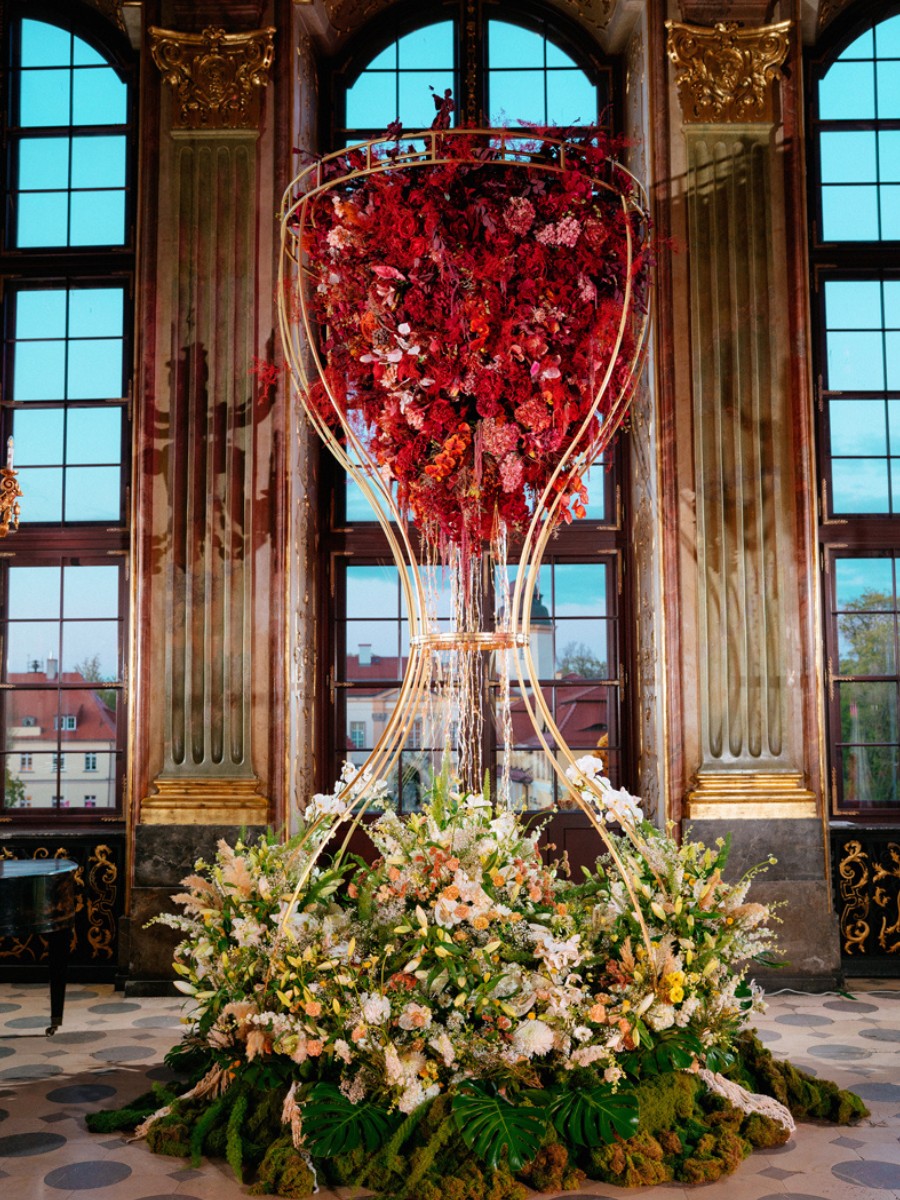
Placed centrally, the hourglass becomes the axis of the hall; a focal point around which visitors move, observing shifting perspectives and changing light. The transparent metal structure, approximately four and a half meters high, references palace elegance and classical symmetry. The upper chamber represents the weight of the past – dense, rich, and filled with emotion.
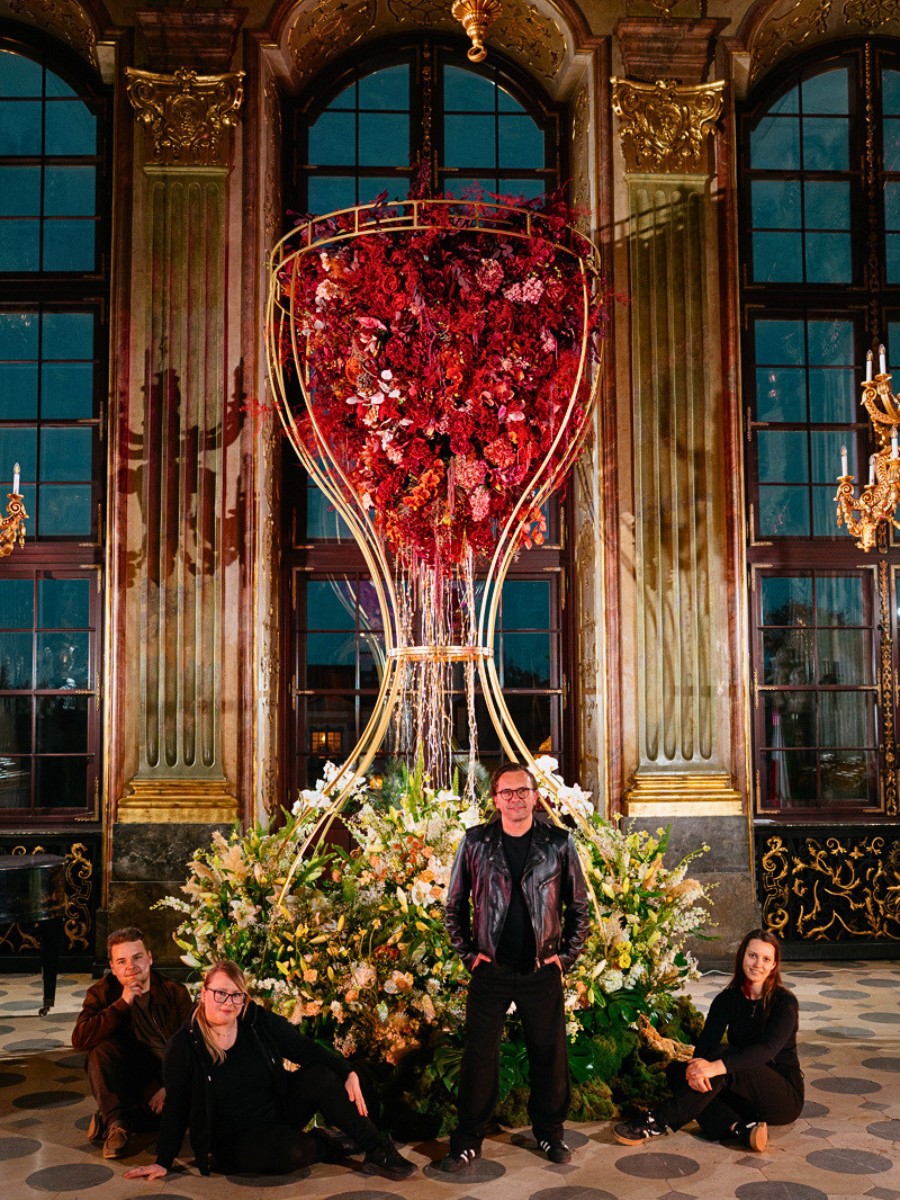
 

Zbigniew Dziwulski’s Hourglass of Bloom, a Floral Dialogue Between History and the Future, Created at Zamek Książ During an Edition of the Festiwal Kwiatów I Sztuki Odyseja Czasu.


A palette of burgundy, deep red, sepia, and beige creates an atmosphere of memory and historical opulence. Dried and preserved plants form a structure resembling an archive of time. The composition is heavy, almost painterly. It speaks of history, remembrance, transience, and the traces left behind by generations.
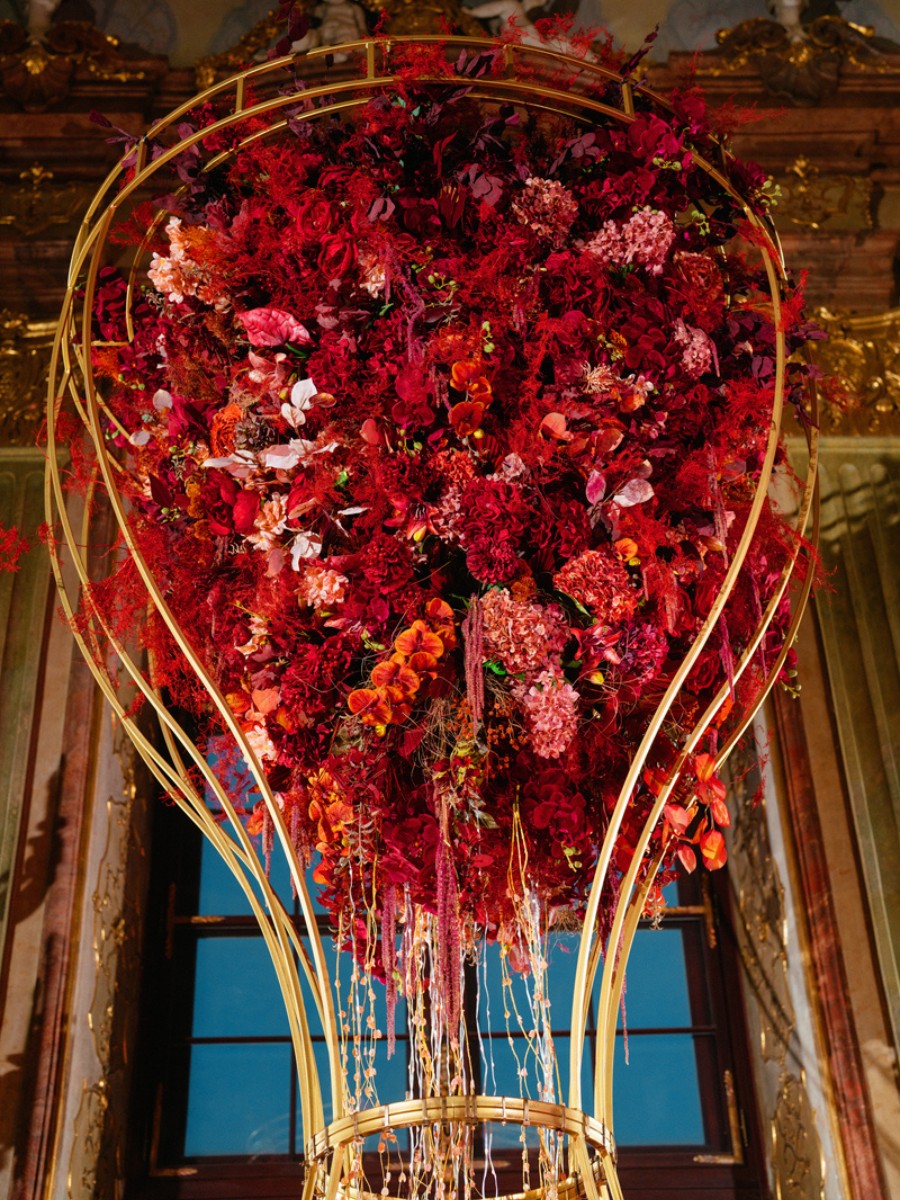
 

Zbigniew Dziwulski’s Hourglass of Bloom, a Floral Dialogue Between History and the Future, Created at Zamek Książ During an Edition of the Festiwal Kwiatów I Sztuki Odyseja Czasu.


Intersection of Floral Art, Spatial Installation, Scenography, and Emotional Narrative

The narrow neck of the hourglass symbolizes the present – the briefest and most fragile moment. Delicate fiber optics and subtle LED lighting illuminate the central part of the installation, creating the illusion of suspended time. Individual petals and tiny fragments of dried botanicals appear to ‘fall’ on nearly invisible threads, building a sense of movement. This section of the project remains intentionally quiet and minimalist — like a held breath between what has been and what is yet to come.
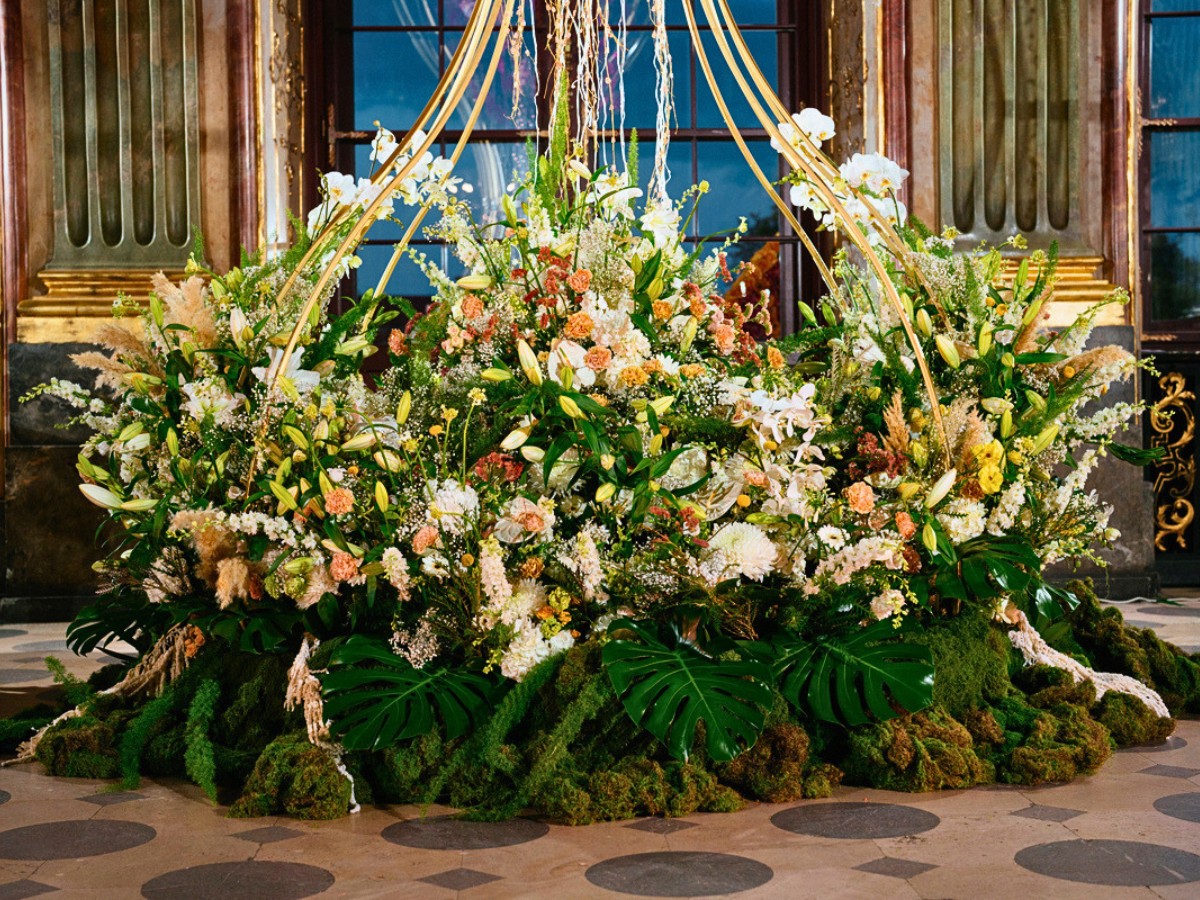
 

Zbigniew Dziwulski’s Hourglass of Bloom, a Floral Dialogue Between History and the Future, Created at Zamek Książ During an Edition of the Festiwal Kwiatów I Sztuki Odyseja Czasu.


The lower chamber becomes a symbol of the future – light, open, and filled with hope. The color palette transitions into whites, écru, soft greens, and pastel accents. Orchids, Lisianthus, Chrysanthemums, light Anthuriums, ornamental grasses, and Monstera create a more spacious and breathable composition. Weight gives way to lightness, density to openness. The future is not presented here as certainty, but as possibility.
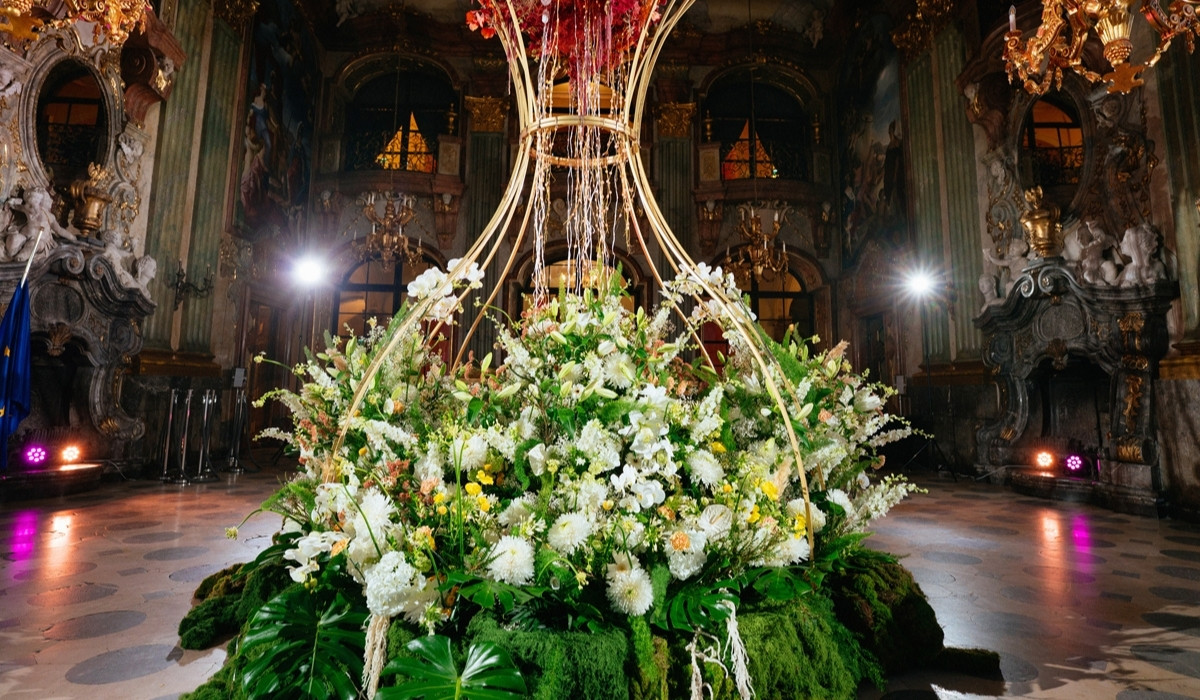
 

Zbigniew Dziwulski’s Hourglass of Bloom, a Floral Dialogue Between History and the Future, Created at Zamek Książ During an Edition of the Festiwal Kwiatów I Sztuki Odyseja Czasu.


'Hourglass of Bloom’ exists at the intersection of floral art, spatial installation, scenography, and emotional narrative. Every element carries meaning: symmetry references palace architecture, dried material symbolizes preserved memory, fresh flowers speak of impermanence, and the transparent form emphasizes the invisibility of time.
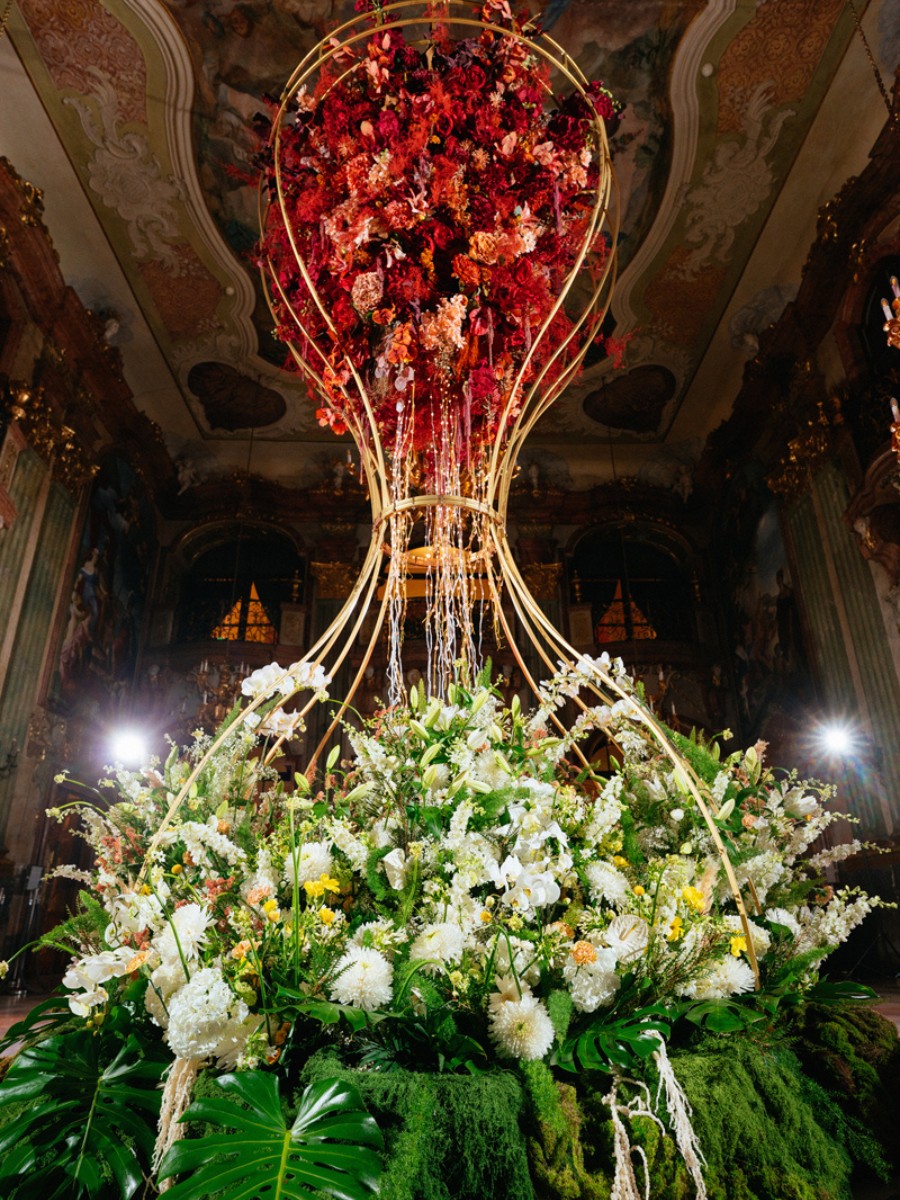
 

Zbigniew Dziwulski’s Hourglass of Bloom, a Floral Dialogue Between History and the Future, Created at Zamek Książ During an Edition of the Festiwal Kwiatów I Sztuki Odyseja Czasu.


This Is Floristry Telling a Story

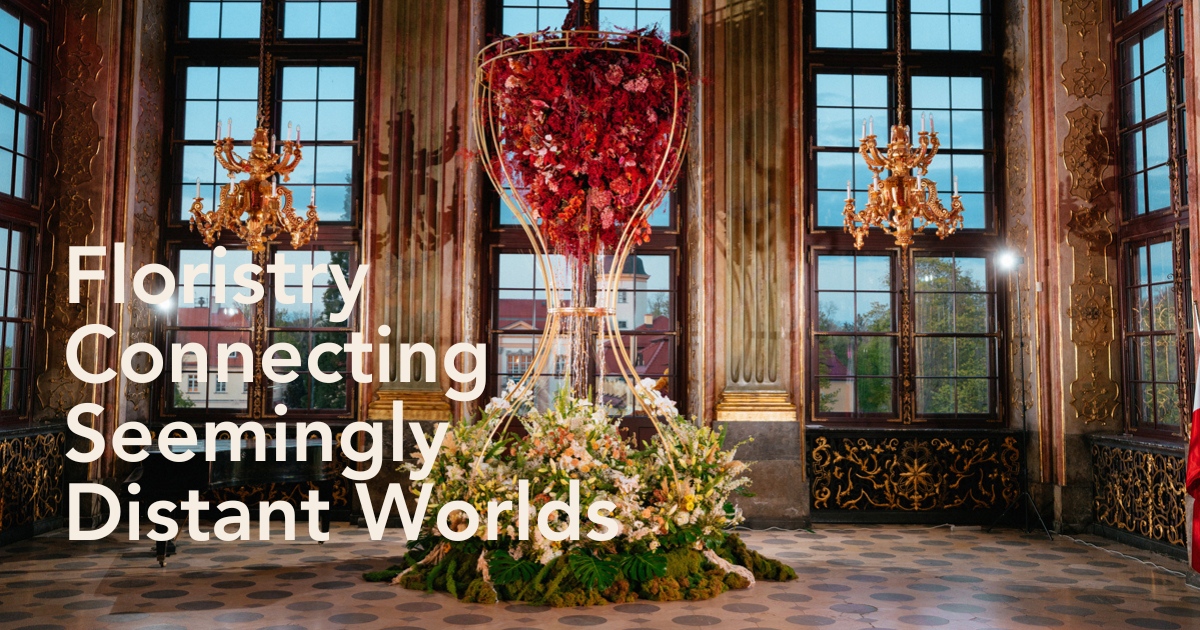
One of the project’s central ideas is to show that floristry can connect seemingly distant worlds: history and modernity, architecture and nature, permanence and transience, silence and movement. Flowers become carriers of emotion and memory. The installation was designed not only to be observed, but above all to be experienced through light, space, and shifting perspectives as visitors move around the object.
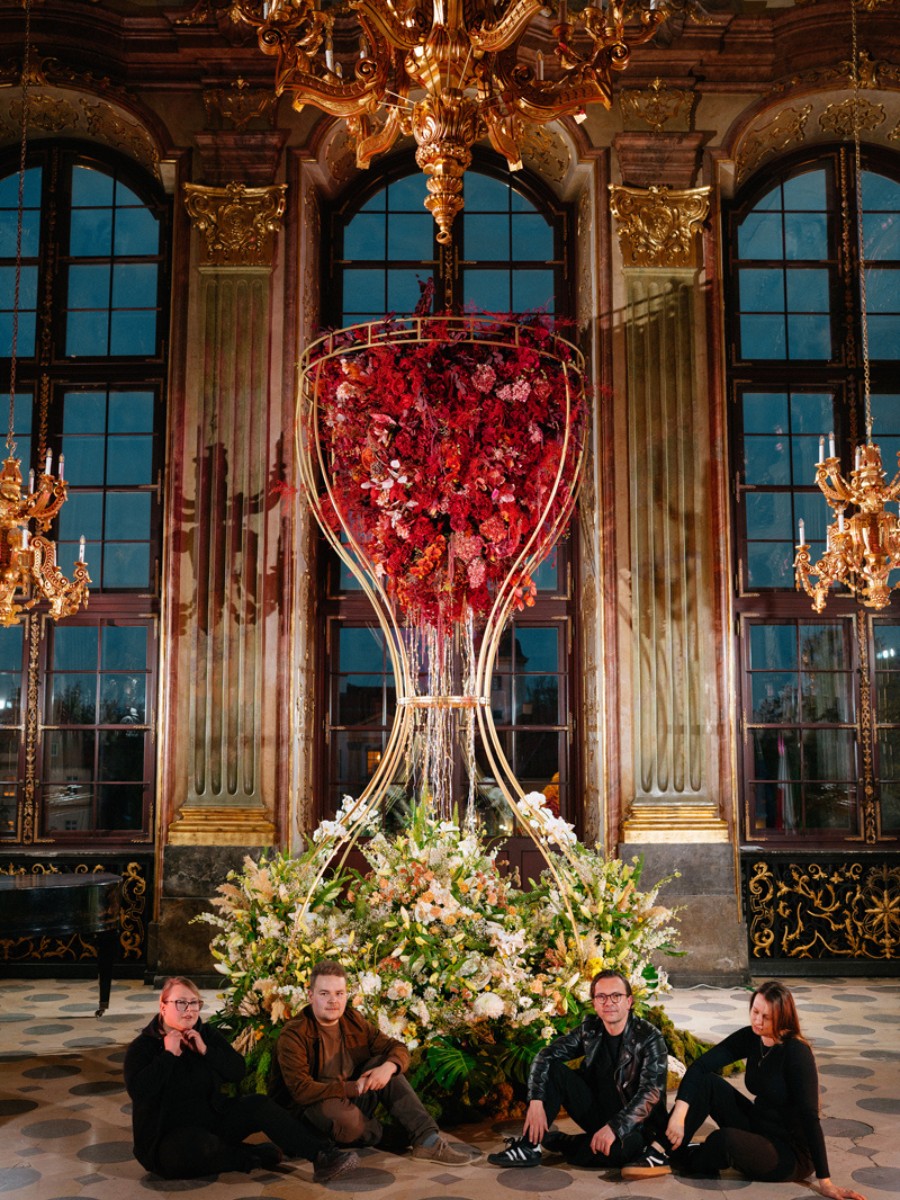
 

Zbigniew Dziwulski’s Hourglass of Bloom, a Floral Dialogue Between History and the Future


Time does not disappear – it transforms. And floristry, like the castle itself, connects what once was with what is yet to come. ‘Hourglass of Bloom’ demonstrates that contemporary floristry can move beyond decoration and become a fully immersive artistic experience – one that remains in memory long after the flowers themselves have faded.
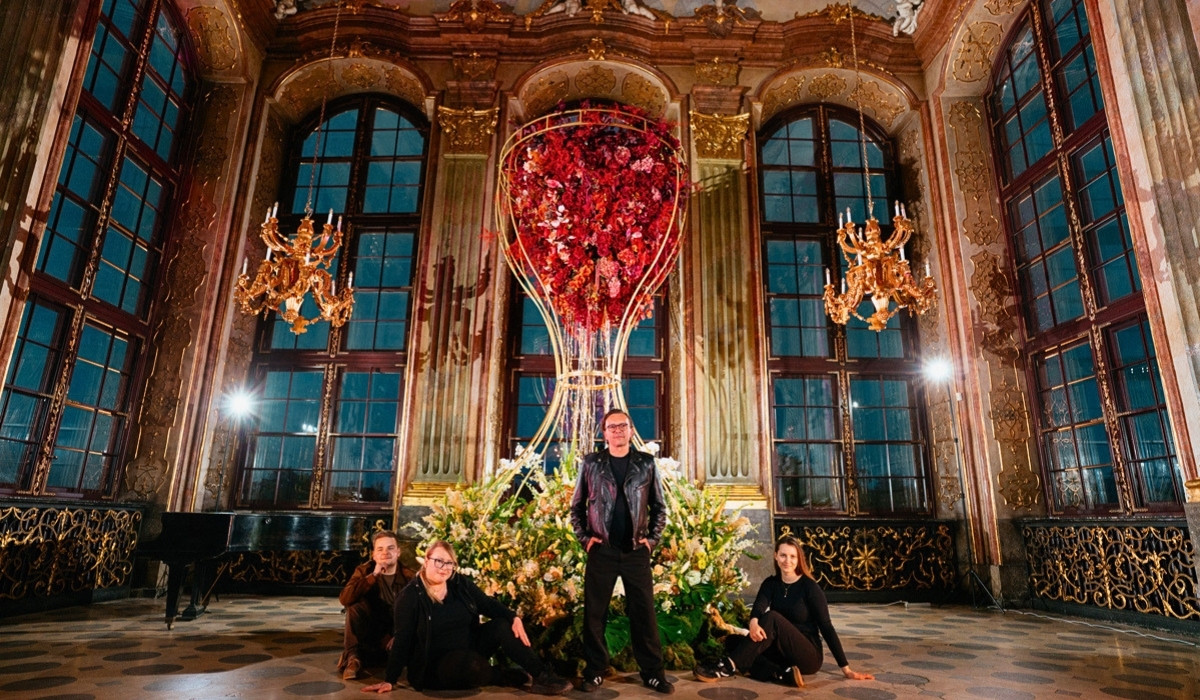
 

Zbigniew Dziwulski’s Hourglass of Bloom, a Floral Dialogue Between History and the Future


Second Place in Public Vote

The Hourglass took second place in the audience and tourist vote this year. According to official data, approximately 40,000 visitors attended the festival over the course of four days.


Photography: Marcin Chrusciel. Special thanks to: Zamek Ksiaz and Stowarzyszenie Florystów Polskich for their support and trust, and to the wonderful assistants: Katarzyna Małkowska, Karolina Rumińska, and Marcin Dlugajczyk – without you, this installation would not have been possible. Supported by Partners: Novbis, Heemskerk, Canea, Rekpol Group.
FAQ

What is 'Hourglass of Bloom' and where was it displayed?

'Hourglass of Bloom' is a large-scale floral installation created for the Festiwal Kwiatów i Sztuki 'Odyseja Czasu' (Festival of Flowers and Art 'Odyssey of Time') at Zamek Ksiaz (Ksiaz Castle). It was placed within the monumental Maximilian Hall, where it served as both an artistic centerpiece and a narrative experience about time, memory, and transience.

What does the symbolism of the hourglass represent in this installation?

Each section of the hourglass carries distinct meaning: the upper chamber represents the past through dense, dark, dried botanicals; the narrow neck symbolizes the present as a fragile, fleeting moment illuminated by fiber optics; and the lower chamber represents the future through lighter, fresher, more open floral arrangements in whites, greens, and pastels.

How large is the installation and what materials were used?

The transparent metal structure stands approximately four and a half meters tall. It incorporates both dried and preserved plants in the upper section, as well as fresh flowers including orchids, Lisianthus, Chrysanthemums, Anthuriums, ornamental grasses, and Monstera in the lower section, complemented by subtle fiber optic and LED lighting.

How did the public respond to the installation?

It was very well received. 'Hourglass of Bloom' earned second place in the public and tourist vote at the festival. The event itself drew around 40,000 visitors over four days.

How does 'Hourglass of Bloom' go beyond traditional floristry?

Rather than functioning as simple decoration, the installation positions floristry as a fully immersive artistic experience, one that bridges floral art, spatial installation, scenography, and emotional storytelling. Every element is intentional: symmetry echoes the castle's palace architecture, dried materials evoke preserved memory, fresh flowers speak to impermanence, and the transparent form reflects the invisibility of time itself. The goal was not just to be observed, but to be felt and experienced through light, space, and movement.

Zbigniew Dziwulski profile picture
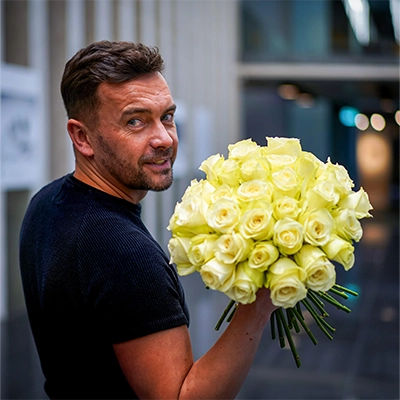
Zbigniew Dziwulski

Florist Zbigniew Dziwulski is a Floral Designer and the main representative of 'Kwiaciarnia Grasz W Zielone?', a flower shop in Lublin, Poland: "For the love of flowers, nothing happens without a reason. The most important thing in life is to have a purpose and passion. And follow these in your life."

YOU MAY ALSO LIKE

Thank you flowers
What Flowers Are Best for Saying Thank You?
Collectif de la Fleur Française (CFF) Is a French Non-Profit Association Dedicated to the Promotion and Consumption of Locally Grown, Seasonal Cut Flowers in France.
What Is Collectif de la Fleur Française, and All About It?
Hamish  Powell
Florist Special With Hamish Powell
Interviews Floral Designs
May 18 | 4 min read
Do You Know How and Why Flowers Are Important in Japanese Culture? Here’s Why
Here’s Why Flowers Are Important in Japanese Culture
The Role of Flowers in Honoring Fallen Heroes on Memorial Day
Memorial Day and the Role of Flowers in Honoring the Fallen Heroes
Special Days Flowers
May 18 | 9 min read
Study by Floral Marketing Fund (FMF), Calflowers, and FTD Conducted at the APPAH Lab, Colorado State University, on What Gen Z Seek in Flowers
New Study Puts Into Context What Gen Z Wants From Flowers
four phones with a thursd page open

Can't get enough?

Subscribe to the newsletter, and get bedazzled with awesome flower & plant updates

Sign up