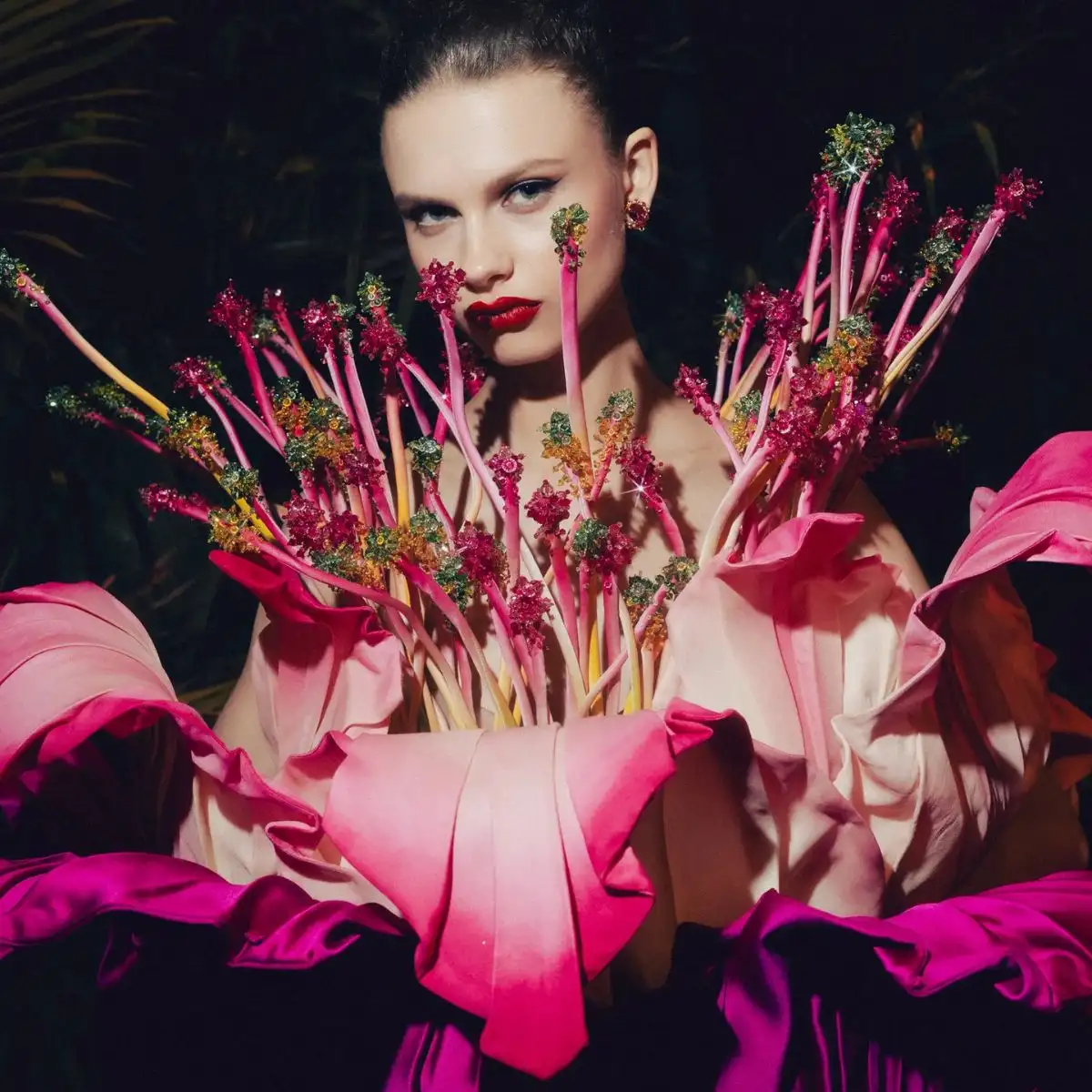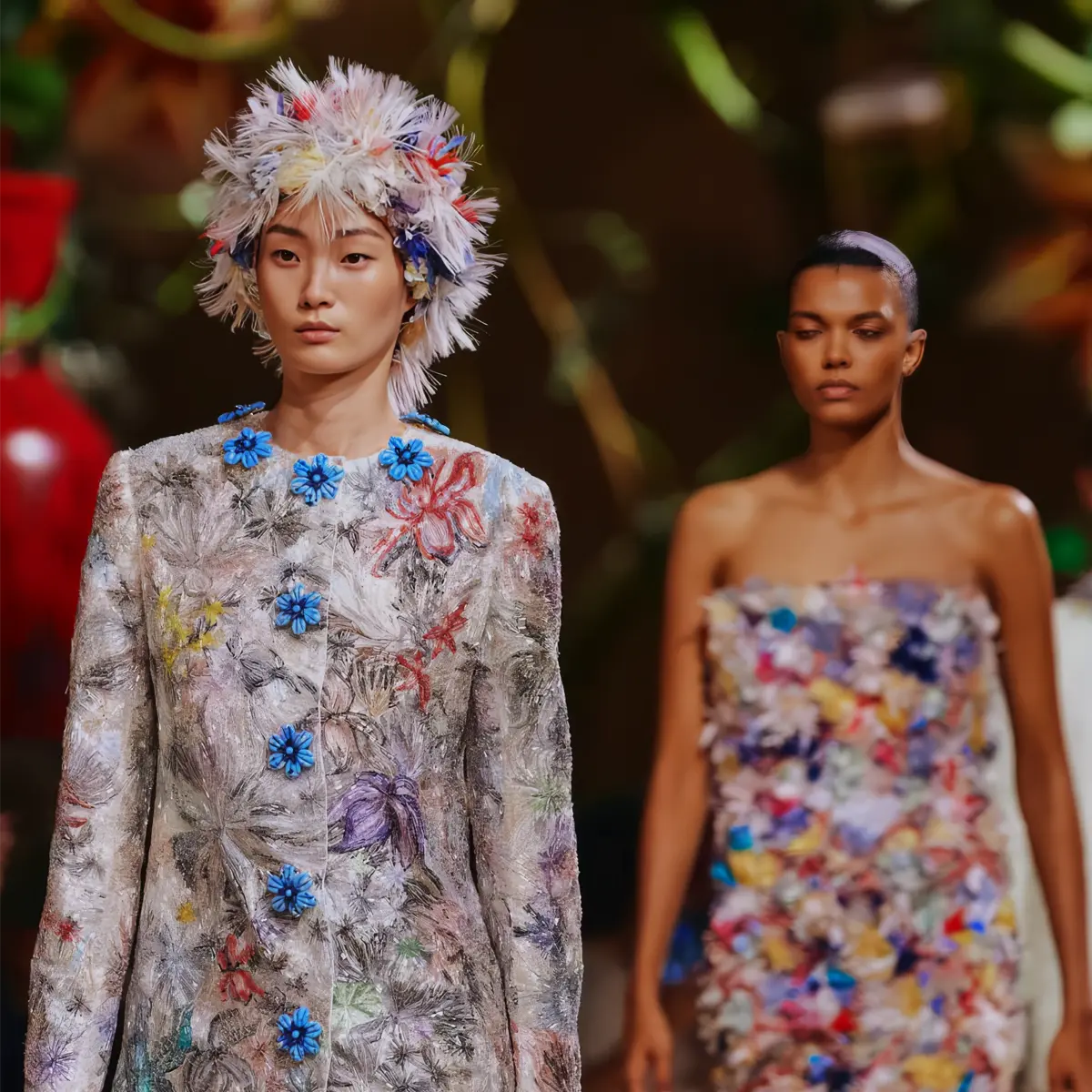
Daniel Roseberry's latest haute couture collection for Schiaparelli begins with architecture. After visiting Antoni Gaudí's buildings in Barcelona, the creative director found himself questioning the creative formula that had defined his previous season. Inspired by Gaudí's sculptural approach to nature – where flowers, leaves, and organic forms are carved into facades, columns, and decorative details – the resulting Fall/Winter 2026-27 collection, 'The Call of the Void', translates these architectural references into couture.
Gaudí’s Architecture Shapes Schiaparelli’s Latest Couture
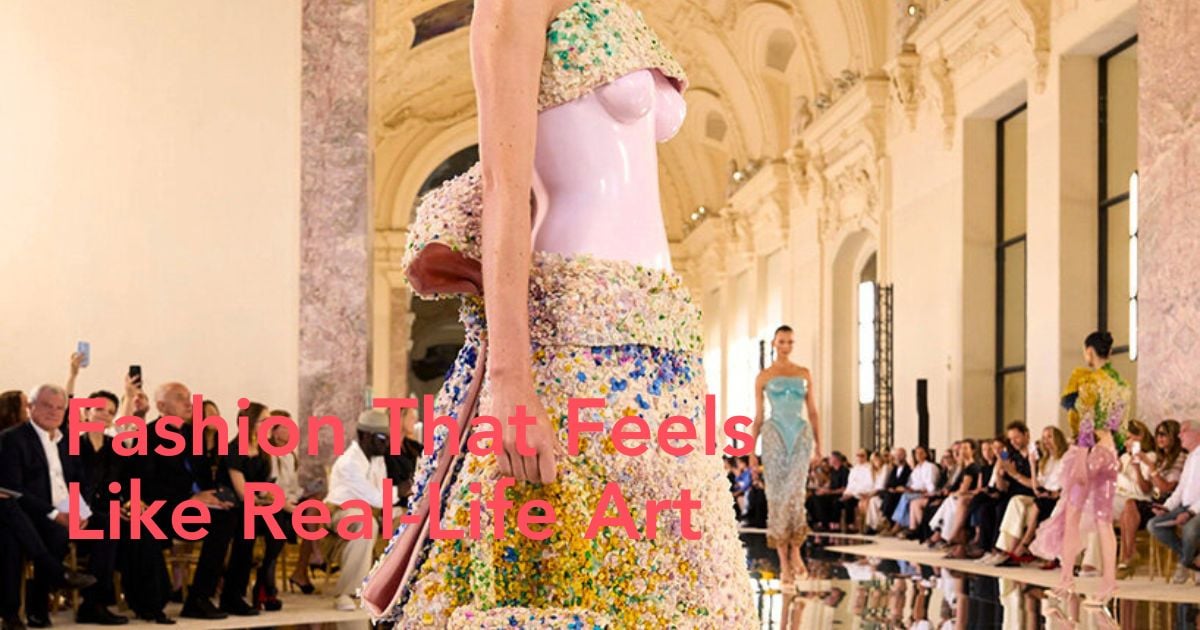
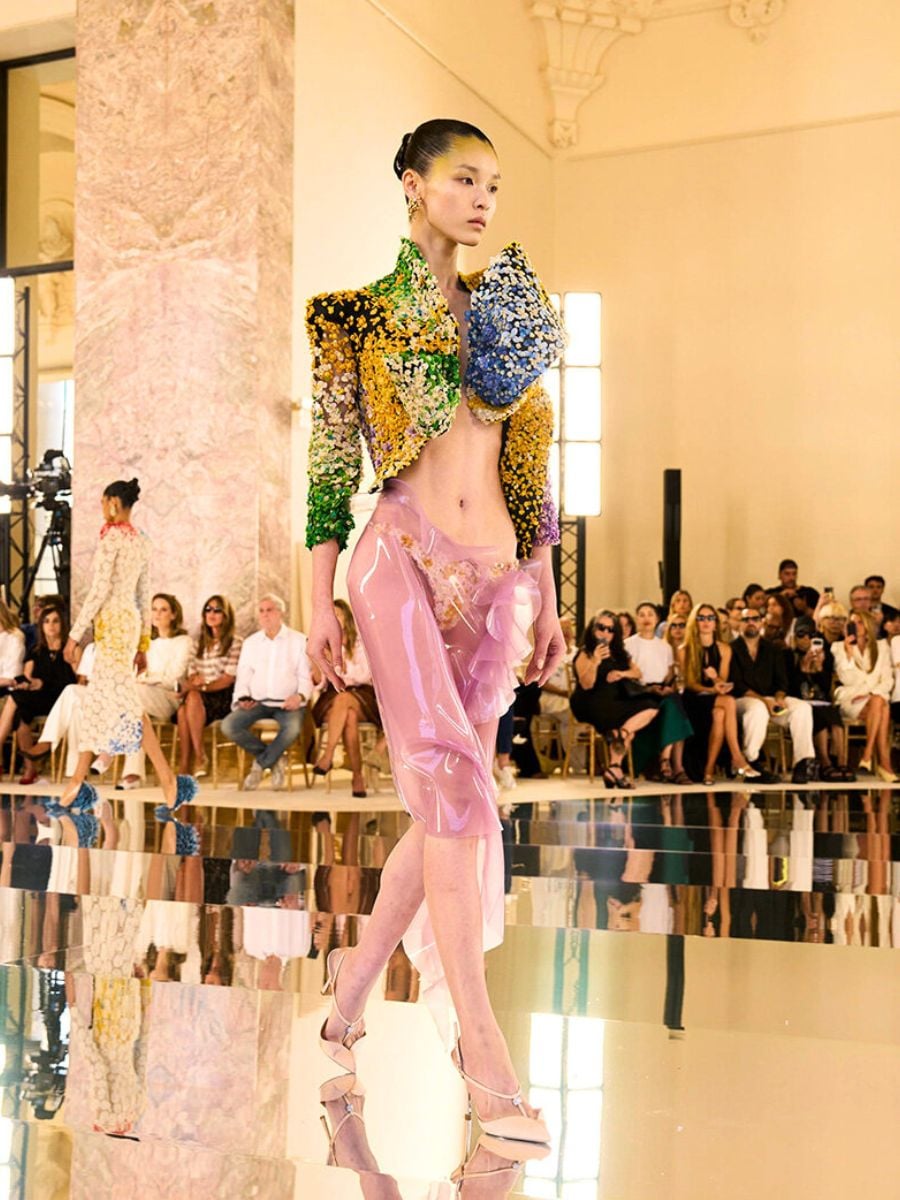
In Schiaparelli's latest runway, traditional silks and satins give way to silicone, latex, and handmade surfaces, echoing Gaudí's experimentation with material, structure, and the botanical world through fashion. The influence is most apparent in the collection’s sculptural silhouettes and richly textured surfaces. A pale pink silicone bustier dress is paired with an embroidered skirt composed of thousands of flowers, fish scales, ribbons, and pearls, creating a fragmented surface that recalls the broken ceramic mosaics, or trencadís, found throughout Gaudí’s buildings.
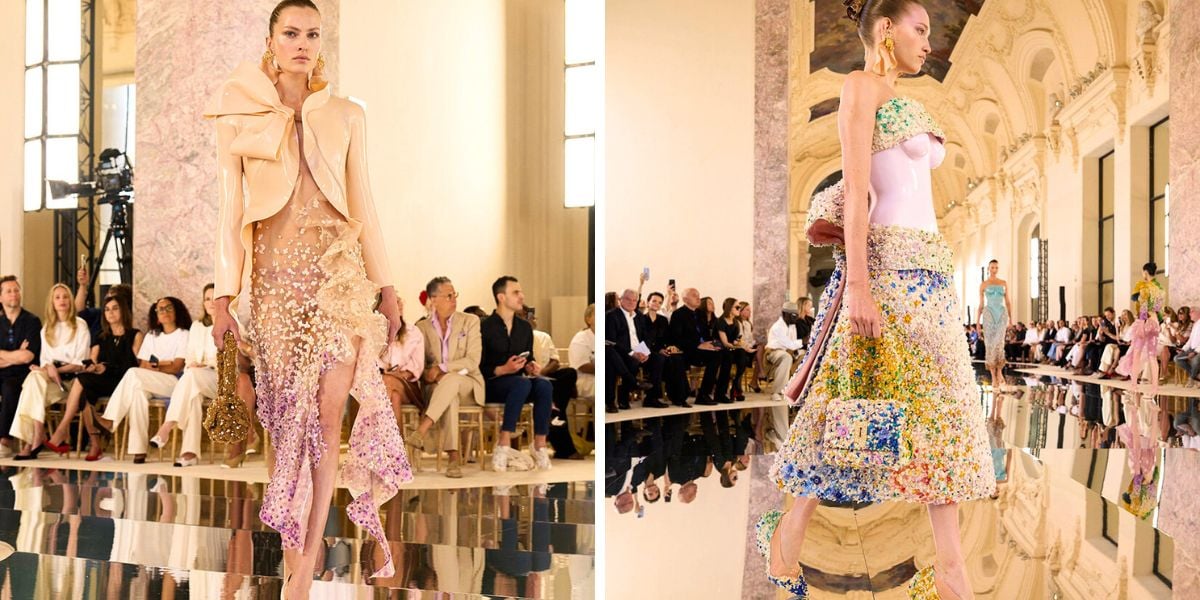
Embroidered jackets are reduced to sculptural elements that frame the body, while exaggerated shoulders and flowing silicone forms echo the architect’s preference for fluid, organic geometries over rigid symmetry. Architecture, flowers, and fashion woven together into luxury pieces.
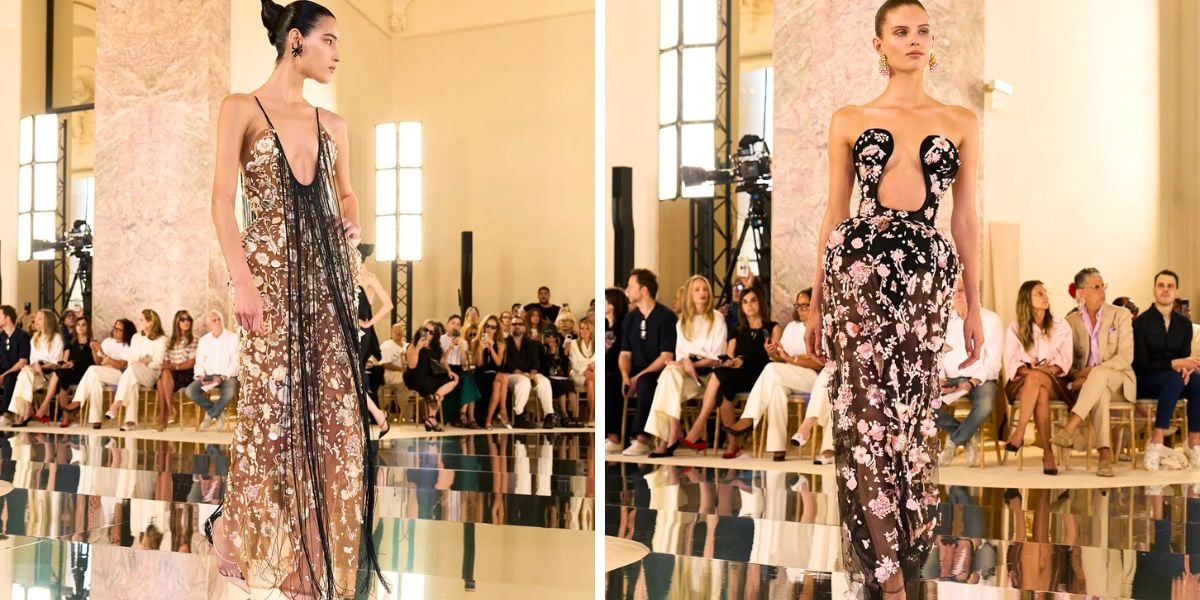
Nature Becomes a Universal Language
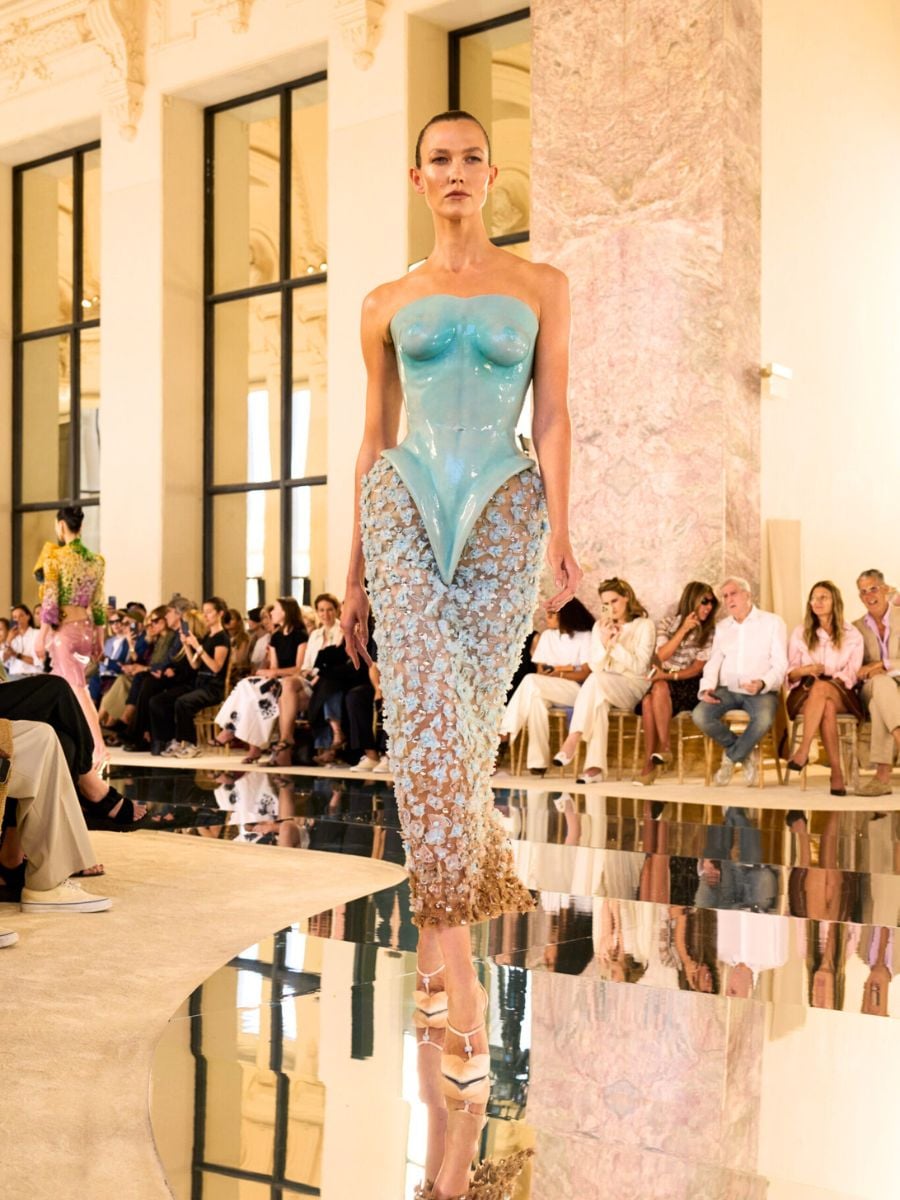
Roseberry’s dialogue with Gaudí extends beyond aesthetics to material experimentation. In the collection notes, the designer describes replacing couture’s traditional textiles with latex, silicone, and sheets of baked paint shaped into garments. The shift mirrors Gaudí’s own willingness to elevate unconventional construction methods and humble materials into expressive architectural forms. Here, silicone assumes the visual qualities of polished ceramic, while embroidery becomes a sculptural surface.
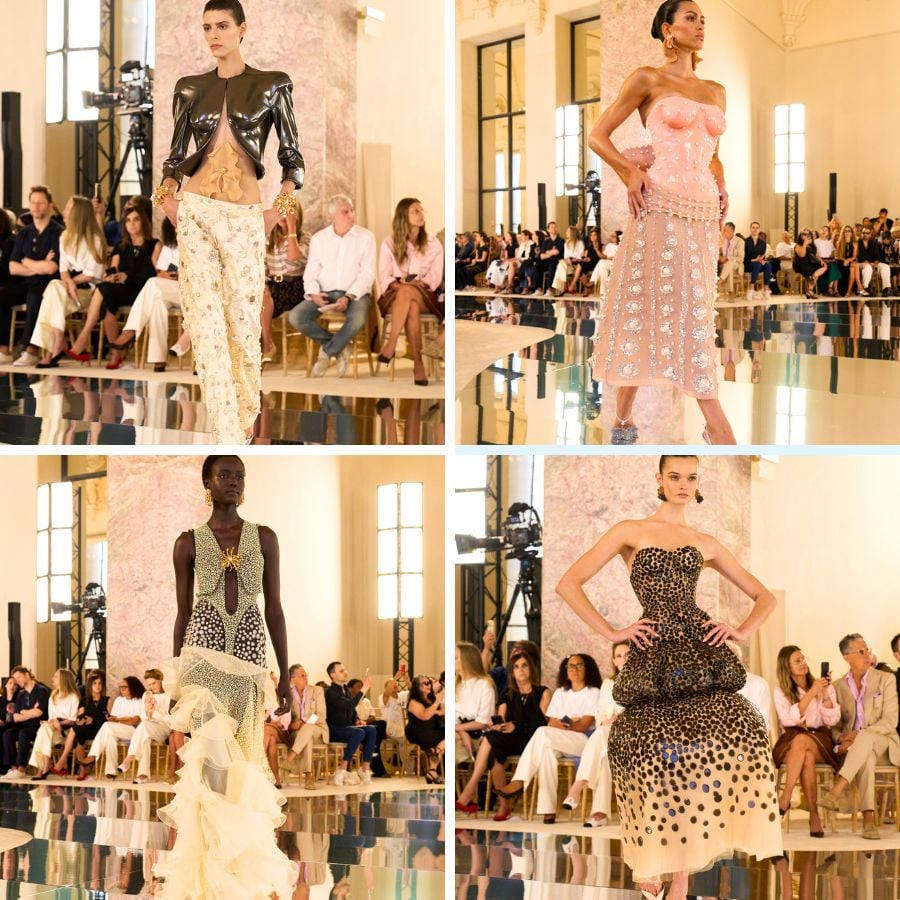
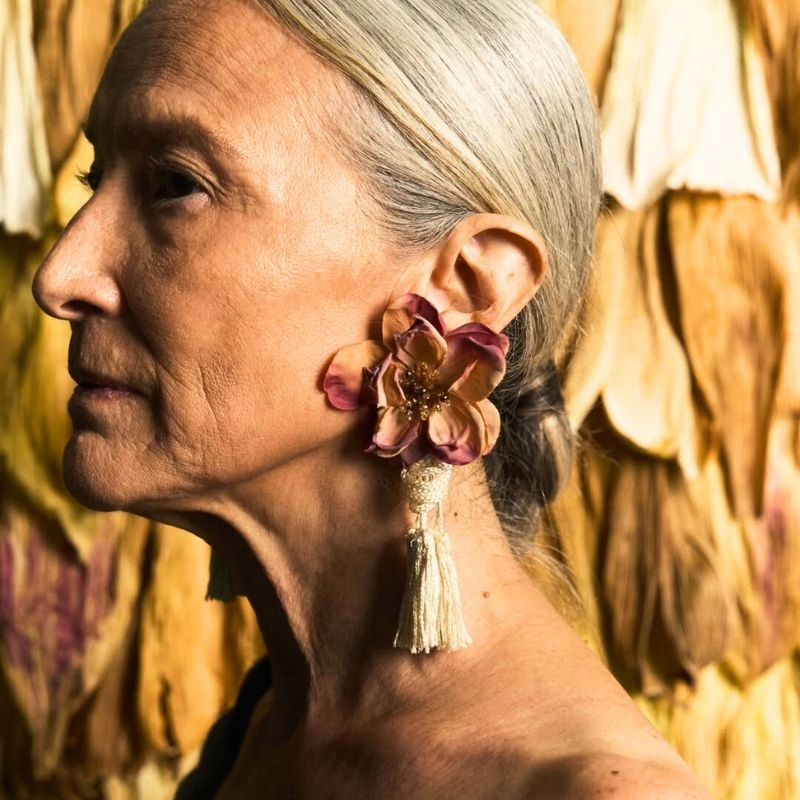
Nature also provides a shared vocabulary. Gaudí famously treated natural systems as structural models rather than decorative references, and Roseberry similarly draws from marine life and botany throughout the collection. Shell earrings lined with porcelain, octopus-inspired jewelry, sea anemone-like silicone accessories, fish scales, and embroidered flowers reinforce an organic language that runs consistently through both the garments and accessories. The palette, spanning lobster pink, saffron, pale mint, violet, and deep black, further evokes coastal landscapes and marine ecosystems.
The collection also challenges one of Schiaparelli's own signatures. The house’s iconic jacket is reimagined as a sculptural accessory designed to complete an outfit. This deliberate shift reflects Roseberry’s broader intention to question inherited house codes while echoing Elsa Schiaparelli’s belief that familiar forms should continually be reinvented.
Why Flowers Continue to Shape the Most Luxurious Fashion Brands
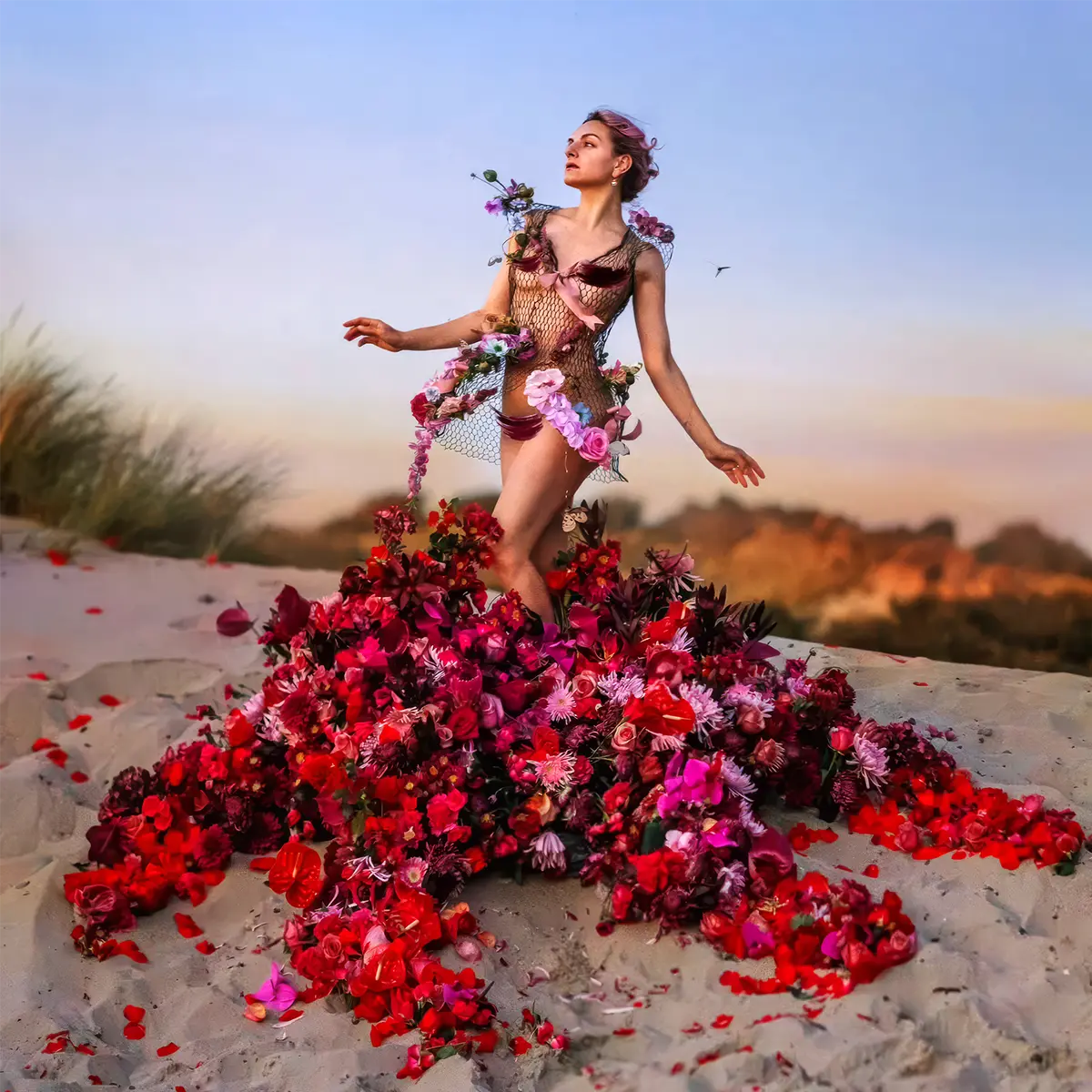
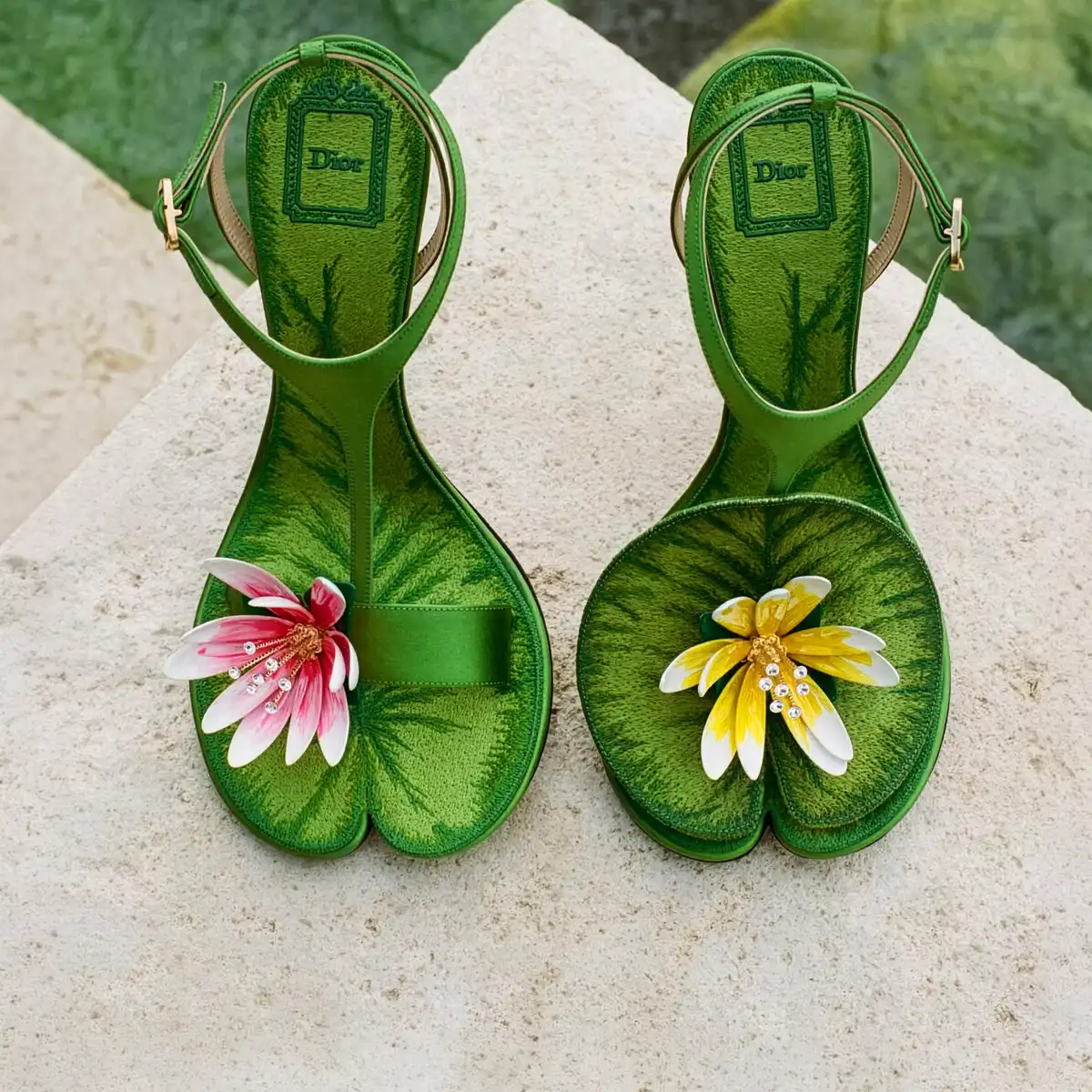
Flowers have influenced fashion for centuries, not only as decoration but as a main source of form, texture, and proportion. Designers continue to study petals, stems, seed pods, and flowering plants to develop silhouettes, surface treatments, and new material expressions. Some reinterpret the geometry of a flower, while others borrow from the movement of petals or the layered structure found in nature.
A glimpse of the pieces created for this collection. Video by: Schiaparelli
Collections like Schiaparelli's demonstrate that flowers remain one of fashion's most everlasting creative references. Much like Gaudí looked to the natural world when designing his buildings, contemporary designers continue to return to flowers for ideas that feel timeless while opening the door to new interpretations. Their diversity, complexity, and endless variation ensure they remain a constant point of reference across couture, art, architecture, and design.
Photos: @schiaparelli.