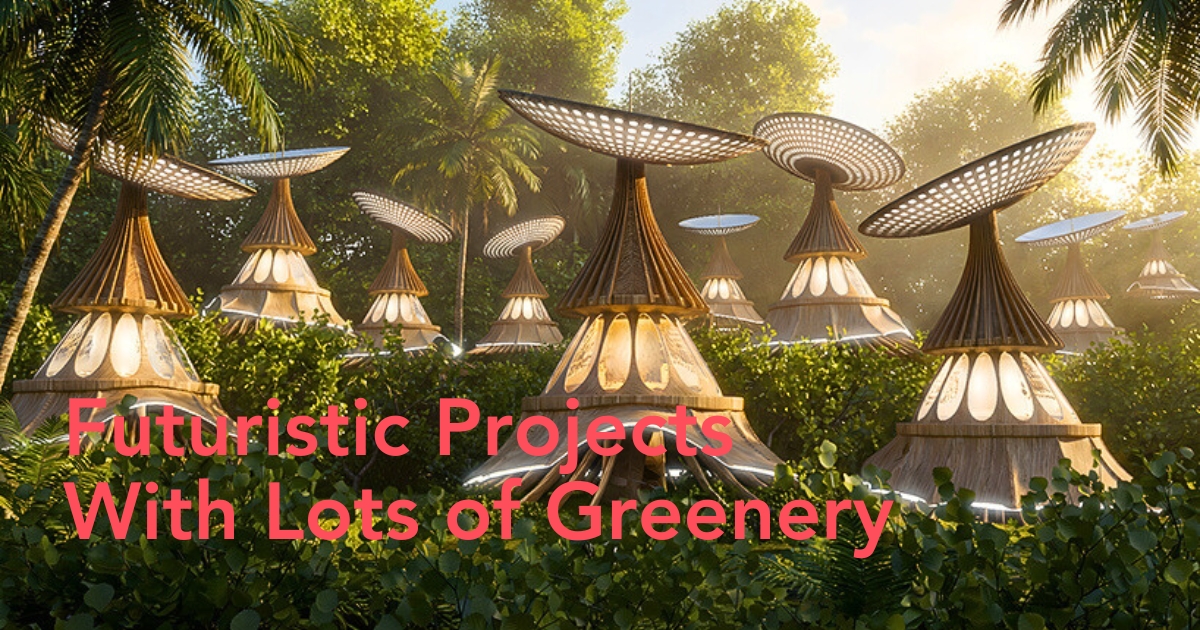
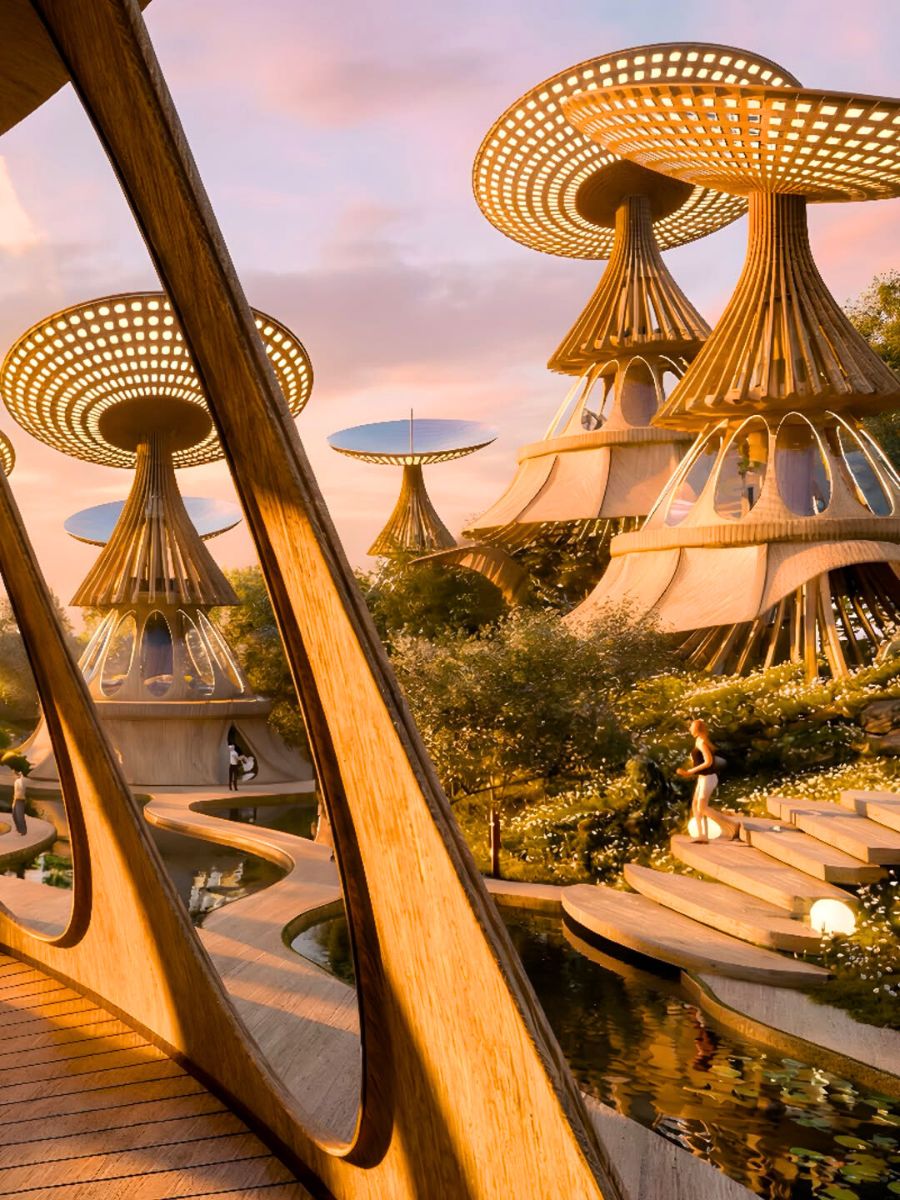
The Fiji Living System proposal by MASK Architects reimagines architecture as a living part of the environment by integrating energy, water, and environmental systems directly into spatial design. At its core is a dual-axis kinetic concave mirror, called the 'Solar Crown', which tracks the sun in real time to generate electricity and collect rainwater on site, reducing reliance on external energy and water infrastructure. This approach reframes buildings as environmental systems that work with the landscape and climate.
Architecture as Integrated Energy, Plant, and Water Infrastructure
Known as the Fiji Solar Crown, the system introduces a solar-integrated living architecture that incorporates a kinetic concave mirror into the primary structural and spatial framework. Developed in collaboration with TesserianTech, responsible for engineering and kinetic mirror technology, the project addresses Fiji’s challenges related to energy instability, reliance on imported diesel, freshwater scarcity, saltwater intrusion, and increasing climate pressures.
The system is designed to operate independently from centralized grids, allowing architectural units to generate electricity and harvest water directly on site while having natural sources of plants and nature around to harmonize the environment.
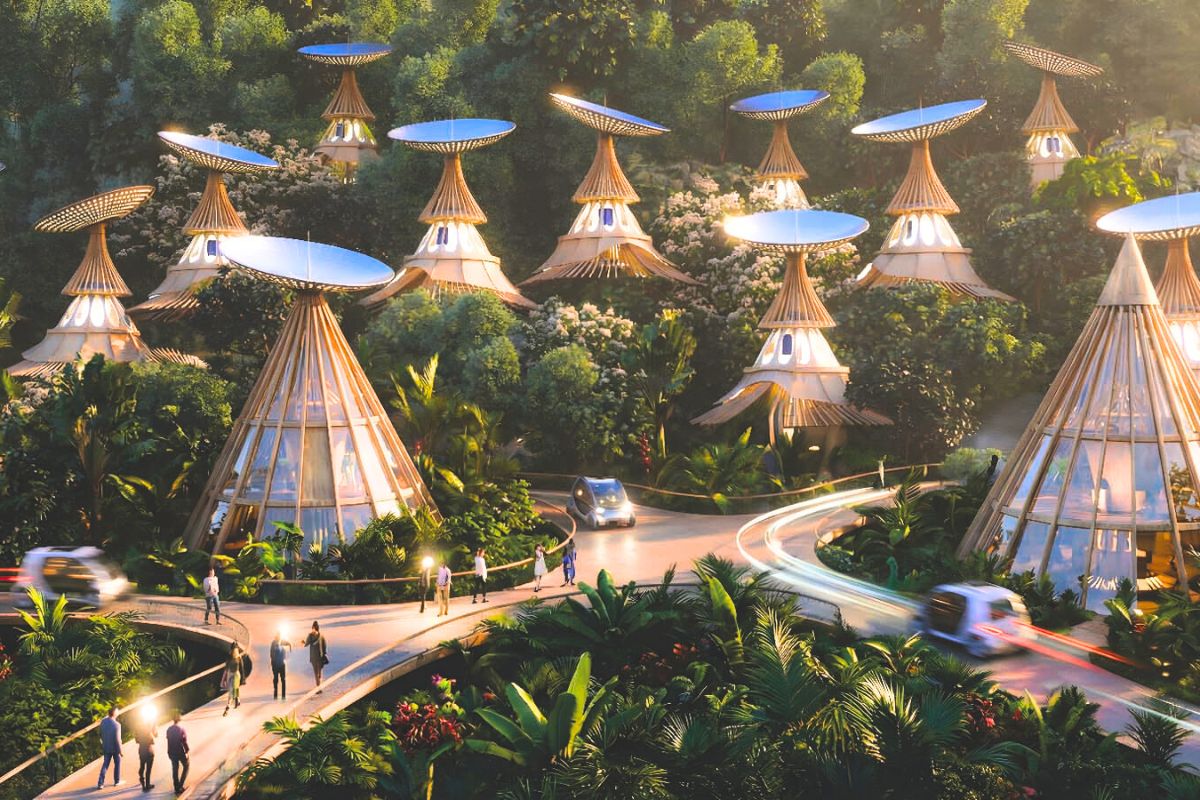
Greenery and plant life play a key role in sustainable architectural thinking because plants influence microclimates, air quality, and human well-being in buildings and settlements. In the Fiji Living System concept, shaded, naturally ventilated spaces below the Crown allow for open areas that could support vegetation and landscaping as part of the daily lived environment, creating a stronger connection between structures and their surroundings.
The Solar Crown render
This model echoes broader trends in sustainable design where green elements are essential. For example, living facades and green infrastructure can enhance air quality, regulate temperature, and support biodiversity in urban settings by turning buildings into functional ecosystems instead of having static enclosures.
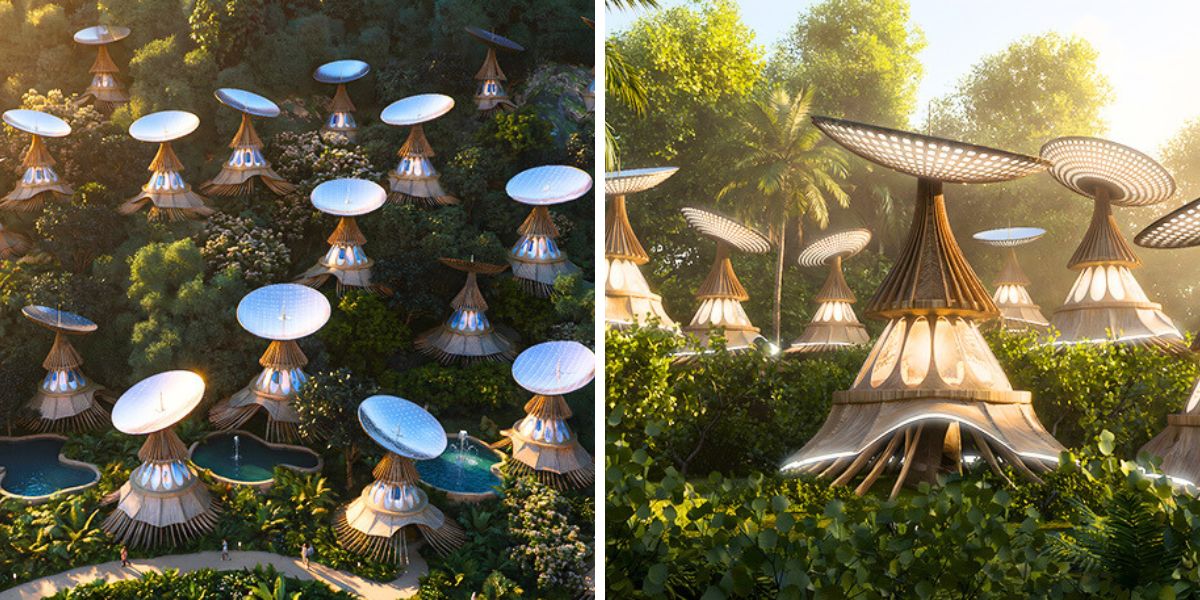
Fiji Living System Proposal Uses Kinetic Concave Mirrors for Energy and Water Autonomy
The architectural language draws from the traditional Fijian bure, reinterpreting its elevated structure, passive ventilation principles, and symbolic roof apex through contemporary materials and technology. The concave solar crown functions as an environmental engine, concentrating sunlight for electricity generation, redirecting heat to support passive cooling, powering nighttime illumination, and collecting rainwater that is stored within the structural core for potable and non-potable use.
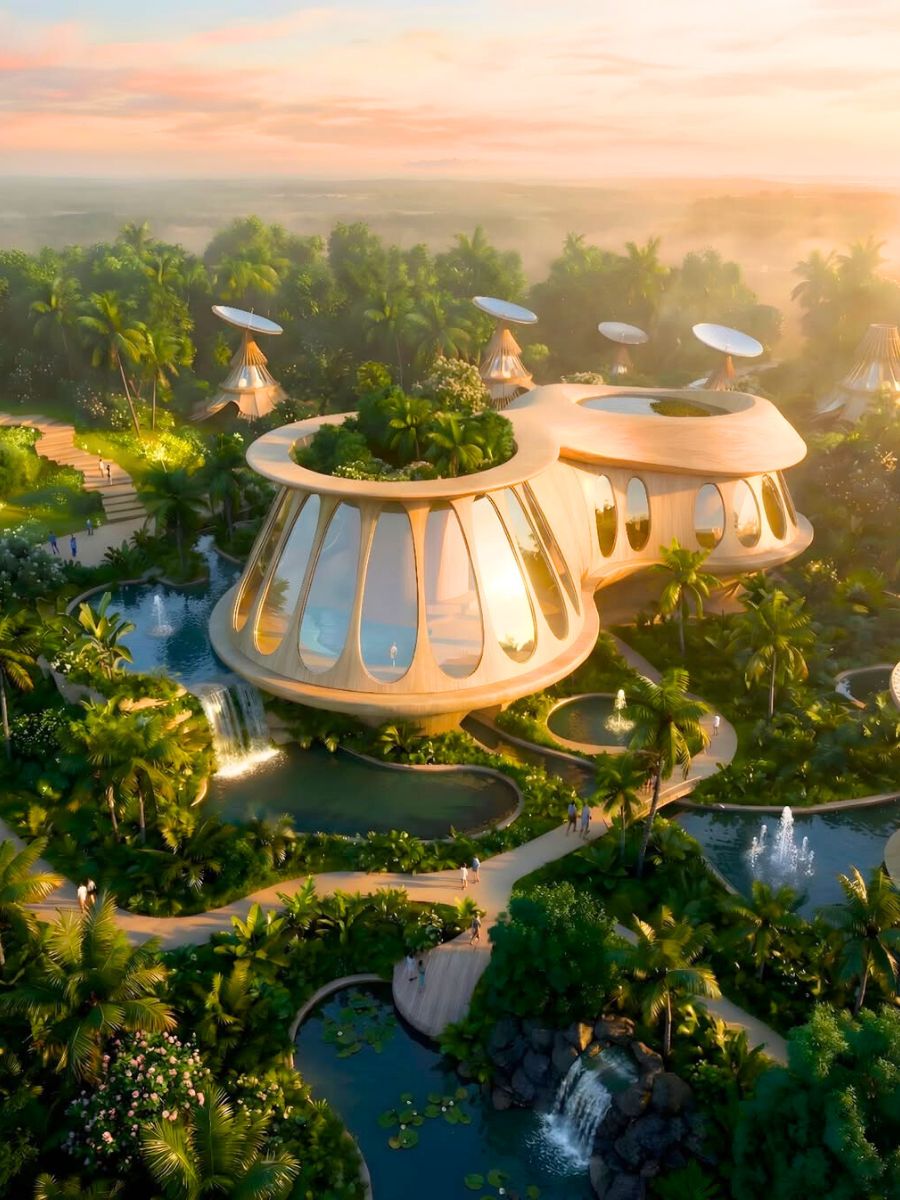
Beneath the crown, the spatial organization unfolds vertically. The ground level forms a shaded, naturally ventilated living platform, while the main inhabitable floor integrates panoramic views with the service core. An upper observation level frames the sky and surrounding landscape, reinforcing the vertical relationship between living space and environmental systems.
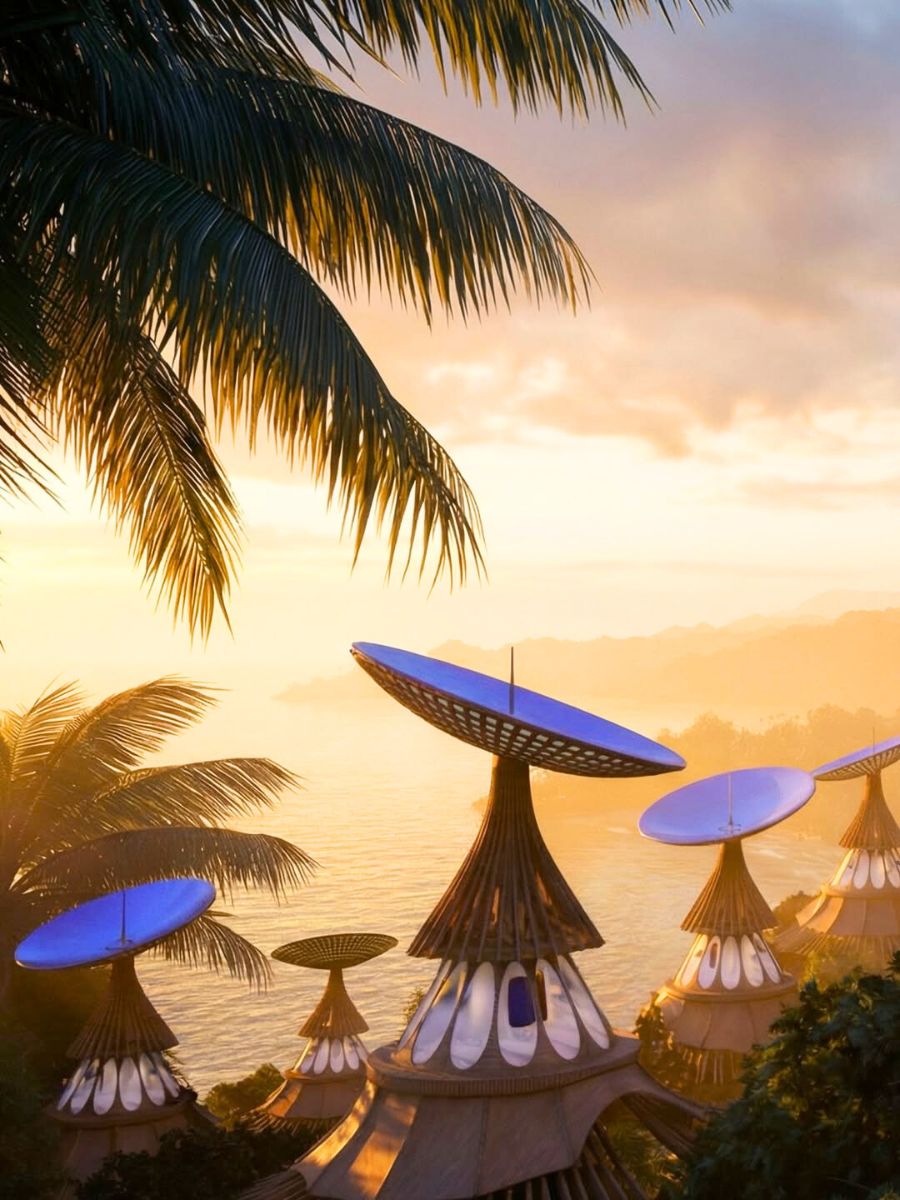
The design team at MASK Architects considers the system as a family of three modular scales, each defined by its concave solar crown. The 3-meter-diameter module functions as a compact energy and water generator suited to rural infrastructure, agricultural use, and small off-grid shelters. The 5-meter module supports community-oriented programs such as outdoor classrooms, gathering spaces, and small tourism facilities. The 7-meter module is conceived as a fully inhabitable multi-level residence or accommodation unit, capable of operating on elevated or floating foundations in response to rising sea levels. These modules can function independently or be clustered to form larger communities, micro-grids, or territorial networks.
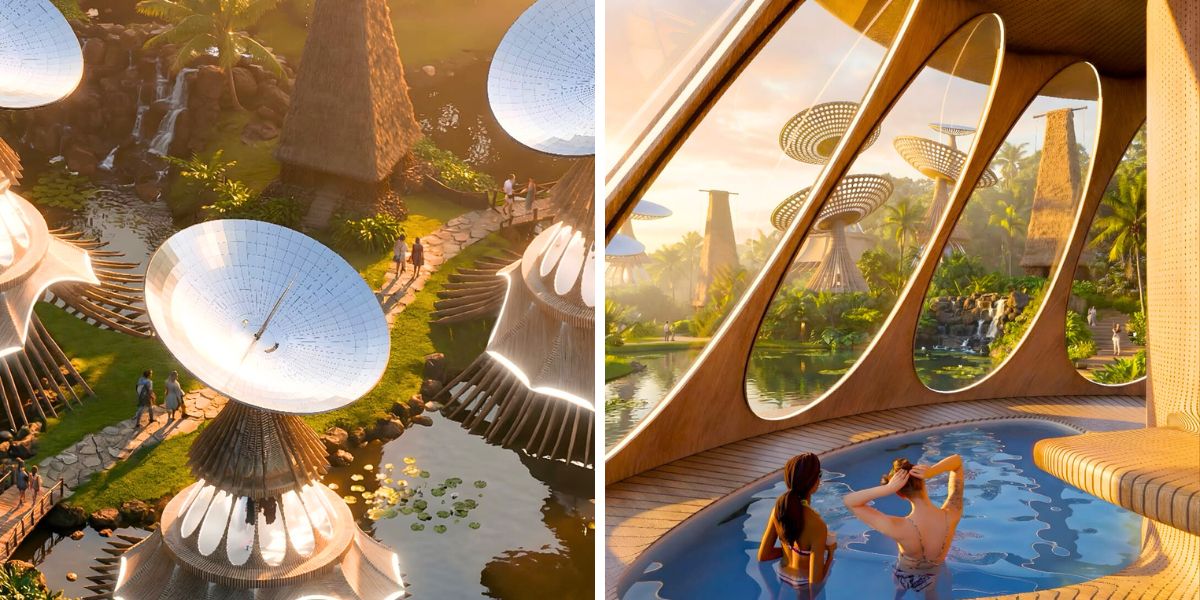
Vegetation That Complements Spaces
In a tropical context like Fiji, where climate challenges include heat, humidity, and rising sea levels, an architectural strategy that embeds vegetation and nature into the built environment complements systems like the Solar Crown. Greenspaces and planted surfaces help moderate temperatures, increase comfort, and promote ecological resilience, linking human habitation more directly with the natural world. This reflects a broader shift toward designs that respect and include natural systems as active elements of architecture – a principle closely aligned with biomimetic and biophilic design strategies.
In short, the Fiji Living System suggests that plants and green environments are central to creating buildings and communities that support life, comfort, and sustainability in harmony with nature.
Photos: @mask_architects.