ARTICLES

T__M.space Tops Sinuous Pavilion in New Delhi With Green Roof

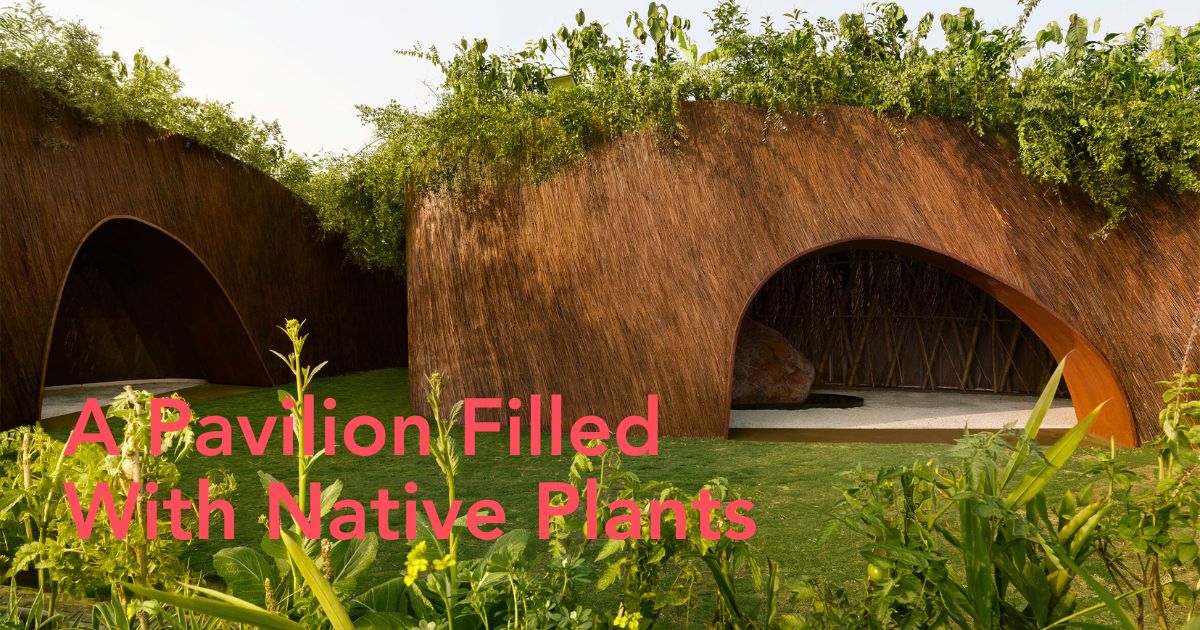
On the roof, over 40 native plants were planted, including those that are edible, medicinal, and hold cultural significance

By: MELISSA MAINGOT | 04-02-2026 | 2 min read
Travel Architecture
Aranyani pavilion

Revealing the inaugural 'Aranyani Pavilion' in New Delhi, a curving green-roofed structure that was designed by architecture studio T__M.space to host discussions on ecology. Named 'Sacred Nature', the spiralling, undulating pavilion opened in the Sunder Nursery park today, where it will remain until 20 February.

Sacred Nature Opened as the First Annual Aranyani Pavilion

It is the first annual Aranyani Pavilion commission, which was launched by nature restoration and arts organisation Aranyani to facilitate conversations on the environment. T__M.space created the fluidly shaped pavilion with a planted roof that rises and falls as it spirals round with the aim of connecting visitors with nature.
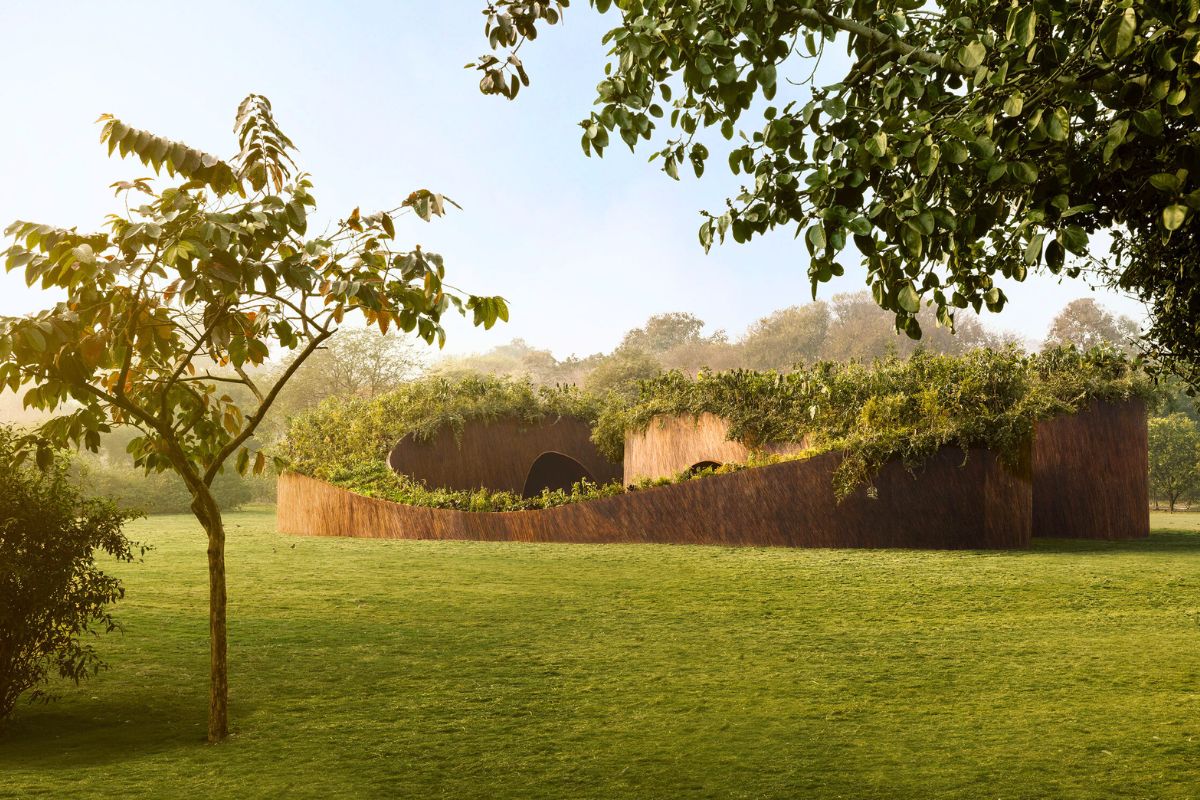
 

The New Delhi green pavilion
The beautiful side view of the green pavilion in New Delhi


The curving form guides people to a large stone housed in an oval-shaped room at the center of the pavilion, aiming to evoke the feeling of walking through one of India's sacred groves, where stone markers have symbolic meaning. Indian design practice Ekarth Studio created this lattice room from Lantana camara, an invasive shrub in India that contributes to the deterioration of the country's forest ecosystems.
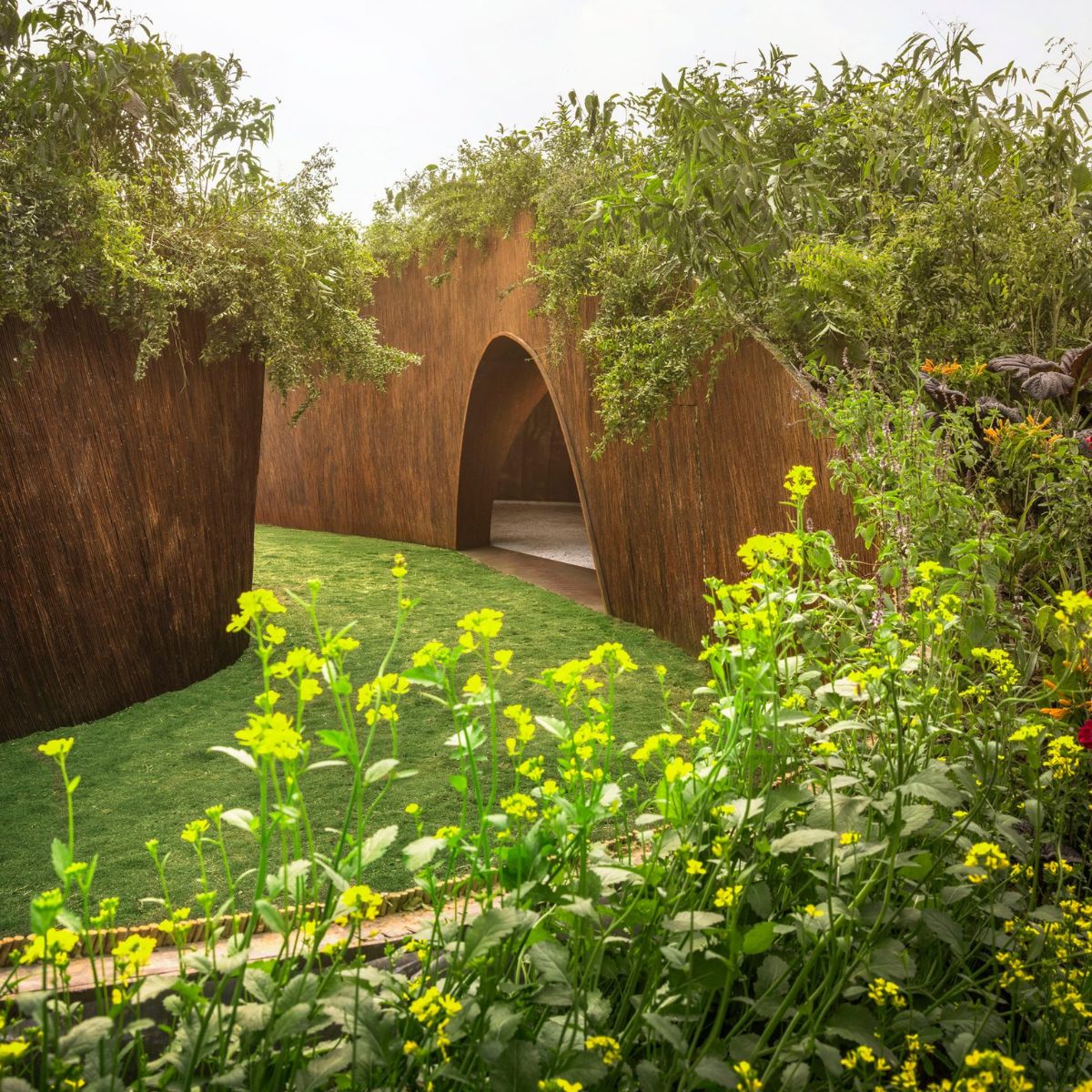
 

The roofs filled with greenery
The roofs are filled with greenery


Over 40 Native Plants on the Roof

On the roof, over 40 native plants were planted, including those that are edible, medicinal, and hold cultural significance. By bringing invasive and native species into conversation, they hope to create space for local and international dialogue on how we might restore not only ecosystems, but the relationships that sustain them, as said by Aranyani founder, Tara Lal.
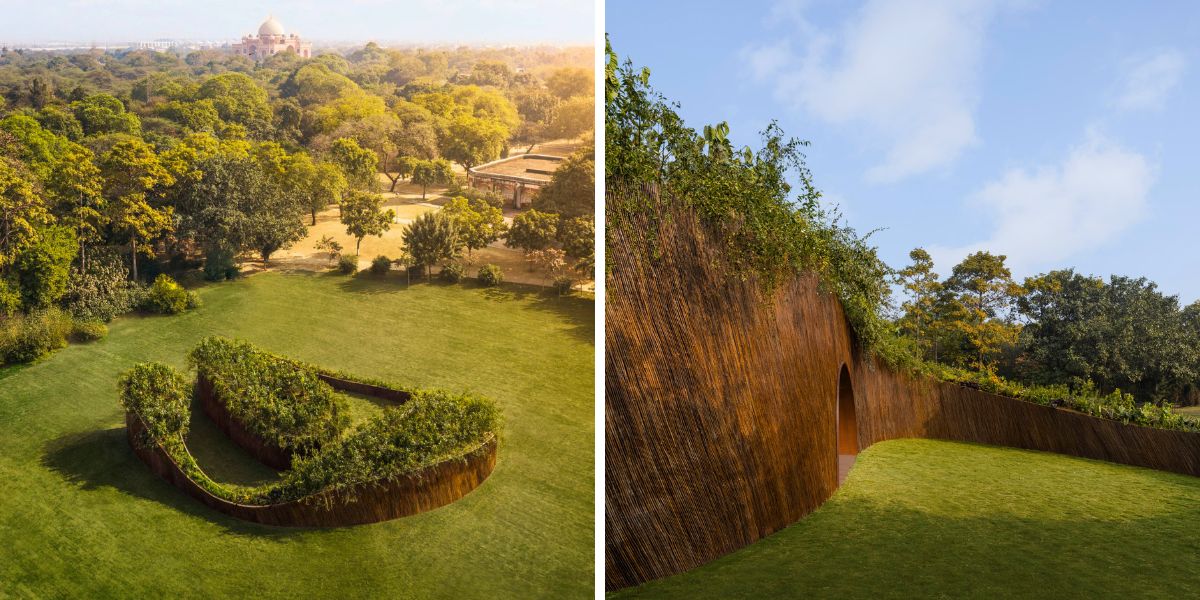
 

Different views of the pavilion in New Delhi
The energy and magic of green spaces


They are living through a moment where the distance between people and the natural world has never been greater, Lal continued. So many of today’s ecological crises are rooted in colonial histories and systems that separated communities from the land, from Indigenous knowledge, and from one another. The Aranyani Pavilion is an invitation to repair that rupture, to experience ecology not as an abstraction but as something people can walk through, feel, and belong to.
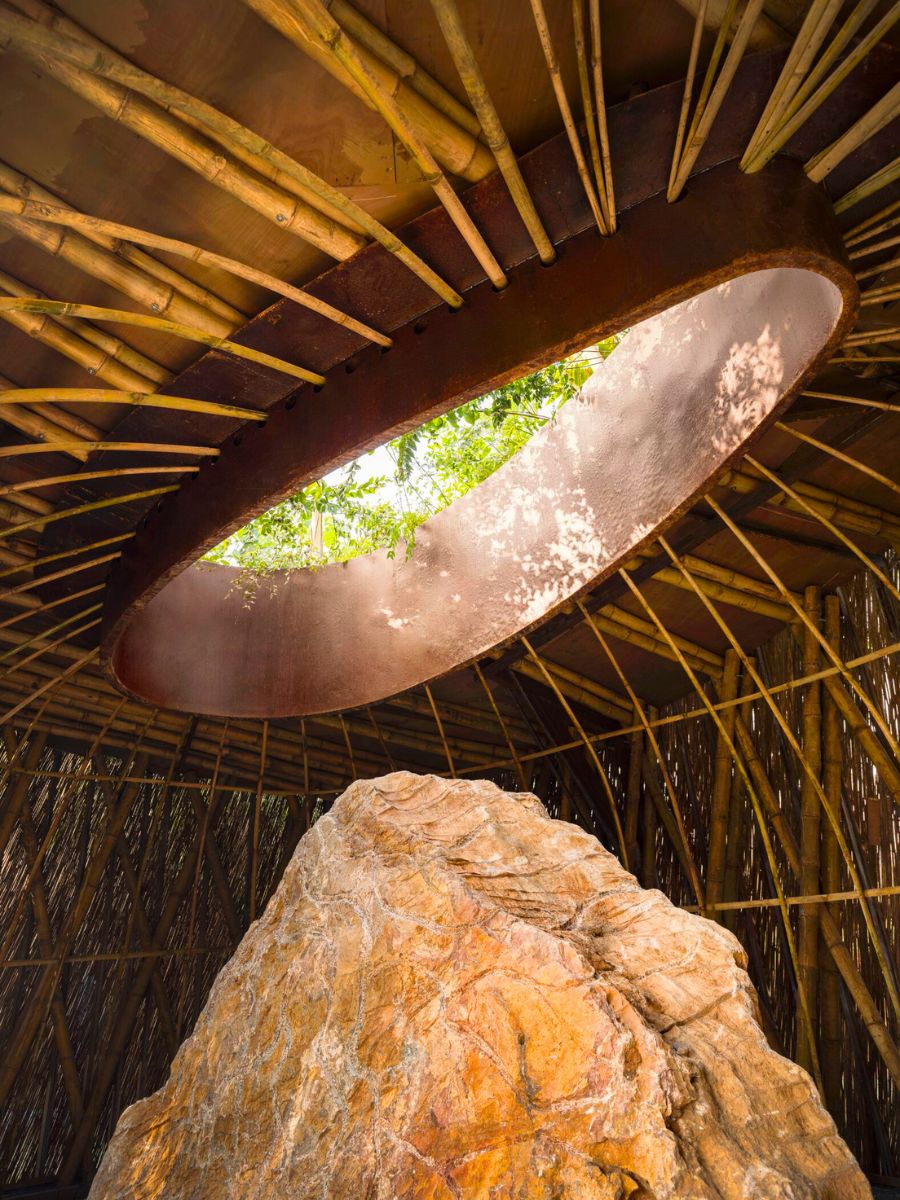
 

Part of the inside of the pavilion
Every part of the pavilion is filled with natural materials and inspired by nature


During its residency at Sunder Nursery, the pavilion will serve as a living cultural space, hosting performances, talks, and workshops that bring together artists, researchers, and local communities. These programs are intended to encourage dialogue around ecology, heritage, and collective care, allowing visitors to engage with the pavilion not only as an installation but as an active gathering place.
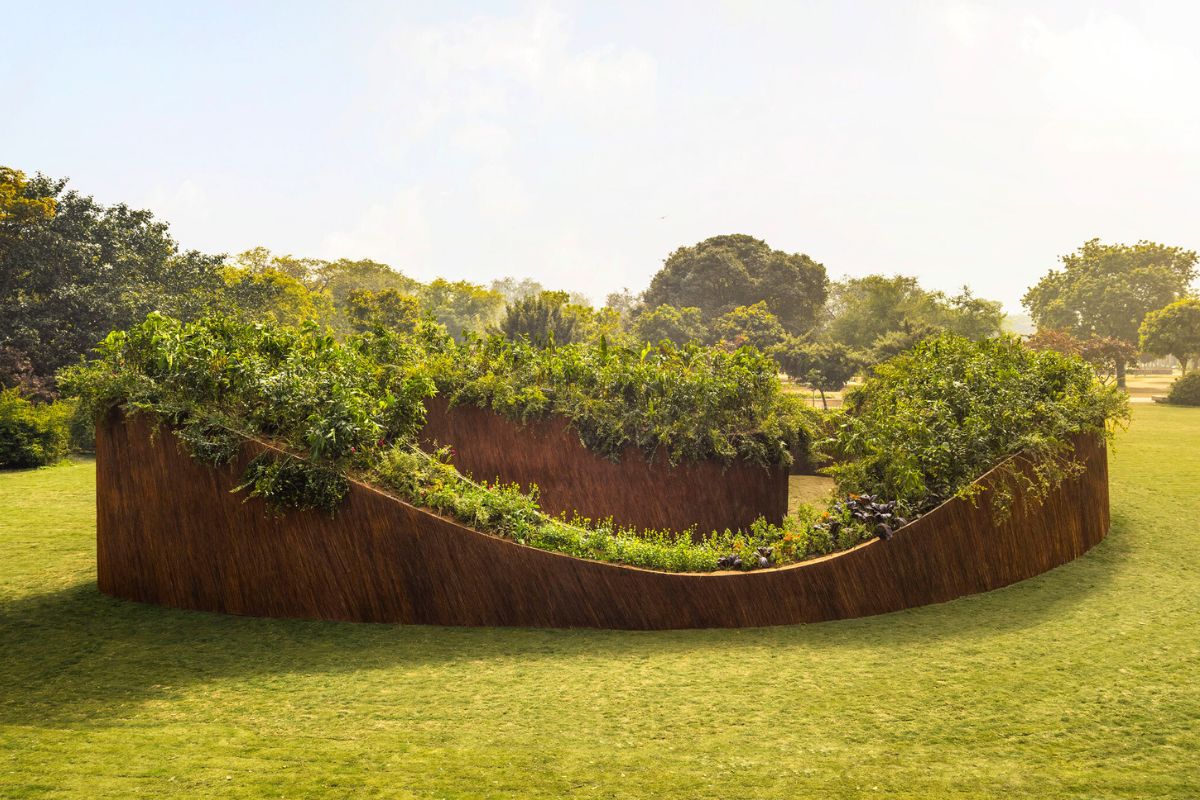
 

Closeup of plants in the pavilion


After this period, the structure will be permanently relocated to the Rajkumari Ratnavati Girls’ School in Jaisalmer, where it will continue its educational and social purpose. The edible and medicinal plants cultivated on the roof will be shared with community-led environmental initiatives in Delhi, extending the project’s impact beyond the site and supporting local efforts toward sustainability and food knowledge.
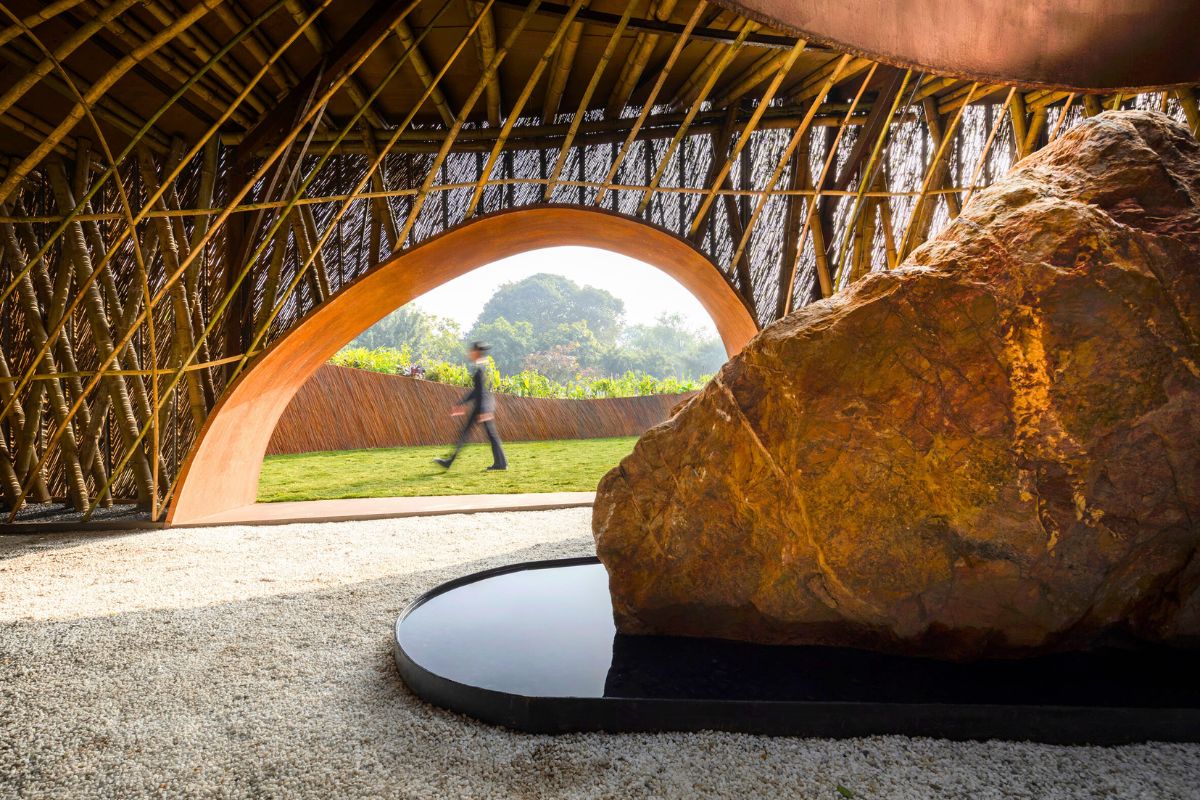
 

Walking spaces around the Aranyani pavilion


Photos: Lokesh Dang

FAQ

What is the Aranyani Pavilion?

The Aranyani Pavilion, titled Sacred Nature, is a spiraling, green-roofed structure in New Delhi designed by architecture studio T__M.space. It was created as a space for conversations on ecology and to reconnect visitors with the natural world.

Where is the pavilion located and how long will it be there?

The pavilion opened at Sunder Nursery park in New Delhi and will remain there until 20 February as the first annual commission by the nature restoration and arts organization Aranyani.

What is special about the design of the pavilion?

Its curving, undulating form guides visitors toward a central stone within an oval lattice room made from the invasive shrub Lantana camara. The design evokes India’s sacred groves, where stones hold symbolic meaning and nature is deeply respected.

What plants are featured on the roof?

More than 40 native species have been planted on the roof, including edible, medicinal, and culturally significant plants. The project brings native and invasive species into dialogue to explore new ways of restoring ecosystems and relationships with the land.

What will happen to the pavilion after its residency?

After Sunder Nursery, the pavilion will be relocated to the Rajkumari Ratnavati Girls’ School in Jaisalmer. The rooftop plants will be shared with community-led environmental initiatives in Delhi to support local sustainability efforts.

Poll

What inspires you most about the Aranyani Pavilion?

YOU MAY ALSO LIKE

Green architecture
10 of the Best Nature-Inspired Architecture Books
Modern Calgary Landscaping Trends Feature Image
Modern Calgary Landscaping Trends Homeowners Love
Fiji Solar Crown
Plants, Greenery, and the Fiji Living System – A New Environmental Architecture
Travel Architecture
Jan 21 | 4 min read
Leaf shaped home
Michaelis Boyd Plants Leaf-Shaped Home in Cotswolds Countryside
Japa Valley
Pharrell Williams and Nigo Designing a Surprisingly Green and Entertaining District in Tokyo
Travel Remarkable
Jan 15 | 3 min read
Apartamentos Varanda
A ‘Hybrid Habitat’ By Guto Requena Gives New Meaning to ‘Urban Jungle’ in São Paulo
Travel Architecture
Jan 14 | 3 min read
four phones with a thursd page open

Can't get enough?

Subscribe to the newsletter, and get bedazzled with awesome flower & plant updates

Sign up