Few orchids attract as much attention as the ghost orchid. Known for its unusual appearance, elusive habitat, and almost leafless structure, this rare tropical plant has fascinated botanists, orchid collectors, and nature lovers for generations. Its white flowers seem to hover above the water in the dark forests where it grows, giving the species an appearance that has inspired its memorable name.
Scientifically known as Dendrophylax lindenii, the ghost orchid is native to southern Florida and Cuba. It belongs to the Orchidaceae family and is an epiphytic plant, meaning it grows attached to the trunks and branches of trees. Unlike many familiar orchids, it has no prominent leaves, making its flowers and exposed root system particularly unusual.
But there is much more to this orchid than its appearance. Its history, specialized growing conditions, nocturnal fragrance, and relationship with pollinating moths make it one of the most interesting plants in the orchid world.
Where Does the Ghost Orchid Come From?
The ghost orchid originates from the Caribbean region, with its natural distribution centered on southwestern Florida and western Cuba. It grows in humid forests, particularly in the lowland swamps and wetland environments of southern Florida. In Cuba, it also occurs in tropical hardwood forests, where it attaches itself to trees growing in limestone landscapes.
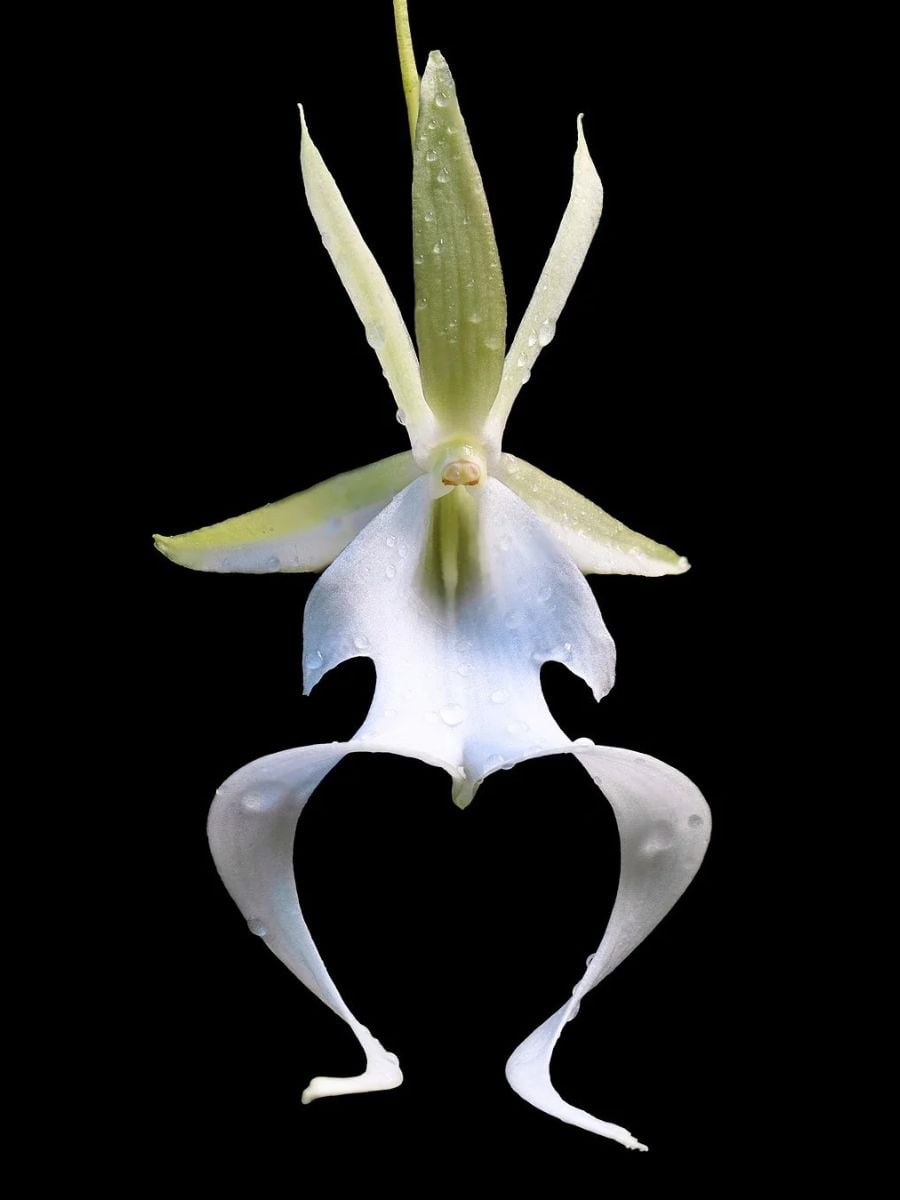
Photo: @fairchildgarden
The species was first observed in Cuba in 1844 by Belgian plant collector Jean Jules Linden. Botanist John Lindley formally described it in 1846, initially giving it the name Angraecum lindenii. Its classification later changed, and it is now known as Dendrophylax lindenii. The species name honors Linden, whose discovery brought the orchid to the attention of European botanists.
Florida became another important location for the species, where it was documented in the Everglades region during the nineteenth century. Today, its distribution remains highly restricted. Its survival depends on specific environmental conditions, including high humidity, suitable host trees, and healthy wetland ecosystems.
Photos: @blumenhausmagazine
Why Is It Called the Ghost Orchid?
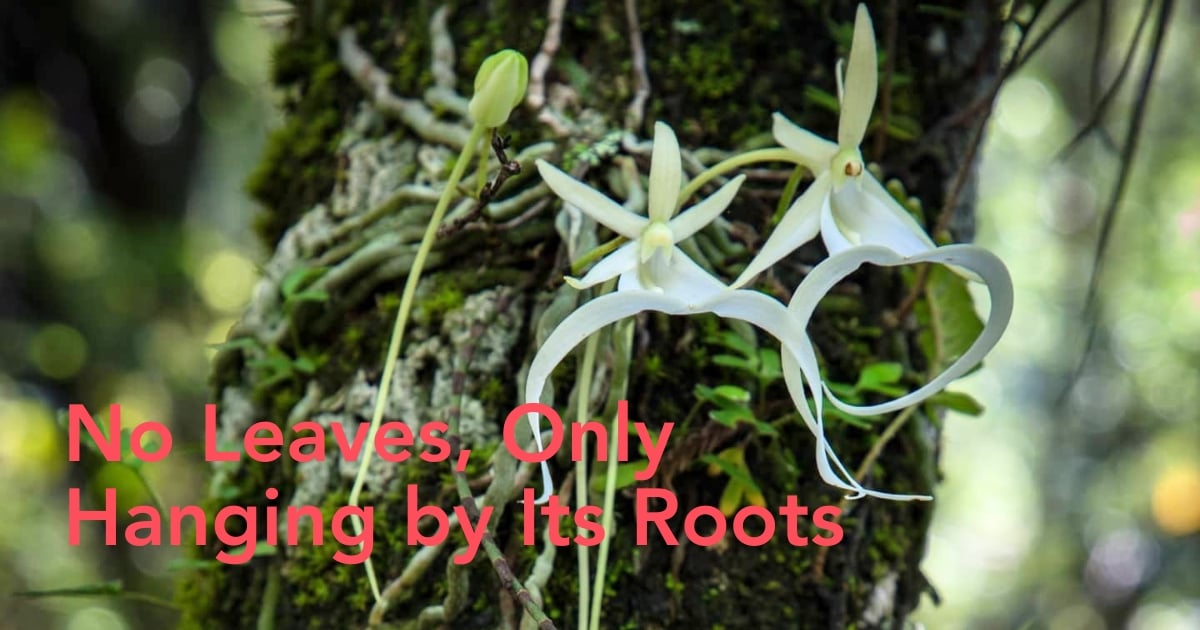
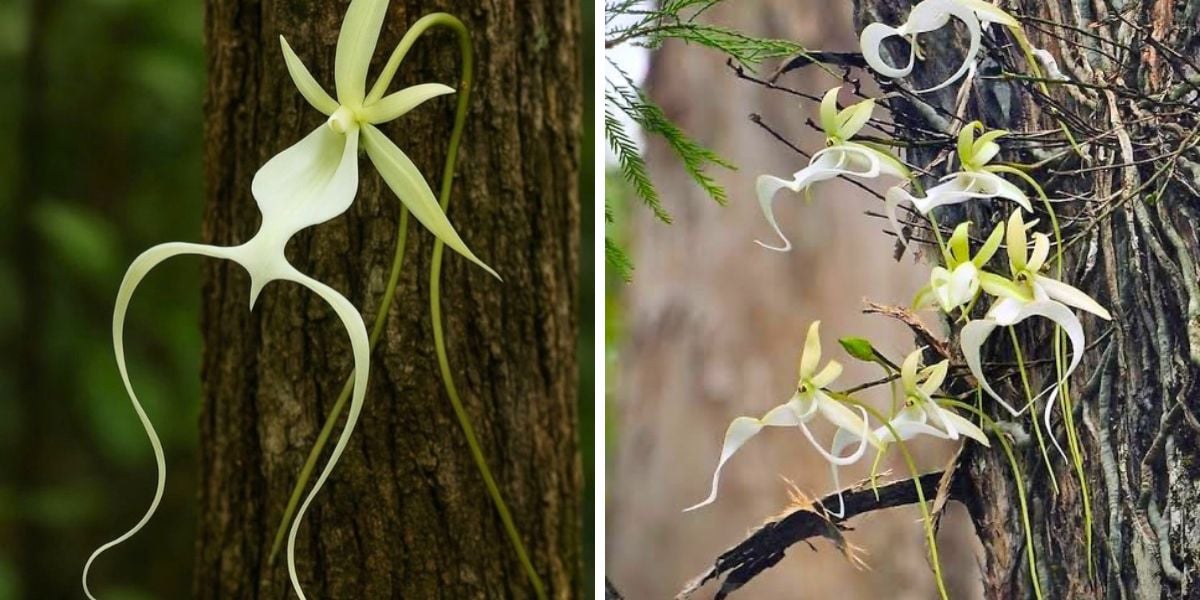
The name ghost orchid comes from the appearance of its flowers in their natural habitat. Its pale white petals seem to float in the air, especially when viewed against the dark trunks, tangled vegetation, and shadowy water of a Florida swamp.
The effect becomes even more unusual because the plant has no obvious leaves. Most of its visible structure consists of gray-green roots that spread across the bark of its host tree. These roots blend into the surrounding surface, making the plant difficult to notice when it is not flowering. When a white flower emerges, it can appear almost detached from the tree, as though it is suspended in mid-air.
The flower itself has several unusual features. Its petals and sepals form a delicate white structure, while the lower petal, known as the lip, extends into two long projections. These curved extensions give the flower an additional resemblance to a small frog, which explains another of its common names: the frog orchid.
Its fragrance contributes to its character, too. Ghost orchid flowers release a noticeable scent at night, when their pollinators are active. This nocturnal fragrance helps attract moths searching for nectar in the forest.
What Does a Ghost Orchid Look Like?
At first glance, the ghost orchid can be difficult to recognize as a plant. Its structure is very different from the leafy growth associated with most orchids.
Instead of developing large leaves, Dendrophylax lindenii produces a network of flattened, branching roots that attach directly to the bark of a tree. These roots are usually gray-green and contain chlorophyll, allowing them to carry out photosynthesis. They perform much of the work that leaves do in other plants, absorbing light and helping the orchid produce energy.

Photo: @florida.unfiltered
The roots also absorb moisture and nutrients from the humid air and surrounding organic material. A small, inconspicuous stem sits among them, often hidden by the root system. When the plant flowers, a slender stalk emerges and carries one or several white flowers. These flowers can measure several inches across, with a long, narrow spur extending behind the petals. The spur contains nectar and plays an important role in the orchid's relationship with its pollinators.
The flowers usually open one or two at a time instead of all at once. Flowering is generally associated with the warmer months, although the exact season can vary across its natural range and between individual plants.
Where Can You Find the Ghost Orchid in the Wild?
Southern Florida is one of the best-known places to find the ghost orchid. Its natural habitat includes the wetland forests of the Everglades region, Big Cypress, and the Fakahatchee Strand. These environments provide the high humidity and moisture levels the orchid needs to survive.
The Fakahatchee Strand Preserve State Park is particularly associated with the species. Its swamp forests contain suitable host trees, including pond apple (Annona glabra) and pop ash (Fraxinus caroliniana), on which ghost orchids can establish themselves. Other tree species can also serve as hosts.
Cuba is another important part of its natural range. There, the orchid grows on the bark of tropical hardwood trees, often in forests with different conditions from the flooded swamps of Florida. This difference shows that the ghost orchid does not depend on one particular type of landscape, but it does require a consistently humid environment and suitable trees.
Finding one in the wild is not easy. The plant is naturally difficult to spot when it is not flowering, and its restricted distribution means that even experienced plant enthusiasts may never encounter one. Anyone hoping to see it should visit protected natural areas and follow local conservation guidelines. Removing orchids from their natural habitat is harmful to wild populations and is prohibited under Florida protections.
How Is the Ghost Orchid Pollinated?
One of the most interesting aspects of the ghost orchid is its relationship with nocturnal moths. Its long flower spur contains nectar, attracting insects with mouthparts capable of reaching the reward. For many years, the giant sphinx moth (Cocytius antaeus) was widely believed to be its primary, or even its only, pollinator. Its long proboscis appeared particularly suited to reaching the nectar inside the flower.

Photo: @orlandomuseumofart
However, research published in 2019 provided new evidence. Scientists documented pollination by the fig sphinx moth (Pachylia ficus) and found evidence of other hawkmoth species carrying the orchid's pollen. The findings challenged the idea that a single moth species was responsible for pollinating the ghost orchid.
The orchid's nighttime fragrance is another part of this relationship. By releasing its scent after dark, it attracts moths that visit the flowers to feed. During these visits, pollen structures can attach to the insects and be transferred to another flower. This relationship shows how the survival of a plant can depend on other organisms in its ecosystem. The ghost orchid needs suitable trees to grow on, specific environmental conditions to thrive, and pollinators to support its reproduction.
Is the Ghost Orchid an Indoor or Outdoor Plant?
The ghost orchid is an outdoor plant in its natural environment. It is not a typical houseplant, and its growing requirements make it particularly challenging to cultivate outside the warm, humid forests where it naturally occurs. As an epiphyte, it needs a suitable surface on which to attach its roots. It also depends on high humidity, consistent moisture, appropriate temperatures, and good air circulation. Its roots must remain healthy and exposed to the conditions they need for photosynthesis.

Photo: @geraldsavesflorida
Growing it indoors presents considerable difficulties. Ordinary household conditions rarely reproduce the humidity, airflow, temperature stability, and environmental relationships found in its native habitat. The species is also challenging to propagate, as its seeds depend on compatible mycorrhizal fungi to germinate and develop successfully.
This does not mean the ghost orchid has never been grown or displayed outside its natural habitat. In 2023, the Royal Botanic Gardens, Kew, presented a ghost orchid in its Princess of Wales Conservatory after a collaboration involving conservation and horticultural organizations. The flowering marked the first time this rare Florida orchid had flowered in the UK.
For most plant enthusiasts, however, the ghost orchid is better appreciated in botanical collections and conservation displays than treated as a plant to grow at home.
Why Is the Ghost Orchid So Rare?
The ghost orchid's restricted range and specialized growing requirements make it vulnerable to environmental changes. Habitat loss, fragmentation, illegal collection, and changes to wetland hydrology all affect its survival. In Florida, water levels and the condition of swamp forests are particularly important. Changes to natural water flow can affect the humidity and ecological conditions that support the orchid and its host trees. Hurricanes and other extreme weather events can also damage the low-lying forests where populations occur.

Illegal collection is another concern. Because of its unusual appearance and reputation among orchid enthusiasts, the ghost orchid has attracted collectors who remove plants from the wild. However, specimens taken from their natural environment often struggle to survive under artificial growing conditions.
Conservation work increasingly focuses on protecting existing habitats, understanding how the orchid reproduces, and developing propagation and reintroduction methods. A 2026 University of Florida publication highlights ongoing efforts to restore populations and protect the ecological conditions the species needs.
The ghost orchid remains a reminder that some of the world's most unusual plants are also among its most vulnerable. Its flowers may appear briefly above the water, but their survival depends on an entire ecosystem working together.
Featured image by @groupertoes.