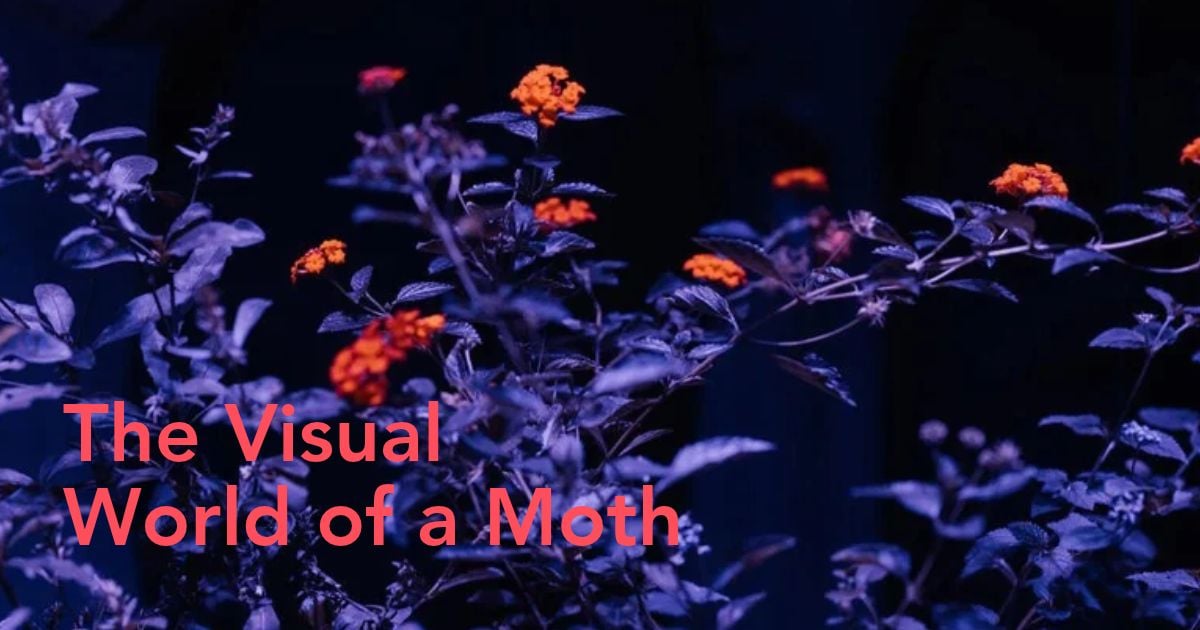
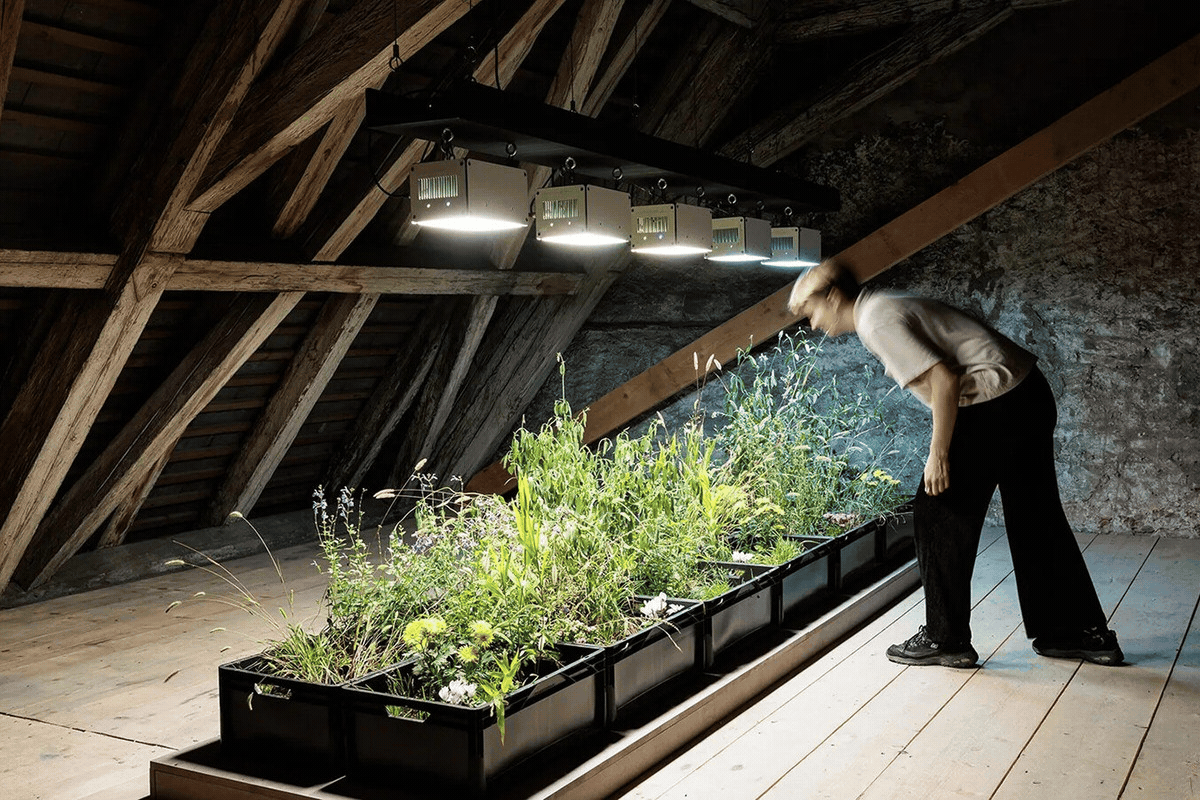
The installation Parallel World was one of the projects featured at the 2026 Ars Electronica Festival in Linz. Created by Brussels-based artist Adrien Lucca in collaboration with scientists, the work investigates the relationship between light, plants, and insect vision. A collection of living plants sits inside an enclosed space fitted with programmable LEDs, where timed changes in illumination transform the garden's appearance and invite visitors to consider how a moth experiences its surroundings.
When Light Reveals Another Side of the Garden
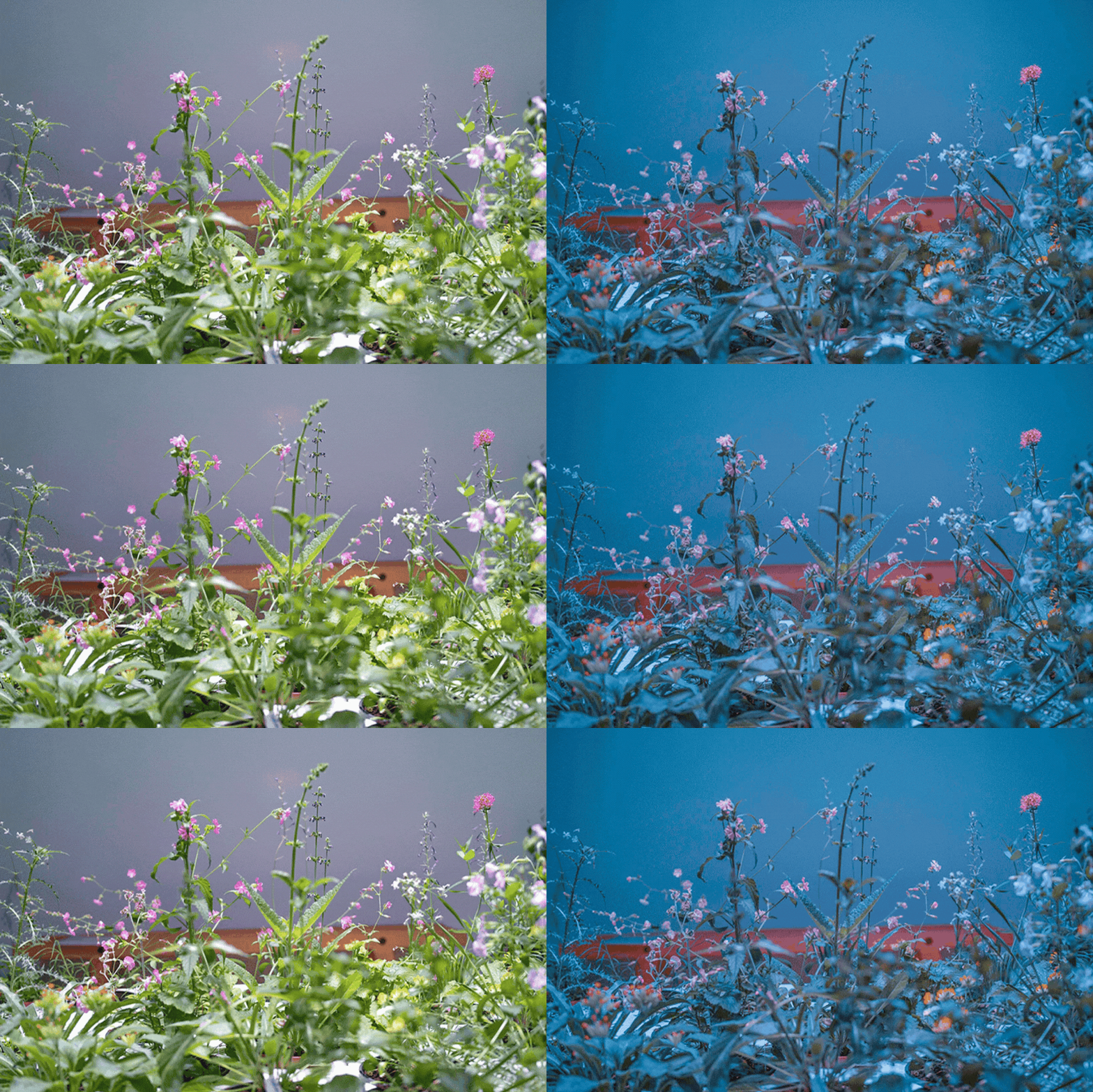
The plants remain still throughout the installation, but their appearance changes dramatically as the lighting moves through different settings. Pink flowers stand out against the foliage, while shifts in illumination alter the overall look of the indoor landscape.
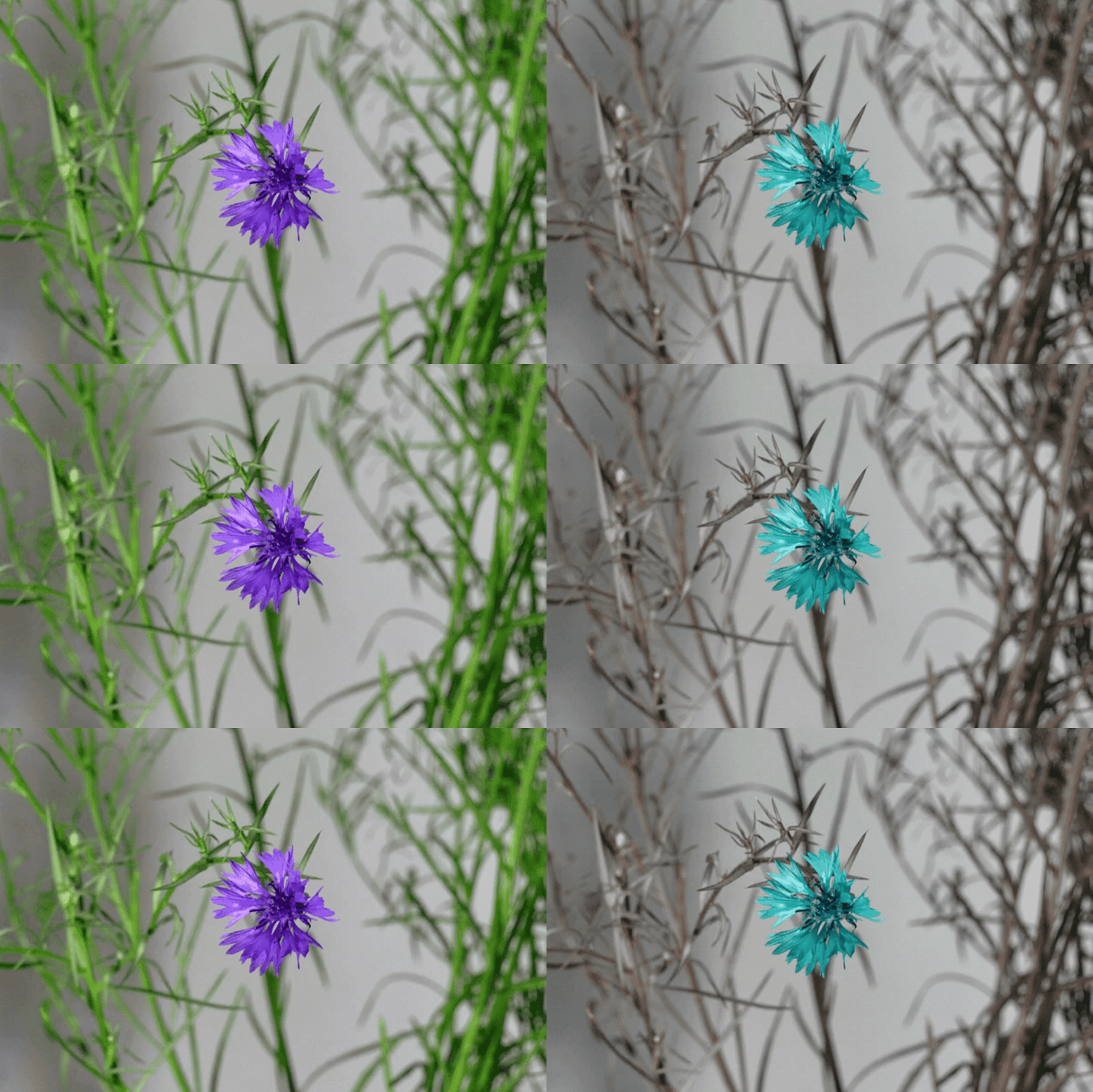
With cooler, bluish light, the green leaves appear much darker, sometimes taking on brown or almost black tones. The flowers, meanwhile, seem to glow against the surrounding vegetation. These visual changes are caused by the different wavelengths of light interacting with the plants and reaching the viewer's eyes. The experiment highlights how color perception depends on the light available and the way each observer responds to it.
How a Nocturnal Pollinator Experiences Color
The installation takes inspiration from the elephant hawkmoth (Deilephila elpenor), a nocturnal pollinator capable of recognizing colors in extremely low-light conditions. While human color vision becomes limited after sunset, this insect can continue distinguishing flowers under the faint light of the night sky.
Its eyes are sensitive to ultraviolet wavelengths as well as parts of the blue and green spectrum, allowing it to detect visual information beyond the range of human perception. A 2002 study published in Nature demonstrated that elephant hawkmoths can distinguish colors under lighting conditions comparable to dim starlight.
The Team Behind the Optical Experiment
The installation was developed with color scientist Ali Aiman Raza, researcher Colas Schretter, and biologist Marko Ilić, who specializes in insect vision. Their combined expertise informed the lighting system, which uses carefully selected wavelengths to demonstrate aspects of the elephant hawkmoth's visual range.
Although the human eye cannot detect ultraviolet light or replicate the moth's compound-eye system, the project brings scientific research into an artistic setting, making an otherwise invisible aspect of insect biology accessible to visitors.
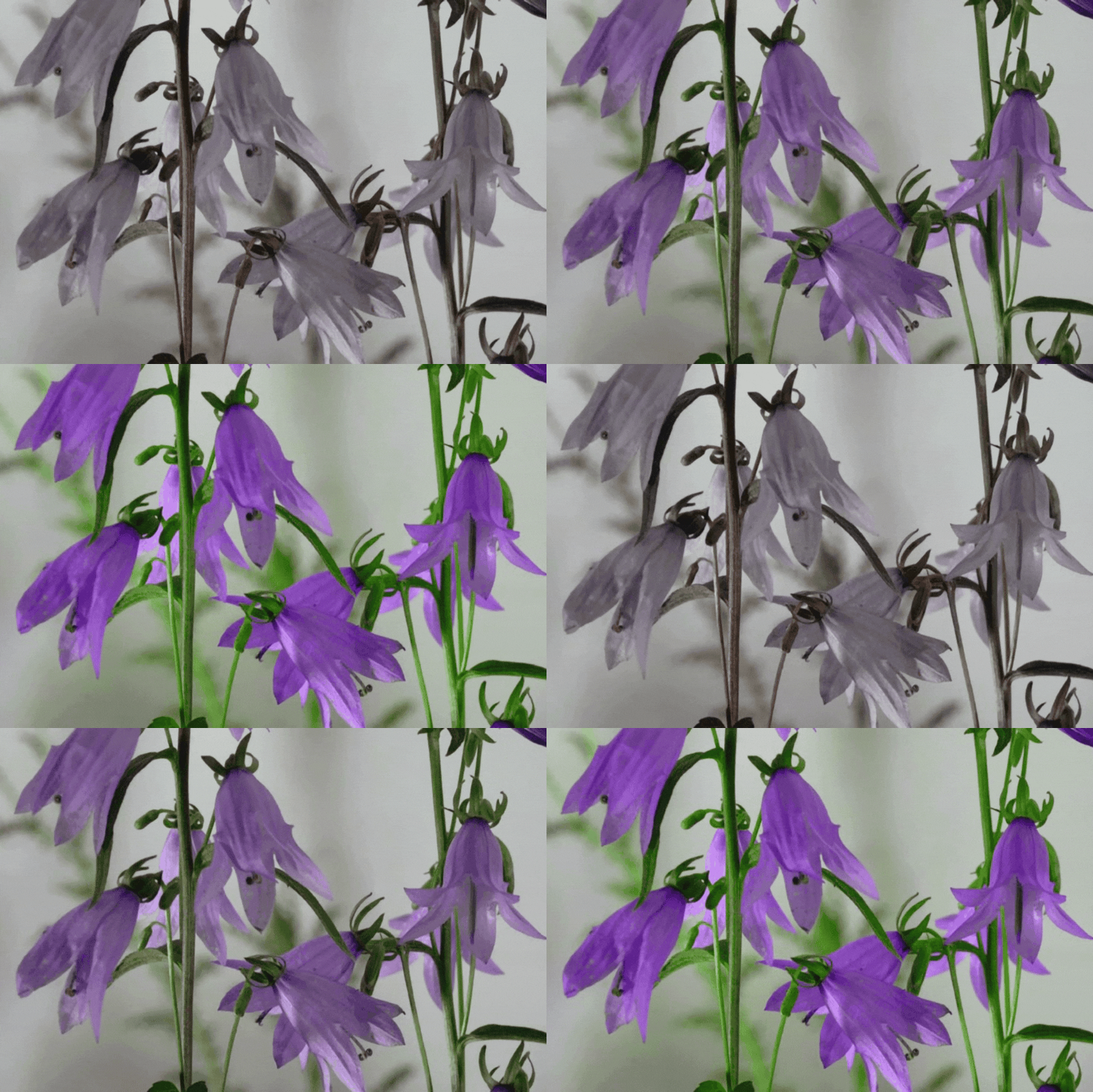
The ideas behind this work have been developing through a series of artistic investigations into how plants respond visually to different lighting conditions. One earlier project, Mondes parallèles, was presented in 2022 through a collaboration between Adrien Lucca, LMNO Gallery in Brussels, and Belgian seed producer Ecosem. The installation brought together wildflowers and programmable lighting, allowing the artist to alter the way individual species stood out within the composition. As the lamps changed the spectrum of light, some flowers became more visible while others blended into the vegetation. The work also examined the long evolutionary connection between floral appearance and the insects that pollinate plants.
From Twilight Studies to an Exploration of Insect Vision
Lucca's interest in nocturnal perception developed further during a 2024 residency with Gluon in Brussels, where he investigated the elephant hawkmoth's relationship with light after sunset. This research later informed his 2025 exhibition, À l’aube du crépuscule, at LMNO Gallery, featuring paintings and illuminated sculptures based on the visual atmosphere of twilight.
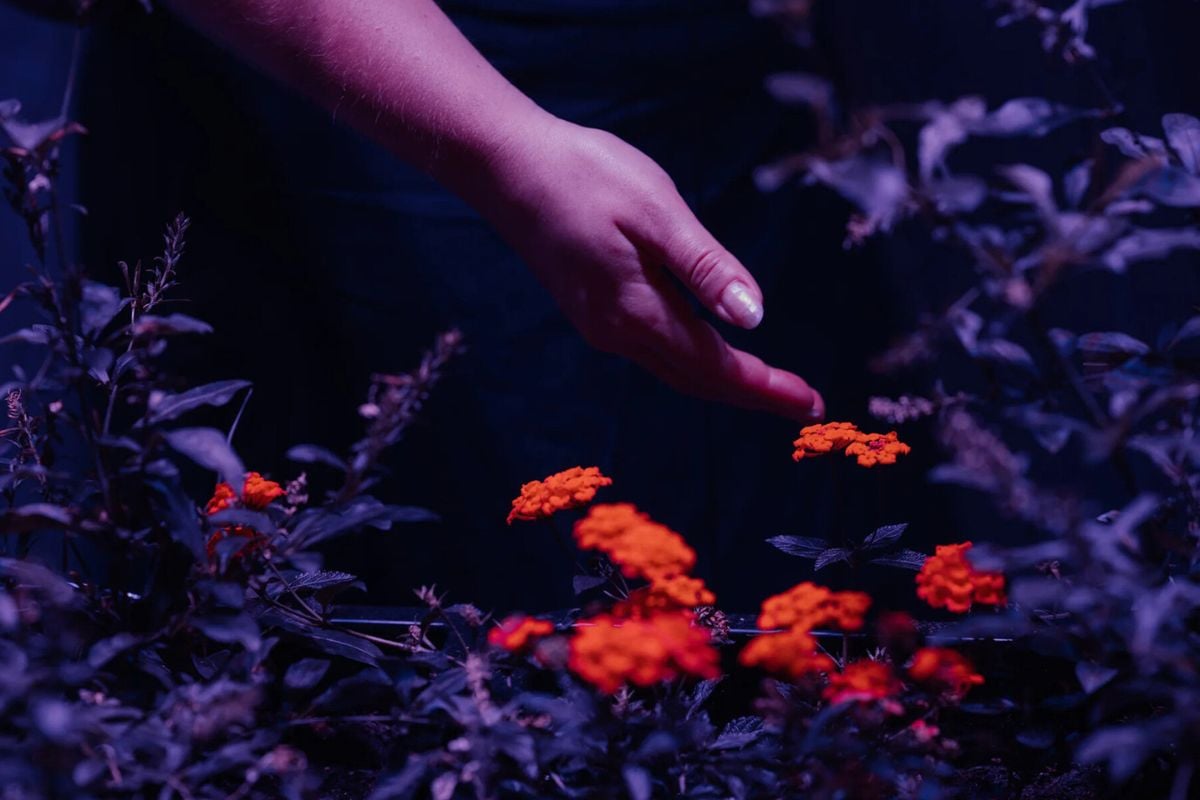
His experiments also examined how the moth's field of vision differs from that of humans, particularly its sensitivity to wavelengths outside our visual range. In the drawing Rosetta, he placed the two visual systems side by side, using red as a visual stand-in for ultraviolet light. Parallel World continues this line of investigation through a living installation that connects his artistic research with the biology of nocturnal pollinators.
The Impact of Artificial Light on Night-Pollinating Insects
The installation also connects with a growing environmental concern: how artificial lighting affects the relationship between plants and their nocturnal pollinators. Many flowers have developed specific colors and patterns to attract insects, including ultraviolet markings that humans cannot see. When streetlights and other artificial sources illuminate these plants at night, they can interfere with the visual cues insects use to locate flowers.
Research published in Nature in 2017 found that artificial illumination reduced nocturnal flower visits by 62% compared with unlit areas. This decline can affect pollination and, consequently, the reproduction of certain plant species.
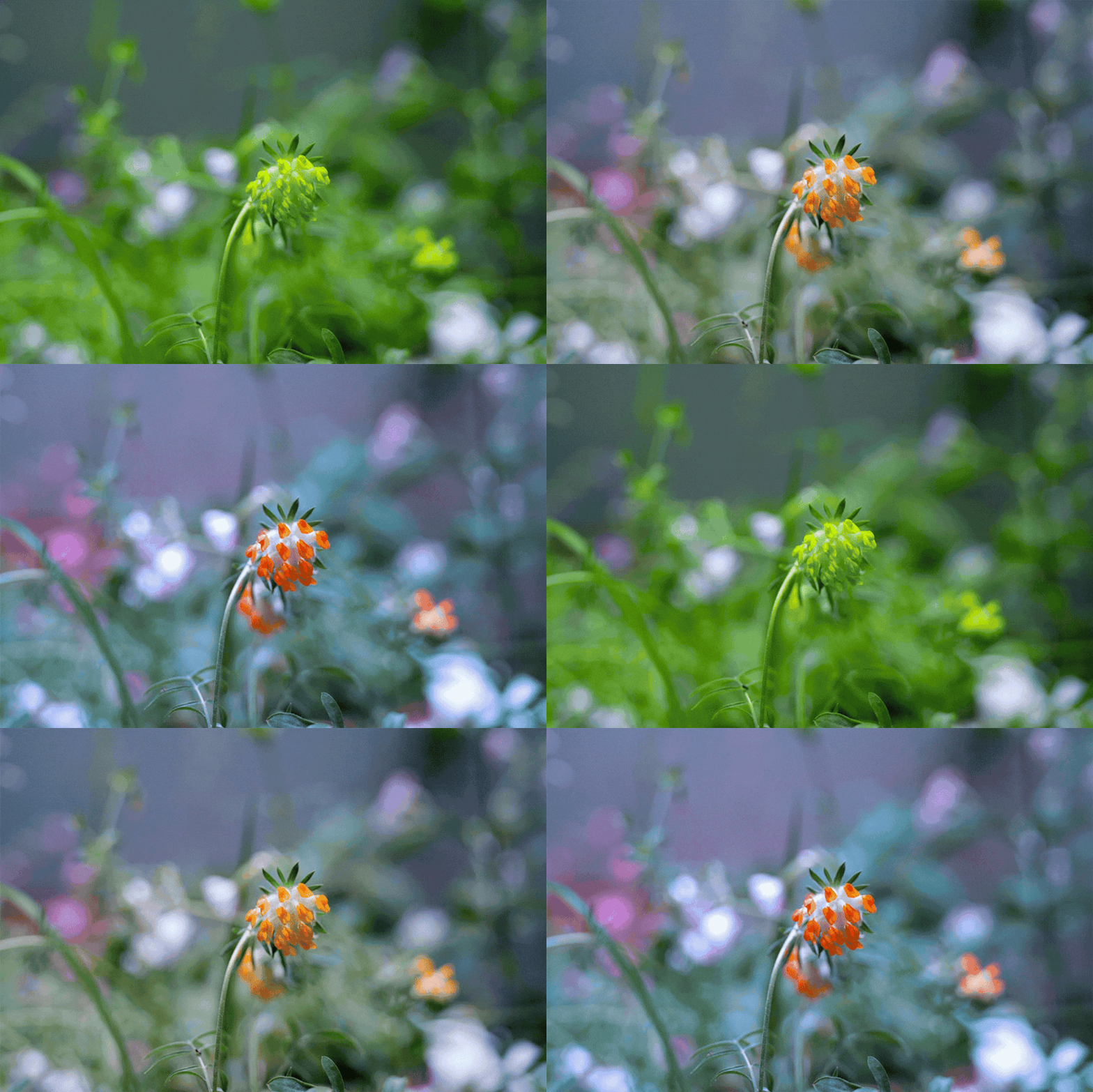
The color of artificial light is another important factor. A 2021 study published in Nature investigated how different lighting spectra affect the way elephant hawkmoths perceive flowers against surrounding foliage. The findings showed that the type of illumination can influence floral visibility, with some wavelengths preserving color contrasts while narrow-band orange light made flowers harder for the moths to distinguish.
In Parallel World, a change in illumination reveals how much of a familiar landscape depends on the observer. The flowers remain the same, but the garden briefly offers a glimpse of another visual world existing alongside our own.
Photos, video, and featured image by @studioadrienlucca.