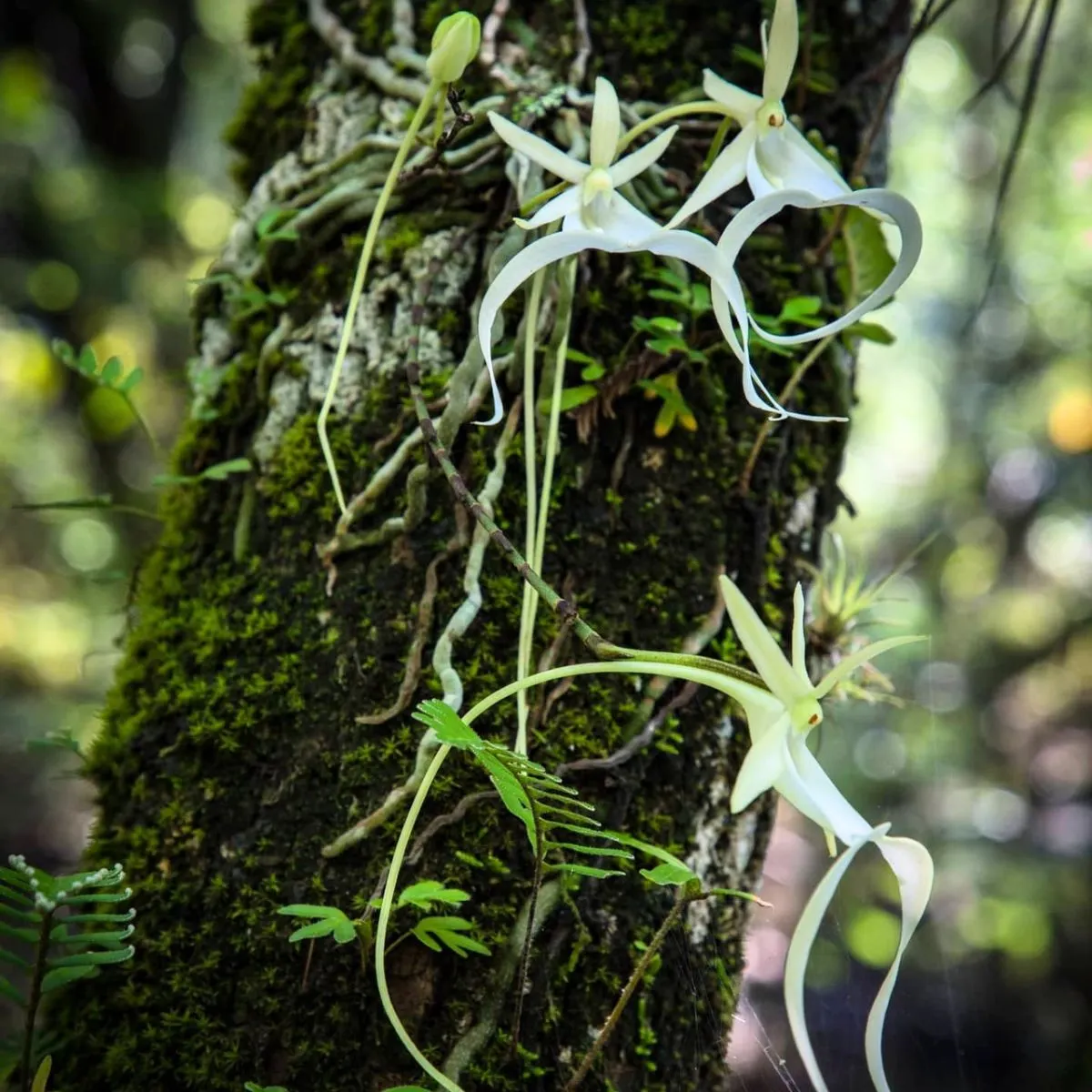
Your orchid's ancestors never saw a flower pot. Most orchids you can buy are epiphytes: in the wild they grow on trees, roots out in the air and rain running straight past them. That's why the best orchid potting mix isn't soil at all. For a Phalaenopsis, it's a chunky, airy mix of medium-grade fir bark, often with some perlite and horticultural charcoal, or a loose pad of long-fiber sphagnum moss. Feeding follows the same logic. Give a balanced orchid fertilizer at a quarter of the label strength every time or every other time you water. Rinse the pot with plain water once a month, and ease off in winter.
Sounds simple? It mostly is. The trouble starts when someone tips a houseplant into the pot.
What Is the Best Orchid Potting Mix? Anything but Soil
An orchid potting mix has two jobs, the American Orchid Society (AOS) explains. It lets plenty of air reach the roots. And it lets water run past them instead of standing around them, while still holding enough moisture for the plant. Garden soil does neither: it packs down, holds water, and leaves no aeration around the orchid's roots. A bag of multipurpose compost doesn't either, and the Royal Horticultural Society (RHS) is blunt about it: loam-based or multipurpose compost will kill a moth orchid.
So what goes in an orchid potting mix? You'll find the same few potting media on almost every bag of orchid mix.
Fir Bark
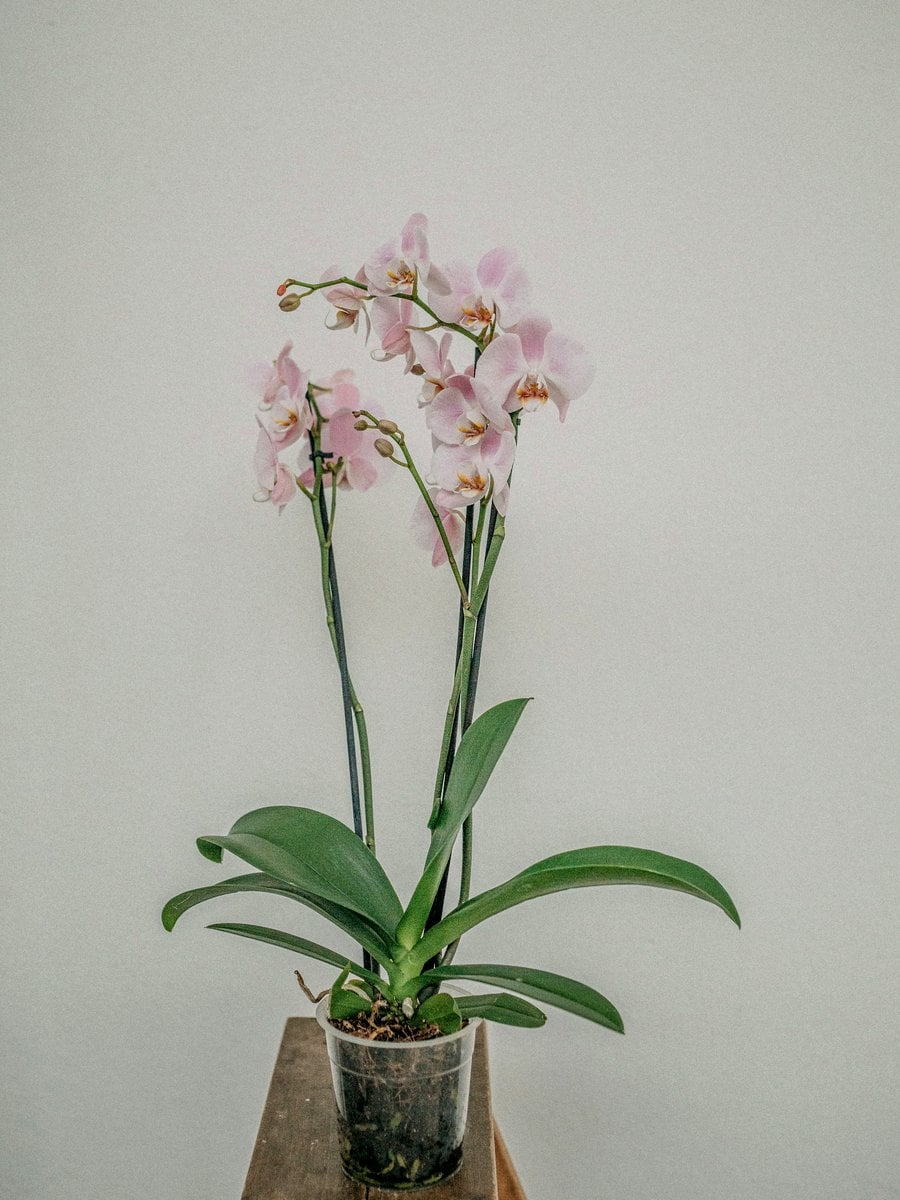
Fir bark is the default base of an orchid mix. The AOS calls it the reigning king of potting materials. In the US, it puts the odds at six in ten that a new orchid arrives in bark chips. It's cheap, drains freely, and holds about 80 percent of its own weight in water, so the orchid's roots get a drink and then air. The catch is that bark rots. A wood-eating fungus slowly breaks the chips down, and as they crumble, the mix holds more water and less air. That's why you'll replace it every couple of years.
Sphagnum Moss
Long-fiber sphagnum, such as New Zealand moss, is the sponge of the orchid world. It holds far more water than bark, and a mix with moss dries more slowly than a bark mix, the New York Botanical Garden (NYBG) notes. That's handy in a dry, heated living room with low humidity and risky for anyone who loves a watering can. Pack it loosely, because tightly packed moss cuts off the air, and moss that stays soggy is the quickest route to overwatering and root rot. And wear gloves when you handle it: the AOS warns that sphagnum can carry a fungus that infects people through cuts in the skin.
Perlite, Charcoal, and Other Add-Ins
Perlite is volcanic glass popped like popcorn. It's light, holds a little water, never breaks down, and keeps a bark mix open as the bark ages. Horticultural charcoal holds water on its surface and soaks up fertilizer residue. It can hold on to salts as well, so a rinse with plain water helps. Pumice, lava rock, and expanded clay pellets or shale don't break down either, so they keep air circulation and good drainage in the pot as the bark ages. There's one thing to know about all of them: an inorganic mix releases no nutrients, so whatever grows in it lives entirely on what you put in the water.
| Ingredient | Water | Good to know |
|---|---|---|
| Fir bark Organic, the base of most mixes |
Holds about 80% of its weight, drains freely | Breaks down in about two years; soak it overnight before use |
| Sphagnum moss Organic, long-fiber |
Holds far more than bark, dries slowly | Pack loosely and handle with gloves |
| Perlite Inorganic additive |
Holds a little | Never breaks down and keeps the mix open; chunky grades work best |
| Horticultural charcoal Additive, not barbecue charcoal |
Holds water on its surface only | Absorbs fertilizer residue but also salts, so flush it with plain water |
Source: American Orchid Society, Beginner's Series Part 2, Media Mania Revisited.
How to Make an Orchid Pot Mixture at Home
You don't need a recipe book. Here's the orchid pot mixture the Missouri Botanical Garden uses for its own moth orchids:
- 5 parts fresh fir bark, medium grade, in chunks of about 6 to 13 mm (¼ to ½ inch)
- 1 part horticultural charcoal
- 1 part perlite
Match the chunk size to the roots: the thicker the root, the bigger the chunk. Coarse chunks leave bigger air spaces and dry faster, while fine ones hold more moisture and dry more slowly. The AOS passes on the grading used by the Eric Young Orchid Foundation. That's about 6 mm (¼ inch) for seedlings and thin-rooted orchids, 13 mm (½ inch) for most adult plants, and 19 mm (¾ inch) for big ones such as mature Cattleya. Want more water retention for a heated room or a forgetful waterer? Add a handful of sphagnum moss or peat. In a humid bathroom, or if you water often, go the other way and add more bark, pumice, or perlite. Orchid researcher Yin-Tung Wang grew Phalaenopsis for a year in pure fine fir bark and in a mix of 7 parts bark to 3 parts sphagnum peat. The plants in the bark and peat mix grew more leaves and a larger leaf area.
Two habits make any orchid potting mix work better. Soak new bark overnight, because bone-dry bark can pull water out of the roots before it takes up any itself. And stir a bag of orchid mix before you use it, since the ingredients settle at different rates (both tips from the AOS).
The Right Mix for Phalaenopsis, Dendrobium, Vanda, and Cymbidium
One orchid potting mix doesn't fit every orchid. The four you'll meet most in shops and garden centers each want something a little different around their roots.
Phalaenopsis
The moth orchid is the easy one. Mature plants go in a medium-grade bark mix. They can stay in it until the bark starts to decompose, usually after about two years, the AOS Phalaenopsis culture sheet says. Indoors, the same sheet favors a fine bark mix whatever the plant's size. Growers raise them by the million. Ter Laak Orchids in Wateringen grows around 6 million a year, and VG Orchids in De Lier aims to keep its orchid range as broad as it can. Species such as Phalaenopsis bellina, which grows high in the trees of Borneo, show where that taste for air comes from.

Dendrobium Nobile
Dendrobium nobile isn't fussy about the mix. A fast-draining medium is the one must, and both bark and sphagnum mixes are fine, says the NYBG. It likes a snug pot, too. Keep the container fairly small and refresh the mix rather than moving up a size. De Hoog Orchids in Delfgauw has grown nothing but Dendrobium nobile since 1990, varieties such as Dendrobium nobile Spring Dream Apollon among them. Its own advice is about feeding, and it comes up below.

Vanda
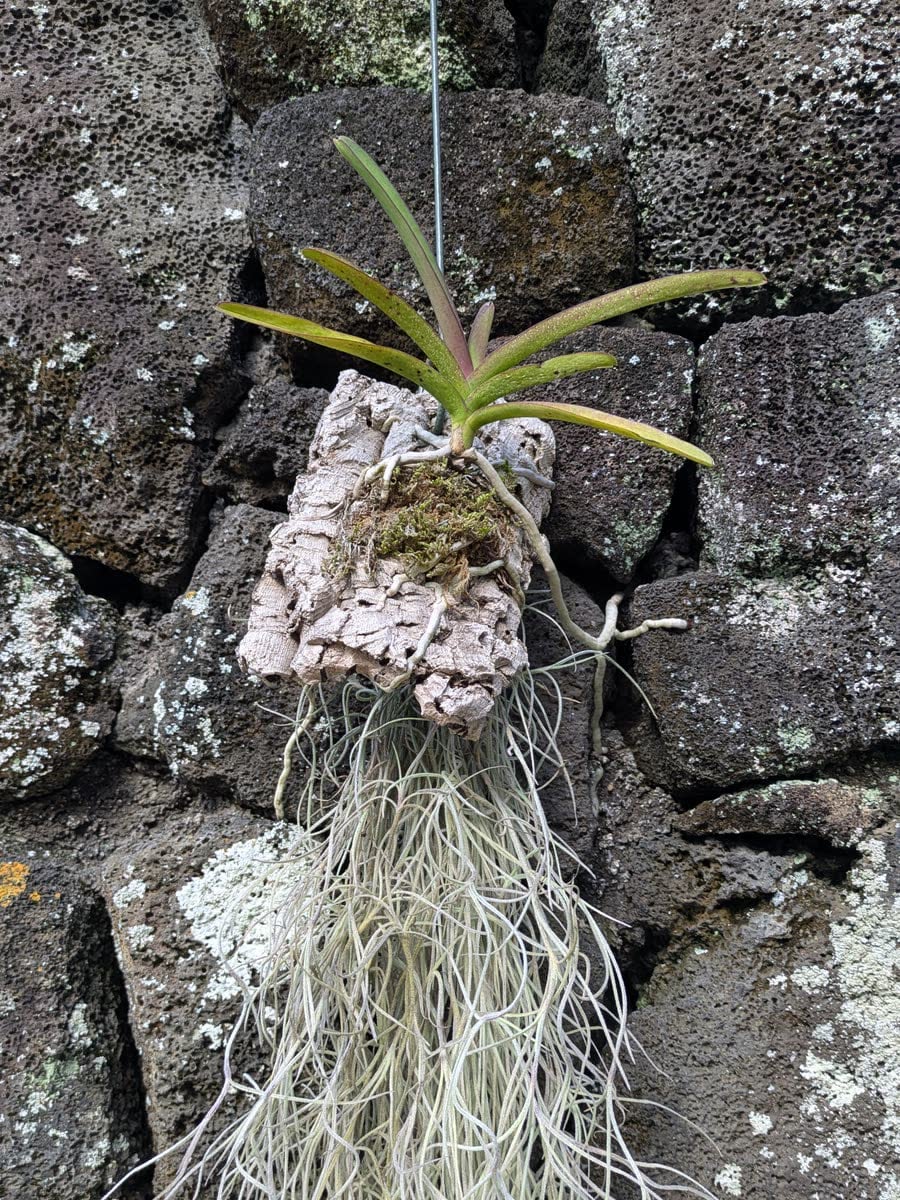
Vanda is the orchid that skips the orchid potting mix altogether. It can grow in a basket with its roots exposed, in a small pot, or hanging with no growing medium at all, according to the NYBG. If you do pot one, use a coarse, chunky mix of fir bark, lava rock, or charcoal. A bare-root Vanda has one quirk, the AOS Vanda culture sheet adds. Without media, the roots slowly lose their salts. So every few months, soak the plant for a few hours in one tablespoon of Epsom salts per 4 liters (1 gallon) of water. Thursd author Elisa Macomber grows hers mounted on bark in Hawaii, and she wrote about growing orchids on trees the way nature intended. In Europe, Ansu Vanda in Wateringen grows cut Vandas such as Vanda Kanchana Magic Blue, and Thursd's guide to Vanda orchids goes through the types.
Cymbidium
Cymbidium is the thirsty one. It grows in the ground rather than on trees, so it wants a water-retentive mix, as do other terrestrial orchid types such as slipper orchids (Paphiopedilum) and jewel orchids. Medium-grade fir bark with peat moss and perlite is a common one, the AOS Cymbidium culture sheet says. Repot every two years, in spring after flowering, as the mix decomposes. Alain Poot Orchideeën in Delfgauw breeds and grows its own Cymbidium varieties.

How Often to Fertilize Orchids (Weakly, Weekly)
Here's the rule worth remembering: "feed weakly, weekly." It comes from the NYBG, and the reason is the mix itself. Bark and moss aren't nutritious garden soil, so the food has to come with the water. In practice, that's a balanced fertilizer such as 20-20-20 at a quarter of the label strength, every time or every other time you water. Once a month, a plain-water flush washes out leftover salts.
Ask around and you'll hear plenty of schedules. The RHS feeds lightly but regularly in the growing season and gives every fourth watering without fertilizer. The University of Maryland Extension feeds every third or fourth watering, following the label. The growers themselves keep it simpler still. Ter Laak advises an orchid fertilizer once a month on its care page. De Hoog Orchids gives its Dendrobium nobile a liquid fertilizer every two weeks during spring and summer, according to its FAQ.
The schedules differ, but they all agree on one thing: less is safer than more. Too much food gives lush leaves at the expense of flowers, as the University of Maryland puts it. Arjan de Hoog has a one-line diagnosis for a nobile that grows little plantlets on its canes instead of flowers. "If the plant makes keikis, the plant has too much food in it," he said for the orchid care guide.
Which Orchid Fertilizer? What the Numbers Really Mean
The three numbers on the label are nitrogen, phosphorus, and potassium, in that order. A 20-20-20 is balanced, and that's what most orchids want.
So where does the famous 30-10-10 come from? From the bark. The fungus that breaks bark down eats a lot of nitrogen. The extra nitrogen in a 30-10-10 feeds that fungus, so it doesn't rob the orchid. The AOS is clear that it's only for orchids in bark, and calls the idea that every orchid needs it "totally wrong."
Then there's the bloom booster, the high-phosphorus feed sold to push flowers. Research on Phalaenopsis doesn't back it. In his review of the science, Wang found that 25 to 50 mg of phosphorus per liter is enough for good growth. Extra phosphorus given a month before spiking didn't improve flowering. Potassium matters more. Plants short of it look fine until they start to flower, and then the lower leaves turn yellow and drop. Two more findings from the same review are worth knowing. Phalaenopsis grows and flowers better when at least half of its nitrogen comes as nitrate, so check the label. And spraying the leaves alone doesn't feed the plant well enough.
If that's all too much chemistry, there's the fertilizer orchid growers call "Michigan State University's Magic Fertilizer," or MSU for short. It was designed for the university's greenhouses and "just about everything but orchids," wrote MSU orchid grower Jan Szyren for the AOS. She tried it anyway, and the MSU collection then won a string of AOS cultural awards. It comes in two versions. The 13-3-15 is for rainwater or purified water, and the 19-4-23 was made for the hard well water at the university. Note how low the middle number is.
When to Feed Your Orchid and When to Stop
Feed when the plant grows, and slow down when it rests. For a Phalaenopsis, the RHS feeds only sparingly, if at all, in winter, while the NYBG keeps feeding weakly all year. The other three have clearer calendars:
- Dendrobium nobile: regular orchid fertilizer in spring and early summer, then a high-potassium feed from late summer into autumn, says the RHS. Skip high-nitrogen feed, especially after midsummer. The NYBG cuts water and fertilizer by about 20 to 30 percent in winter to trigger flowers. De Hoog stops feeding in autumn and winter altogether.
- Vanda: the NYBG feeds at a quarter to half strength at every watering while the plant grows. The AOS cuts back or stops in autumn, when growth slows.
- Cymbidium: the AOS calendar starts with a high-nitrogen feed from March to May and a balanced one from June to September. A bloom booster follows once the spikes show, and there's nothing at all in winter.
And once the flowers are on their way? Growers can stop feeding a Phalaenopsis completely once the flower spike is 10 cm (4 inches) long, or when the first flower opens. They don't lose a single flower, according to Wang's review. You don't have to stop, but you don't have to worry if you forget.
Signs the Mix Is Spent
Even the best orchid potting mix wears out. You'll see brown crumbs wash out when you water, the bark feels soft through the drainage hole, or the pot stays wet for days. Healthy roots are firm and green or silvery, while brown, mushy roots sit in a mix that holds too much water. Lift the pot and feel its weight before you reach for the can: a light pot is ready for its next watering. Roots tell you too. White mold on Phalaenopsis roots means the medium has broken down and needs changing, the NYBG says. Wait until flowering is over, then repot into a new orchid potting mix. Pick a pot only just big enough for the roots, because a pot full of spare mix stays wet and the roots rot. Thursd's orchid care guide walks through the repotting step by step.
Give the Roots Air and the Water a Little Food
An orchid lives on air, water, and very little else. Give it an orchid potting mix that drains in seconds and breathes, a weak feed most times you water, and plain water once a month. When the bark turns to crumbs, start again with a new mix. Your Phalaenopsis spent its first years in a greenhouse that did exactly that, so it'll know what to do.
Sources opened for this guide, November 2026: the American Orchid Society beginner's article Media Mania Revisited, its culture sheets for Phalaenopsis, Vanda, and Cymbidium, and Jan Szyren's article on the MSU fertilizer. The Missouri Botanical Garden guide to repotting moth orchids. The New York Botanical Garden research guides on Phalaenopsis, nobile Dendrobium hybrids, and Vanda. The Royal Horticultural Society growing guides for Phalaenopsis and Dendrobium. University of Maryland Extension on the care of moth orchids, and Iowa State University Extension on moth orchid care. Y.-T. Wang and E.A. Konow in the Journal of the American Society for Horticultural Science (2002) and Y.-T. Wang in Acta Horticulturae 878 (2010). The care pages of Ter Laak Orchids and De Hoog Orchids.
Header image by Anna Khromova on Unsplash, featured image by De Hoog Orchids.