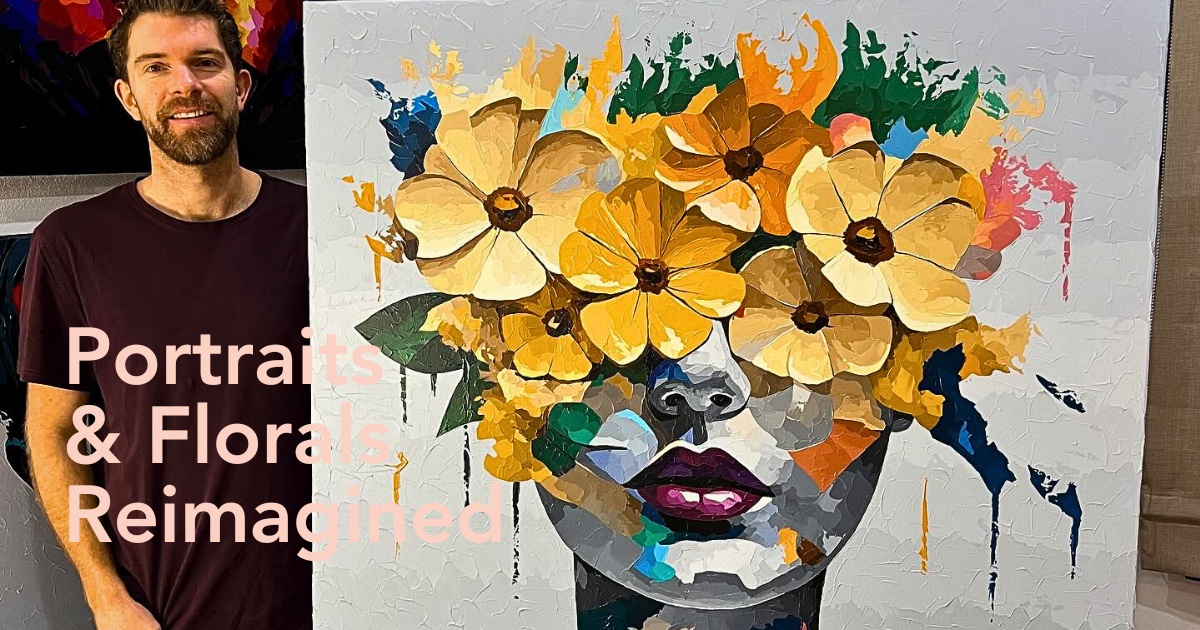
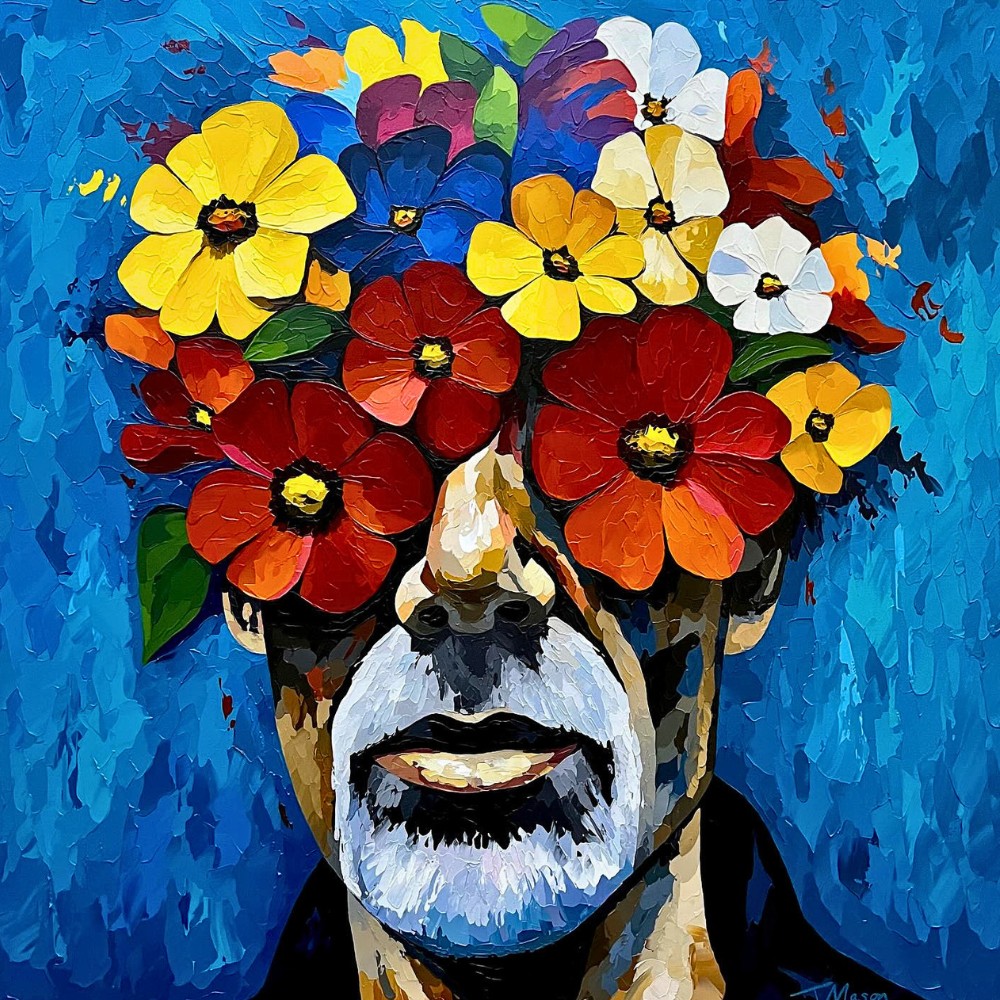
British-born, Germany-based Jack Mason is a palette knife painter who has built a kind of body of artwork that transits between deeply felt portraiture and lush florals with an ease that feels almost natural. In most of his pieces, he merges the two subjects so that they seem to make natural and perfect sense.
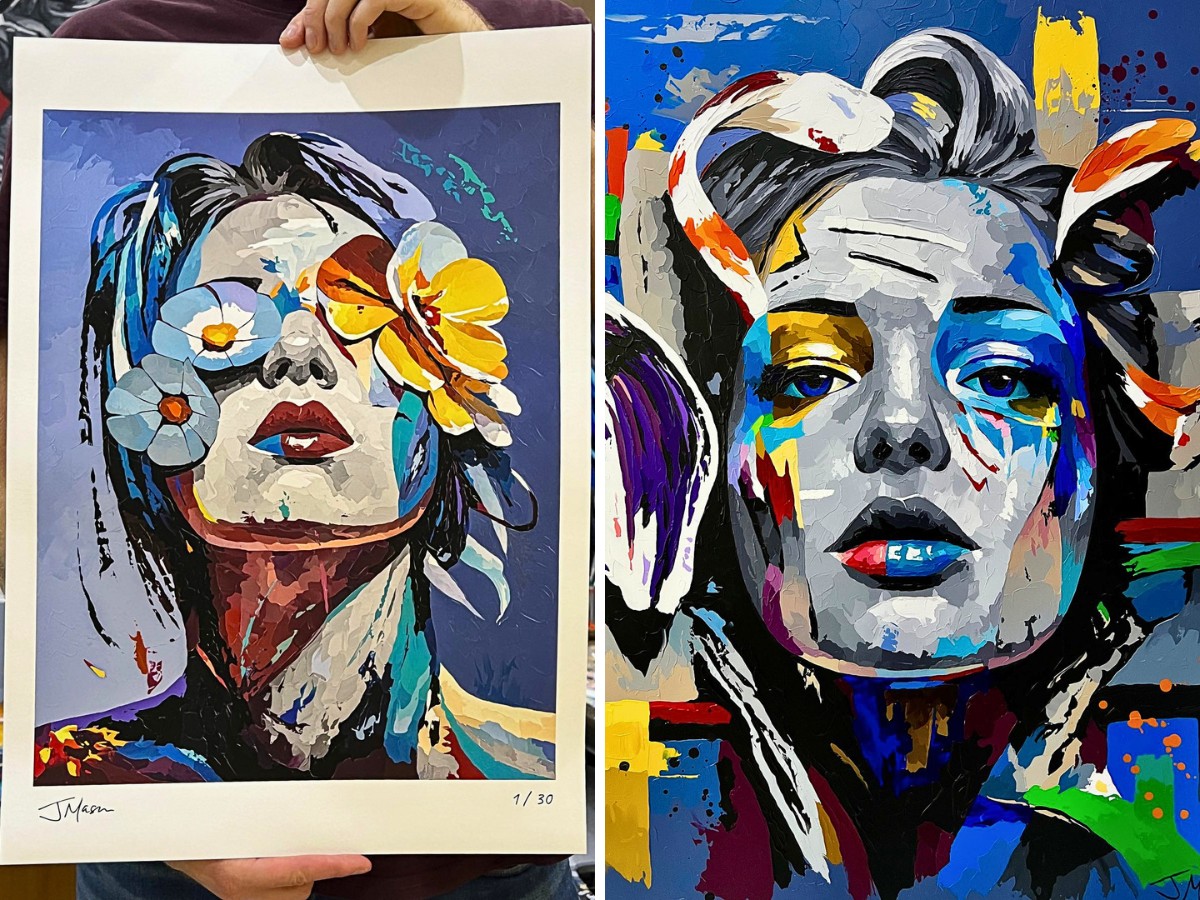
Looking at his portraits, at first glance, his work pulls you in with bold color and thick paint strokes. Faces, gestures, and flower petals meet in these paintings, making them feel intimate and expressive, one could say. As he puts it himself, through his art pieces (portraits), he tries to communicate the sentiments and experiences that make everyone unique.
A Background in Geology, and a Focus on Art Later
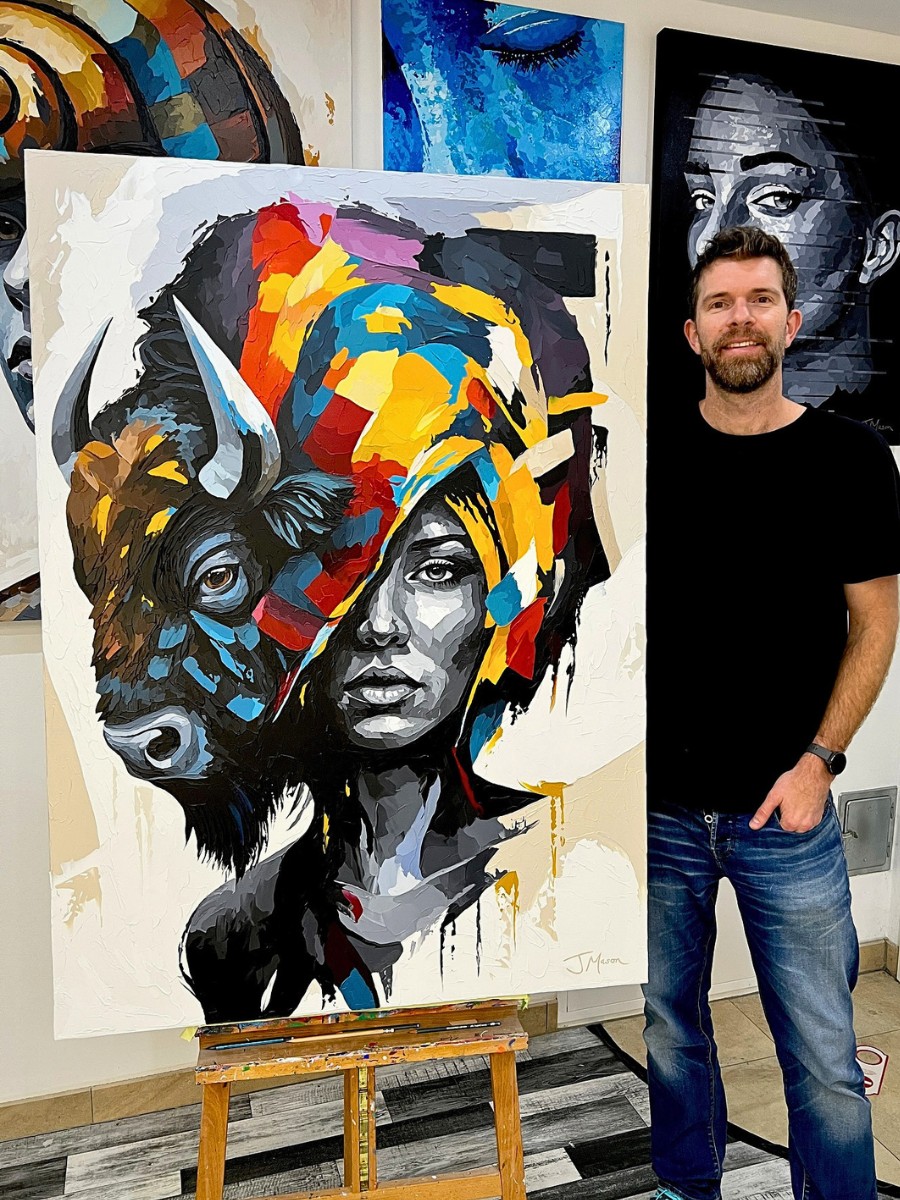
Back then, before he started out, Jack had a PhD in Paleoseismology at RWTH Aachen University and had an altogether different career. He spent over a decade as a geologist, a background that is worth holding onto as you look at his artworks, because therein is something unmistakably geological about them.
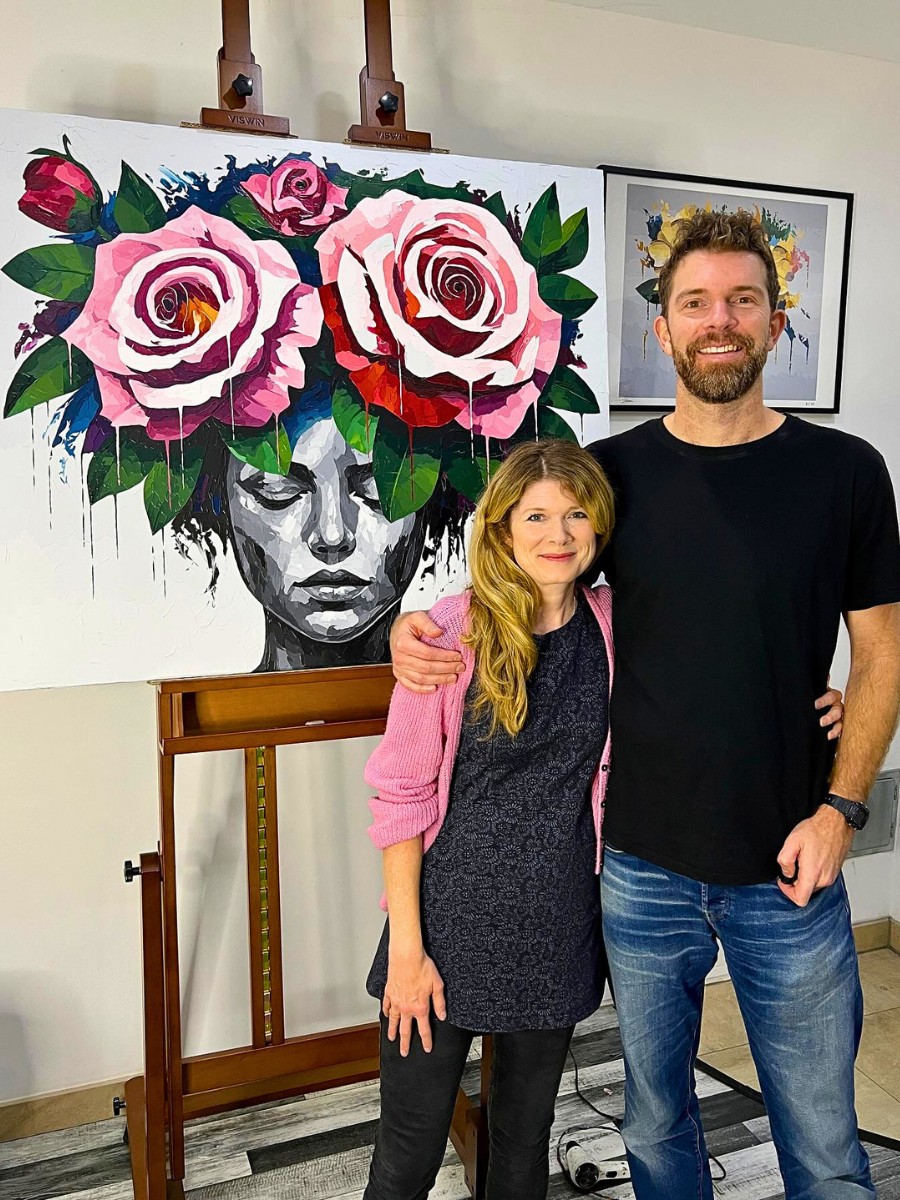
Jack moved from the UK to Germany's Sauerland region in 2012, eventually settling in the quiet Olpe District with his girlfriend (now wife) Teresa and their two children, Henry and Isla. He became a full-time artist in 2020, which shows in the confidence of his work.
The life he has built around his practice is not incidental to understanding his living, as his paintings are often full of domestic warmth and an attentiveness that comes from one who carefully notices the people and things around them every day.
Portraits as the Subject He Is Most Drawn To
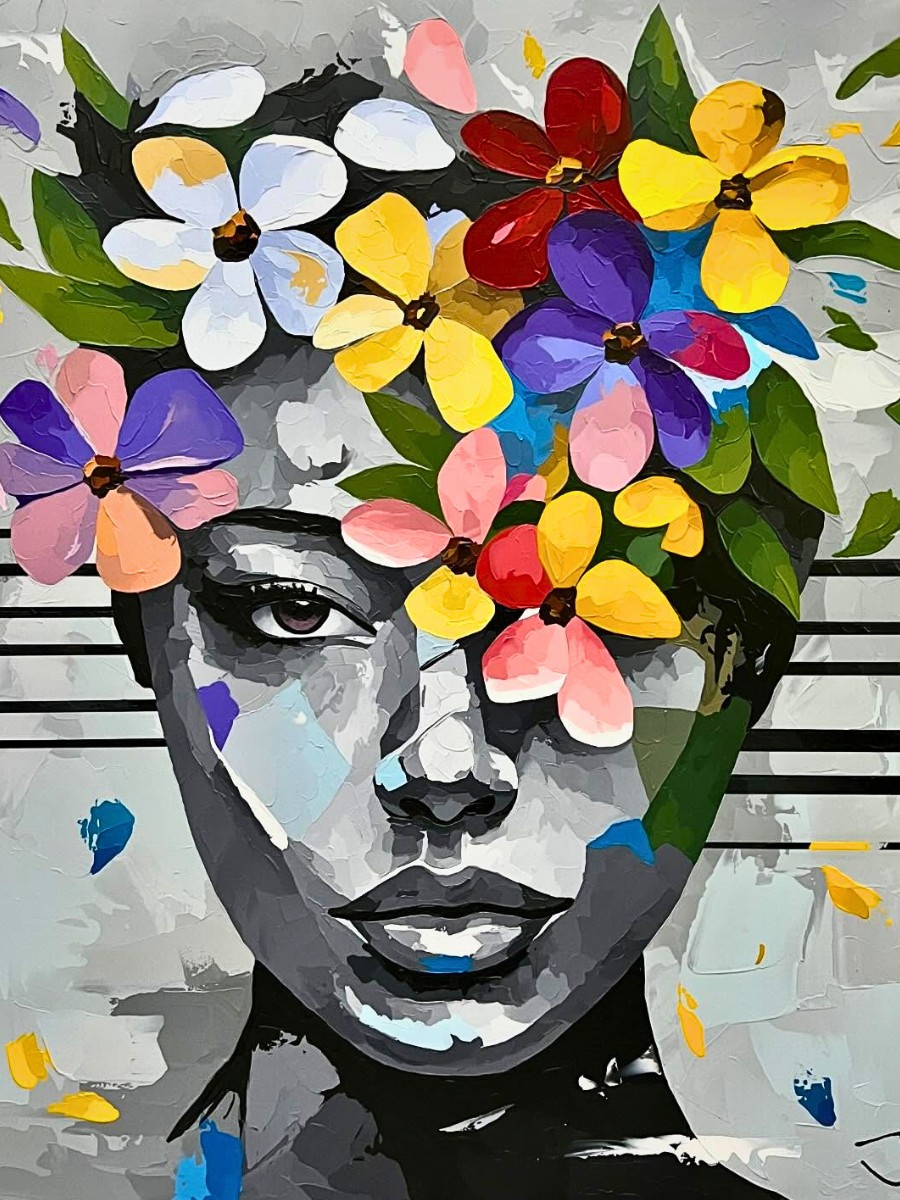
Jack has, for the most part, indicated that portraits are the subject he is most drawn to. It is easy to understand why, because his approach was practically designed for it. The palette knife, dragged across the canvas in a single arc, has a manner of catching light that mimics the way that light falls across the cheekbone or the bridge of a nose, of the portrait’s subject, capturing the outlines of a face.
Jack:
"I am fascinated by the way humans express themselves, and I see my paintings as an expression of the human condition. Be it through a facial expression or the juxtaposition of color within a portrait, I try to communicate the emotions and experiences which make us all unique."
Using the bold knife strokes, he, therefore, allows the expressed emotion to be revealed, whilst also providing a slightly abstract element. His painted portraits are recognizably human but continuously pull toward abstraction, as though they are suggested, and not quite defined. Their skin tones are pulled together from colors that have no clear business being next to each other, but somehow they read as completely spot-on once they are painted on the subject.
Jack describes his artistic thought process:
"My process involves the assemblage of abstract shapes of color using palette knives, layer upon layer, and stroke after stroke, until eventually the desired form emerges. The faces I paint have detectable features but continually push towards abstraction, and the thick texture of my works makes the viewer want to reach out and feel each piece."
In essence, what he is after, as he suggests, is the expression underneath the surface; quite like he is being less interested in capturing what a face looks like and more interested in what the subject in the painting is doing or even about to say. His portraits do not flatter the subject in the conventional sense, but give them a bearing.
Flowers as Emotional Architecture
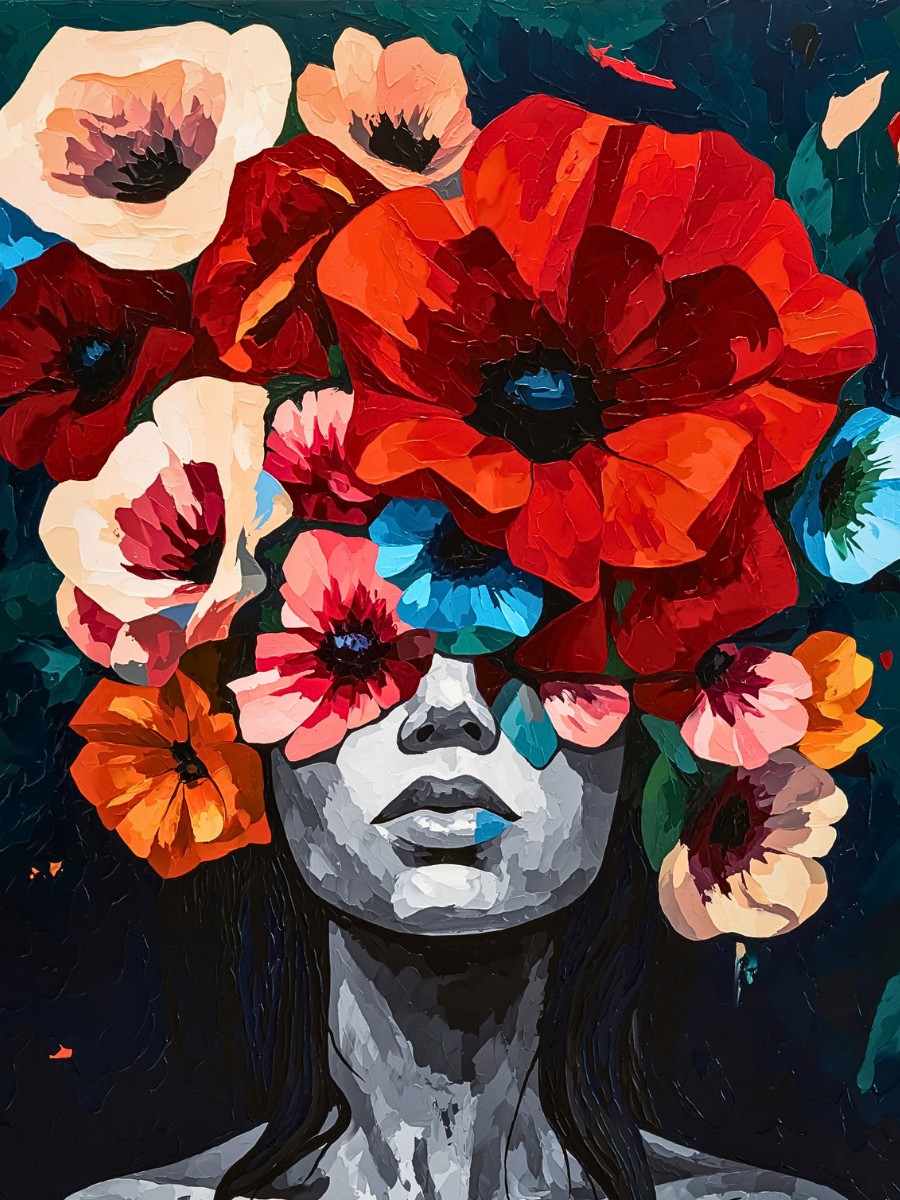
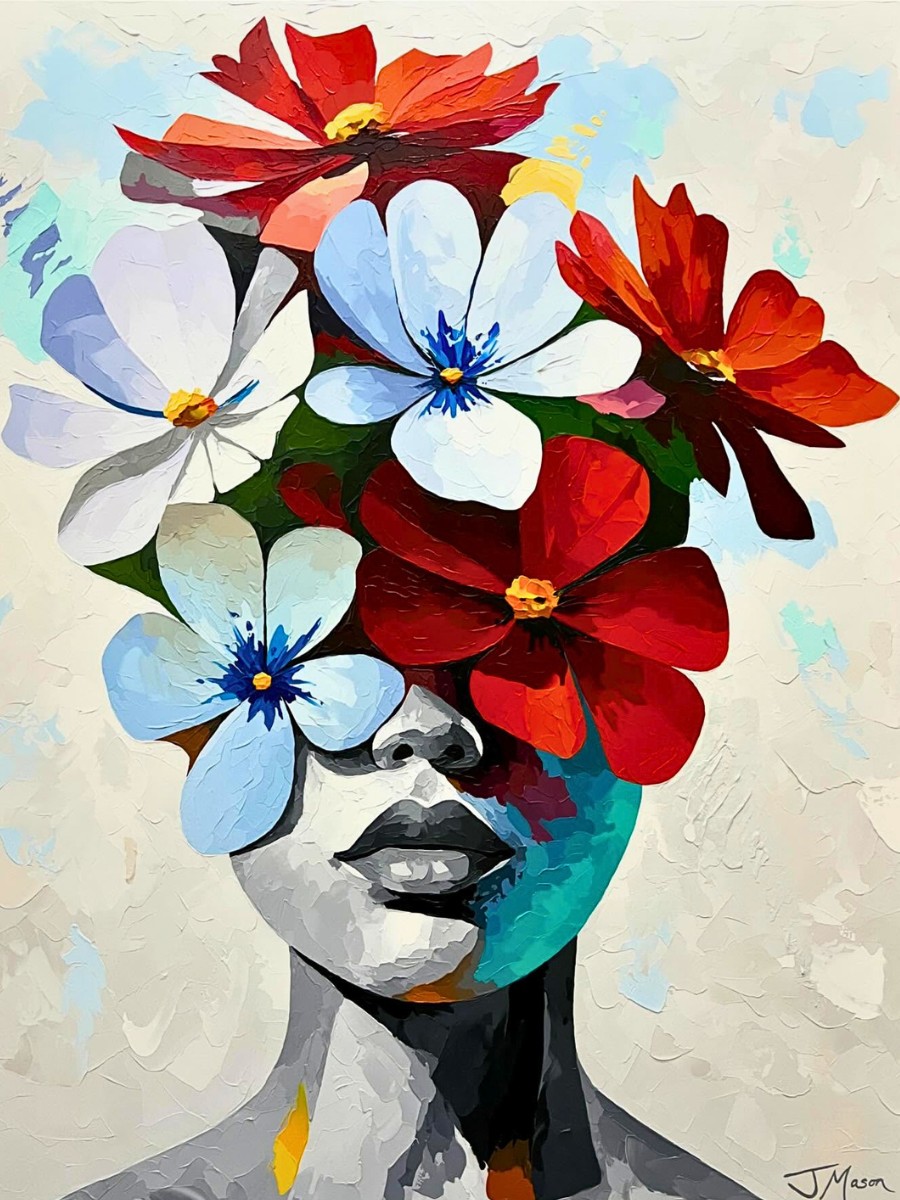
Jack’s portraits featuring floral paintings alongside human subjects are perhaps among his most fascinating works. Thick passages of cream, coral, pale gold, and other colors sit against deep, sometimes shadowed backgrounds, created from decisive knife strokes. There is not much fussiness here; the flowers are assembled instead of being rendered, and the construction marks are still visible up close. You can see the thought process in the physical marks.
But there is more that makes his works seem more than technically assured, in the way he approaches a flower as if it has a feeling. His floral compositions carry an emotional charge, perhaps not because they are sentimental, but because he applies the same interpretive logic to each floral subject as he applies to a human face in the paintings.
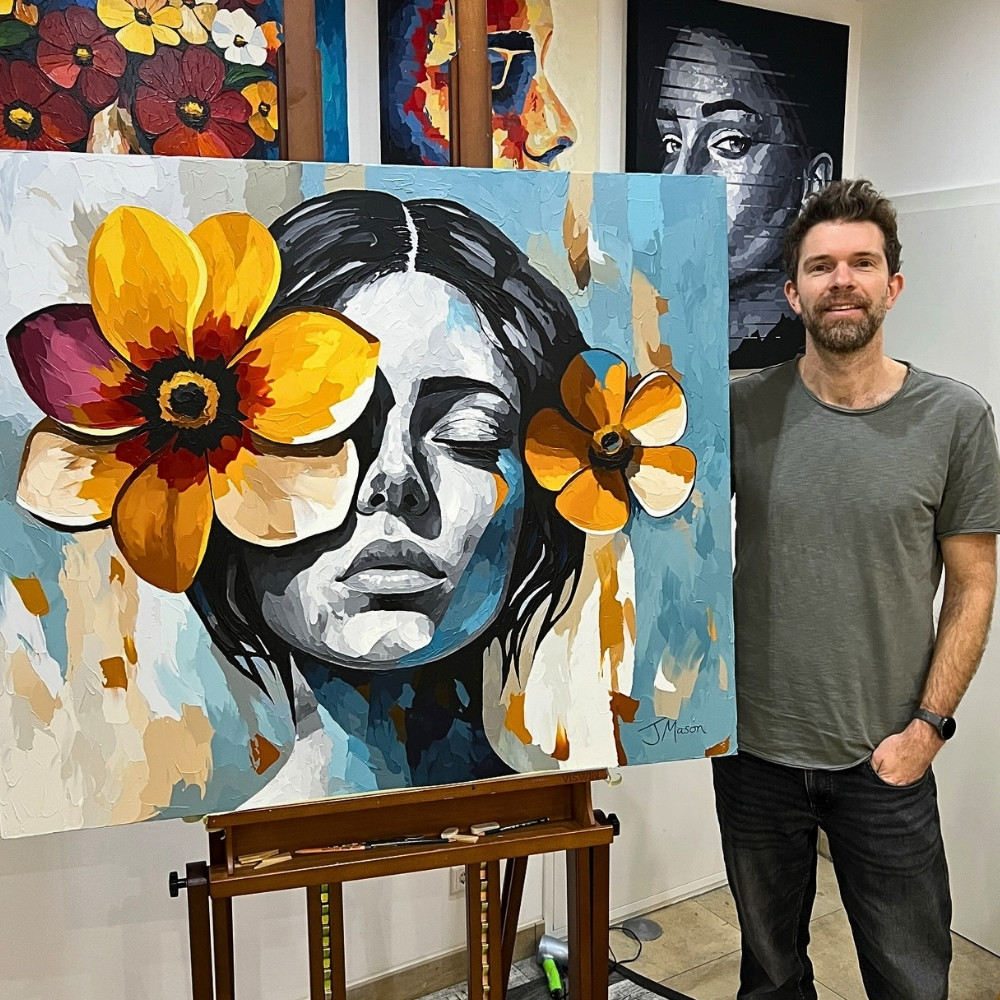
For instance, in a striking 2024 solo exhibition titled ‘Expressions in Bloom’ at the Sparkassen-Galerie in Olpe, Germany, this connection was made explicit. The show placed his floral and portrait work side by side, and the back-and-forth between them was easy to ‘hear.’ A face and a flower, in his mind, one would therefore say, are studied with the same thorough intensity.
Definitely an Artist Whose Work Is Worth Following
Jack has exhibited his works across Europe and elsewhere, with group exhibitions in London, Madrid, Prague, Milan, Hamburg, Dortmund, and Cologne, and won the Fobikus Fine Art Prize in 2023.
His limited edition prints are produced on archival Hahnemühle museum-grade paper. If you want first access to his works and new originals, because his sold works page fills up with a steady, satisfying regularity, you can explore them at jackmasonart.com.
Photos by @jack_mason_art.