

In Naivasha, Kenya, where altitude and light create ideal conditions for rose production, Pride of Africa has steadily built its name since 2004. Founded by the Van den Berg family, the farm initially focused on standard roses, supplying consistent quality to demanding retail and wholesale markets. Three years ago, they expanded into spray roses, not as a trend-driven decision, but as a calculated step into a category with long-term potential.
This shift reflects how the farm operates. Growth happens when the structure is ready. By entering the spray rose segment with an existing foundation in quality management and market understanding, Pride of Africa positioned itself to deliver a product that meets both aesthetic and technical expectations.
A Close Relationship With Interplant Roses
A defining element of the farm's spray rose program is its collaboration with Interplant Roses. Around 95 percent of Pride of Africa's spray rose assortment comes from Interplant genetics. Currently, the farm grows 25 Interplant varieties, with new introductions added each year to keep the range relevant.
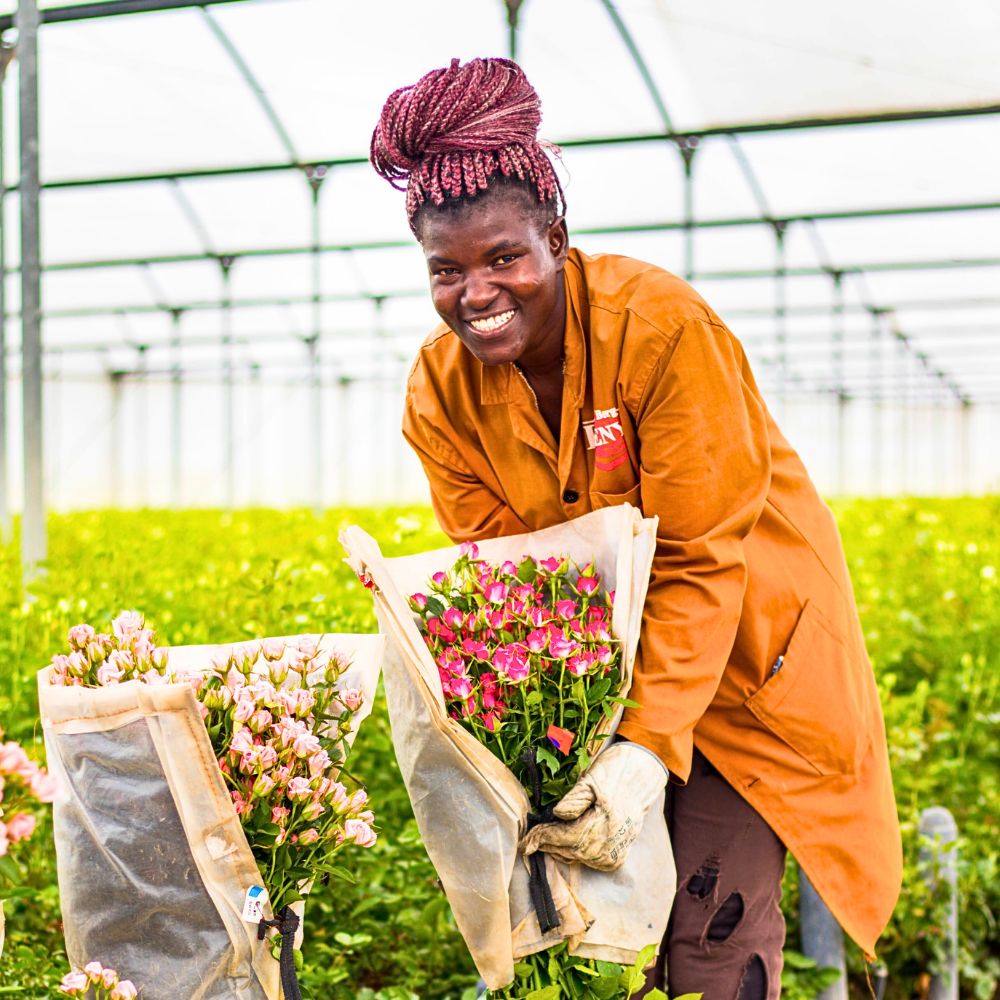
Working so closely with one breeder creates clarity. It enables focused crop management, aligned expectations for performance, and consistency in stem quality and structure. In a niche category like spray roses, that consistency matters. Buyers want reliability in colour, shape, and vase performance. By maintaining a strong breeder relationship, Pride of Africa strengthens its ability to deliver that reliability season after season.
What Makes Their Spray Roses Stand Out?
Spray roses from Pride of Africa are known for their relatively long stems. Because the crops are still young, the farm is achieving stem lengths that support both bouquet work and mono bunch presentations. In retail environments where height and structure influence consumer choice, this makes a measurable difference.

Equally important is harvest discipline. Roses are cut at the correct stage to ensure they open well and hold through transport and display. That cut stage decision is not rushed. It is based on experience and market knowledge. Once harvested, the roses are unpacked in the Netherlands by the team themselves, adding another layer of control. By managing quality close to the market, the farm reduces variability and protects its product's reputation.
This combination of young crops, precise harvesting, and careful handling gives their spray roses a clear positioning within the World of Spray Roses network.
Varieties Driving Current Demand
Among the strongest performers in the assortment are the 70-centimetre stems of spray roses: Summerdance, Fireworks, Tralala, and Holly. These varieties combine a strong presence with versatility. They work well in mixed bouquets but also hold their own in mono bunches, where stem length and uniformity are critical.

The pipeline continues to develop. New varieties such as Caradonna, Nandi, Jalitah, and Yvette are being introduced to expand the colour spectrum and structural diversity. Offering a broad range is not about volume alone. It is about giving florists and retailers options that respond to changing design preferences and seasonal demand.
Contributing to the Growth of Spray Roses
As part of World of Spray Roses, Pride of Africa supports the broader effort to increase awareness around the everyday use of spray roses. In more countries, spray roses are appearing not only in event work but also in daily retail bouquets and mono bunch concepts.

The category remains niche, and that is not a weakness. A niche position allows growers to protect quality, manage supply carefully, and maintain value. Promotion through World of Spray Roses and continued varietal development from Interplant have strengthened demand and improved market perception. Spray roses are no longer seen as secondary to standard roses. They are becoming a deliberate design choice.
Sustainability and Responsibility
Retail supply comes with clear expectations. Pride of Africa is accustomed to working under Fairtrade standards for its single roses, and the same level of compliance applies to its spray roses. If those standards are not met, access to key retail markets becomes impossible.
Consumers are increasingly critical. They look closely at spraying schedules and the number of active ingredients used in production. The farm understands that protecting the reputation of roses as a product category depends on responsible cultivation. Social and environmental standards are therefore integrated into daily operations rather than treated as optional extras.
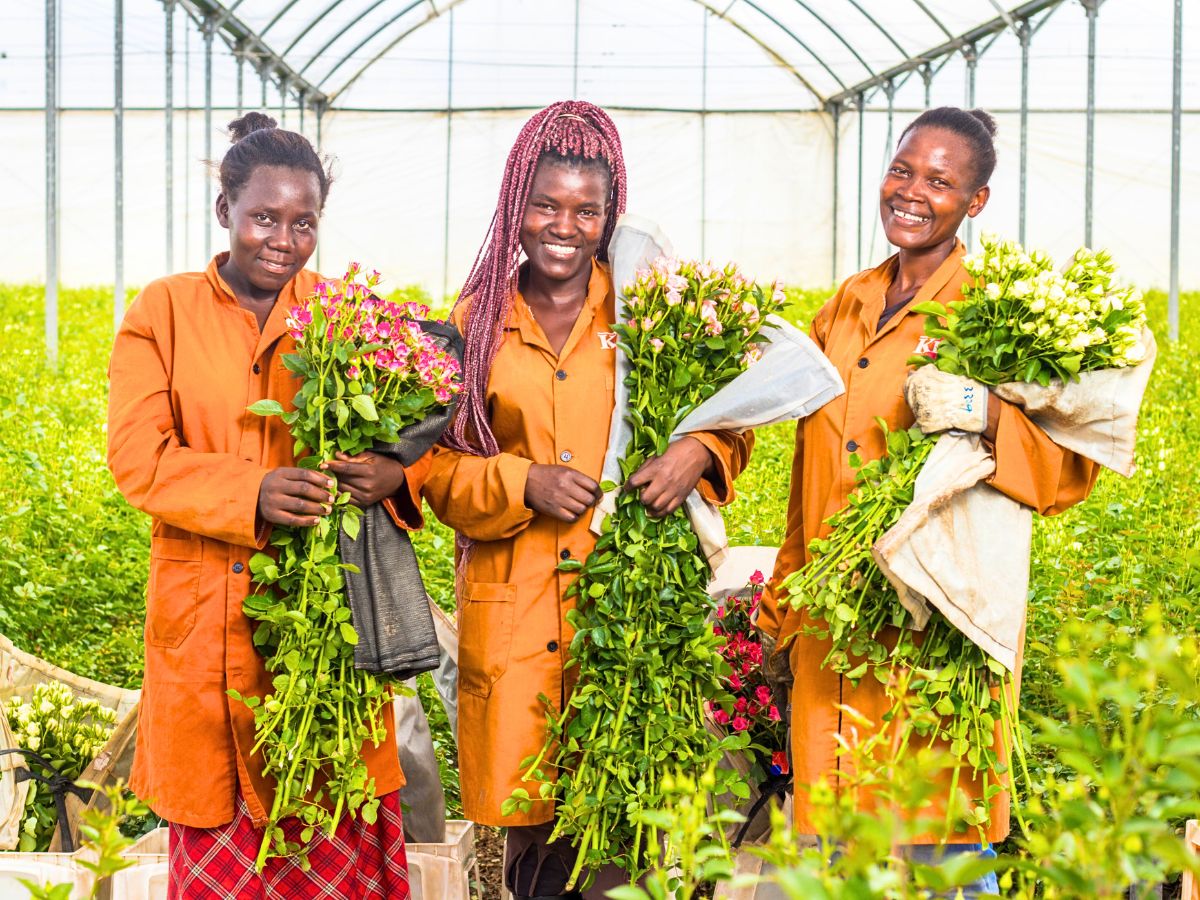
From a growing and market perspective, the future of spray roses lies in controlled expansion. Pride of Africa believes the category should remain focused and well managed, with continued attention to vase life, colour diversity, and structural variation. If growers maintain quality and offer a wide range of varieties that meet design needs, more consumers will continue choosing spray roses for regular use. Through disciplined production and strong partnerships, Pride of Africa is helping shape that future, one stem at a time.
Pictures by @Prideofafricaroses.