A century plant lives up to its name because it waits almost a lifetime to bloom. Such an Agave may remain in a pot for even twenty years before it flowers, and few varieties survive in the wild on solitary mountain slopes in Mexico, Arizona, and other dry regions. Their slow pace and narrow home explain the price tags at specialty nurseries and the eagerness of growers to secure an offset, since not many plants command the kind of reverence reserved for these rare collector Agaves.
Professional landscape designers and dedicated plant enthusiasts often seek specimens that push botanical limits. Outside of the standard garden varieties are unusual mutations, limited habitats, and exquisite variegations prized by connoisseurs. These unique succulents demand patience and specialized care, and they give their growers exceptional structural elegance. So if you have admired a plain blue Agave and wondered what lies beyond it, these ten species are your ideal starting point.
The Allure of Rare and Collectible Agaves
So what distinguishes a standard garden succulent from a prized collector specimen? The answer lies in a combination of slow growth, geographical isolation, propagation challenges, and genetic anomalies. Growth rate often comes first. Unlike mass-produced landscape plants grown rapidly in automated nurseries, rare Agaves often take decades to reach maturity.
Collectors and landscape designers value them because their sculptural forms add permanent architectural weight to garden beds and interior displays. Limited range comes second. Several species live in just one canyon or mountain range in Mexico, and habitat loss and poaching have put pressure on wild populations.
Propagation is the third factor. Agaves flower once, often after decades, and many species' mother rosettes die afterward, so seed and offsets are scarce. Propagation through tissue culture or harvesting offsets requires skilled labor, which limits commercial availability. Fourth are genetic mutations, such as variegation patterns, unusual spine formations, or distinctive leaf textures. These occur rarely in nature, making specific clones highly sought after by botanical institutions and private hobbyists.
Even so, most species below do well outdoors in USDA zones 8 to 10, and gardeners in colder areas can grow them in containers and move them indoors for winter. Strict conservation regulations also protect wild populations of restricted species, so ethical sourcing plays a major role in the collector community.
10 Rare and Collector Agaves
1. Agave Victoriae-Reginae Albomarginata
Commonly called the White Rhino Agave, this cultivar of the classic Queen Agave features deep green leaves outlined by crisp white margins. Unlike the standard species, which displays chalky white lines down the leaf face, this rare form concentrates its variegation along the outer edges.
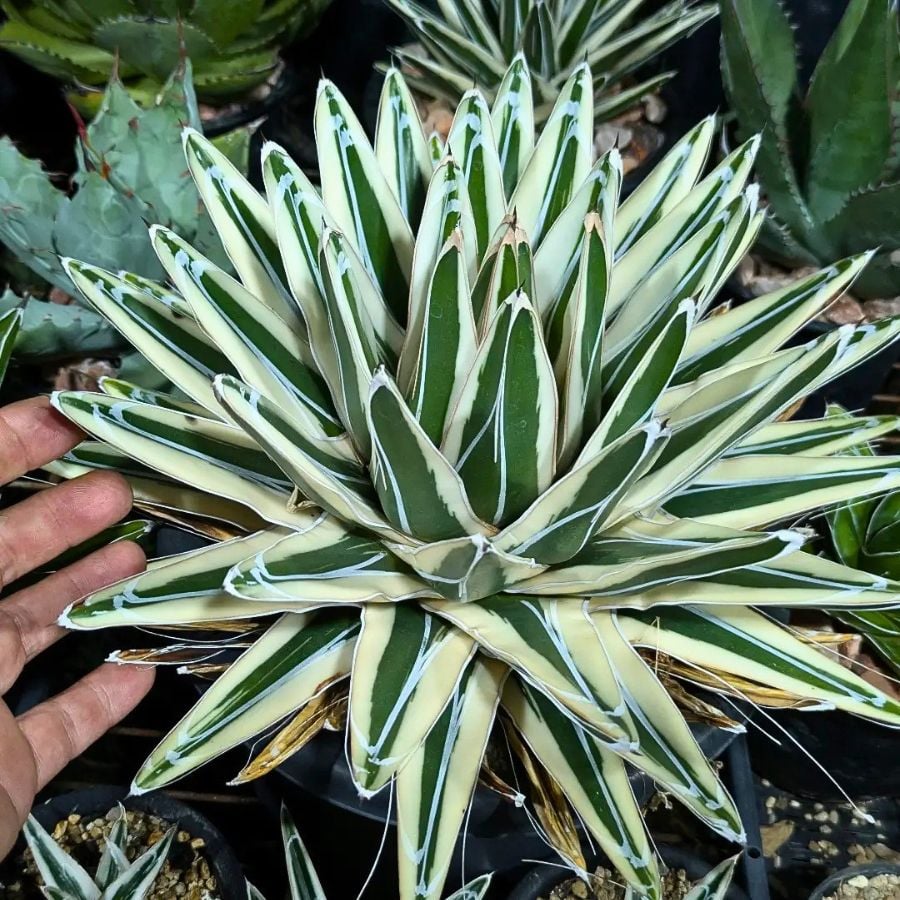
It is considered rare because the mutation occurs infrequently during seed propagation, and tissue culture labs struggle to stabilize the variegation pattern consistently. Landscape designers prize this plant for its tight, symmetrical rosettes that provide striking geometric contrast in dry garden settings. Cultivating this specimen requires excellent drainage and protection from scorching afternoon sun.
2. Agave Titanota
Originating from the limestone cliffs of Oaxaca, Mexico, select varieties of Agave titanota are known to enthrall modern succulent enthusiasts. Its ‘White Ice’ selection, for instance, stands out due to its thick, chalky gray-blue leaves armed with stark white marginal spines and curved teeth. It is rare because it grows slowly, occupies limestone slopes in a small native range, and produces few offsets.
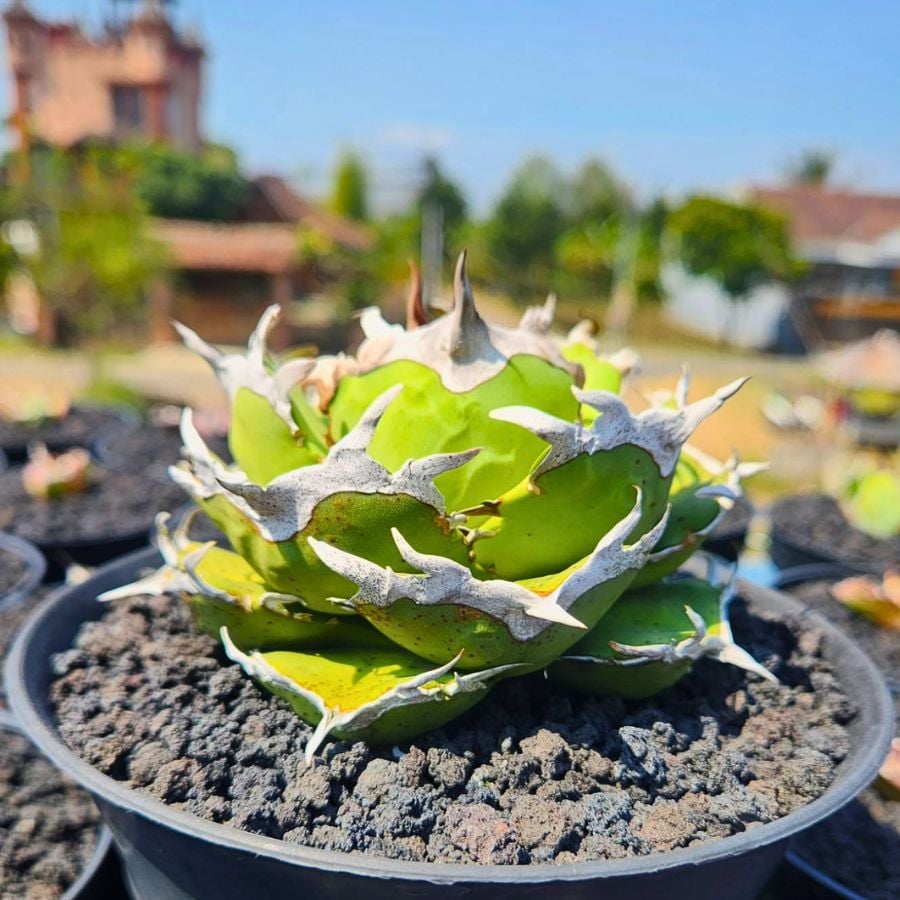
Its collector status is also the result of intense selection by specialized breeders, who isolate plants with the heaviest thorn development and most compact rosettes. Landscape architects use its compact, fierce silhouette as a focal point in contemporary container gardens and minimalist architectural landscapes. Providing a gritty, mineral-heavy substrate ensures the root system avoids moisture retention issues. This species tolerates temperatures down to roughly −9°C to −7°C, which suits zones 9 to 11.
3. Agave Albopilosa
Commonly known as the White Hair Agave or Hair-Tipped Century Plant, this is a rare, miniature succulent species first published in 2007. It was discovered growing on remote, nearly vertical 3,500–5,000-foot limestone cliffs in the Sierra Madre Oriental southwest of Monterrey, Nuevo León, Mexico. This petite Agave grows slowly into a neat rosette of narrow green leaves, each tipped with a tuft of soft white hairs that curl like frayed rope.
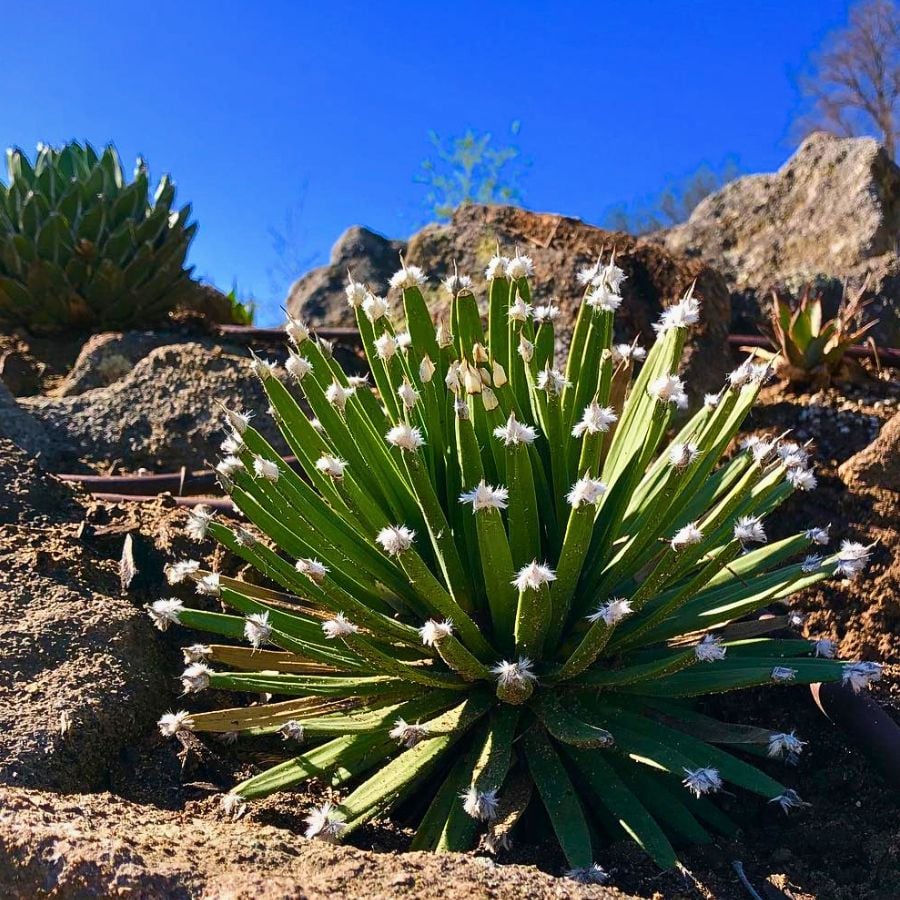
Its small wild range, slow growth, and scarce seed make it a true collector’s plant. And because it stays under about 60 cm wide, it suits containers, rock gardens, and troughs. Provide it with bright light, sharp drainage, and light afternoon shade in hot climates. Also, protect it from hard freezes.
4. Agave Guiengola
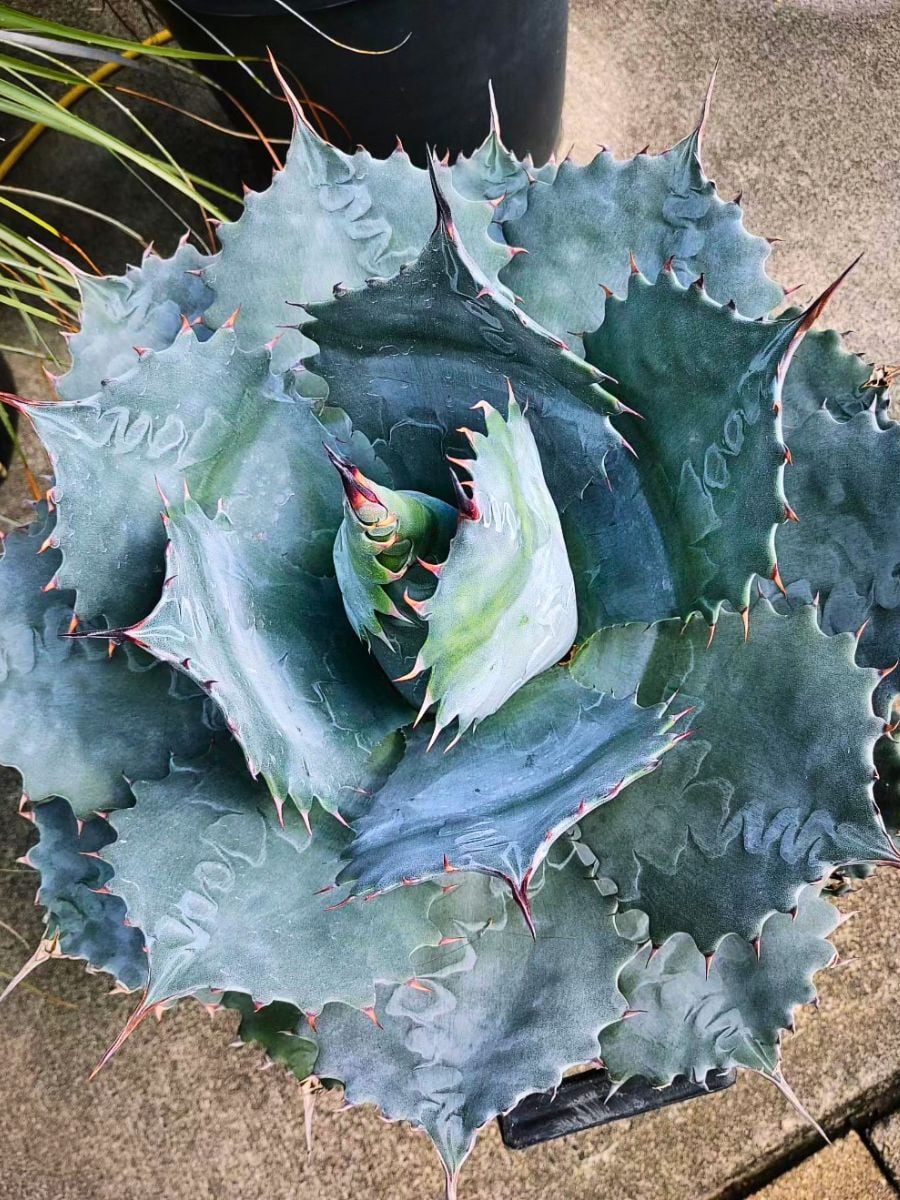
A striking, architectural succulent native to a limestone slope of Cerro Guiengola in Oaxaca, Mexico, this Agave is listed as Endangered in the wild. It boasts pale, powdery grey-white leaves with a distinctive puckered texture. Its natural habitat is extremely restricted, and wild populations face conservation pressures, making ethically sourced cultivated specimens valuable to botanical institutions and private collections.
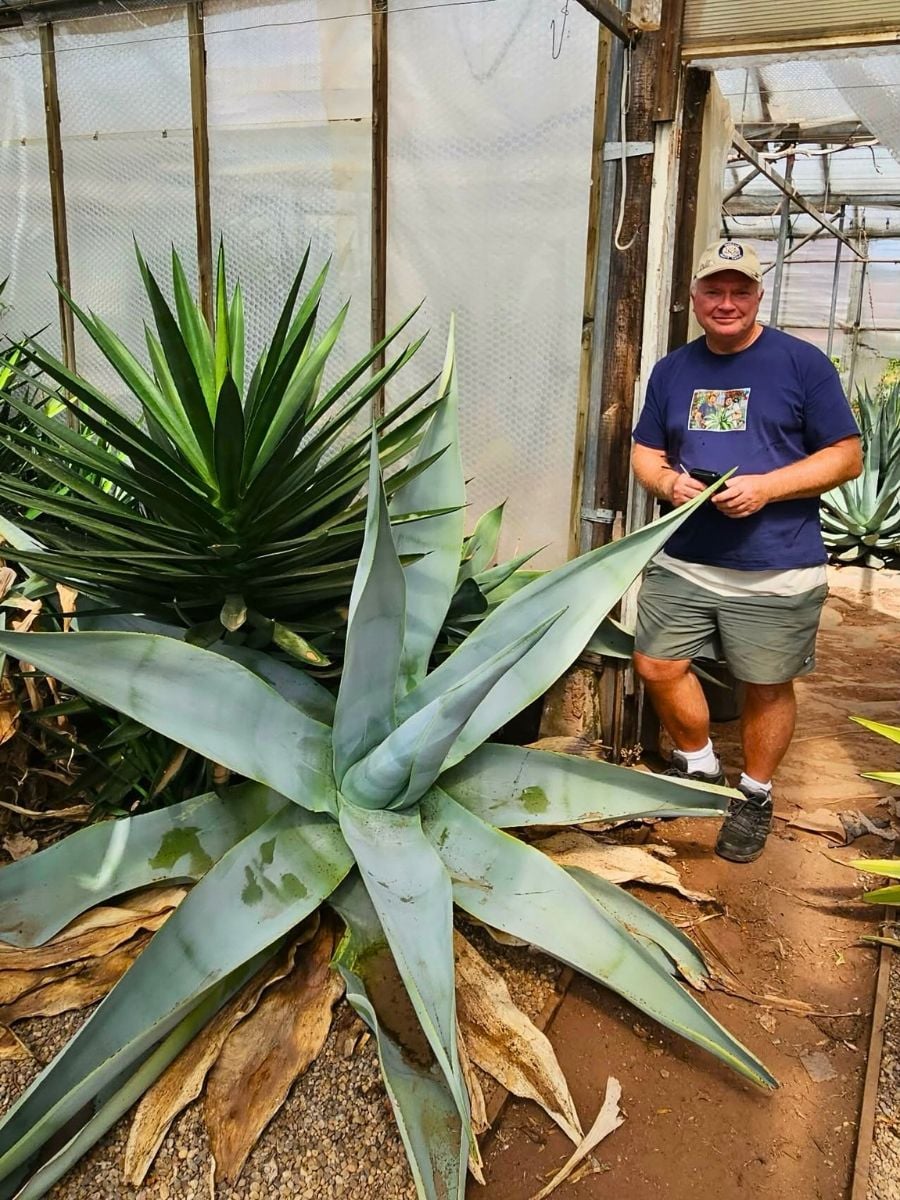
The pale coloration and rounded leaf tips give it a softer appearance compared to typical desert Agaves, appealing to designers seeking sculptural contrast without aggressive thorns. It prefers sheltered microclimates, excellent air circulation, and protection from freezing temperatures during winter months.
5. Agave Parrasana
Agave parrasana (commonly known as the cabbage head Agave or desert rose Agave) is a compact, slow-growing evergreen succulent native to the limestone mountains of Coahuila in northeastern Mexico. It has received the Royal Horticultural Society Award of Garden Merit for its striking form and resilience. This Agave forms a rounded, blue-gray rosette whose broad, short leaves carry a distinct bud-print pattern, as if pressed into wax.
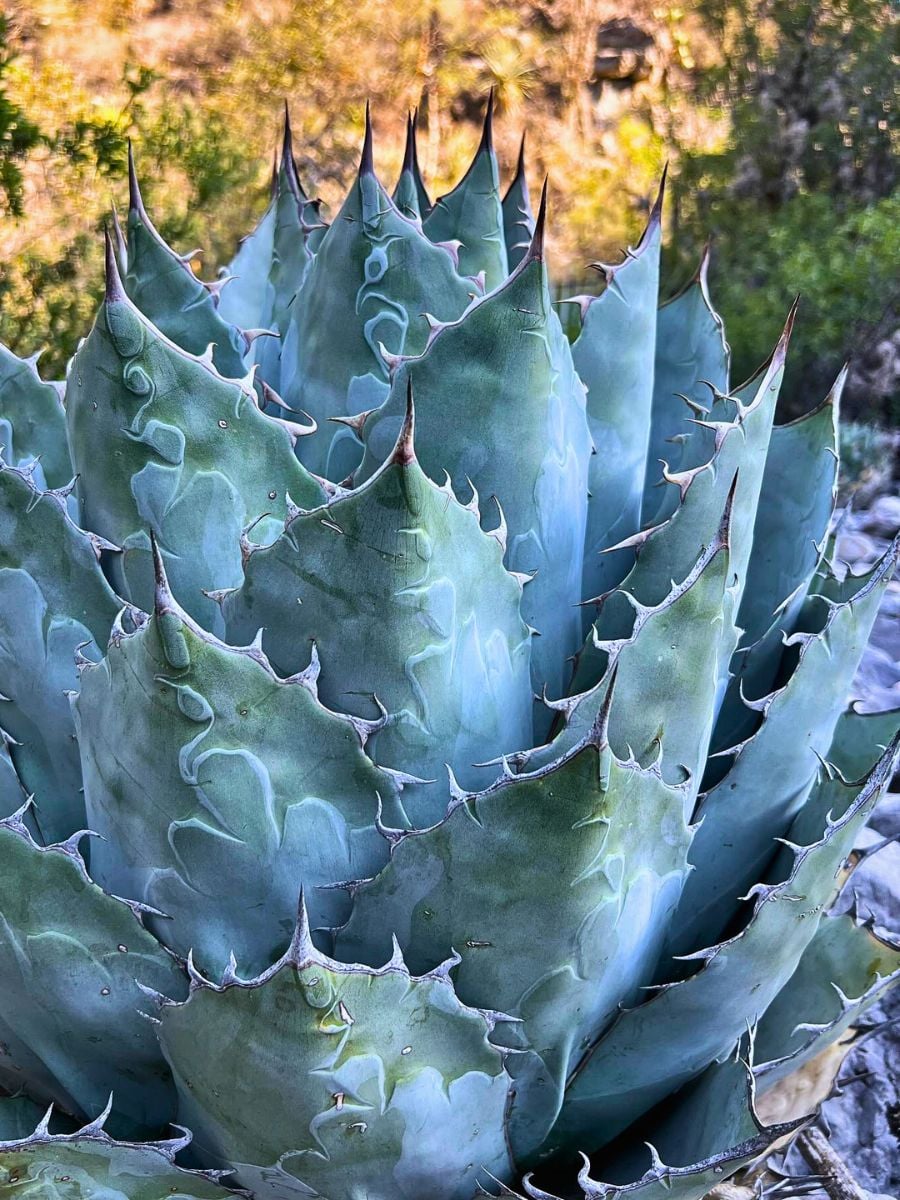
Its limited native range and slow growth keep supply low, and the IUCN lists it as Vulnerable. Landscape designers like its tidy, spherical outline, which can reach about 100 cm across. Growing it, plant it in full sun with excellent drainage, and water deeply but infrequently. It tolerates cold to roughly −12°C to −9°C and does best where winters are dry, since wet cold rots the crown.
6. Agave Macroacantha Variegata
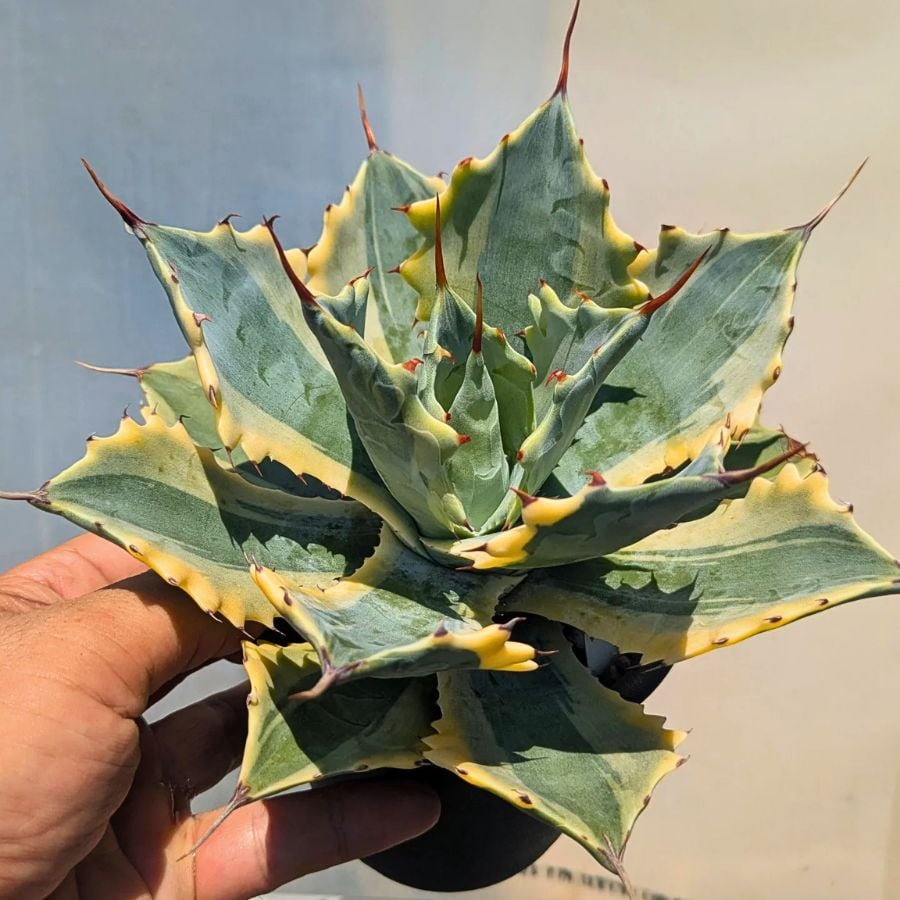
The standard green form of Agave macroacantha is admired for its slender, bluish-gray leaves tipped with striking, dark burgundy spines. The variegated version presents smoky blue-green or grayish-green leaves accented with creamy-white or golden-yellow margins and golden-yellow stripes running parallel to the leaf margins.
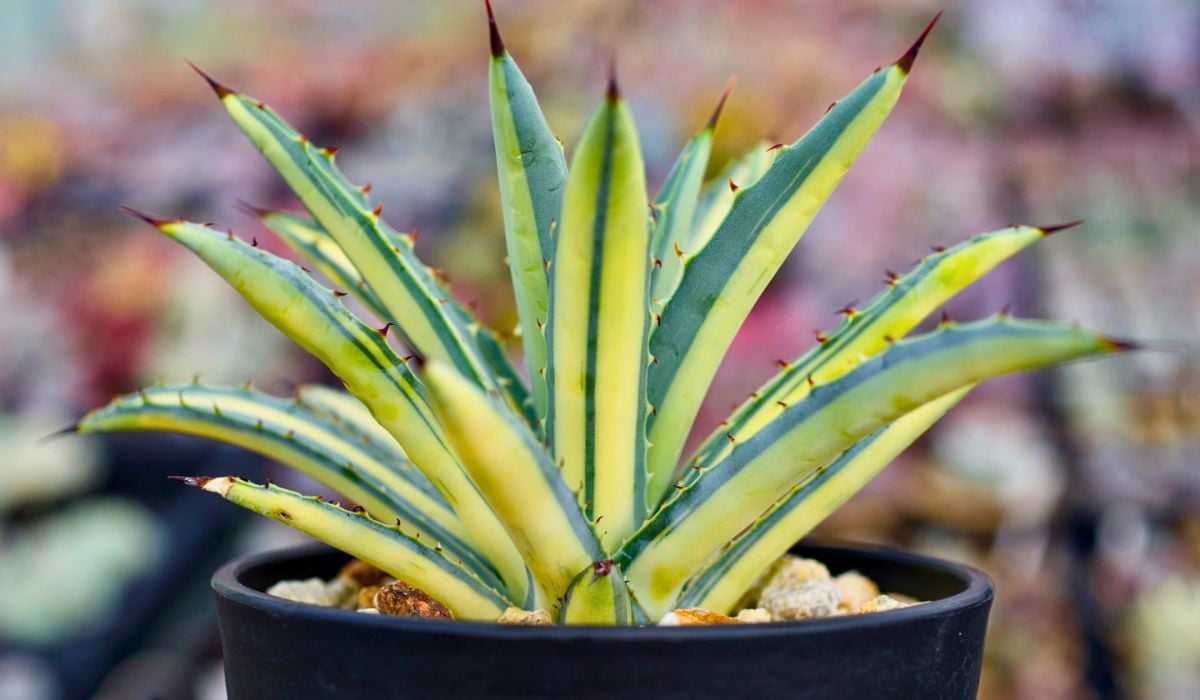
Its rarity is attributed to its variegated offsets, which appear infrequently on mature specimens and must be separated manually by growers. It offers a refined texture that pairs exceptionally well with ornamental grasses and fine-leaved perennials in modern garden designs. Bright morning sun brings out the best coloration in the plants.
7. Agave Potatorum
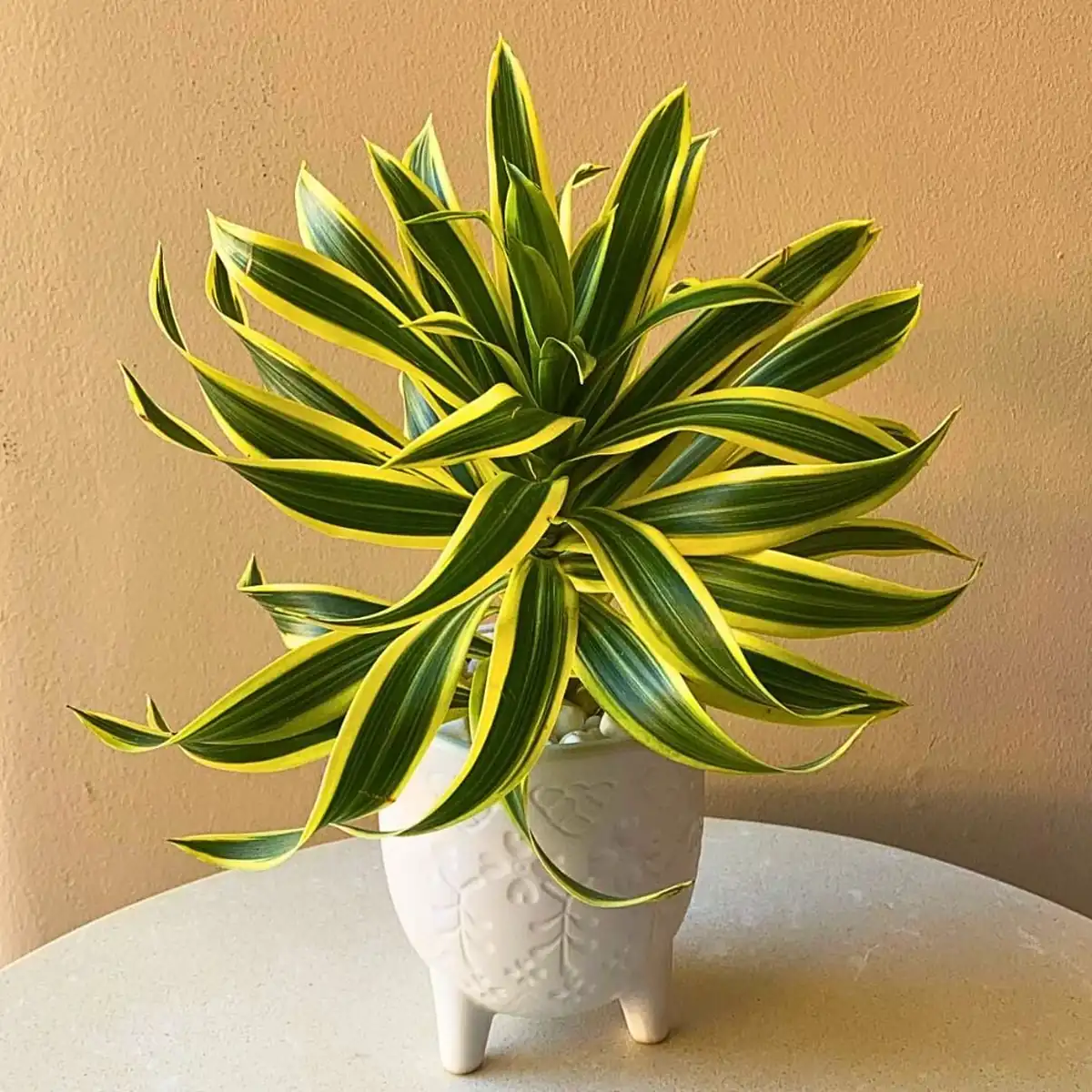
Commonly known as the butterfly Agave or Verschaffelt Agave, this is a compact, slow-growing succulent perennial native to the semi-desert regions of Mexico (primarily Puebla and Oaxaca). Kissho Kan, also known as the dwarf butterfly Agave or lucky crown century plant, is a Japanese cultivar of this species, with creamy-yellow margins around a blue-green center that give each leaf a painted look.
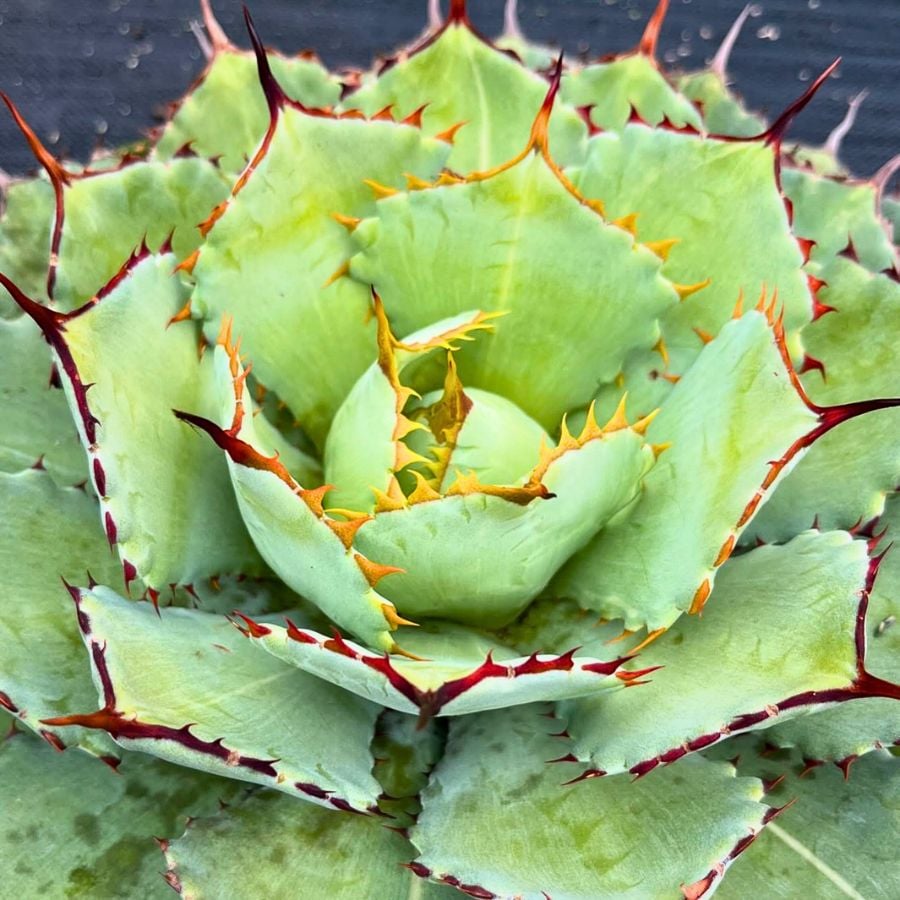
Variegated Agave potatorum is rare because the pattern cannot come true from seed. Growers must separate offsets, and variegated plants produce them slowly. Collectors value it for its color and its compact, symmetrical form. Grow it in a container or a protected bed with bright light and afternoon shade, since pale tissue scorches easily. Keep it fairly dry, and protect it below about −7°C.
8. Agave Nickelsiae
Frequently known in older literature as Agave ferdinand-regis, this species, commonly known as the King Ferdinand Agave or King of the Agaves, forms a solitary, perfectly symmetrical rosette adorned with black terminal spines and unique white imprinting lines left by neighboring leaves.
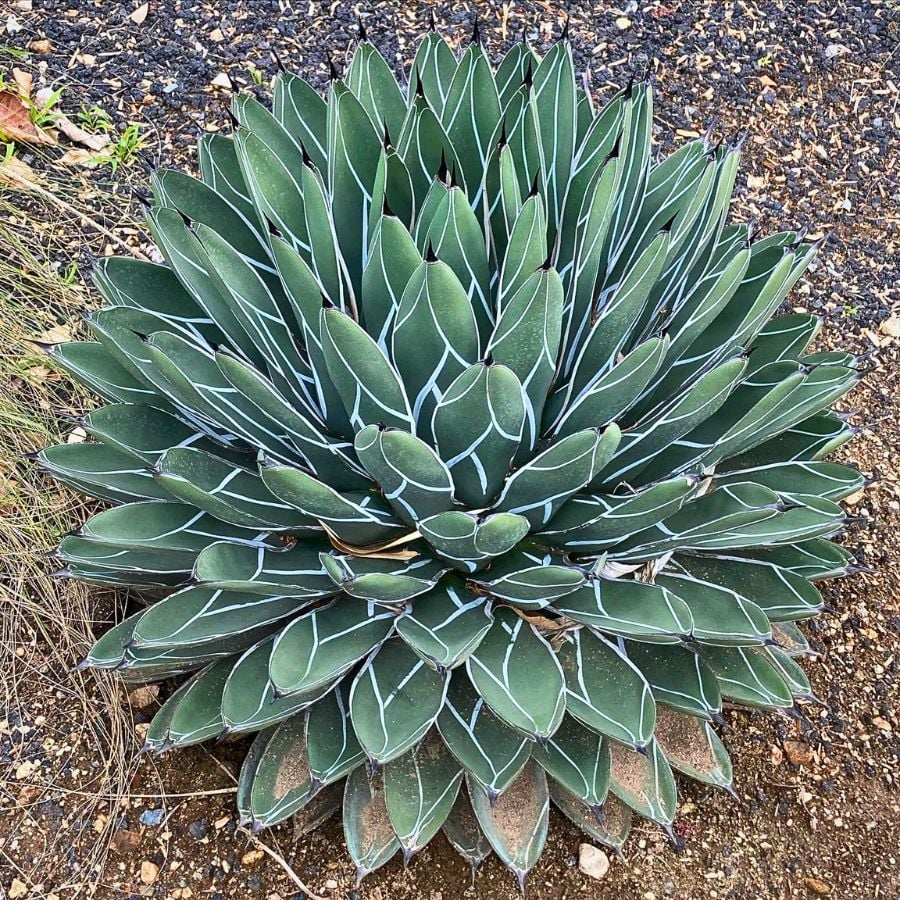
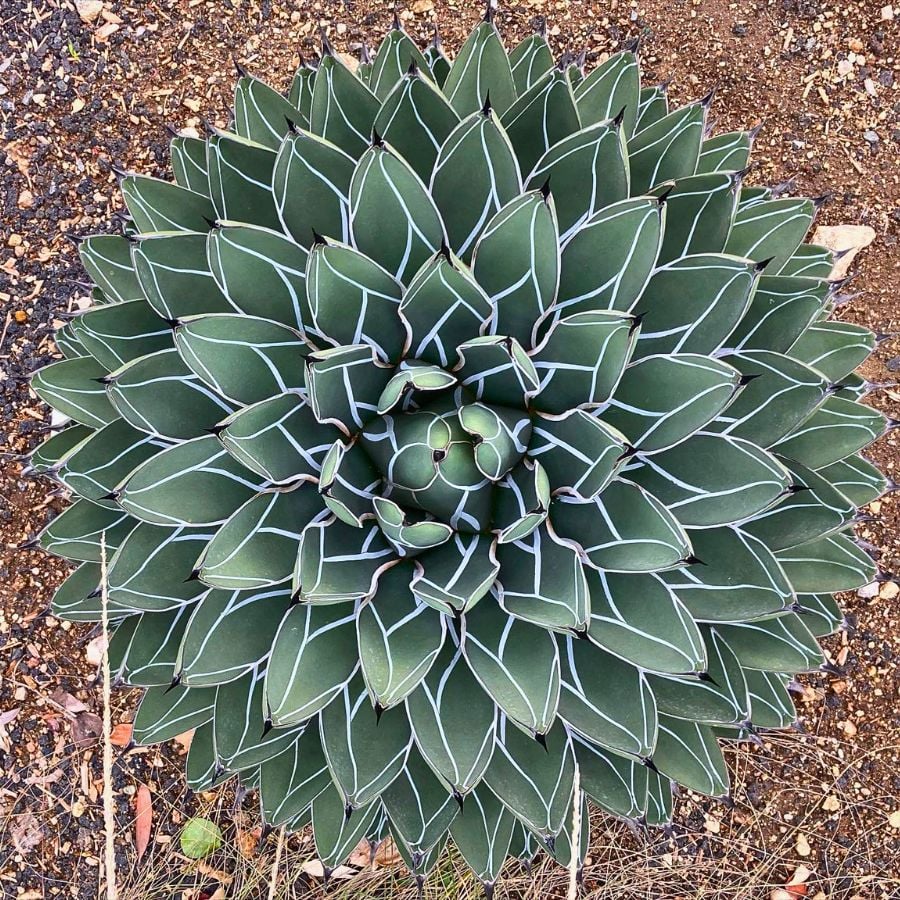
It is rare in cultivation due to its slow germination rate and limited seed supply from its native Chihuahuan desert habitats, especially the rocky, limestone hills of Coahuila, Mexico (near Saltillo). Connoisseurs value its formal geometry, which resembles a carved stone artifact rather than a living organism, and its cultivation success depends on providing maximum sunlight and watering only when the soil medium has dried completely.
9. Agave Parviflora
A rare, dwarf succulent native to southeastern Arizona in the United States and Sonora in Mexico, this Agave features dark green leaves that carry white stripes and shed curling white threads along the margins. It is a monocarpic perennial, meaning the main rosette lives for about 10 to 15 years, sends up a tall flower spike with small cream or yellow flowers, and then dies.
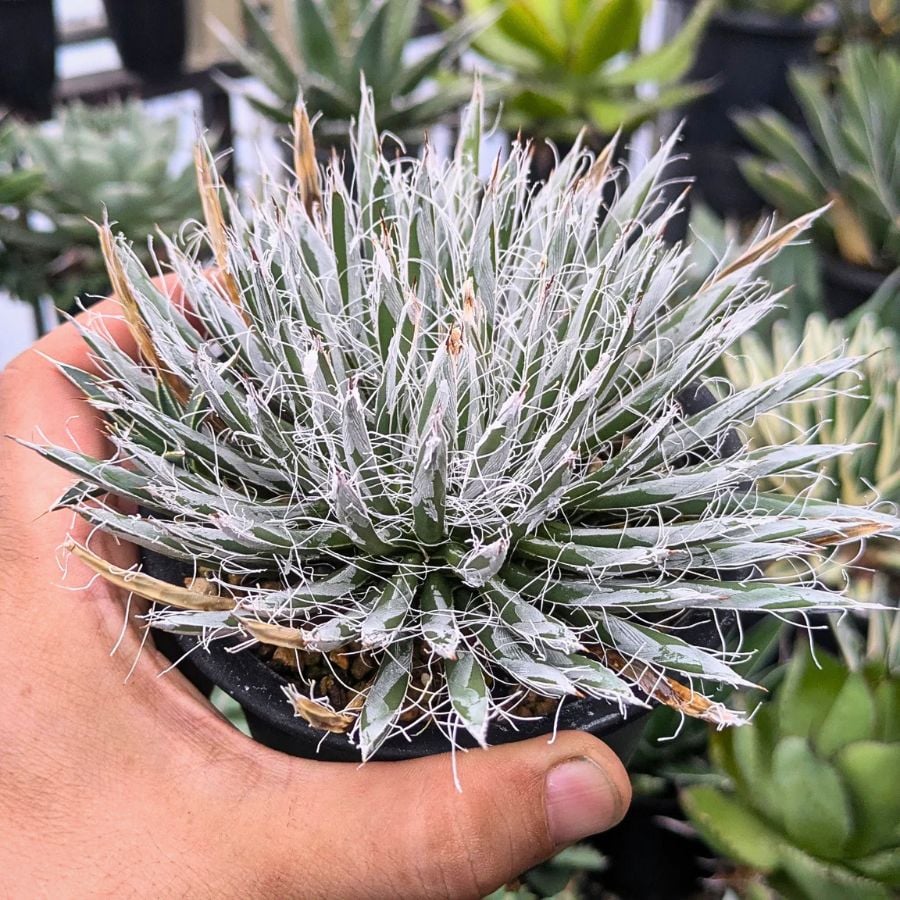
This Agave is rare because of its small range, its slow growth, and legal protection in Arizona that prohibits wild collection. Gardeners value it for its size, usually fewer than 30 cm across, and for its fine detail. It does well in zones 8 to 10 with sharp drainage and a little shade in summer. Container culture keeps its crown out of cold, wet soil.
10. Agave Montana
Agave montana, commonly known as the mountain Agave, is an extraordinary, high-altitude succulent native to the oak and pine forests of northeastern Mexico, especially in Tamaulipas. Growing at elevations between 3,000 and 9,000 feet, this species is uniquely adapted to cool, damp mountain air, making it more tolerant of frost, snow, and wet winters than typical desert Agaves.
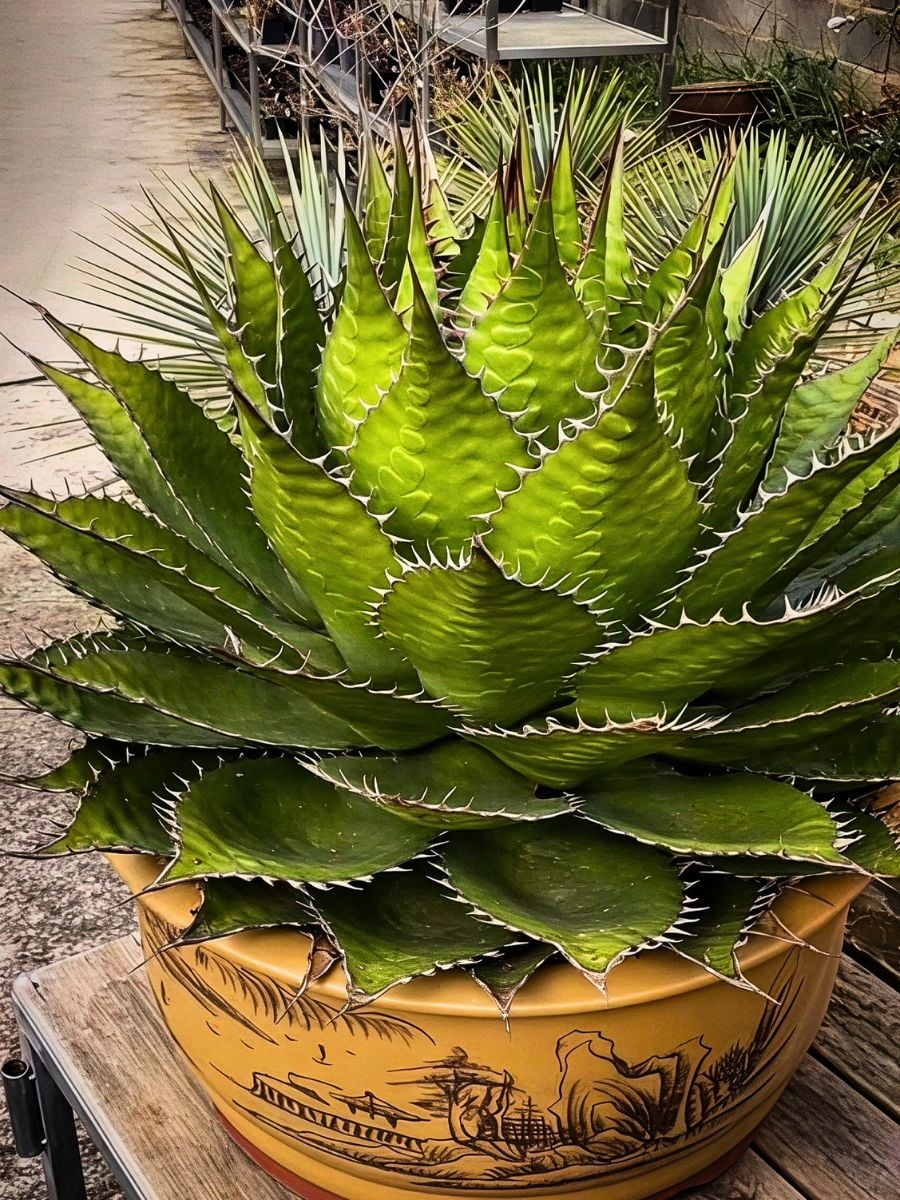
This collector-grade plant forms a massive, solitary rosette, and its leaves are broad, fleshy, and a rich apple-green to silvery-blue color. The margins are lined with sharp, prominent teeth, and as the tightly packed leaves unfold from the center, they leave dramatic, geometric bud imprints on each other’s surfaces.
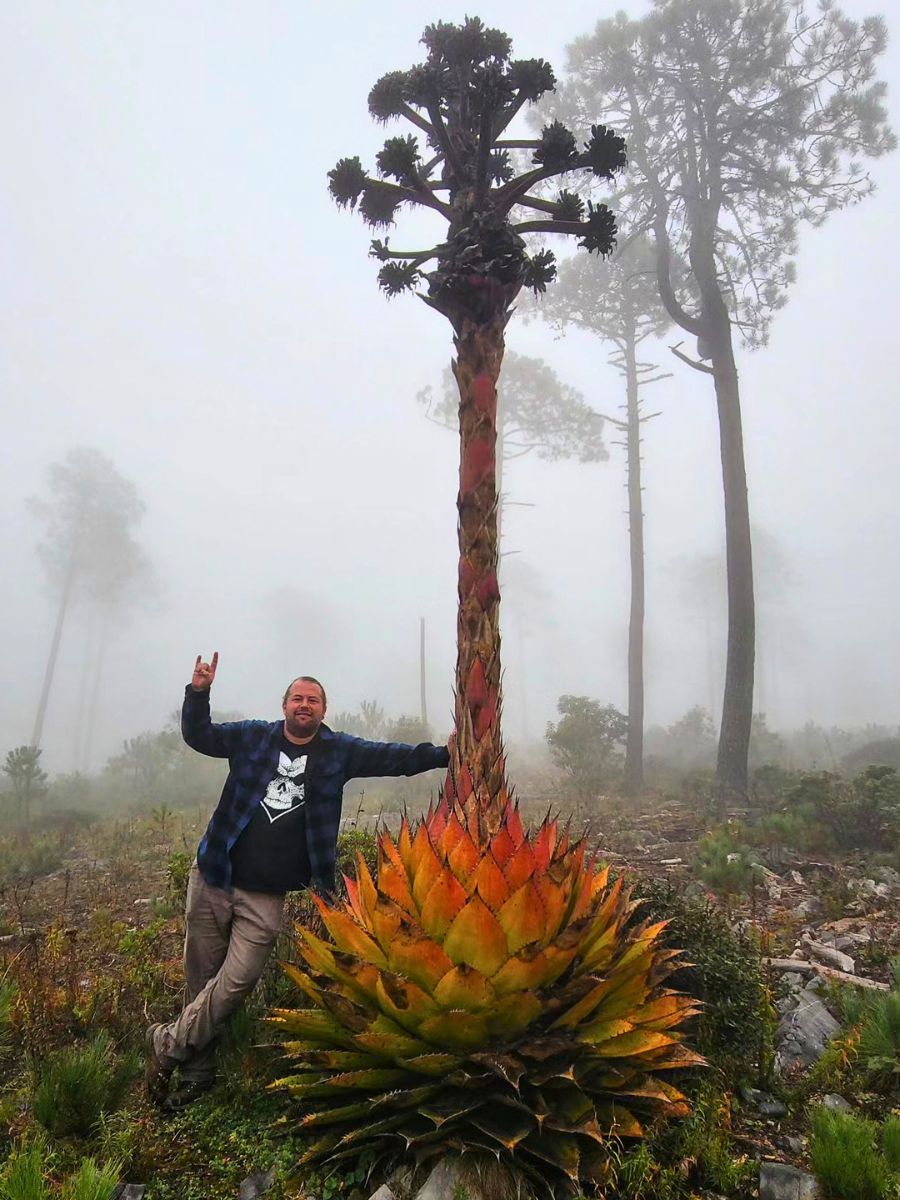
Unlike many Agaves that freely produce offsets, Agave montana rarely offsets. It relies wholly on seed propagation, which keeps it highly prized and relatively rare in cultivation. It also grows slowly for several decades before undergoing its melodramatic, life-ending finale: a spectacular ‘death bloom’ where it sends up a monumental, tree-like flowering spike packed with bright yellow blossoms.
Rare Agaves in Design and Cultivation
Designing with collector Agaves requires an appreciation of their physiological limits. Garden designers often place these specimens in custom stone containers or raised mounds to highlight their sculptural geometry and protect them from winter dampness.
Notably, most collector Agaves share the same basic care needs, and getting them right protects an investment that may have taken years to grow. Because many rare forms are variegated, they lack the full complement of chlorophyll found in all-green species, making them more susceptible to intense midday sun and root rot.
Drainage is also an important factor. Mix roughly two parts pumice or coarse grit to one part potting soil, since mineral-rich, highly porous media drains instantly and roots sitting in wet material rot quickly. Water deeply, and then let the mix dry fully before watering again. In winter, cut back or stop watering, since cold, wet soil causes more losses than cold air. Also, provide full sun in mild climates and afternoon shade where summers are hot.
Knowing the specific needs of these rare plants helps ensure long-term success in both outdoor landscape installations and high-end indoor plantscaping projects.
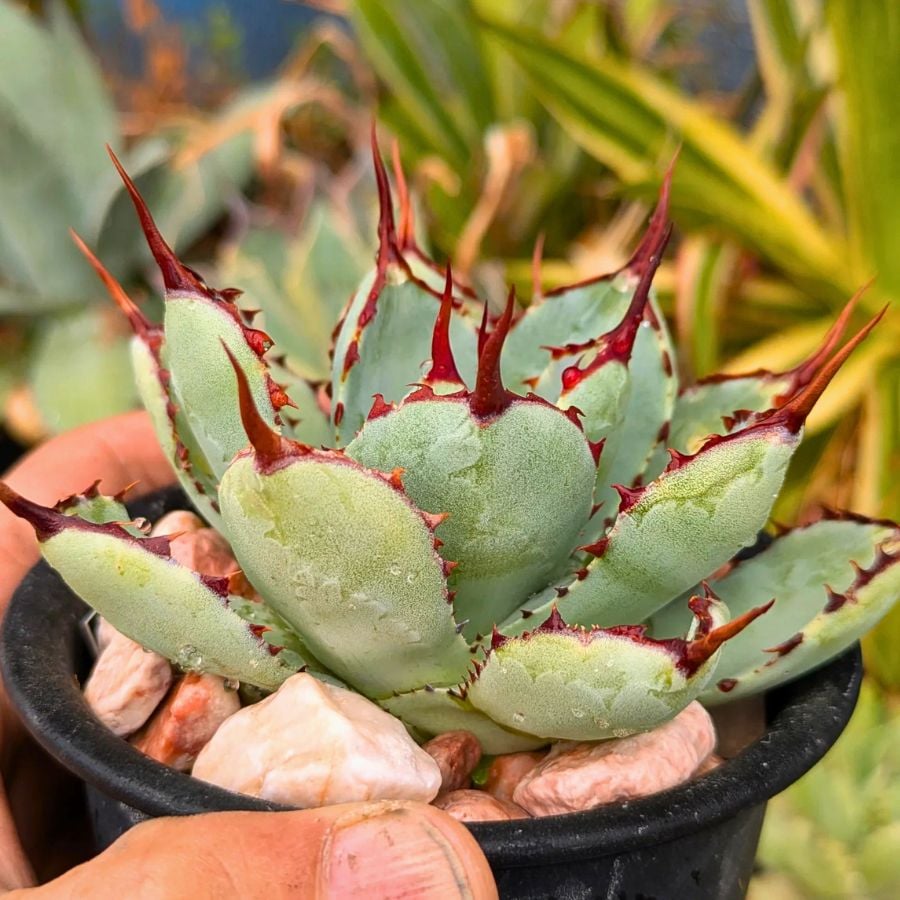
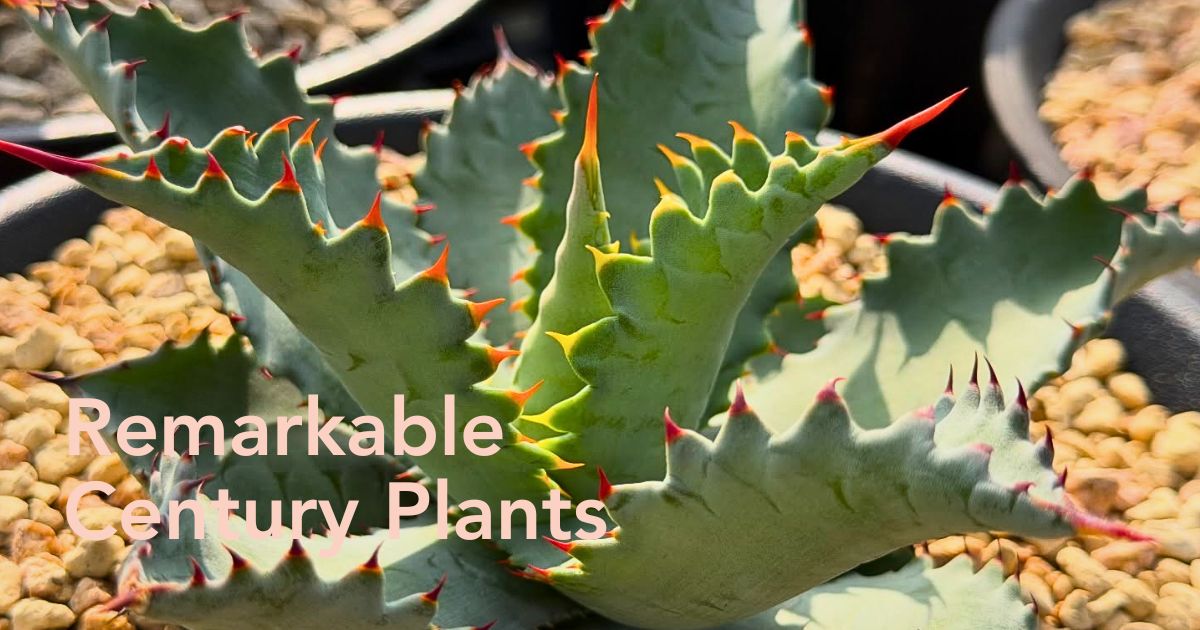
Featured image by @rouka.plants. Header image by @agafetw.