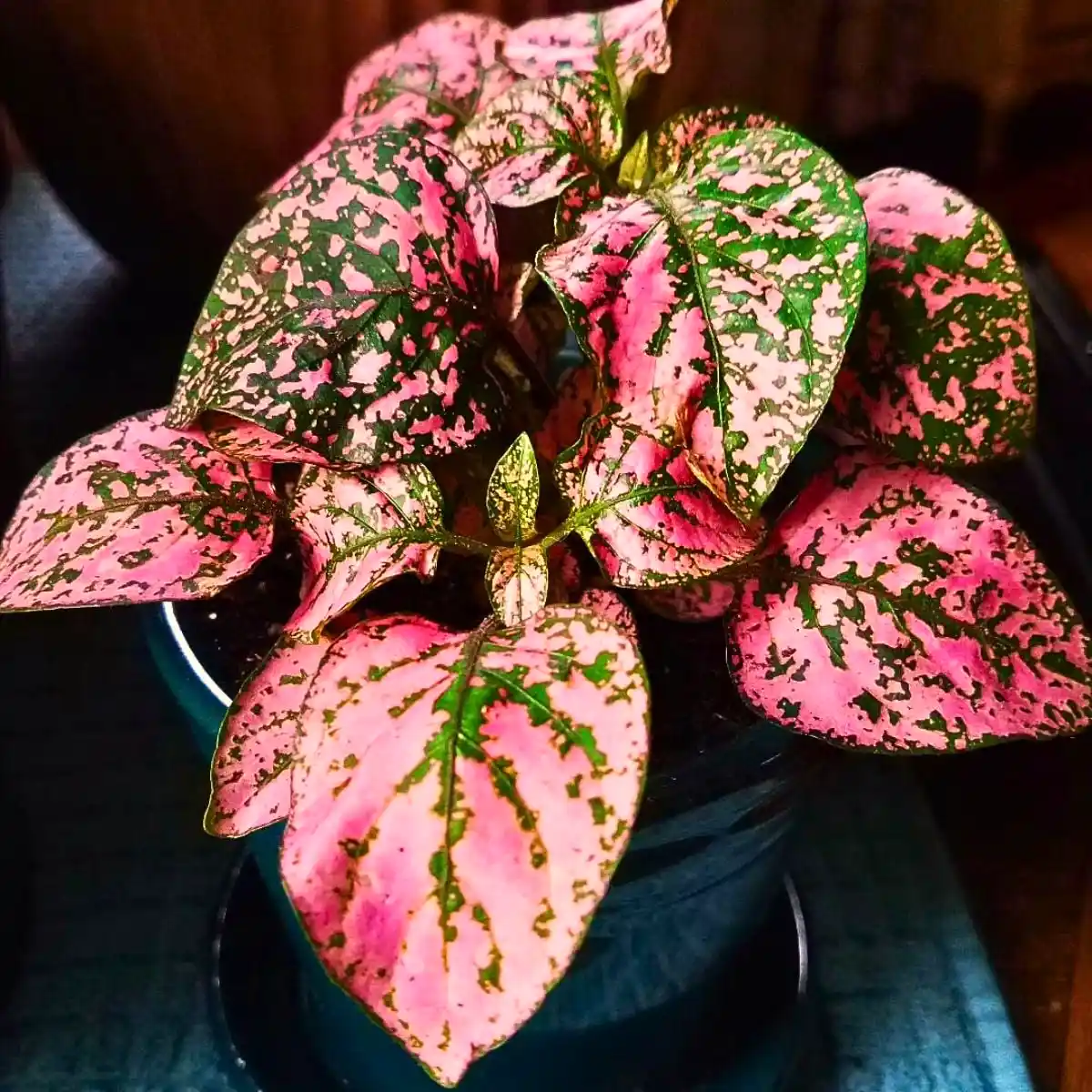
Pick up three succulents in a garden center, and you're holding three different plant families. That chunky rosette, the jade with its coin leaves, and the trailing string of beads only share one habit: they store water in thick leaves, stems, or roots, so they can sit out a dry spell. That's the whole definition. It's why types of succulents run from frost-hardy rooftop rosettes to Christmas-flowering cacti and spiny trees that bleed milky sap.
Most succulent plants you'll find in a shop come from a handful of genera: Echeveria, Sempervivum, Haworthia, Kalanchoe, Crassula, Aloe, Agave, Sedum, and Euphorbia, plus the trailing strings and a few cacti. Some want full sun, one sulks in it, and a few are best kept away from the cat. Whatever the type, overwatering is the most common way to lose one (Iowa State): it leads to root rot, so check that the soil is completely dry before you water. Once you know which one you have, the succulent watering and care guide takes it from there.
How to Tell Types of Succulents Apart (Start With the Shape)
Names on plant labels are a lottery. Shape isn't. Light is the other half: indoors, most succulents need at least six to eight hours of bright light a day (Iowa State). Most succulents fall into four looks, and each look tells you something about the window it wants.
- Rosettes (Echeveria, Sempervivum, Aeonium) grow in tight spirals and need the most light. In a dim room, they stretch toward the glass and lose their shape.
- Trailers (string of pearls, burro's tail, string of hearts) hang over a pot edge and like bright light without hours of hot afternoon sun.
- Low-light growers (Haworthia and its relatives) stay small and tolerate a spot a meter or two back from the window.
- Tall and spiny types (Euphorbia, Agave, Aloe, most cacti) make the architectural statements. Some of them have sap or spines you'll want out of reach of pets.
And then there are the mimics. Lithops, the living stones, are two fat leaves fused into a cone that sits flush with the gravel. Wisconsin Horticulture calls them masters of camouflage, and their leaves hold enough water to go months without rain (UW Extension). Pebbles you have to water now and then. Barely.
And the cactus question? Every cactus is a succulent, but most succulents aren't cacti. Cacti are one family, the Cactaceae, and they carry areoles: small cushions on the stem where spines, flowers, and new shoots grow. A spiny Euphorbia can look exactly like a cactus and still be a completely different family. Snap a stem, and it usually bleeds white latex, and you won't find the areoles.
Echeveria: The Rosette Everyone Pictures
Ask anyone to draw a succulent, and you'll get an Echeveria. These rosettes come from the dry hills of Mexico and Central America, where their thick leaves carry them through the arid months, and they come in gray-blue, lilac, pink, and near-black. Many wear a powdery bloom on their leaves. Touch it and your fingerprint stays there for good, so handle them by the pot.
Echeveria wants the brightest spot you've got. With too little light the rosette opens up and stretches toward the window, and it won't tighten again. It's also the rosette florists use most as a cut succulent, which is why the Echeveria piece is all about wreaths and bouquets.

Hens and Chicks (Sempervivum): The Succulent That Survives Winter
Sempervivum means "always living", and it's earned the name. These are mountain plants from Europe that sit outside through frost and snow, which makes them the odd one out in this list. The mother rosette is the hen. The small rosettes she pushes out on short runners are the chicks.
How cold can they go? Sempervivum Coral Red is hardy to -35 °C (-31 °F), according to its product page. Each rosette flowers once, on a tall stalk, and then dies, but by then the chicks have filled the gap. Breeders have turned them into a color range: the Chick Charms series is one example, and growers such as Belgicactus offer varieties like Sempervivum Arctic White.

Haworthia: The Best Succulent for Low Light
Haworthia is the answer for the reader with no sunny window. These small South African rosettes grow in the shade of rocks and shrubs in the wild, so a spot a little back from the glass suits them. Direct summer sun can actually scorch them.
The zebra plant with its white-striped leaves is the best-known one (botanists moved it to Haworthiopsis, plant labels didn't follow). Winco Holland grows the striped Haworthia cymbiformis White Tiger, whose rosettes reach about 10 cm (4 inches). For a ridged, darker look, try Haworthia limifolia.

Flaming Katy (Kalanchoe Blossfeldiana): The Succulent You Buy in Flower
Most people don't even realize this one's a succulent. Flaming Katy comes from Madagascar and is sold in flower, with clusters of small blooms in red, pink, orange, yellow, and white, as one of the easiest flowering houseplants around. Look at the leaves, though: thick, waxy, and full of water.
It flowers when the nights get long, which is why growers can time it for any season. Growers like SlijkermanKalanchoë breed whole ranges, such as Kalanchoe Serenity Tender Mix. The Kalanchoe varieties guide shows how wide the genus goes.
Paddle Plant (Kalanchoe Thyrsiflora): Flat Leaves, Red Edges
Round, flat leaves stacked like a pile of pancakes. That's the paddle plant, also sold as flapjacks. Give it strong light and a cool night or two, and the leaf edges blush red. In a dim room, it stays plain green and leans.
It's a Kalanchoe, so the same pet warning applies as for flaming Katy. The variegated form, with cream bands on gray-green, is a favorite in mixed succulent bowls.

Mother of Thousands (Kalanchoe Daigremontiana): Babies on Every Leaf
Look closely at the leaf edge, and you'll see a row of tiny plants with their own roots. They drop off, land in the next pot, and start growing. That's mother of thousands, and if you've ever been given a cutting by a neighbor, it was probably this one.
Winco Holland grows a softer, pink-edged version called Kalanchoe Pink Butterfly. Its close cousin with the hanging bell flowers is Kalanchoe pinnata.
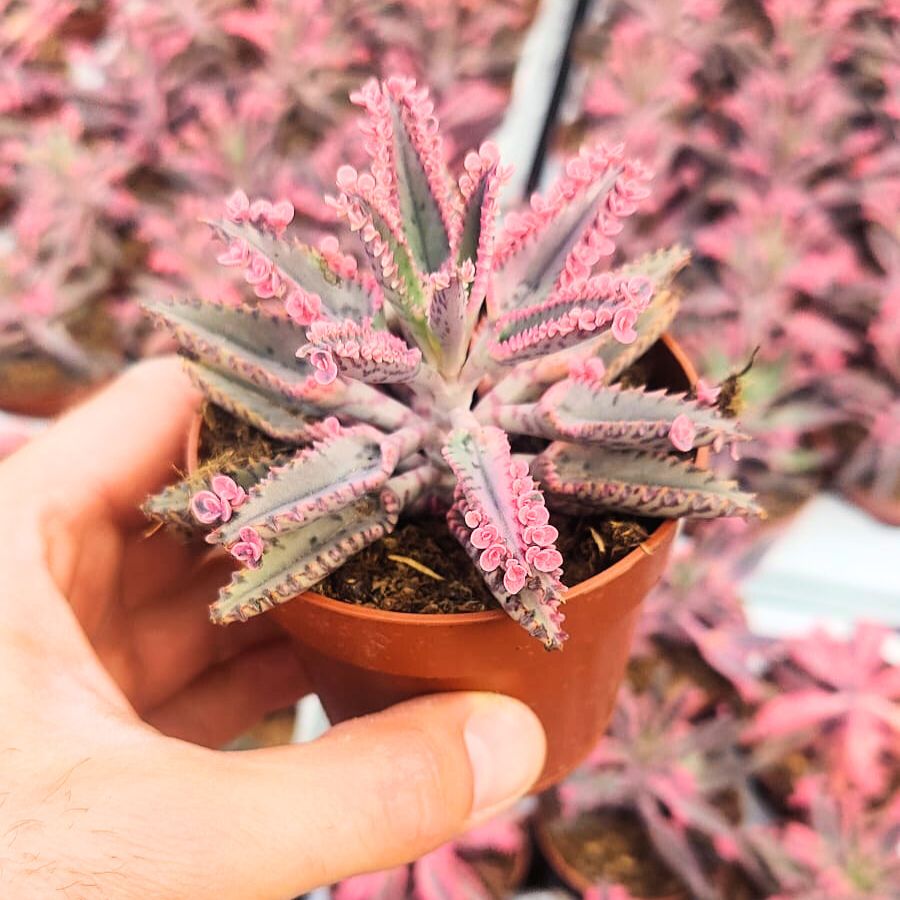
Jade Plant (Crassula Ovata): The Money Plant That Lasts for Decades
The jade plant grows into a small tree with a thick trunk and coin-shaped leaves, and it's the one people keep for decades and pass on. It comes from South Africa, so it likes sun and hates wet feet.
Those round leaves are also why feng shui counts it among the money plants. Pretty, lucky, and not one for the cat, though: the ASPCA lists it as toxic.
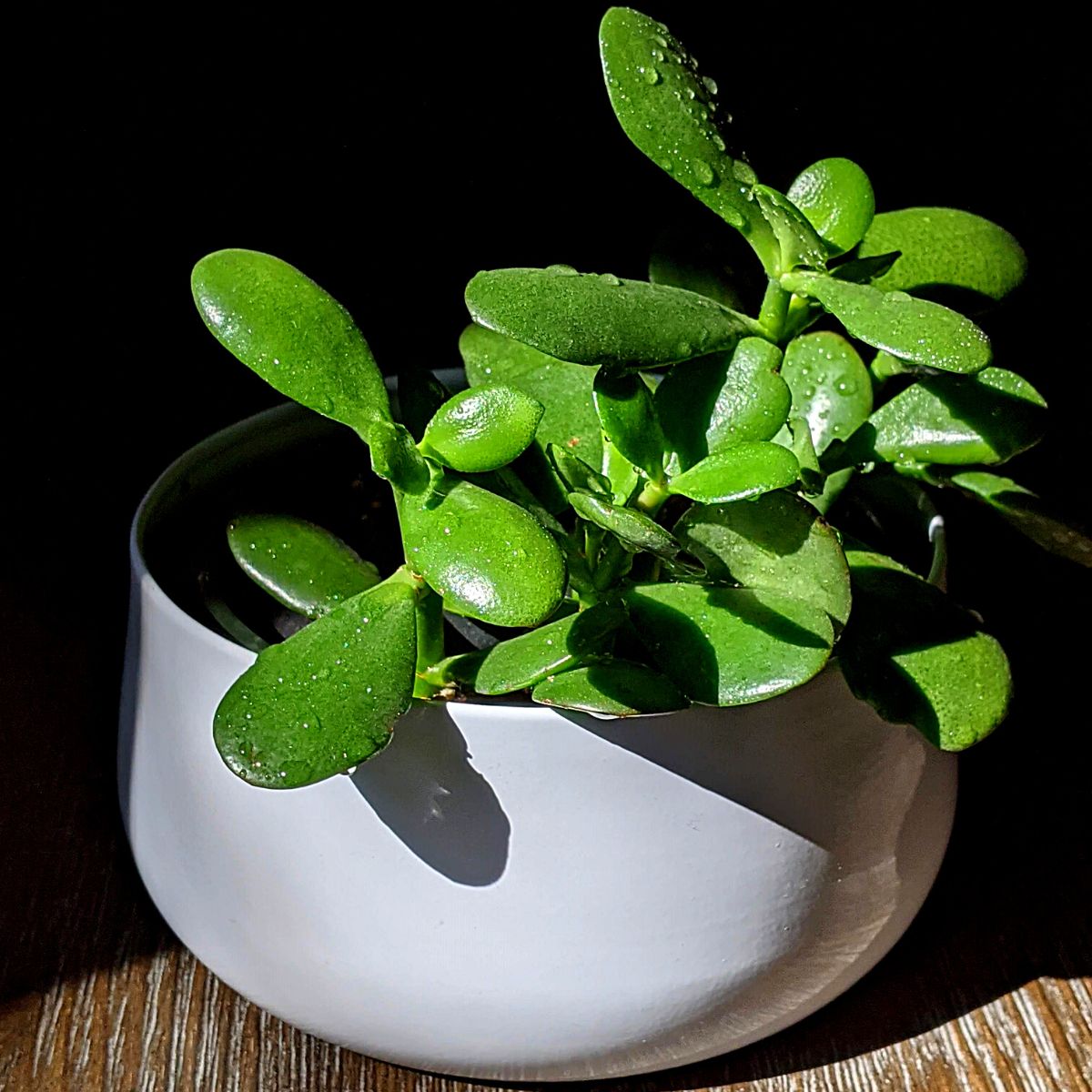
Crassula Campfire: The Succulent That Turns Red in the Sun
Green in the shop, flame red on a sunny windowsill. Campfire is a Crassula that changes color with the light and cold: the more sun and the cooler the nights, the redder it gets.
It spreads low and wide, which makes it a good filler between rosettes in a bowl. Here's how to keep Crassula Campfire red.

Aloe Vera: The Succulent With the Gel
You know the gel; you might not know the plant. Aloe vera grows as a fan of thick, gray-green leaves with soft teeth on the edges, and it pushes out pups around the base once it's settled. It wants a bright window and will happily take some direct sun. Beyond that, it asks for very little: aloe is about as low maintenance as succulents get.
One catch for pet owners: the ASPCA lists aloe as toxic to cats and dogs, even though it calls the gel itself edible. Keep the plant, not just the gel, away from a chewer.

Foxtail Agave (Agave Attenuata): The Agave Without Spines
Most agaves come armed. The foxtail agave doesn't: its soft, pale leaves have no terminal spine, which is why it's the one you see on sidewalks and terraces in mild climates. Indoors it needs your sunniest window.
After many years, it sends up one long, arching flower spike, the foxtail. Then the rosette dies and the pups take over. Want something wilder? Browse these rare and collector agaves, or read up on foxtail agave and its flower spike.

Mangave: Half Agave, Half Manfreda, All Spots
Cross an agave with its spotted cousin Manfreda, and you get Mangave: a smaller agave with speckled and blotched leaves. It grows faster than most agaves, so it fills a pot in a season or two.
Names like Mangave Mint Chocolate Chip tell you breeders are having fun with it. Here's the Mangave care guide and best varieties.

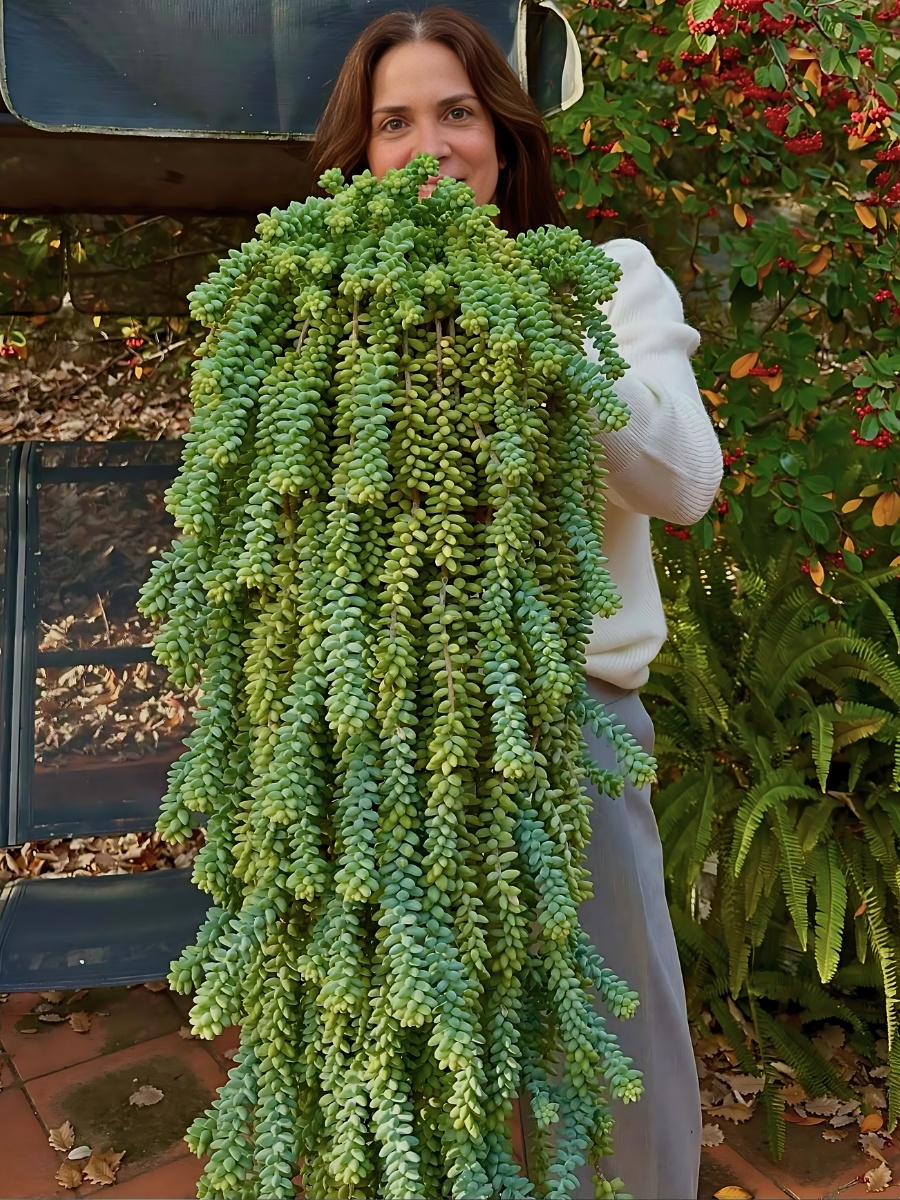
Burro's Tail (Sedum Morganianum): Look, Don't Touch
Long, rope-like stems packed with plump blue-green leaves, hanging straight down. Burro's tail, or donkey tail, is a Sedum from Mexico. It's gorgeous in a hanging pot and hopeless if you like to fiddle: brush past it and the leaves drop.
The good news is each fallen leaf can root, and the ASPCA lists it as non-toxic, which puts it on the list of pet-friendly houseplants. Find a spot and leave it there.
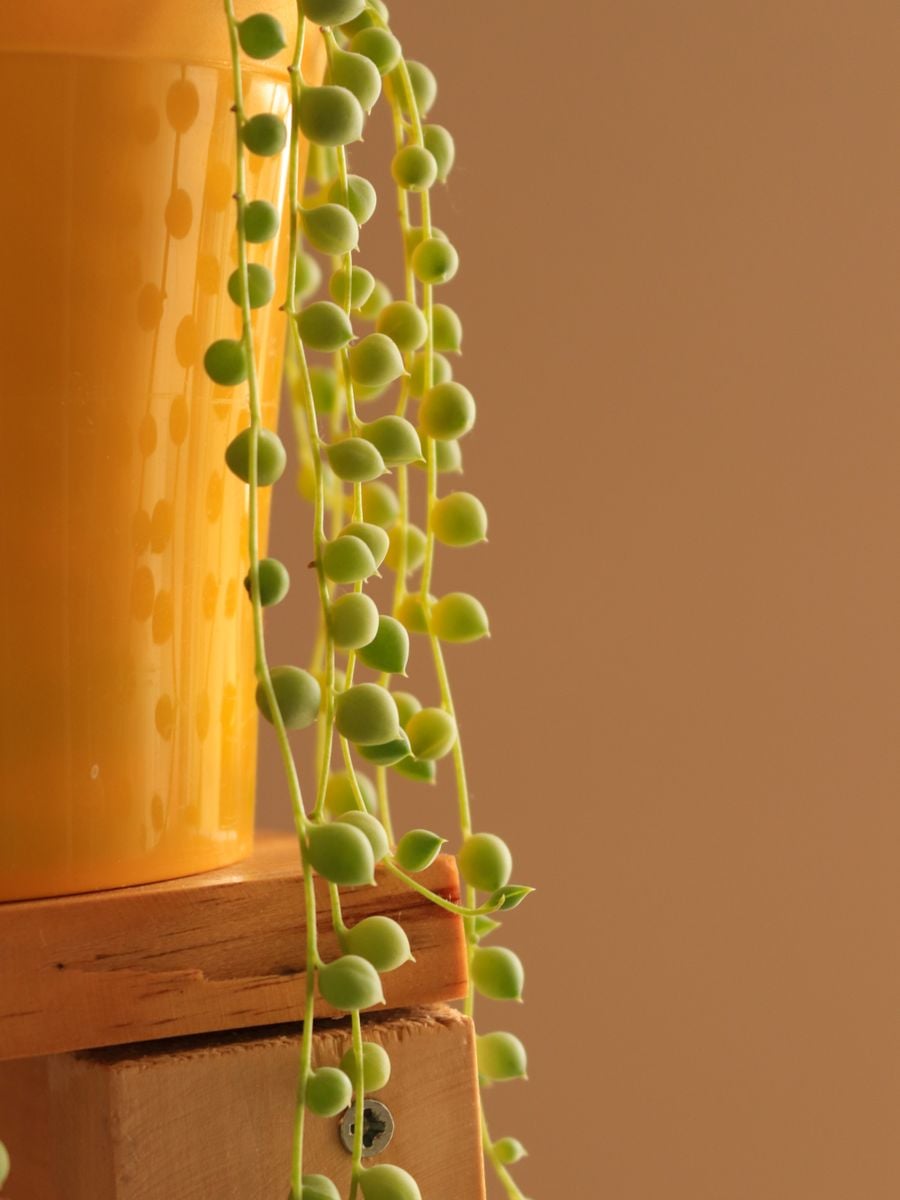
String of Pearls (Curio Rowleyanus): Beads on a Thread
Each "pearl" is a leaf, rounded to lose as little water as possible, with a tiny translucent window that lets light in. The plant comes from southern Africa and trails over a pot edge in strands that can reach a meter.
It rots faster than almost anything else on this list, so water less than you think. The string of pearls page covers light, water, and pet safety.
String of Hearts (Ceropegia Woodii): The Trailer for Lighter Rooms
Small, heart-shaped leaves marbled in silver on thin purple stems. String of hearts is a semi-succulent vine from southern Africa that stores water in its leaves and in little tubers along the stems. It's more forgiving of a lighter room than string of pearls.
Pin a stem on a pot of damp soil, and it roots at the tubers. It's one of the best easy-care hanging plants.

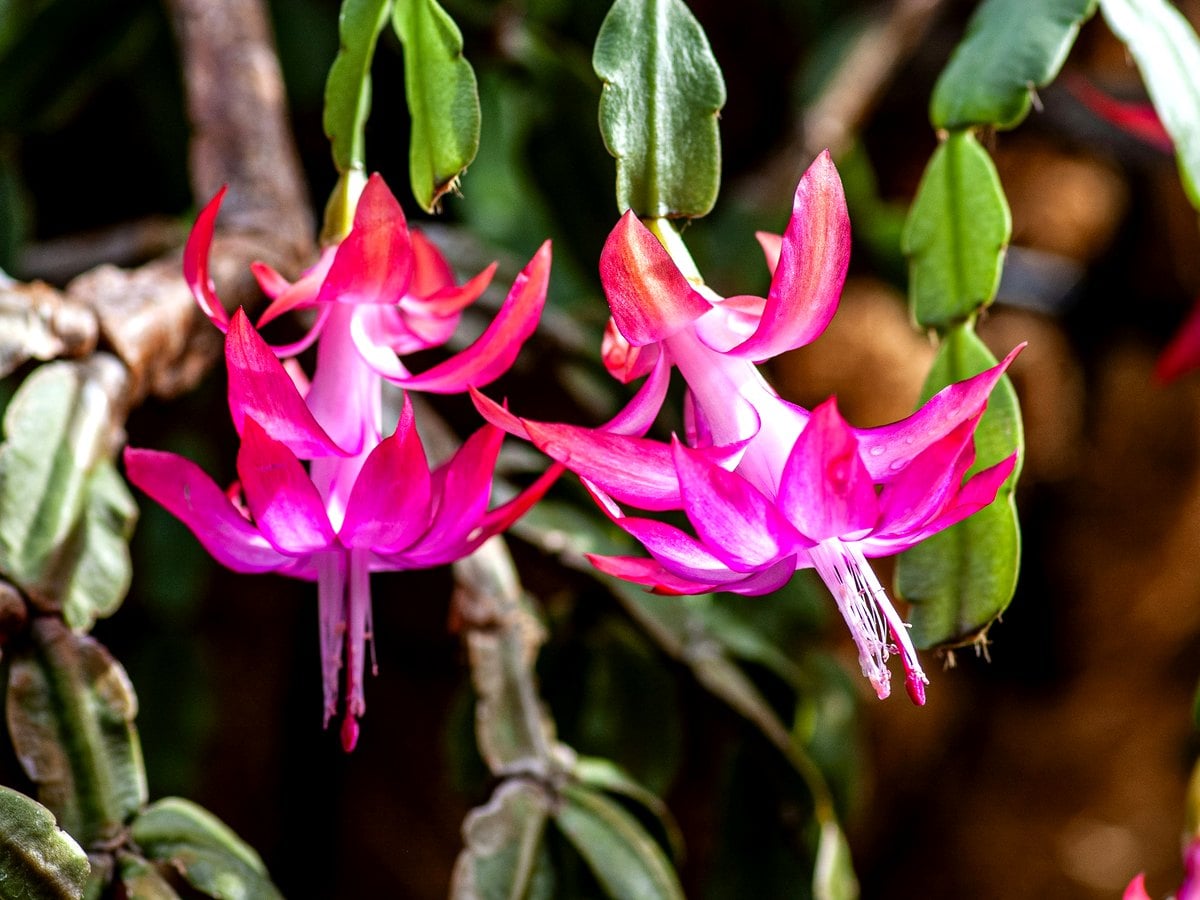
Christmas Cactus (Schlumbergera): The Forest Cactus
Not every cactus lives in a desert. The Christmas cactus grows on trees and rocks in the coastal mountain forests of Brazil, so it wants filtered light and more water than the rest of this list. No spines, flat jointed stems, and flowers that hang from the tips.
Buds form when the nights get long and cool, which is why it flowers in winter. Not sure whether yours is a Christmas or a Thanksgiving cactus? Check the leaf edges, then follow the Christmas cactus care guide.
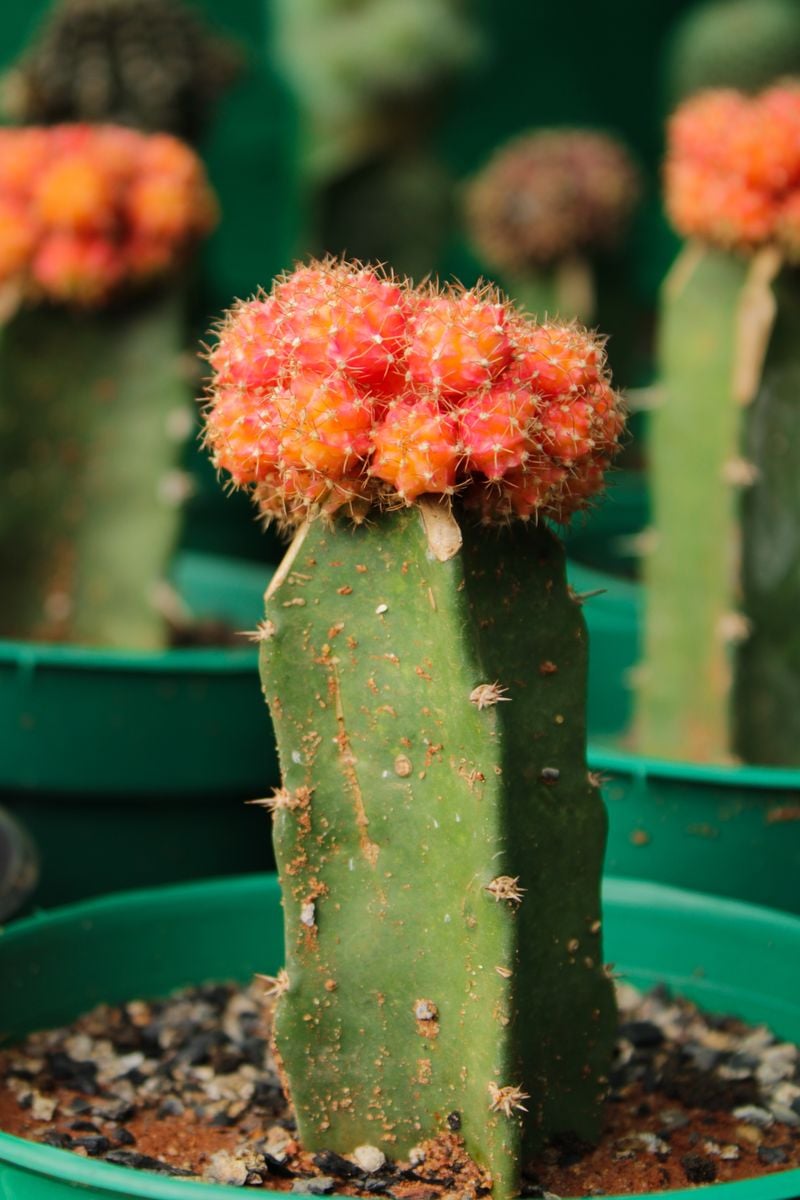
Moon Cactus (Gymnocalycium Mihanovichii): Two Plants in One
That neon red, orange, or yellow ball can't make its own food. It's a Gymnocalycium without chlorophyll, grafted onto a green cactus stem that does all the work. So a moon cactus is really two plants taped together by a grower.
Keep the green part healthy and the top survives; the colored top often outgrows its rootstock within a few years. Read more on moon cactus grafting and lifespan, and see which cacti are poisonous to pets.
Crown of Thorns (Euphorbia Milii): Flowers on Spines
Spiny gray stems, bright green leaves, and red, pink, or yellow "flowers" that are really colored bracts. Crown of thorns comes from Madagascar and will flower most of the year in a sunny window.
It's a Euphorbia, so it bleeds a milky sap that irritates skin and eyes. Wear gloves when you prune, and keep it out of reach of pets. More on the family in the guide to Euphorbia types.

African Milk Tree (Euphorbia Trigona): Looks Like a Cactus, Isn't One
Tall, three-sided stems with spines on the ridges and small leaves along the top. Everyone calls it a cactus. It's a Euphorbia, and the white sap gives it away the moment a stem breaks.
Indoors it grows into a column that can reach the ceiling in a bright room, so give it a heavy pot. The red-leaved form, Rubra, is just as easy. Same rule as crown of thorns: gloves on, pets away.

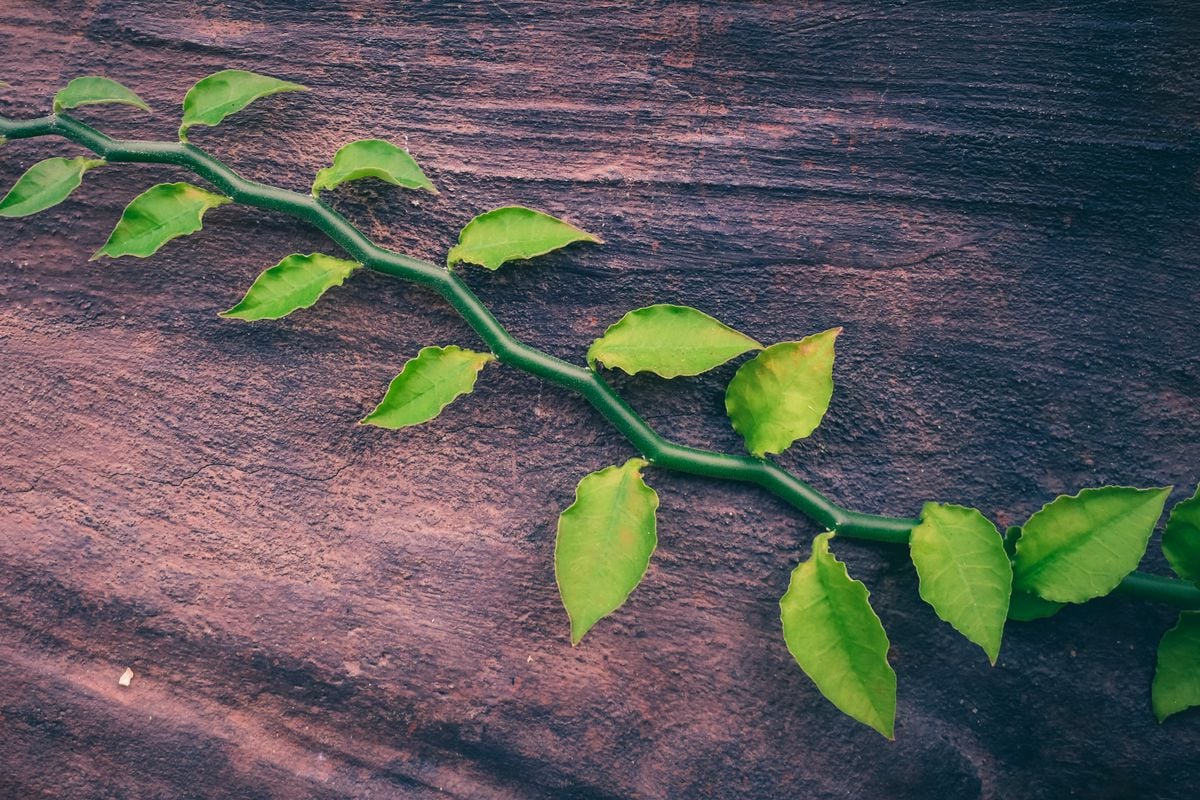
Devil's Backbone (Euphorbia Tithymaloides): The Zigzag Stem
The stem changes direction at every leaf, so it grows in a zigzag. That's where the name comes from. Variegated forms with white and pink edges are the ones you'll see sold as houseplants.
It's a Euphorbia too, with an irritating milky sap. The devil's backbone plant page explains whether it belongs indoors or out where you live. One naming trap if you look it up: the ASPCA's "devil's backbone" entry is a Kalanchoe, not this plant.
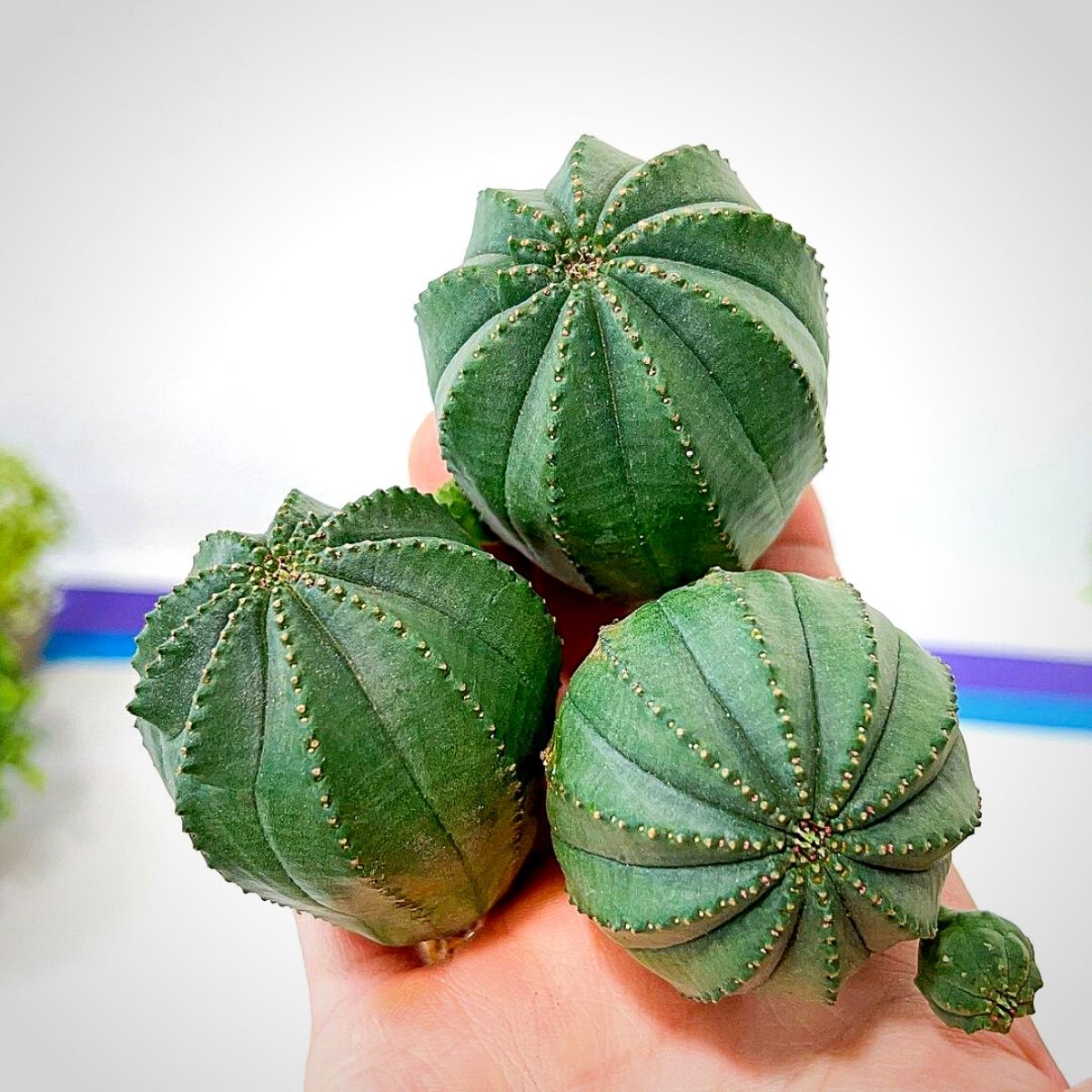
Baseball Plant (Euphorbia Obesa): Nature's Perfect Sphere
Round, striped, and about the size of a baseball. The baseball plant from South Africa is so neat it looks like a toy. It grows slowly and stays small for years, which makes it a collector's favorite on a sunny sill.
Here's a fun one: the plants are male or female, so you need both for seed. You'll still want to keep it from curious pets, because it carries the same milky Euphorbia sap as its taller relatives.
Succulent Types at a Glance: Light, Water, and Pet Safety
Need the short version for the shop floor or the windowsill? Here are all 20 in one place. Pet status follows the ASPCA's toxic and non-toxic plant list where the plant is on it; where it isn't, the entry says so.
| Succulent | Light and water | Cats and dogs |
|---|---|---|
| Echeveria Echeveria species |
Full sun to very bright light; water when the soil is dry | Non-toxic (ASPCA) |
| Hens and chicks Sempervivum |
Full sun, outdoors all year; water sparingly | Non-toxic (ASPCA succulent list) |
| Haworthia and zebra plant Haworthia, Haworthiopsis |
Bright indirect light, copes with less; water when dry | Non-toxic (ASPCA) |
| Flaming Katy Kalanchoe blossfeldiana |
Bright light, some direct sun; water when the top dries | Toxic (ASPCA) |
| Paddle plant Kalanchoe thyrsiflora |
Full sun to bright light; water when dry | Toxic (ASPCA, Kalanchoe) |
| Mother of thousands Kalanchoe daigremontiana |
Bright light; water when dry | Toxic (ASPCA, Kalanchoe) |
| Jade plant Crassula ovata |
Full sun to bright light; water when the soil is dry | Toxic (ASPCA) |
| Campfire crassula Crassula capitella Campfire |
Full sun for the red color; water when dry | Not on the ASPCA list |
| Aloe vera Aloe vera |
Full sun to bright light; water when dry | Toxic (ASPCA) |
| Foxtail agave Agave attenuata |
Full sun; frost-tender; water when dry | Not on the ASPCA list; sap irritates skin (NC State) |
| Mangave Agave x Manfreda |
Full sun; water when dry | Not on the ASPCA list |
| Burro's tail Sedum morganianum |
Bright light, gentle sun; water when dry | Non-toxic (ASPCA) |
| String of pearls Curio rowleyanus |
Bright light, morning sun; water when the beads wrinkle slightly | Not on the ASPCA list; toxic (NC State) |
| String of hearts Ceropegia woodii |
Bright indirect light; water when dry | Not on the ASPCA list |
| Christmas cactus Schlumbergera |
Bright indirect light; water when the top dries; long nights for buds | Non-toxic (ASPCA) |
| Moon cactus Gymnocalycium mihanovichii |
Bright light without harsh sun; water when dry | Not on the ASPCA list |
| Crown of thorns Euphorbia milii |
Full sun to bright light; water when the top dries | Toxic sap (NC State) |
| African milk tree Euphorbia trigona |
Full sun to bright light; water when dry | Toxic sap (NC State) |
| Devil's backbone Euphorbia tithymaloides |
Bright light, some sun; water when the top dries | Irritating sap (NC State) |
| Baseball plant Euphorbia obesa |
Full sun to bright light; water sparingly | Not on the ASPCA list; Euphorbia sap irritates |
If your pet chews something on the toxic side of that list, call your vet or your local animal poison control center straight away and keep the plant label handy.
Succulents in Floral Design: Cut Rosettes for Wreaths and Bouquets
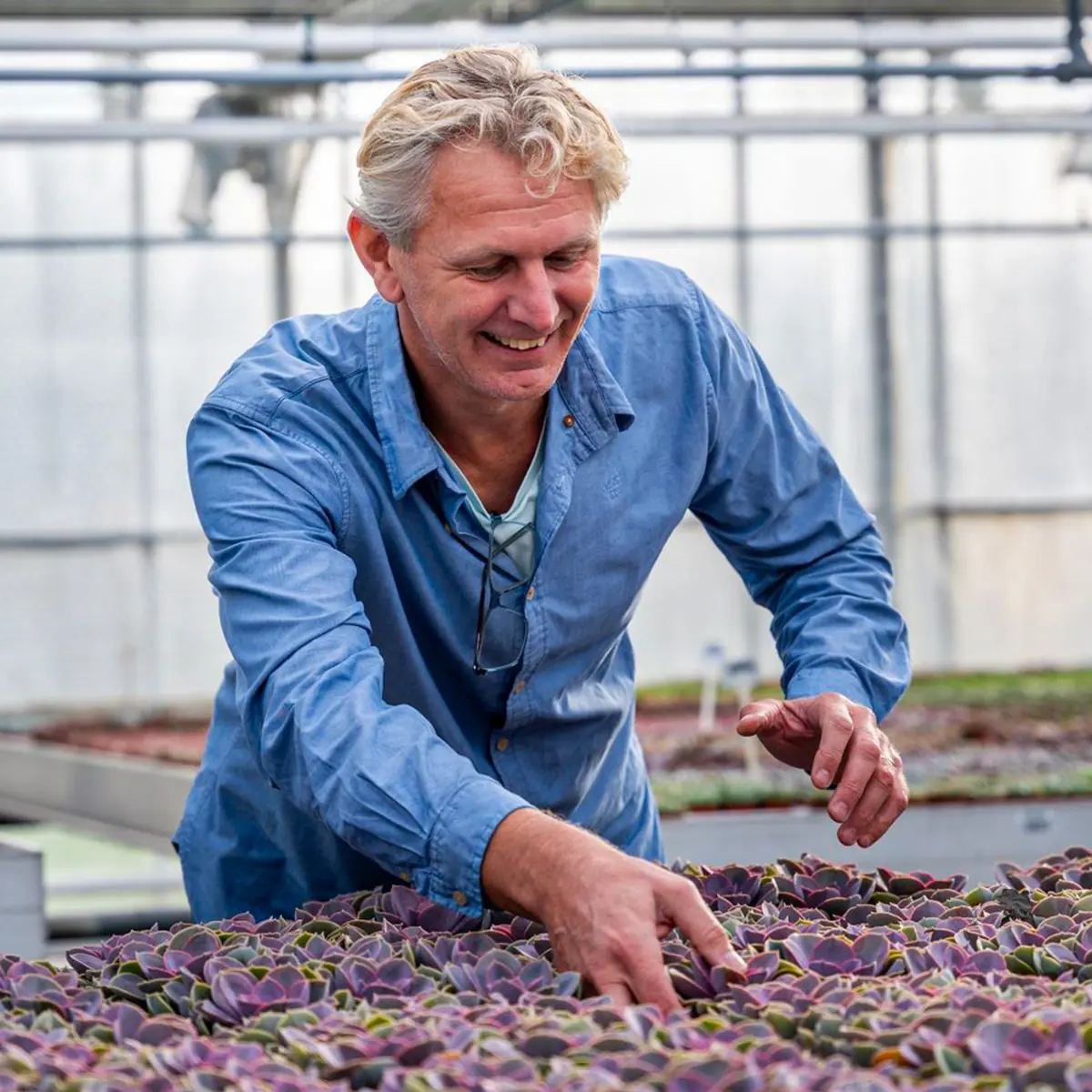
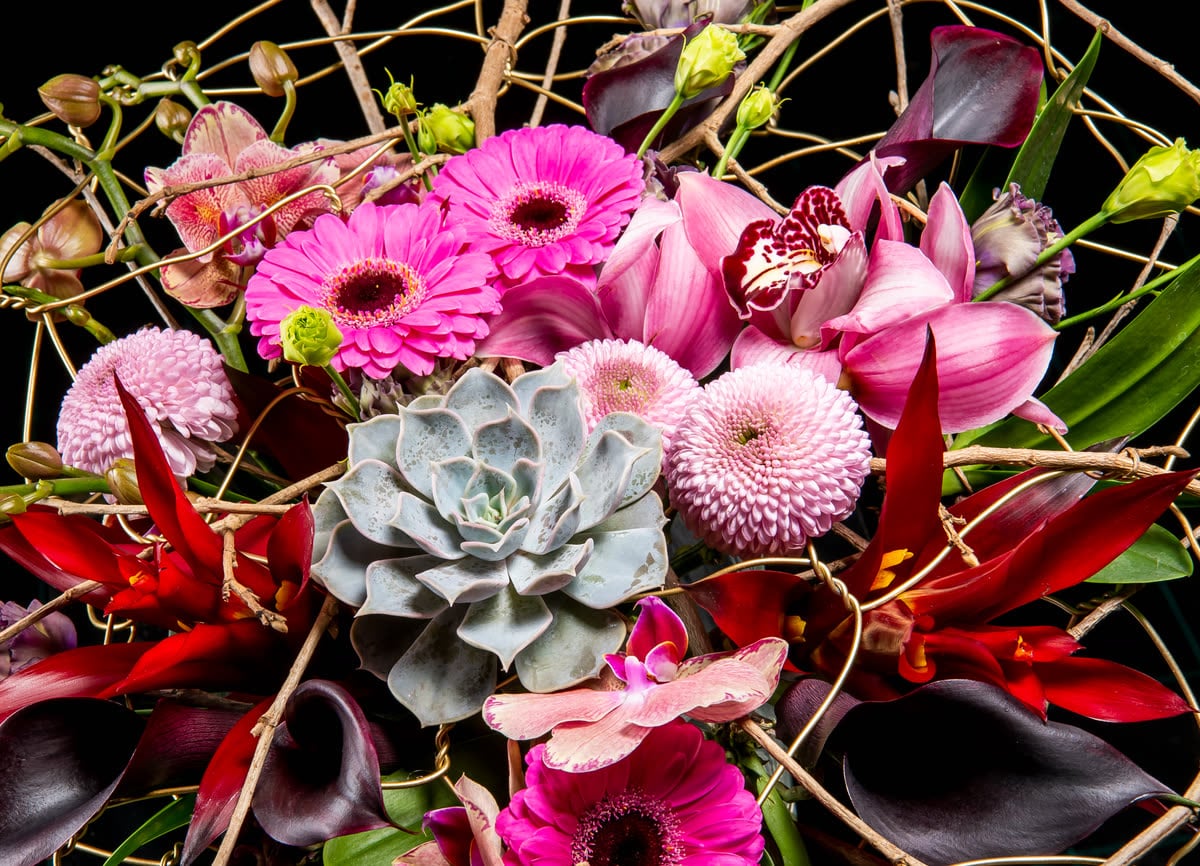
Here's the part most succulent lists skip. Florists have been taking rosettes off the windowsill and into bouquets, wreaths, and even jewelry for years. Michigan designer Susan McLeary made wearable florals her signature, with succulents in rings and cuffs. And the Dutch grower Winco Holland now sells rosettes without pots or roots as a design material, under the name Wincx.
Why does that work? A cut Echeveria keeps its water in its leaves, so it doesn't droop once it's out of the box. The Wincx range runs to 123 varieties, from 5 to 20 cm (2 to 8 inches) across, and you'll find designers such as Hanneke Frankema and Gregor Lersch working it into festive pieces. Bart Noort, owner of Winco Holland, explains where it's heading:
"Florists are using our succulents in their work more and more often, in large table arrangements, at weddings, and in the run-up to Christmas. In America, it has already grown into a huge hype, and in Europe, we're only at the beginning."
One thing to tell your customer: Echeveria isn't frost-hardy, so a succulent wreath belongs on the inside of the front door. More design ideas are in the piece on cut succulents for wreaths and bouquets, and in succulents and cacti for florists.
Pick the Succulent That Fits Your Window
So which one should you buy? Start with the light you actually have, not the plant you fell for on Instagram. A south or west window can carry rosettes, Aloe, Agave, and the spiny Euphorbias. An east window or a bright room suits the trailers and Kalanchoe. And that dim corner you've given up on? That's Haworthia country.
Got pets? Burro's tail, Haworthia, Echeveria, and the Christmas cactus are the easy wins. Then water less than you think, and when you're unsure, check the guide on how to water succulents before you reach for the can. Curious about the bigger picture? The overview of types of flowers by color, season, and use is the next stop.
Sources: ASPCA Animal Poison Control Center: Toxic and Non-Toxic Plants (Echeveria, Haworthia, Kalanchoe, jade plant, aloe, burro's tail, Christmas cactus) and Are Succulents Safe to Have Around Pets? (Sempervivum). NC State Extension Plant Toolbox: Agave americana, Curio rowleyanus, Euphorbia milii, Euphorbia trigona, Euphorbia tithymaloides, Euphorbia. Northern Arizona University, Cactaceae (areoles; all cacti are succulents). Iowa State University Extension, All About Holiday Cacti (short days and cool nights).
Featured image: a pink crown of thorns in a terracotta pot, photo by @kubrademiralay7. Header image: succulents and cacti in the greenhouse, photo courtesy of Winco Holland.