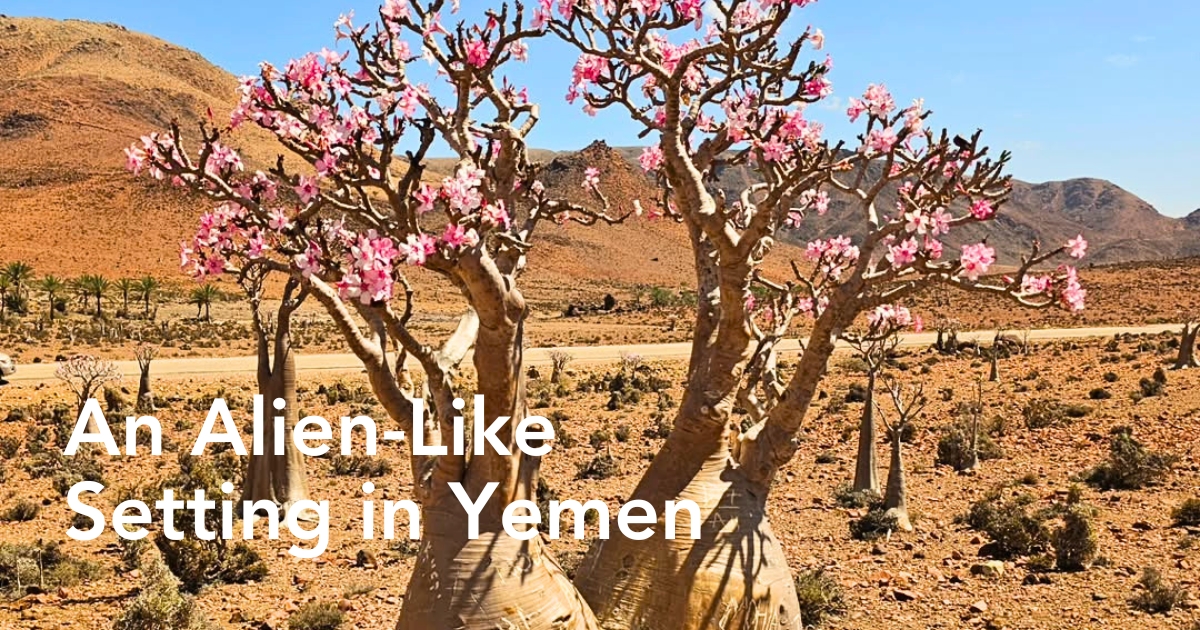
If this Yemeni island is, in itself, a traveler's dream, the flowering of its most peculiar plants makes it an unmissable spectacle. During the subtropical spring, the rugged mountains and deep canyons of Socotra's interior are painted in every shade of pink. It's the time of year when the mythical island, coveted by explorers, anthropologists, botanists, ornithologists, and pirates, is at its most beautiful, as its endemic desert roses, Adenium obesum sokotranum, bloom in a carnival of color. A visual spectacle unparalleled in the world.
Socotra – One of the Most Spectacular Places on Earth
Located halfway between the Horn of Africa and the Arabian Peninsula, the Yemeni island of Socotra serves as the gateway to the Gulf of Aden, where the Indian Ocean and the Red Sea meet. Yet beyond its geography, the island represents a world as evocative as its name – a place shaped by thousands of years of history and regarded as one of the most remote and sought-after destinations for travelers with a passion for adventure and exploration.
The most famous 'Dragon Blood' trees are known to inhabit the island
Video: @piersonx
For many locals, the island’s beauty feels almost mythical. Aamer Thani, a native of Socotra, describes it with certainty as the place 'where paradise was born', while overlooking the vast Firmihin dragon tree forest, home to the iconic Dracaena cinnabari. This extraordinary landscape is just one example of the island’s many endemic plant species, which reveal their most majestic beauty in spring, when the Haggeher Mountains turn green after the rainy season, and the entire island comes alive with nature.
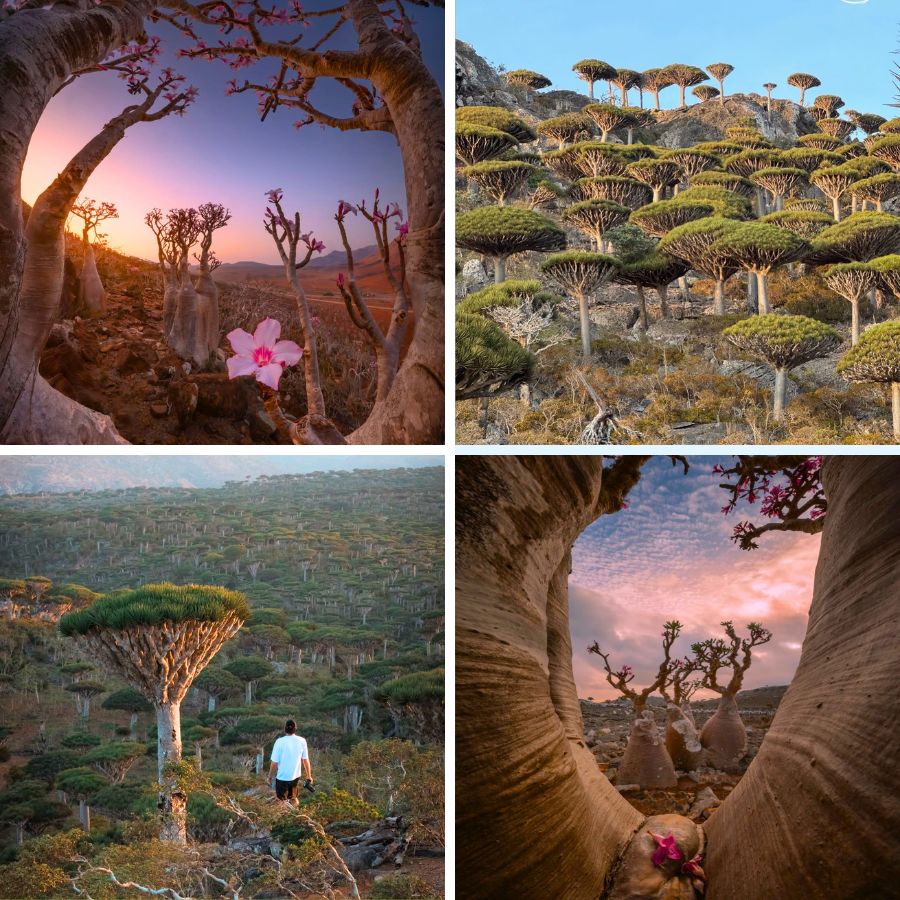
Photos: @maxterwindt and @sstoours.socotra
The Galapagos of the Indian Ocean
Socotra was once part of Gondwana, a supercontinent that hundreds of millions of years ago encompassed Africa, India, Arabia, Australia, Antarctica, and South America – the largest continent to have ever existed on Earth. Approximately 18 million years ago, rising sea levels and the persistent movement of tectonic plates led to the eventual continental restructuring of Gondwana, transforming Socotra into an island. Its unique geographical and climatic conditions, combined with its isolation, were the ideal setting to create unique habitats that, over hundreds of years, allowed the development of a wide variety of endemic species of plants and animals.
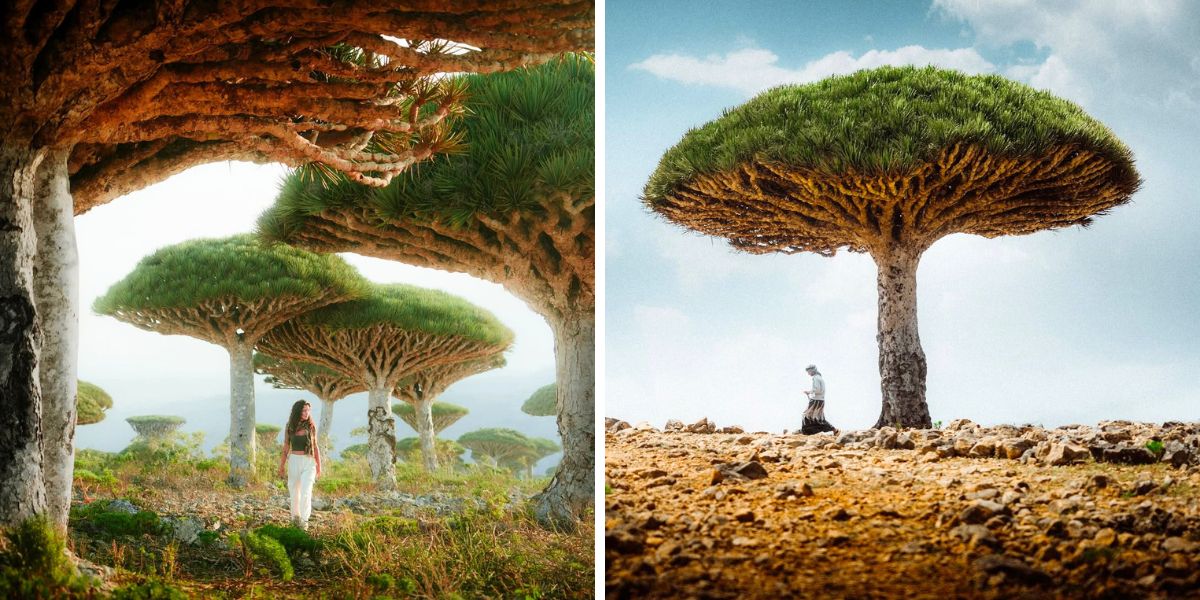
Located in the center of the island, the Diksam Plateau, accessible by dirt tracks through moorland of low grasses and scrubland from the paved road leading from the sleepy port capital, Hadiboh, exemplifies the reasons why UNESCO voted to include Socotra on its prestigious World Heritage List in 2008. Outstanding for the great importance and diversity of its flora and fauna, as well as for the high rate of endemism. One of the richest and most distinctive islands in the world in terms of biodiversity, known as the 'Galápagos of the Indian Ocean'.
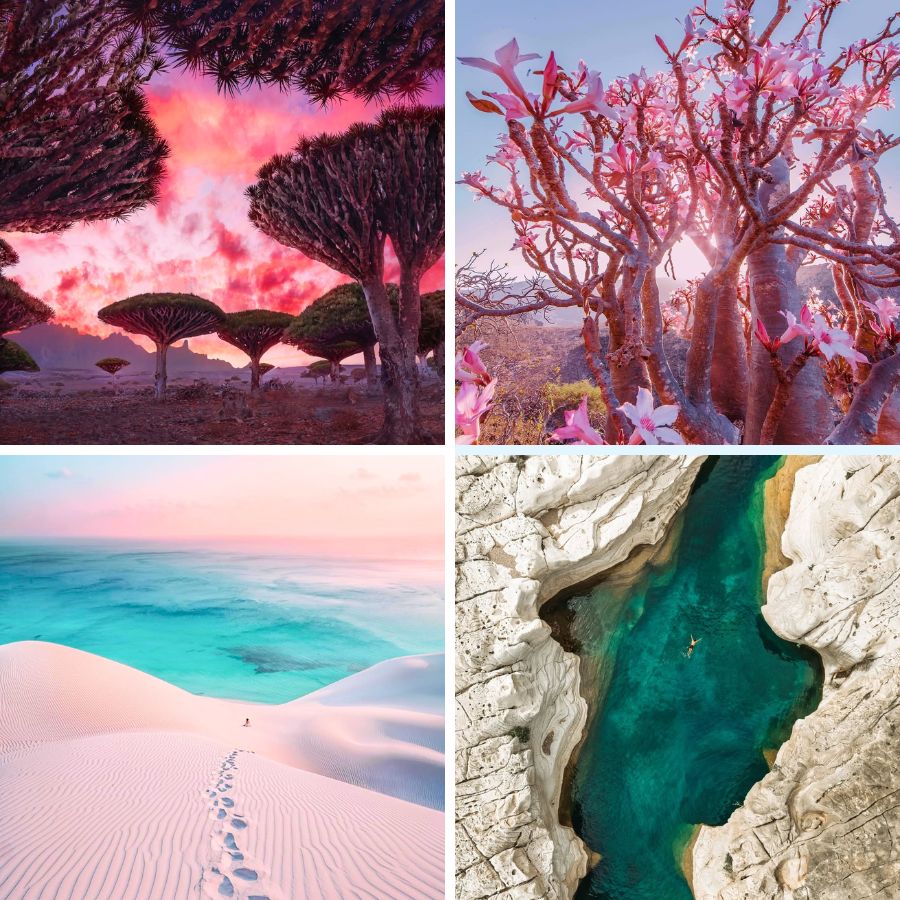
Halfway up Diksam, from the walls of the narrow and intricate Wadi Dirhur canyon, the deepest on the island at over 700 meters above sea level, the scenery is like something out of a movie. Prodigious dragon trees with majestic crowns stand proudly on the horizon. Their bark is sculpted by time and the hands of the Socotri people, who have sought medicinal remedies in it since time immemorial.
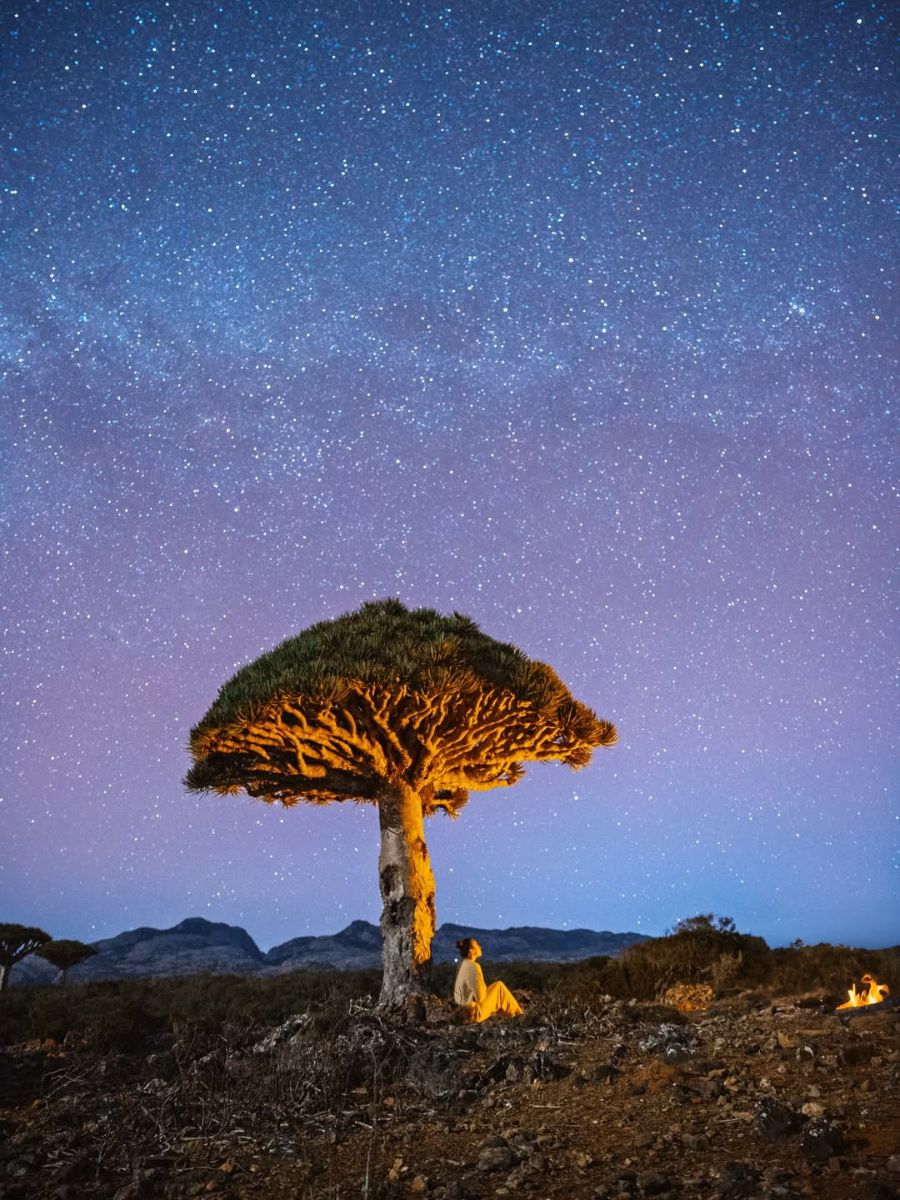
Among them are dozens of desert roses, with plump trunks and slender branches from which only a few leaves sprout amidst a sea of pink petals. But that's not all; among them, you can also find the island's eight native species of incense trees, aloe vera plants, numerous kinds of succulents, and, of course, specimens of the Socotra begonia (Begonia socotrana), the only begonia in the world that blooms in winter.
Video: @welcometosocotra
Socotra remains one of the most distinctive natural environments on Earth, defined by a level of endemism and ecological isolation found in very few places. Its landscapes are the result of millions of years of separation and adaptation, where plant and animal life have evolved in ways that exist nowhere else.
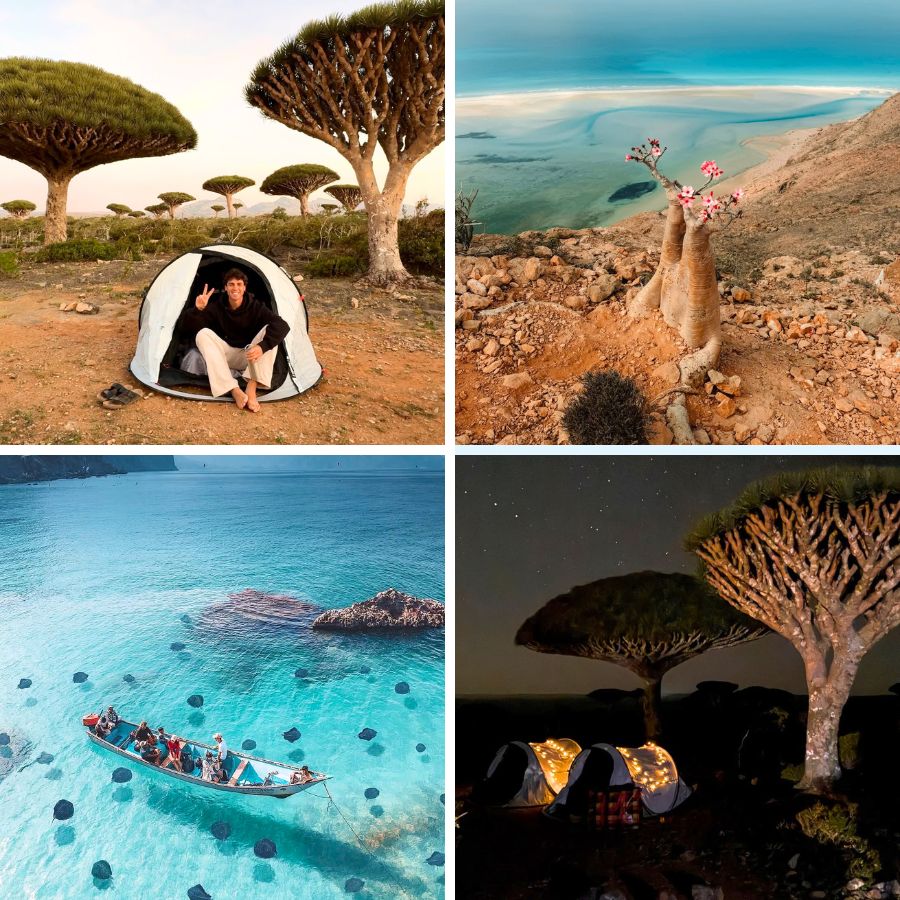
How sick is this place? It's giving nature, alien vibes!