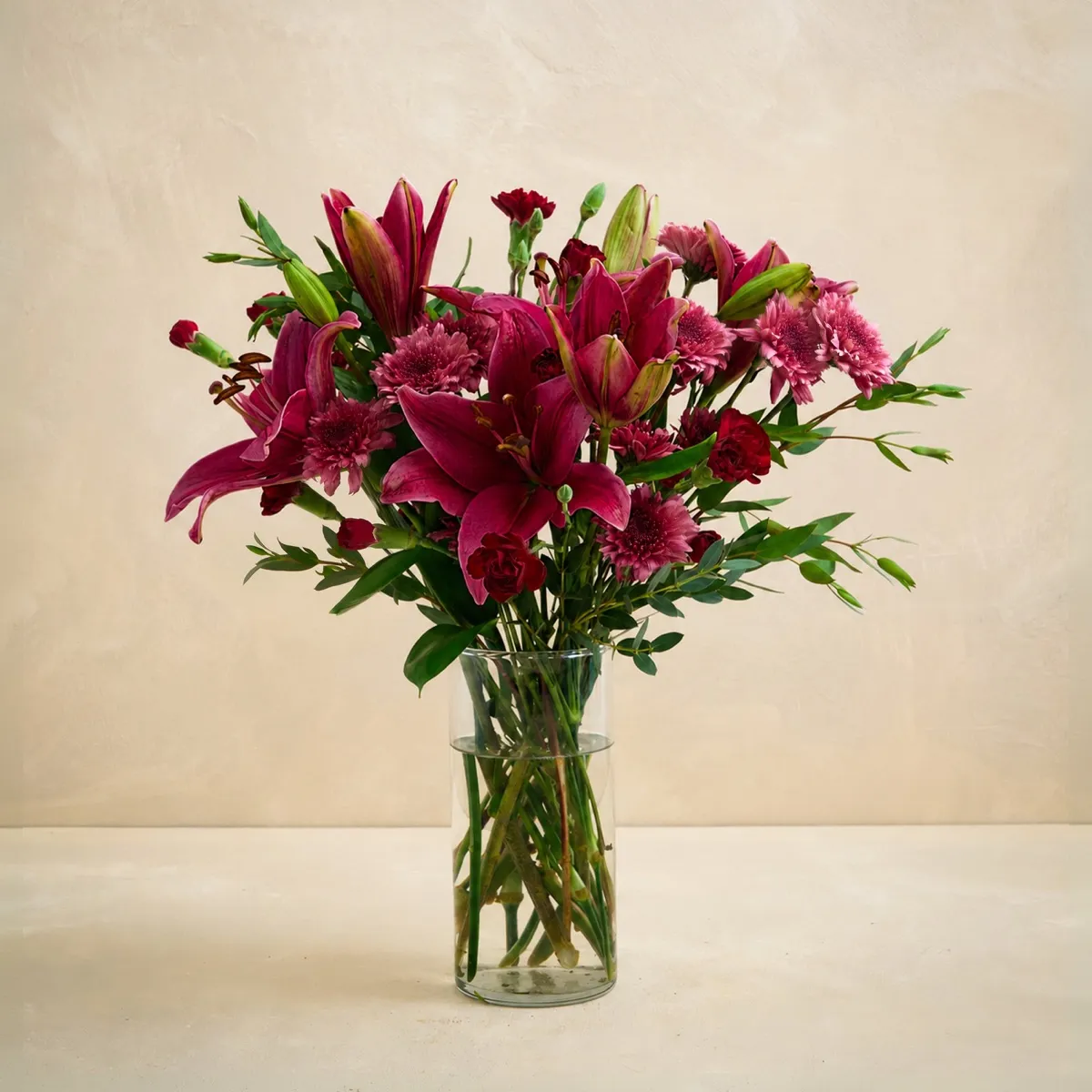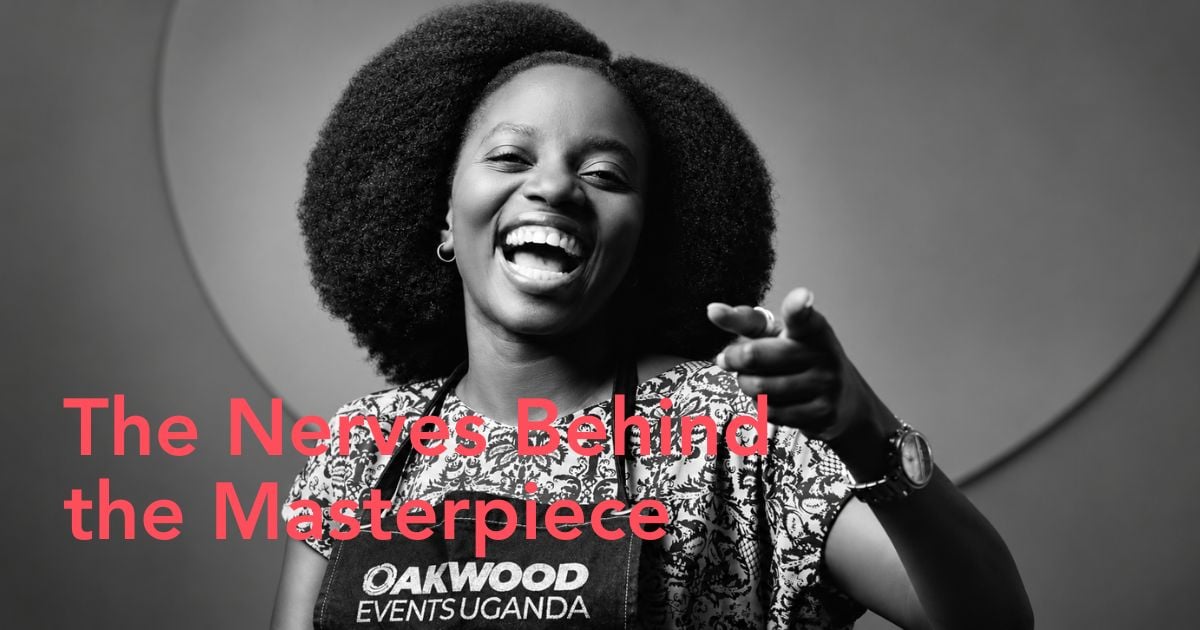
There is a knot Stella Mugera still gets in her stomach every time an arrangement leaves her workshop. Not before a client meeting. Not before a big pitch. Before a bouquet gets in a van, truck, or a boda boda.
That's the thing about Stella Mugera that the headlines miss: the royal wedding, the 100,000 stems, the bridal bouquet she designed for actual Ugandan royalty, none of it cured the nerves. If anything, it raised the stakes. And somehow, that's the most reassuring thing about her.
Stella Migera Was Supposed to Be an Economist
For a while, she was. Development Economics at university, then years behind a desk, first with local government, then as a sustainability specialist with USAID – work she genuinely loved. She was good at systems, at managing people, at making things run. It's the same instinct, she'll tell you now, that keeps Oakwood Events Uganda running today. The economist never really left. She just found something better to apply it to.
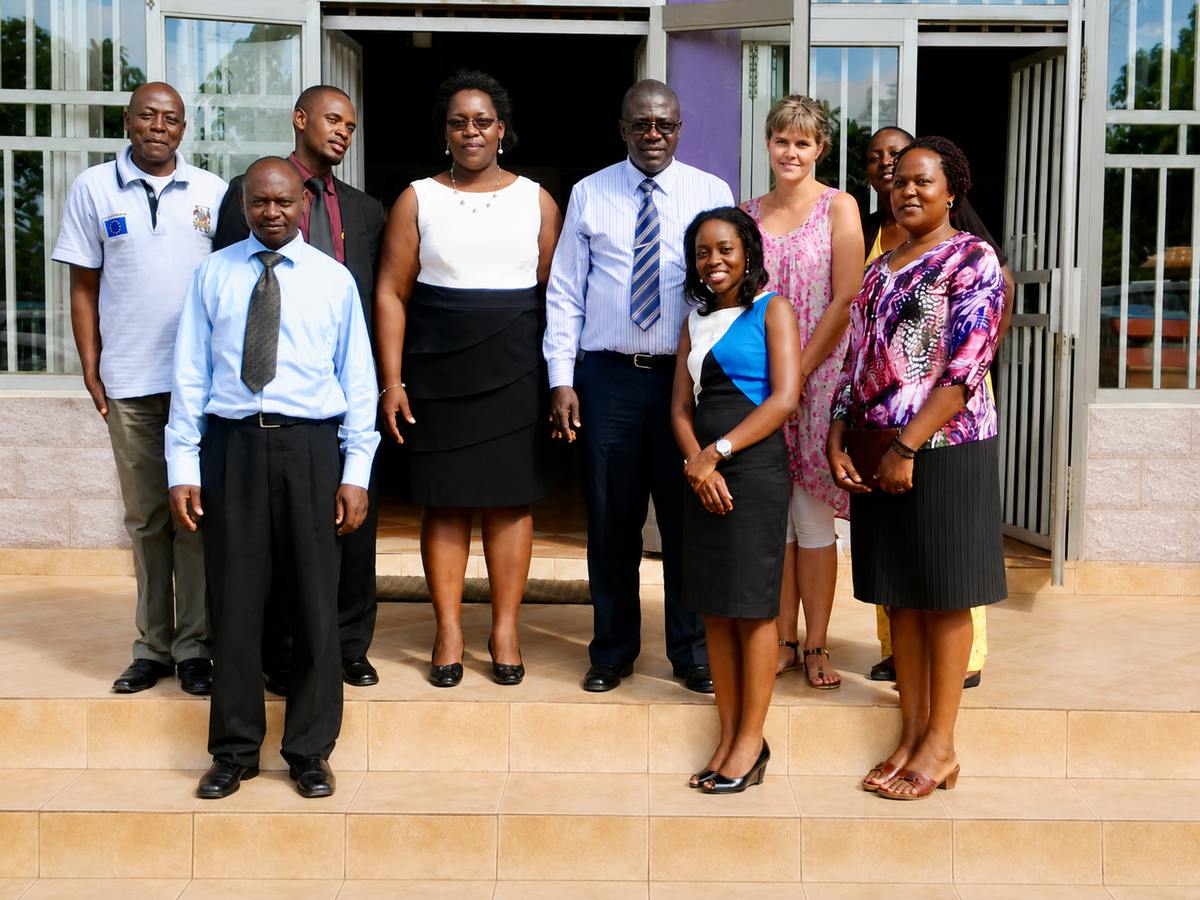
What she didn't have was time. Her calendar was full of local trips and international ones, back to back, and somewhere in that blur she noticed she wasn't sitting still long enough to actually be present, not with her work, not with her family, not with herself. So she did something most people only threaten to do: she didn't renew her contract. Took six months off. Came back a florist. Eight and a half years later, that decision is the reason a queen's wedding bouquet exists.
Flowers Weren't the Plan – They Were the Symptom
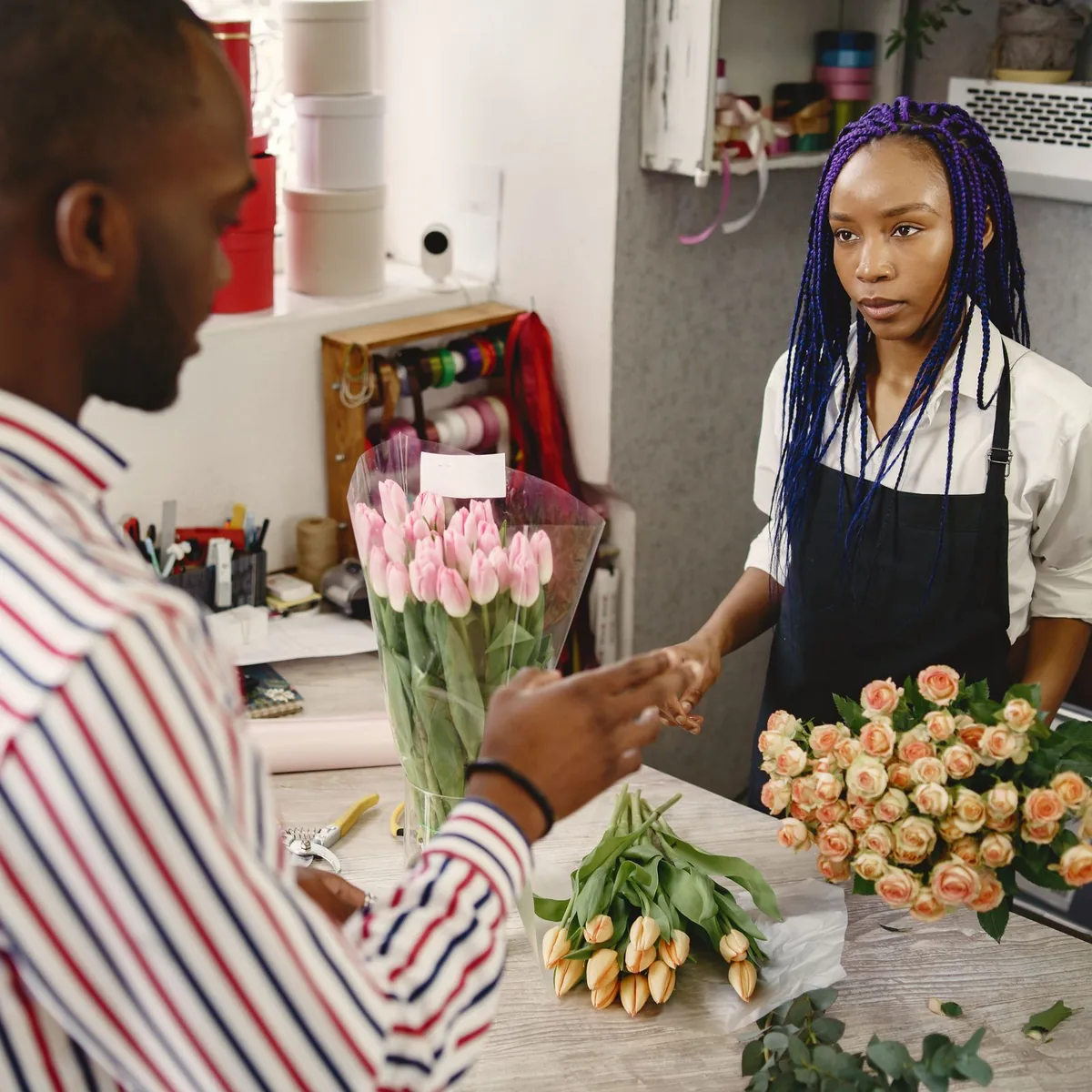
Oakwood Events Uganda started as an events company with one stubborn rule: everything would be fresh flowers, always - the walkway, the backdrop, the bridal bouquet, no exceptions, no artificial shortcuts. It should have been the harder, more expensive way to run an events business. Instead, it became the whole business.
A wedding centerpiece turned into a request for a living room arrangement. That turned into a birthday bouquet for someone's best friend. Before Mugera's team fully clocked what was happening, they were fielding requests faster than they could name the pattern, and the joy of it kept multiplying.
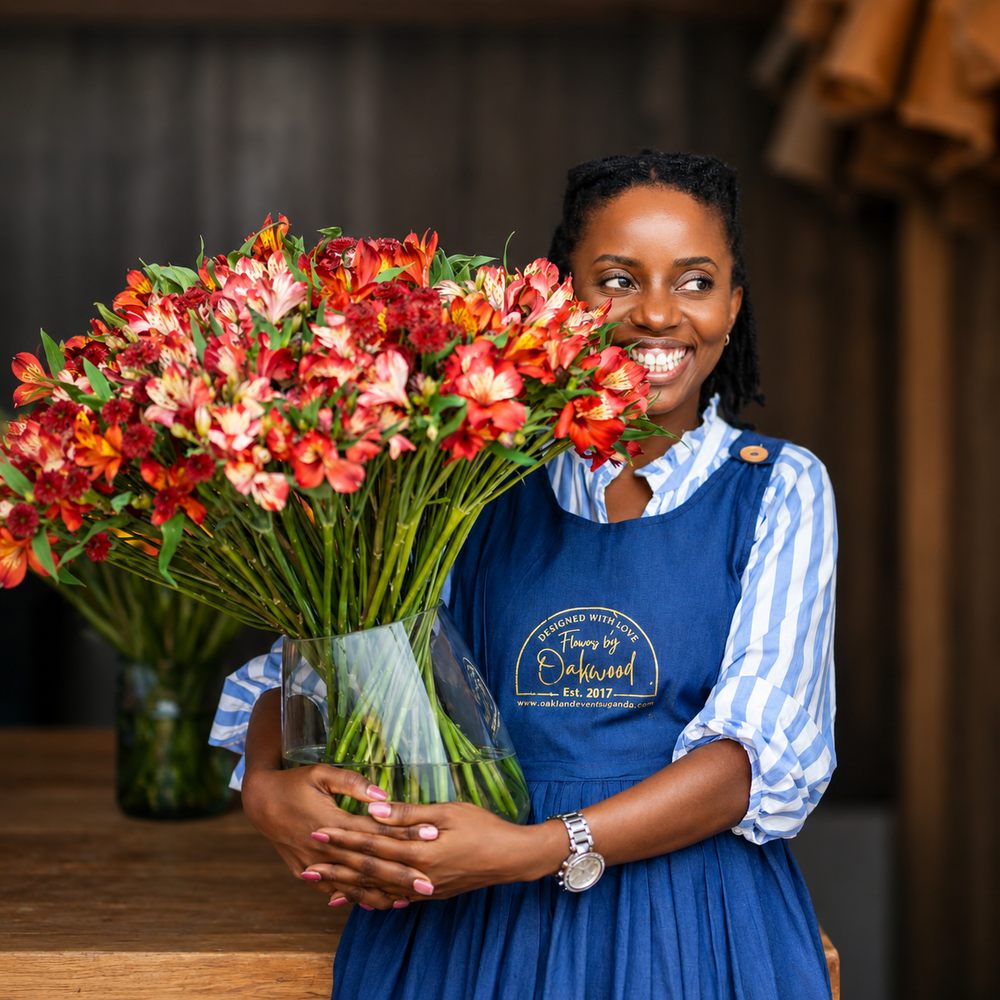
Somewhere in there, they took on a wedding for 800 guests, with full fresh floral installations across the guest tables, the ceiling, and a 20-meter backdrop, and pulled it off without blinking. That was the moment Flowers by Oakwood stopped being a side effect and became its own name on the door.
Loose, Organic, and Slightly Disobedient
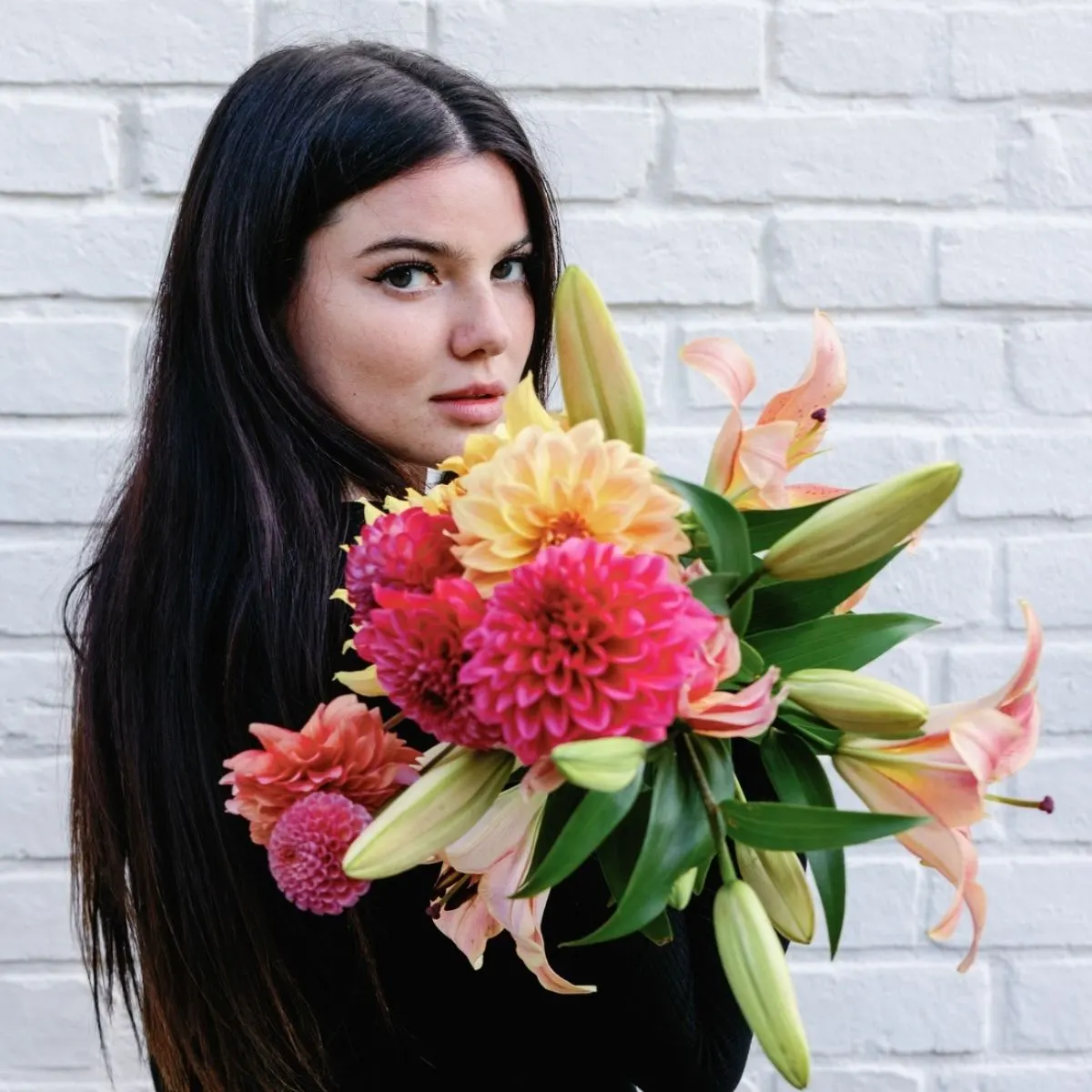
Mugera's design language reads like a rebellion against tidiness. Garden style, she calls it: mixed textures, mixed varieties, shapes that look like Mother Nature herself got impatient with a florist's ruler and did it her own way. Color is either fully committed to one tone, in every shade it comes in, or fully mixed, color-blocked with intention – nothing in between, nothing safe.
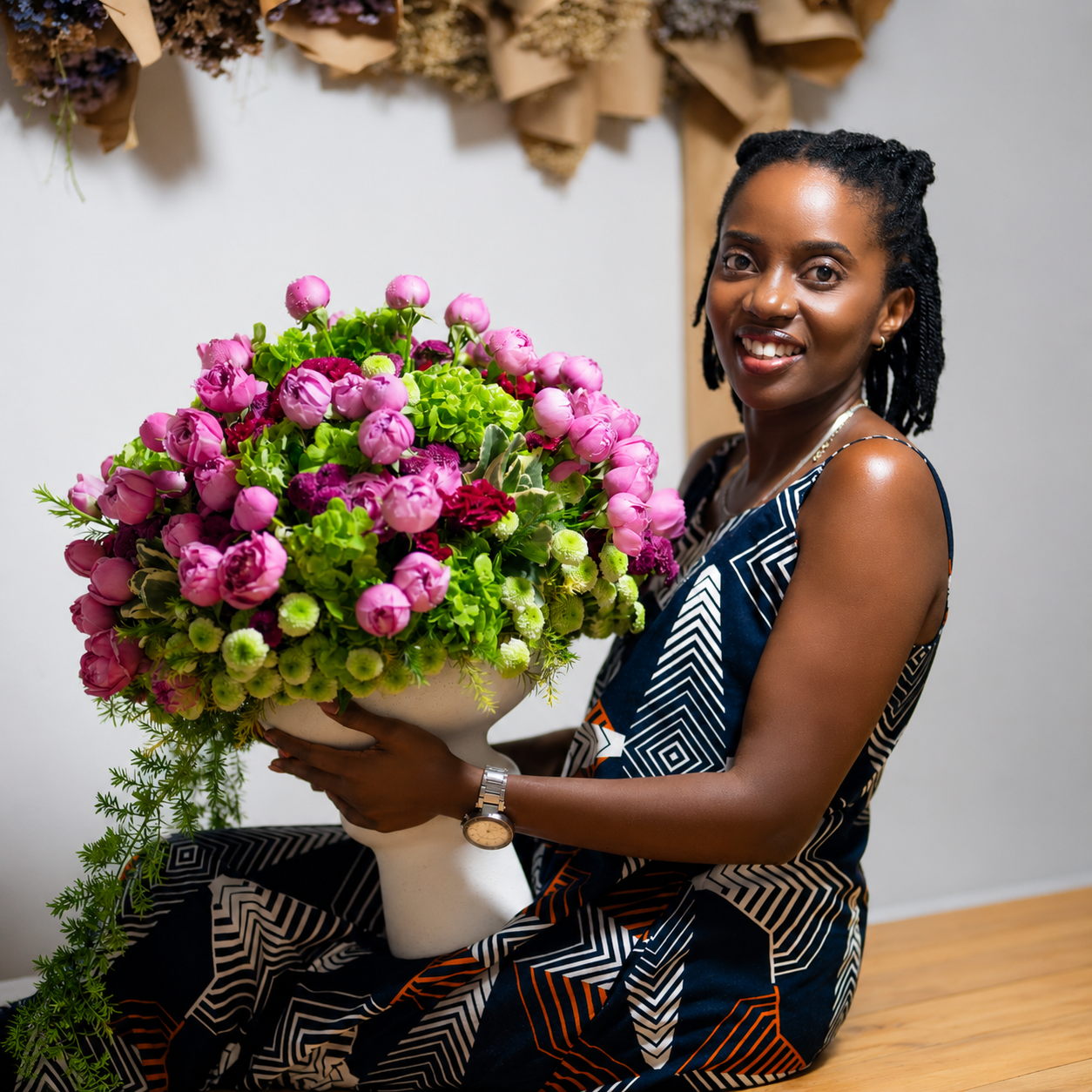
Her favorite flower isn't really a flower at all. It's a succulent: plump, glossy, stubbornly itself, and probably the closest thing to a self-portrait she'll admit to in an interview.
The Royal Wedding, and the Prayer That Answered Itself
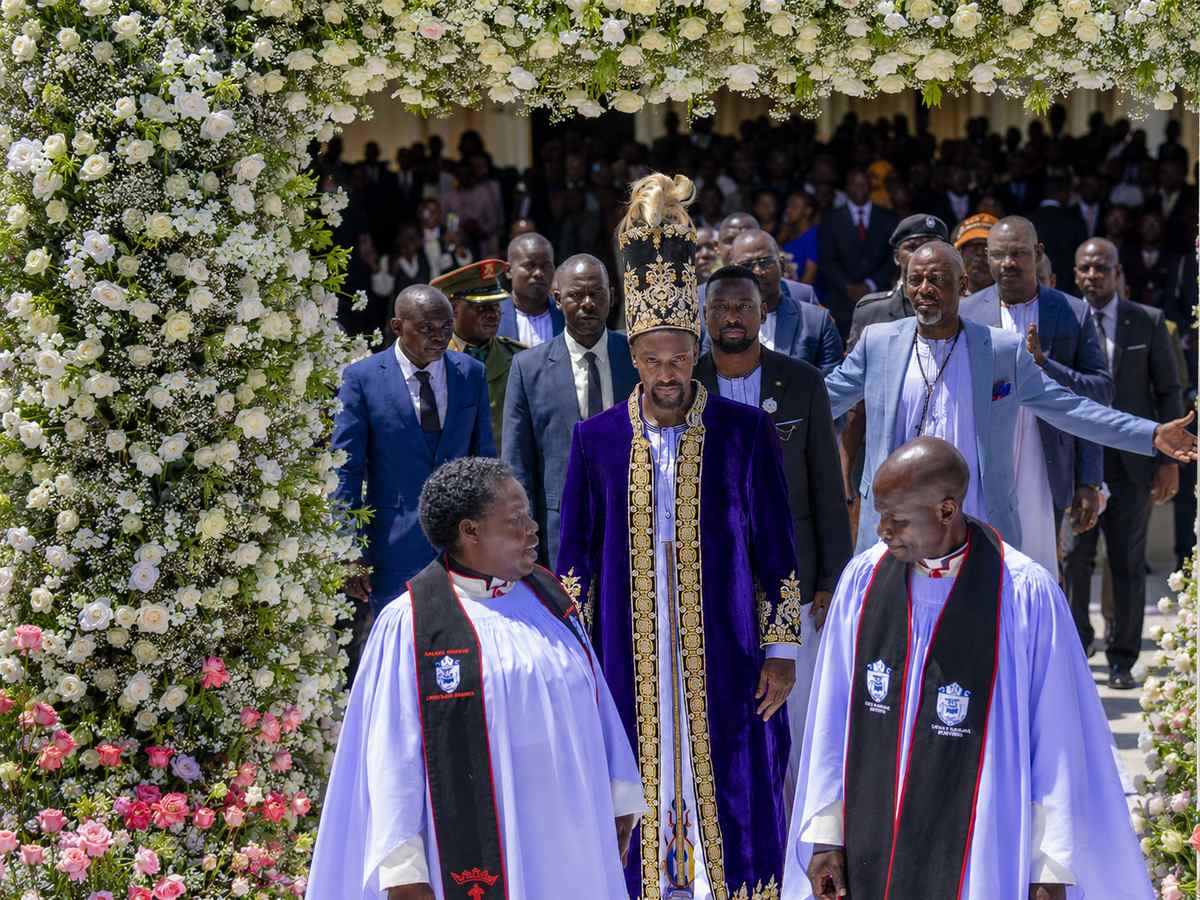
In 2024, Oakwood dressed the Busoga Kingdom's royal wedding at Christ Church Cathedral Bugembe, with early 100,000 stems, soft pastel hues, and a bridal bouquet designed by Mugera's own hands for Her Royal Highness, Queen Inhebantu Jovia Mutesi. Say that sentence slowly: a former government economist personally designed a queen's wedding bouquet.
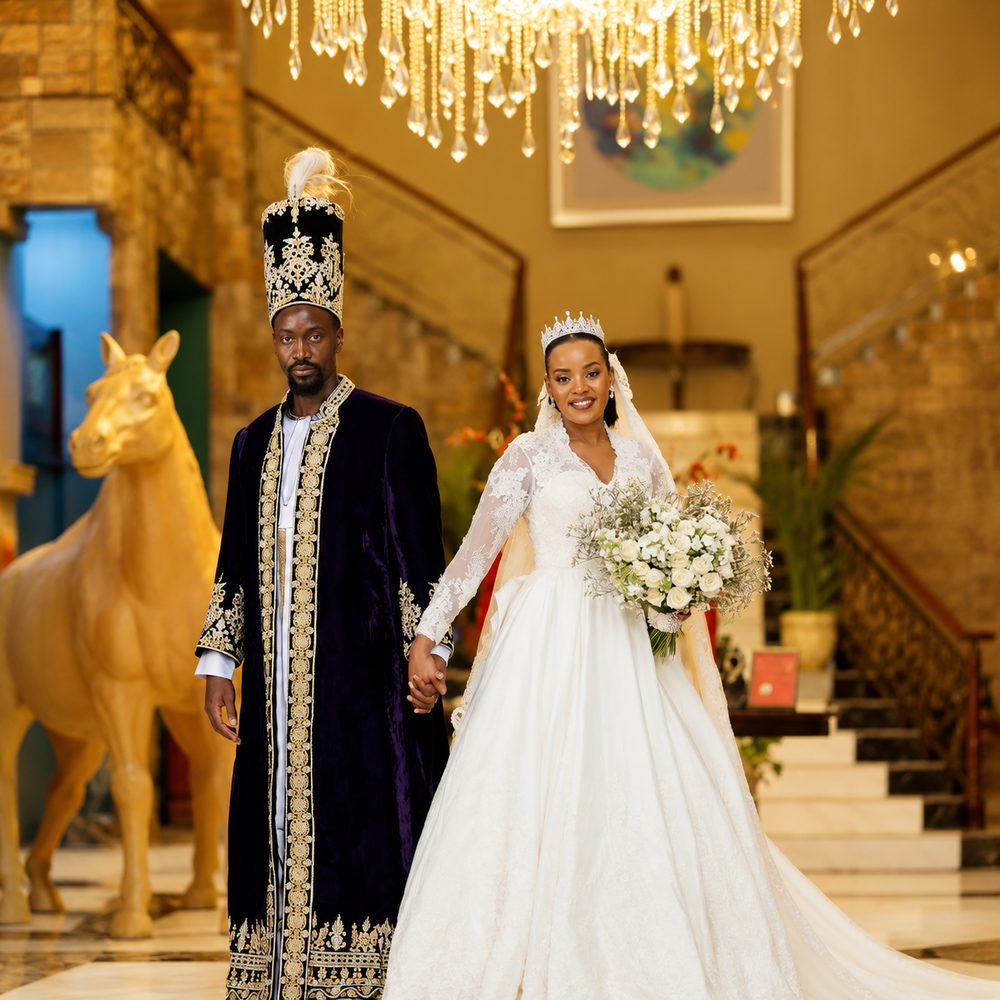
The king's royal robes and headpiece for the ceremony carried the same weight of craftsmanship, designed by Mugera's good friend Lilian Kyabaki, a renowned Ugandan fashion designer who has dressed celebrities including Zari Hassan, created gowns for the Miss Universe finals, and now runs Naysabespoke by Lilian Kyabaki as CEO: two friends, two crafts, one royal wedding.
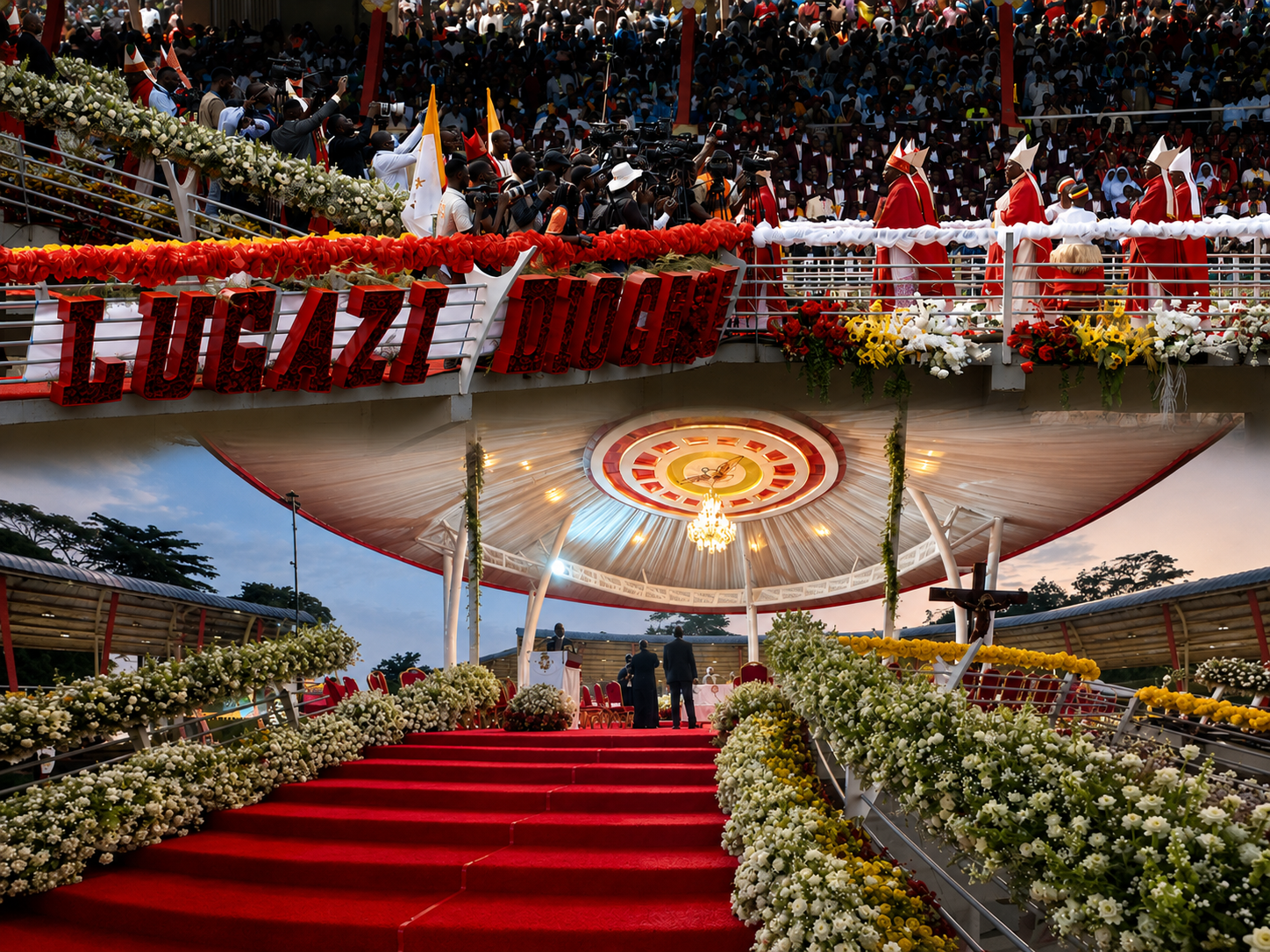
Then, in June 2025, came something Mugera doesn't talk about with the same triumphant tone, something quieter and heavier. Oakwood was chosen to flower the altar, the staircase, and the VIP dining area for Uganda's International Martyrs' Day at Namugongo, feeding nearly 40,000 stems into a sacred space built for thousands of pilgrims. She'd prayed for exactly this, as a pilgrim herself, two years earlier. When it happened, she wasn't just executing a contract. She was watching her own prayer get answered in real time, one stem at a time.
The 1% That Keeps Her Honest
Ask her about pressure, and she won't perform humility; she'll tell you the truth. Ninety-nine percent of the time, clients see her vision, and it lands exactly right. But there's always that other one percent: the delivery van, boda boda pulling away, the stomach knot, the waiting. When it goes wrong, she doesn't defend the work. She redoes it, free of ego, because, in her words, it was never really hers to begin with. "We're just the creative conduit," she says. "It's their arrangement."
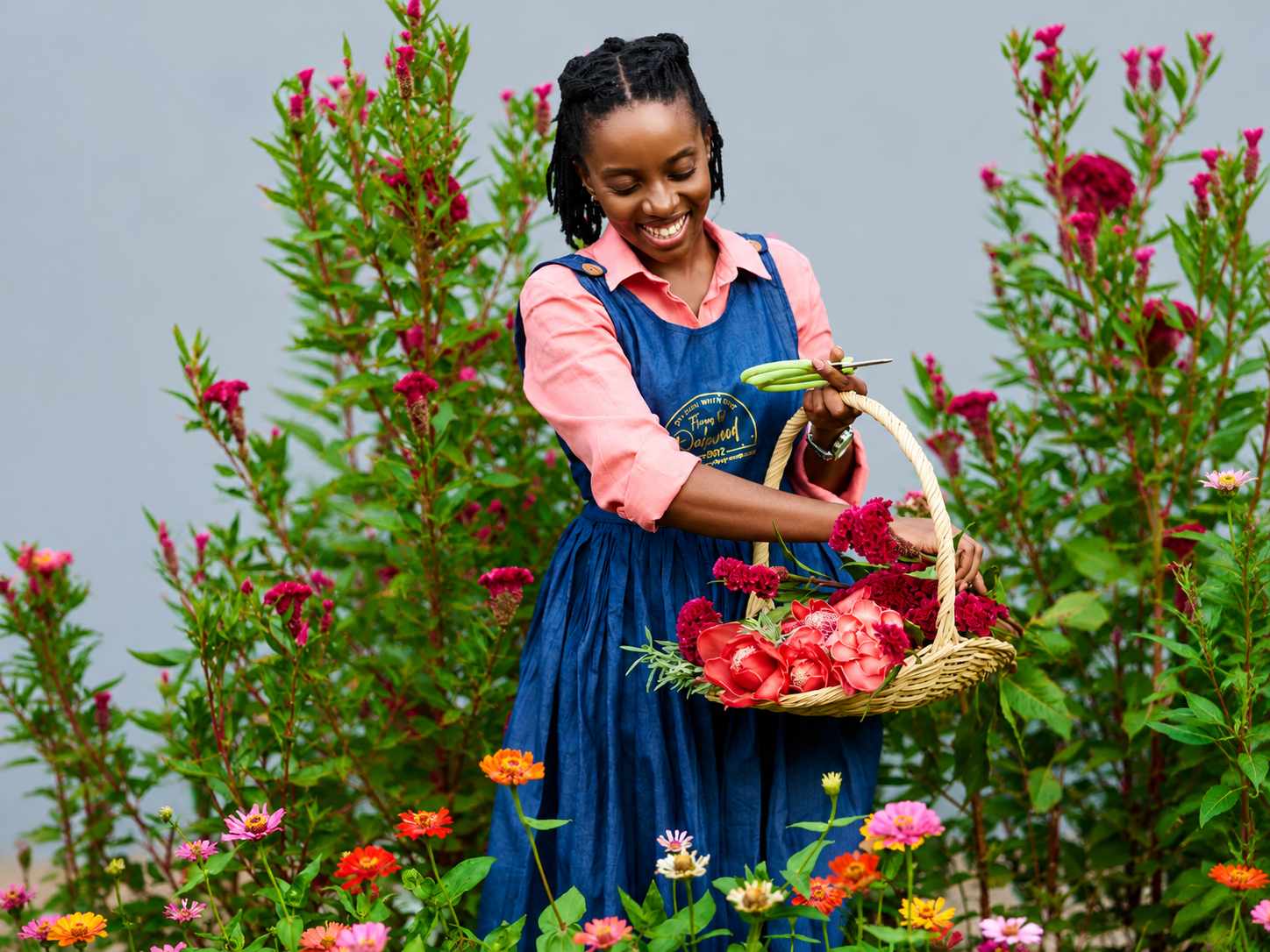
That sentence is probably the closest thing to a business philosophy she has, and it might be the reason people trust her with the biggest, most sacred moments of their lives.
What Stella Still Wants
She wants Oakwood to be one of the leading floral design houses in the region, not a modest goal, and she says it plainly, without flinching. And then, almost under her breath, she'll admit the real dream: to one day design flowers for the Vatican. The holiest of places, for a Catholic woman who once prayed her way into Namugongo and got exactly what she asked for.
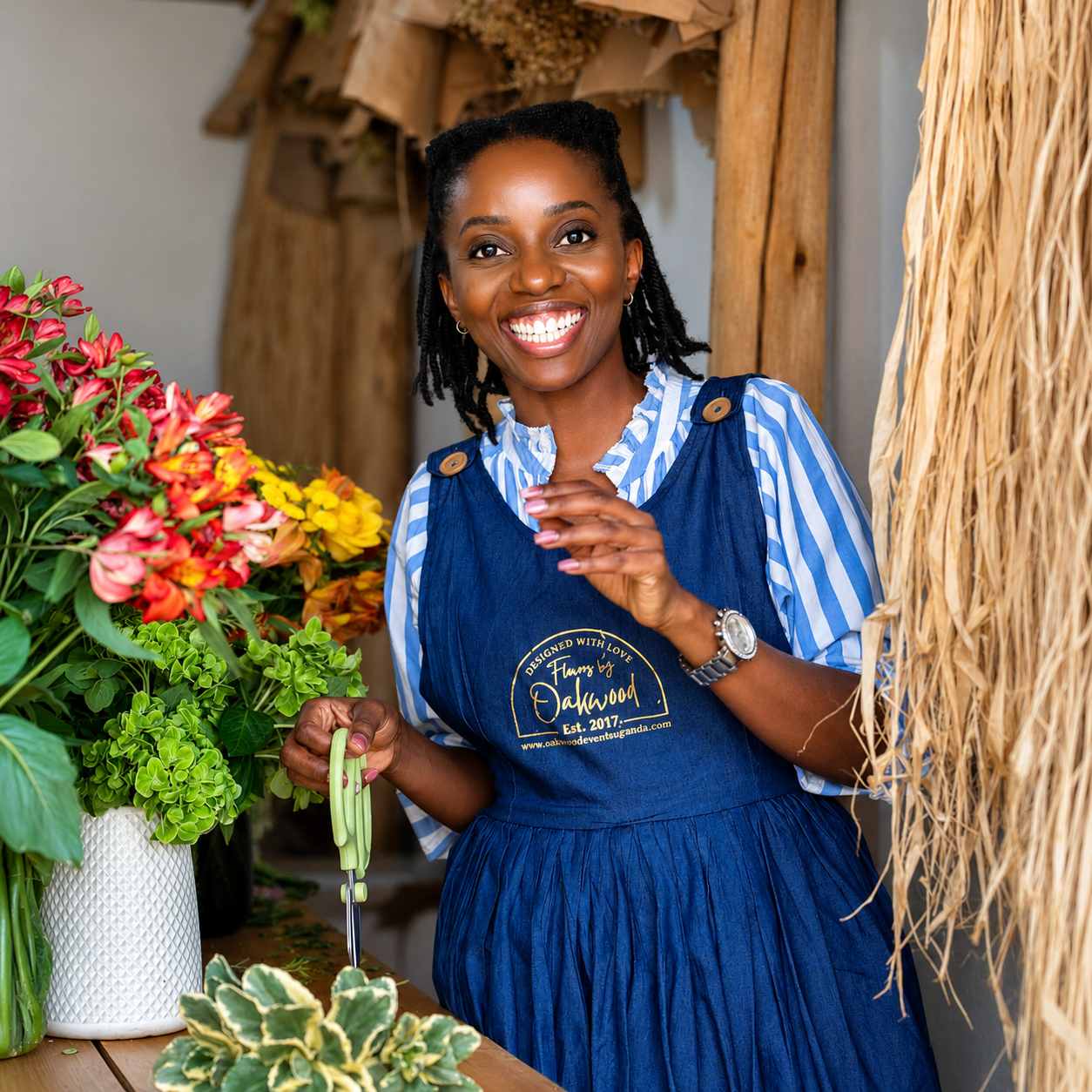
If that prayer worked once, it's hard to bet against her.