Earlier this year, at IPM Essen, I had a strong sense of déjà vu. Florists from Germany and other European countries asked me about flower vending machines, and I heard the same questions I had heard in Poland several years earlier. Will customers really buy bouquets from a machine? Will it take sales away from the traditional flower shop? Can such an investment pay for itself?
With around 2,000 machines now operating in Poland, I can answer from practice rather than theory. Yes, customers buy. But the machine does not replace the florist; it does not create demand on its own, and the location decides more than the technology does.
We are still learning. At the beginning, we looked at the change too narrowly ourselves and mainly saw a machine that would sell flowers after the shop had closed. Over time, it became clear that much more was changing: the place of sale, stock management, the use of a florist's time, and, perhaps most importantly, the way some customers want to buy flowers.
Why Flower Vending Machines Work in Poland
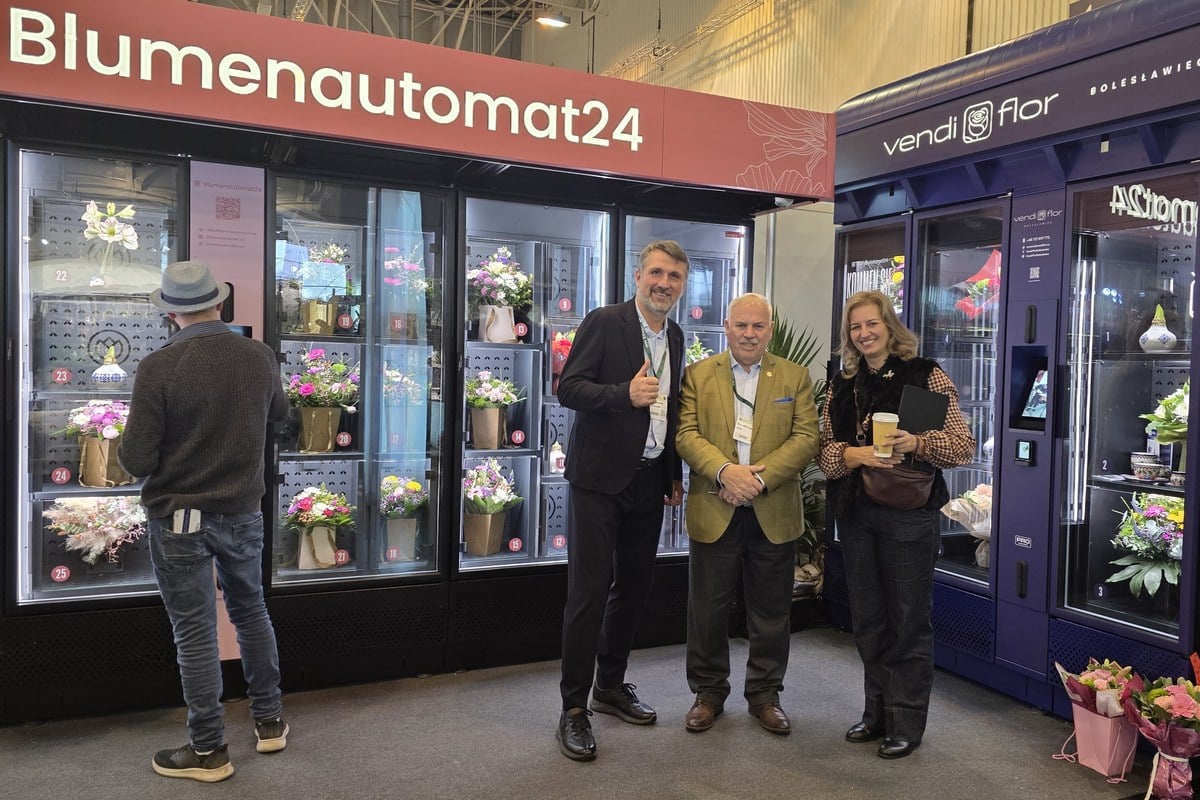
One important element in Poland was the combination of two very different areas of expertise. Wsparcie Florystów brought an understanding of the realities of flower shops and the needs of florists, while Eldrut Automatics brought technology, automation, and machine-building expertise. So the solution grew together with the market rather than alongside it.
Technology starts to matter when it solves a concrete problem for an existing business. Here, the goal was never to replace the flower shop, but to let it sell in more places and for more hours of the day.
What the Numbers Show
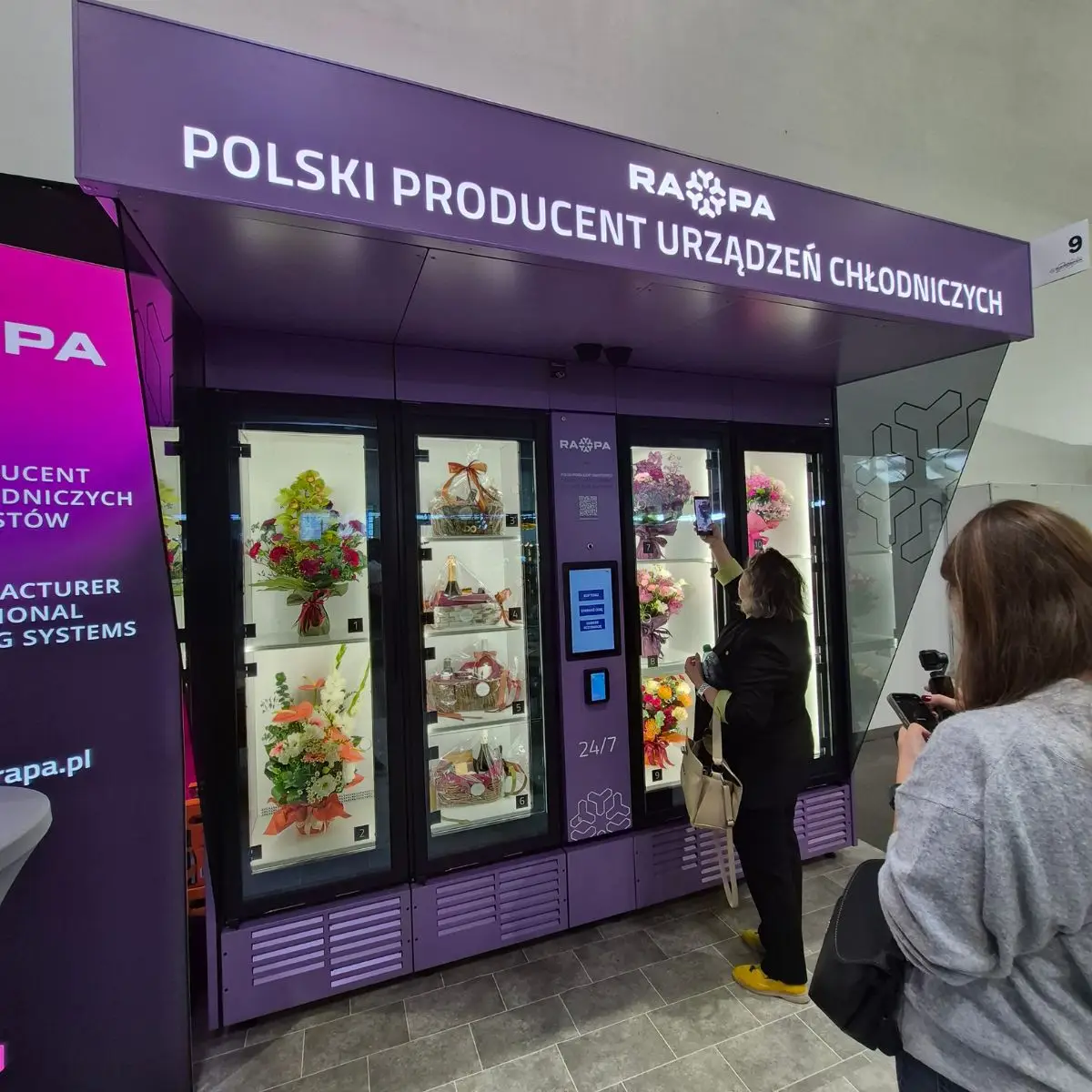
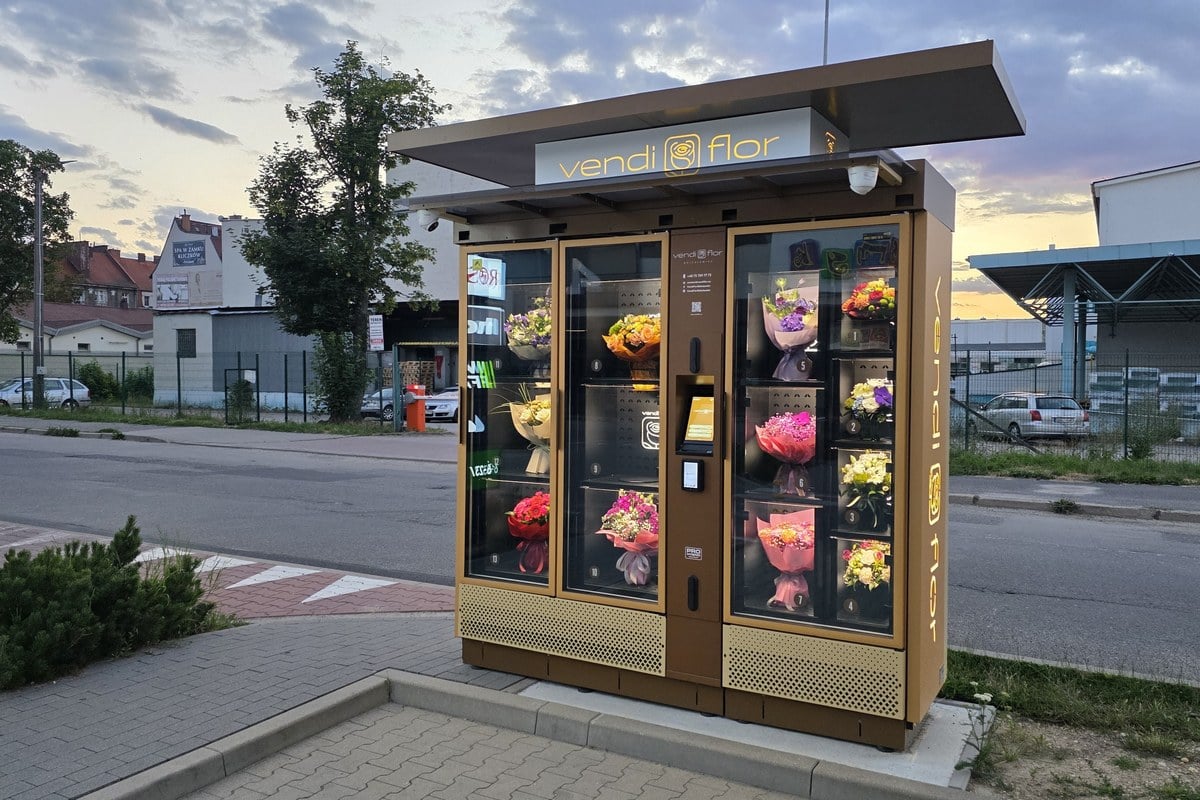
Around 2,000 flower vending machines manufactured by Eldrut Automatics are currently operating in Poland, with almost 200 more outside the country. That is large enough to see recurring customer behavior and real differences between locations.
On average, one machine sells around 30 bouquets per week, at an average price of around PLN 160 (approximately EUR 36). That makes it a real part of the flower retail market. Some locations do much better, others much worse. Location, product quality, pricing, replenishment discipline, the display, and knowledge of the local customer can change the outcome more than the technology itself.
A Billboard That Sells Bouquets
For decades, the flower shop model was simple. The florist chose a location, built a brand, prepared the display, and waited for the customer to come in. Advertising, social media, webshops, and delivery helped, but the physical sale of a ready-made bouquet stayed tied to where the shop was.
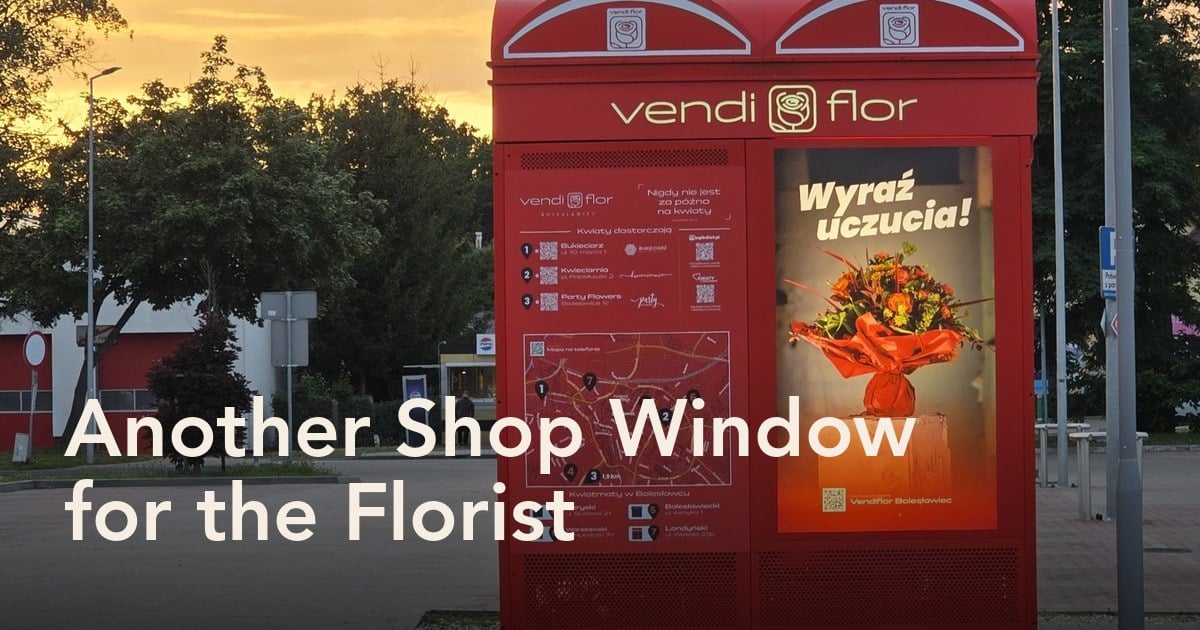
A flower vending machine partly breaks that dependency. The shop stays where it is and creates another shop window where there is demand for bouquets: near residential areas, shopping centers, busy roads, hospitals, gas stations, or anywhere else with the right kind of traffic. We no longer have to persuade every customer to come to the flower shop. We can place part of the shop where the customer already is.

That is why location became one of our most important lessons. Two similar machines with similar products and prices can produce completely different results. Technology creates the possibility of a sale, not the demand.
Why Transactions Are Not the Full Story
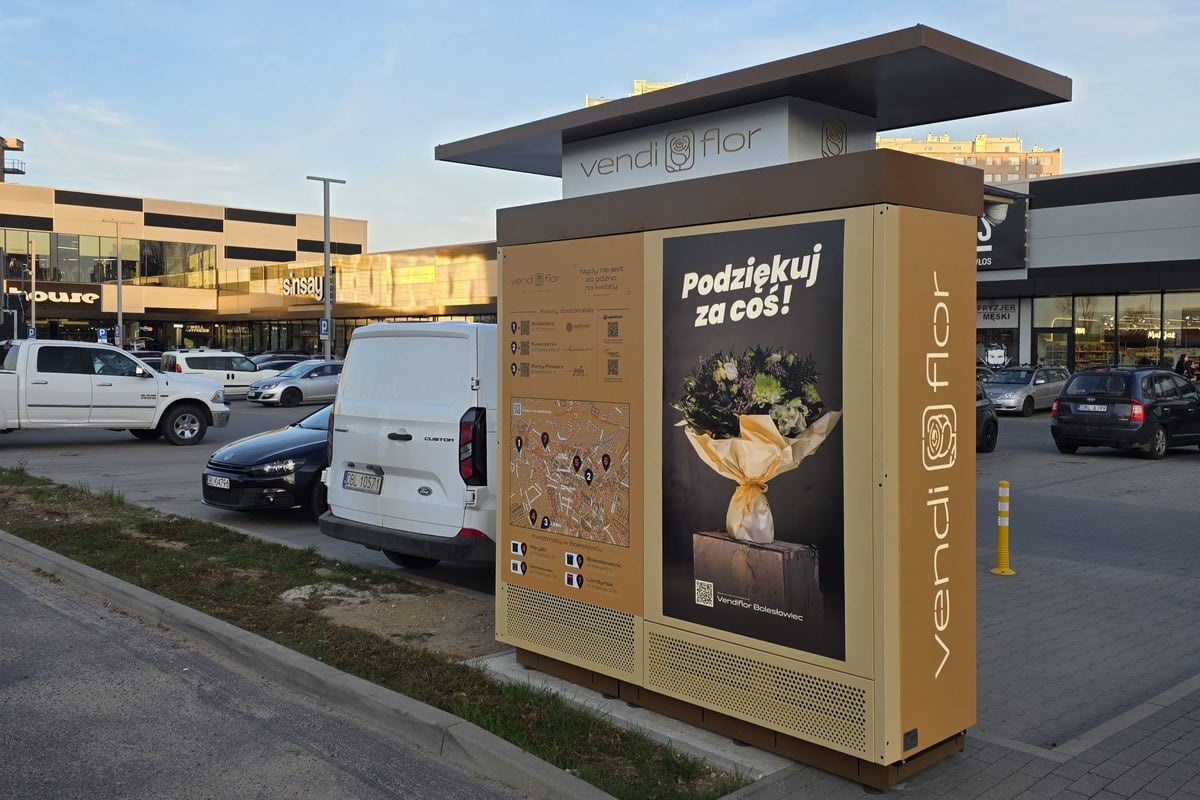
A well-placed bouquet vending machine is also an advertisement for the local flower shop. A billboard can show a bouquet, a logo, and the message that the flower shop is two kilometers away. A flower vending machine does the same, every day, with the real product. But if the customer wants flowers right now, the purchase can happen immediately.
So transactions alone do not show the full value of a good location. The machine is a sales point, a product display, and a daily contact point between the customer and a local brand.
The Florist Still Makes the Bouquet
In the Polish model, practically every machine has a local flower shop behind it: its people, its style, its quality, and its reputation. What has changed is where the customer can find and buy them. Technology did not replace the florist. It gave the florist another shop window.
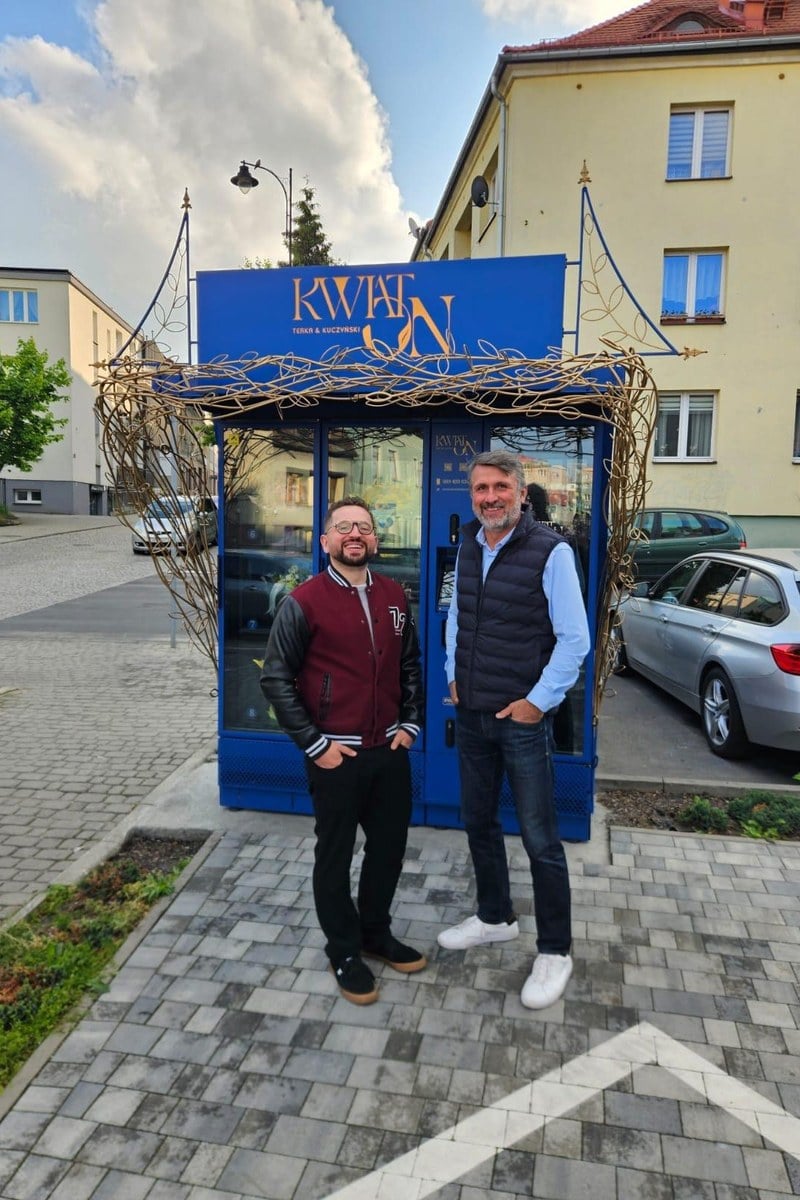
Someone still has to buy the flowers, make the bouquets, and take responsibility for their quality. What the machine changes is the next stage. In a traditional shop, someone has to be there not only to make the bouquet, but also to take the payment, hand it over, and wait for the next customer. Unattended sales separate the moment of production from the moment of purchase. The florist prepares bouquets when it is most efficient, and the machine sells them one, five, or many hours later.
That does not mean a business without work. It means using work more efficiently. A skilled florist's time goes to production, individual orders, decorations, or creative work, while technology handles the simplest part – displaying the product, taking payment, and handing over the bouquet.

How Customers Buy Flowers From a Machine
Choosing the Machine Next to an Open Flower Shop
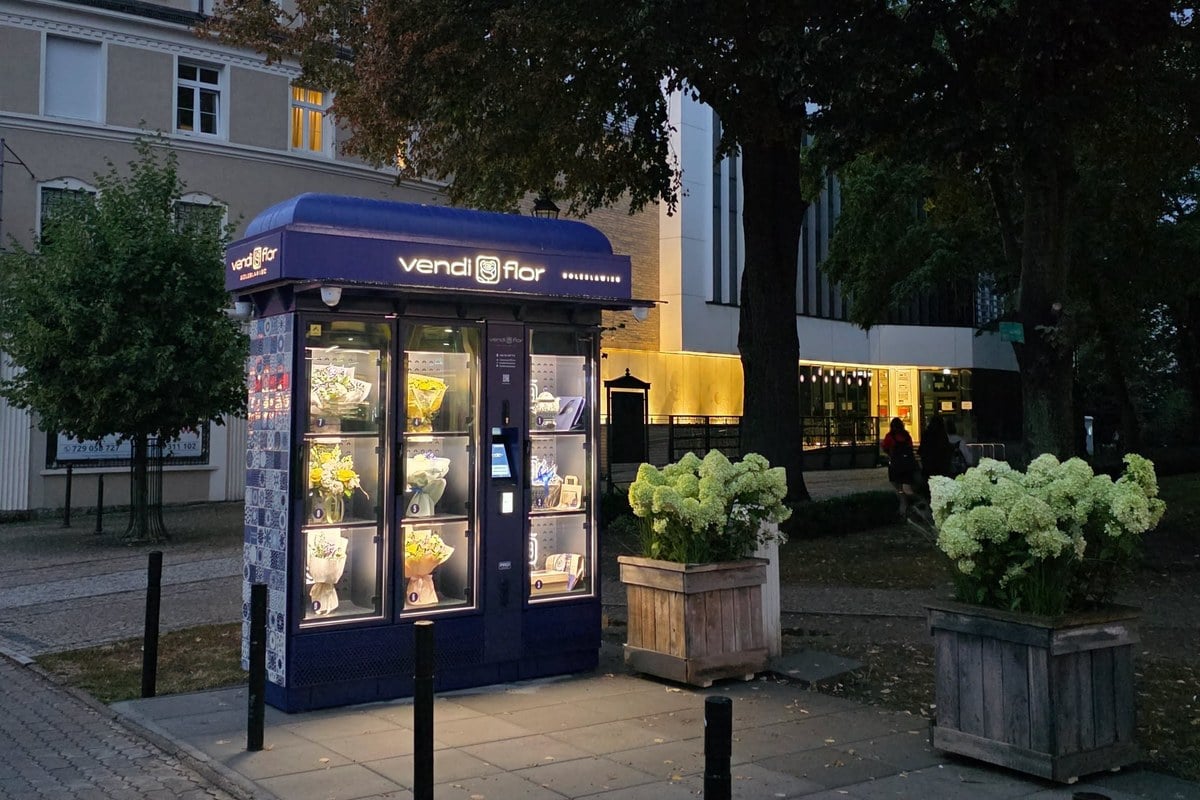
One observation interests me even more than the sales figures. Around 30% of the machines in Poland stand directly next to flower shops. We regularly see the shop open, yet the customer walks up to the machine, chooses a bouquet, pays, and leaves. For some customers, speed, simplicity, choosing on their own, a clear price, and not waiting for service matter as much as opening hours. If someone a few meters from an open shop door chooses the machine, availability alone cannot explain it. The way people buy has changed too.
Greater Availability Can Create Additional Demand
We have also seen many spontaneous purchases. Someone who had not planned to buy flowers notices the display and, a moment later, decides to surprise someone.
Flowers appear on the customer's everyday route, with no need to plan a visit, look for parking, or check opening hours. So greater availability does not just move existing sales from one channel to another. If it leads to more spontaneous purchases, new channels can increase how often people buy flowers overall.
What Did Not Work With Flower Vending Machines
It is easy to tell only the success stories of a fast-growing sales channel, but that teaches an entrepreneur little. Not every location turned out to be good. Not every product mix worked. Not every owner was prepared for the consistency it requires. Sometimes we overestimated a location or expected too much from nighttime sales. In other cases, the problem was stock.
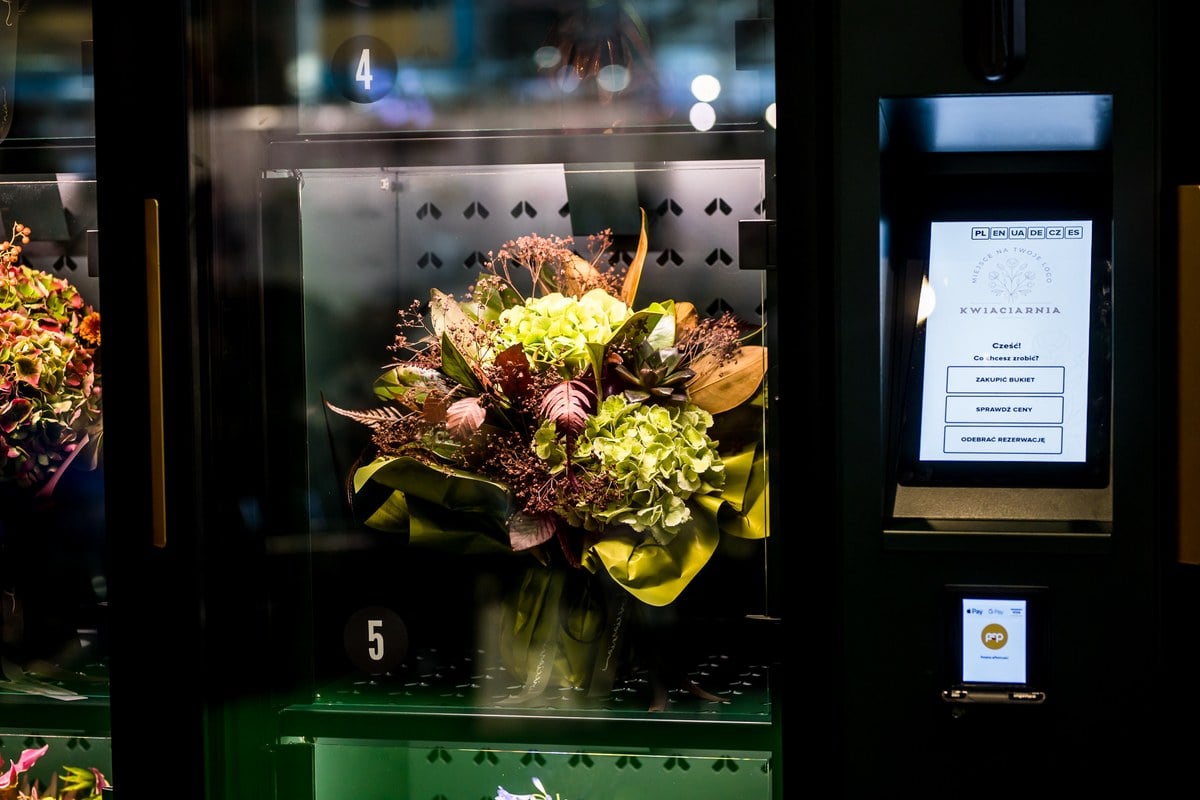
A full display looks attractive, but every additional bouquet is both a potential sale and a potential loss. Too little stock means missed transactions; too much increases waste. I do not give one waste percentage for the whole market, because locations and management methods vary too much for such a number to be fair. That is exactly why stock rotation and adapting the offer to each site matter so much.
Some people also expected the technology itself to create sales. It does not. It can use existing demand very effectively and generate some spontaneous purchases, but it still needs the right location, product, price, and organization. Weaker locations can be just as valuable to learn from as the strongest ones. Success shows what is worth repeating. A weak result often shows what needs to change.
Perhaps We Were Asking the Wrong Question From the Beginning
That is why the conversations at IPM Essen were so interesting to me. The florists there asked very reasonable questions, the same ones we asked in Poland several years earlier. Today, we no longer ask only whether a customer will buy a bouquet without speaking to a salesperson. We talk about location, the economics of the sales point, stock levels, price points, and running several locations from one production base. In Poland, the flower vending machine has become one of the sales channels of local floristry.
For a long time, local flower shops saw market changes mainly as threats: cheap supermarket flowers, consumers buying at wholesale markets, and delivery networks that were not always favorable to the local florist. This time, a new technology served local florists first.
A customer who buys a bouquet from a flower vending machine at 11 p.m. has not necessarily abandoned the traditional flower shop. Perhaps the shop was simply closed. A customer who chooses a BouquetMat standing in front of an open flower shop is not necessarily rejecting traditional floristry either. They simply chose the more convenient way to buy at that moment.
Perhaps the customer did not abandon the flower shop. Perhaps the customer changed the way they want to buy flowers.
If that is true, local florists face another question. Not only "How do I run a good flower shop?" but also "Where is my customer today, what do they expect, and how do they want to buy from me?" That is what I would like to explore in my next blog. The future of flower retail will probably not belong to one single channel. The most important skill may be learning how to combine several of them.

Header image and featured image by Andrzej Dabrowski.