There are not so many flowers that have as gentle and innocent a reputation as the daisy. Children often weave them into chains on summer afternoons, brides tuck them into simple bouquets, and greeting cards often lean on them whenever a message calls for expressing what is pure, modest, and unspoiled.
But this reputation did not just happen arbitrarily; rather, it grew out of years of folklore, Christian symbolism, and old habits of language that gradually shaped how people came to see this small, open-faced flower. So, why are daisies today associated with innocence?
The Flower Wears Its Honesty on Its Face
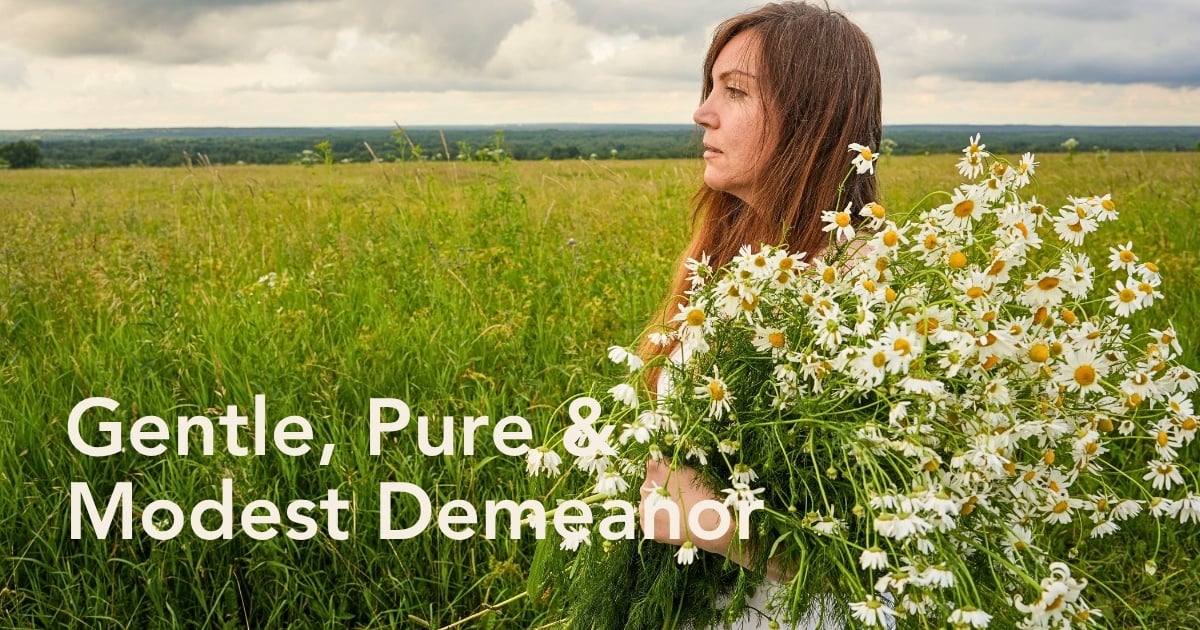
Part of the daisy's association with innocence comes down to its simple appearance. Unlike flowers with layered petals or deep, closed centers that hide their middle, the daisy presents itself naturally. Its white petals radiate outward from a bright yellow center in a shape almost anyone can recognize easily, even as a child. This openness speaks of honesty, since there is nothing folded away or concealed therein. It has often stood in for the visual truthfulness of a flower with nothing to hide.
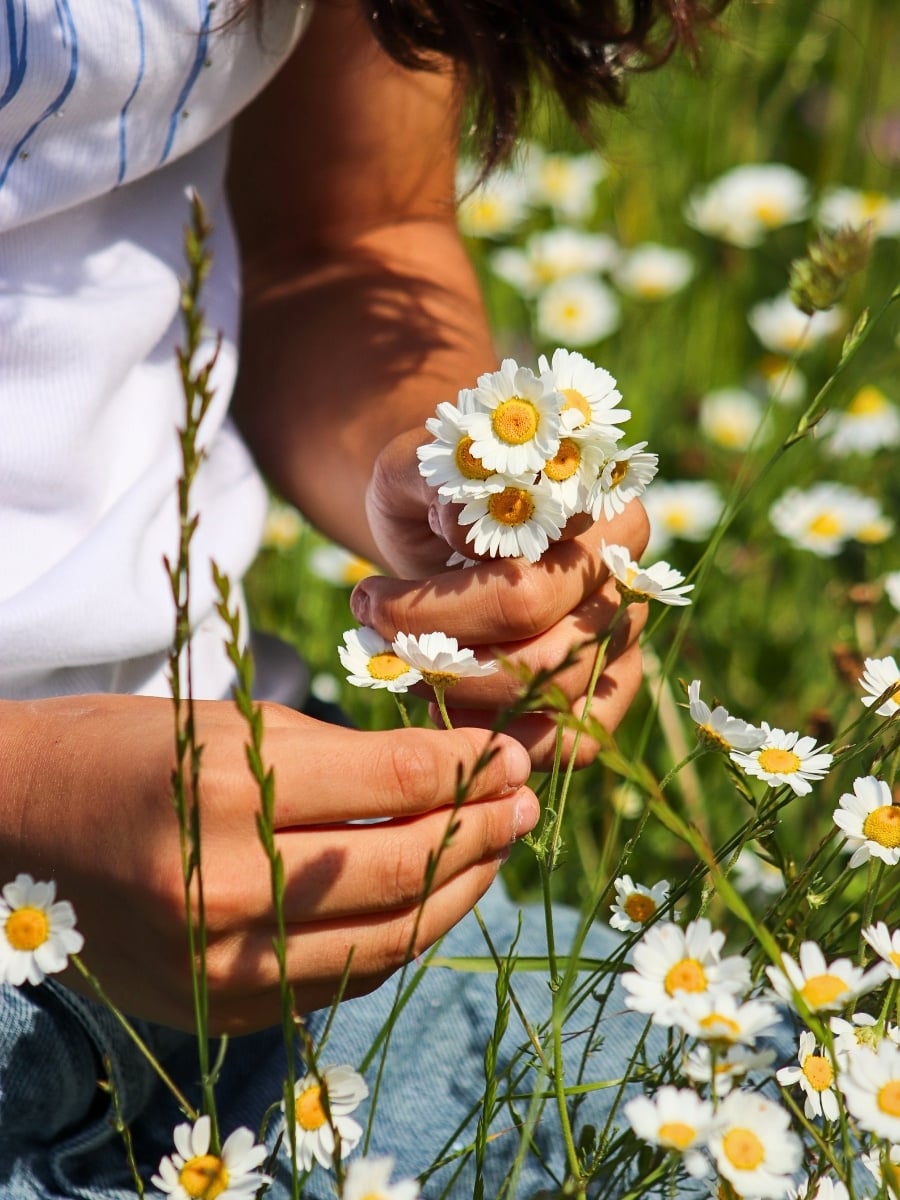
The flower’s name itself also points to this openness. ‘Daisy’ comes from the Old English ‘dægeseage,’ meaning ‘day's eye,’ a reference to the way the flower opens its petals at sunrise and closes them again at dusk, simulating the rhythm of a waking and sleeping eye. Geoffrey Chaucer fondly wrote of this habit in the fourteenth century, calling the daisy the ‘eye of the day’ in his poem ‘The Legend of Good Women.’
Therein, he described watching this flower rise every morning to greet the sun, in a daily act of opening without hesitation, hiding nothing from the light. This reinforced the sense that the daisy had nothing to conceal, a quality people tend to associate with innocence.
Behind the Innocent Symbolism
Mythology gave the daisy an origin story that inclines into themes of youth and purity. In Roman legend, the wood nymph Belides caught the eye of Vertumnus, the god of orchards and seasonal change, and, to escape his pursuit, she transformed herself into a daisy, choosing to remain small and unnoticed so that she would not lose her freedom. The story cast the daisy as a flower tied to modesty and self-protection, not vanity or display. These qualities closely bound up with the idea of innocence.
Norse folklore also has a gentler account. The daisy was linked to Freya, the goddess associated with love, beauty, and fertility, and in some retellings it was said to represent childbirth and new motherhood, again pulling the daisy toward themes of beginnings and untouched purity.
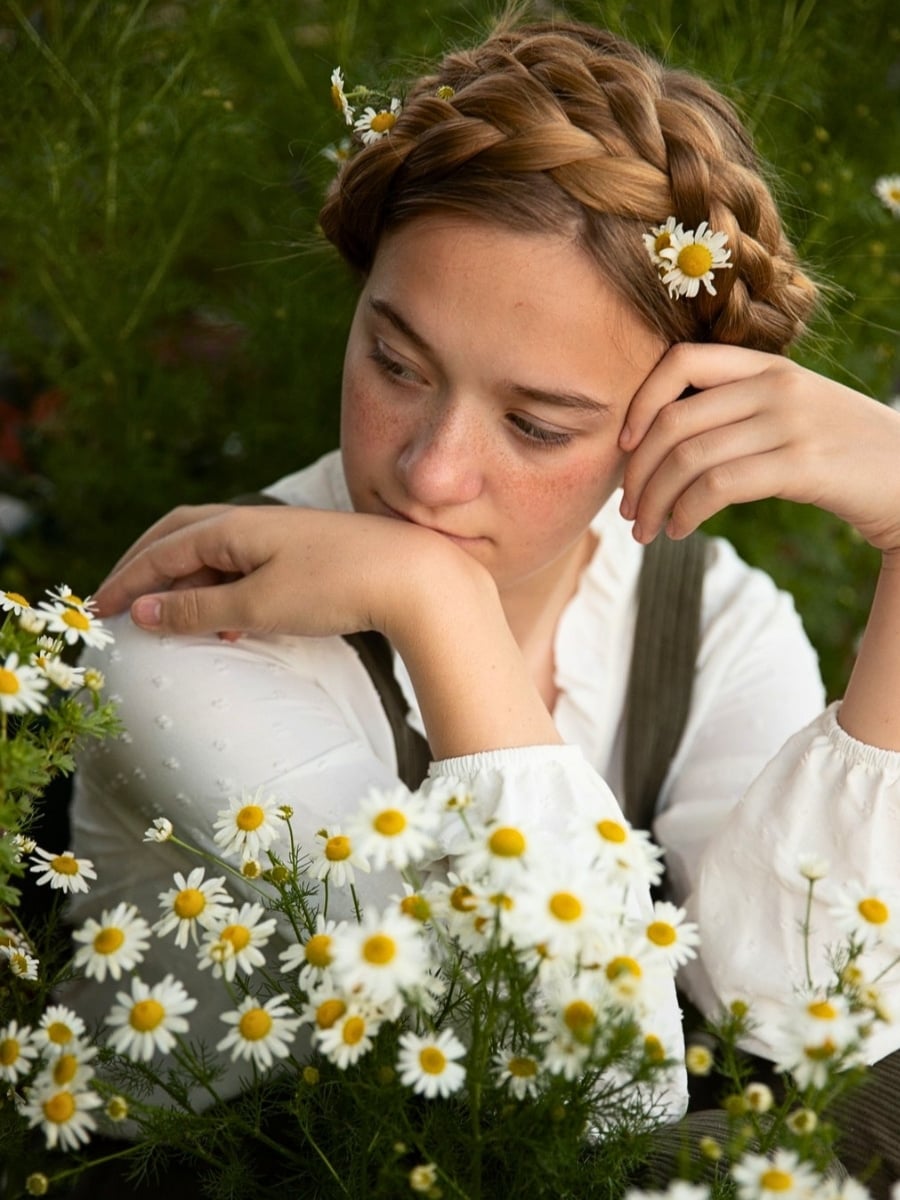
Likewise, during the Middle Ages, Christian iconography adopted the daisy into art and sacred symbolism. These Christian tradition symbolisms saw the daisy become connected to the Virgin Mary, sometimes called ‘Mary's flower’ in parts of Europe. Its white petals were seen as a symbol of purity, and its cheerful, unassuming form fit neatly alongside the humility associated with Mary in religious art and devotion of the time.
Painters, then, often depicted the Virgin Mary and the infant Christ surrounded by wild daisies in enclosed gardens, using the pristine white petals to show spiritual purity, humility, and grace. By the Renaissance and Victorian eras, this symbolic history influenced social customs, and young women wore daisy chains as symbols of gentle affection. Shakespeare notably referenced the daisy in Hamlet through Ophelia to represent lost innocence.
The Victorian Language of Flowers
Much of the daisy's meaning and reputation for innocence, however, comes from a more recent source: the Victorian era's fascination with floriography, or the language of flowers. During the nineteenth century, sending flowers became a coded form of communication, and guidebooks assigned specific meanings to nearly every flower a person might grow or gift.
The daisy was often placed in the category of innocence and loyal love, often given by young suitors as a way of expressing early, unspoiled affection without overstepping the laid-down formal boundaries of courtship.
This Victorian habit did more than assign a meaning, since it cemented the daisy's symbolism into popular culture at a time when flower symbolism was widely taught, printed in books, and shared at social gatherings. This helped the association survive and travel forward into the twentieth and twenty-first centuries largely unchanged.

Childhood, Simplicity, and the Daisy Chain
But aside from mythology and Victorian codebooks, the daisy's connection to innocence owes a great deal to its long-standing role in childhood play. Daisy chains, made by slitting the stem of one flower and threading another through it, have been a common pastime for children across Europe and North America for ages.
Because this activity is so closely tied to early memories of carefree summer days spent outdoors, the daisy became linked in the popular imagination with youth itself, and by extension, with the unspoiled, uncomplicated view of life and the world that people associate with being young.
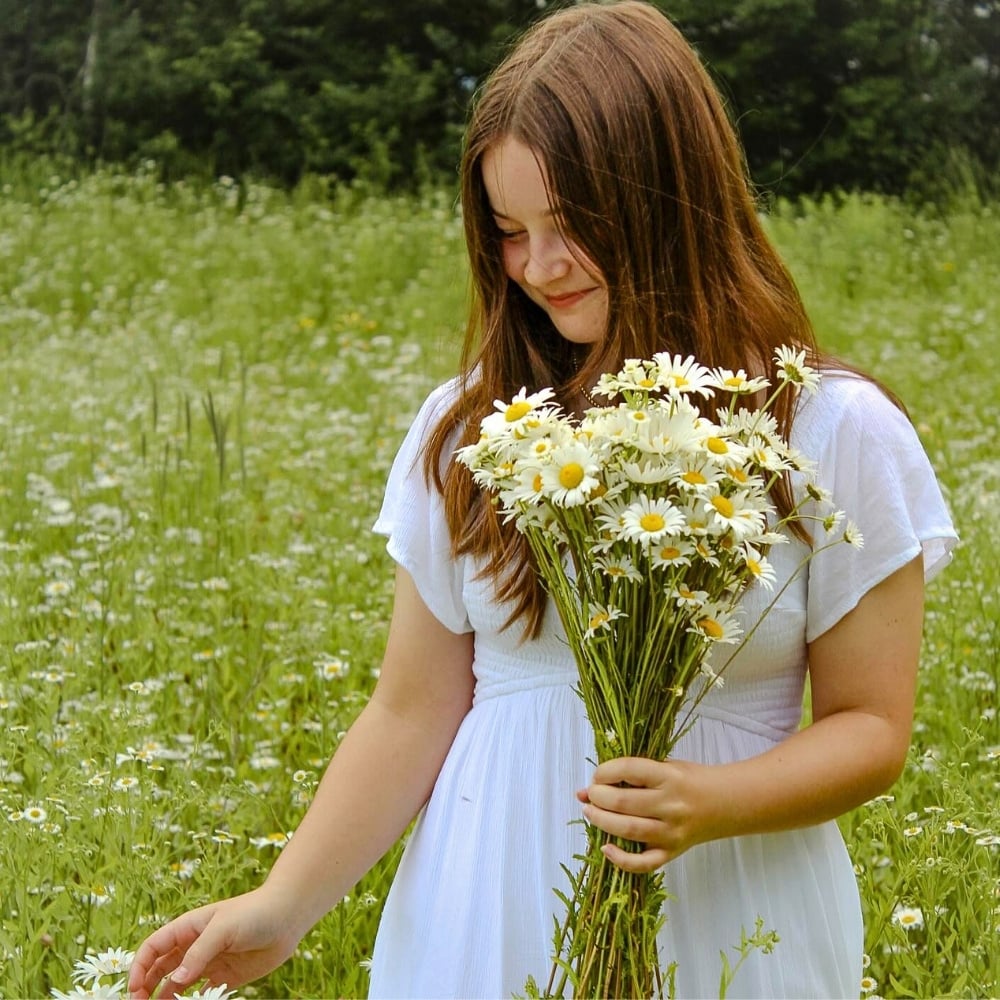
The daisy's hardiness also plays a quiet role here as well. It grows readily in meadows, lawns, and roadside patches without any particular cultivation, appearing on its own without it being planted with effort. This unfussy, humble growth habit separates it from flowers bred and displayed for their showiness, and continues to strengthen the daisy's reputation as an honest, unpretentious flower; one that is neither curated nor performative.
Even now, the daisy shows up whenever a message calls for easy simplicity or a fresh start. It appears in nursery decor, wedding bouquets meant to feel modest and understated, and in springtime imagery meant to imply new beginnings.
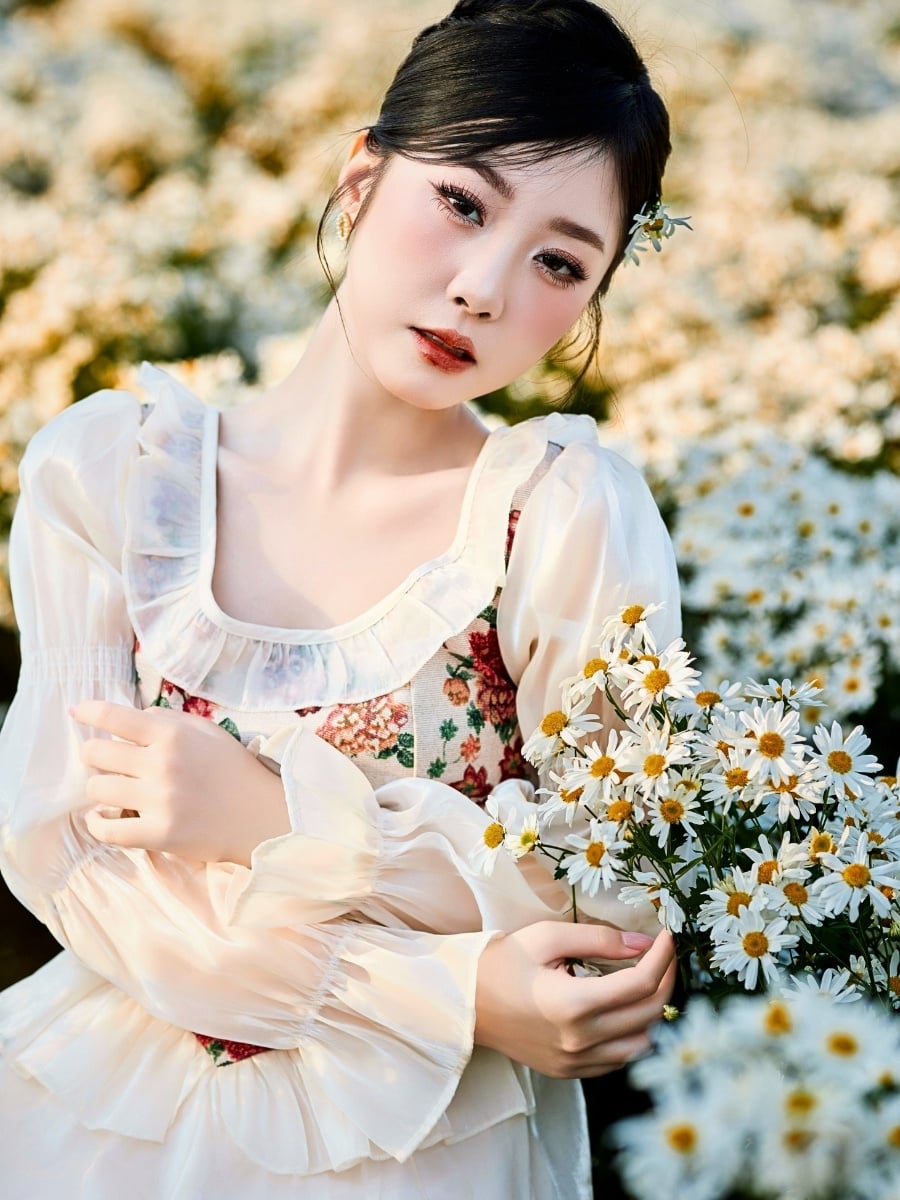
This flower's long history and symbolism both point in the same direction, and the consistency across so many years and cultures is part of why the association has held up so well even today. This is why very few flowers convey a symbolic meaning this settled, and fewer still earned it through so many different paths arriving at the same conclusion.
Featured image by @archipelagopresets. Header image by iddea photo