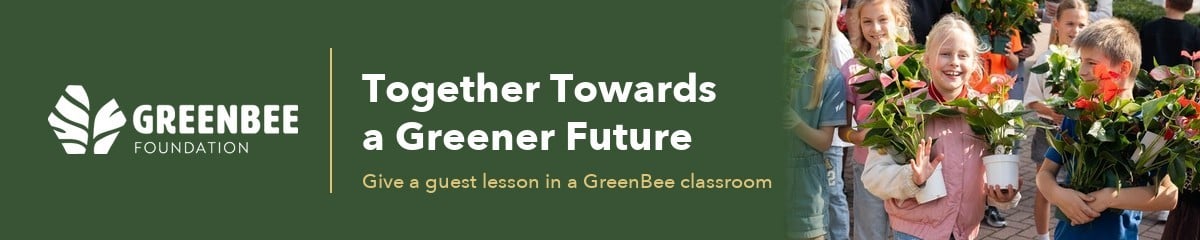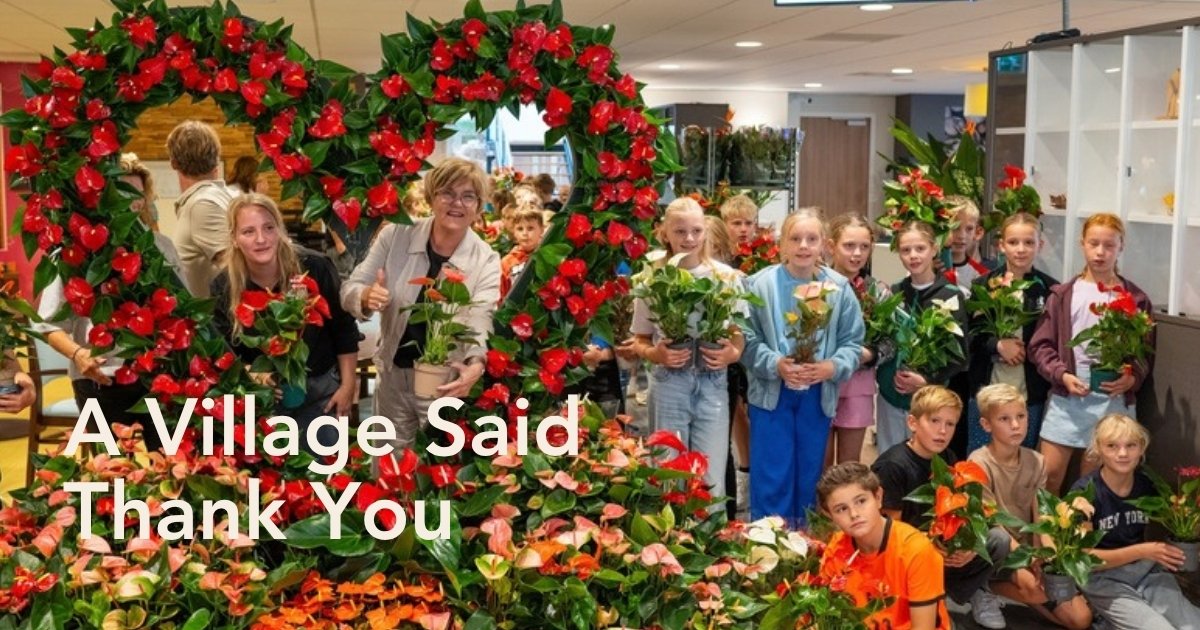
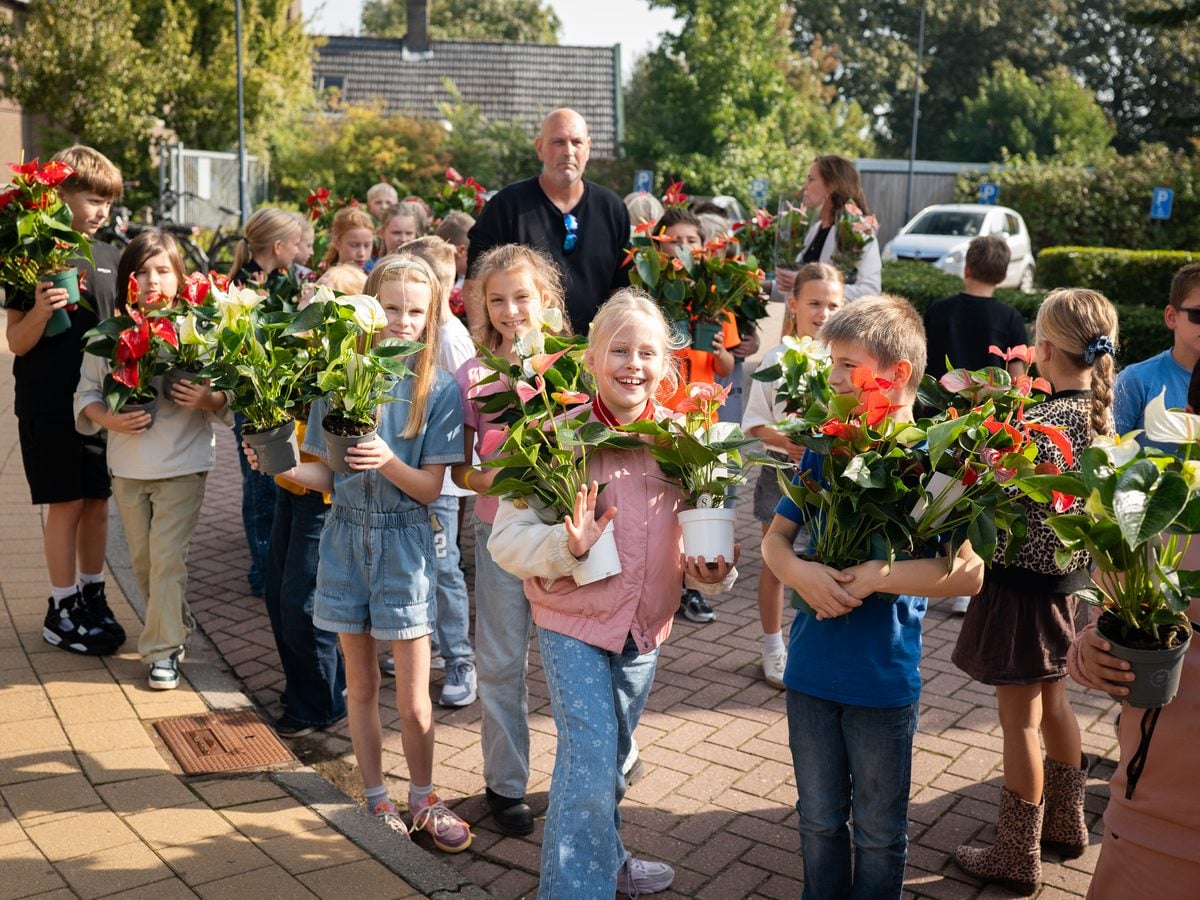
On Tuesday, 29 September, a long line of children walked through Lutjebroek, a village in the north of the Netherlands, each of them holding a pot plant against their chest. More than 70 pupils of primary school De Baskuul were on their way to Omring Nicolaas, the village care home, with flowering Anthurium plants. It was World Heart Day, and the plants were a thank-you from the kids and the GreenBee Foundation. They were meant for the people who look after the residents.
600 Plants, More Than 5,000 Hearts
In total, 600 flowering Anthurium plants went to the care home. They came from Dutch Anthurium growers, and GreenBee set up the action together with Anthurium Info, the information platform for the Anthurium as a cut flower and a pot plant. The organizers had counted on about 3,000 flowers. When they added it up, the plants carried more than 5,000 flowers. Every one of them is shaped like a heart, and that was the whole idea. According to Frank Timmerman, founder and chairman of GreenBee Foundation, the Anthurium and its heart-shaped flowers stand for care, attention, and connection.
Florists will point out that the colored heart is a spathe, a modified leaf, and that the real flowers sit on the little spike in the middle. Here's what that heart means when you give one: the Anthurium meaning, color by color. Nobody in Lutjebroek was counting spikes. Read more about the flamingo flower and how to keep one going in our easy Anthurium care guide.
A Heart in the Middle of the Care Home
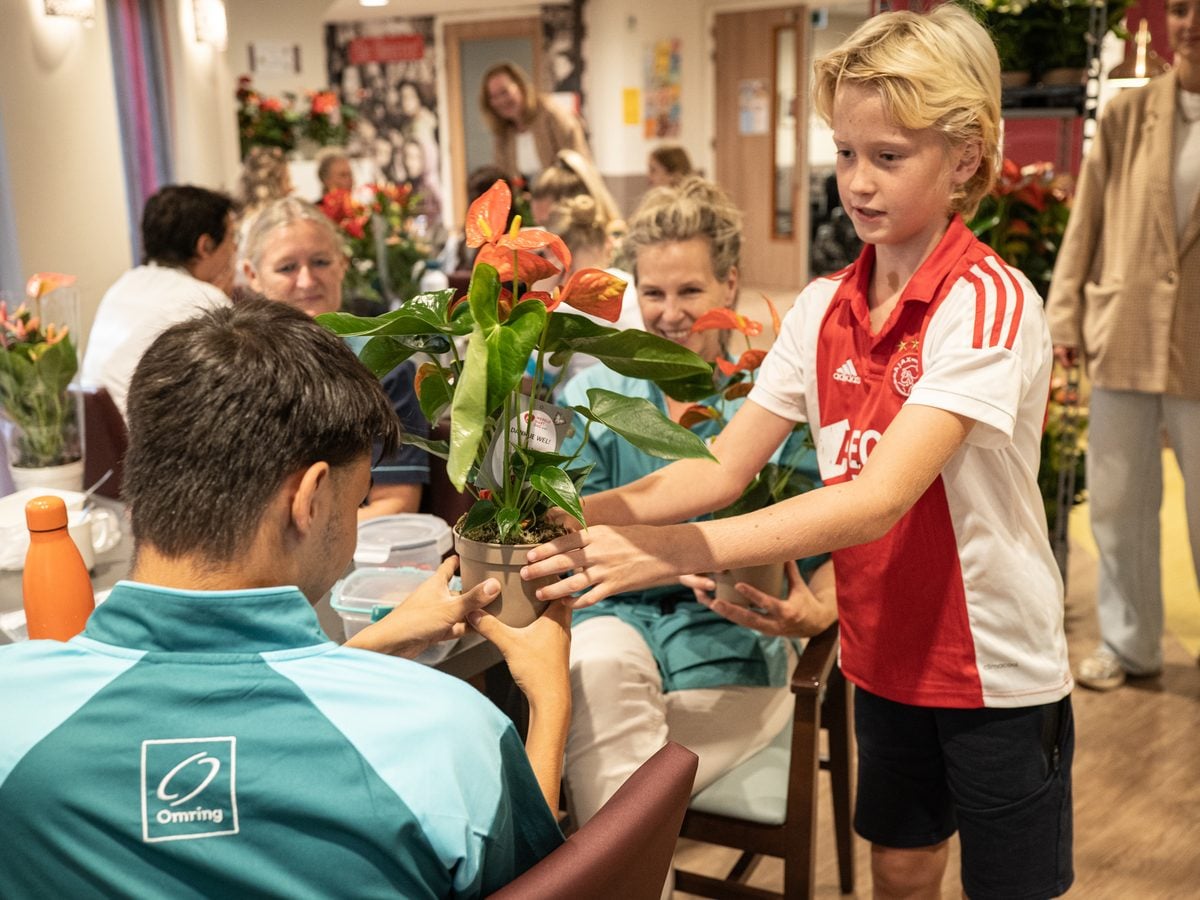
Inside, residents, staff, and volunteers were waiting, and so was a large heart built entirely from flowering Anthurium plants. It stood in the center of the building with the message of the day: 'Taking good care of each other is good for your heart.' The children then handed their plants to the people who work there.
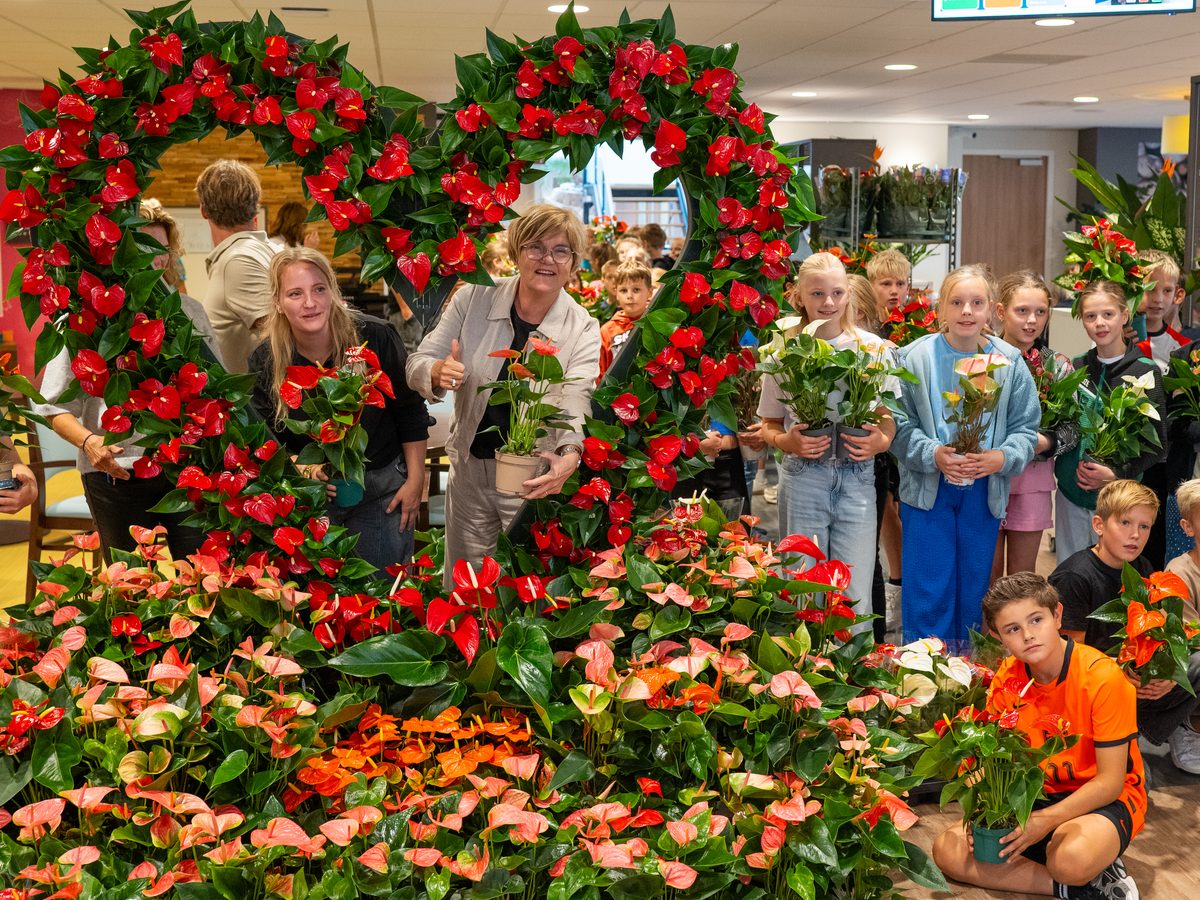
Omring Nicolaas looks after older people, with small living groups for residents with dementia. "Everything that gets attention grows," Trudie Doodeman, manager of care and operations, told Streekomroep West-Friesland. "This day is mainly meant to show our enormous appreciation for the nearly 200 volunteers and the 300 employees who give their all every day."
What the Children Took Home
For the kids, nine to eleven years old, the morning was also a first look at the world of care. They saw how many different jobs it takes to run a care home and how much of the daily work rests on volunteers. Who makes sure people here feel safe and at home? And how many people does that take?
World Heart Day in Lutjebroek, from the classroom to the care home. Video by QuickWorks for GreenBee Foundation.
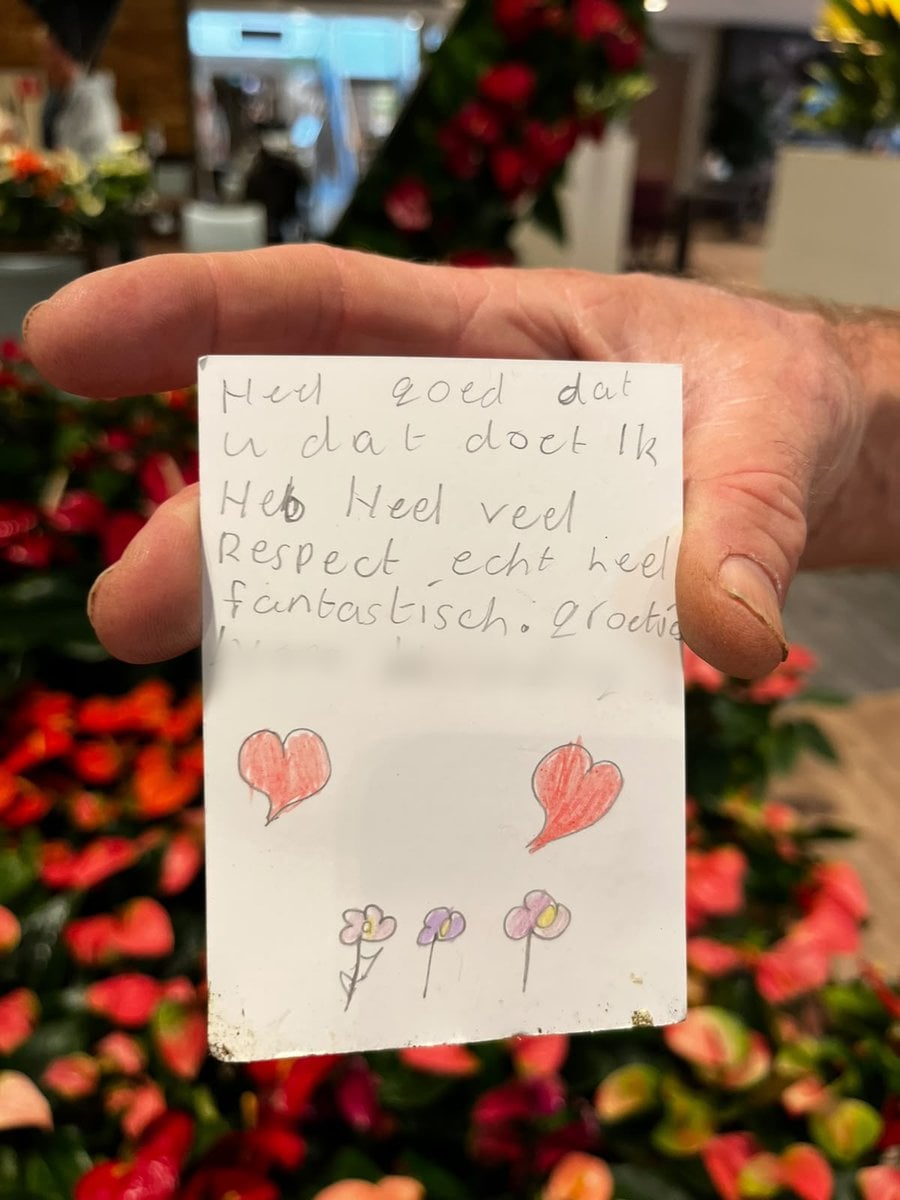
Some of them put it on paper. One card, in careful pencil with two red hearts and three small flowers, reads: "Very good that you do this. I have a lot of respect; really fantastic."
Where GreenBee Comes In
GreenBee Foundation is best known on Thursd for its classroom work. Through GreenBee Kids, every child in a class gets a plant of their own and learns to look after it, and this school year the program is going into 100 Dutch classrooms as part of the Jungle Classroom Challenge. Its second program, GreenBee Connect, uses a plant to bring young people and older people in care together. On World Heart Day in Lutjebroek, a school and a care home ended up in the same room, with 600 Anthurium plants in between.
GreenBee works with guest teachers from the ornamental sector, people who spend an hour in a classroom telling children how a plant grows and how it ends up in someone's living room. Growers, traders, and florists can sign up through the GreenBee Foundation website. More on why plants belong in the classroom.
Sources: GreenBee Foundation press release (29 September 2026); Streekomroep West-Friesland; Omring Nicolaas; Basisschool De Baskuul; World Heart Federation.
Feature image and header image: QuickWorks for GreenBee Foundation.