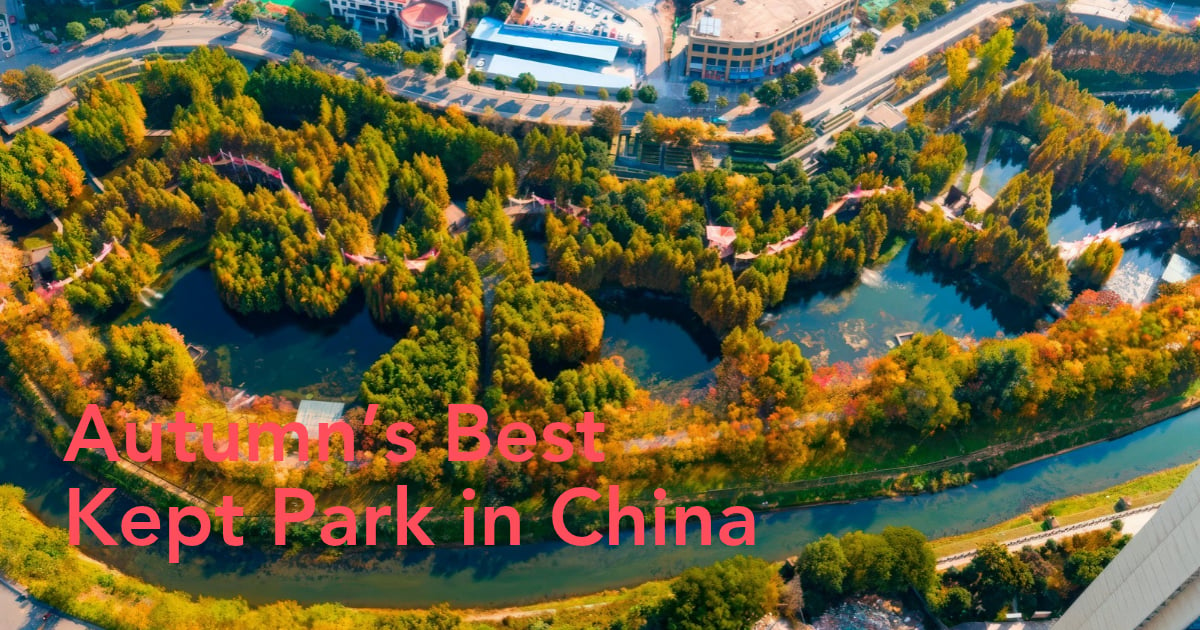
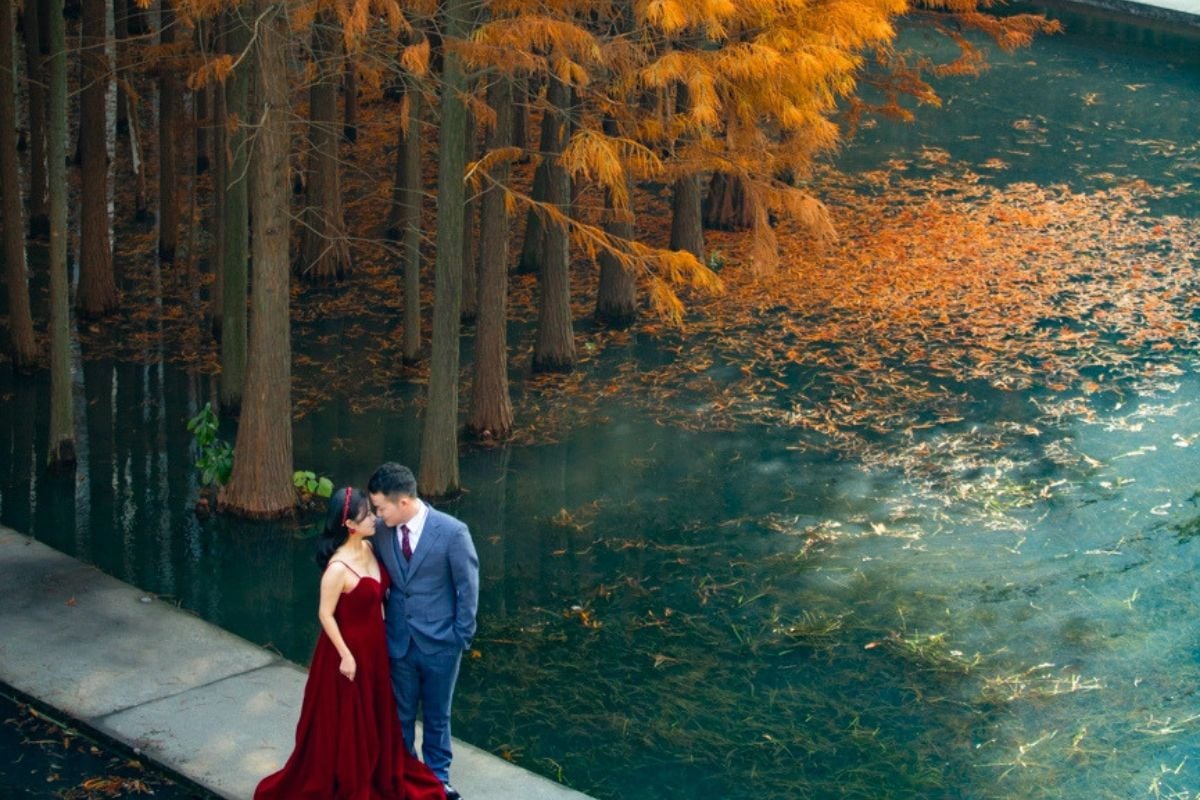
Every autumn, the trees at Yichang Yunhe Park in Hubei Province, China, begin to change color. The park's water forest is known for its groups of bald cypress trees (Taxodium distichum) and dawn redwood (Metasequoia), two conifers planted along and within a series of ponds. As temperatures drop, their foliage changes from green to yellow, orange, and reddish-brown. The trees stand in the water, with their reflections visible across the ponds.
November is one of the best months to see the park's autumn colors. Local reports describe the Metasequoia gradually turning yellow and red as the season progresses, while fallen leaves collect around the water and along the walkways. The park is particularly interesting for anyone who enjoys trees, as the planting allows visitors to see these species growing in large groups and in a wetland setting.
Cypress Trees and Dawn Redwood Change Color Throughout November
The water forest is formed mainly by two types of conifers: Taxodium distichum and Metasequoia, known as dawn redwood. Both are associated with wet environments and have a long history in East Asia. Their tall trunks and fine, feathery foliage give the planting its characteristic appearance.
Metasequoia is a deciduous conifer, which means it sheds its leaves in autumn. During the warmer months, its foliage is green. As the season advances, the leaves turn yellow, orange, and burgundy-like before falling. This annual change is one of the reasons the species is widely planted in parks and gardens where autumn color is appreciated.
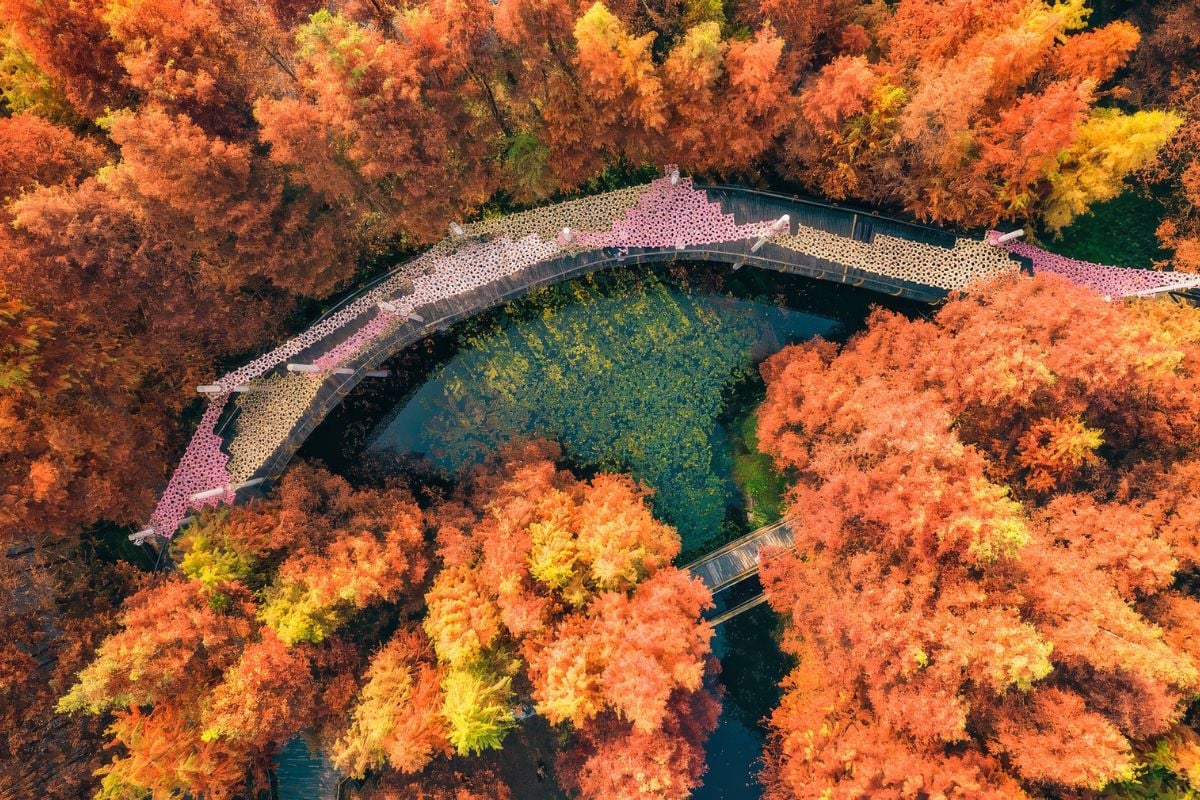
Taxodium is also adapted to wet ground and grows naturally in swampy areas. Its foliage changes color before the tree sheds its leaves. At Yunhe Park, the two species are planted in dense groups, creating wooded areas around the ponds. Their different forms and seasonal changes give the water forest variation throughout autumn.
According to local reports, the foliage begins changing after the Double Ninth Festival, which usually falls in October. The color develops over several weeks, with the trees becoming increasingly yellow and red towards late autumn. November is therefore a good time to visit, although the exact timing of the color change depends on that year's weather.
The trees are particularly interesting when viewed from the water's edge. Their trunks rise directly from the wet ground, while the foliage forms a canopy above the ponds. When the water is calm, the trees are reflected on its surface. Fallen leaves add another layer of color to the water and the surrounding paths.
Wetland Planting, Bamboo and Walkways Surround the Water Forest
Both of these tree species are part of a wider planting scheme that includes bamboo, lotus, cattails, and reeds. These plants occupy different areas of the park, particularly around the ponds and their banks. The aquatic vegetation also has an environmental purpose, helping to filter water as it moves through the site.
According to Turenscape, the landscape architecture practice responsible for the project, the park contains native tree species selected for different parts of the site. Chinese tallow trees were planted along the northern canal bank, while hackberry, ginkgo, and liquidambar were used near entrances and gathering areas. The pond areas were planted with wetland species, including lotus, cattails, and reeds.
Bamboo is another part of the park's planting. A report published by the Hubei Department of Housing and Urban-Rural Development in June 2026 records nine varieties of bamboo across approximately 3,000 square meters. The same report gives a total of 8,000 trees belonging to 17 species, showing the range of planting beyond the main water forest.
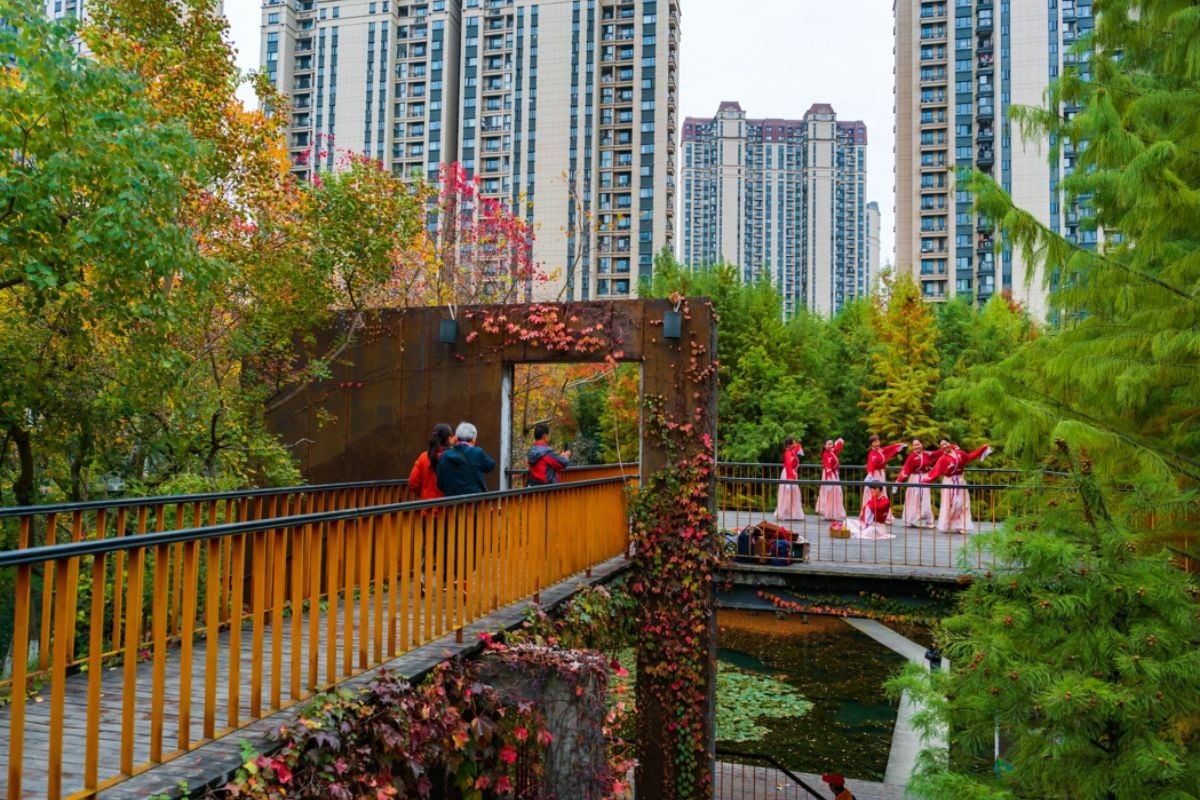
Visitors can explore the park along a network of paths, bridges, and boardwalks that cross the former pond embankments. These routes pass close to the trees and water, allowing visitors to see the planting from different positions. An elevated walkway also crosses the park above the tree canopy, providing views over the ponds and surrounding vegetation.
Yichang Yunhe Park's Sky Umbrella Corridor
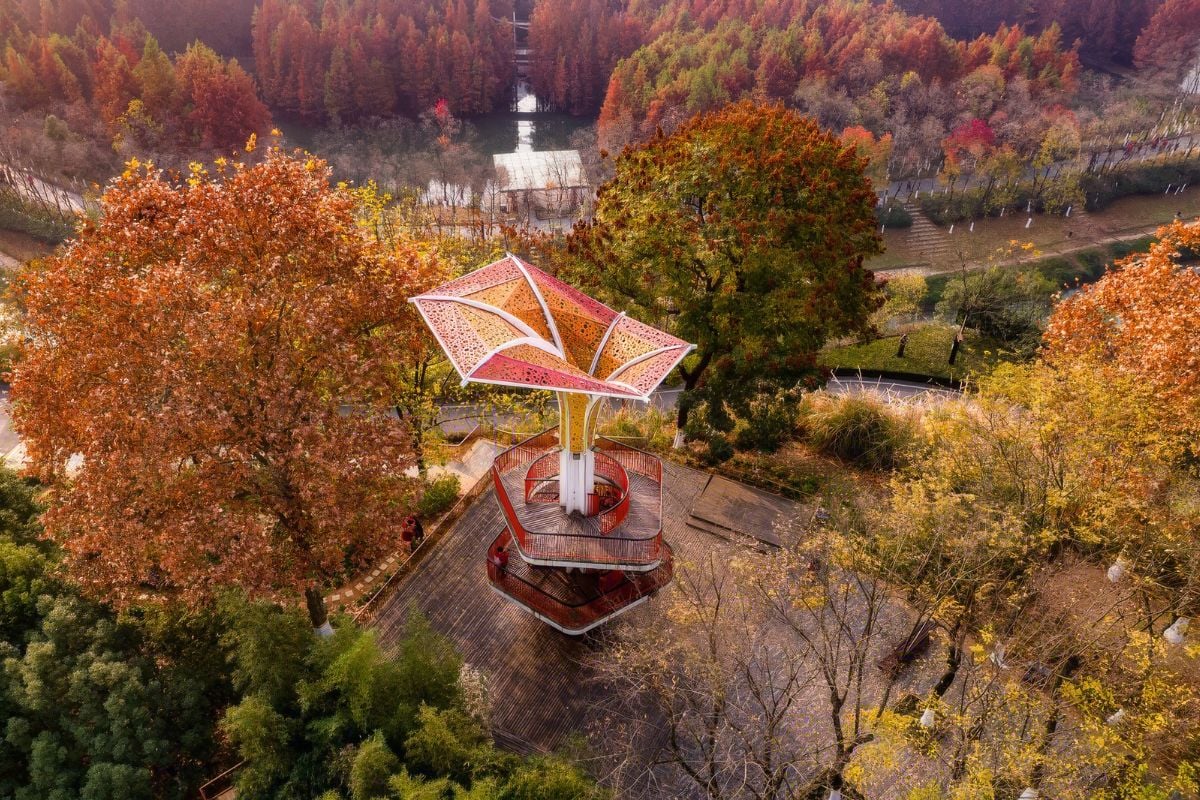
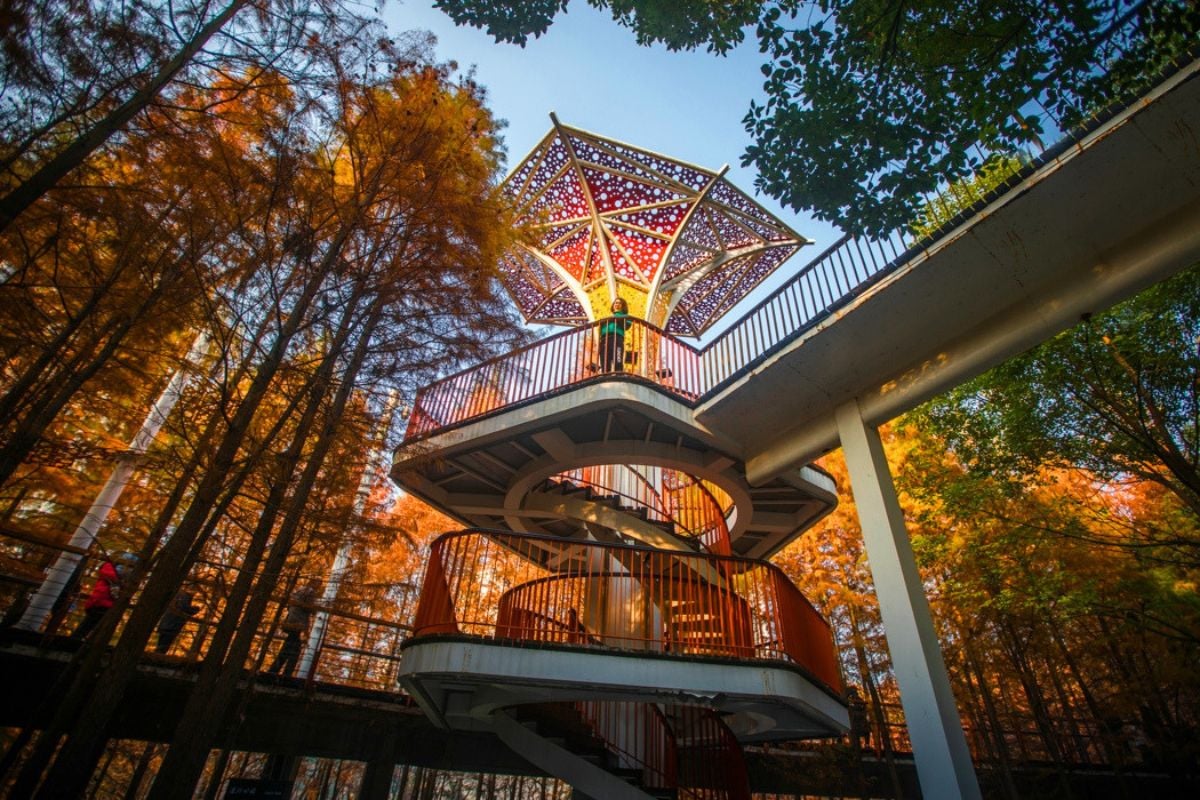
The Sky Umbrella Corridor is an elevated walkway that crosses the park, connecting areas at different heights. Its design follows the difference in level between the surrounding roads and the park. Along the route, visitors pass platforms, rain shelters, and two viewing towers. Some sections extend over the former fish ponds, while others follow the higher ground. The corridor provides views of the wetlands, ponds, tree canopy, and canal.
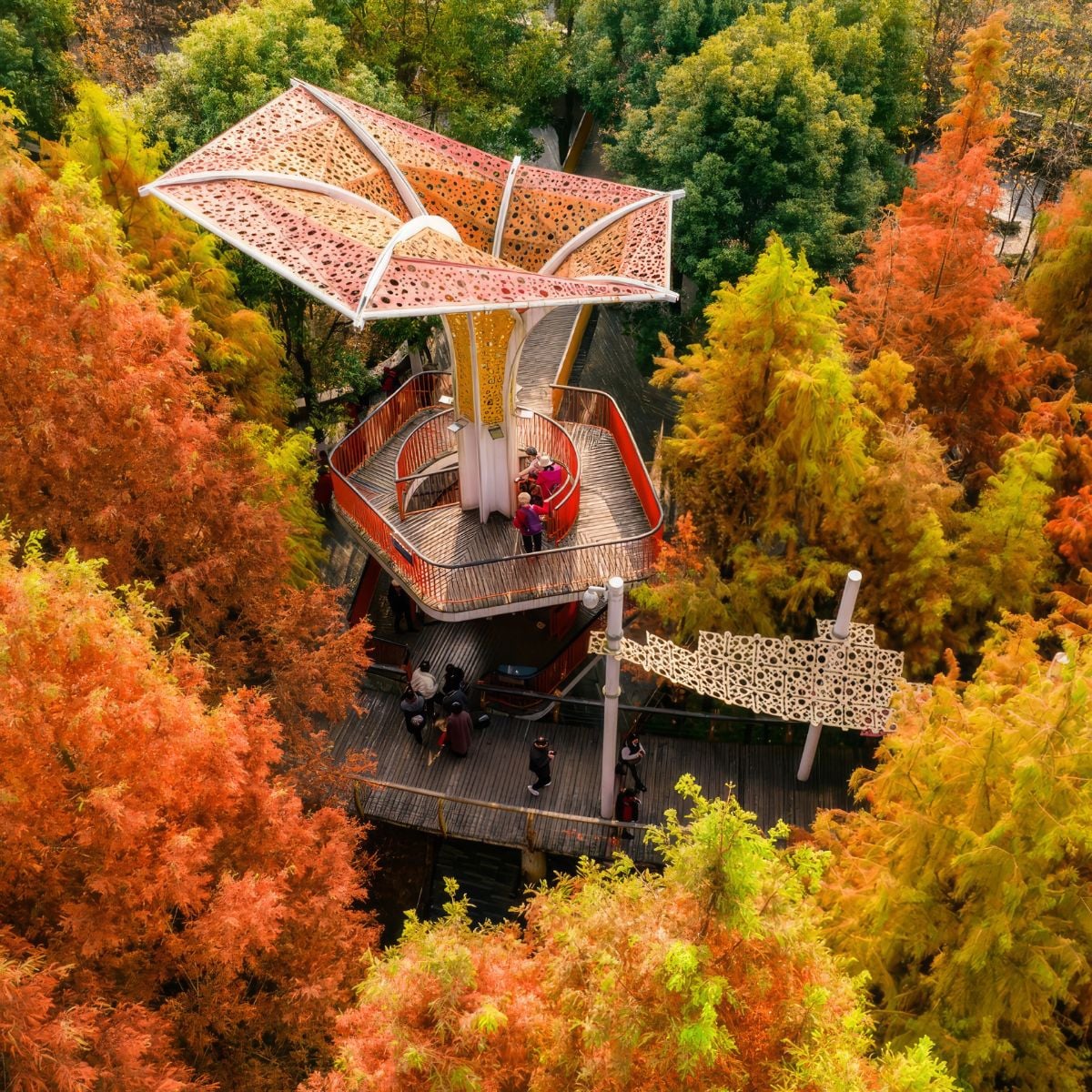
The walkway has red and yellow canopy structures above it. As visitors move along the route, the views change between sections surrounded by trees and more open areas overlooking the canal. The platforms and viewing towers provide places to stop and look across the park.
The red canopy is visible from different parts of the park during the day. At night, the viewing towers are illuminated with warm yellow lights. The colors also change in appearance with the seasons: the red structures stand out against the green foliage in spring and summer, while the yellow tones complement the autumn leaves. Since opening, Yunhe Park has become a public space for residents of Yichang. Children use the elevated platforms, couples walk along the paths, and families spend time around the ponds and open areas. The park also attracts newlyweds who use its meadows and landscaped areas for photographs.
How an Abandoned Fish Farm Became Yichang's Water Forest
Yunhe Park was designed by the Chinese landscape architecture practice Turenscape. The 12-hectare site was originally an abandoned fish farm containing twelve ponds. The surrounding canal had also suffered from water pollution caused by agricultural runoff and household sewage. The design retained its basic layout and adapted it into a water filtration system.
The ponds are connected so that water can move through the site, passing through planted filtration areas before returning to the river. Wetland vegetation forms part of this process. The system was designed to help improve water quality and manage stormwater while providing habitats for different forms of wildlife.
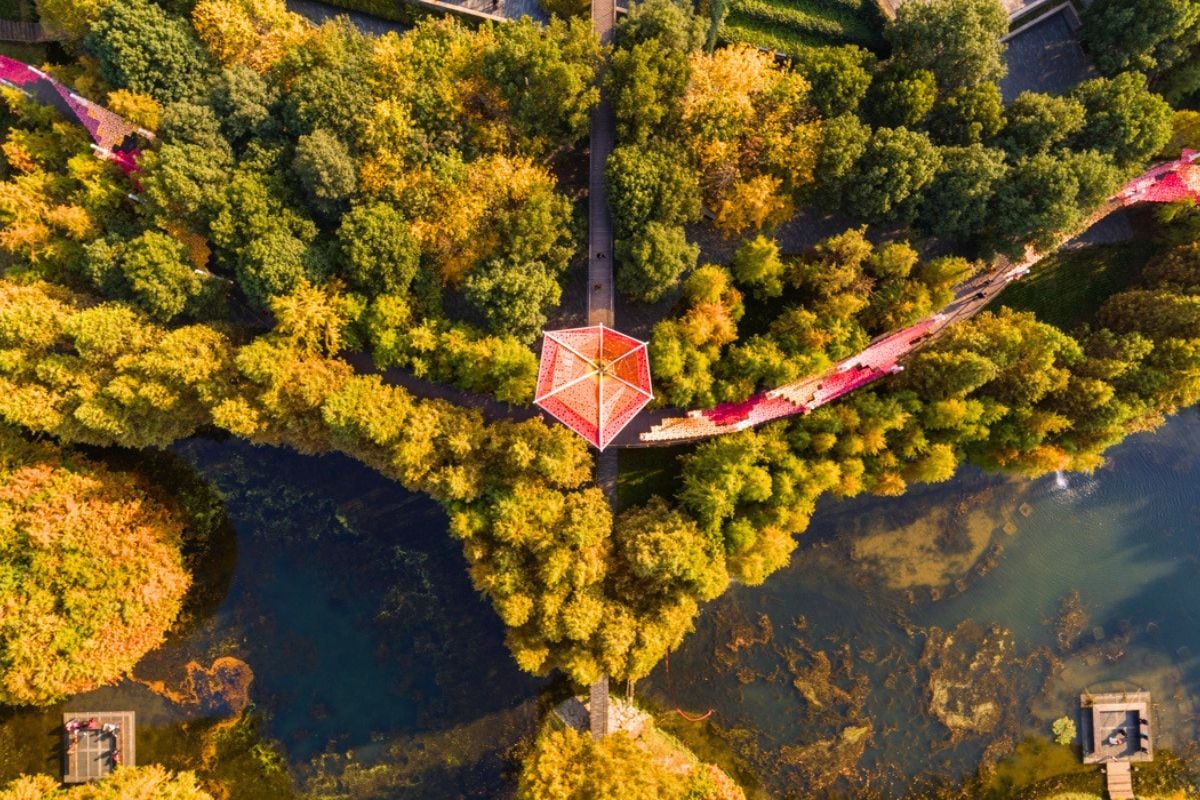
The tree planting was also important to the site's transformation. Turenscape selected both native trees found in the region and planted them in dense groups across the former fish-farm landscape. Their height and foliage help define the wooded areas, while other trees provide shade near entrances and gathering points.
The project was completed in 2013 and opened to the public in 2014. Today, the original pond layout remains part of the park, with paths and bridges connecting the different areas. The result is a public landscape where water management, wetland planting and tree cover all form part of the design.
For visitors interested in autumn trees, November is the month to consider. This is when the bald cypress and Metasequoia change from green to shades of yellow, orange and red. The color develops throughout the season, so visiting in the second half of November can be a good choice, although the exact peak varies from year to year.
Photos by @kongjianyu_turenscape.