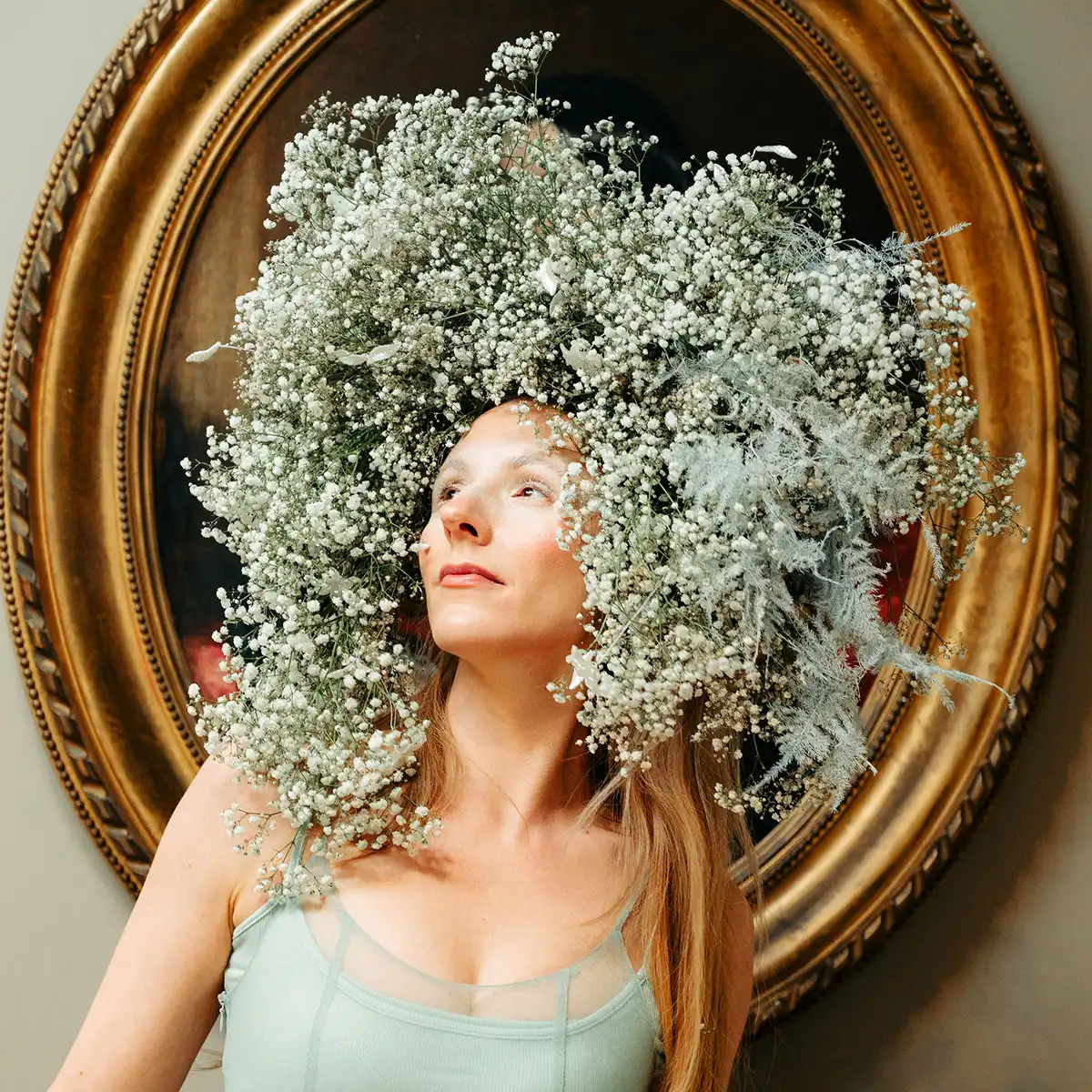
We recently took a few days out to immerse ourselves in the world of the Dutch Masters, using it as an opportunity to explore our own work through a different lens, asking something different of the viewer, and inviting stillness. It wasn't about recreating the past exactly, but about understanding the feeling behind design. The quiet, the depth, the way light and shadow hold a piece together. In a world where everything moves quickly, this was an opportunity to slow down and look with intention.
Studying the Dutch Masters
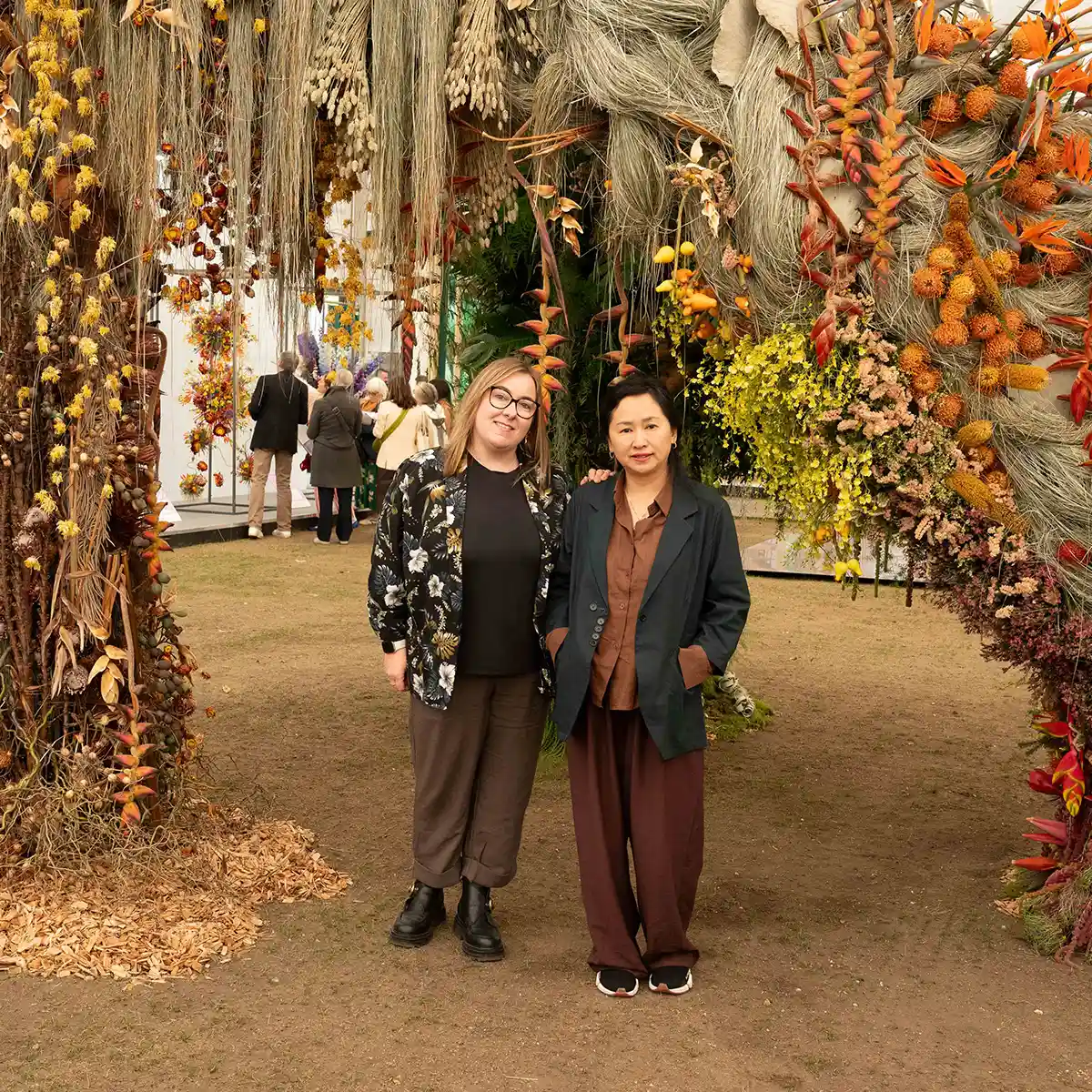
At Acacia Creative Studio, Xue Wang and I have always carried the idea that there is more to design than what is seen at first glance, which has evolved into our narrative-led design style. We feel a piece should reveal itself over time, that the eye should move, return, and always notice something new. This is how we felt when studying the Dutch Masters. These compositions don't give everything away immediately, but simply invite you to sit with them.
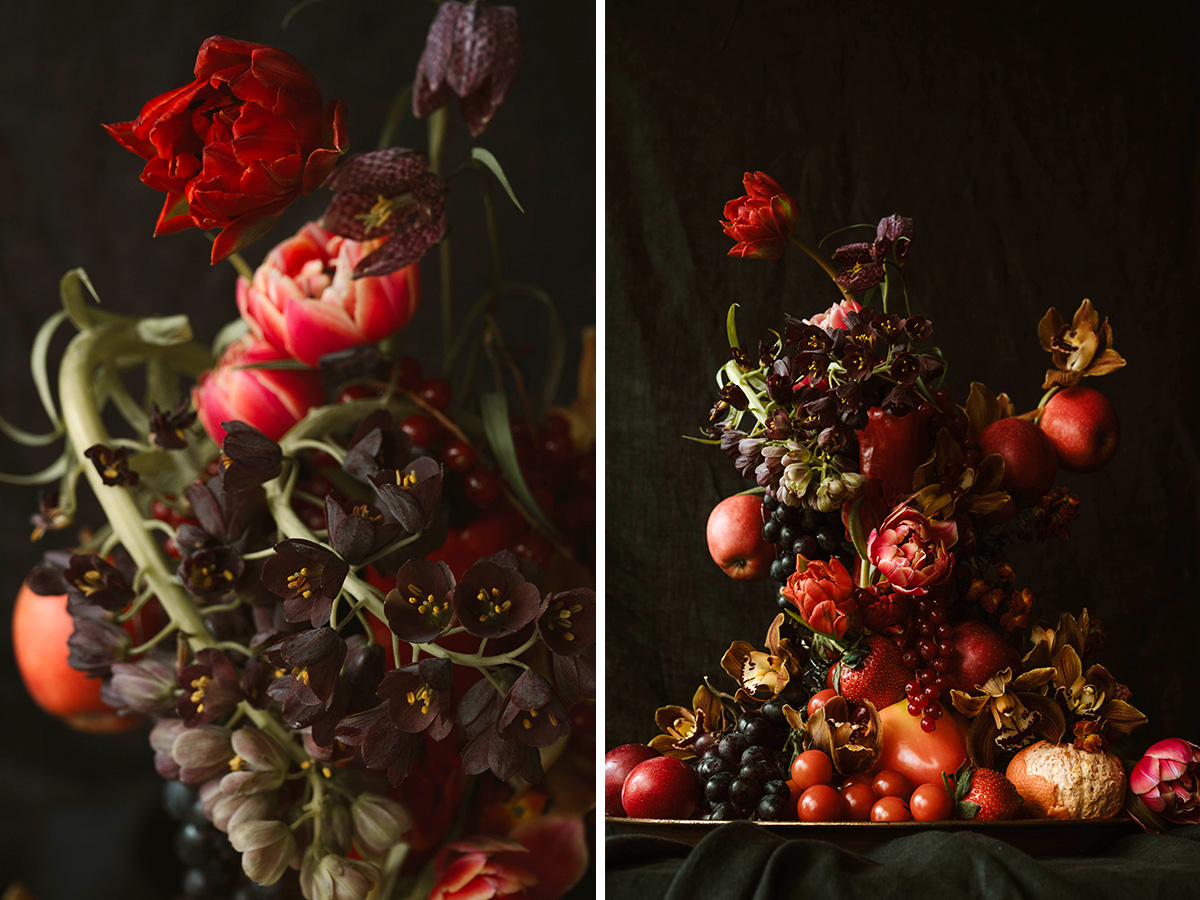
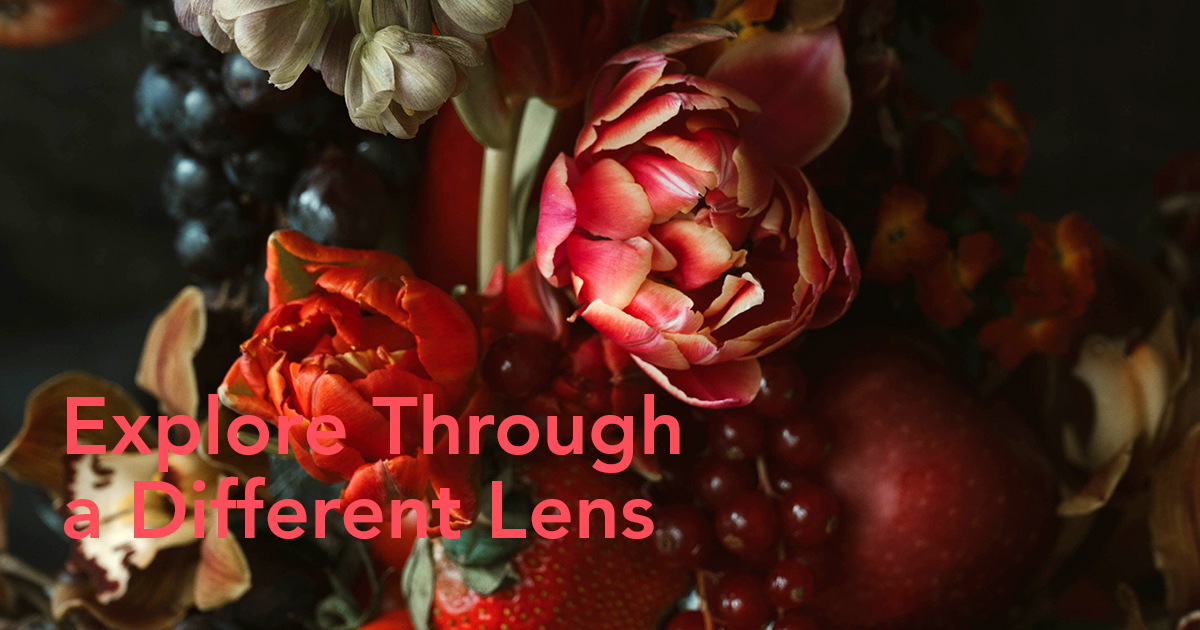
We have always been drawn to Dutch Master paintings for their understanding of flowers and how they move beyond decoration into art forms. They don't focus on flowers at their peak, but across their entire lifespan. There's a quiet honesty in that, where a fully open bloom sits beside one just turning, or one even that's already fading, and together they create a richness, a story. That sense of time, of transience, became something we wanted to bring into this shoot.
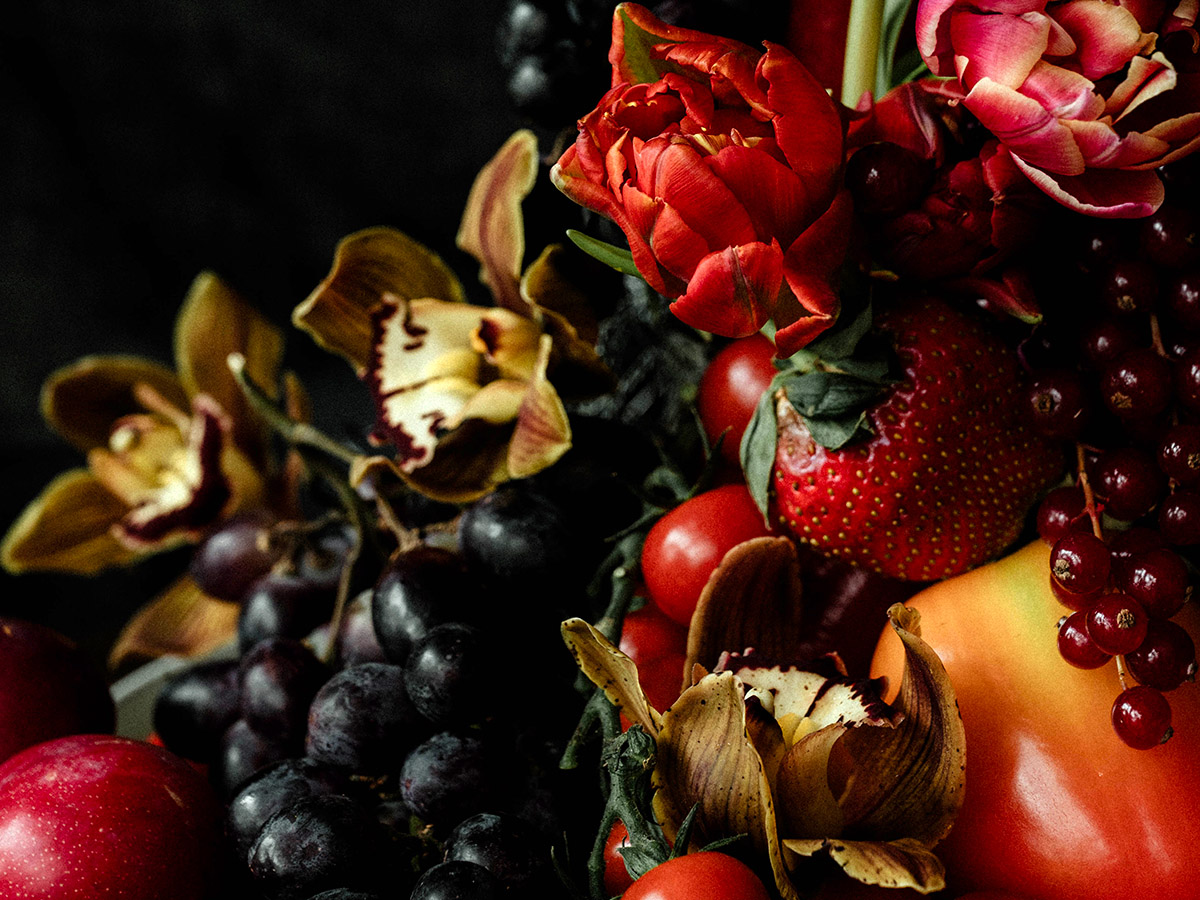
Generous but Not Controlled Arrangements
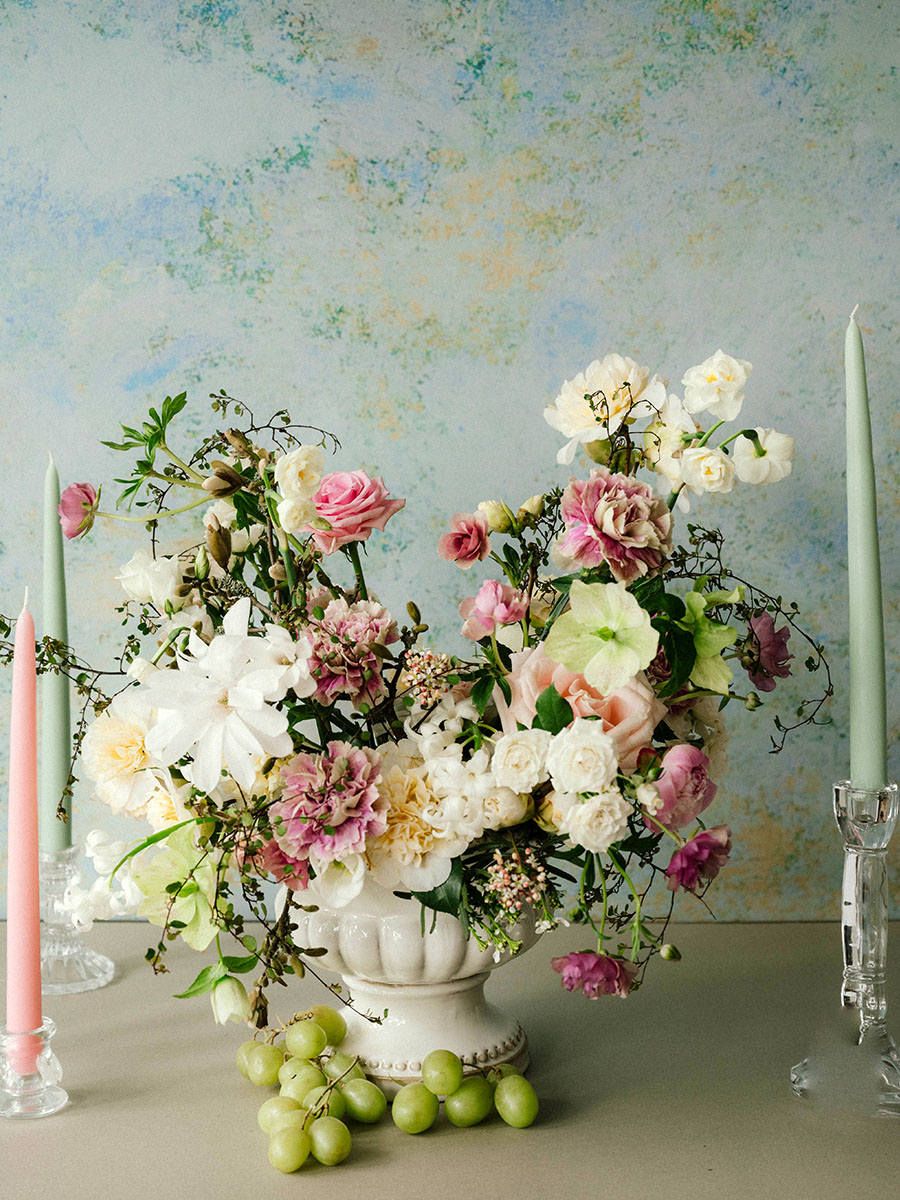
We approached the series with that in mind, allowing arrangements to feel generous but not controlled. Letting stems fall where they naturally wanted to, embracing movement, and resisting the urge to design in perfection. And there's a tension in that balance, between structure and looseness, abundance and restraint. It's within that tension that the arrangements begin to feel most alive.
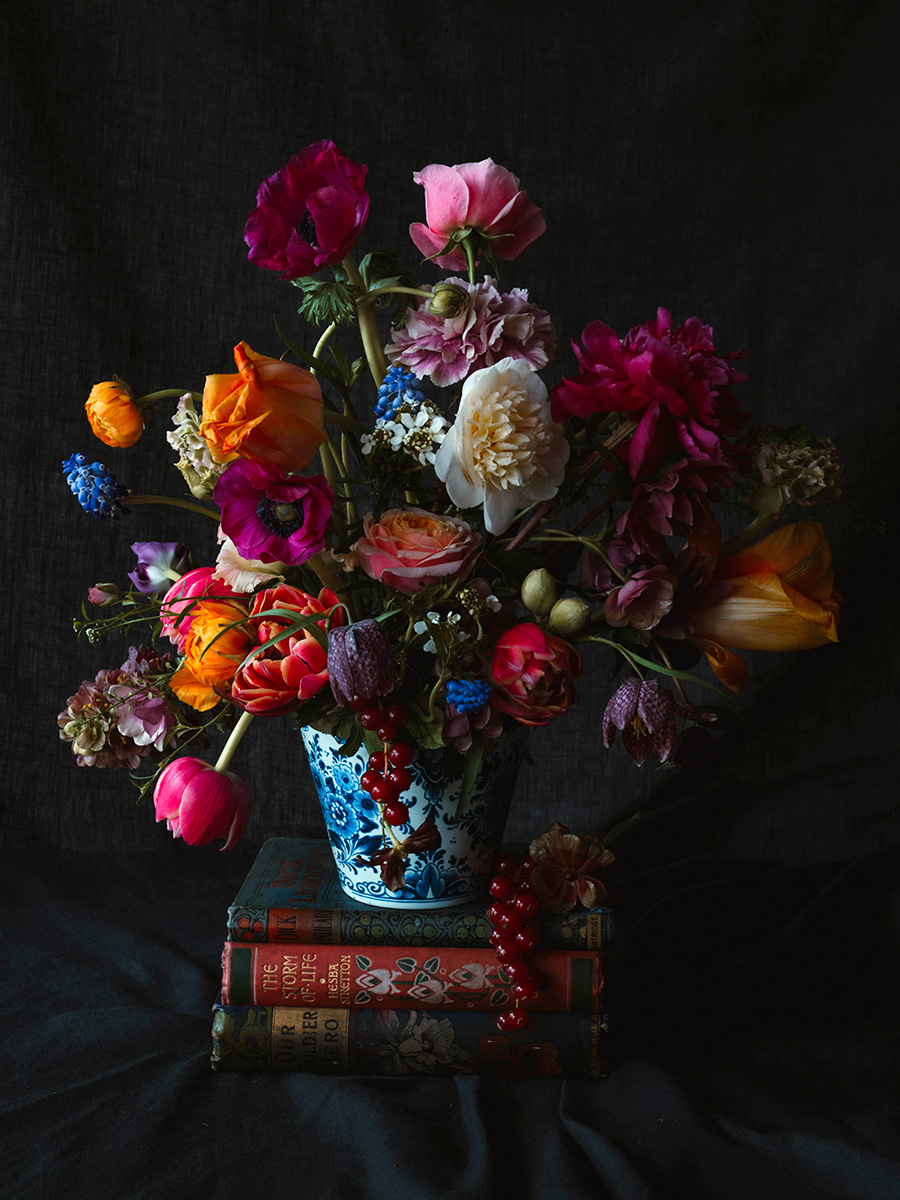
The use of darker backdrops and directional light played an important role, too. It allowed color to emerge more subtly, creating a sense of atmosphere rather than something purely decorative. The flowers remain the focus, but they sit within the deeper mood, rather than simply being on display. Here, rich tones, dramatic shadows, and layered textures unfold. The work becomes more emotional and more expressive.
There is also something important in allowing a design to hold complexity. Not to resolve everything too quickly, or make it immediately understandable. Just like the paintings that inspired this series, the intention is not just to be seen, but to be experienced and hold attention a little longer.
Scaling Back and Refocusing
For us, this shoot became a way of taking in floristry as a slower, more thoughtful process. We regularly design in sculptural and larger-scale pieces, and it's always good to scale back and refocus. It's a reminder that working with flowers is not just about arranging, but about noticing and paying attention to form, texture, and the small details that give each piece its unique feel or story.
Working alongside photographer Clare Coleman brought another layer of depth to the process. Her ability to understand light and shadow allowed her to capture with a sensitivity that feels true to the original intention. It became a shared language, where floristry and photography met in the same space of restraint and observation. Nothing was overworked or overexposed, just a quiet tension, allowing the details to reveal themselves gradually.
Through this process, we found ourselves rethinking how we approach our work. It highlighted the importance of designing with both intent and awareness, and trusting what unfolds naturally rather than over-directing.
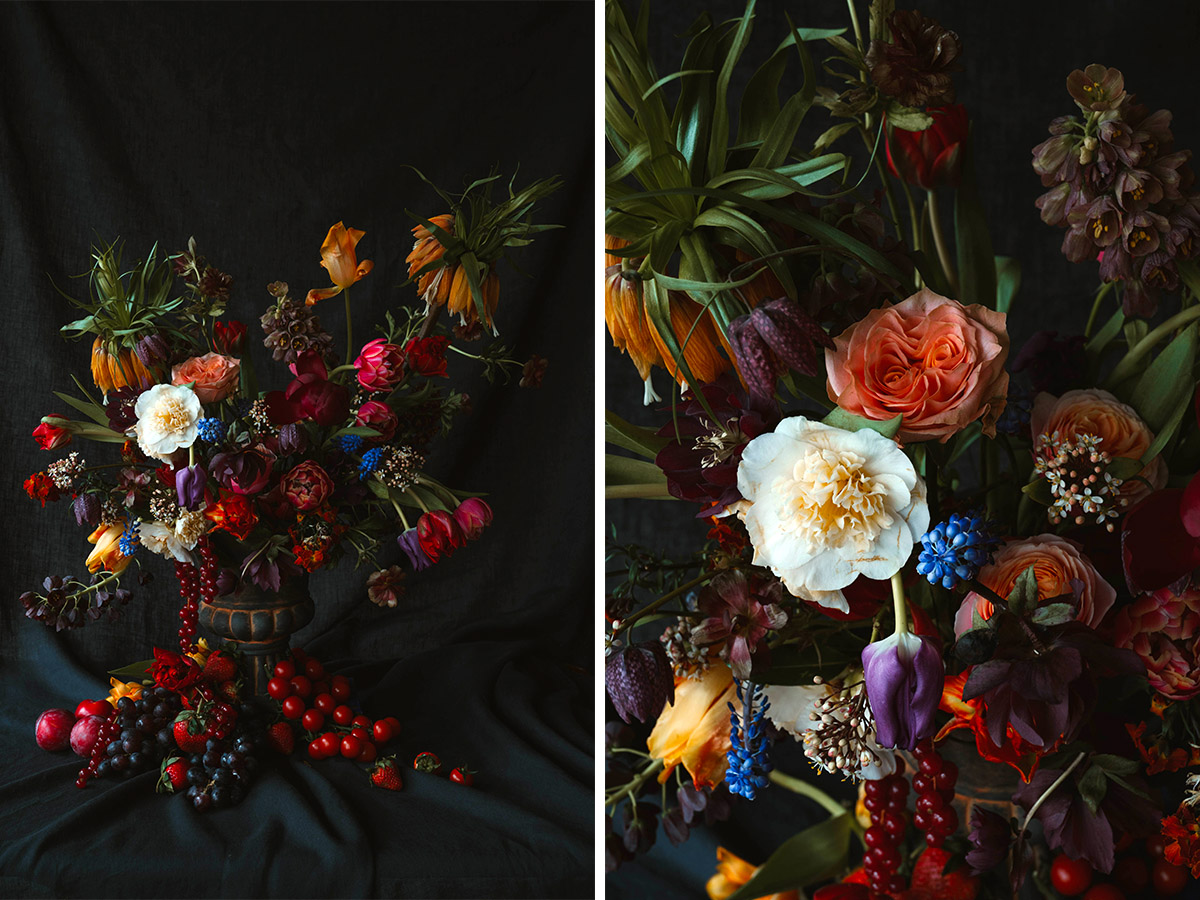
Photography by Clare Coleman from @ateliervandecasteele.