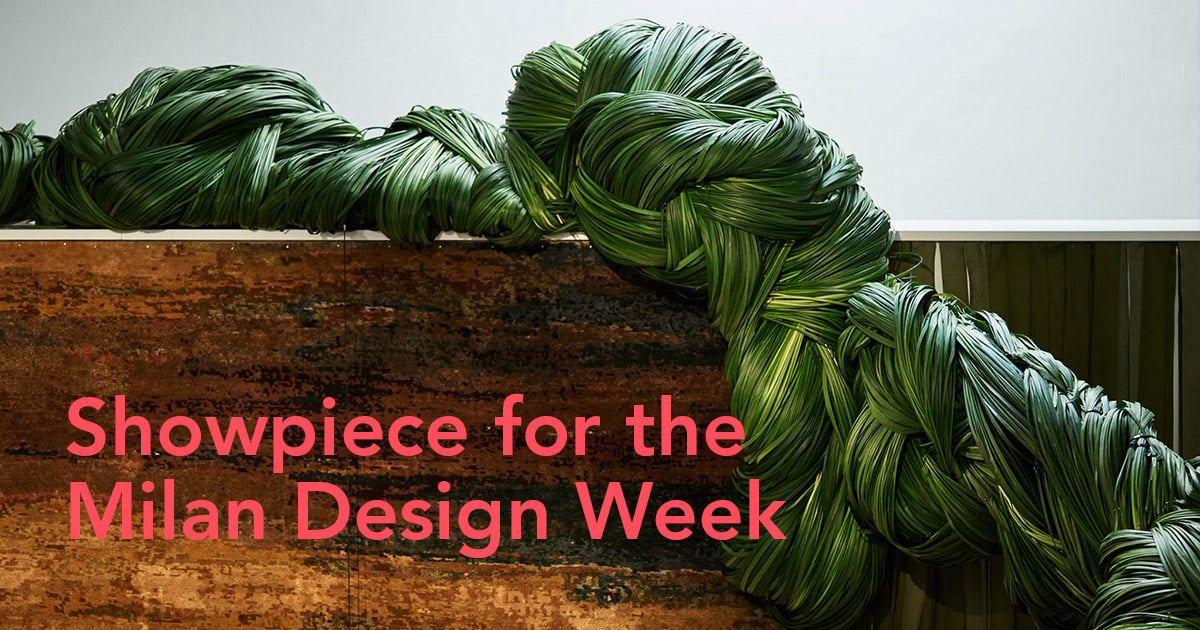
There are projects that start with a clear idea. And then there are projects that start with a feeling. This one started with anxiety.
Not the kind that makes you want to run away. More the kind that tells you something big is about to happen. The kind that makes your body understand the scale of a project before your head has fully processed it.
For Walter Knoll during Design Week at the Salone del Mobile in Milan, we made a large-scale floral art installation in the showroom. Here's the story of our creation.
Our Floating Structure at the Salone del Mobile
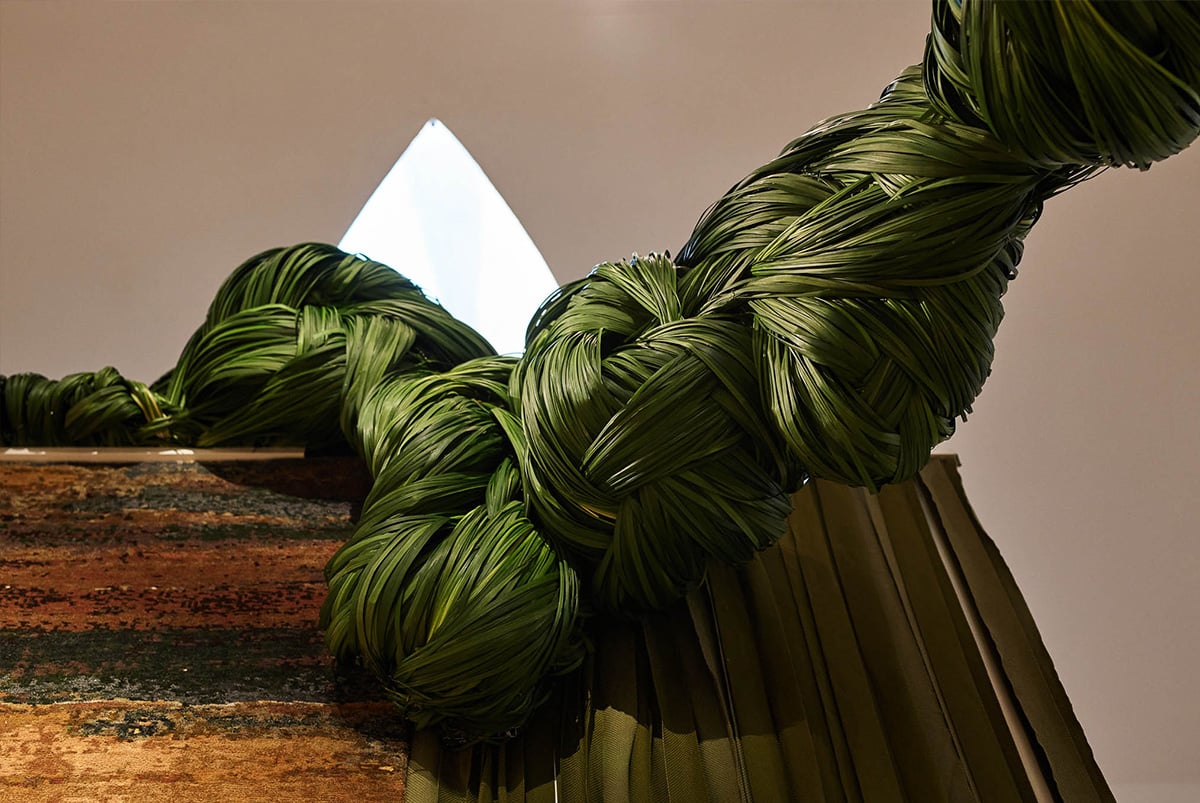
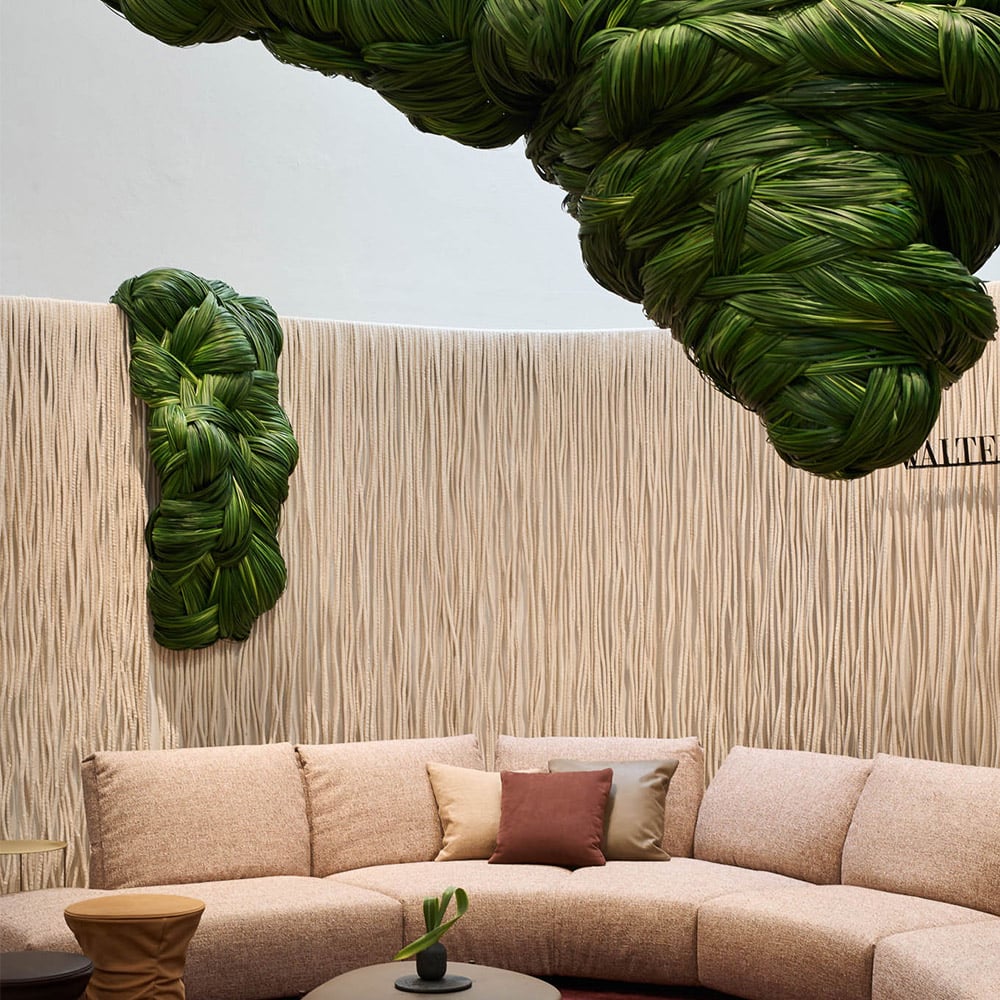
The idea was to create a woven botanical structure, suspended above the space, floating between furniture, architecture, light, and people. 22 meters of woven grass, containing 2,600 bundles of Lily Grass from Sri Lankan grower Spado Im- & Export and importer Adomex, weighing as much as a small car: 650 kilograms, suspended between 5 and 7 meters above the ground!
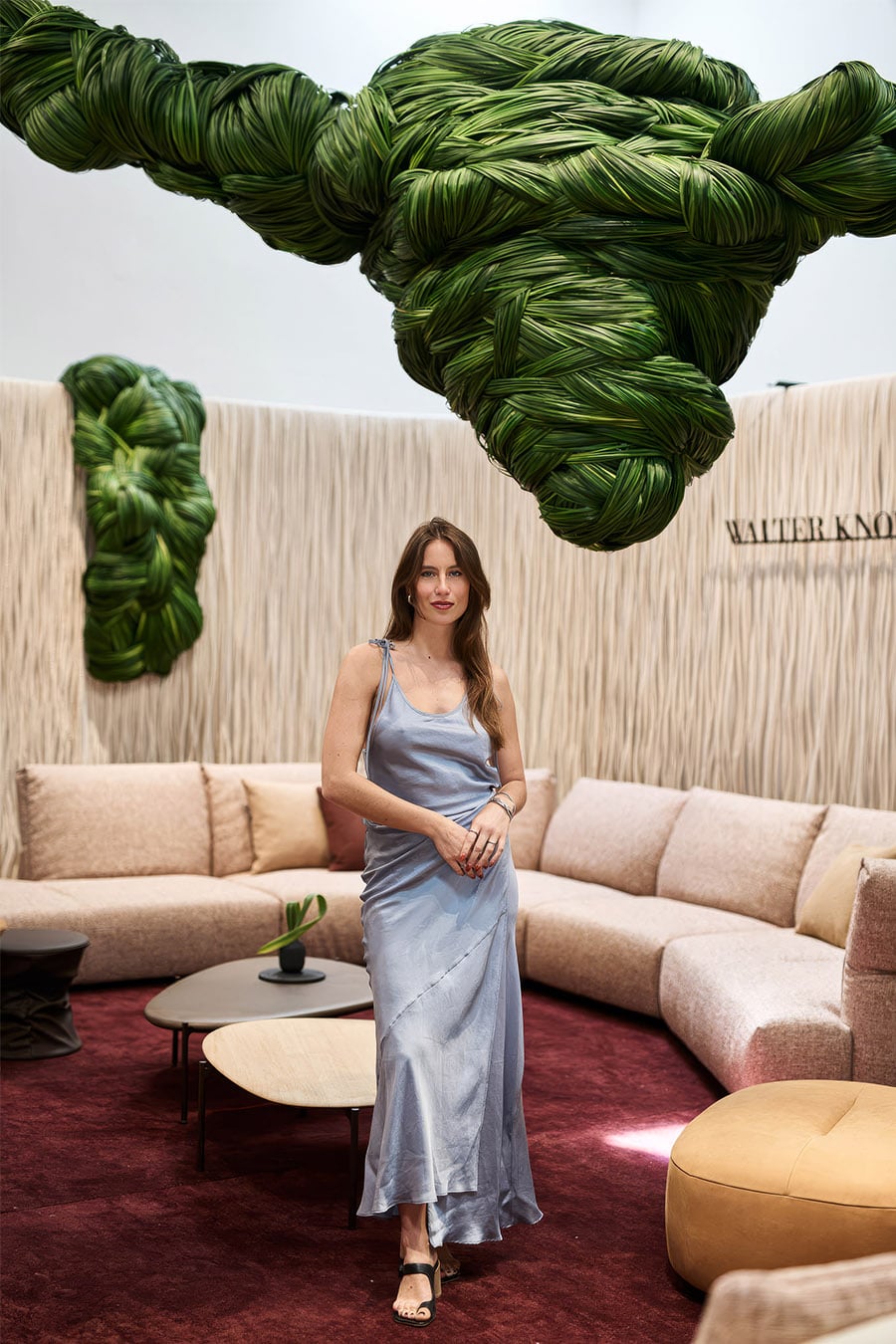
When I write these numbers now, they look clean and almost simple. But behind every number there were hands, hours, decisions, calculations, revisions, logistics, and moments where we all looked at each other and thought: okay, this is serious.
The Beginning of a Long Process
The inquiry came in last October. From that moment until April, the project never really stopped moving. It lived with us for months. Sometimes quietly in the background, sometimes very loudly in the middle of everything.
In November, we worked on different concept proposals. In December, the final direction was chosen. In January, we started sampling and testing the design. In February, renderings and digital concepts were developed in close collaboration with the architects at Ippolito Fleitz Group – Identity Architects.
By March, the romantic part of the idea had to become very practical. Project planning, material sourcing, supplier management, logistics, team coordination, structural engineering, travel arrangements. The list was long. And necessary.
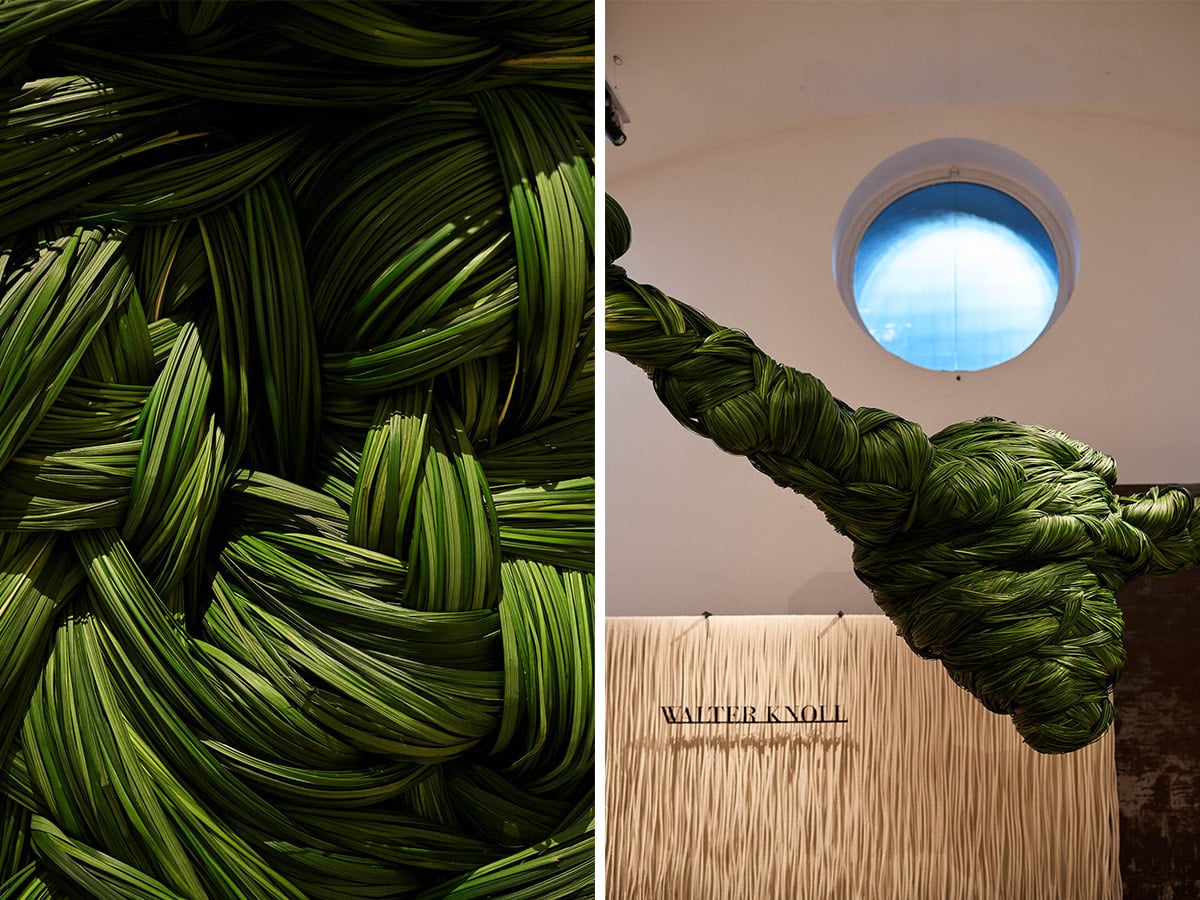
Because large-scale floral art is never only about how something looks. It is about how it behaves in a space. How it holds. How it moves. How it can be installed. How it reacts to weight, air, light, time, and people.
It is beauty, yes. But it is also engineering, discipline, and a lot of physical work.
Four Days of Weaving in the Studio
At the beginning of April, the studio became a weaving place. Six floral designers, ten hours a day. Four consecutive days.
We wove grass. Again and again. Bundle after bundle. Section after section. It was repetitive, intense, and very focused work. There is something almost meditative about it at first. Then the body starts to feel it. Then the mind needs to stay sharp anyway, because every detail matters.
The rhythm was simple: prepare, weave, check, adjust, repeat. And still, nothing about it felt simple. Each part had to belong to the bigger movement. The installation needed to feel organic, almost as if it had grown into the space on its own. But of course, that kind of natural feeling is never accidental. It needs structure. It needs proportion. It needs control.
Video by @studiodepasquale.
After these studio days, all individual elements were packed and loaded into a 7.5-ton truck. Then they traveled to Milan. And we followed.
Installing Above the Ground
In Milan, the work changed. The studio phase had been about making; the on-site phase was about precision under pressure.
Seven floral designers were on site. Three more days of hard labor, eleven hours a day. Exhibition builders, strong hands, lifting platforms, tools, cables, systems, measurements, decisions. The showroom was alive with movement, and we had to become part of that rhythm without losing our own focus.
Everything had to come together in a limited time. The furniture, architecture, lighting, visitor flow, and our botanical installation.
And our work was not on the floor; it was above us: 5 to 7 meters high. That changes everything. Every movement takes longer. Every adjustment needs coordination. Every detail has to be checked from below, from the lift, from the side, from the distance. You need trust in the team. You need patience. You need calm, even when the schedule is tight.
There were many moments when I felt the pressure very clearly. But there were also moments when the installation began to take shape as we had imagined. The long grasses began to create these flowing, organic forms. The material started to speak with the space. The handmade structure became something architectural. That is always the moment I wait for. When the object stops being a project and starts becoming an atmosphere.
Why Lily Grass?
For me, flowers and plants are never just decoration. They carry emotion, they create a subconscious connection, they soften a space, but they can also give it direction, scale, and tension. For Walter Knoll, the material had to connect with craft. Not in a loud way. Not as a statement that tries too hard. It had to feel elegant, precise, and alive.
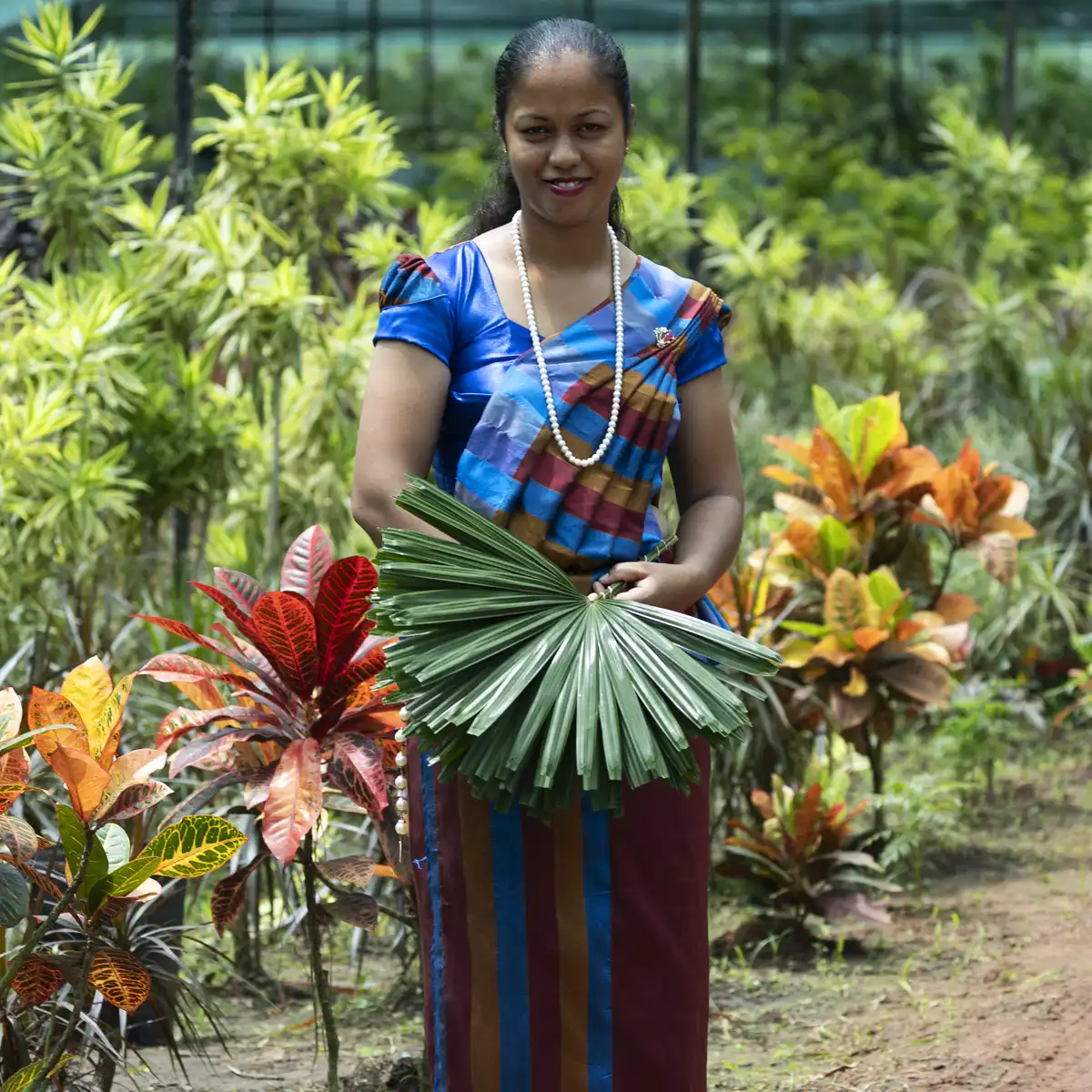
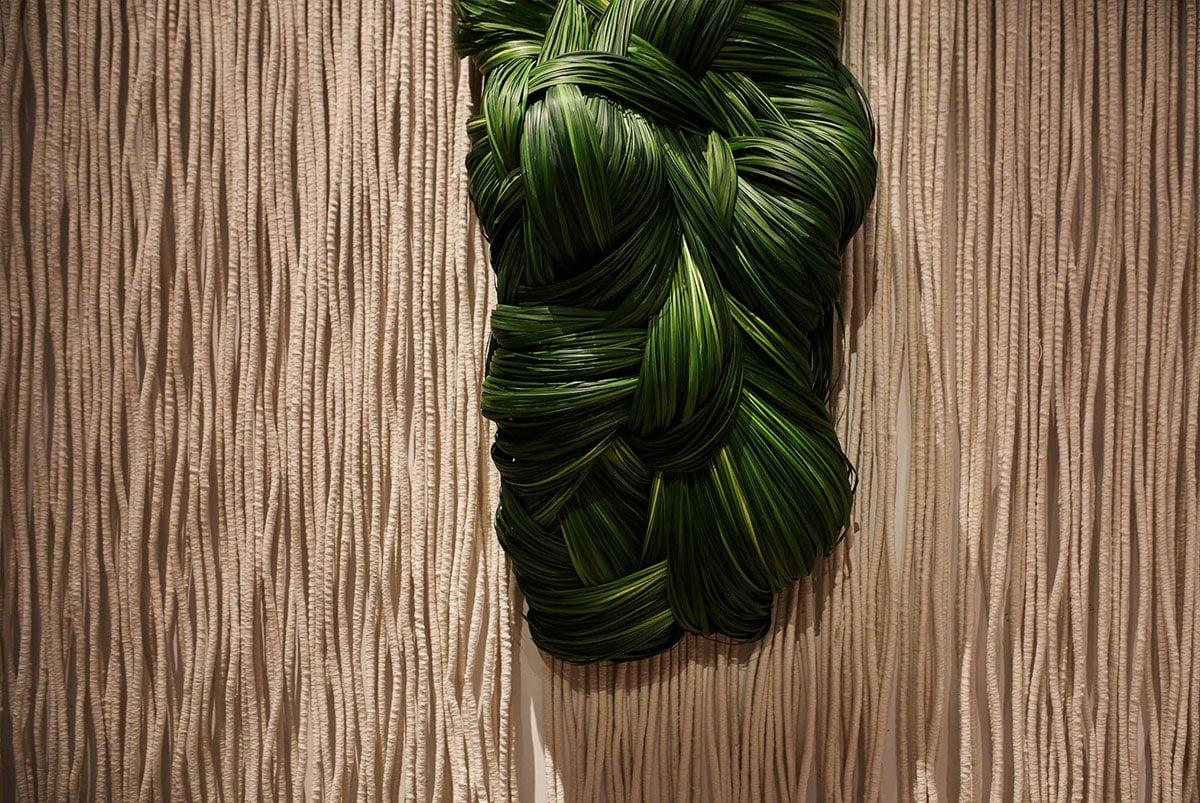
Lily Grass by the grower Spado, supplied by Adomex, was perfect for that. It is flexible, graphic, and strong. When used in thousands of bundles, it becomes more than a botanical material. It becomes a surface. A line. A volume. A movement.
From a distance, the installation had an architectural presence. Up close, you could still see the handwork. The weaving, the repetition, and the craft. That contrast is what I love: The large gesture and the tiny detail, the technical structure and the emotional response, and the weight of 650 kilograms and the feeling of something floating.
The Part People Don’t Always See
When people visit a design week showroom, they see the final image. They see the atmosphere, the furniture, the light, the entire installation. They take photos, they look up, and they feel something. And that is exactly what should happen.
But behind that moment is a completely different world. There is the truck, the planning, the early mornings, the heavy lifting, the problem-solving, the sore hands, the dust, the waiting, the small corrections, and some last-minute decisions. The moments when something does not fit the way you expected, and you need to find a solution immediately.
This is also floral art. Not only the delicate part, but also the strong part. The part where craftsmanship becomes physical. Where a team becomes essential. Where an idea only survives because many people care enough to make it work.
I am deeply grateful for that team. Every person who wove, carried, lifted, checked, secured, adjusted, and stayed focused made this installation possible.
From Anxiety to Euphoria
I rarely say openly that I am proud. Maybe because I always see what could be even better. Maybe because, after a project, my mind immediately moves to the next challenge. Maybe because standing still and saying, yes, we did this, feels surprisingly difficult.
But this time I want to say it. I am incredibly proud of what we created together. This was one of the most complex and labor-intensive projects for Studio de Pasquale in the last six years. And one of the most impressive. Not only because of the scale, not only because of Milan, not only because it was for Walter Knoll during one of the most important design weeks in the world. But because the project carried everything I believe floral art can be. Emotional. Physical. Technical. Organic. Elegant. Demanding. Human.
First came the anxiety. Then came the euphoria.
And somewhere between the two, 2,600 bundles of Lily Grass became a floating botanical artwork above Milan.
All the best,
Valentina
Credits to photographer Philipp Kottlorz and my direct supplier KURZ Blumen GmbH.