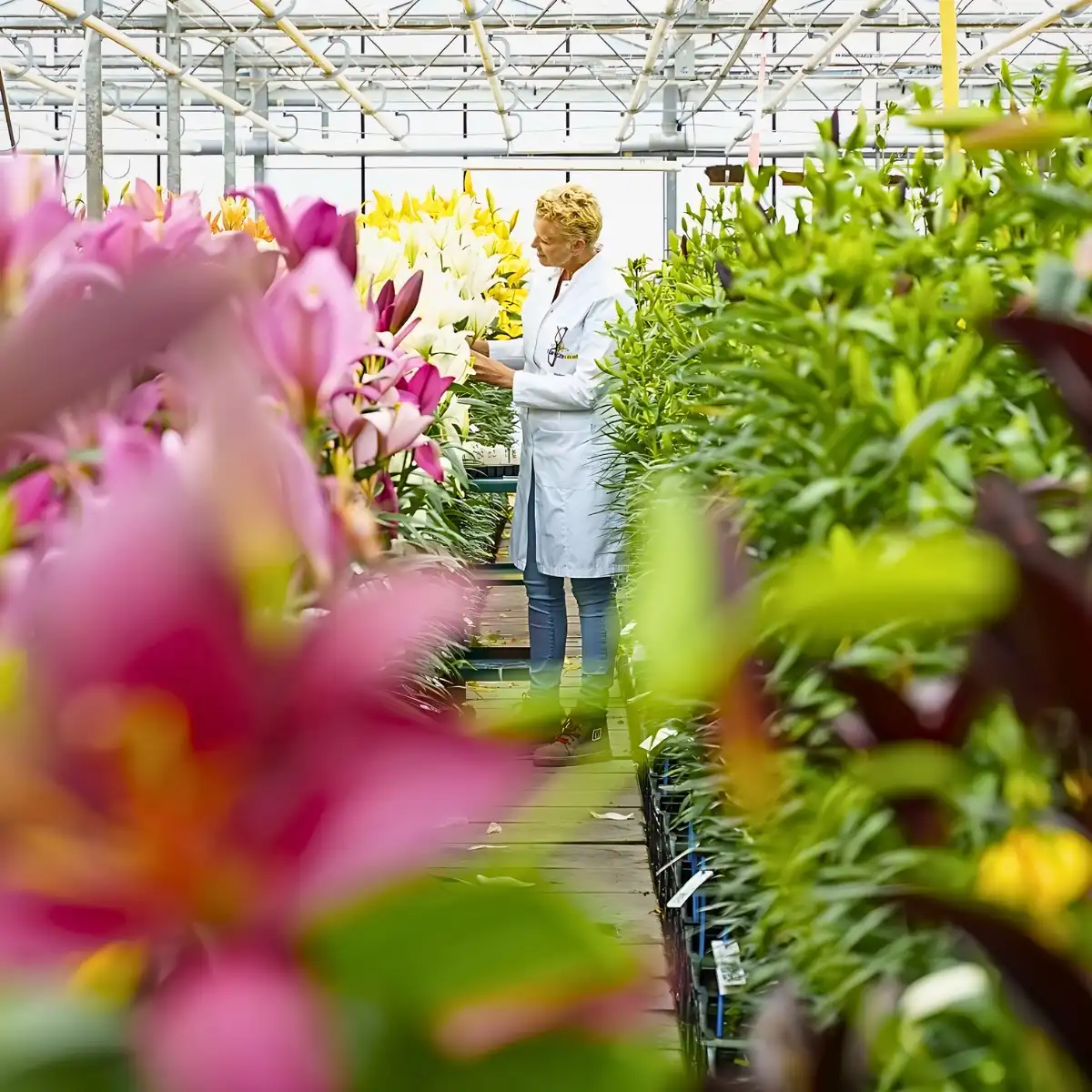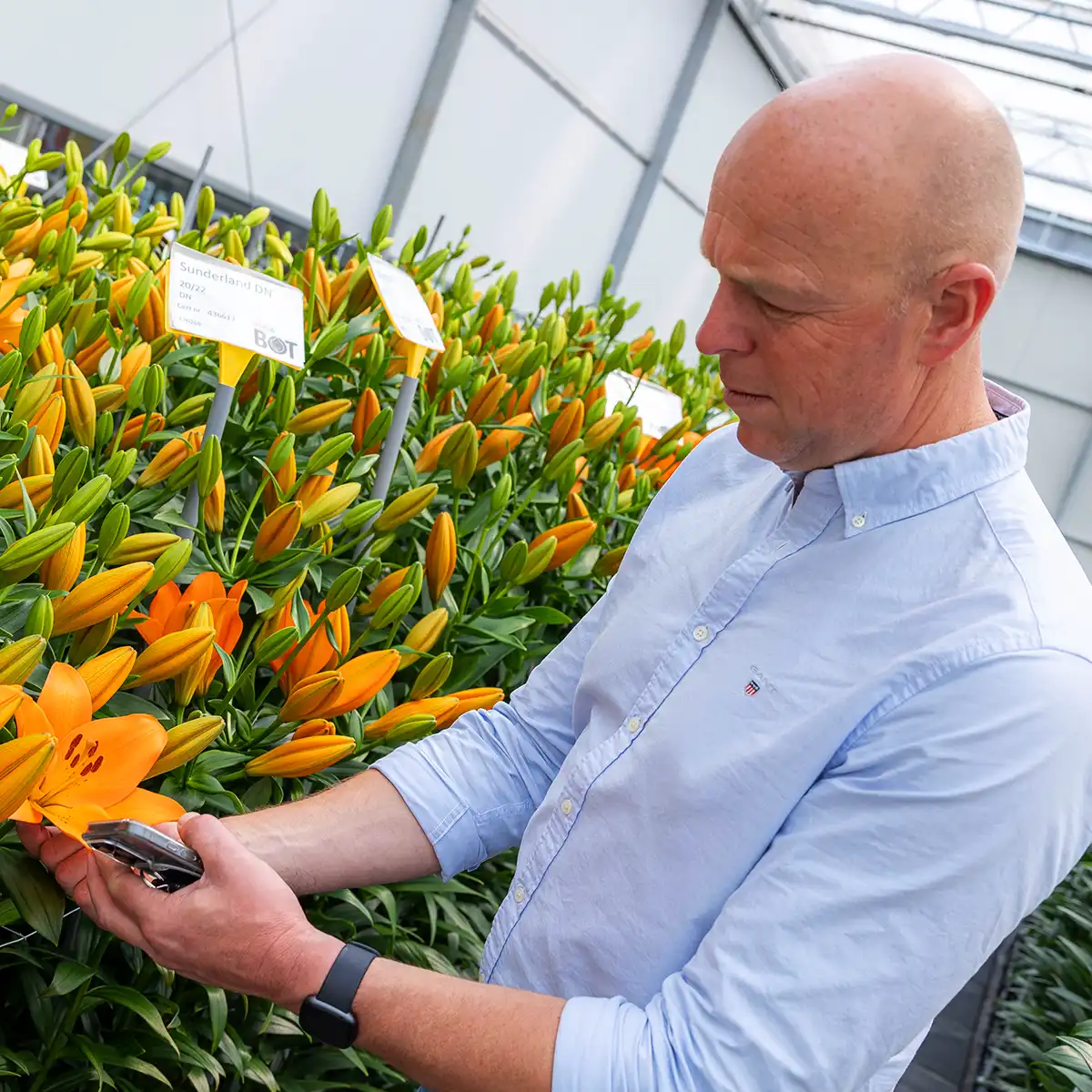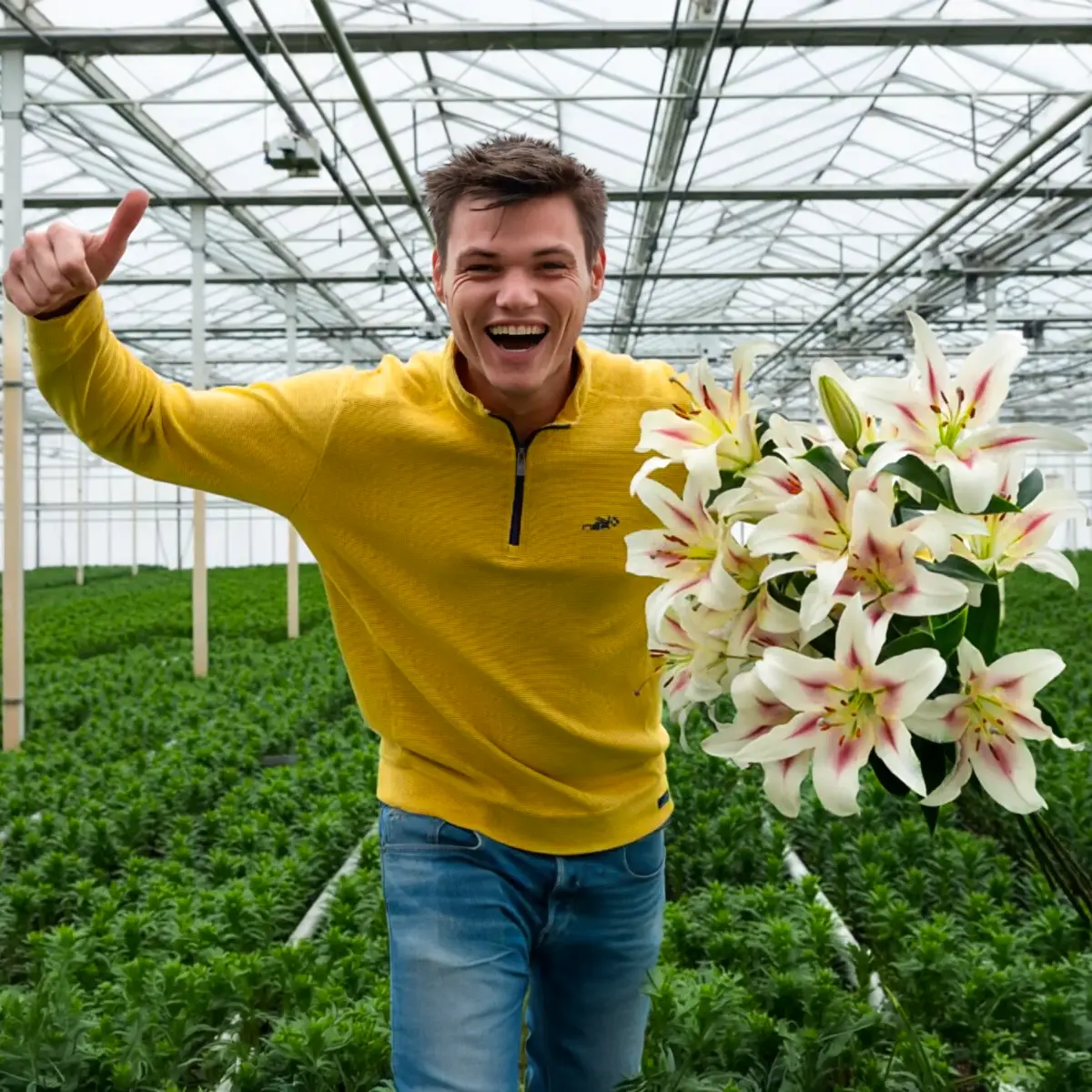
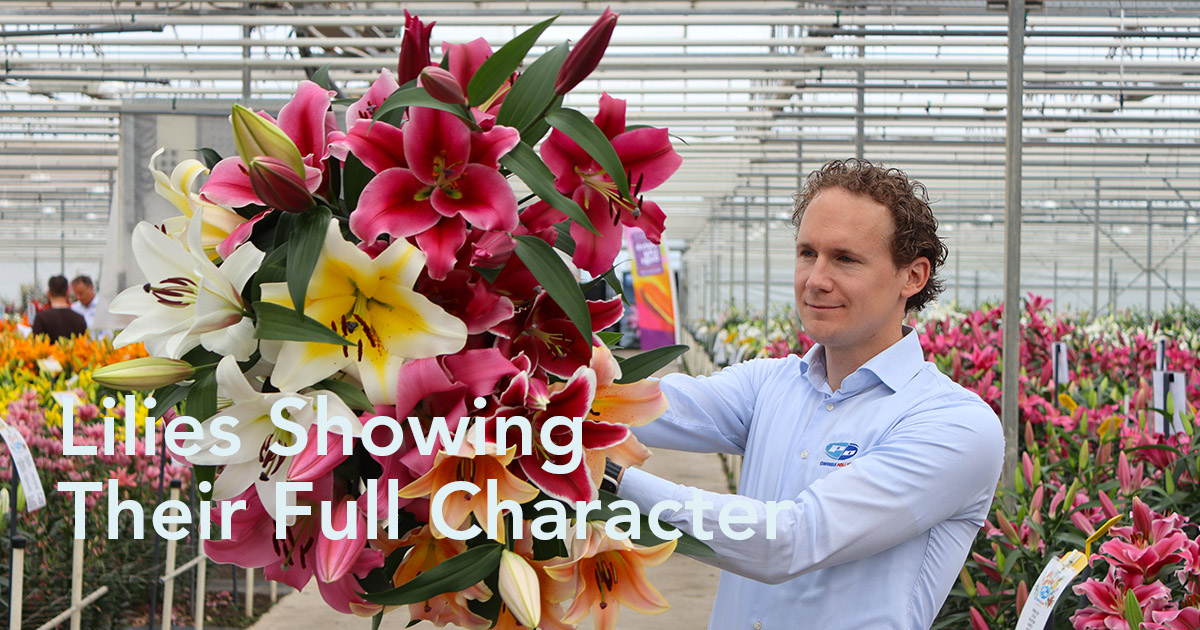
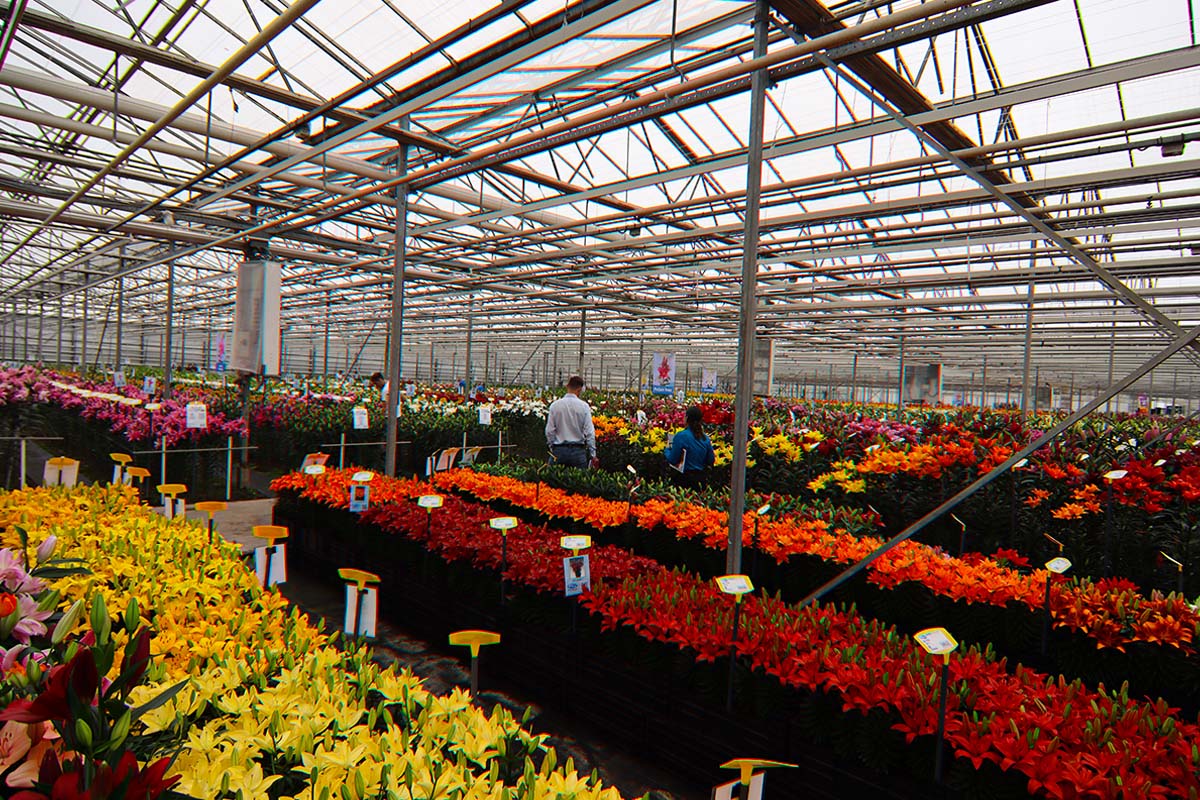
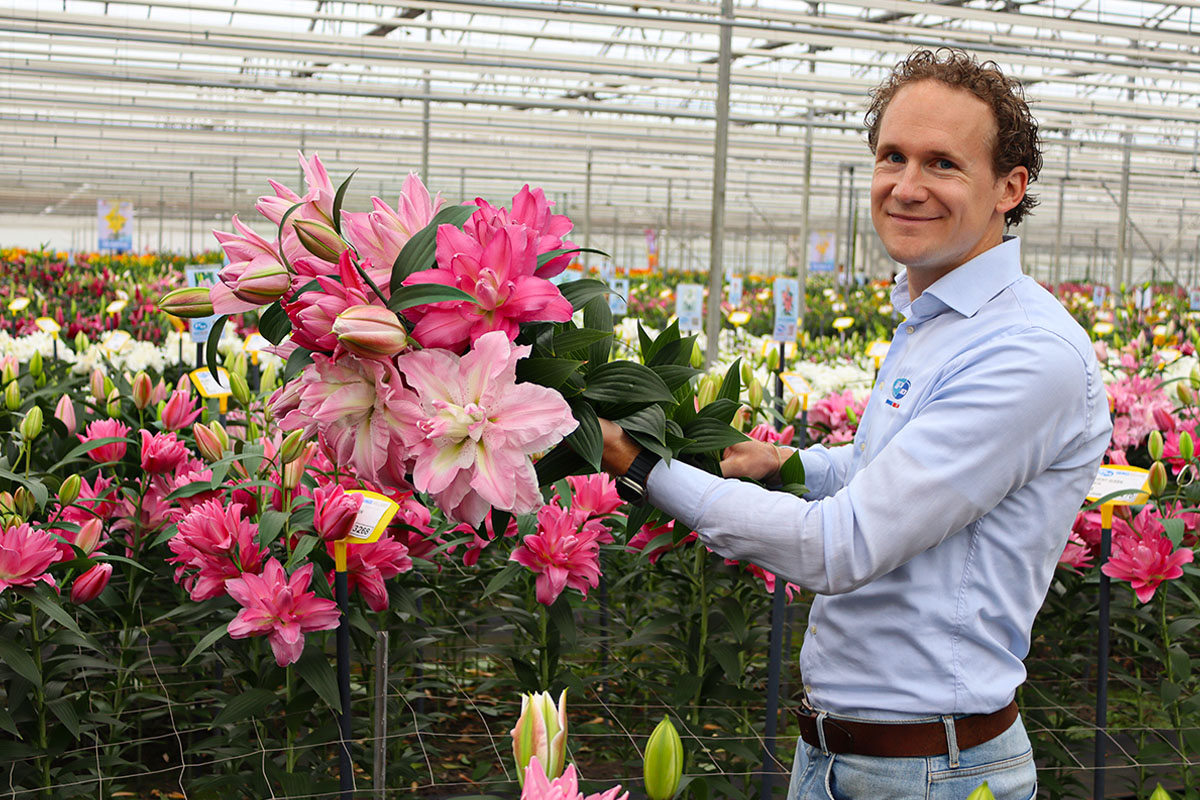
During Dutch Lily Days, a visit to Onings Holland Flowerbulbs in Honselersdijk feels like stepping straight into the world behind the lily. Inside a large greenhouse, hundreds of lilies are in full bloom. It is quite a sight, especially because most consumers usually meet the lily in the flower shop as a tight bud, not as an open flower showing its full character.
For CEO Sjoerd Onings, this is exactly why the Dutch Lily Days matter.
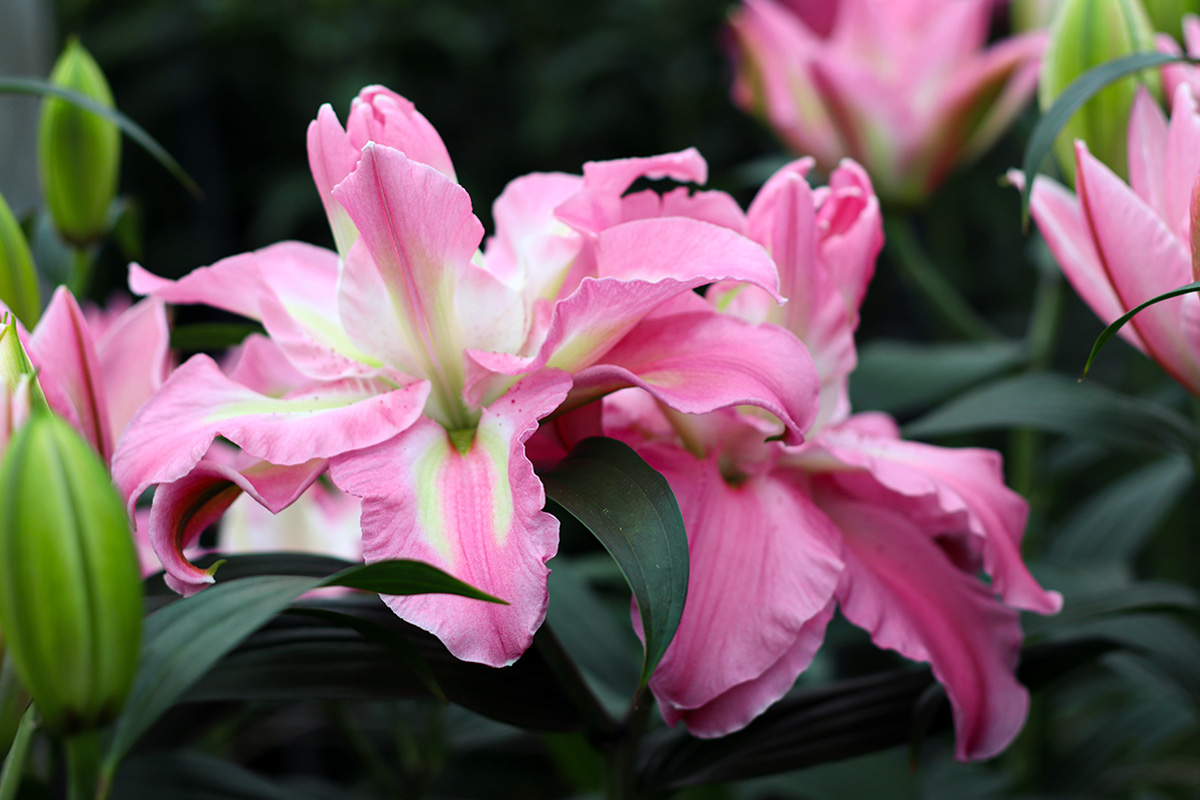
"Many people know the lily mainly as a bud, or they immediately think of a flower with a strong scent," Sjoerd says. "But this is where we can really show how versatile the lily is. We have varieties that hardly release any scent at all, and others that are very fragrant. We also see growing interest in double lilies, which have a look of their own."
The presentation at Onings gives visitors a broad view of what is happening within the crop. For growers, traders, and other visitors from the international ornamental industry, Dutch Lily Days are a practical moment to see new varieties, compare existing ones, and talk about where the market is heading.
A Family Company With a Global View
Onings is a family business with more than ninety years of history in the flower bulb sector. Over the years, the company has grown into an important international name in lilies. Today, it supplies bulbs to customers in around fifty countries worldwide.
Although the company is often described as an exporter, Sjoerd sees its role in a broader way:
"We are actually the link between bulb production and the flower grower," he explains. "We connect supply and demand. We work with bulbs from the Netherlands, France, Chile, and New Zealand. Recently, we also started growing lily bulbs ourselves in New Zealand. By working with production on both the northern and southern hemispheres, we can serve our customers year-round."
That global spread is important. Lily growers work in different climates, with different market demands, and under different production systems. Onings looks at what fits each region, each grower, and each customer base.
The Art of Matching Bulbs to Growers
Behind every lily stem is a chain that needs to work. That becomes clear when Sjoerd talks about bulb sizes. To someone outside the sector, a lily bulb may simply look like a lily bulb. Inside the business, size, weight, and quality make a real difference.
"We buy complete harvests from bulb growers," Sjoerd says. "That means we receive small, medium, and large bulbs. Then we look at which customers need which size. Some growers want stems with three buds, while others need at least five buds. That is directly linked to bulb size."
This matching work is one of the key parts of what Onings does. The right bulb has to end up with the right grower, in the right market, at the right moment. When that works, growers can produce more efficiently and deliver the type of stem their customers expect.
A Flower That Travels the World
The lily is one of the major cut flowers worldwide, and Sjoerd does not find that surprising.
"The lily likes a climate where people often feel comfortable too," he says. "A moderate summer, like we know it in the Netherlands, is ideal. But because growers can work with shade nets, or move to higher altitudes in warmer regions, lilies can be grown successfully in many places around the world."
That international character is visible during Dutch Lily Days. Visitors come from all over the world. Onings works with customers from countries including China, Japan, Vietnam, Colombia, Ecuador, and Costa Rica. For many of them, traveling to the Netherlands during this week is part of their yearly rhythm.
They come to see flowers, of course. But just as much, they come to talk. About performance. About market preferences. About fragrance. About bud count. About logistics. About what consumers are asking for and what growers need to make production work.
Putting Lilies in the Spotlight
As with all 13 participants, for Onings, Dutch Lily Days is much more than an open house. It is a moment to put the lily in the spotlight internationally and to show how much the assortment has changed.
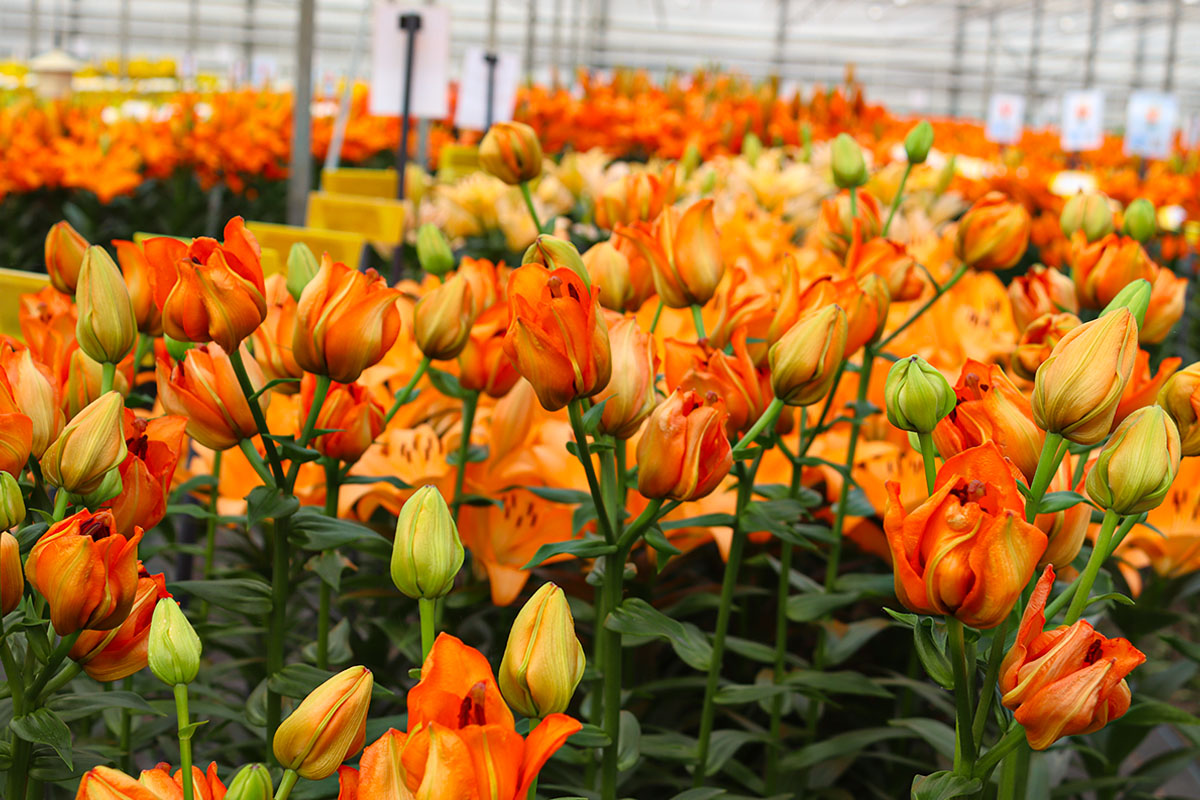
In the greenhouse, the message is clear: the modern lily is more diverse than many people think. Some are subtle. Some are strongly scented. Some have no pollen. Some have double flowers. Some feel classic, others have a more modern look.
For florists, that variety matters. It gives room to choose lilies that fit different designs, different clients, and different settings. For growers, it gives options to serve markets with specific preferences. For the trade, it shows that the lily is not standing still.
Walking through the Onings presentation, surrounded by hundreds of flowering varieties, you understand why the lily remains such an important cut flower around the world. Not because it is one thing, but because it can be many things.
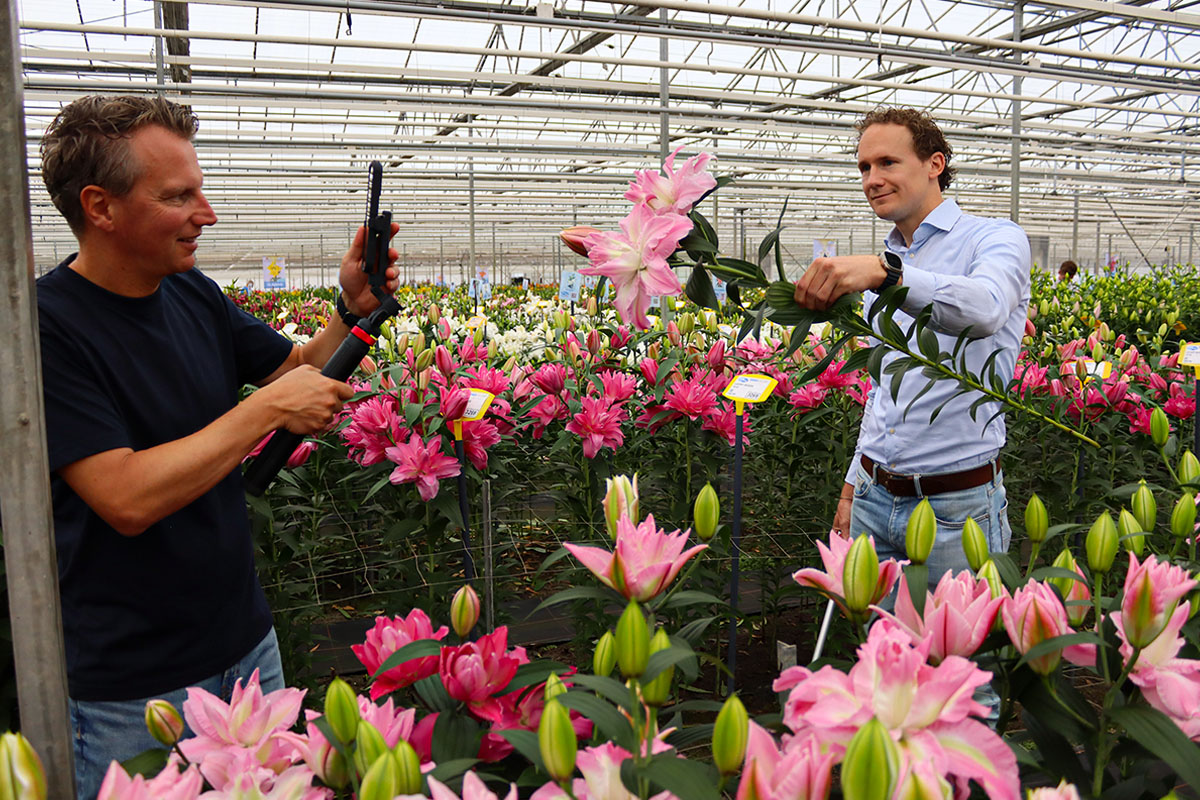
All the best from Peter van Delft.
Photos by Marcel de Romph from Thursd.com.