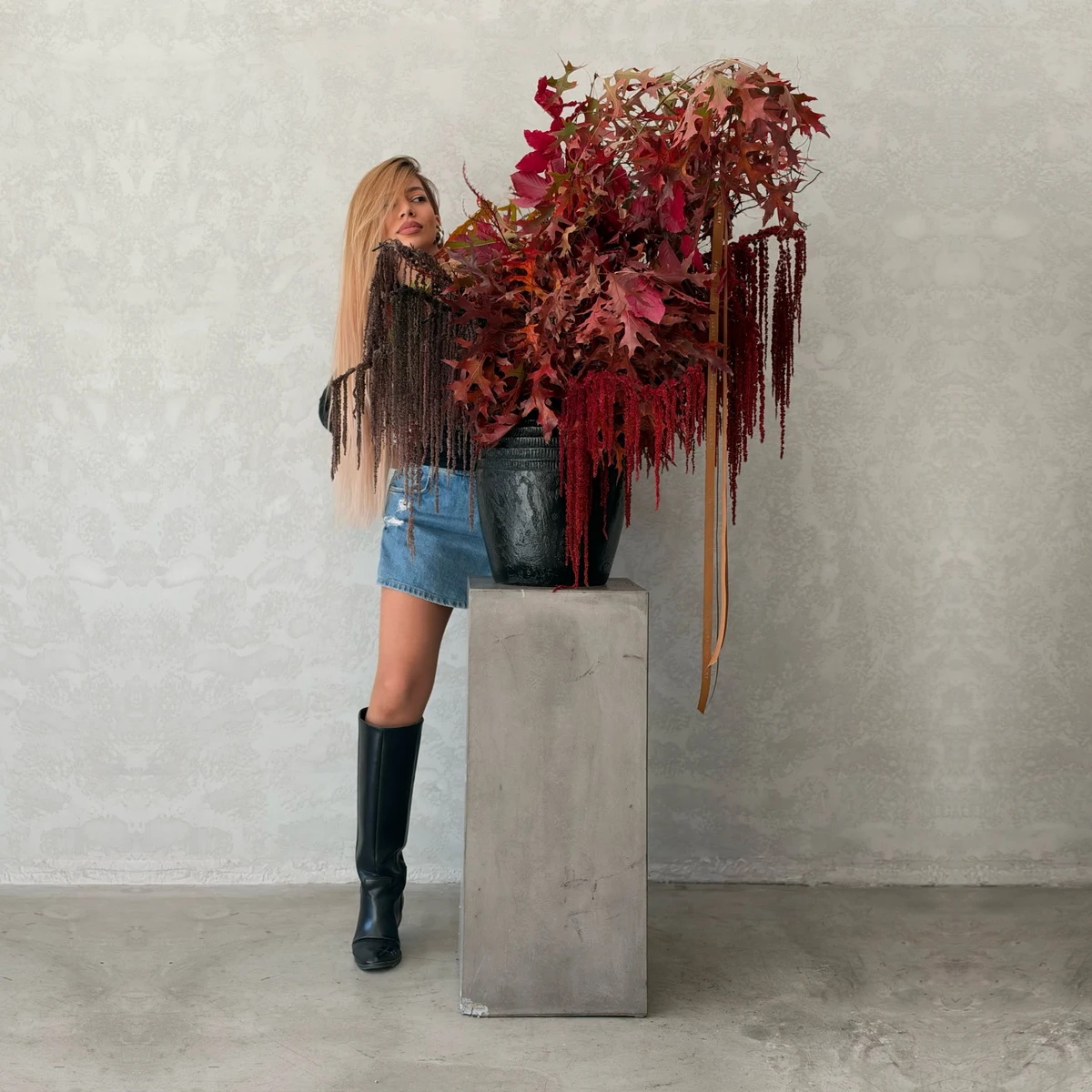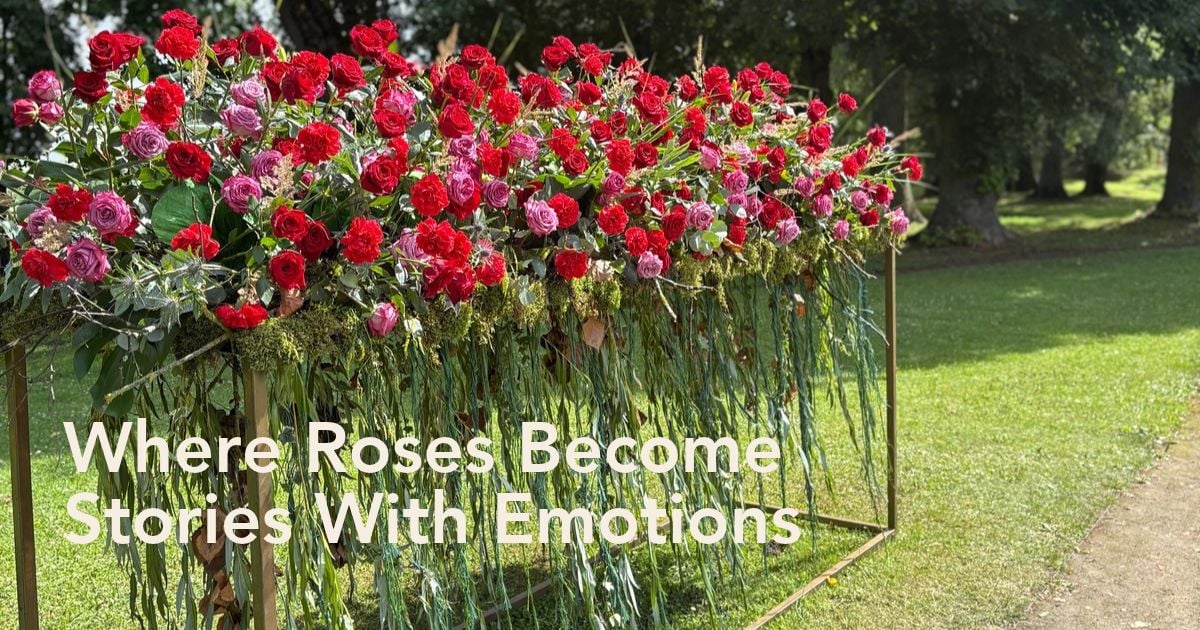
In the second week of July, I traveled back to Lithuania for the third Rose Festival at Paežeriai Manor. I promised the Lithuanian florists I would show their work to the world, so here it is.
Last summer I came to Paežeriai as one of the international designers Kristina Rimienė invited for the international edition of the Rose Festival. I left with a full camera roll and a soft spot for this place. So when the invitation came again, I didn't have to think long.
The festival took place on Saturday, July 11, 2026, with the compositions staying on view through Sunday. It was the third edition, and you can feel it growing. This year, twelve florists worked on site, from Lithuania, Singapore, Mexico, Israel, Switzerland, and Belgium.
A Manor That Chose the Rose
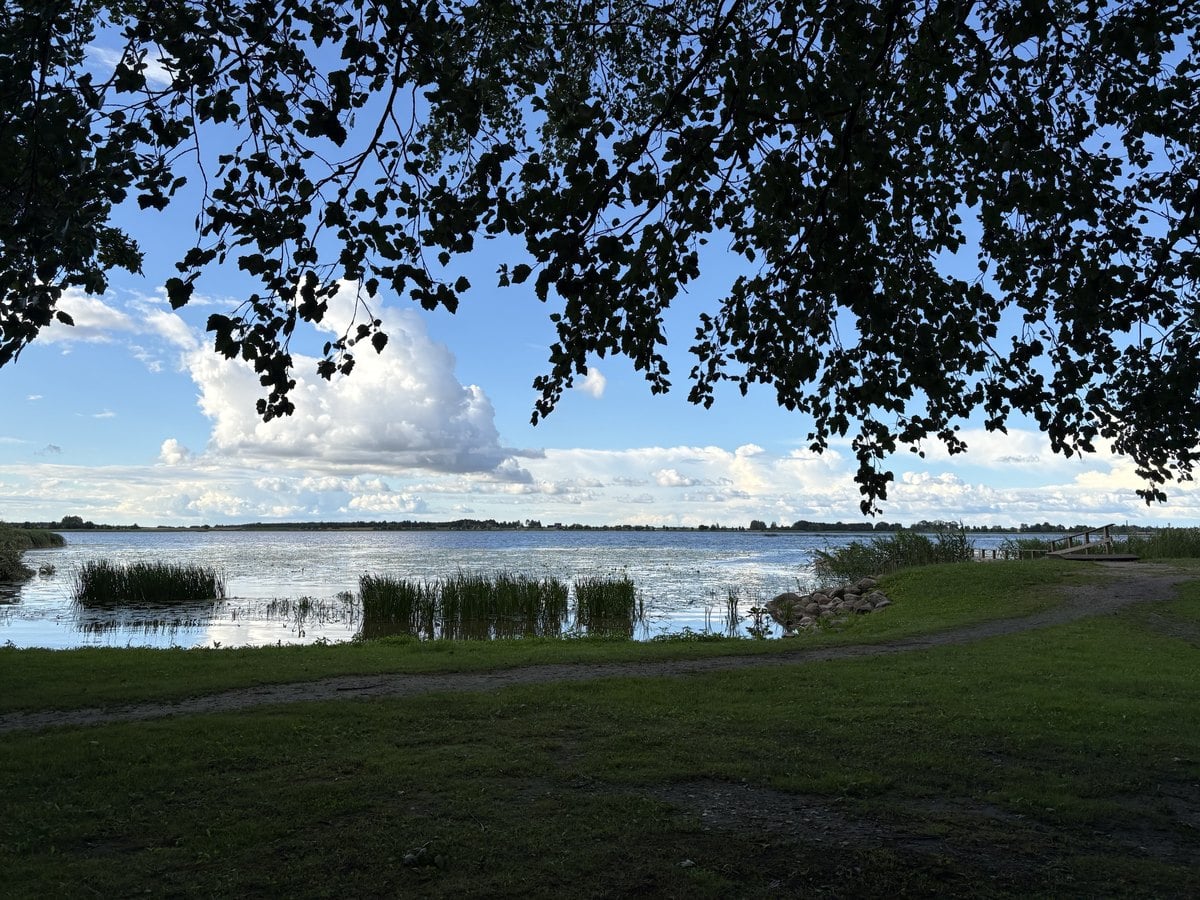
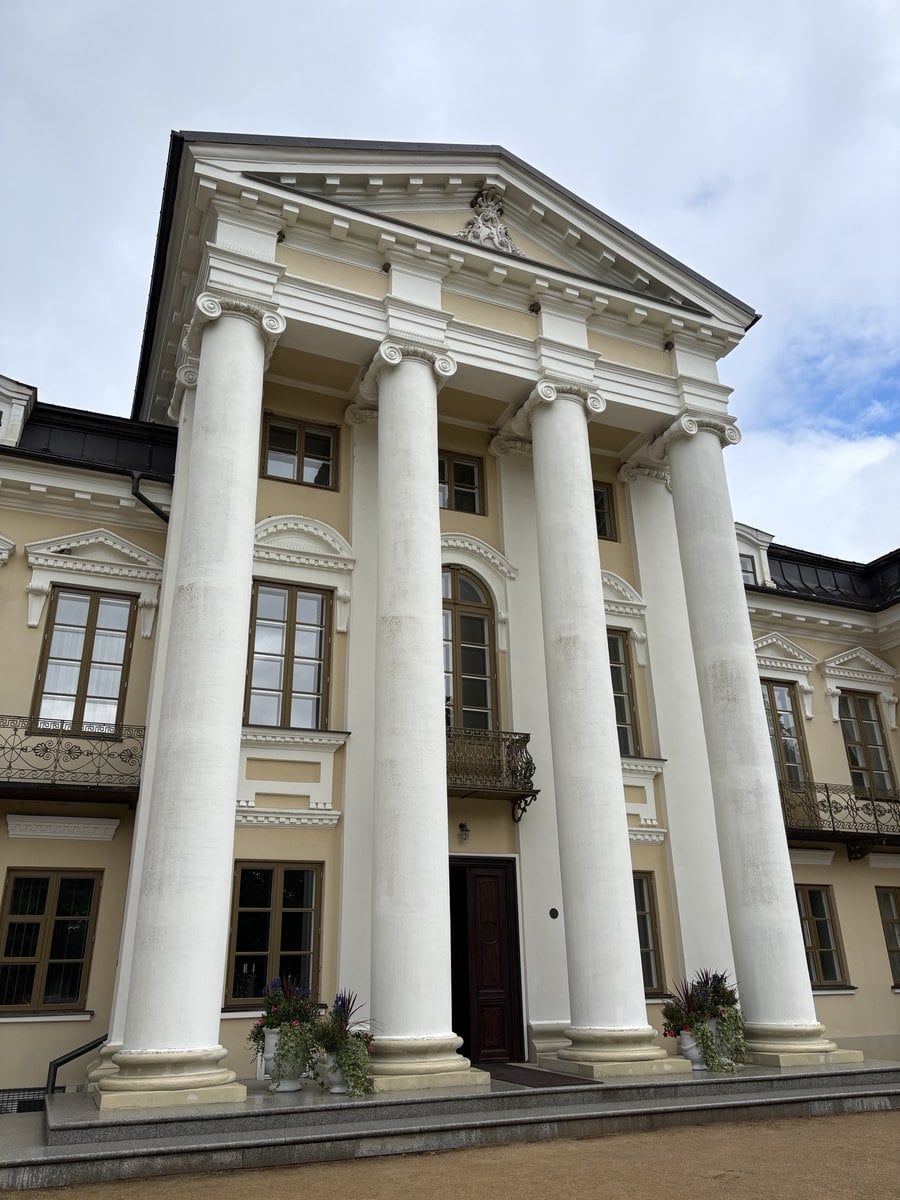
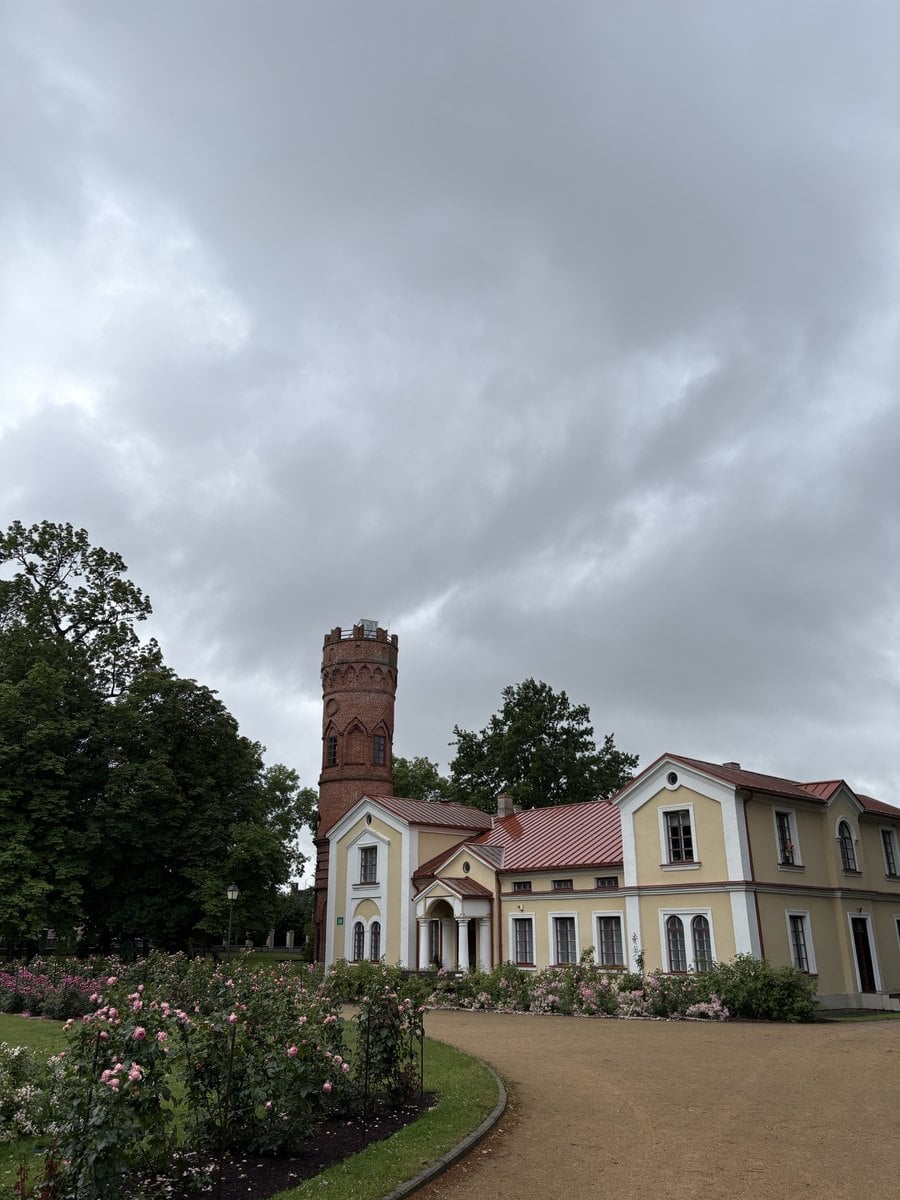
Paežeriai Manor sits in the Suvalkija region in southwest Lithuania. The palace was built between 1795 and 1799, and it is surrounded by a 12-hectare park with its own lake. The rose garden was renewed a few years ago, and that garden is what gave the team the idea for a festival in the first place.
Harijanto Setiawan Gave a Warm Welcome
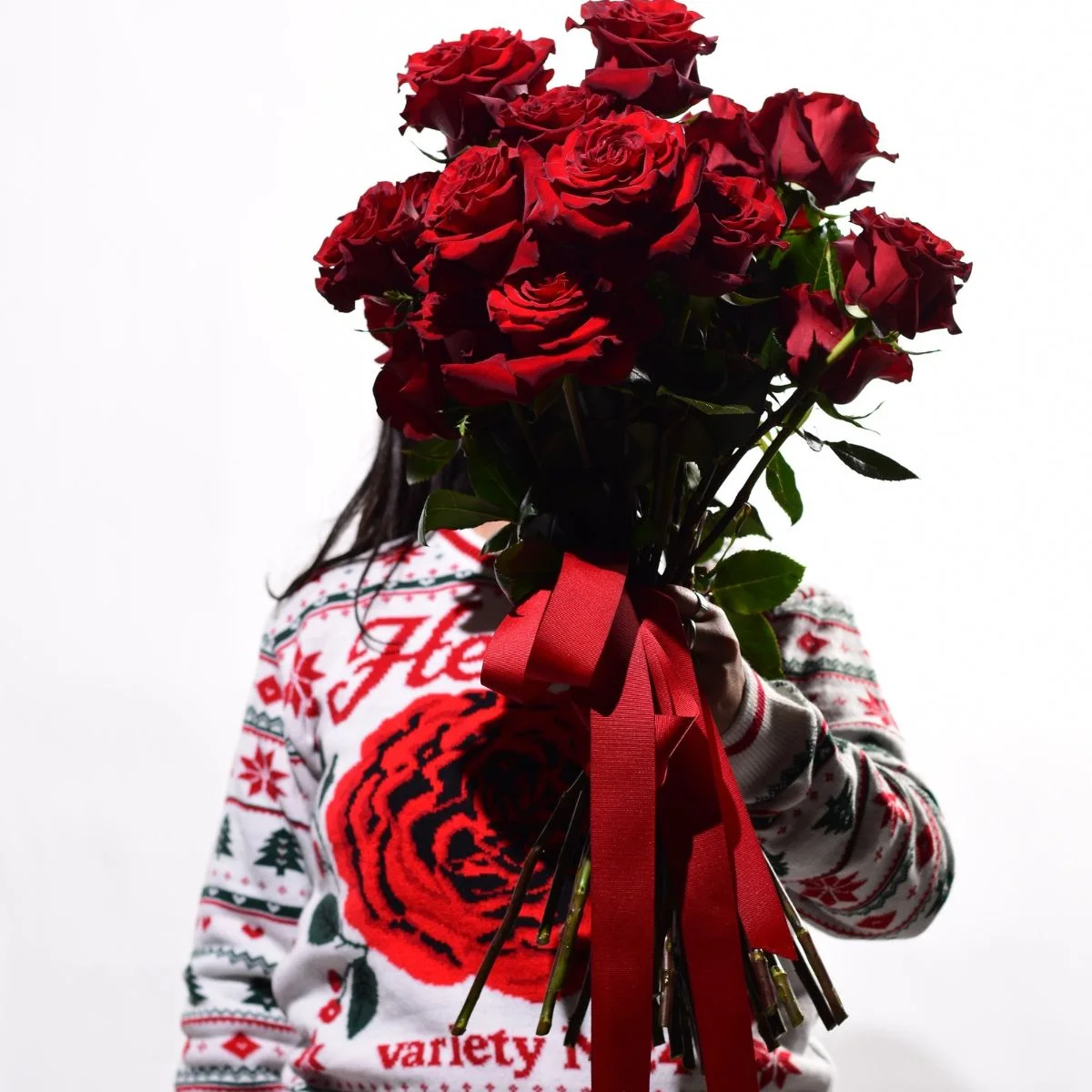
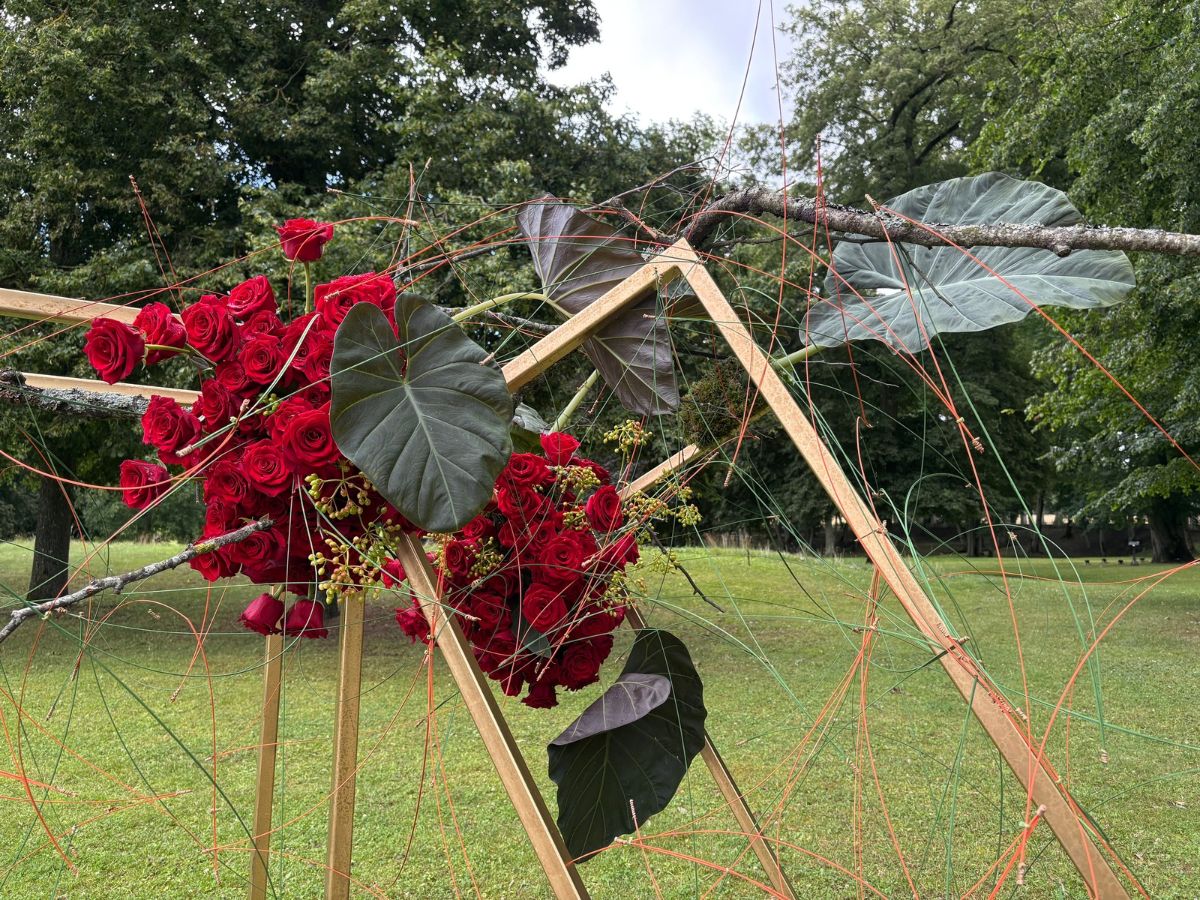
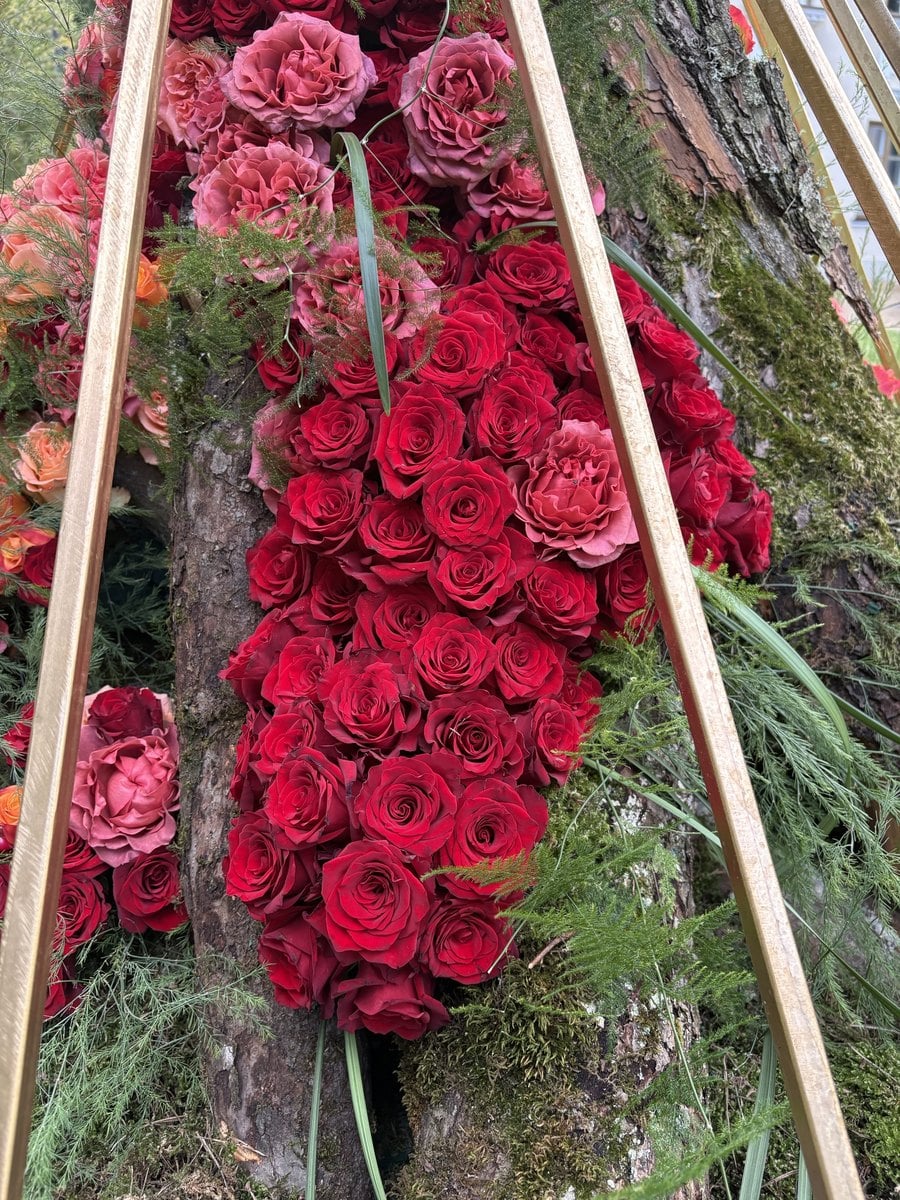
In his Ikebana mind, he works with many techniques that give that little extra to the design. For this installation, he chose to make triangles with thin wooden lines. He created a tapestry with them and created a rose design with beautiful red roses from Fontana. Harijanto was so nice to all of us; he was the one bringing talks and fun into the group.
Odeta Riklienė, who directs the Suvalkija (Sūduva) Culture Center Museum that runs the manor, told the local paper that preparations start every January. Her wish is simple: when people hear Paežeriai, she wants them to think of roses.
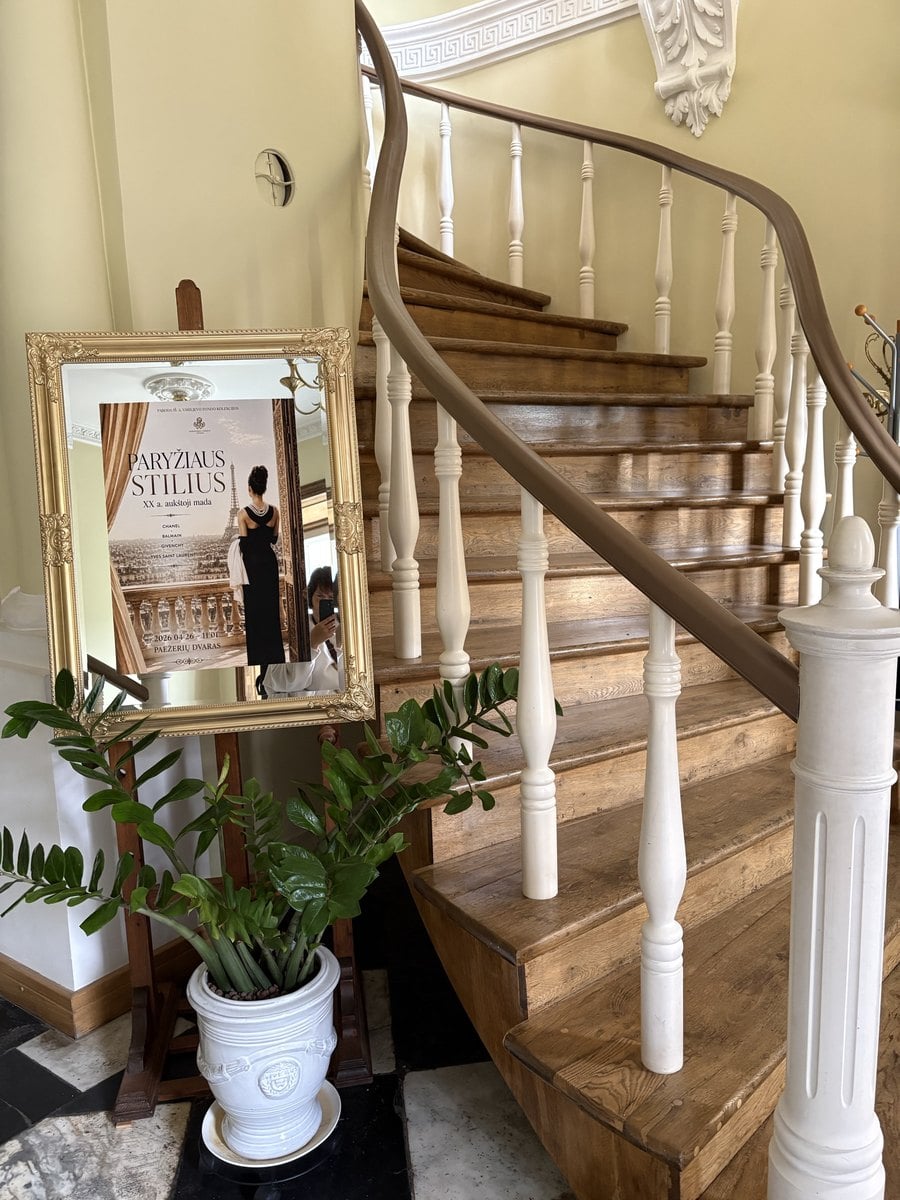
Inside the palace, there was a lovely bonus for a fashion lover like me. The exhibition Paris Style, 20th-century haute couture, showed pieces by Chanel, Balmain, Givenchy, and Yves Saint Laurent from the A. Vasiljev Foundation collection. I also took home a postcard of the manor gate as it looked in 1915. That old photograph made me realize how many summers this place has already seen.
Rain, the Most Beautiful Roses, Flower Friends, and a Tree in the Lake
I won't pretend the weather was kind. It was cool and wet for most of the build, and on festival day the rain came and went. Visitors came anyway, from Kaunas, from other Lithuanian cities, and even by bus from Poland.
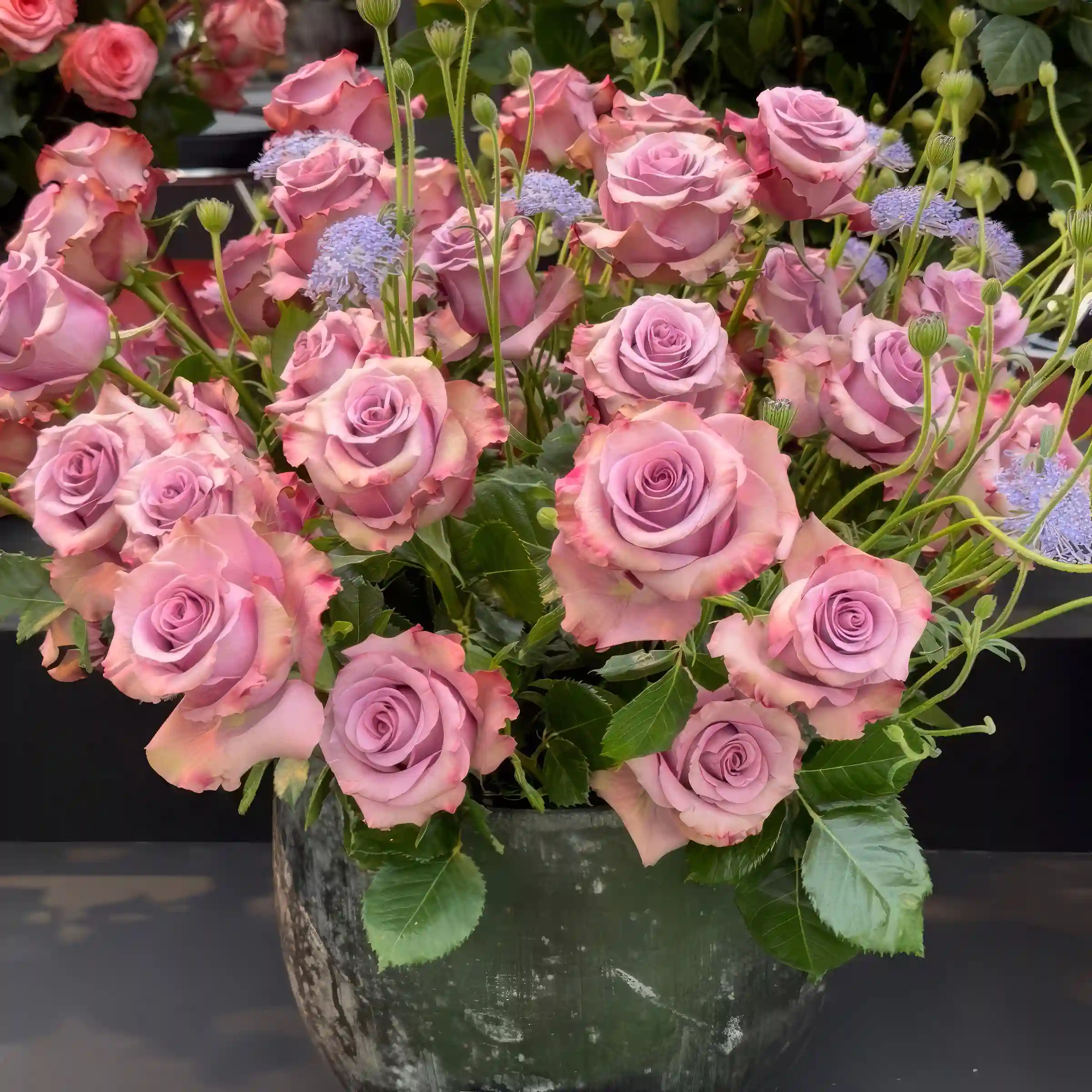
Overall, it was fantastic. Behind the scenes, the team kept solving problems. The Roses came from Kenya through the Netherlands. Fontana Roses has the most magnificent varieties, and other flowers needed to be there too, so the organizers drove to Kaunas for extra blooms.
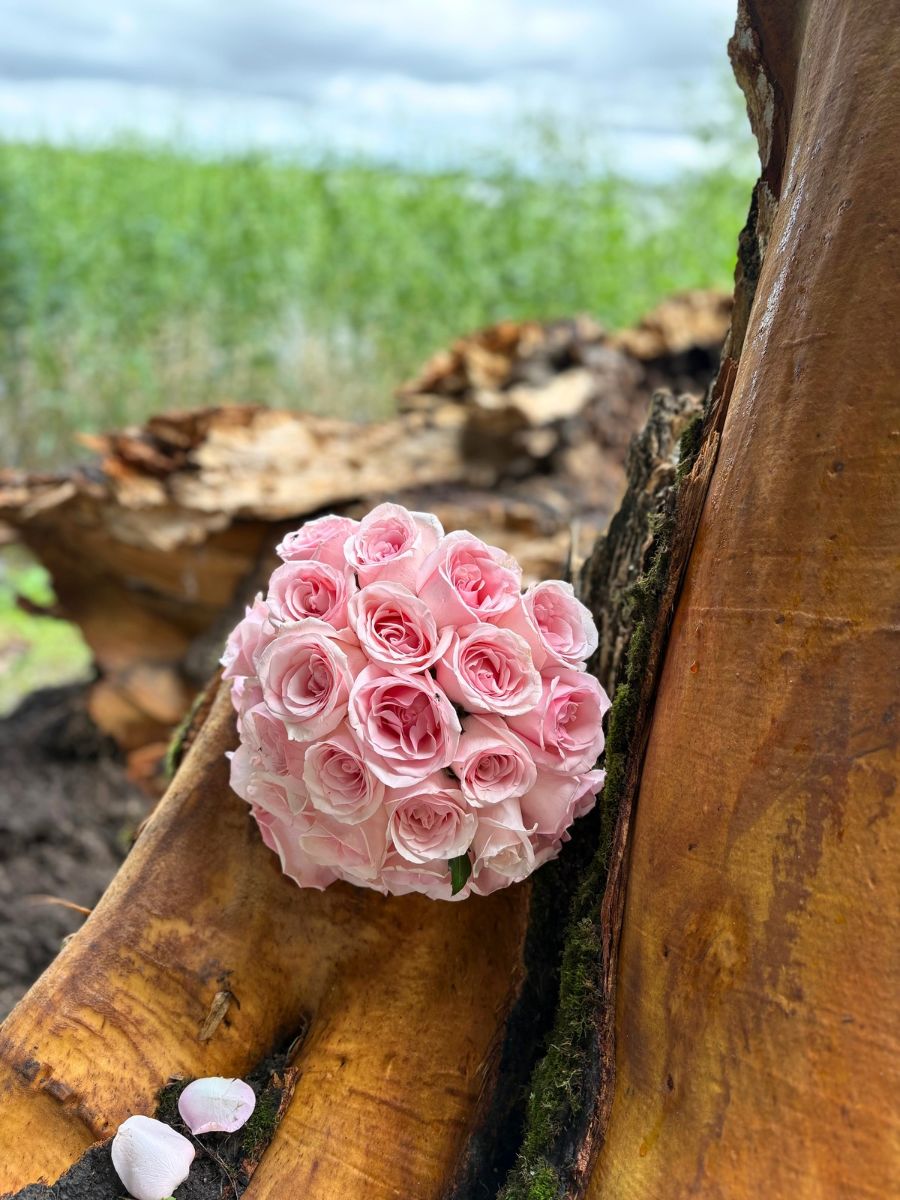
And then, one day, a tree simply fell into the lake. The florists looked at it and saw a gift. They dressed the trunk with a nice pink bouquet.
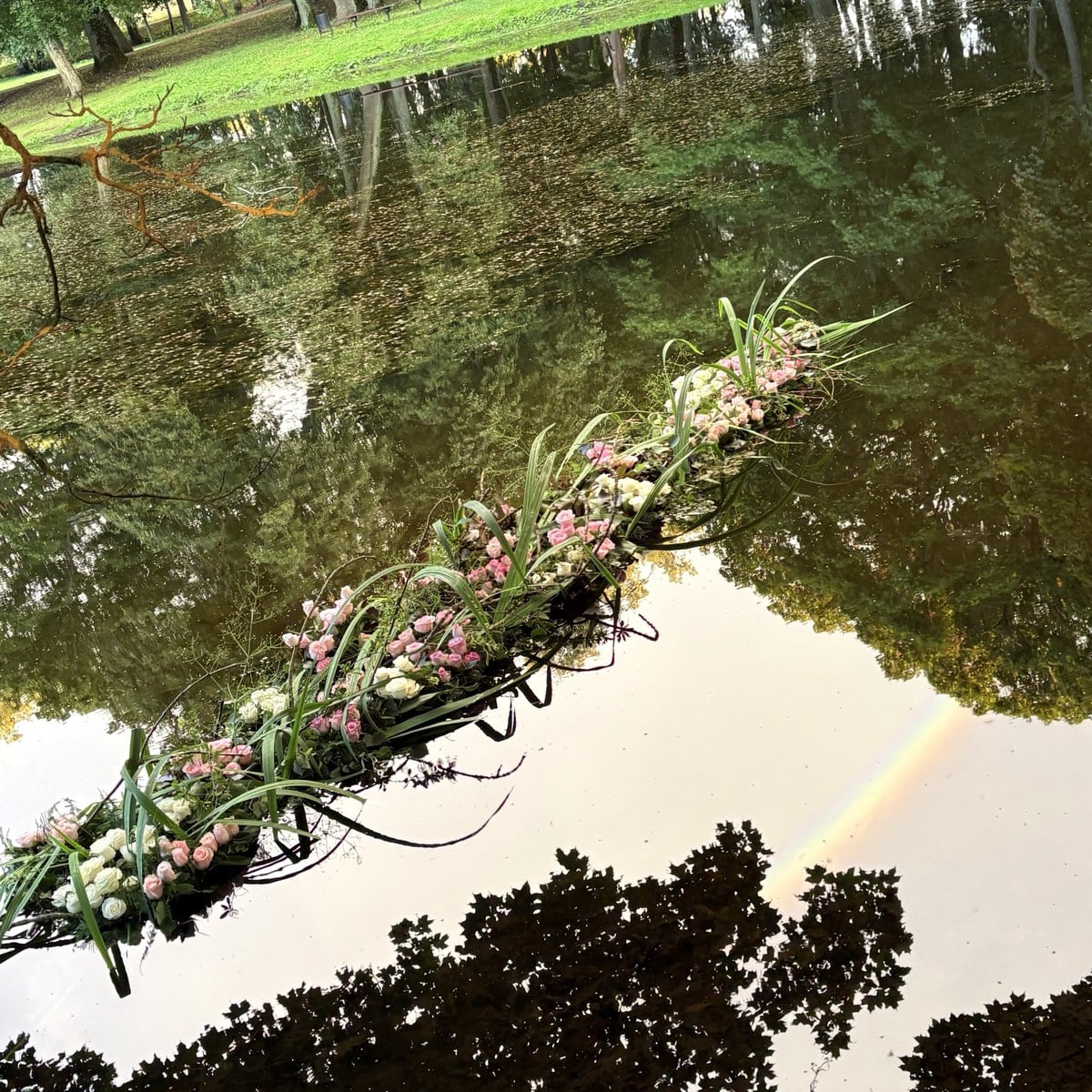
And in the lake on the other side, Marion Benz created a floating design with pink and white roses and long green leaves, and it floated there as it had always been part of the plan. When I photographed it, a rainbow showed up in the reflection. I couldn't have staged that if I tried.
The Lithuanian Designers
This is the part I promised. While I walked the park with my camera, I kept being impressed by the level of the Lithuanian florists, and I told them I would feature their work on Thursd.
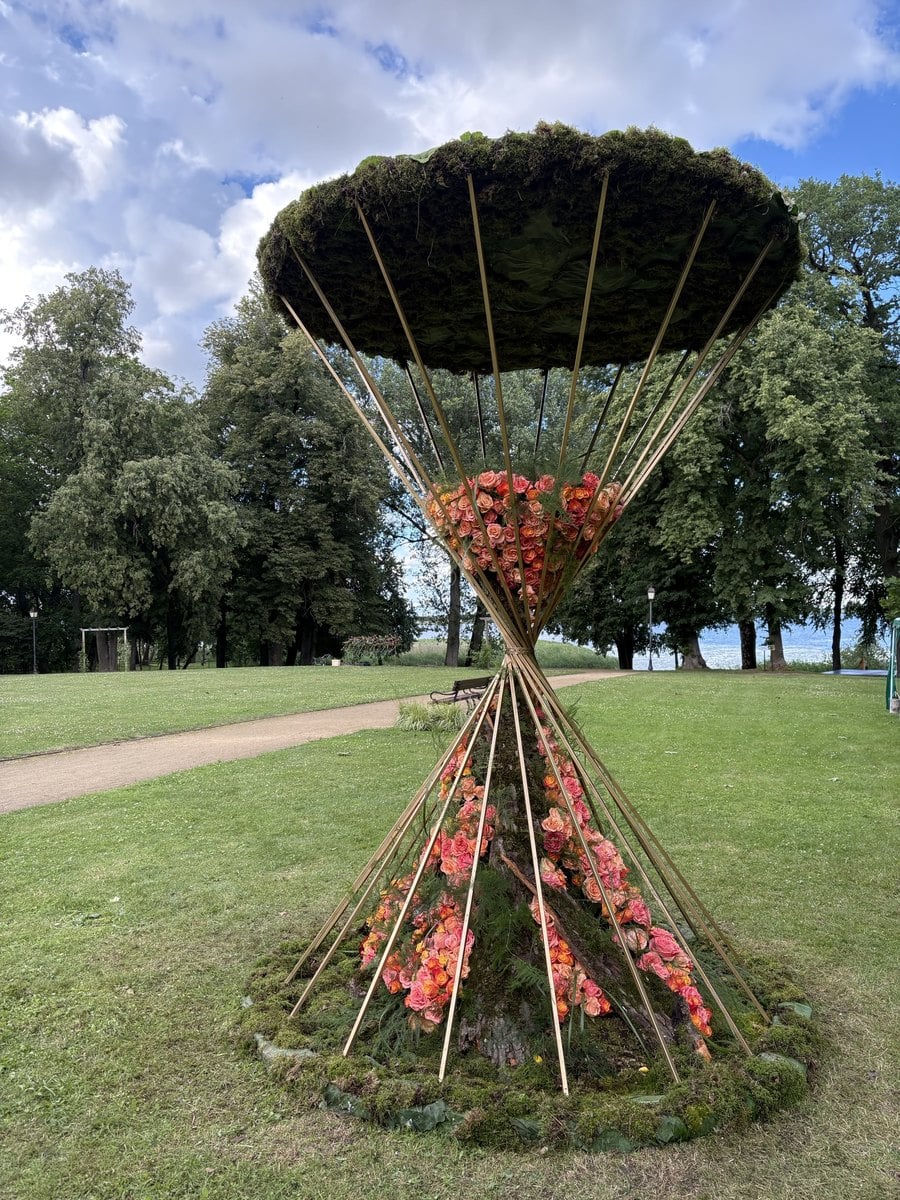
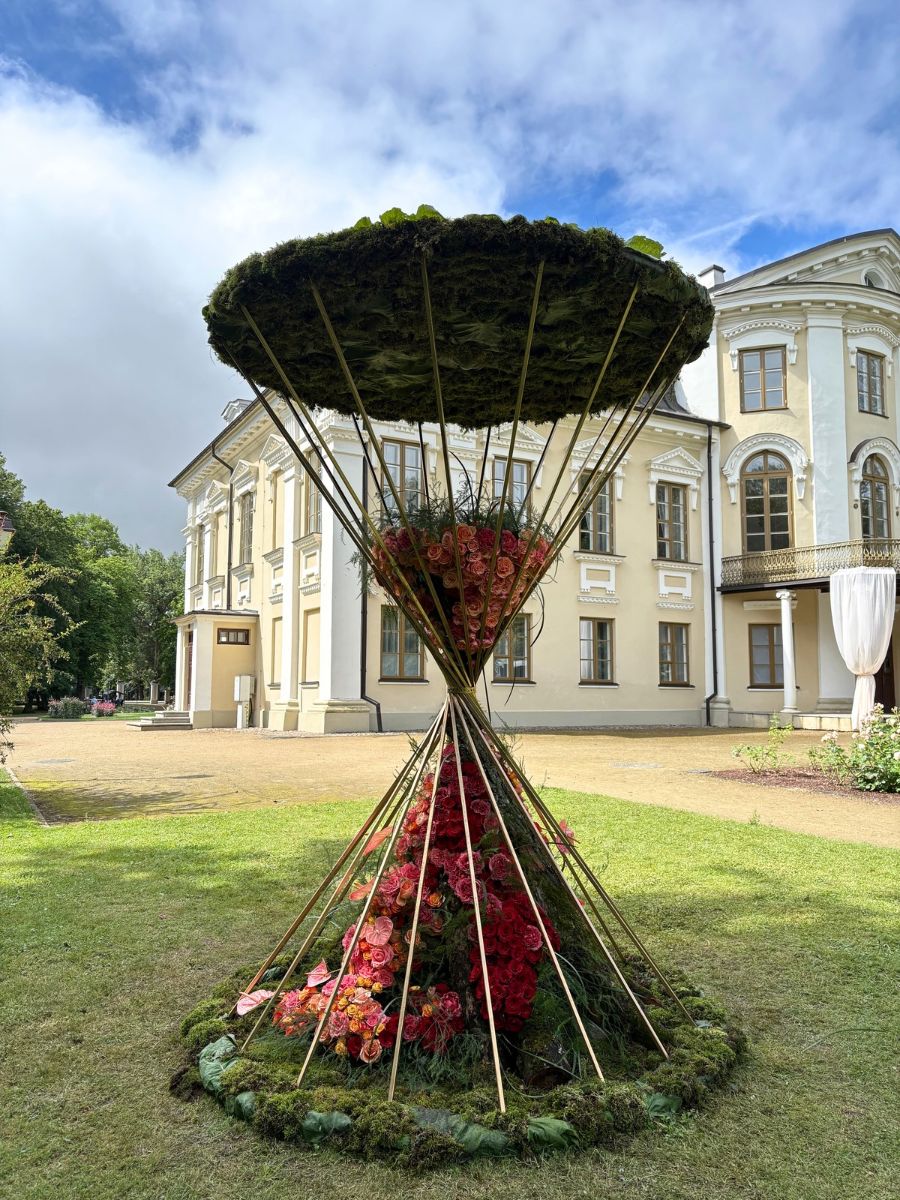
Kristina Rimienė built a design that reads as an hourglass. A cushion of moss floats on top of golden rods, which pinch together in the middle and open again over a tree trunk covered in coral, peach, and orange roses.
Kristina and Floral Fashion
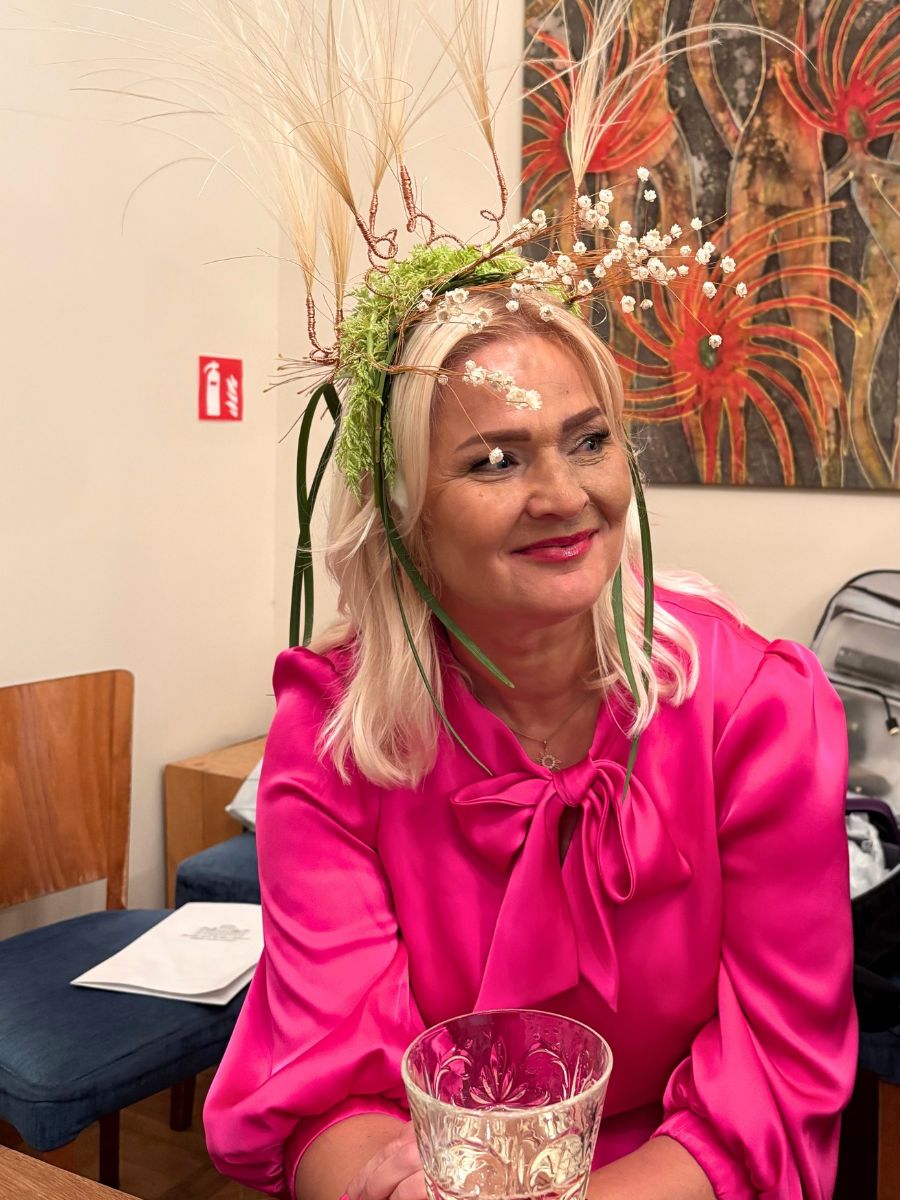
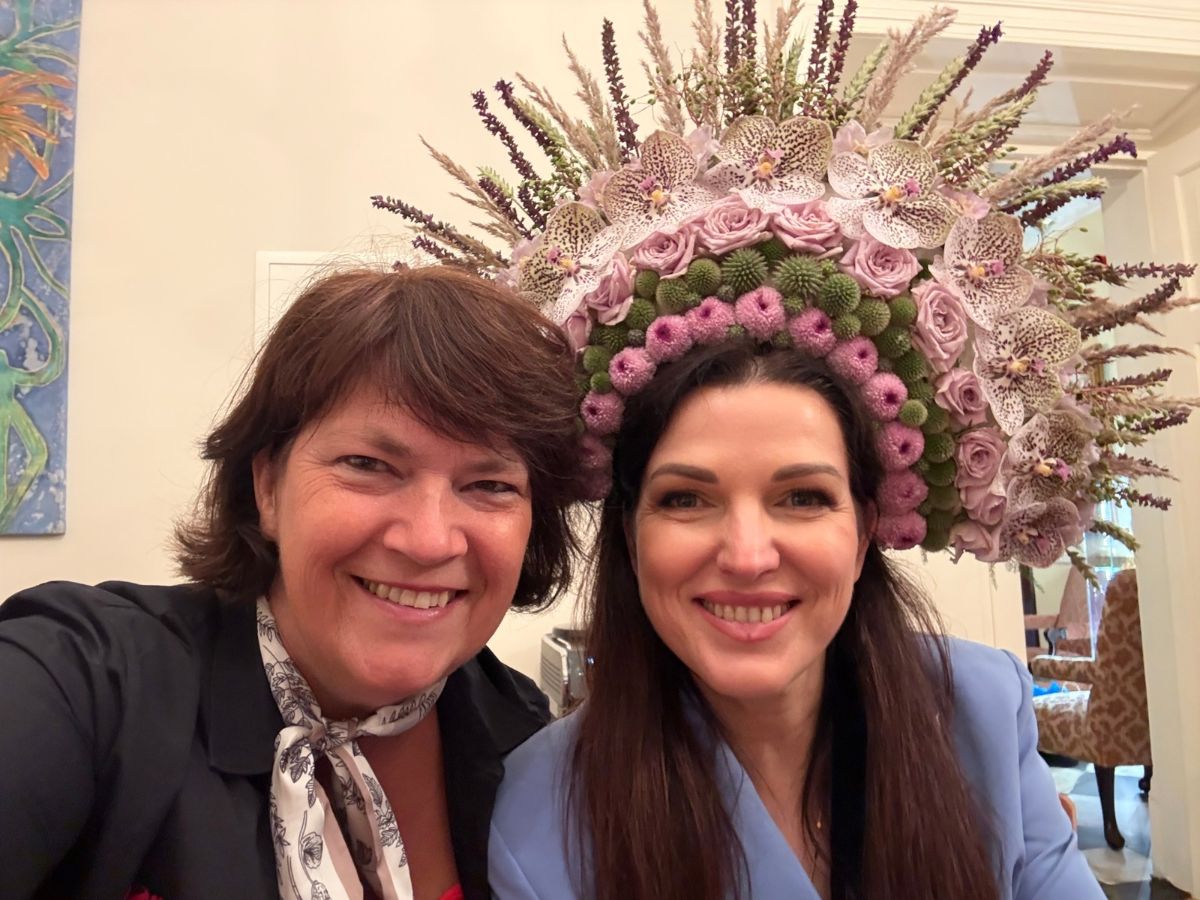
She's the best at creating beautiful headpieces, and so were all of the other florists there. Everyone made a few designs to model during the show day on stage.
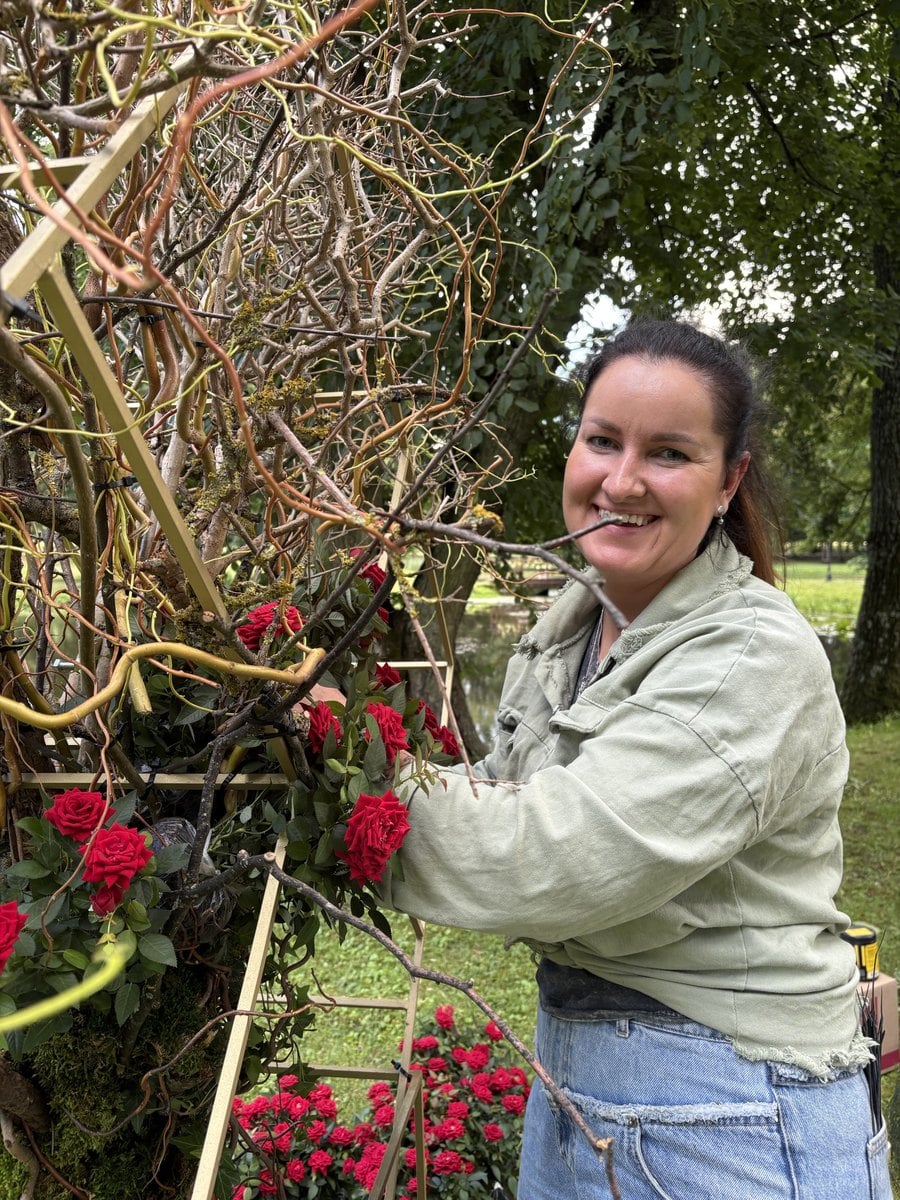
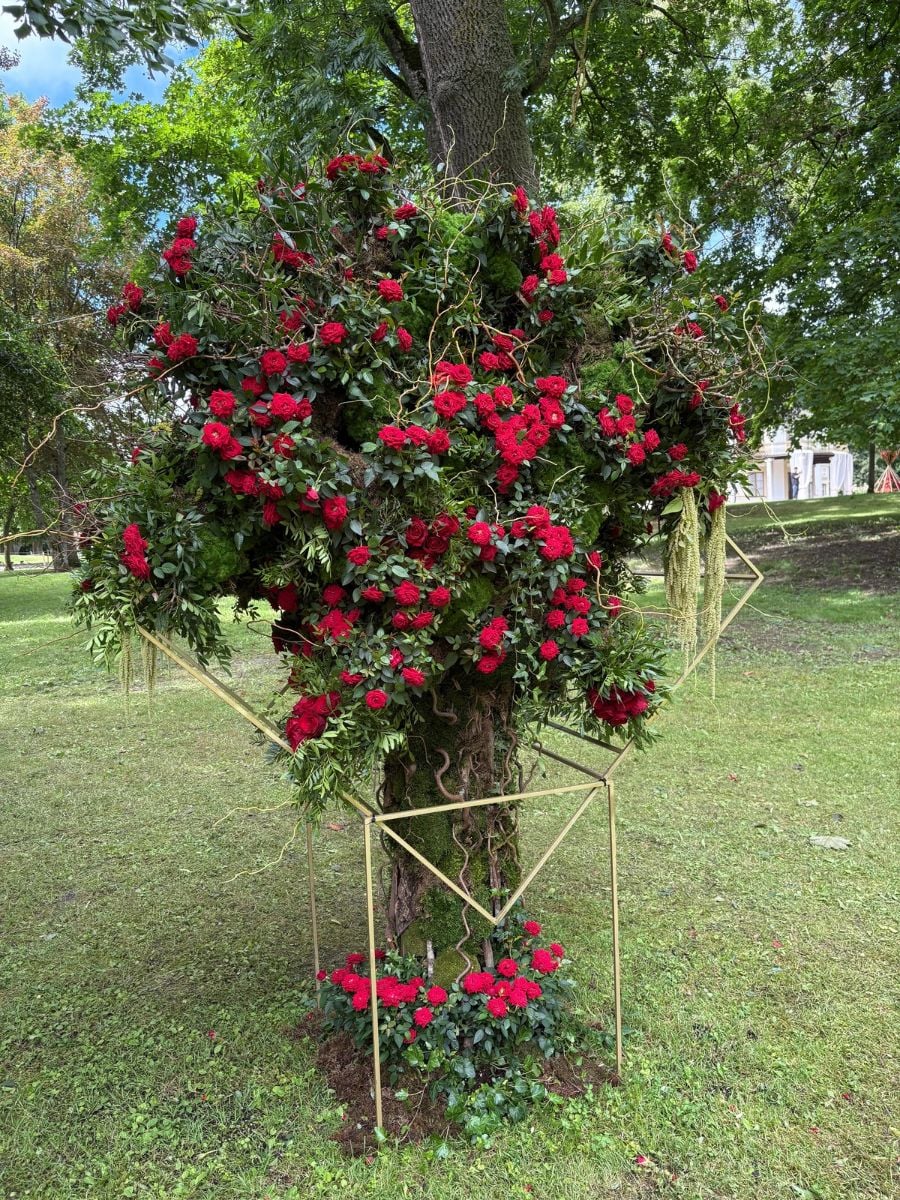
Laima Mačaitė made a Rose Tree from roses and many other plants, a piece about growth, freedom, and courage.
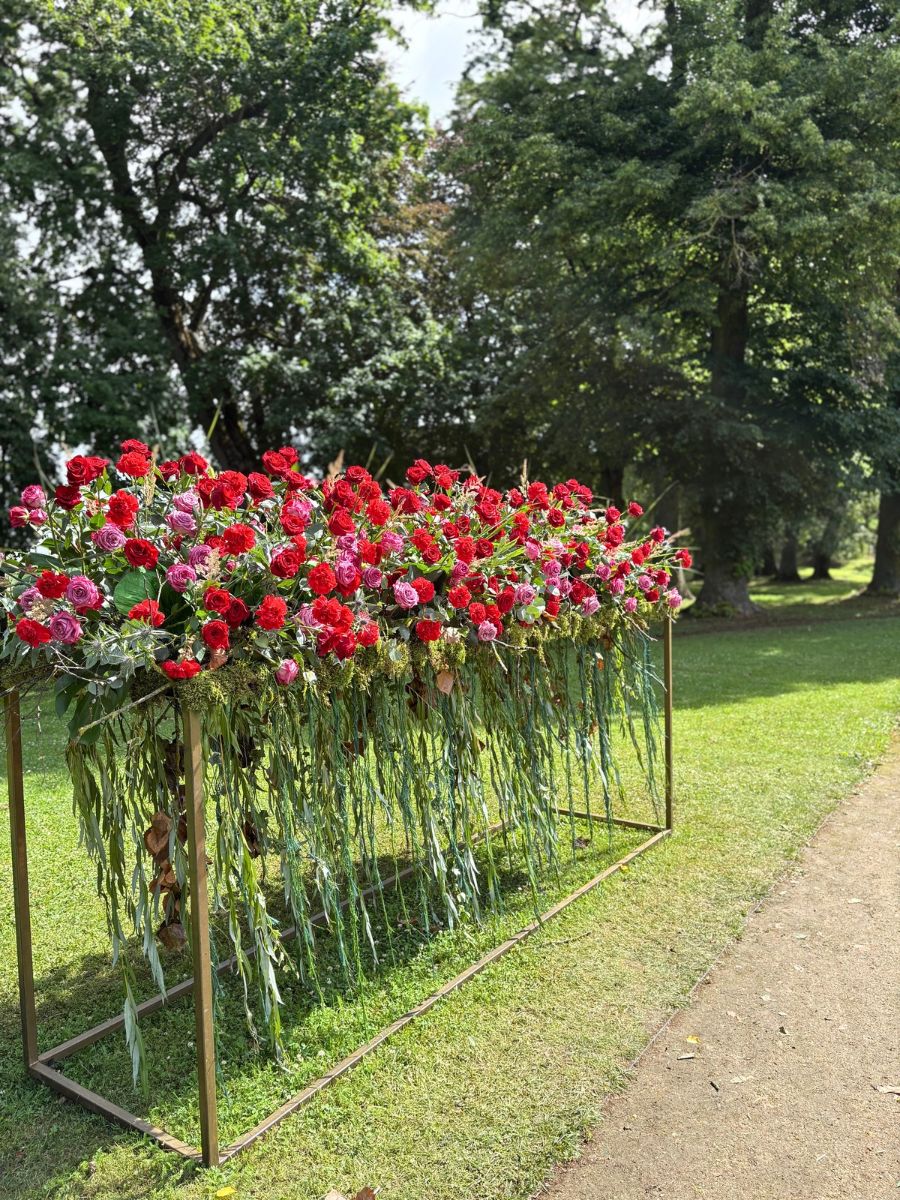
Eglė Jočienė worked with saturated, deep red roses, the kind of red that almost looks like velvet up close.
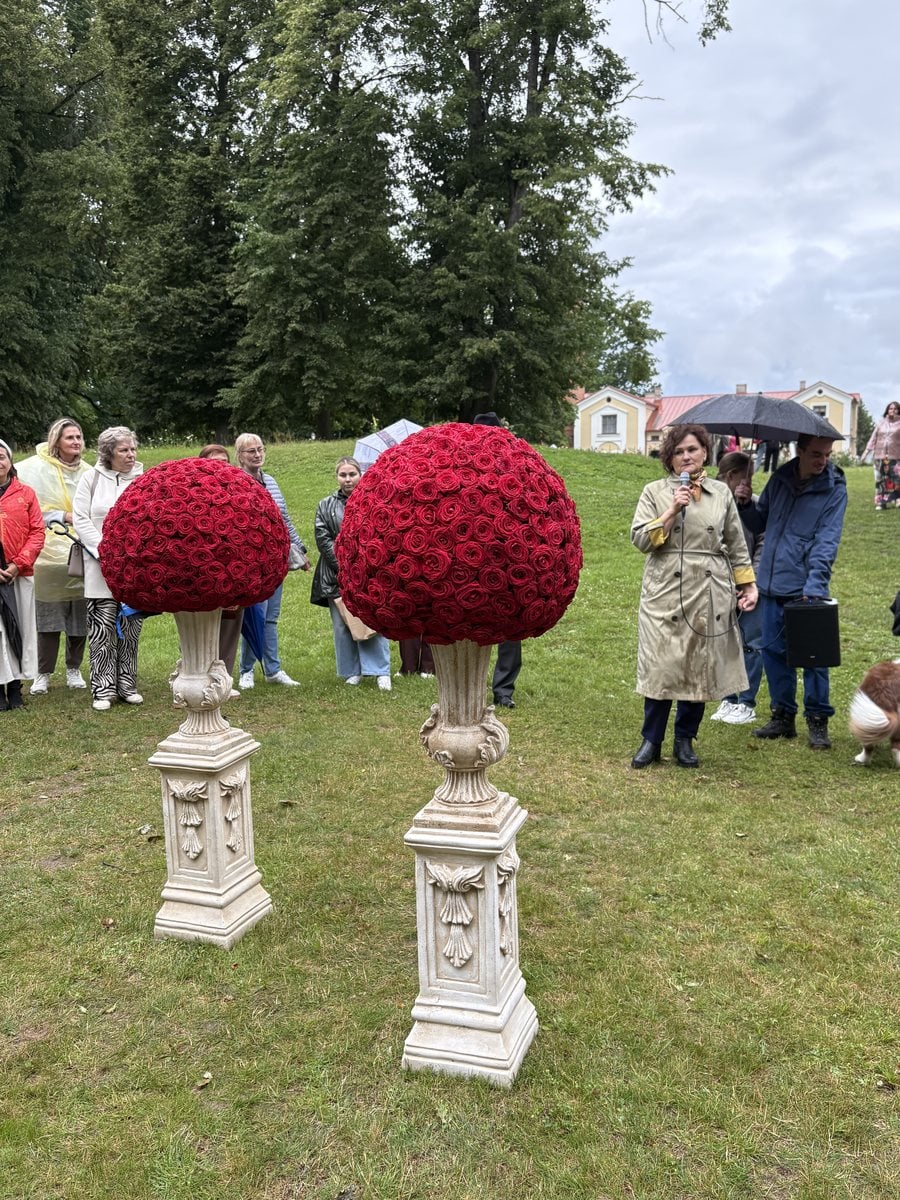
The sisters Laimutė Samojauskienė and Dalia Grabauskaitė did something I love. Their composition used only flowers grown on their own farm. You could smell the summer garden in it.
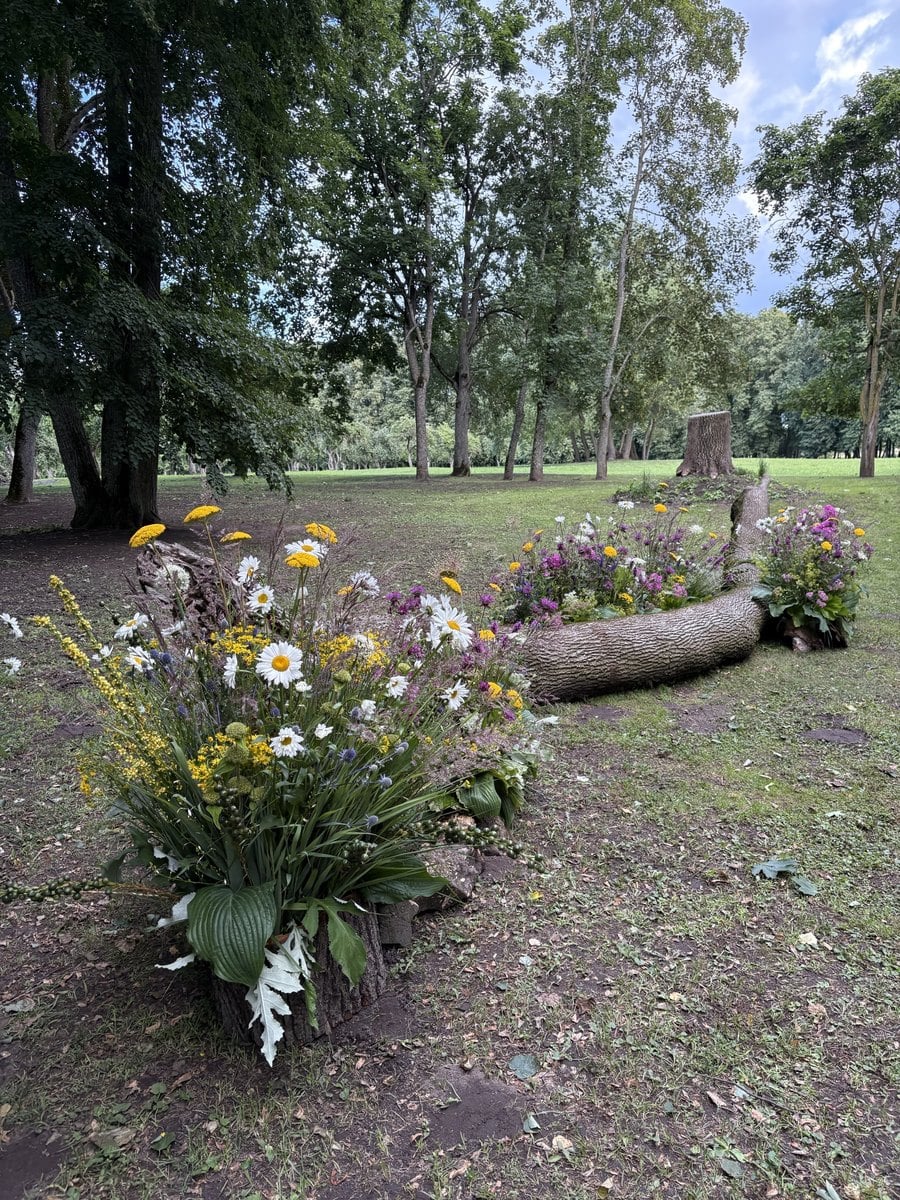
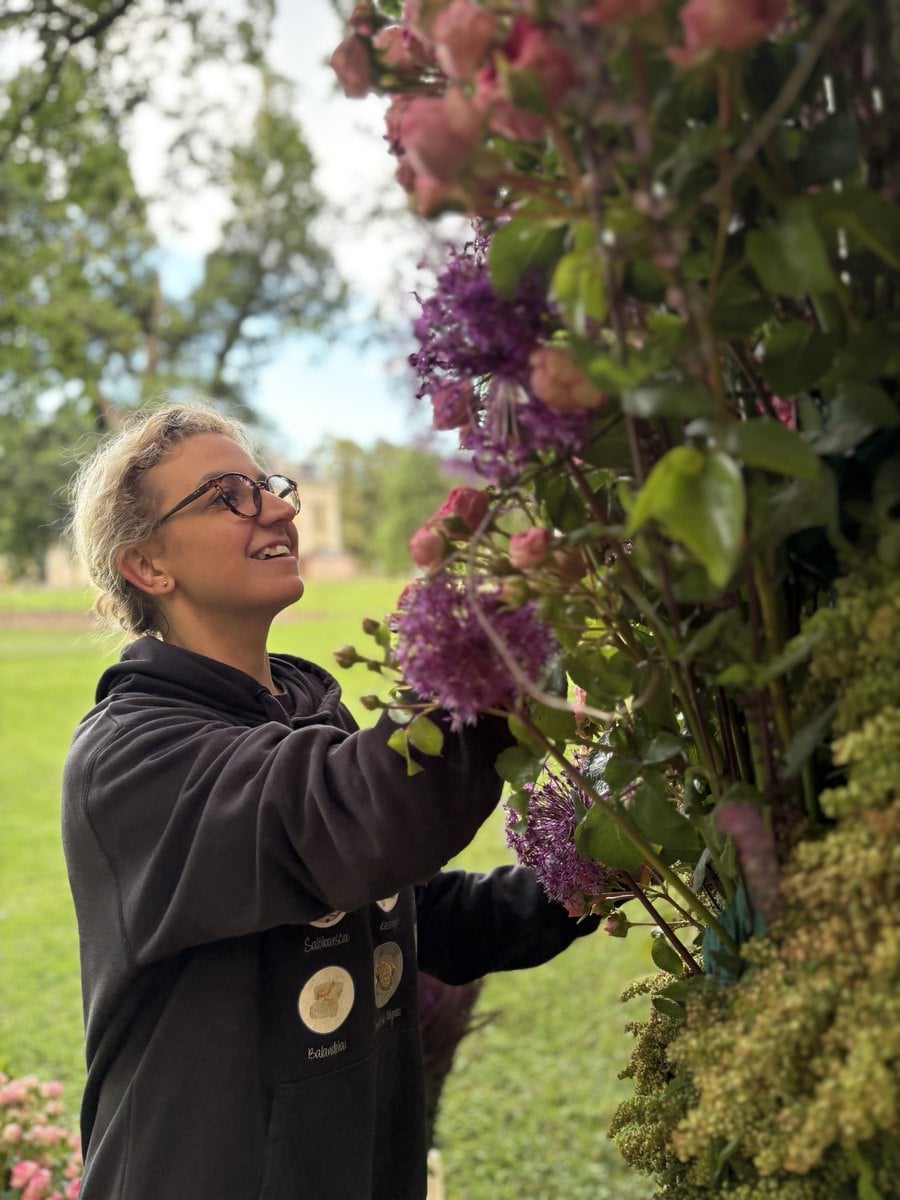
Eglė Bačinskienė called her piece Liberation. Pinks, fresh green, and ornamental alliums reached upward as if the whole thing was bursting open. Rita Naujalienė made two compositions, and in one of them she dared to use dried Sosnowsky's hogweed. Once dry, the plant is safe to handle, and in her hands it became a real statement.
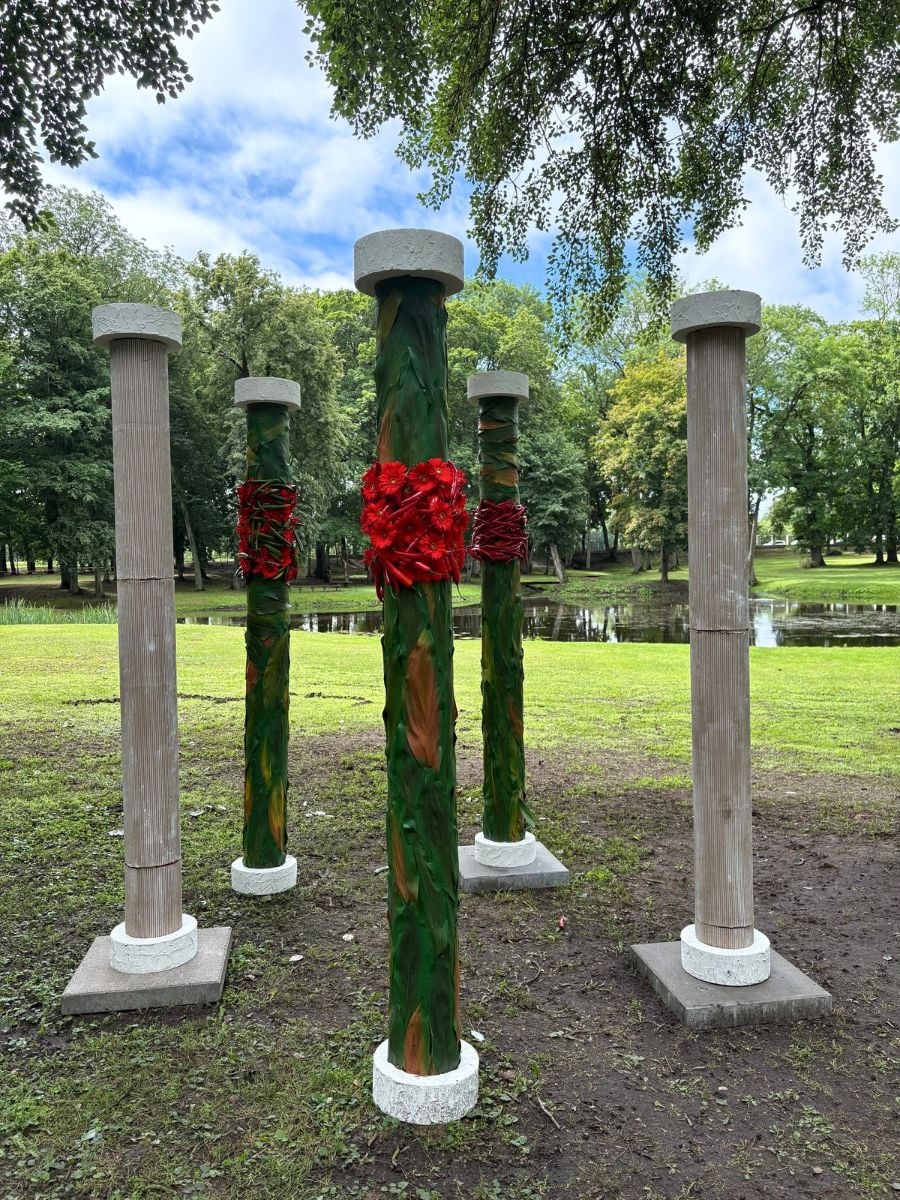
Danguolė Gylienė placed her design on columns and combined bright red gerberas with hot red chili peppers. I had never seen that pairing before, and it worked. Aistė Venclauskaitė joined the international festival for the first time and made a flower arch. Lijana Ciganskienė, who runs a curtain studio, hung light fabrics under the palace balcony. Every time the wind moved them, people stopped to watch.
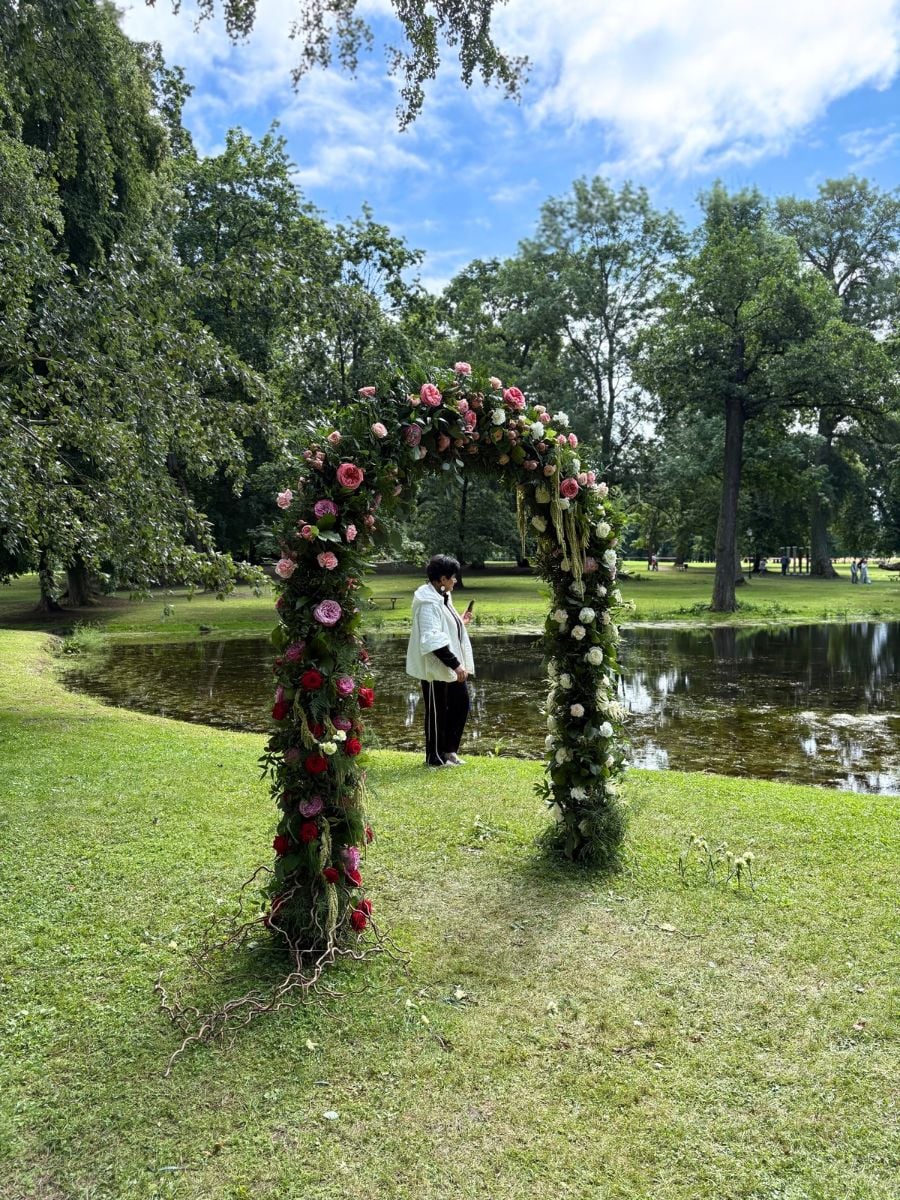
Orit Hertz From Israël Reflected During Her Stay: This Is the Result
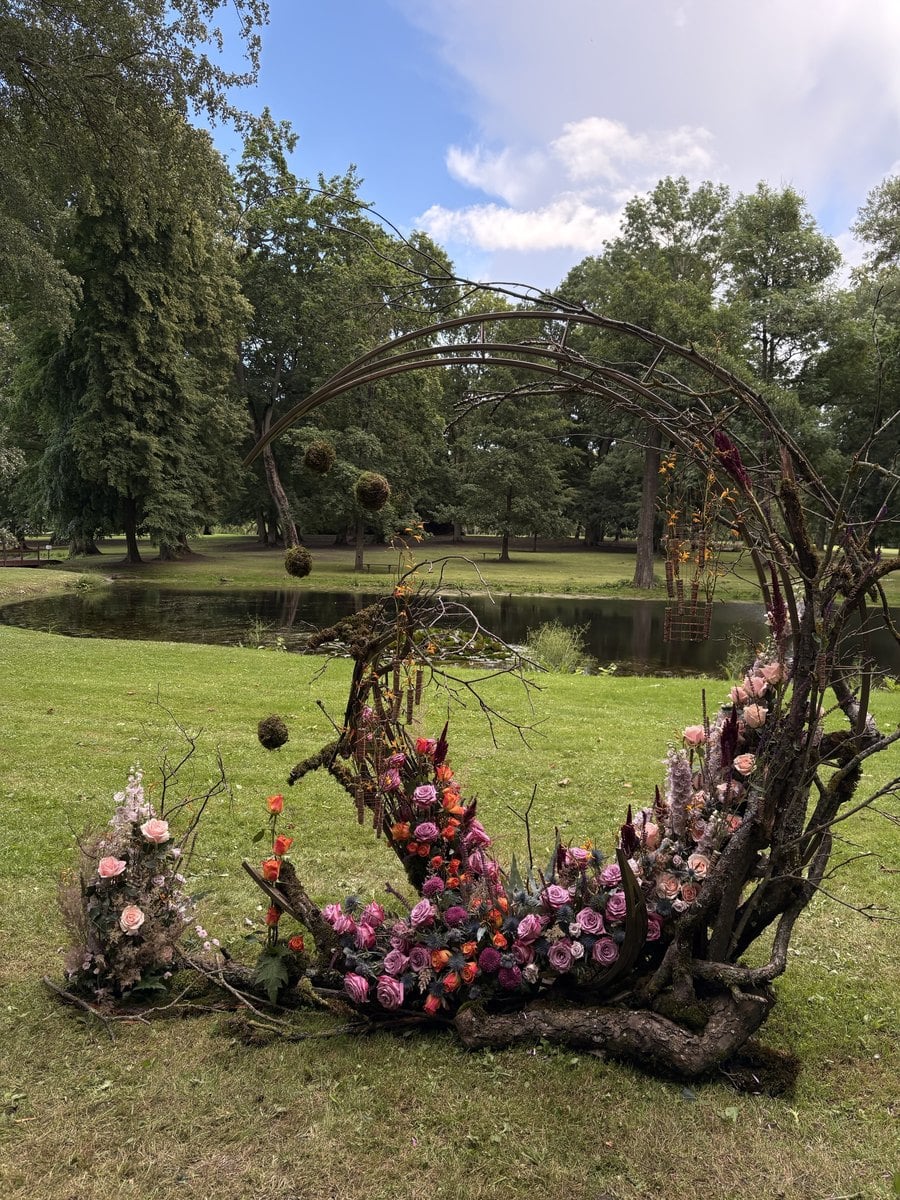
From Israel came Orit Hertz, floral designer and owner of the Orit Hertz Floral Design School in Kibbutz Naan, which she founded in 2009. Trained through the British Society of Floristry, Gregor Lersch seminars and the European Master Certification, Orit is known for combining dry botanical materials with fresh flowers, giving the dried elements a new life. She often works with materials she gathers in nature and in her own garden, and the landscape around her kibbutz remains one of her greatest sources of inspiration. For the Rose Festival at Paežeriai Manor, she created these half-moon forms, one of the large compositions visitors could admire in the gardens of the manor.
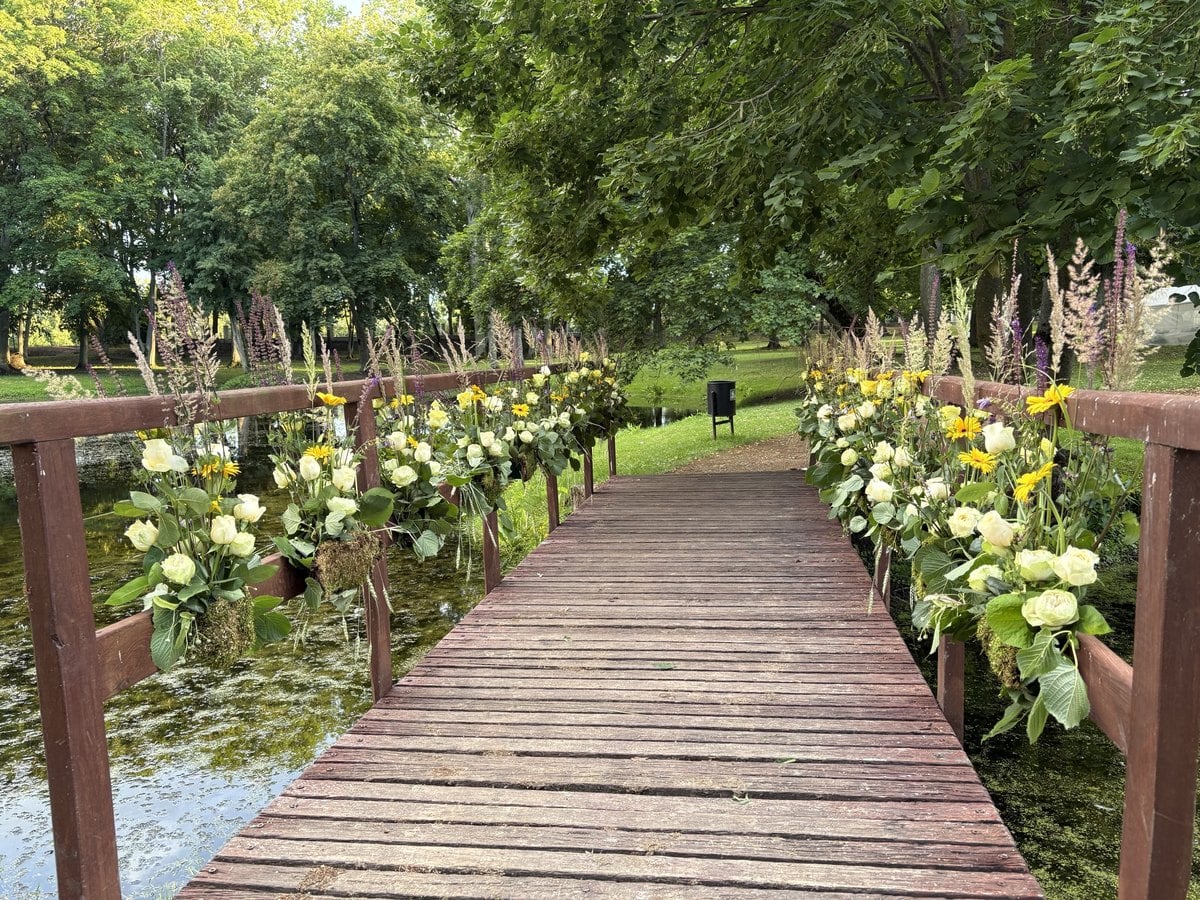
A Bridge Full of Sunshine
I was there to cover the story of the event, but I also love to design, so I took the responsibility to create a design to make the walk for visitors more beautiful, and this bridge connected one side of the park to the other side. So I thought it could use some decoration. Since the sun left us for those days, I chose yellow to bring some joy. And for me it worked.
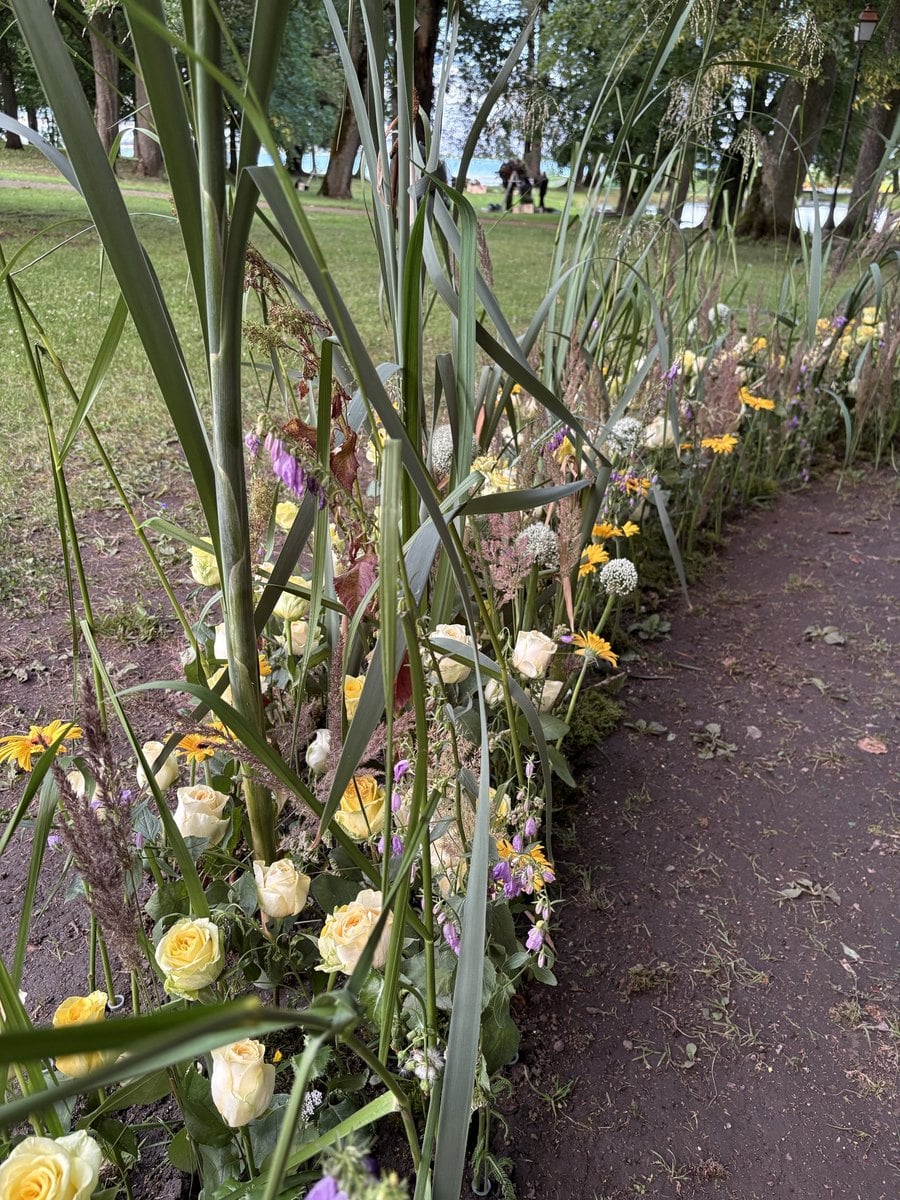
The second design was there to make the tree a place to come together, to have a space to feel surrounded by love and joy. To bring people together to talk, in their own small flower garden.
Evenings at One Long Table
The international designers built their own large pieces, and on festival day they also worked live, dressing models with floral headpieces and bouquets. But what I will remember just as much is the evenings. From Thursday on, all of us sat down together every night after work. We talked about the day, laughed about the rain, and tasted šakotis, the Lithuanian tree cake, with local honey.
Elvia Carrasco from Mexico admitted the cool Lithuanian summer was the hardest part for her. The warm welcome made up for it. I can only agree. Elvia's design, although, was exceptional. She did a perfect job.
What Comes Next for Paežeriai
The team is already working on next year. Together with perfumers, they are developing a Paežeriai rose perfume and a home fragrance, hopefully ready for the 2027 festival. They also want to restore the manor's historic fountain. All the money from the Art Glacio ice cream sold at the festival goes to that project, so every scoop helped.
If you missed it, Kristina hosts the TV3 program Pasaulis pagal moteris, and the first episode of the new season in September included a report from the festival. You can also read about last year's edition in The Rose Festival in Paežeriai Took on an Entirely New Meaning.
Thank you, Odeta and the whole manor team, and thank you, Kristina, for bringing florists from so many countries to this lake. I hope to walk under those old trees again next July.