At Floralien Ghent 2026, Team Romania presents BROKEN – The Distance That Still Holds, a large-scale installation in the selected florist section, which shifts floral design from ornament to meaning. Set within Ghent’s historic floral venues, the work engages a question that resonates across disciplines today: what persists when structure fails? What blooms beyond fracture? The inevitability of separation.
I Wanted to Create a Structure That Refuses to Close for Floralien Ghent
Rather than resolving the fracture, BROKEN keeps it visible, engaging emotions and language beyond botanical. Rupture held by memory, wilderness rebuilding structure, tension without collapse, nature negotiating fracture, time continuing after damage. Asymmetry gives truth through imbalance. Hanging tension gives strength through the negative space between, read as the absence that gives room for everything to bloom again—curated by Mircea Gheta, who brought me to Ghent and made it all possible.
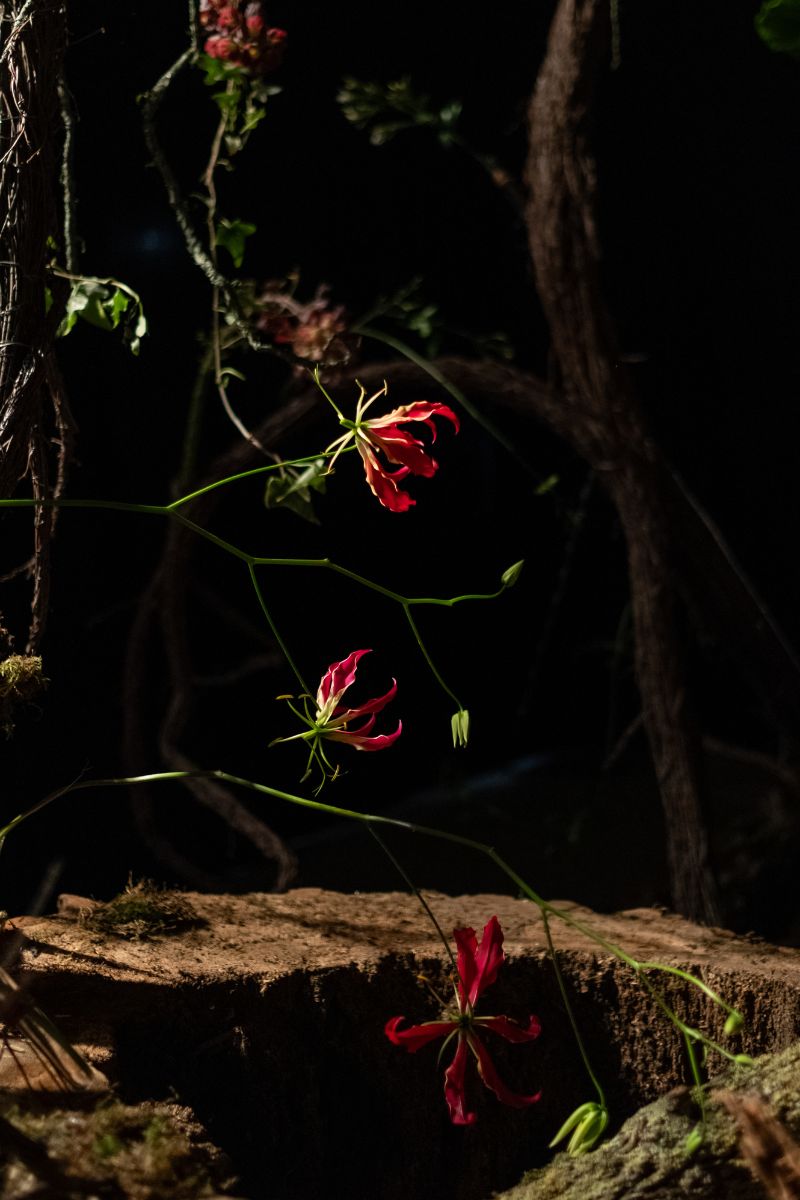
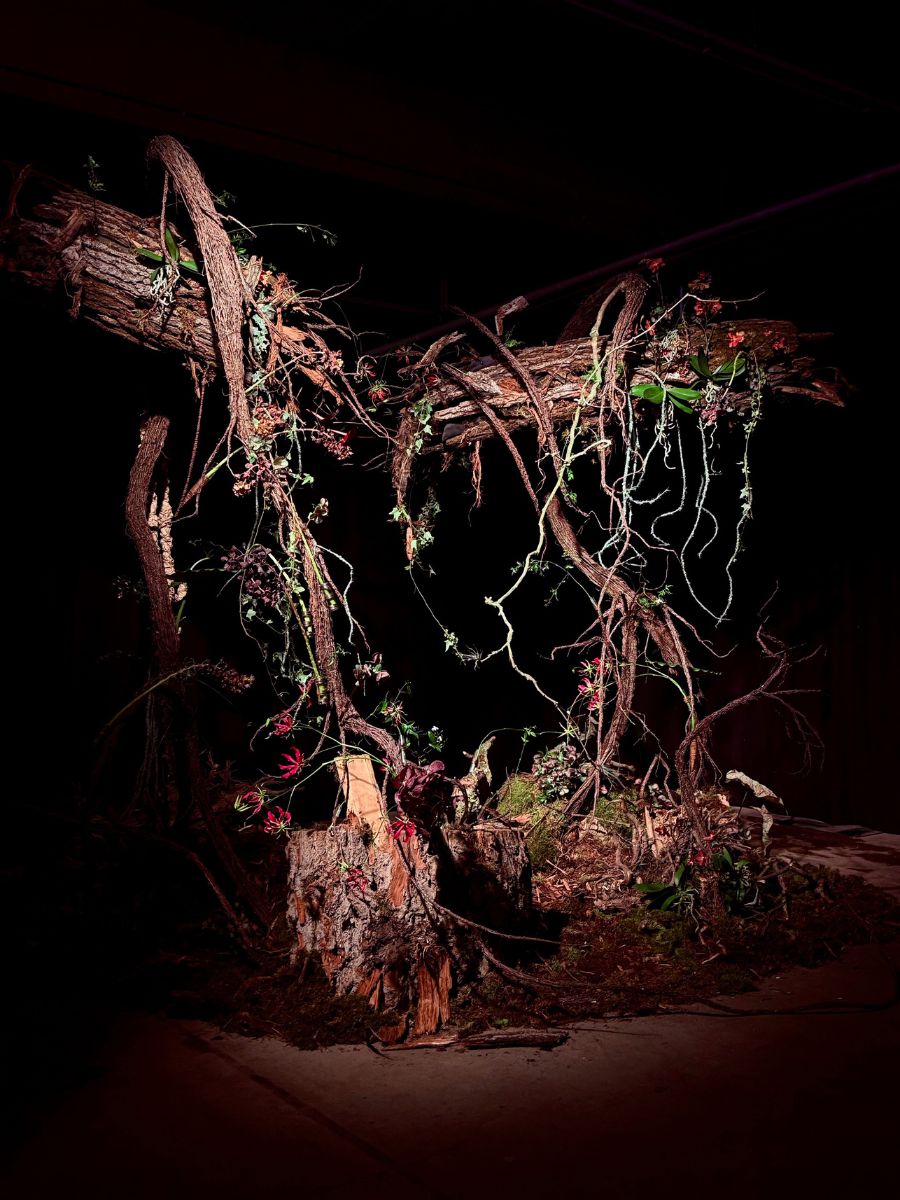
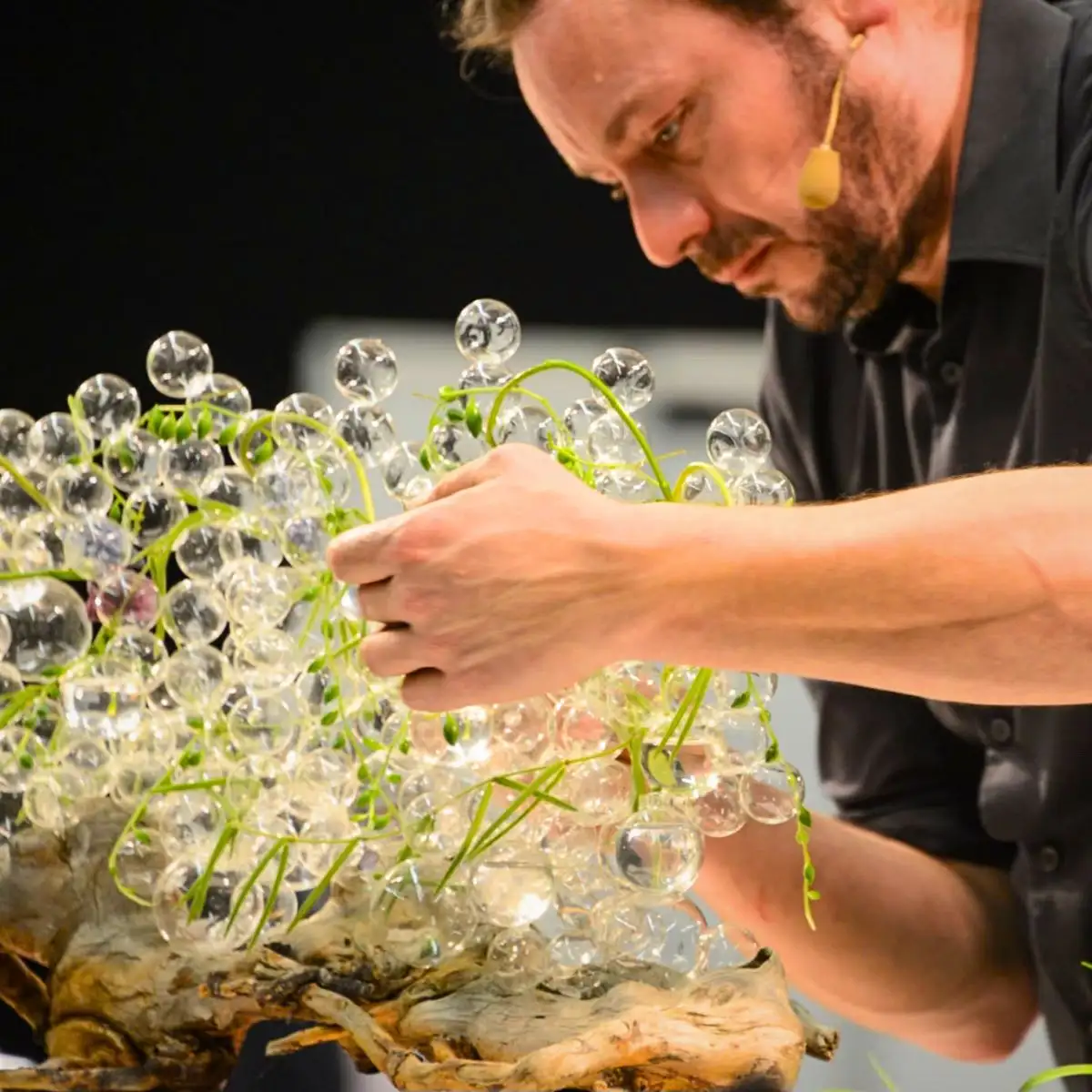
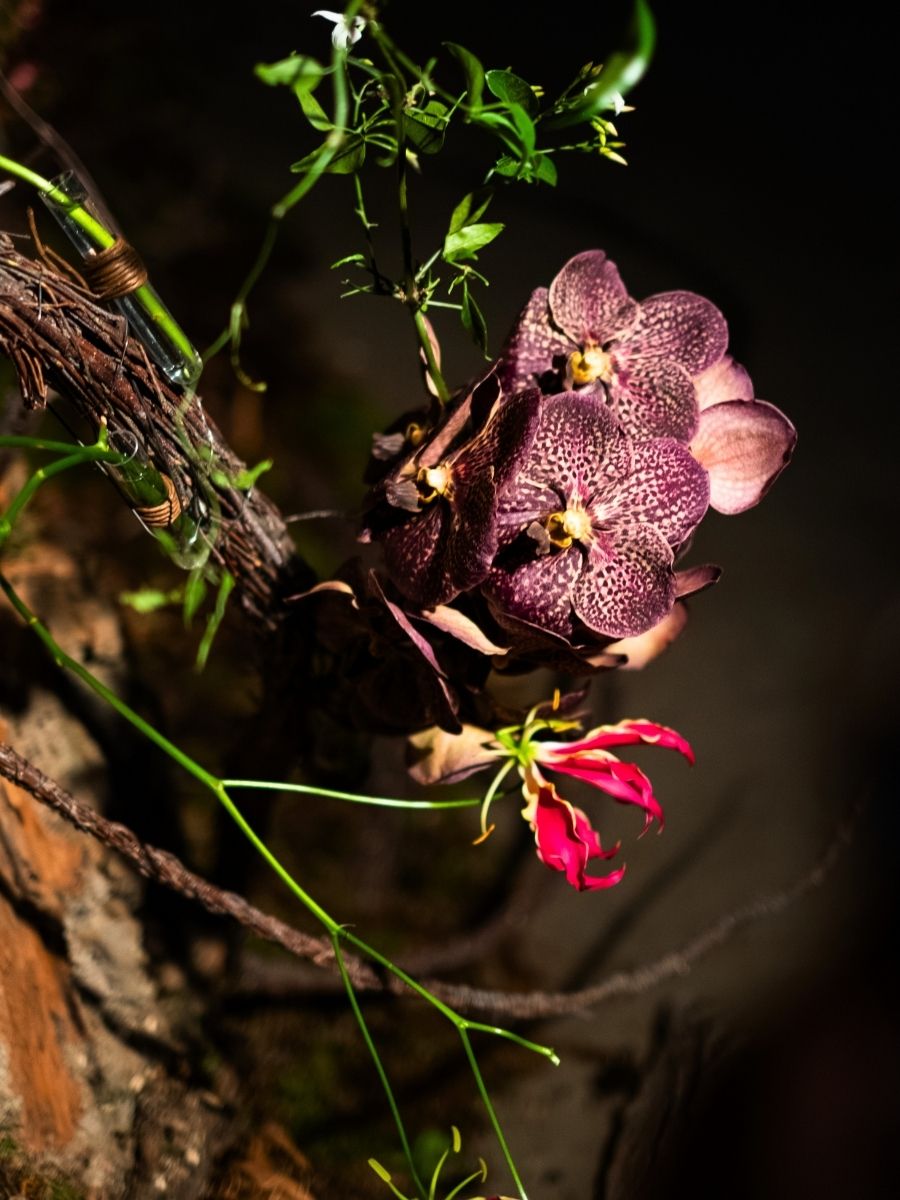
Two timber masses, weathered, split, and suspended, hold a deliberate distance. I love the old and lived wood structures. They are not reattached. Instead, a network of living elements like roots, vines, botanical threads, moves between them, negotiating gravity and space, working like an active language. In this installation, flowers do not decorate the surface; they operate as connective tissue. They trace paths across absence, soften edges of rupture, and introduce time into a static break. The result is a structure that feels unfinished by design, alive, responsive, and open.
My Floral Art at Floralien – From Composition to System
BROKEN belongs to a broader shift in contemporary floristry: from composition to system. Where traditional arrangements prioritize harmony and closure, this work foregrounds tension, asymmetry, and process. It reads as a spatial system, one that accommodates instability while maintaining coherence. The negative space at its center is not a gap to be filled, but a condition to be understood.
This approach aligns floral practice with architecture and scenography, where void, load, balance, and flow are as important as material selection. Here, botanical matter carries both aesthetic and structural intent.
We Tried to Make the Right Choices of Materials
The palette is restrained and precise: bark, roots, moss, and sparse blooms. Each element is chosen for its ability to speak about time and continuity.
- Timber signals rupture and memory.
- Roots and vines articulate connection and adaptation.
- Moss grounds the work, anchoring it in a living ecology.
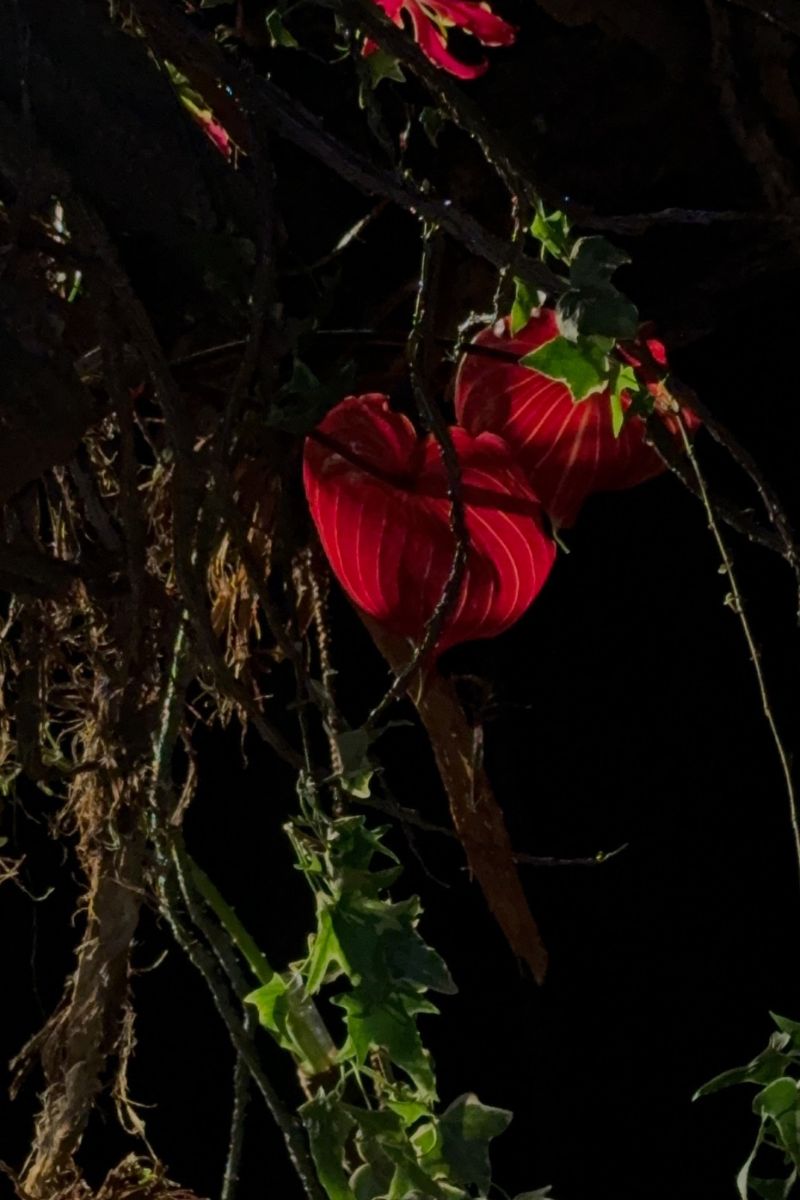
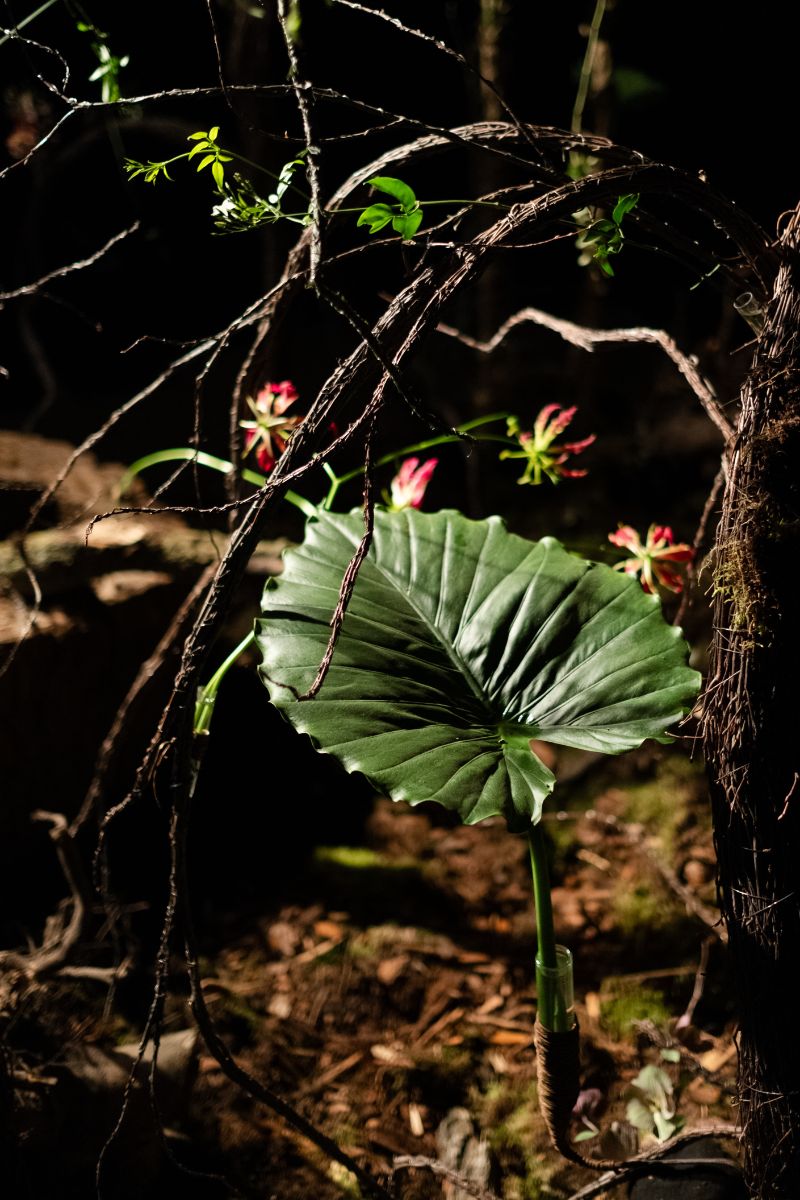
- Selective blooms punctuate the structure, brief, deliberate interventions of color and symbolism, including Phalaenopsis, Anthurium, the Winter Rose Heleborus, Fritillaria, and Gloriosa, vibrant, marking the victory through rupture.
This economy of means strengthens the narrative. Nothing is excess, and every element contributes to the reading of the piece.
A Romanian Presence, Clearly Positioned
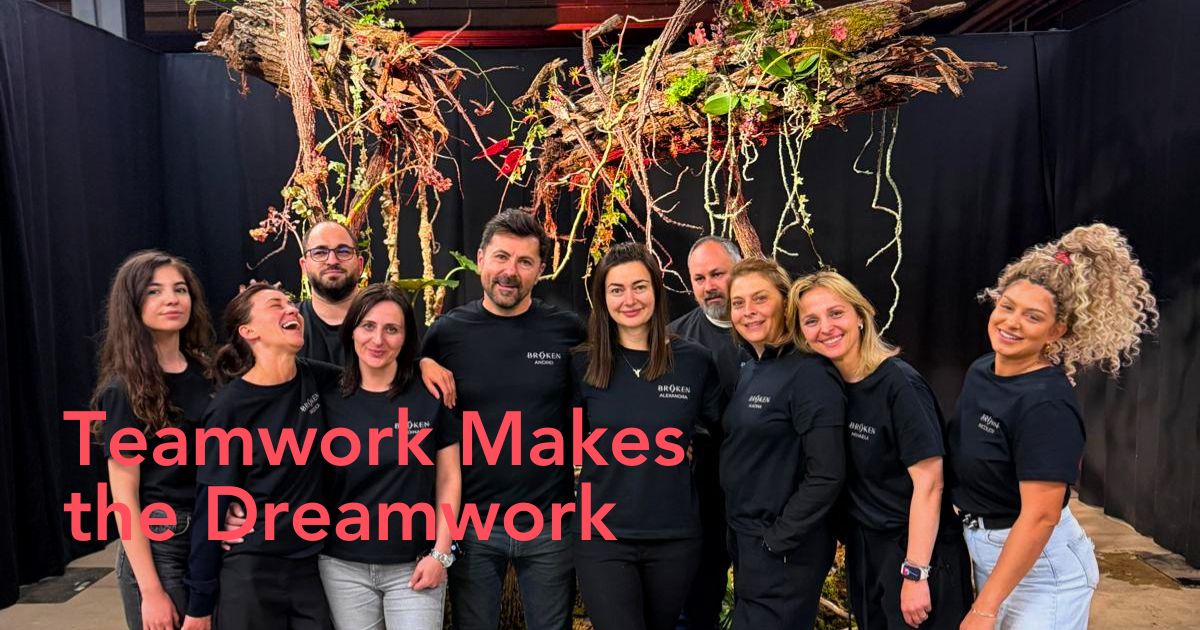
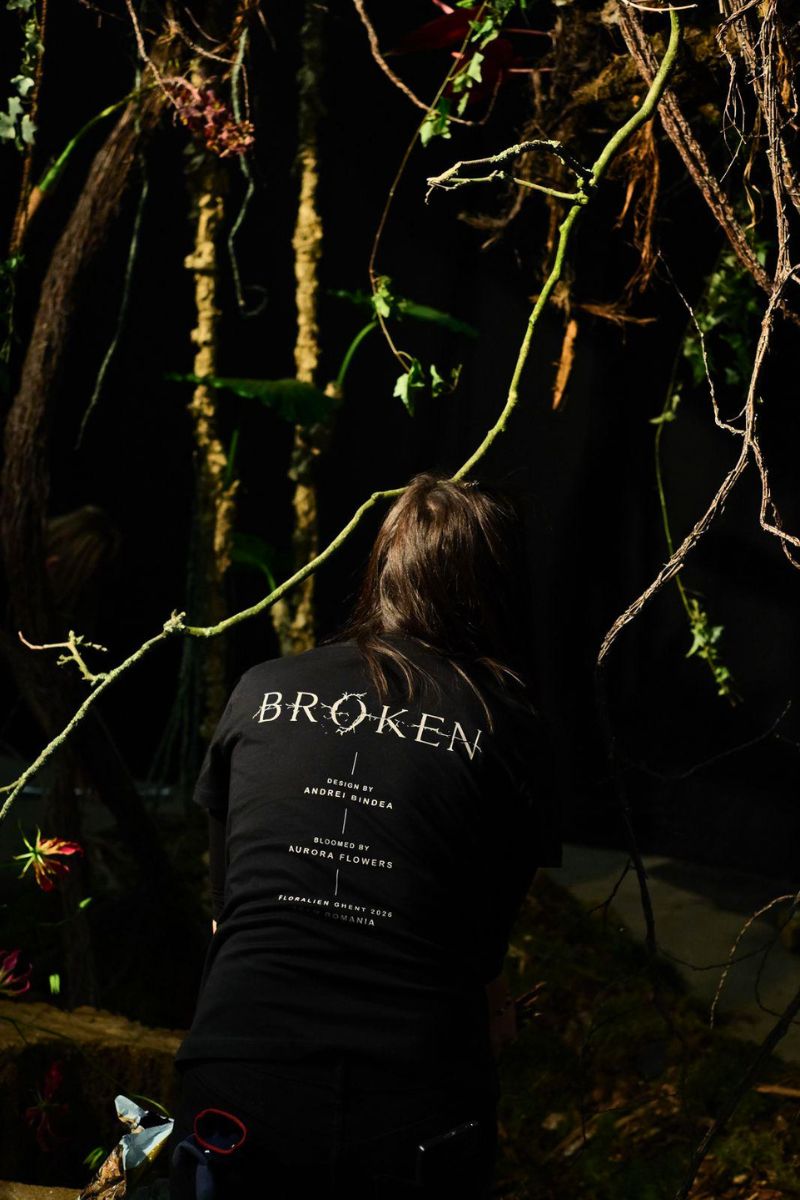
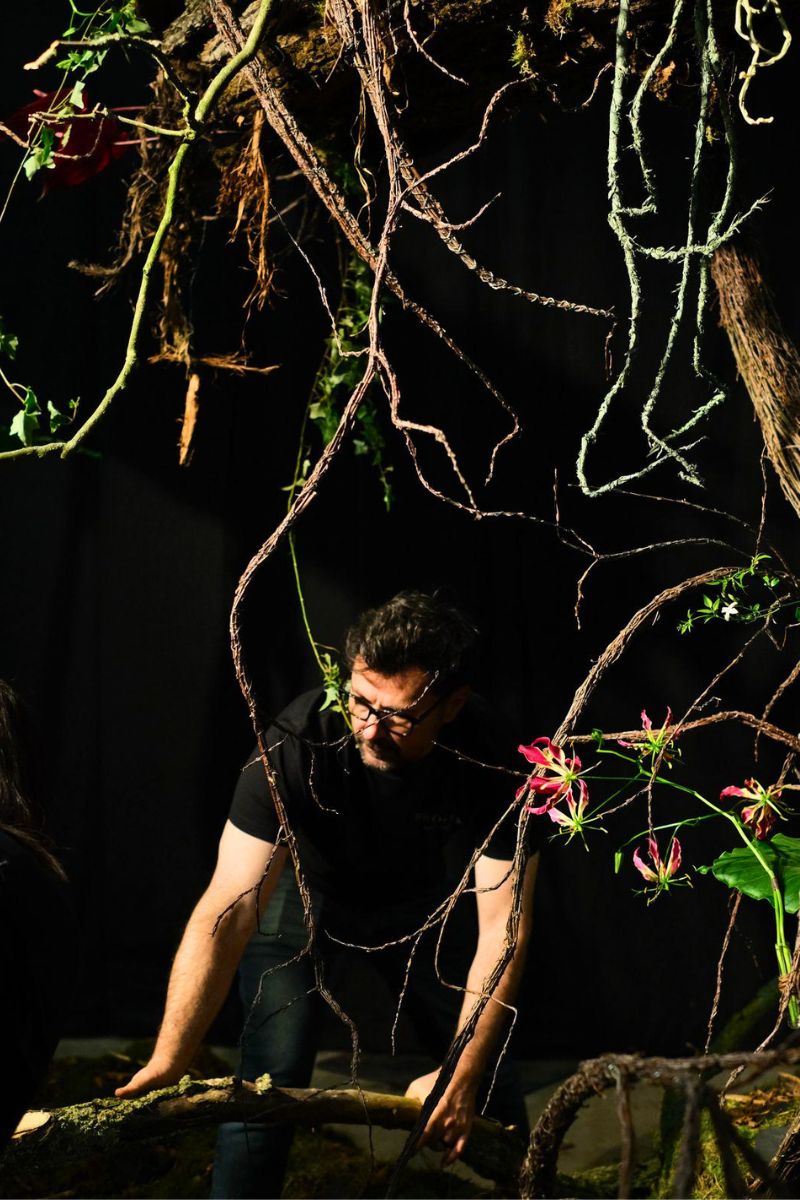
I was so happy to be in Belgium with my team, representing a new generation of Romanian floral designers: Mihaela Vardiana, Vladina Radu, Alexandra Antal, Nicoleta Sanchi, Cristina Georgescu, and Rodica Diaconu. Romania’s presence at Floralien Ghent continues a trajectory of increasing visibility within European floral design, including a previous Prix de la Presse recognition. What distinguishes this participation is not scale alone, but clarity of intent: a move toward installation as discourse.
Execution at International Standard
Realizing a work of this nature requires more than concept. It depends on precise logistics, material integrity, and controlled build conditions. Support from Aurora Flowers and Plants ensured the delivery of plants and materials, as well as on-site coordination, enabling the team to translate a conceptual framework into a stable, high-quality installation under time pressure.
The Story I want to Bring to Attention
In the field of flowers and floral design, which is often associated with celebration and completion, BROKEN introduces a different register. It proposes that floral design can engage with uncertainty without resolving it. That connection can be articulated without concealment. And that beauty, in this context, is not the absence of fracture, but the intelligence with which it is held. For professionals across floristry, design, and installation, the work offers a clear signal: the discipline is expanding. Not by abandoning craft, but by extending its vocabulary.