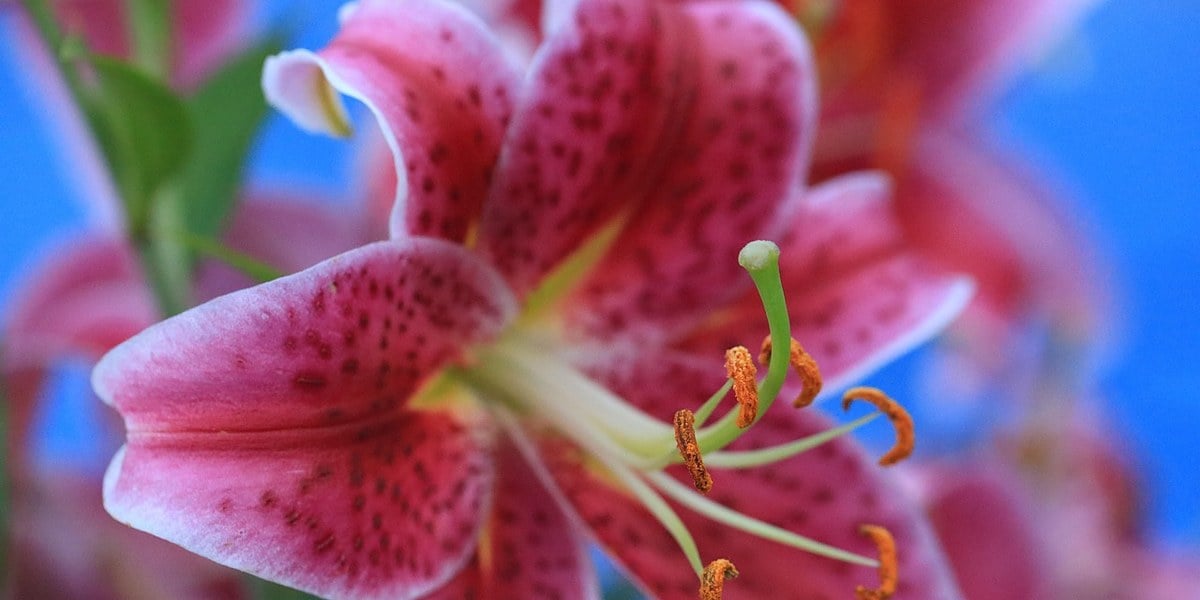
'Stargazer' is an Oriental hybrid lily with crimson, white-edged, spotted flowers that face the sky. Florists know it as a fragrant cut flower, gardeners as a hardy summer bulb. Every part of it, pollen and vase water included, can cause fatal kidney failure in cats.
Most Oriental lilies nod or look sideways. Lily 'Stargazer' (Lilium 'Stargazer') turns its flowers to the sky, and that is where the name comes from. The American lily breeder Leslie Woodriff introduced it in the late 1970s, from a complex cross of Oriental species whose exact parentage is unknown. It has been a familiar sight in florists' buckets ever since.
It is easy to recognize: crimson tepals edged in pale pink or white, freckled with darker red, and a strong, sweet scent. For the symbolism behind it, read our Stargazer lily meaning article, or our broader piece on lily flower meaning.
Common Names
Stargazer lily
Lily 'Stargazer'
Oriental lily 'Stargazer'
Stargazer Lily as a Cut Flower
Growers cut Oriental lilies when the first bud on the stem shows color but has not opened yet, according to FloraLife. In cool storage, they keep best at 3 to 5°C (38 to 41°F). In the vase, with properly mixed flower food, an Oriental lily lasts 6 to 14 days, and the buds keep opening one after the other.
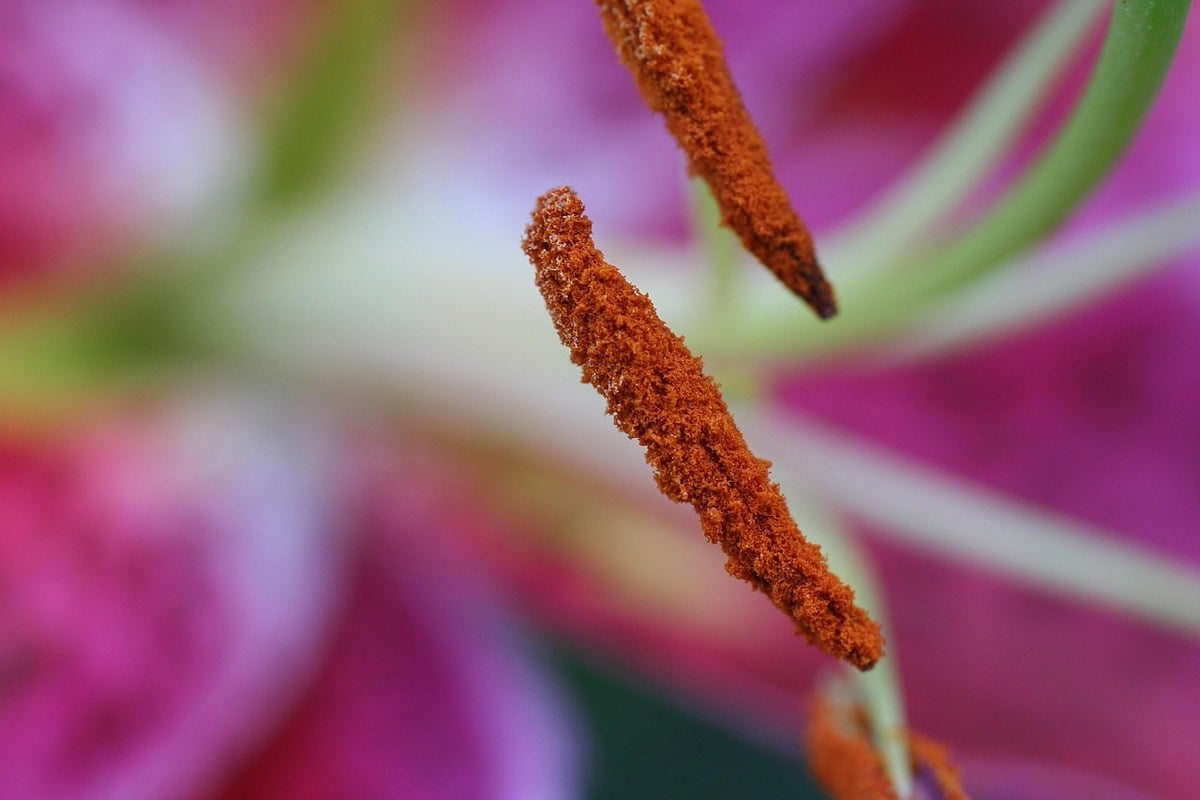
The anthers of an Oriental lily, loaded with pollen. Remove them as soon as each flower opens. Photo by JillieMae on Pixabay.
The one job a florist cannot skip: remove the anthers as soon as each flower opens. The orange pollen stains petals, clothing, and skin, and pollen licked off a cat's fur is enough to poison it (more on that below). Pinch the anthers off with a tissue rather than bare fingers. The flower looks just as good without them.
Growing Stargazer Lilies in the Garden
'Stargazer' is a hardy bulb, not a tropical plant. University of Wisconsin-Madison Extension rates it hardy in USDA zones 4 to 9. Plant the bulbs in early spring or fall, about 6 inches (15 cm) deep for large bulbs, in almost any well-drained soil, heavy clay included. Full sun gives the best flowers, though it tolerates part shade.
It flowers in midsummer, earlier than many other Oriental lilies. Plants usually reach 3 to 4 feet (90 to 120 cm). Watch for the lily leaf beetle, an invasive and serious pest of lilies, and for deer, rabbits, voles, and aphids.
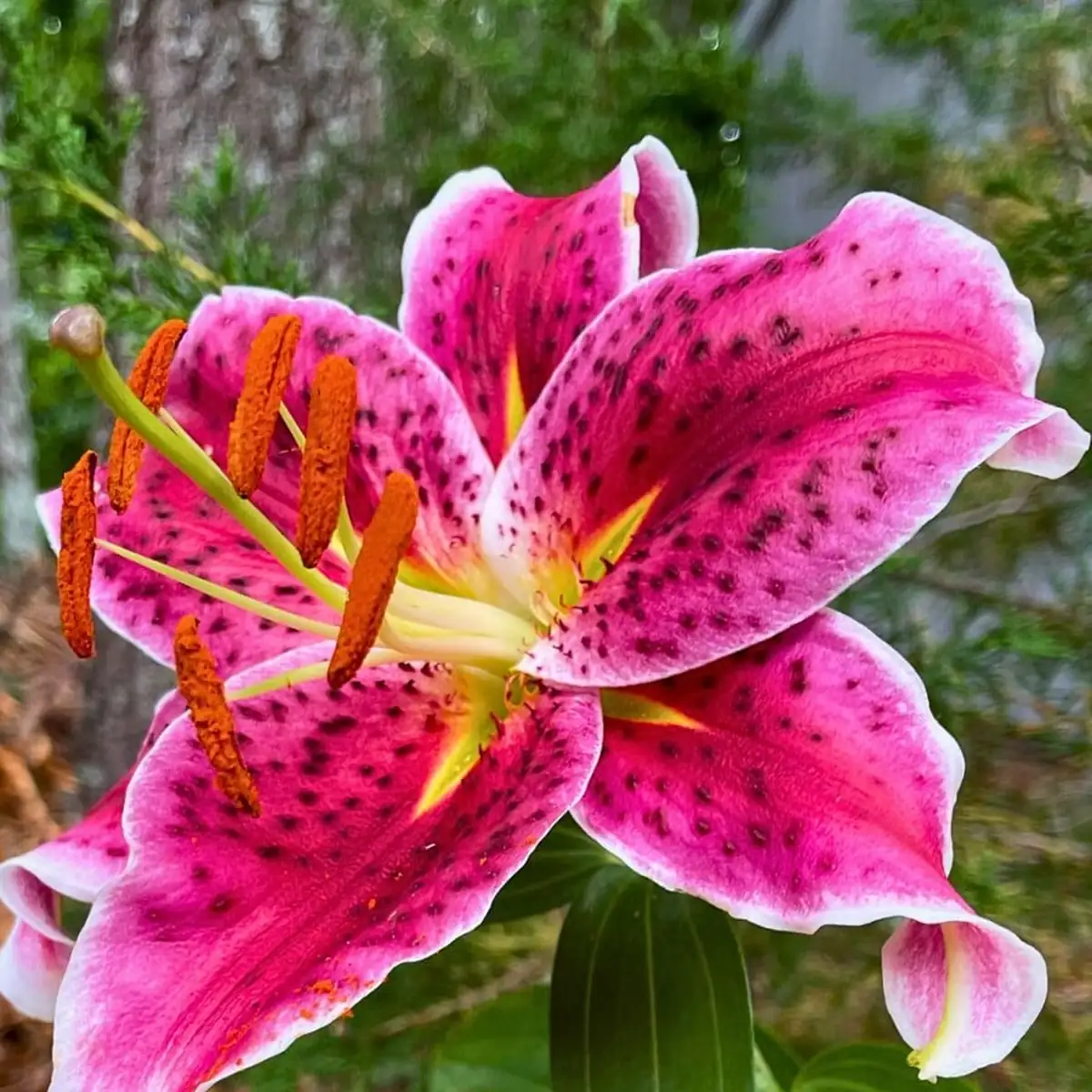
Stargazer lilies in bloom, with more buds still to open further up the stems. Photo by Shirley810 on Pixabay.
Stargazer Lilies Are Toxic to Cats
This is the part every buyer should know. All true lilies (Lilium), Oriental lilies like 'Stargazer' included, and daylilies (Hemerocallis) can cause acute kidney failure in cats. The US Food and Drug Administration is clear that the whole plant is toxic: stem, leaves, flowers, pollen, and even the water in the vase. A cat that licks a few pollen grains off its fur or drinks from the vase can be poisoned.
The first signs, within 0 to 12 hours, are drooling, vomiting, loss of appetite, and less activity. Kidney failure follows within 24 to 72 hours and can be fatal without treatment. If you think a cat has touched a lily, call your vet or the ASPCA Animal Poison Control Center at (888) 426-4435 at once, and take the plant or a photo with you. Do not wait for symptoms.
Dogs that eat lilies may get a mild stomach upset but do not develop kidney failure, according to the FDA, and the ASPCA lists the Stargazer lily as non-toxic to dogs and horses. For a home with a cat, though, the safest choice is simple: pick another flower.