Baby's breath (Gypsophila paniculata) is the cloud of tiny white flowers that florists call gyp. It is a perennial from Europe and Asia, and where it escapes into dry, open land in North America it has become a listed weed.
Baby's breath is the cloud of tiny white flowers that florists tuck into bouquets and call gyp. The species behind it is Gypsophila paniculata, a perennial from Europe and Asia with a root deep enough to survive dry summers. As a cut flower it comes in named varieties, such as Gypsophila Xlence and Gypsophila Million Stars.
Outside the vase, the same plant has a second reputation. Where it escapes into dry, open land, it can take over, and in Washington State it is a listed noxious weed.
Common Names
Baby's breath
Common baby's breath
Gypsophila
Gyp (florists' shorthand)
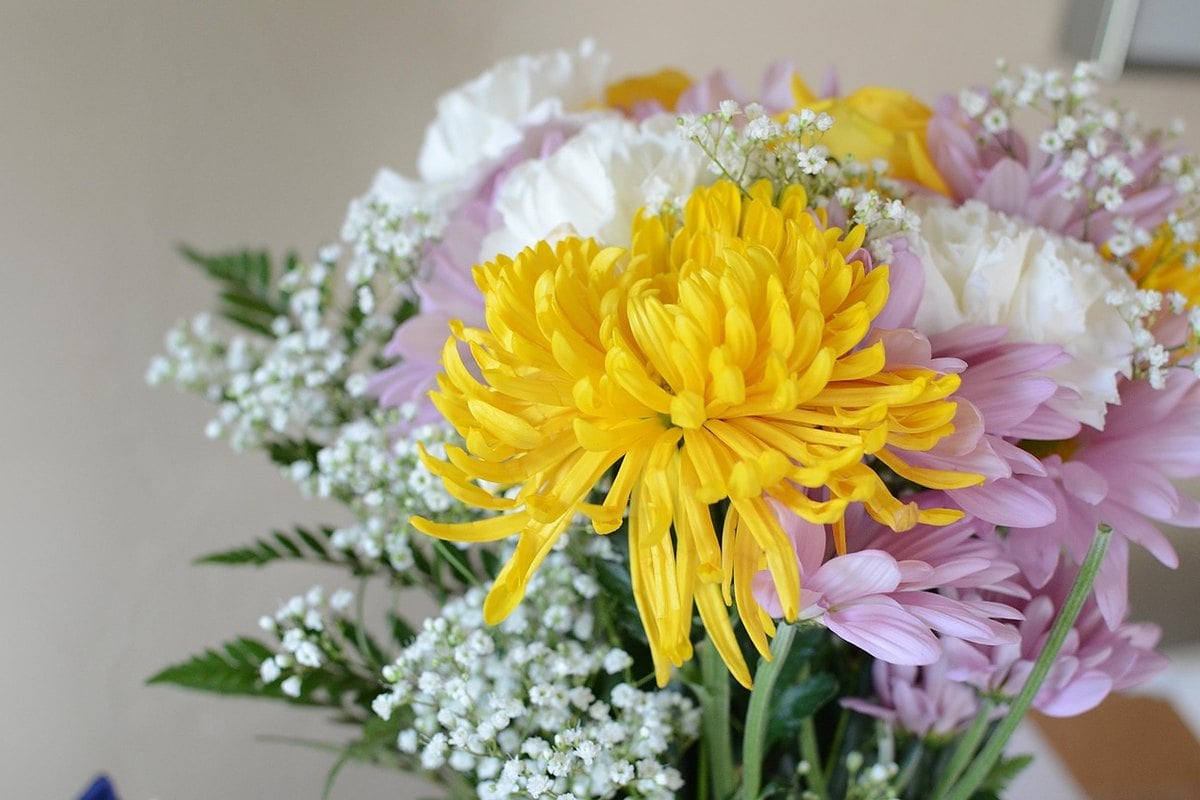
Baby's breath doing its classic job: filling the gaps in a mixed bouquet. Photo by christinebeers on Pixabay.
How to Recognize Baby's Breath
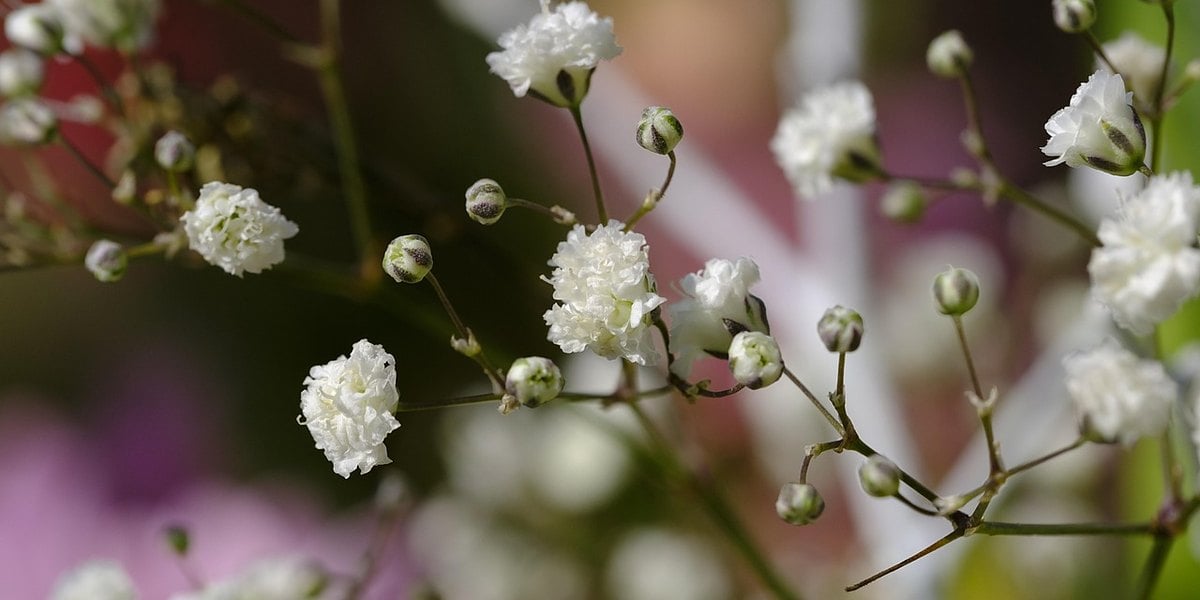
It is a much-branched perennial up to about 75 cm (2.5 ft) tall. The stems fork again and again into wiry, open sprays, and each tip carries a tiny white flower with five petals and ten stamens. Below ground sits a deep root system, which is why the plant copes with drought so well.
One plant can produce around 13,700 seeds, according to the Washington State Noxious Weed Control Board, and the wind carries them a long way. That number explains most of what follows.
Baby's Breath in the Flower Trade
For florists, gyp is the classic filler, the flower that fills the space between the bigger blooms in a bouquet, and it has had its turn as the star too, in all-gyp wedding designs. Read how it went from filler to showstopper in Gypsophila Is So Much More Than Baby's Breath, and how it compares with other fillers in our guide to greens and flower fillers.
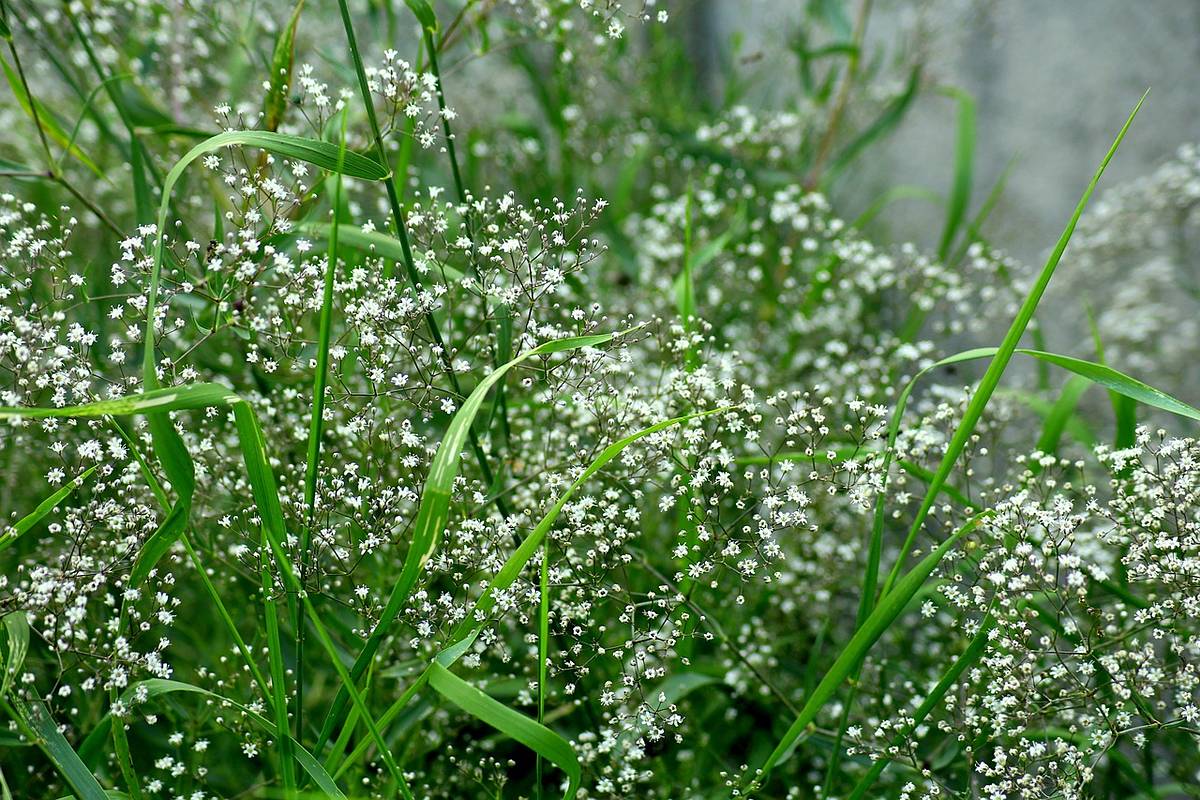
Baby's breath has escaped from gardens across much of the northwestern United States and western Canada. In Washington, it has been a Class C noxious weed since 1988. It forms dense stands in pastures, rangeland, roadside ditches, hay fields, and abandoned fields, and once it is established it is hard to control. Mowing barely slows it down.
It is a problem on the Lake Michigan shore as well. Since 2007, the National Park Service and The Nature Conservancy have been removing it from the dunes of Sleeping Bear Dunes National Lakeshore, because it crowds out native dune plants such as Pitcher's thistle.
If you grow it, cut the flower stems before the seed ripens, do not throw old plants or dried bouquets out on open land, and keep it away from dunes, prairie, and rangeland. Check your state or regional weed list before you plant it.
Baby's breath growing among grasses, the kind of open ground where escaped plants spread. Photo by _Alicja_ on Pixabay.
Is Baby's Breath Safe for Pets and People?
Mostly, yes. The ASPCA lists baby's breath as non-toxic to dogs, cats, and horses, although eating it can cause mild vomiting or diarrhea. Its entry covers the annual species, Gypsophila elegans.
For people who handle a lot of it, there is one known issue. Case reports in the Journal of Allergy and Clinical Immunology describe florists who developed allergic asthma, a runny nose, and itchy eyes from working with fresh or dried gyp. If you process large amounts, especially dried, work in a well-ventilated space, and see a doctor if you start wheezing or sneezing at the bench.
Sources: Washington State Noxious Weed Control Board; ASPCA Animal Poison Control Center; PeerJ (2019), study of Gypsophila paniculata at Sleeping Bear Dunes National Lakeshore; Journal of Allergy and Clinical Immunology (1982), occupational asthma in a florist caused by baby's breath.
Header image by Bru-nO, featured image by Nika_Akin, and profile picture by Laura_O, all on Pixabay.