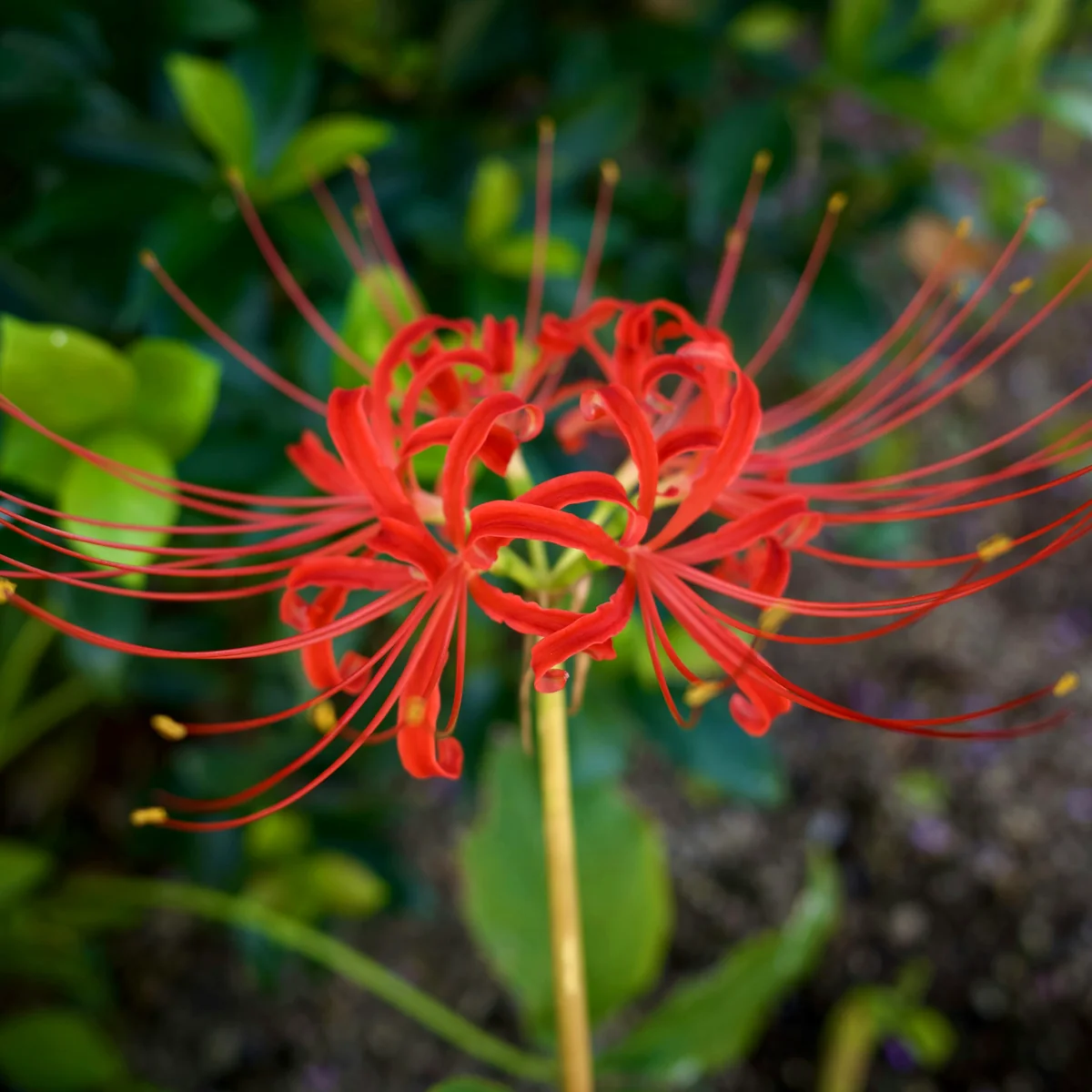
The red spider lily, Lycoris radiata, flowers on bare stalks in late summer and early fall, before its leaves appear. In Japan it is higanbana, the flower of the equinox and of farewells. Every part of the plant is poisonous, the bulb included.
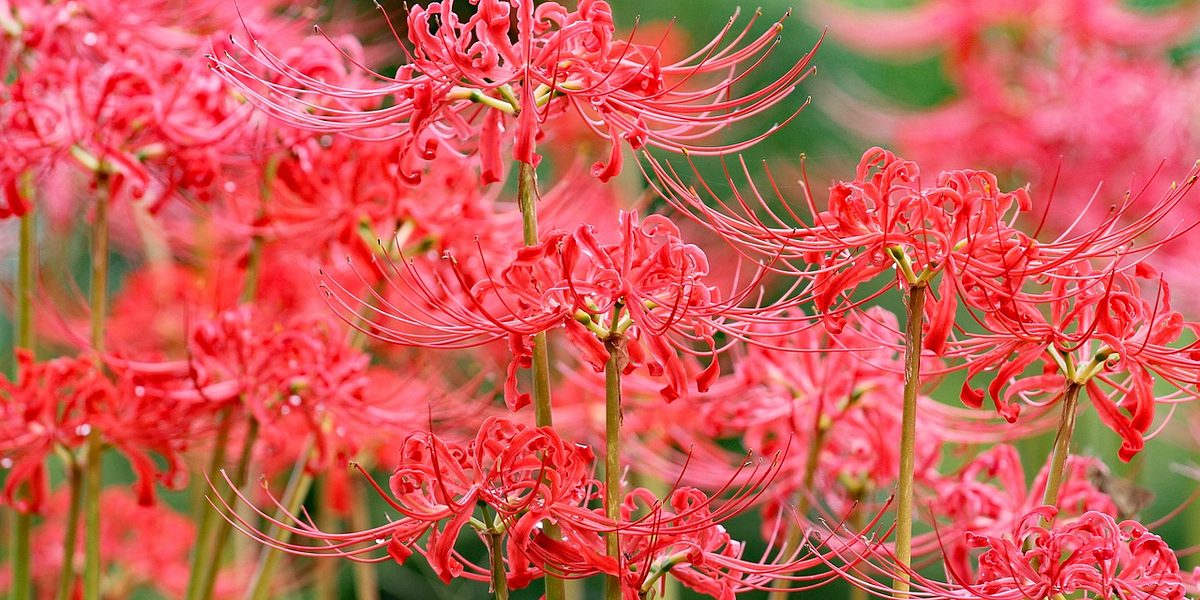
Most people who search for spider lily meaning have just seen a red flower appear out of nowhere. That is the red spider lily (Lycoris radiata), a bulb from East Asia that pushes up bare stalks in late summer and opens a ring of curled red flowers with long, thin stamens, the spider legs that give it its name. The leaves come later, once the flowers are gone.
In Japan it is called higanbana, and there its meaning is about endings.
Common Names
Red spider lily
Hurricane lily
Equinox flower
Red magic lily
Red surprise lily
Higanbana (Japan)
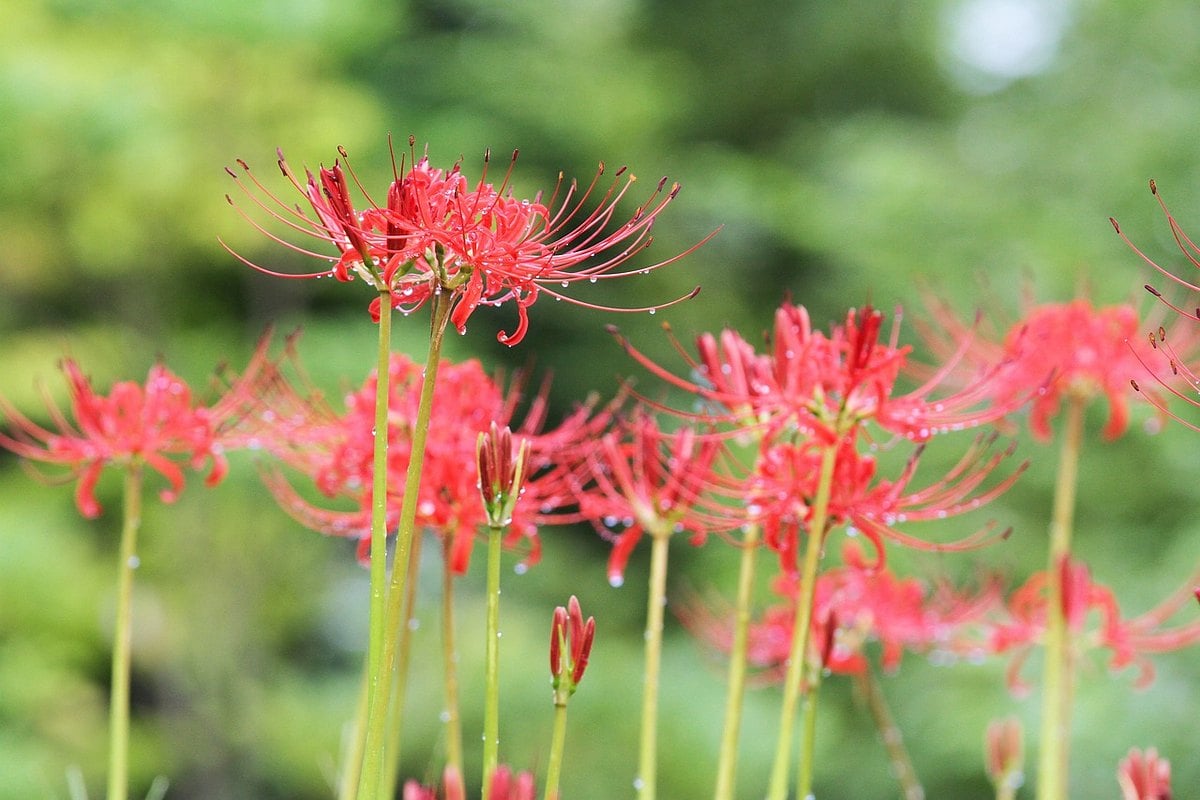
Red spider lilies on bare stalks: the leaves only appear after the flowers fade. Photo by HelgaKa on Pixabay.
How to Recognize a Red Spider Lily
Look for a bare stalk, 30 to 60 cm (1 to 2 ft) tall, with no leaves on it. At the top sits a cluster of four to seven red flowers. Each has six narrow, wavy petals that curl back on themselves, and stamens that reach far out past them. It flowers in August and September. The narrow gray-green leaves follow in October, stay green through the winter, and die back in spring, so you never see flowers and leaves on the plant at the same time.
Spider Lily Meaning in Japan
The Japanese name explains most of it. Higan is the Buddhist week around the spring and fall equinoxes, when families visit the graves of their ancestors, and the red spider lily opens right on time for the fall one. Higanbana means the flower of Higan. It grows beside roads, along the paths between rice fields, and in graveyards.
So in Japan the flower stands for death, farewell, and the passage to the next world, and there is a belief that you should never give it as a gift. The usual explanation for all those plantings is practical: the poisonous bulbs were set along rice fields and around graves to keep mice and other animals out. And because its flowers and leaves never meet, modern flower symbolism also ties it to separation and lost love.
A red spider lily is Lycoris radiata. The other colors are other plants. The pink one sold as surprise lily, magic lily, or naked ladies is Lycoris squamigera, which flowers in August and September and copes with colder winters. Yellow spider lilies are other Lycoris species, such as Lycoris aurea.
A white 'spider lily' can be a white Lycoris, but just as often it is Hymenocallis, a different genus from the Americas, with fragrant white flowers and a thin membrane joining the stamens. UF/IFAS warns gardeners not to confuse the two. They share a nickname, not a meaning.
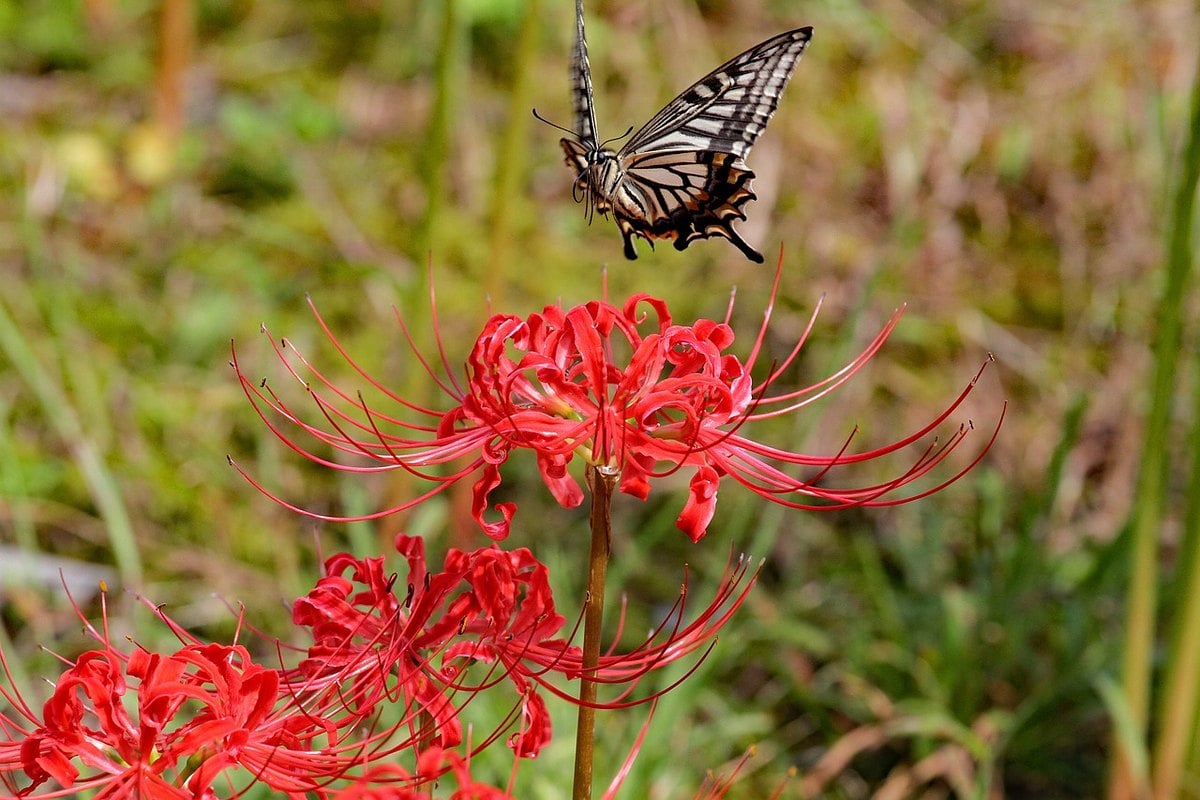
Red spider lilies open in late summer and early fall, and butterflies find them quickly. Photo by 김경복 on Pixabay.
Is the Spider Lily Poisonous?
Yes. All parts of the plant, the bulb included, contain lycorine, a toxic alkaloid. Eating it can cause stomach pain, drooling, nausea, vomiting, and diarrhea, and larger amounts can lead to convulsions, in people as well as in dogs and cats. NC State Extension rates the overall risk as low, but this is not a plant to leave within reach.
Keep the bulbs and cut stems away from children, dogs, and cats.
Wear gloves when you plant, lift, or divide the bulbs, and wash your hands afterward.
If a child eats any part of it, call your poison center (in the US, Poison Control at 1-800-222-1222).
If a pet eats it, call your vet or the ASPCA Animal Poison Control Center at (888) 426-4435.
How to Grow Red Spider Lilies
This is a temperate bulb, not a tropical plant. NC State Extension rates it hardy in USDA zones 6 to 10. In colder gardens, grow it in a large pot that spends the winter somewhere frost-free: the bulbs need room for a big root system before they flower.
Planting: plant the bulbs in fall with the neck of the bulb showing, 15 to 30 cm (6 to 12 in) apart, in rich, moist soil that drains well.
Light: full sun to part shade. Clemson Extension advises at least four hours of direct sun for good flowering.
Water: keep the soil moist while the leaves grow, from fall to spring, and fairly dry while the bulb rests in summer.
Dividing: let the leaves yellow and die back on their own, then divide crowded clumps in early spring.
The bulbs multiply through offsets and are long-lived. Leave a clump alone and it gets better every year.
Sources: NC State Extension Gardener Plant Toolbox (Lycoris radiata, Lycoris squamigera, Lycoris, Hymenocallis); Clemson Cooperative Extension Home & Garden Information Center; UF/IFAS Gardening Solutions; Nippon.com; ASPCA Animal Poison Control Center.
Header image by HelgaKa, featured image by yuno11, and profile picture by yamabon, all on Pixabay.