The tiger lily, Lilium lancifolium, is a hardy summer lily with nodding orange flowers covered in dark spots and small black bulbils along its stem. It is easy to grow and hard to contain. Keep it away from cats: every part of it, pollen included, can cause kidney failure.
The tiger lily (Lilium lancifolium, also sold as Lilium tigrinum) is the orange lily with dark spots that hangs its flowers face down and curls its petals back toward the stem. It is a hardy garden lily from East Asia, native to China, Korea, Japan, Tibet, and the far east of Russia, and it has escaped from gardens in many parts of the world, eastern North America included.
It is easy to grow. For anyone with a cat, it is also one of the riskiest flowers to bring home.
Common Names
Tiger lily
Orange tiger lily
Lilium tigrinum (older botanical name)
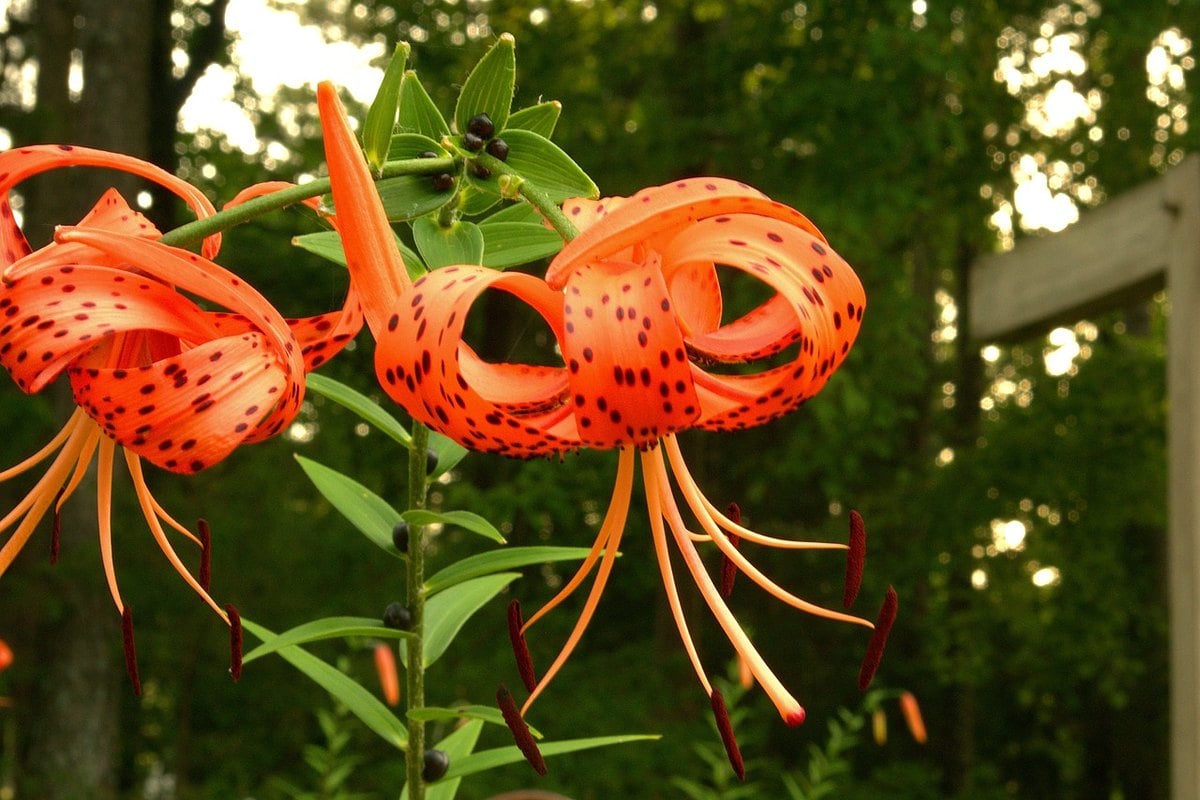
Small black bulbils where the leaves meet the stem: the easiest way to recognize a tiger lily. Photo by jwvein on Pixabay.
How to Recognize a Tiger Lily
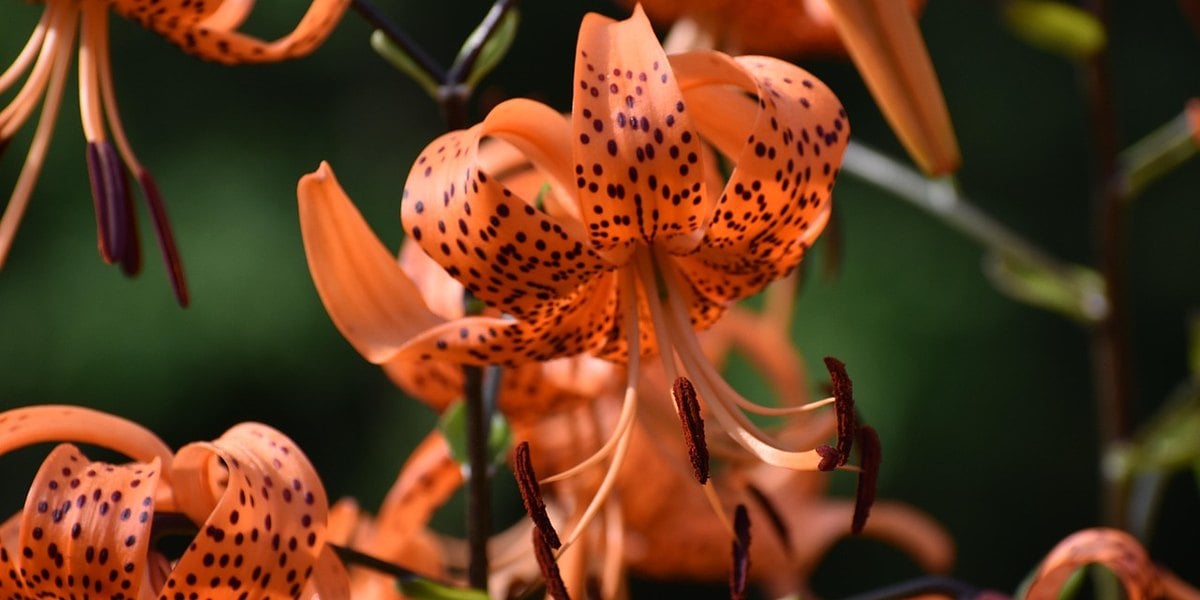
Check three things. The flowers are orange, 8 to 15 cm (3 to 6 in) across, peppered with purplish-brown to black spots, and they nod, with the petals curled sharply backward. The leaves are narrow and lance-shaped, 8 to 15 cm (3 to 6 in) long, set one at a time up a stiff stem that often reaches about 1.2 m (4 ft). And in the angle where the upper leaves meet the stem sit small, shiny, purplish-black bulbils. No native North American lily has them, and most garden hybrids do not either.
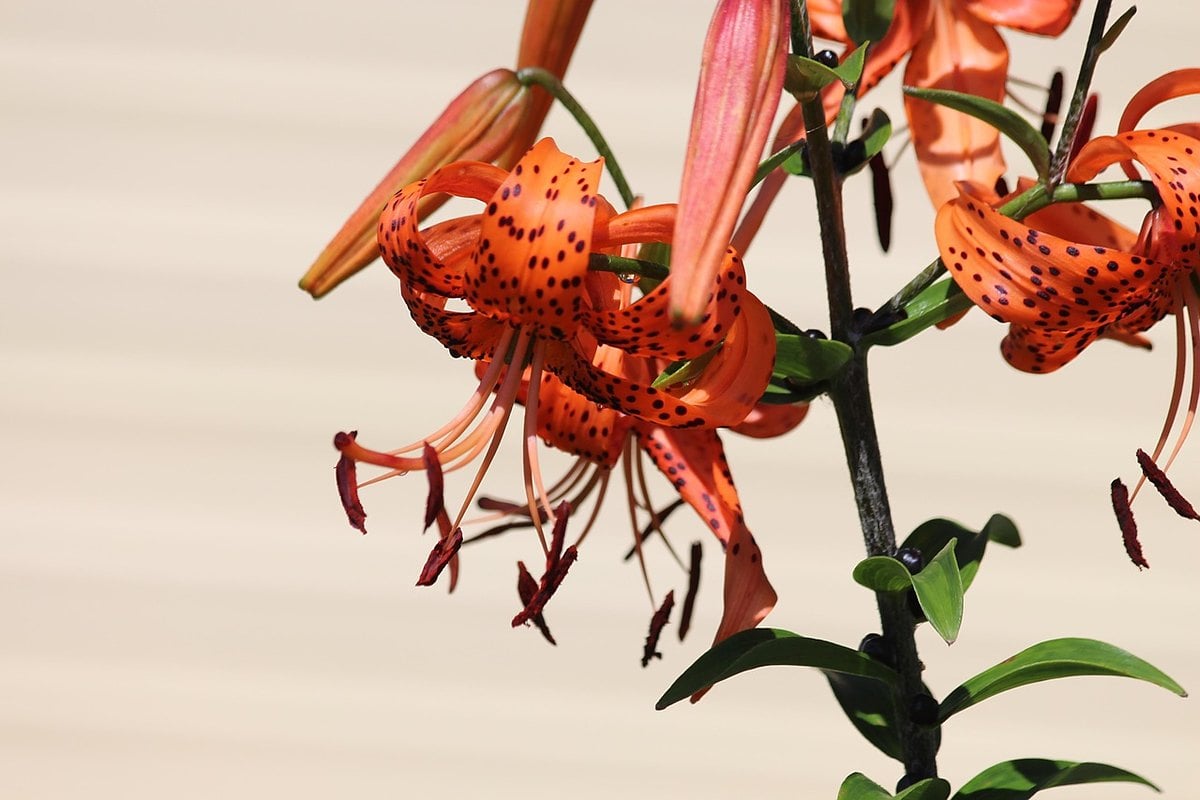
It flowers in July and August, with up to ten flowers on a stem and no scent.
Tiger Lily or Daylily?
The orange daylily (Hemerocallis fulva) is often called a tiger lily too, but it is not a true lily. It grows from a clump of long, strap-shaped leaves at ground level, carries no bulbils, and each flower lasts a single day. For cat owners, the mix-up changes little: the ASPCA lists daylilies as toxic to cats as well.
Tiger lily buds and open flowers on a single tall stem, which can carry up to ten nodding flowers. Photo by Bessi on Pixabay.
Tiger Lilies and Cats
This is the part that matters most. True lilies (Lilium) are highly toxic to cats, and the ASPCA lists the tiger lily by name. Every part is dangerous: petals, leaves, stems, the bulb, the pollen a cat licks off its fur, even the water in the vase. A small amount can cause acute kidney failure. Signs include vomiting, loss of appetite, and lethargy. Dogs and horses are not affected, according to the ASPCA. Tiger lilies also last well as cut flowers, which is exactly how many cats meet them.
If you have a cat, do not bring tiger lilies into the house, as a plant or in a bouquet.
In the garden, plant them where your cat does not go, or choose another flower.
If you think your cat has eaten or licked any part of a lily, go to a vet at once and do not wait for symptoms. Early treatment can prevent kidney damage, and the ASPCA warns that it is often fatal when treatment is delayed more than 18 hours. You can also call the ASPCA Animal Poison Control Center at (888) 426-4435.
For people the risk is lower, but Chicago Botanic Garden notes that the pollen can cause vomiting, so keep children from eating any part of the plant. More plants to keep away from cats: indoor plants that are toxic to cats.
How to Grow Tiger Lilies
The tiger lily is a cold-hardy bulb, not a tropical plant. NC State Extension rates it for USDA zones 5 to 8, and Chicago Botanic Garden for zones 4 to 8.
Light: full sun. It survives in shade but flowers poorly there.
Soil: moist, well-drained, and on the acidic side.
Propagation: collect and plant the bulbils. A bulbil flowers about two years after it is collected.
Spread: bulbils drop and grow wherever they land, so a clump keeps moving. NC State Extension calls it one of the easiest lilies to grow and one of the hardest to keep in its place.
Other lilies: tiger lilies tolerate lily viruses and often carry them without showing it, so they can pass them on to other lilies. Plant them well away from your other lilies.
Sources: ASPCA Animal Poison Control Center (tiger lily, daylilies, lilies and cats); NC State Extension Gardener Plant Toolbox; Chicago Botanic Garden; Midwest Invasive Species Information Network (Michigan State University).
Header image by Bessi, featured image by phoenix727, and profile picture by Bessi, all on Pixabay.