

Few businesses live and die by the calendar the way a flower shop does. Revenue floods in around Valentine's Day, Mother's Day, and wedding season, then thins out through the quiet weeks in between. Payroll, cooler bills, and wholesale invoices, however, arrive on a steady schedule no matter how full the buckets are.
That mismatch is where personal credit quietly gets caught in the crossfire. Most florists cover the slow stretches with a personal credit card or sign a personal guarantee on a shop lease or supplier account, so a lean month doesn't just strain the business; it can leave a mark on your own credit report. A single late payment, or a balance sold off to a collection agency, can follow you for years and block the financing you need to lease a new cooler or refinance the delivery van.
The better news is that credit damage is rarely permanent, and you have more leverage than a stressful phone call suggests. Under the Fair Credit Reporting Act, a collector who cannot properly document a debt has to remove it, often within about 30 days. What follows is a practical, situation-by-situation guide to protecting your credit as a seasonal business owner, from disputing questionable collections to handling a lawsuit if one ever lands on the counter.
Why a Flower Business Puts Your Personal Credit at Risk
Before choosing any solution, it helps to understand how a business cash-flow problem becomes a personal credit problem in the first place.
The connection is usually a signature. When you open a wholesale account, sign a shop lease, or take a working-capital loan, the lender often asks for a personal guarantee, a clause that makes you personally responsible if the business cannot pay. Reaching for a personal card to cover ribbon, foam, or a last-minute cooler repair does the same thing more directly. In both cases, a missed payment lands on your consumer credit file, not just the business's books.
That is why a florist's credit report can take a hit even when the shop itself looks healthy. A seasonal dip, one slow-paying wedding client, or a supplier dispute can cascade into a late mark and, eventually, a collection account on your personal FICO.
Two habits blunt the damage. Read every supplier and lease contract for the personal-guarantee clause before you sign, and keep one dedicated business account and card so personal and business debts never blur together. When they do blur, the cleanup is harder, which is exactly what the rest of this guide is about.

How to Choose Help When You Need It
If a debt has already gone to collections, or you are weighing outside help, four questions separate a legitimate partner from an expensive mistake.
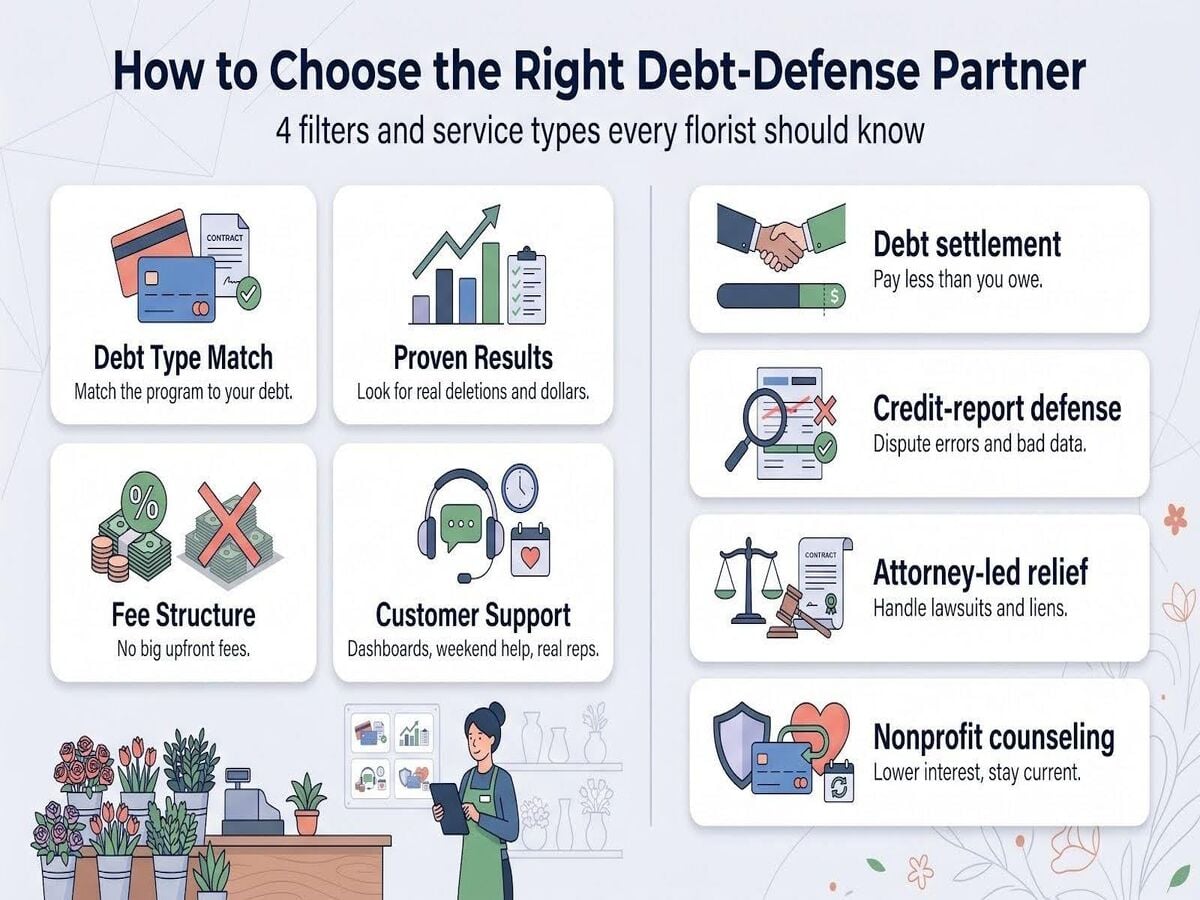
First, does the company handle your exact type of debt? Some specialize in consumer credit-card balances, others in merchant cash advances or credit-report disputes. One short call can save weeks of delay.
Second, can they show real results? Look for concrete numbers, such as collections removed or dollars settled, rather than vague promises.
Third, how do they charge? Reputable programs charge nothing upfront and earn a fee only after results post. A large setup fee is a red flag.
Fourth, will they actually be reachable? Between weddings, sympathy work, and payroll, you cannot spend a Tuesday on hold. A dashboard, weekend support, or a named account rep matters more than it sounds.
Your Options, Situation by Situation
If Old Collections Are Dragging Down Your Score: FightCollections.com
The most common credit problem florists face is not a lawsuit; it is a stray collection account or two that quietly blocks a loan or lease approval. That is the specific problem Fight Collections is built to solve.
Rather than telling you to stop paying anything, the service goes after the paperwork behind each collection. Pressing collectors to produce the original contract, full payment history, and every legally required notice makes many of those marks vanish. When a collector cannot produce that documentation, which happens more often than you would expect once a debt has been sold and resold, the item has to come off your report. This documentation-first playbook is showcased in case studies on fightcollections.
A few things make it a sensible fit for seasonal business owners. You keep paying your regular bills, so there is no "stop-paying" strategy or special savings account. The fee is a flat monthly amount rather than a percentage of your debt. And because the FCRA gives collectors only a 30-day window to respond, unverified items tend to clear in a few credit-bureau cycles rather than dragging on for years.
It is the right first call when your balances are small, but the collection marks are what block approvals, when the debts look wrong (incorrect amounts, sold multiple times, or past the statute of limitations), or when you simply need a cleaner report before financing equipment or opening a new supplier line.
If You Are Carrying Large Balances You Cannot Repay in Full: Debt Settlement
When credit-card or unsecured balances climb into the tens of thousands, and minimum payments only tread water, debt-settlement firms negotiate a lump-sum payoff for less than you owe. Established names such as Freedom Debt Relief and National Debt Relief run this model, and National's intake is set up to combine personal and small-business balances in one plan, which suits florists who have mixed the two. Expect fees in the range of 15 to 25 percent of enrolled debt, charged only after each account settles, and a temporary dip in your score while balances sit unpaid. That makes settlement best when you can tolerate the short-term hit to clear the debt for good, not when you need a loan within the year.
If a Lender Has Filed, or Threatened, a Lawsuit: Attorney-Led Help or a DIY Answer
Some debts move from phone calls to the courthouse: a lien on the delivery van, a frozen account, or a summons on the counter, often tied to a merchant cash advance with a daily ACH draw. When lawyers are involved, you want lawyers on your side. Firms like Delancey Street pair settlement negotiators with attorneys who can challenge predatory contracts and, in many cases, pause aggressive withdrawals, which helps owners already coping with seasonal revenue dips on top of a lawsuit.
If you have been served but cannot afford counsel, a guided tool such as SoloSuit helps you file a court-ready Answer in about 20 minutes, the essential step that stops a default judgment and buys time to negotiate. Most courts allow only 14 to 30 days to respond, so the clock, not the cost, is the real enemy here.
If You Are Current but the Interest Is Crushing You: Nonprofit Credit Counseling
Not every florist in debt is drowning. Sometimes you are still paying on time, but high card rates keep the balance from moving. Nonprofit agencies such as Money Management International and GreenPath set up a Debt Management Plan that often cuts card interest sharply and rolls everything into one monthly payment, usually for a modest setup and monthly fee. You agree to close the enrolled cards and repay the principal over three to five years, but the credit impact is gentle because accounts stay current.
If You Are Not Sure Which Path Fits: A Two-Track Advisor
When your credit is only borderline and you cannot tell whether to consolidate or settle, a firm like Accredited Debt Relief runs a soft-pull check and maps both routes: a consolidation loan if you still qualify, and settlement if you do not. Confirm the firm is licensed in your state, and ask who handles the day-to-day work once you enroll.
Keep this guide handy. Seasonal income will always mean uneven months, but a late notice or a collection letter does not have to become a lasting mark on your personal credit. Match the problem in front of you to the right fix, dispute what is not valid, settle what is, and get legal help the moment a lawsuit appears, and you can get back to the work that actually fills the shop.