For centuries, floristry has celebrated a singular moment. The perfect flower. The peak of color. The moment a flower is considered to be at its most beautiful.
Yet nature was never designed to stand still.
Every leaf, stem, and flower exists within a cycle of emergence, growth, maturity, decline, and then a return to nature. Beauty is not simply found in one single moment, but in the journey between each of these states.
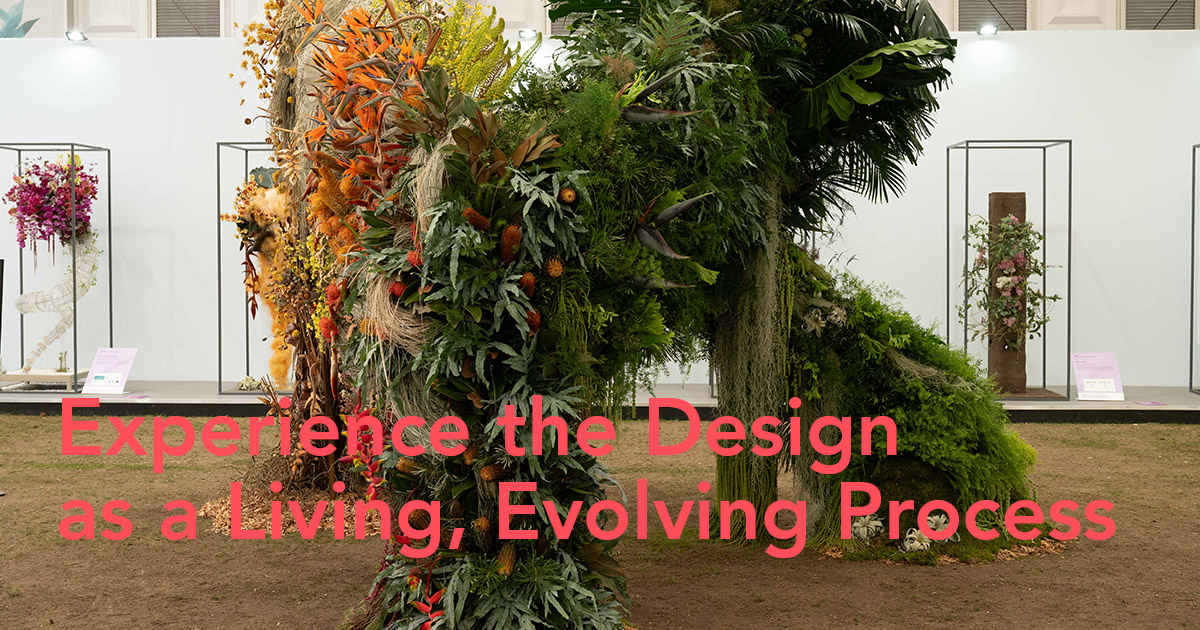
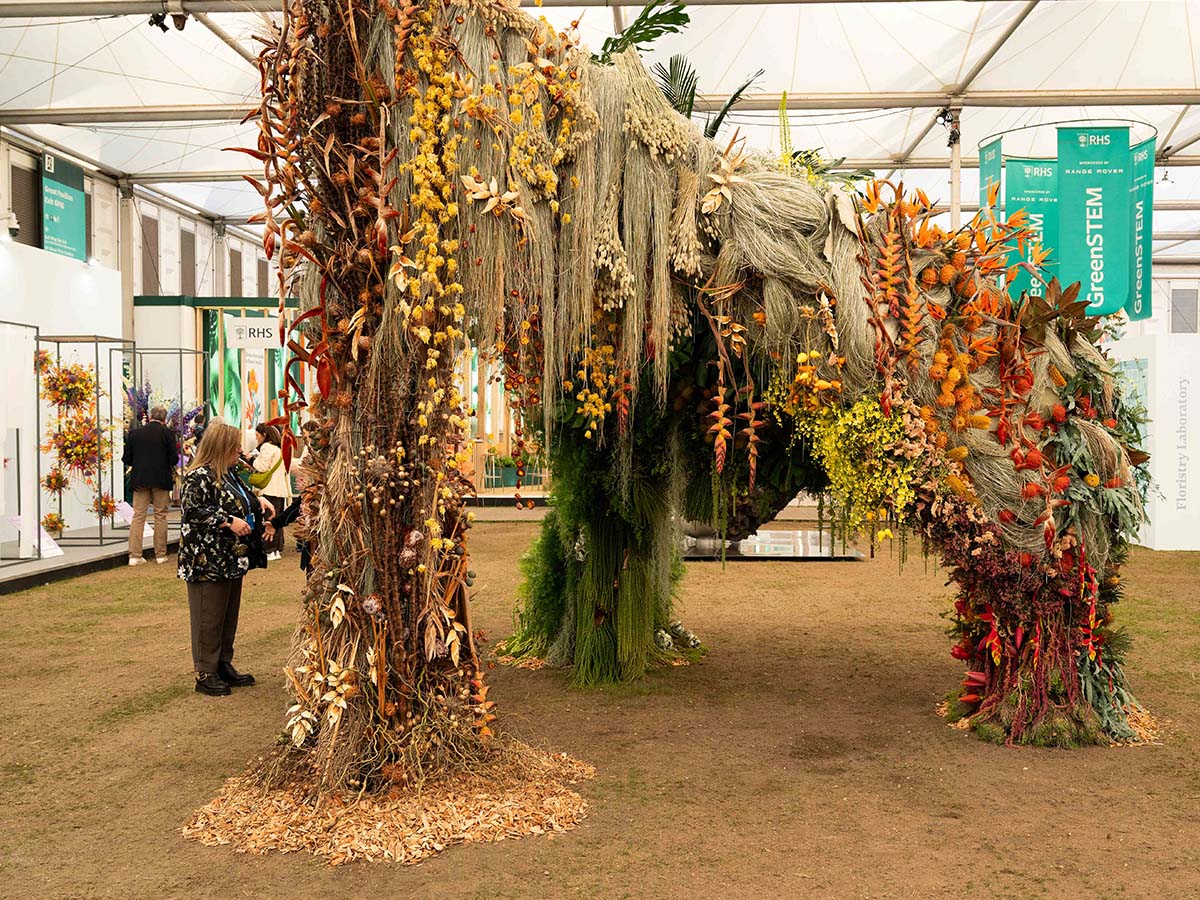
This concept became the foundation of Chlorophyll, an immersive installation by Acacia Creative Studio that encouraged visitors to experience the design not only for its materials, but as a living, evolving process.
Presented at the RHS Chelsea Flower Show 2026, the installation invited visitors to walk through the lifecycle of chlorophyll itself. Chlorophyll is the pigment responsible for transforming sunlight into energy, sustaining nearly all life.
Chlorophyll – Beyond the Flower
Floristry has traditionally focused on perfection.
A flower at its peak. A perfectly composed design. A moment captured in time. But what if the most interesting story happens before and after that moment?
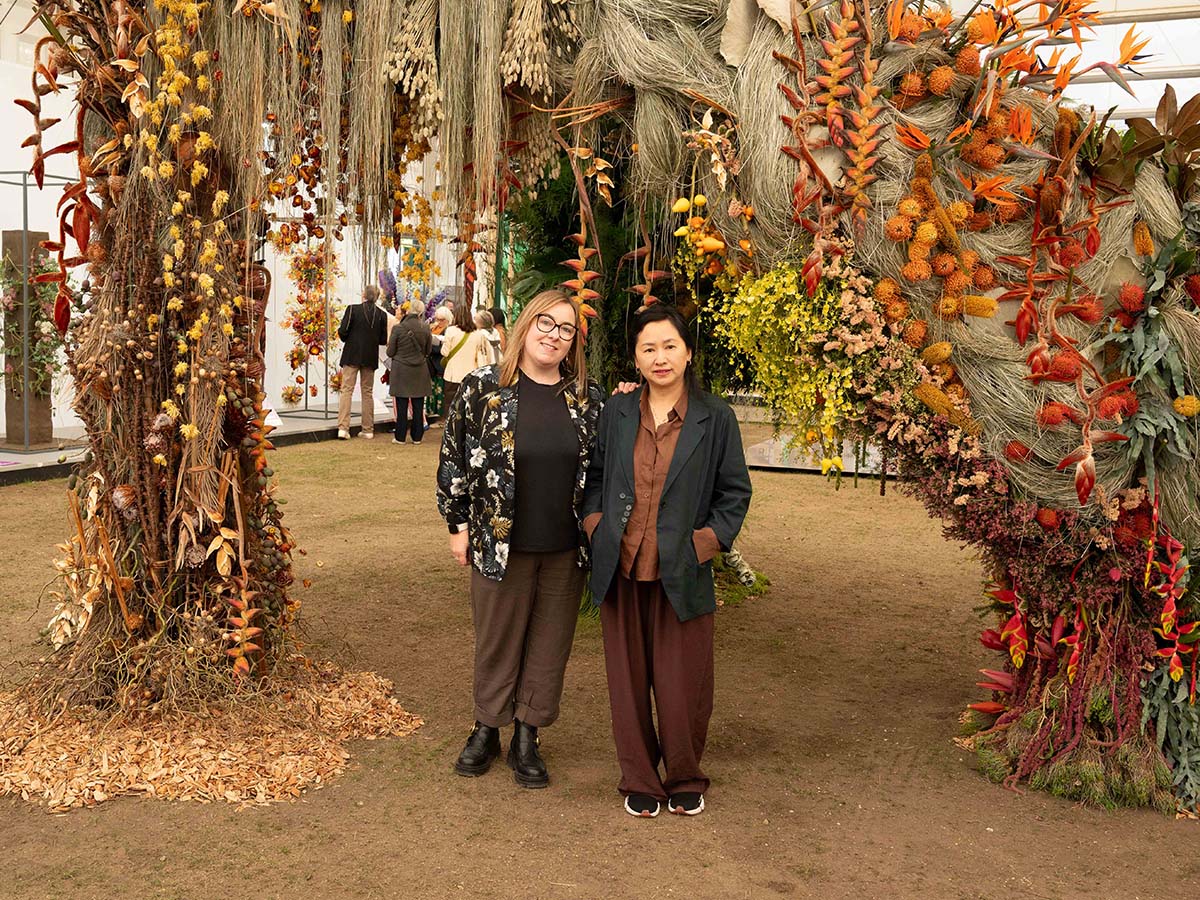
Chlorophyll aimed to move attention away from the final result and pull focus toward the invisible process that makes this beauty possible in the first place.
“Our goal was to create a floral installation that captured more than just a single moment in nature,” explains Rachel Kennedy, Co-Founder of Acacia Creative Studio. “We wanted visitors to experience the entire lifecycle. Too often floristry celebrates things in perfection, but nature just doesn’t work that way. Those colors, textures, and forms that only emerge through the fading of plant material are just as incredible as those at their peak.”
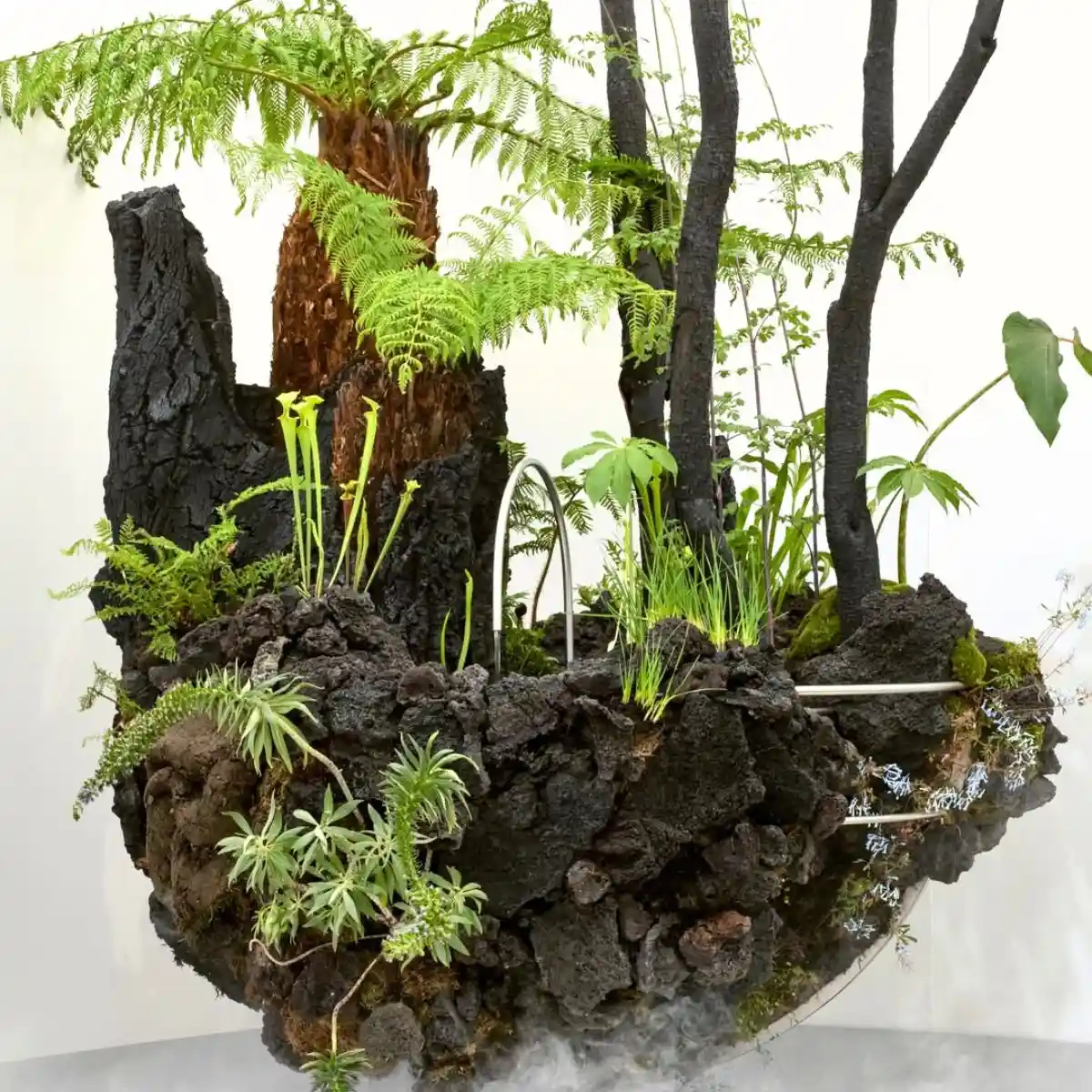
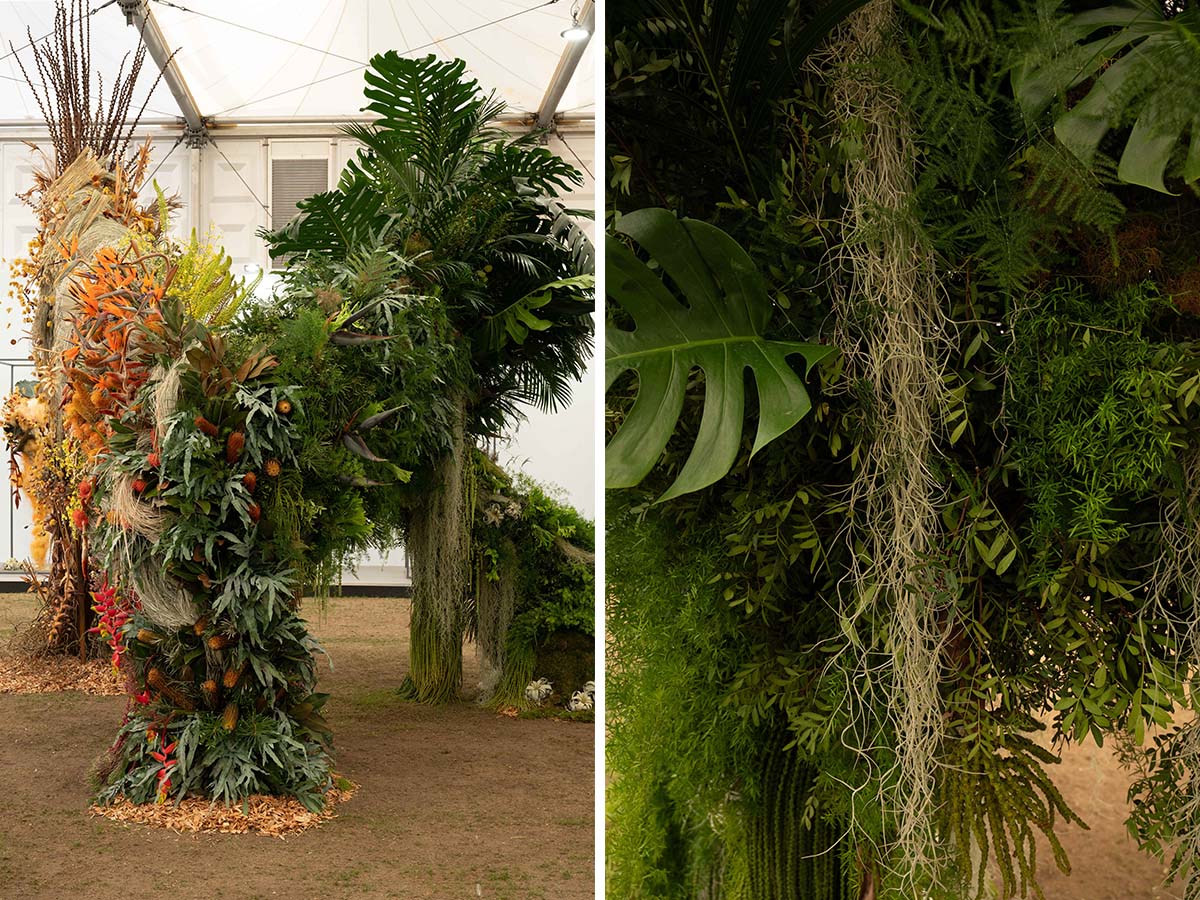
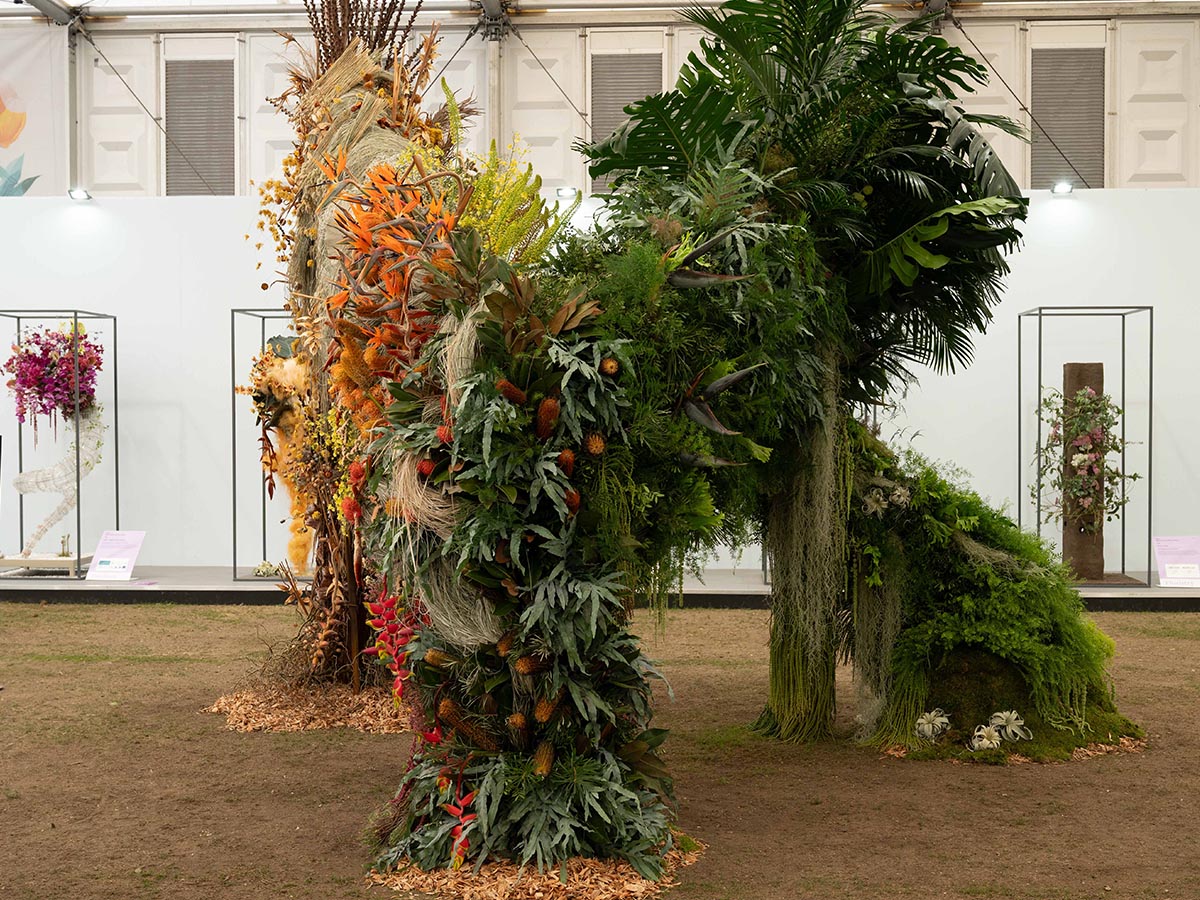
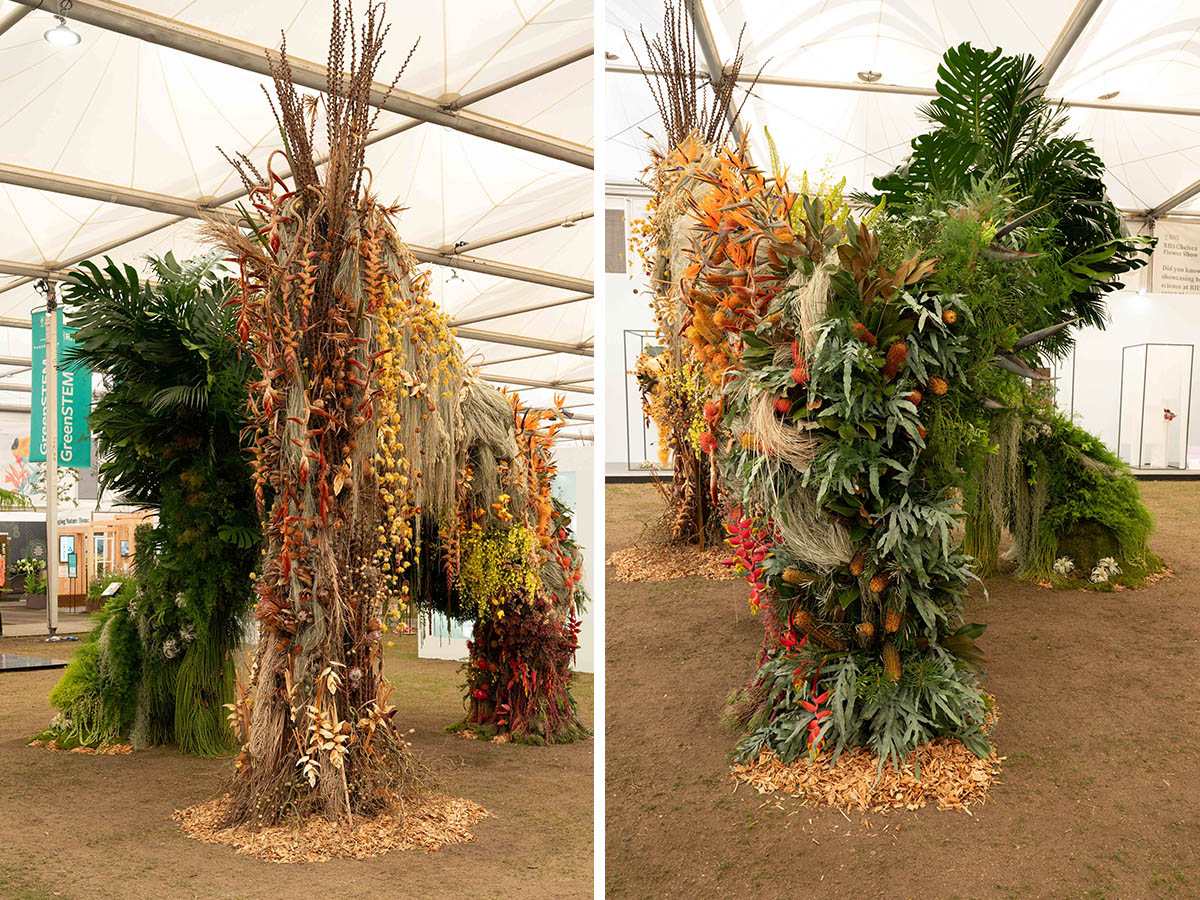
The design began with an eruption of fresh, clean greens, showing emerging growth. Materials appeared energetic, with an upward movement, climbing almost instinctively toward the light. Ferns, moss, Tillandsia, and delicate tropical foliage created a sense of momentum.
As the journey unfolded, the installation expanded and reached its point of maximum intensity. Here, towering tropical foliage dominated the space. Huge Monstera leaves stretched overhead, balanced with ferns and palm leaves. Dense green textures surrounded visitors beneath a canopy of abundance. In this space, chlorophyll was at its strongest, and growth at its most powerful.
Yet nature never remains static.
Beauty Beyond the Peak
Our fascination with perfection is a relatively modern idea.
For centuries, artists documented nature far more honestly. The Dutch Masters and still-life painters in the 16th and 17th centuries regularly included overripe fruit, fading flowers, imperfect leaves, and signs of decline alongside abundance and beauty in their still-life arrangements. These details were not flaws, but reminders of life’s fragility, natural transitions, and the fleeting nature of everything.
Chlorophyll shared a lot in common with these historic works, possibly more than with traditional floral installations. Rather than celebrating nature at a single perfect moment, it embraced the entire journey.
Rather than hiding decline, it celebrated it.
The Beauty of Decline
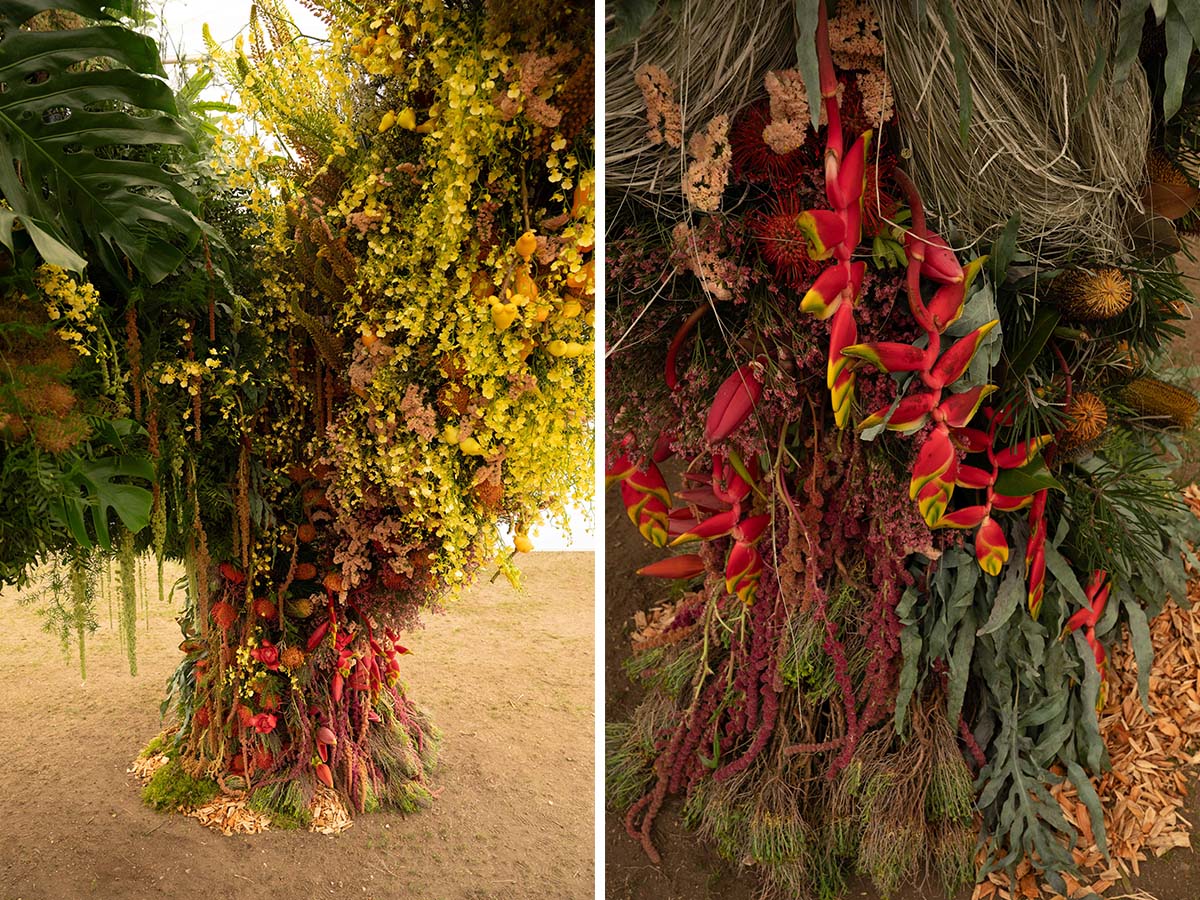
As visitors moved through the installation, subtle shifts began to emerge. Greens softened. Textures dried. Movement slowed down.
The transition was not uniform across all materials. Just as in nature, each species moved at its own pace. Some retained their color while others faded. Some became skeletal, while others shed petals.
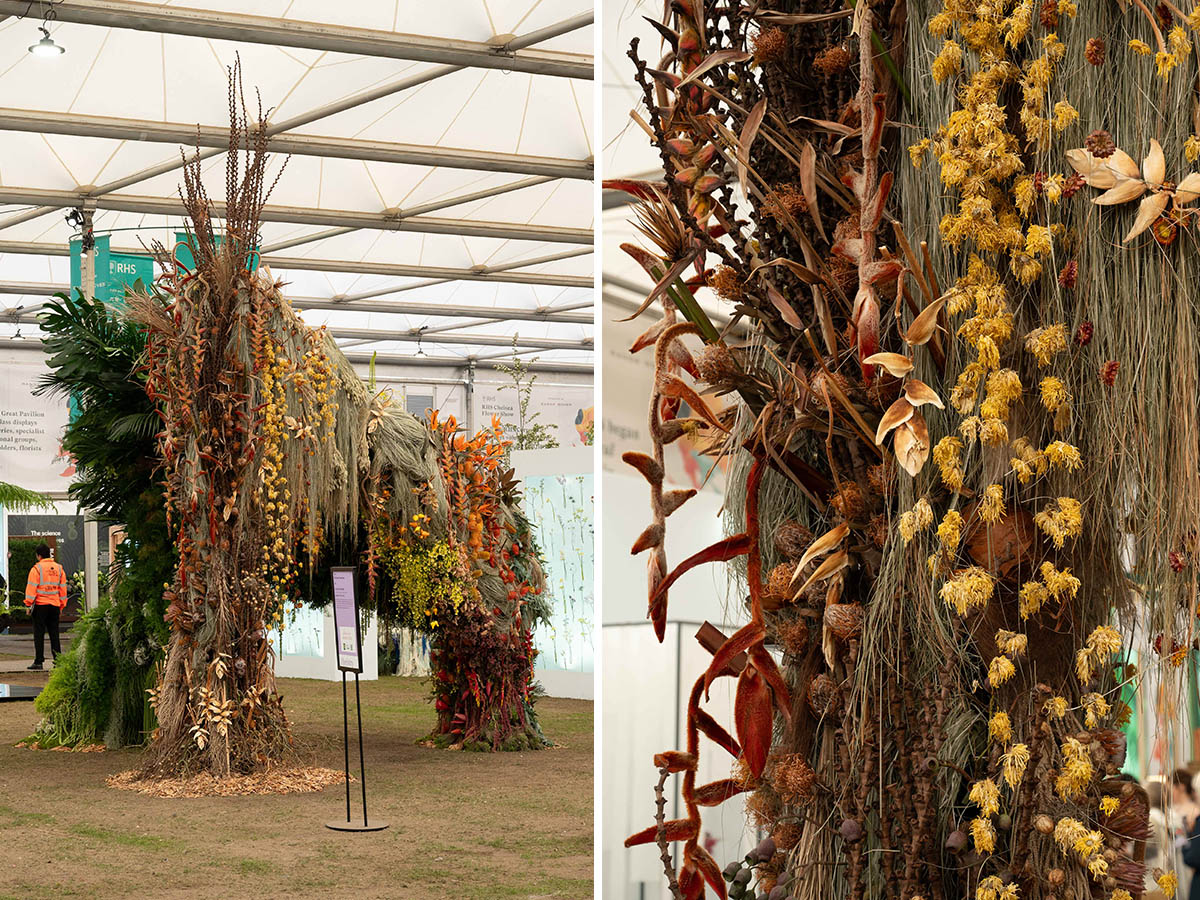
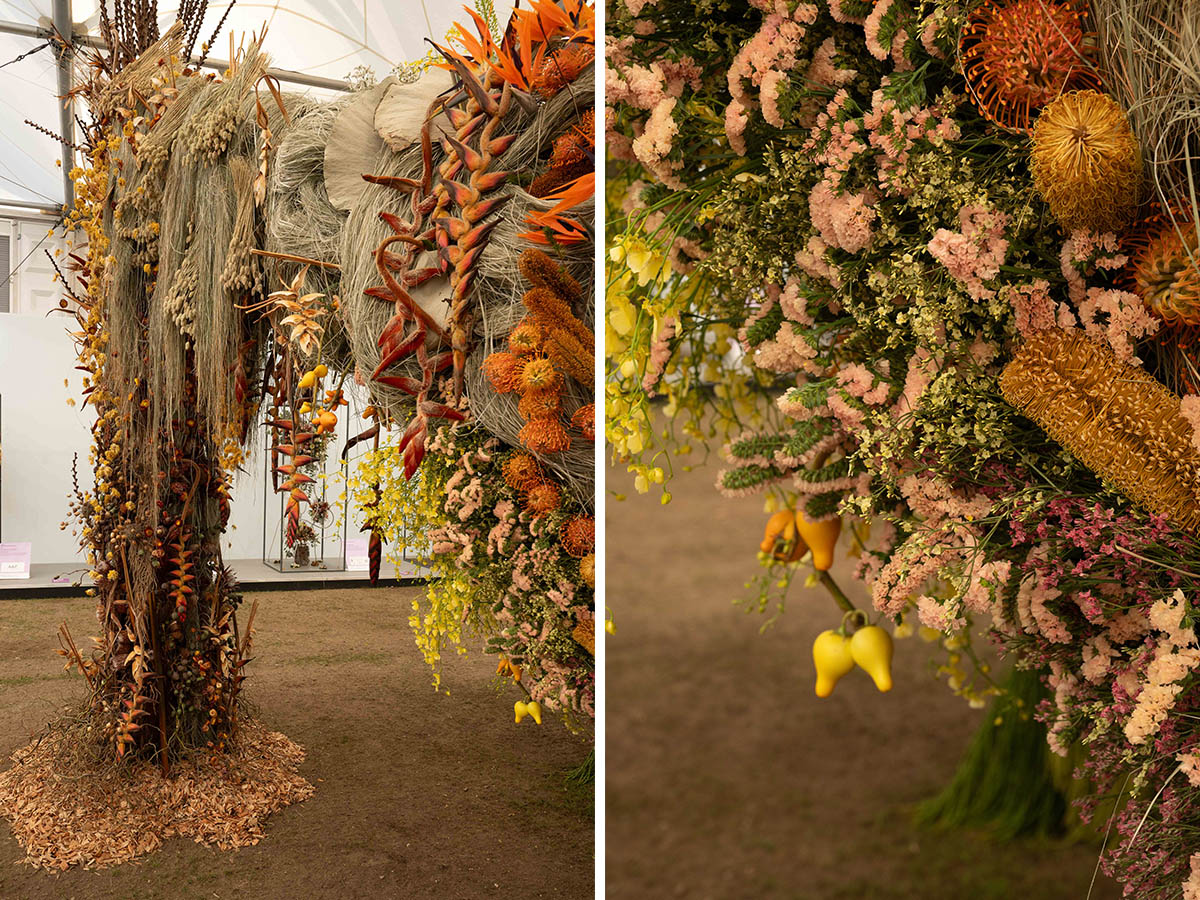
Then something unexpected happened. Color arrived. Not instead of decline, but because of it. Rich oranges, faded blushes, yellows, copper tones, seed heads, and sculptural botanicals appeared throughout the installation. These dried materials created a strong contrast against the lush green forms that preceded them.
Rather than allowing decay to be an ending, Chlorophyll celebrated it as another stage of beauty. The installation stood as a reminder that transformation is not loss, but simply change.
As the journey continued, the textures became increasingly rugged and architectural. The final structure rose to its highest point, showing the beauty of maturity before ultimately, and quite dramatically, returning to the earth. Here, the cycle was complete, as materials faded into the ground, ready to give back and start again.
From Arrangement to Experience
The project also reflected a change taking place within contemporary floristry.
Increasingly, floral designers are moving beyond designing arrangements and are instead considering complete environments. Visitors no longer simply observe floral work. They want to move through it, become immersed within it, and experience it physically and emotionally. Chlorophyll was designed with this in mind.
Towering structures allowed space for pathways beneath. Layered textures invited closer looking. Materials hung, climbed, and trailed, catching attention and creating moments of discovery wherever visitors looked.
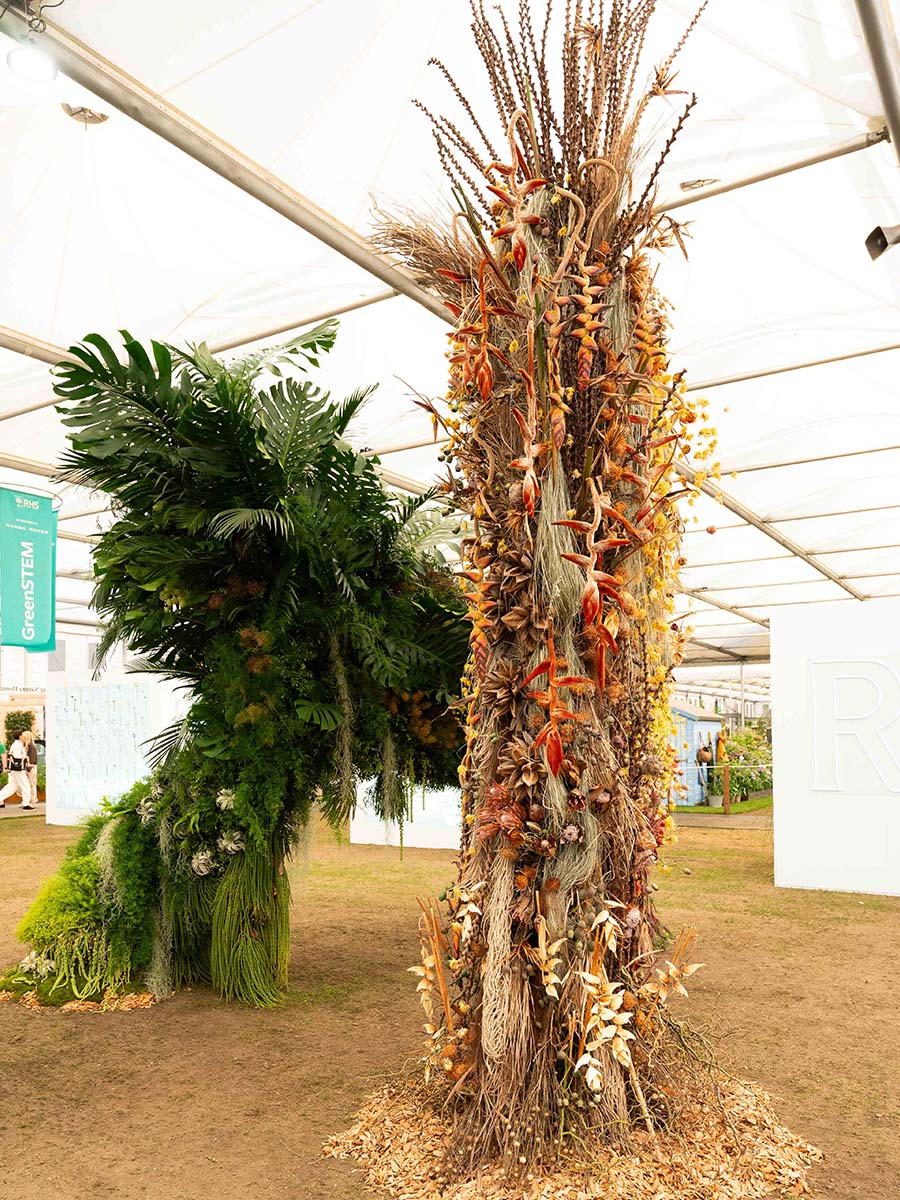
The installation was not intended to be viewed from a single angle. It was designed to be explored.
For Acacia Creative Studio, this reflects an important shift within the industry itself.
“For us, Chlorophyll became a conversation about process rather than outcome,” says Rachel Kennedy. “The floral industry is built on so many unseen systems, from growing and harvesting to mechanics, design, and installing. We wanted to celebrate those hidden layers in the same way chlorophyll quietly supports life beneath the surface.”
Bringing the Story to Life
To further blur the boundary between installation and experience, Acacia introduced wearable designs for RHS Chelsea Flower Show Press Day. Using botanical elements drawn directly from the installation itself, expressive wearable pieces were created and placed on models for the show day.
One model embodied the declining theme through delicate yellow flowers and flowing natural grasses. The other represented the intensity of chlorophyll through the complex textures of rich green fern leaves.
By moving through Chelsea and interacting with visitors, they transformed the installation from a static display into a living narrative. The story stepped off the structure and into the crowd. In doing so, Acacia posed an interesting question: where does floristry end, and where do fashion, performance, and storytelling begin?
Collaboration Beneath the Surface
At its heart, Chlorophyll celebrated something often overlooked. Not flowers or color, and not even plants themselves. But process. The invisible system that allows everything to happen.
In many ways, this concept reflects the floral industry itself. Behind any installation is a network of growers, suppliers, designers, logistics, and creative collaborators. Much like chlorophyll, their contribution is essential, yet often unseen.
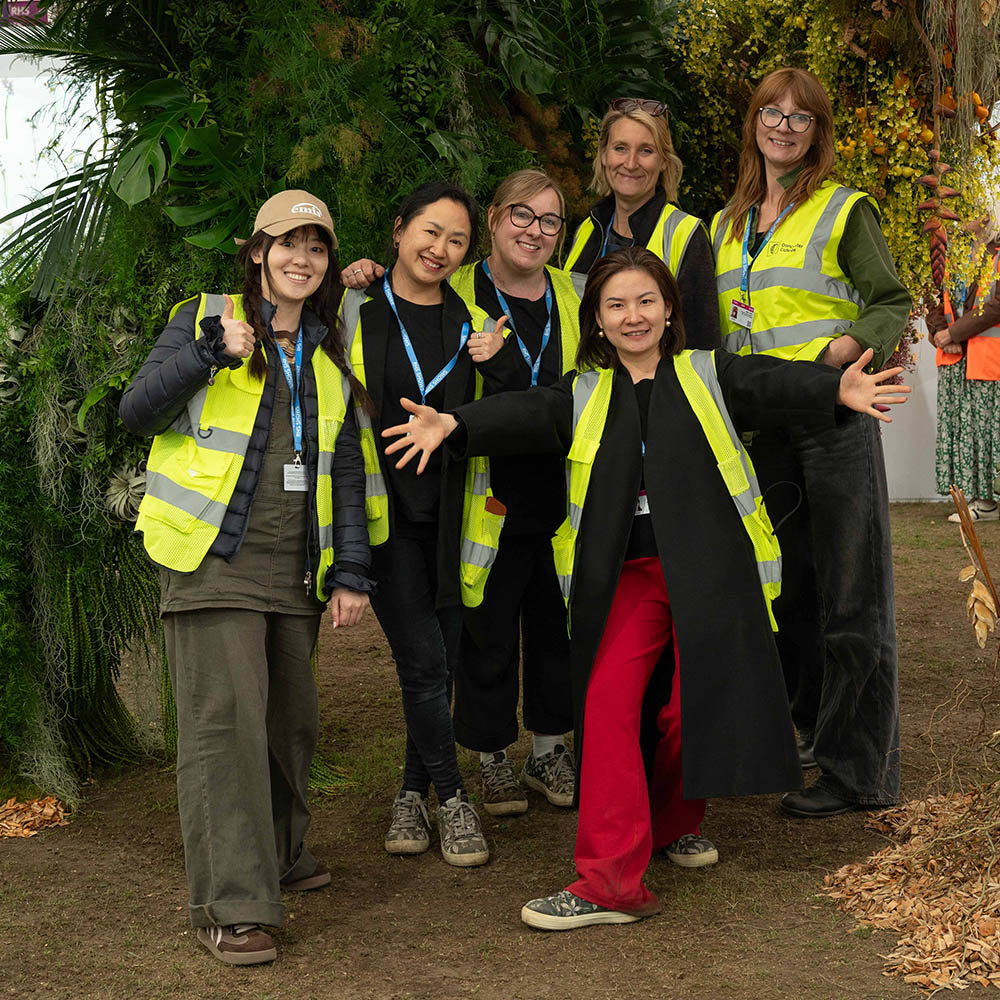
One of the most important elements of this project was collaboration. In the weeks leading up to Chelsea, Acacia Creative Studio worked alongside a team from China, who trained with the studio and learned techniques focused on creating texture, movement, and sculptural form through natural materials.
“One of the most exciting parts of the project was exploring textures and playing with materials and creativity,” says Xue Wang, Co-Founder of Acacia Creative Studio. “Nothing in nature stands still and we wanted to have dynamic shifts of movement. We spent months experimenting with texture and form to allow us to create as if the installation was still growing and changing as visitors moved through it.”
The project was supported by selected industry partners whose expertise helped bring the vision to life. Tom Brown Wholesale and Flowex supplied the botanicals that defined the installation’s complex color palette and dramatic textures, while local collaborators Steel Supplies developed the bespoke steel framework that formed the structural backbone of the immersive design.
Together, these collaborations reflect one of the installation’s key messages: often, the most important elements are the least visible.
Looking Closer
As floristry continues to evolve, projects like Chlorophyll suggest an interesting future for the industry. One where floral design is no longer confined to decoration. One where installations carry messages and stories, evoke emotion, and encourage curiosity. One where beauty is not only found when flowers are at their peak, but in the entire journey from emergence to decline.
Chlorophyll invited visitors to look closer. Not just at the plants themselves, but at all of the cycles, systems, and transformations happening beneath the surface. And perhaps that is the role floristry can play today: helping us see the stories hidden within the natural world all around us.
All photos by Claire Coleman (@ateliervandecasteele), courtesy of Acacia Creative Studio.