An event florist's biggest pieces rarely outlive the party. By the time the venue locks up, the ceremony arch that took hours to wire is usually in pieces in the back of a van. What a future couple will ever see of it is a photograph: on a phone first, then perhaps across a consultation table and, with some luck, in a frame by the studio door.
Very often the best of those photographs were not taken by the florist. They turn up weeks later as downloads from the couple's photographer's online gallery, sized for a screen. Stretched over a full portfolio page, a download like that goes soft at every petal edge. The simplest fix is to ask for the full-size file, and to ask early.
A Photo of Real Flowers Does Work a Drawing Can't
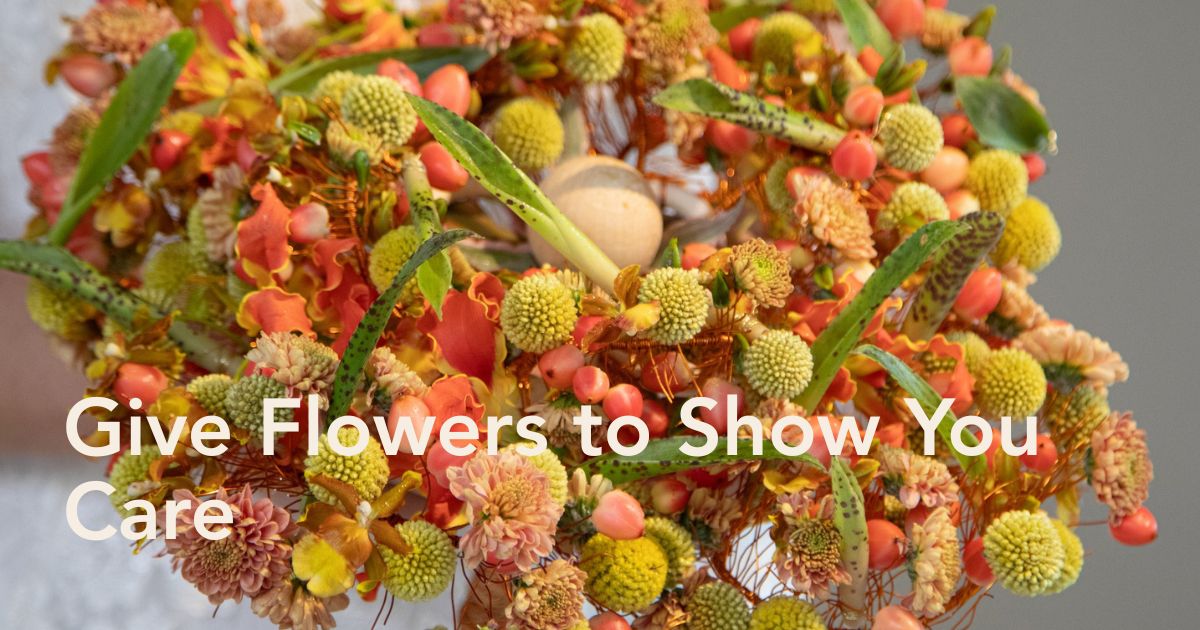
For a 2023 study in the Journal of Applied Communications, funded by the Floral Marketing Fund, a University of Georgia team made simple social media ads for flowers. Each paired a flower picture with a short call to act; the paper gives "give flowers to show you care" as the kind of line used. Two ads showed a photo of roses or of tulips. A third used a clip-art flower graphic.
Every ad also came in a five-second animated cut. The photos got moving text and a bokeh light filter. In the graphic version, the flowers popped up as if growing while a bee circled them. Online, 8,488 American adults were split at random among the six ads and a control group that saw none.

Then came a plain question: which flower was in the ad? Nobody was told, so people went on what they already knew. Of those shown the still roses, 53 percent got it right. The still clip-art managed 30.6 percent. Its animated version fell to 20.3 percent. Movement made no significant difference to how likely people said they were to buy flowers, either.
The authors are frank about the limits. They measured intention, not actual purchases, recruited everyone online, and suspect a single image was "likely not enough" to move people's intention to buy. Their advice is still direct: ads "that incorporate quality images of floral products," because "floral products already possess strong visual appeal applicable to photo media formats." A consultation table is not a social feed. Still, the nearest thing a florist owns to that still photo of roses is a clear picture of an arch that really stood at a real wedding.
Ask the Photographer Before the Wedding
In a 2021 piece for Thursd, floral designer Diana Toma, whose bio counts more than 300 private and corporate events, described the usual pattern. "And, oftentimes, if we're doing weddings, we send the flowers away and hope to get some nice images from the photographers," she wrote. Then the files arrive, and too often they "don't really bring justice to your flowers."
Hope is a thin plan when those pictures will be selling the next job. Toma's own answer was to work with a photographer rather than wait on one. Over the year before that post, a professional photographer helped with her images "for all sorts of more official publications, Thursd included," and coached her on everyday shots for social media. For a wedding florist, a smaller version starts with one message to the couple's photographer during planning. It asks for a few frames of the arch and the tables before the guests come in, at full size rather than as gallery downloads. If only a screen-sized gallery download ever arrives, it can be enlarged with an image upscaler, which also clears away some of the blur. The finer texture that appears is the software's estimate, though, so the bigger file needs a close look beside the photographer's other frames before anything goes to print.
Getting the frames and using them are separate matters. Wedding photos usually stay the photographer's work. Their contract with the couple decides who may use them and how, so permission to print or edit belongs in that same message, along with the wording of the credit. Uploading or editing any of these pictures calls for the right to use the image itself and, where the couple or their guests appear, their consent for that particular edit and use. Frames of the arch or the tables with nobody in them avoid most of this and keep the eye on the flowers anyway.
Three Hundred Dots per Inch
The University of York Library's guide to poster printing puts the problem in one line: "just because a photograph looks OK on screen does not mean it will look fine when printed." Its worked example starts with the 22-inch monitors on campus. They fit 1,920 pixels into a width of 47.3 centimeters, about 41 pixels per centimeter, so a 500-pixel image can sit just over 12 centimeters wide there. On paper, the guide says, that same image "shouldn't take up much more than 4 cm."
The gap comes from "an old printer's rule" it cites: about 300 dots per inch for an image to look good in print, which a younger printer would call roughly 120 pixels per centimeter. A picture meant to be 15 centimeters wide on paper needs a file 1,800 pixels wide. A background covering a whole A1 poster would need 10,000 pixels on its long side, "which may be tricky to source." Below the rule, the guide's verdict is blunt: "it will look rubbish."
In inches, the same rule gives quick answers. An 8-by-10-inch portfolio page wants a file of about 2,400 by 3,000 pixels. A 16-by-20 for the studio wall wants about 4,800 by 6,000. The guide does allow "a bit of leeway," and an image slightly smaller can get by if necessary. It adds one practical step for anyone using an outside printer: check what resolution they require.

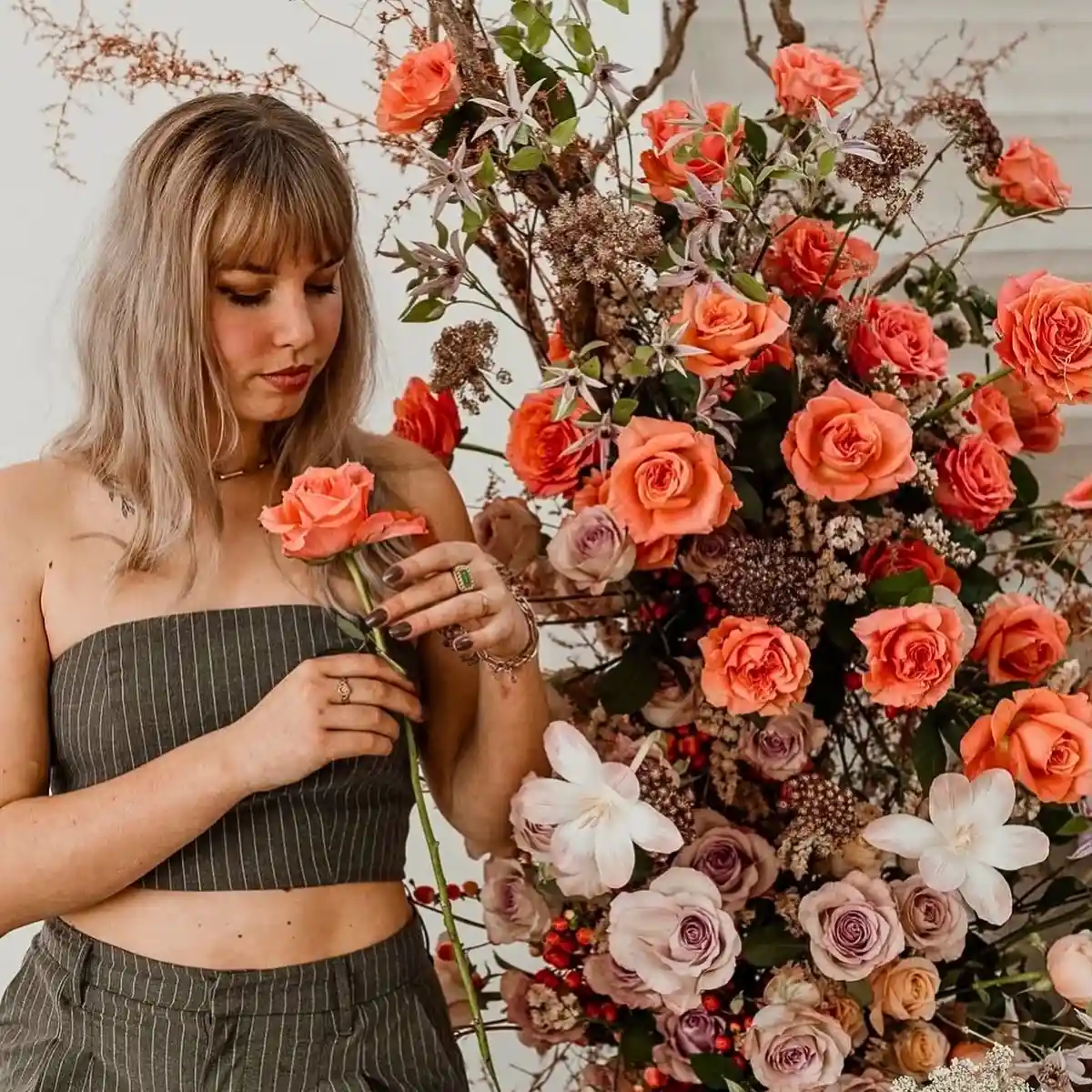
Photo: @popupmob
A Few Minutes With the Arch Before the Guests Arrive
Toma's post also describes how far simple gear can go. For a talk her photographer was preparing, she handed him six arrangements, each built around things florists "oftentimes have problems photographing." He had to shoot all of them with "one light source and a regular camera phone, not even in PRO mode."
Her list of those problems could be a wedding day's inventory: transparency, glass and other reflective surfaces, vertical arrangements, heavy texture. And color, which she called "a tricky one all the time," with yellow flowers that "almost never turn the real yellow that you see in reality." The thing to invest in, she concluded, is "not so much a lot of equipment, but first and foremost: knowledge."
An arch is about as vertical as an arrangement gets. The quiet stretch between the last stem going in and the first guest walking down the aisle is when it can be shot without anyone in the way. Stepping back far enough to leave floor around its base gives room later for a square crop or a tall printed page. Two or three close frames of single clusters catch the ruffle of a garden rose that a wide shot flattens. Holding the phone up beside the arch to compare its yellows with the real ones takes a minute, while a reshoot is still possible.
Choosing the Pictures Worth Printing Large
The York guide has a habit worth borrowing for a portfolio wall: "crop close in to the main subject of the picture." For a florist, the main subject is the arrangement, not the room around it. Every crop spends pixels, though. A tight crop from a gallery download can drop below that 300-dot line quickly, and that is usually the point where enlarging the file comes up.
A poster guide has no need for the next rule, and a florist does. The couple who books after seeing a lush arch on the studio wall expects that arch at their own ceremony. So the enlarged print has to show the design as it was delivered: no extra fullness, no fresher-looking roses, no stems that were never wired in.
Under each print goes the photographer's credit, worded the way the two of them agreed. It tells the couple across the table something too: this florist works well with the other people at a wedding, and that is part of what they are hiring.
The arch itself was gone before the venue closed. Somewhere on a photographer's hard drive, though, there is probably a full-size file of it, far larger than anything in the online gallery. Has anyone asked for it yet?