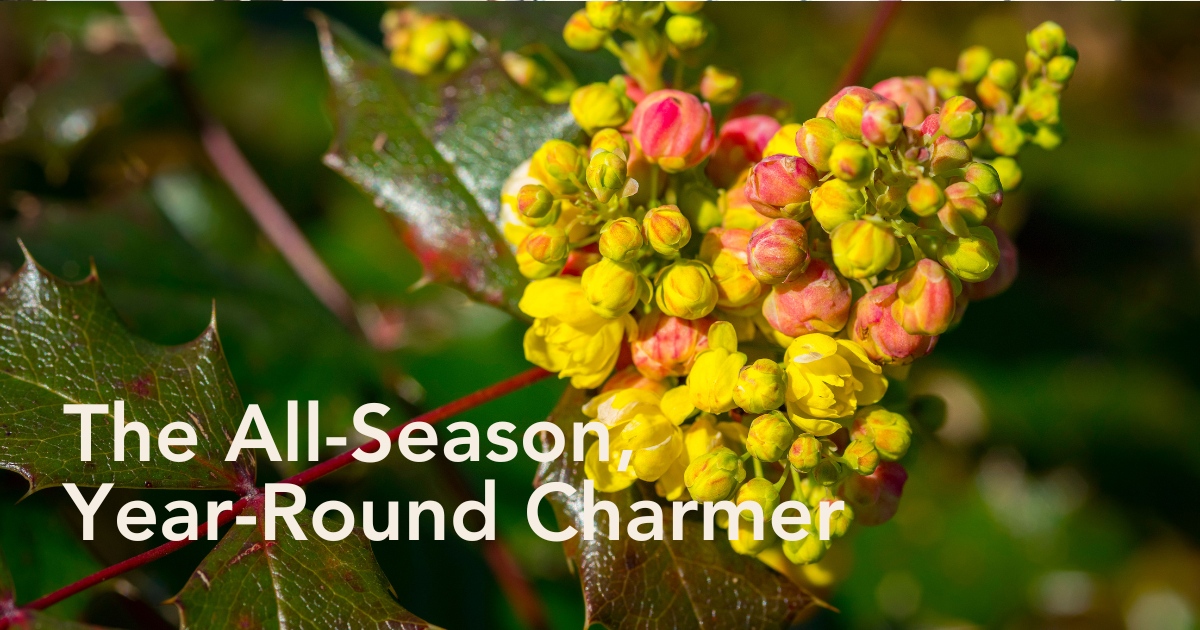
Creeping Oregon grape has a way of winning you over. In one compact shrub, you get glossy evergreen foliage, spring fireworks of yellow flowers, dusky blue berries, and rich winter color that slides from bronze to burgundy. It is the kind of groundcover that works when others give up, especially in dry shade or tricky slopes, carpeting difficult spots with its holly-like foliage, and goes on to produce those cheerful flowers in spring, before clusters of blue-purple berries come by late summer.
Understanding What the Creeping Oregon Grape Is?
Also known as creeping mahonia (or sometimes called low Oregon grape), this is an evergreen groundcover native to western North America, especially the Rocky Mountains and Pacific Northwest. Botanically, it goes by several names, and this can cause a little confusion if you are shopping for it at a nursery.
Its most widely used scientific name is Mahonia repens, though in recent botanical reclassification, it is also correctly listed as Berberis repens. Both names refer to the same species in the Barberry family. You may see it tagged as creeping mahonia, creeping barberry, or creeping grape holly. Whatever the label, you are looking at one of Western North America's most reliable and ecologically generous native groundcovers.
Notably, this evergreen’s shifting nomenclature is also why you often find nursery tags reading ‘Creeping Oregon grape Mahonia repens’ or ‘Mahonia repens creeping Oregon grape’ on the same bench. The species name repens is Latin for ‘creeping,’ which tells you how this plant moves in a low, steady, and spreading manner via underground rhizomes, instead of growing tall.
A mature plant typically stays between 15 and 45 cm in height, gradually expanding outward to cover 90 to 150 cm or slightly more over time. That makes Oregon grape creeping a natural solution for solid coverage without an aggressive, take-over-the-yard habit.
The fact that it is also evergreen means you have something to look at in every season, and that alone puts it ahead of many groundcover options. Plus, with its holly-like Oregon grape leaf, it reads as both ornamental and tough, fitting neatly into woodland, native, and modern landscapes.
Where Creeping Oregon Grape Grows Naturally
As perhaps already noted, creeping Oregon grape is native to a broad swath of western North America, from British Columbia south through the Rocky Mountains and Intermountain West all the way to New Mexico and Arizona. It is a common and often dominant understory plant in forests of Ponderosa pine, Douglas-fir, and mixed conifers, where it grows at elevations ranging from around 1,000 to 3,050 meters.
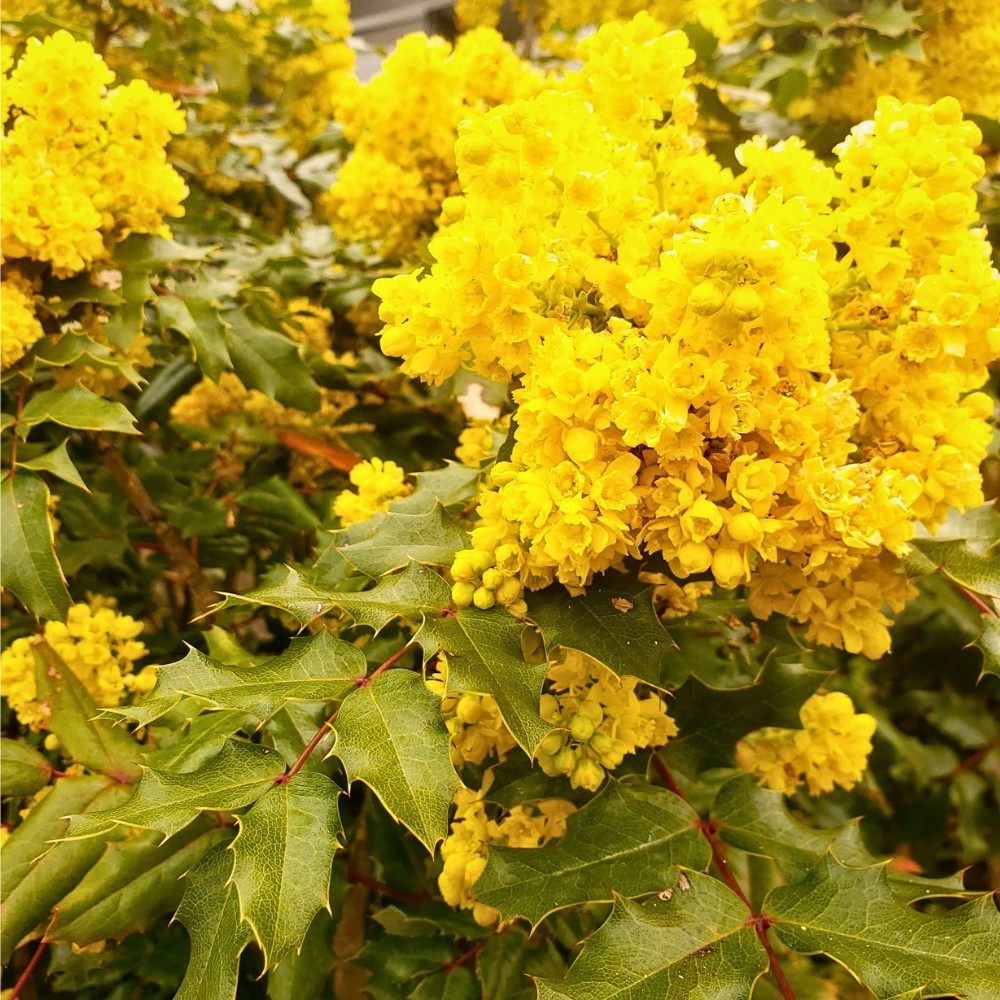
In those native forests, it thrives in the dappled shade beneath tall trees, in soils that are often rocky and dry, and in conditions where many plants would simply give up. This is the kind of background that makes Mahonia repens, creeping Oregon grape, such an adaptable garden plant, having spent centuries making peace with difficult conditions. That resilience follows it into cultivation.
Creeping Mahonia Growing Conditions and Care
If you are looking for a low-maintenance groundcover, creeping mahonia is as close to the ideal as you are likely to find. Here is what it prefers and what it will tolerate, which are often quite different things.
Light: Creeping Oregon grape grows well in full sun, partial shade, and even full shade. In deep shade, it may spread a little more slowly and produce fewer flowers, but it will persist where most other plants would fail. In full sun, particularly in hotter climates, it appreciates occasional irrigation during establishment.
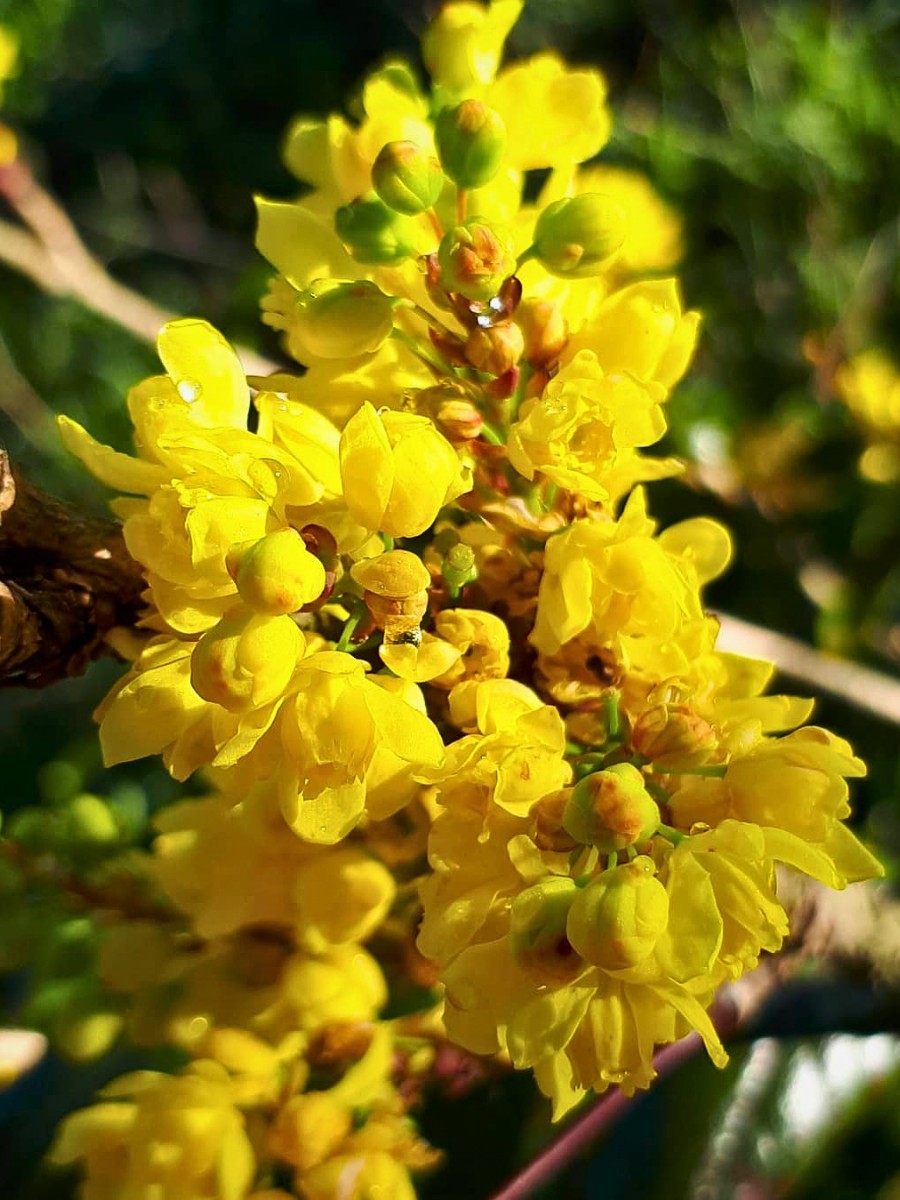
Soil: The plant is adapted to a wide range of soil types, from sandy and rocky to heavier clay. It prefers well-drained soils and will not tolerate standing water or saline conditions. It grows in acidic, neutral, and mildly alkaline soils, though a pH between 5.5 and 7.0 tends to give the best results.
Water: Once established, Oregon grape creeping specimens are notably drought-tolerant. They do not need regular irrigation in most climates and are a sensible choice for water-wise garden designs. During the first season after planting, consistent moisture helps the plant settle in and develop its root system.
Temperature and Hardiness: This is a cold-hardy plant, generally rated for USDA zones 4 through 8 or 9, depending on the source. It survives temperatures well below freezing with minimal protection, making it one of the toughest broadleaf evergreen groundcovers available for gardens in colder regions.
Fertilization: Very little is needed. In reasonably good garden soil, creeping Oregon grape requires no supplemental feeding. If growth seems slow in very poor soils, a light application of a balanced slow-release fertilizer in early spring can help.
Foliage, Flowers, and Fruit Through the Seasons
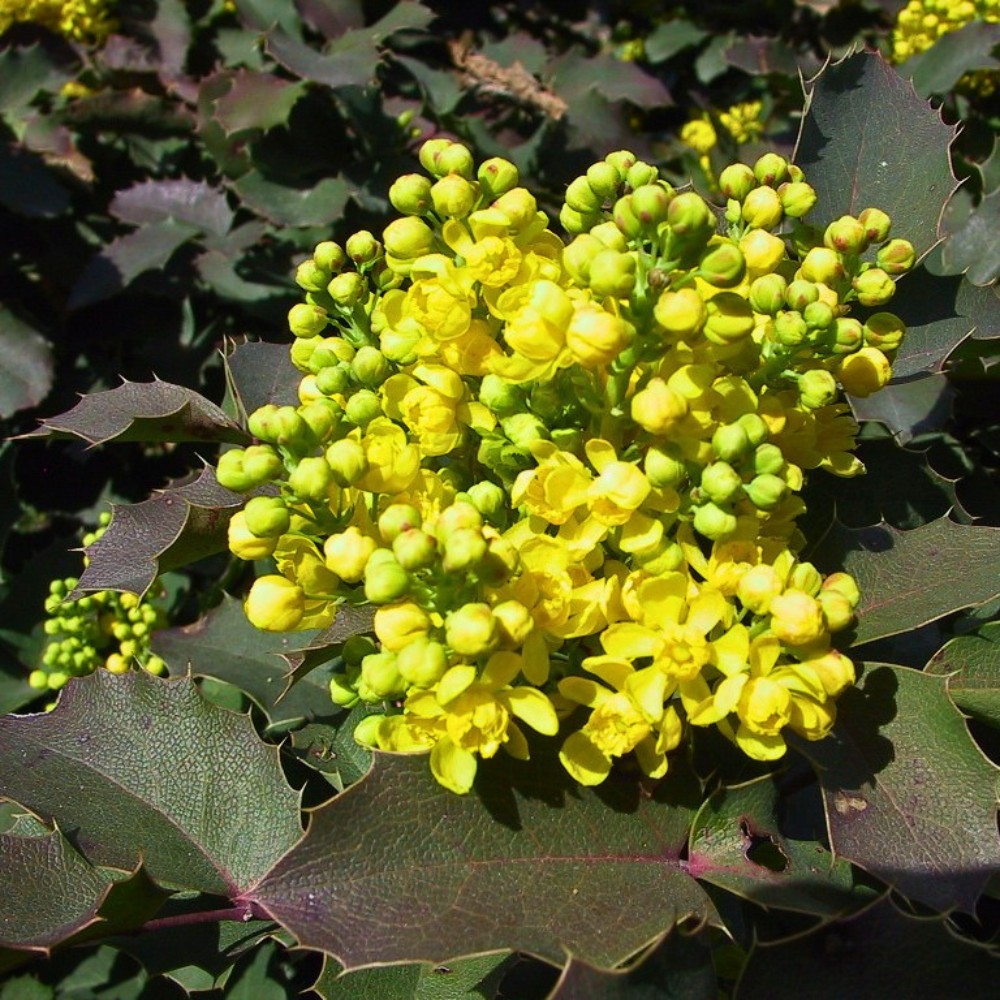
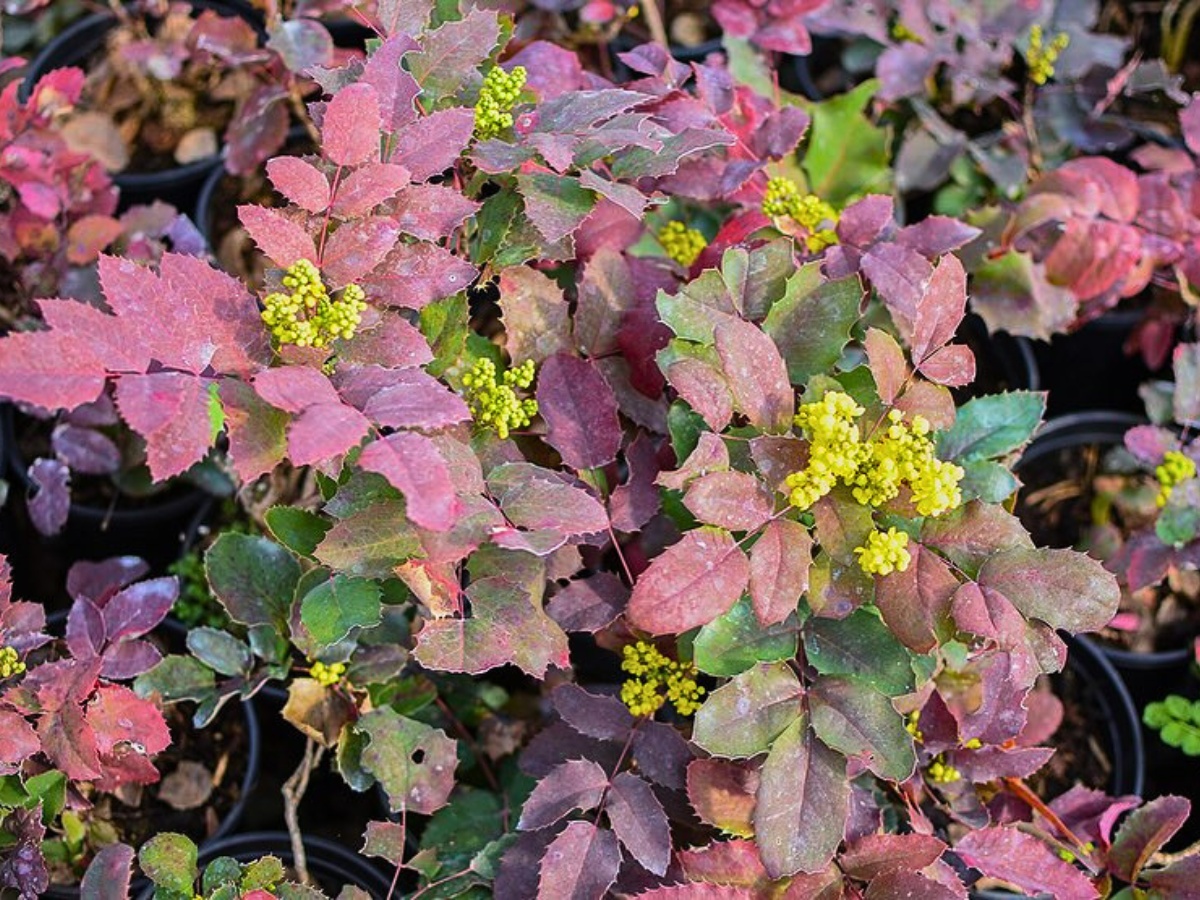
As it matures, the foliage is the first thing that makes many gardeners fall for these Mahonia repens plants. The compound leaves are made of rounded, toothed leaflets that resemble a softer, smaller holly, usually a dull or bluish green in spring and summer. In colder weather, those same leaves change to dusky tones of plum, bronze, maroon, or deep red, giving year-round structure even when surrounding perennials die back.
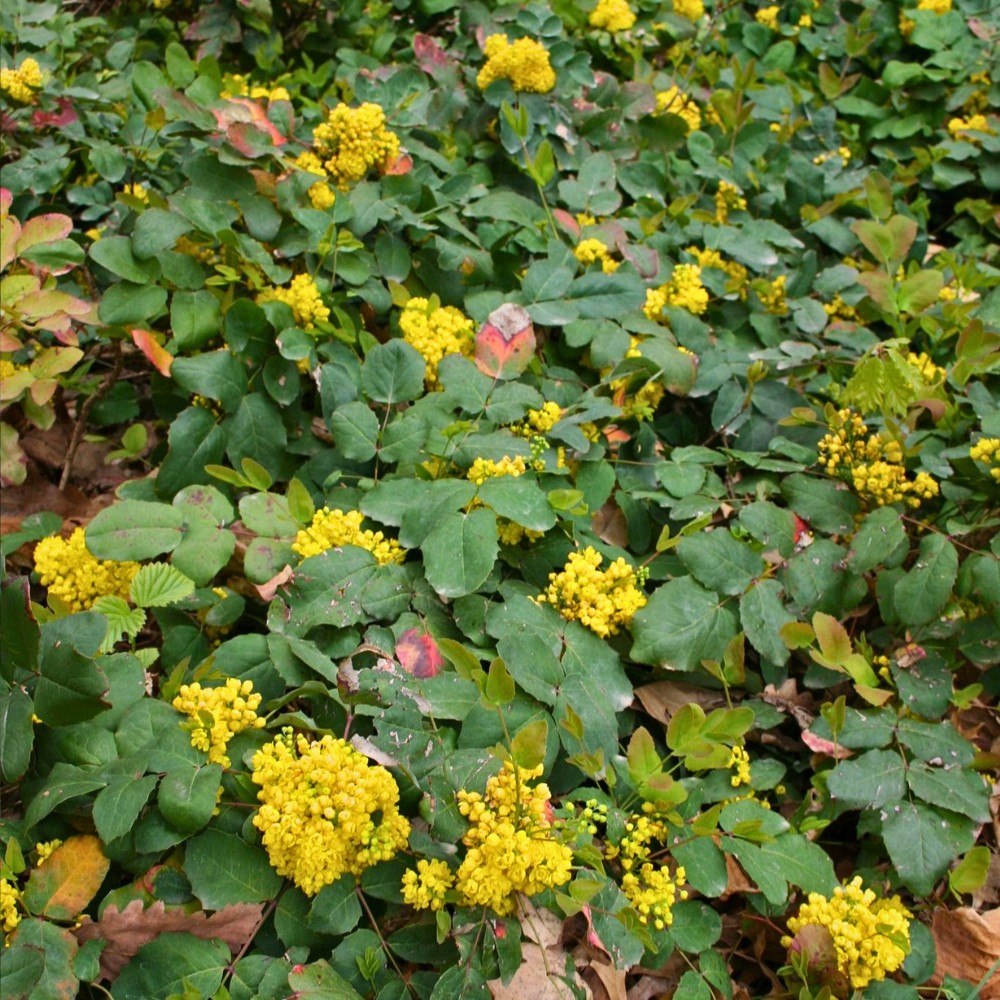
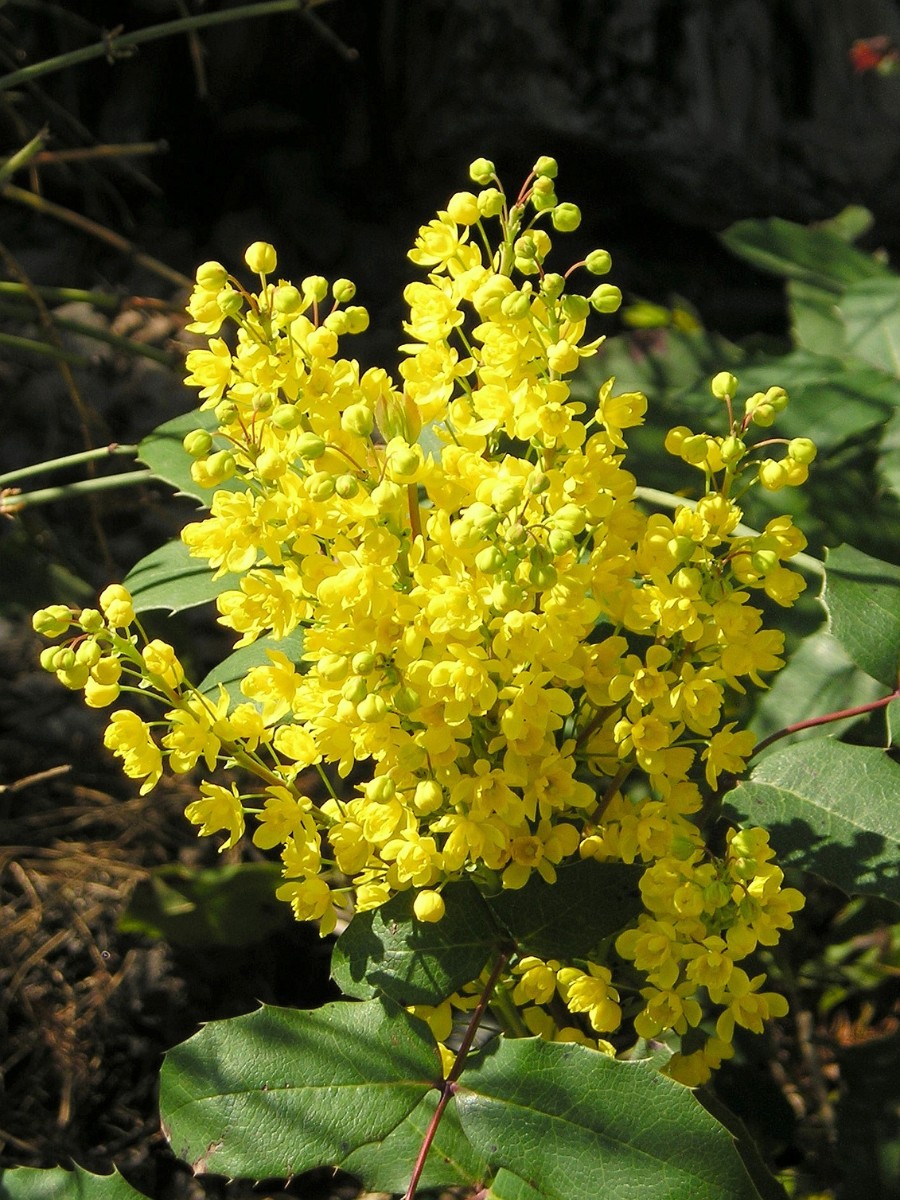
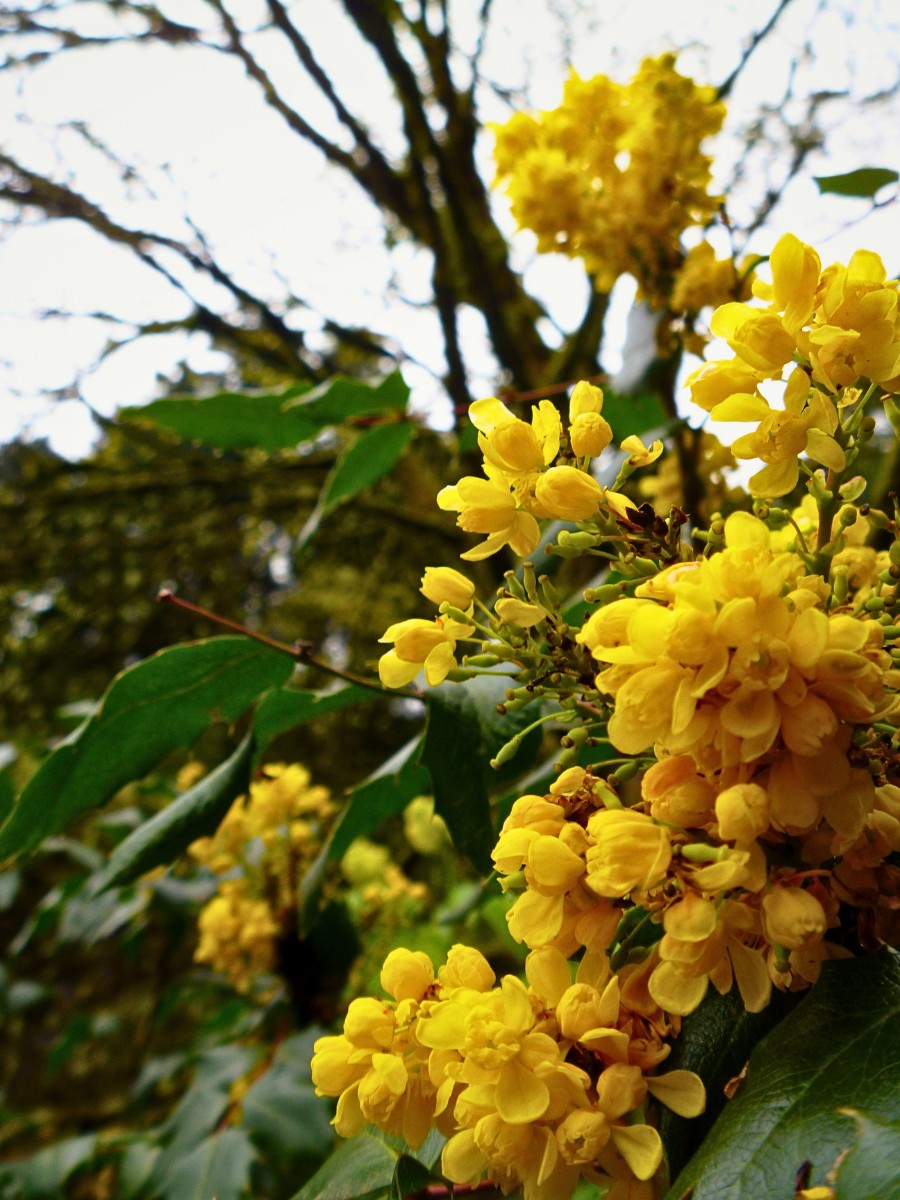
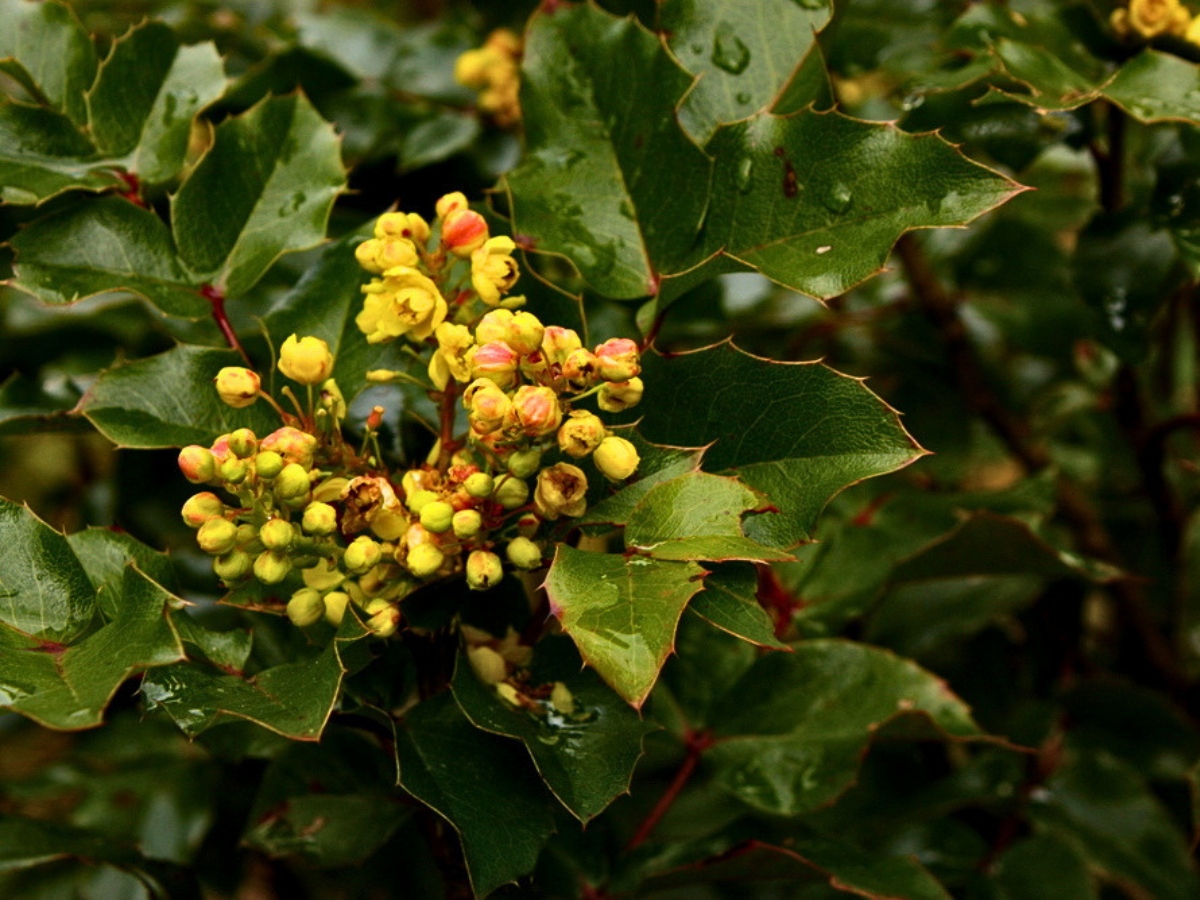
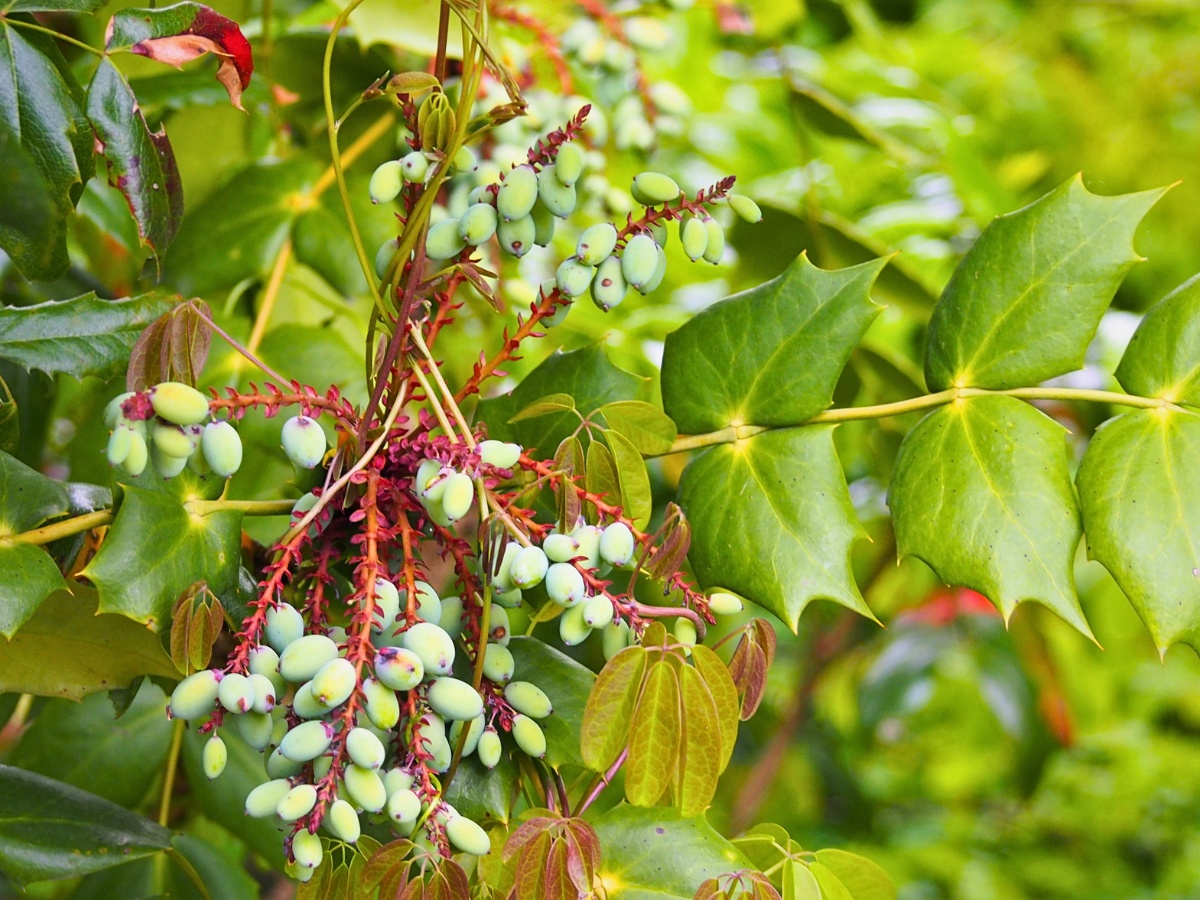
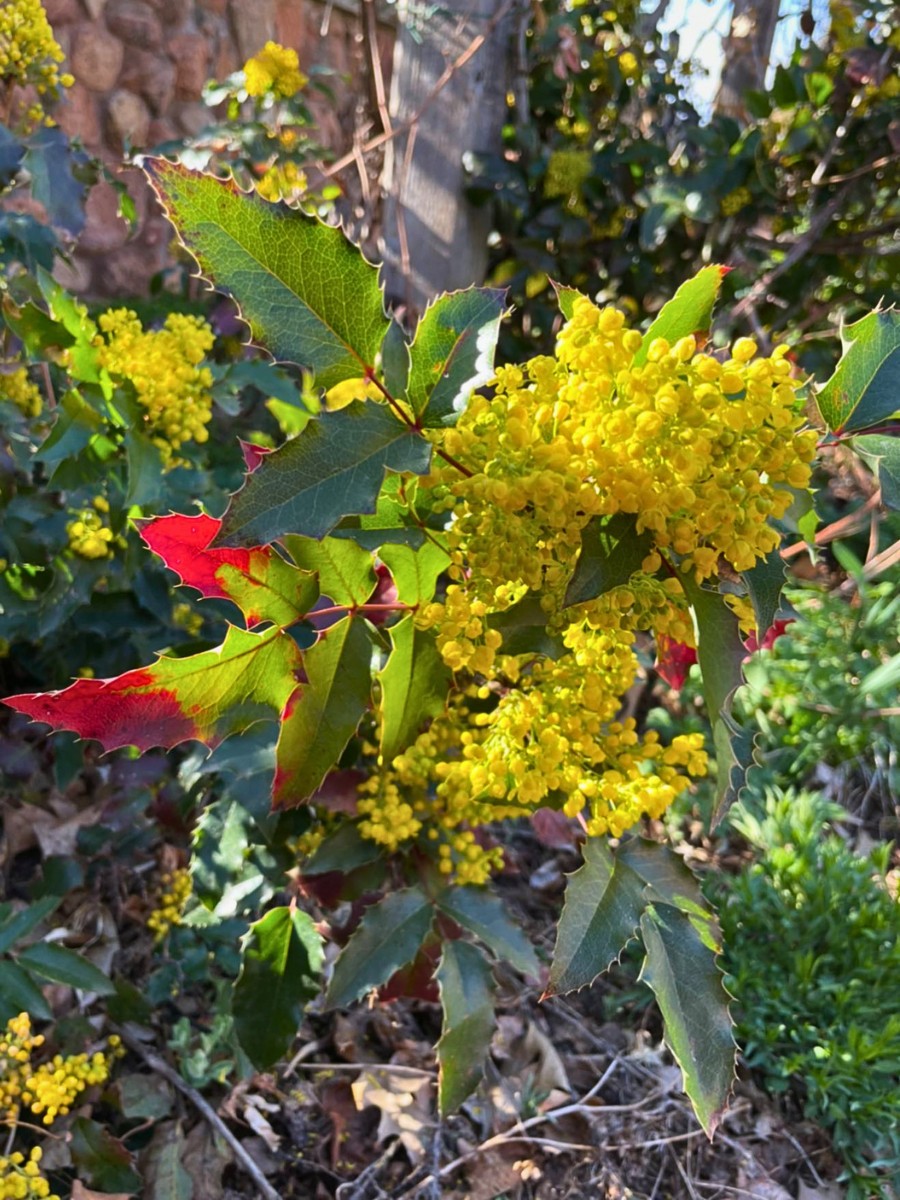
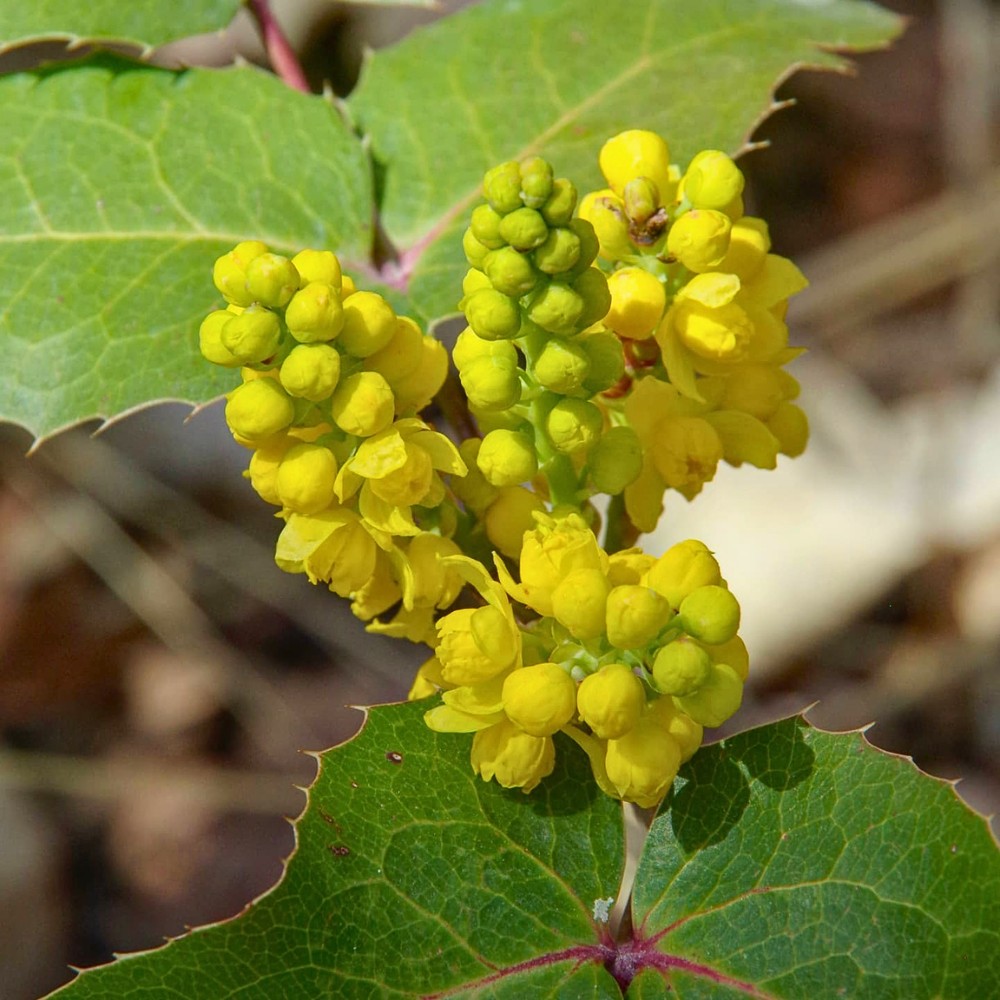
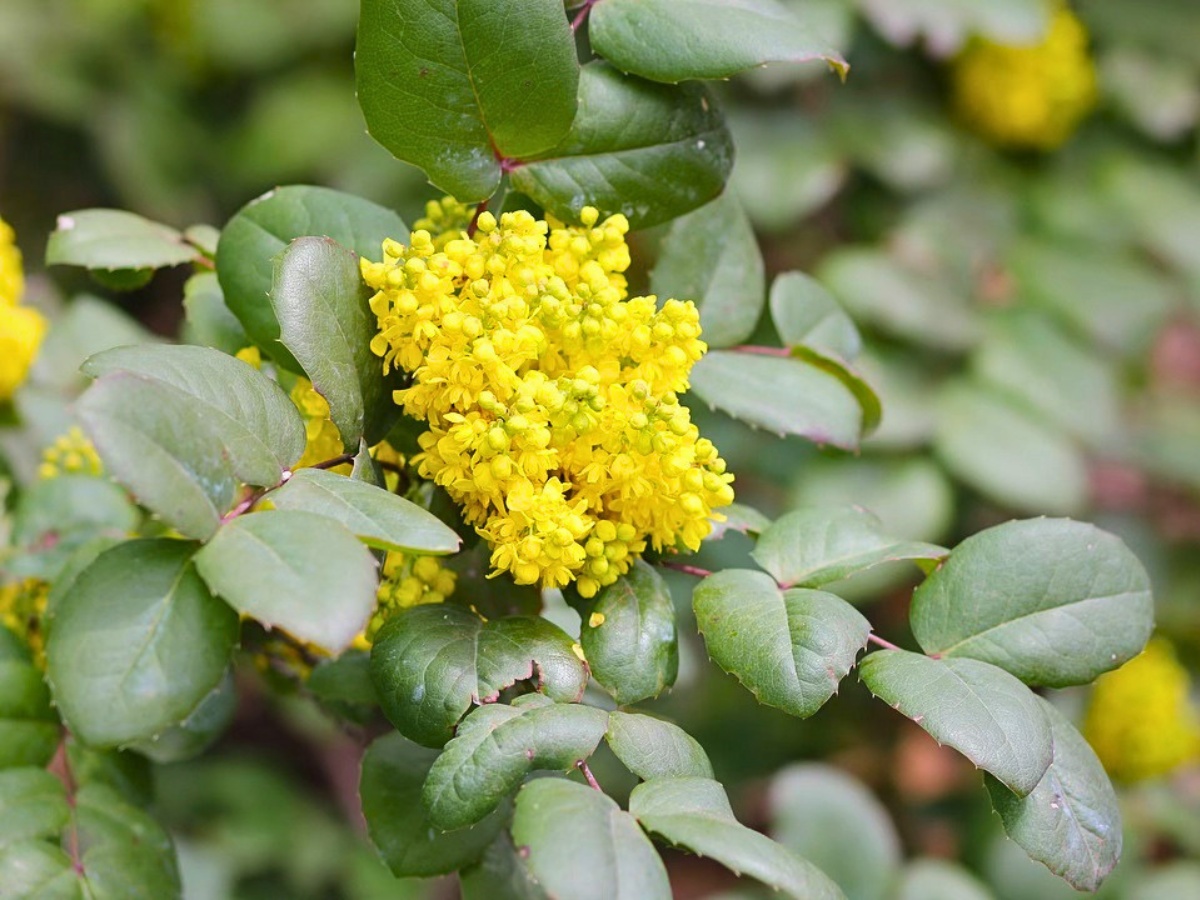
In early spring, Creeping Oregon grape sends up clusters of bright yellow, fragrant flowers that hover above the foliage and call in bees, early pollinators, and even hummingbirds. These flowers mature into powdery blue or blue-black berries by late summer and fall, which are a valued food source for birds and other wildlife. Essentially, this is a small shrub that carries interest from the first flower buds to the last frosty leaves, giving you an easy four-season ground layer.
About the Oregon Grape Leaf
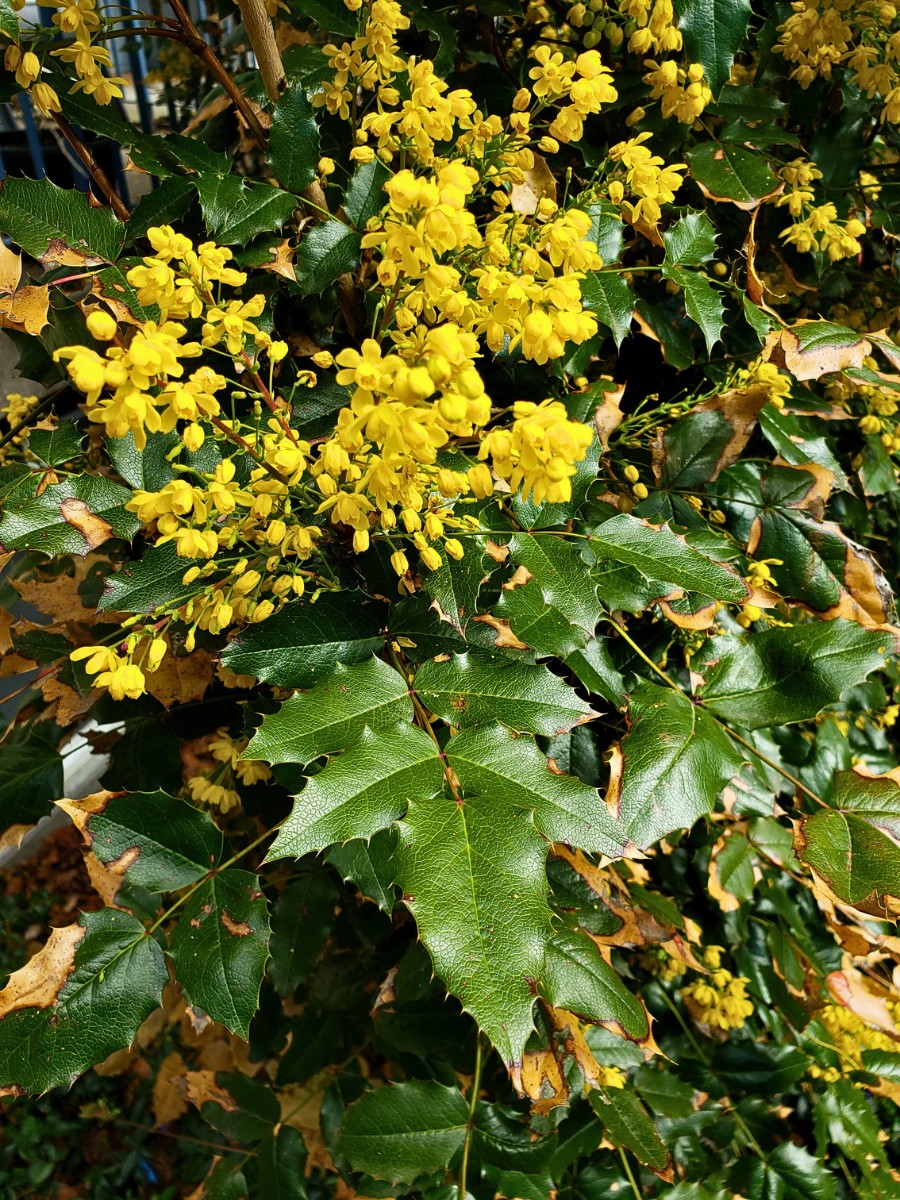
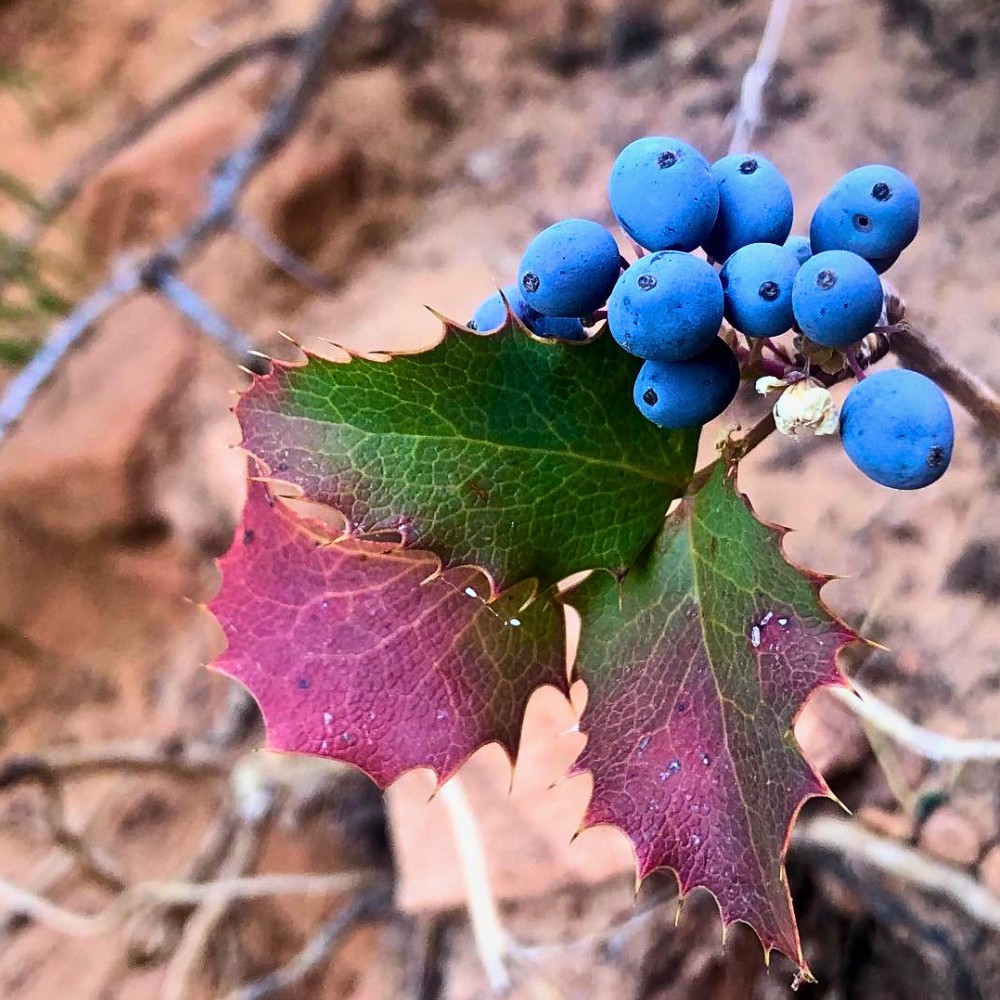
The Oregon grape leaf looks like holly. These leaves are pinnately compound, meaning each leaf consists of several individual leaflets arranged along a central stem. There are usually 5 to 9 of these leaflets per leaf, each one oval and leathery, with a glossy dark green surface and a sharply toothed margin that will catch your finger if you are not paying attention. Those spiny edges are a deterrent to browsing deer. This quality makes Mahonia repens plants particularly useful in gardens where deer pressure is a regular concern.
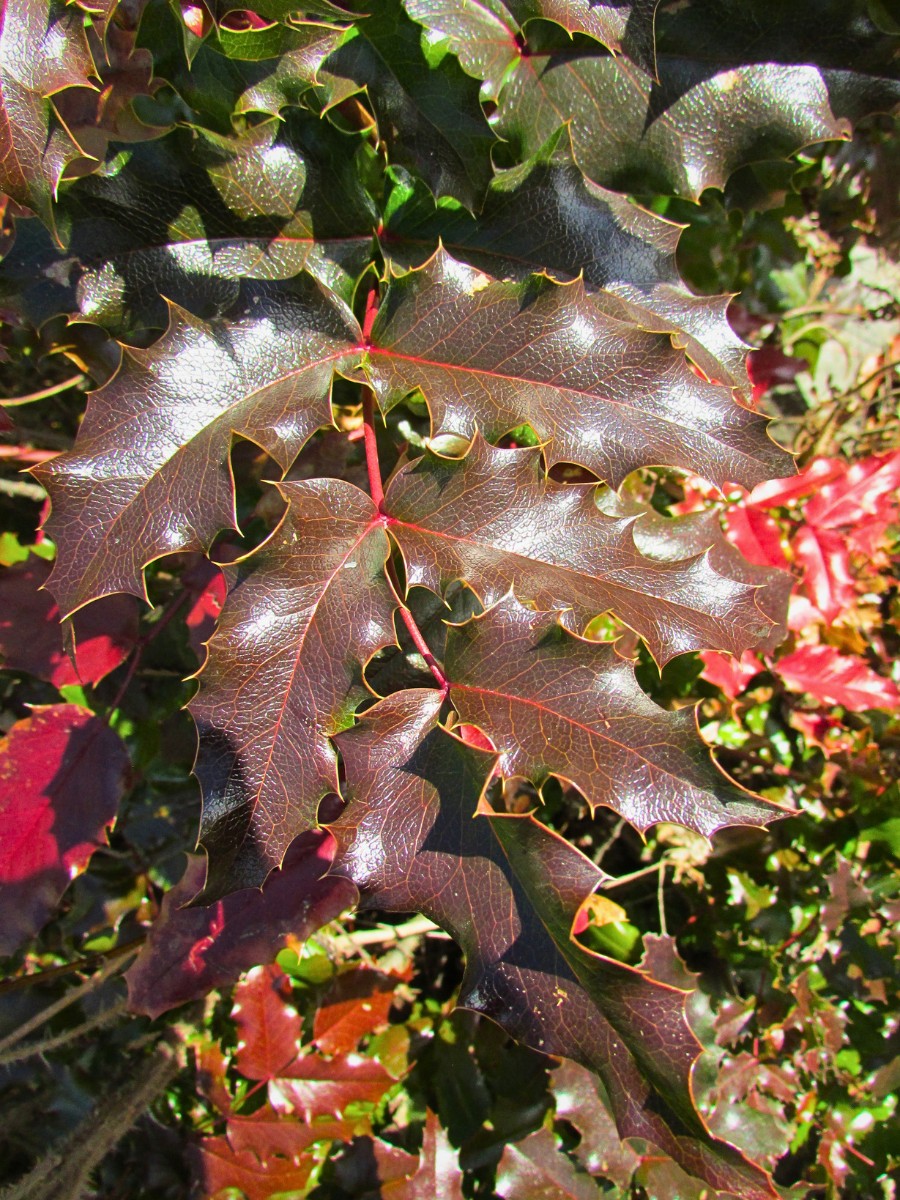
The leaves are especially interesting across the seasons because of their color shift. During the growing season, they hold a rich blue-green tone. As winter arrives, particularly in exposed or sunny positions, they often turn shades of bronze, burgundy, and deep reddish-purple. This is simply the plant's natural response to cold and light, and it gives the garden a warm, earthy depth during the months when most plants go to sleep.
How to Prune Creeping Oregon Grapes
Pruning is one of the most asked questions about this plant, so it demands a careful answer. It is, however, not an issue that comes up very often with established plants, because they are naturally tidy and slow enough in their spread that they rarely need correction. That said, there are situations where some attention is useful.
If a planting has grown beyond its intended boundary, in most gardens, you can get away with very light pruning. You can trim the outer edges back in late winter or very early spring, before new growth begins. Use clean, sharp pruners and cut stems back to a point just above a leaf node or to the ground level if you want to reduce the plant's footprint significantly.
If the plant has become somewhat woody and open over many years, a harder renewal cut, removing stems close to the base, will encourage fresh growth from the rhizomes. This kind of hard pruning is best done in late winter. Avoid pruning in autumn, as new growth stimulated by cutting can be more vulnerable to winter cold.
In most garden situations, however, Mahonia repens is quite content to be left alone. It does not necessarily require shaping to stay presentable, and excessive pruning removes the flowering stems that would otherwise produce both flowers and berries. Less is more with this plant.
Propagation
If you want to have more plantings of Mahonia repens, there are several options. The simplest is to dig and divide rooted rhizomes from an established plant in early spring, replanting the divisions at the desired spacing. This is reliable and cost-free once you have a planting established.
Growing from seed is possible but requires patience. Seeds need cold stratification of at least three months and have a germination rate of only around 20% to 25%. Cuttings can also be taken in late autumn or early spring with the help of a rooting hormone and misting to prevent desiccation, though this requires a bit more attention than division.
What to Plant Next to Creeping Oregon Grape
Choosing good neighbors makes a real difference in how a planting looks and functions over time. What to plant next to the creeping Oregon grape depends somewhat on your garden's conditions, but several excellent options work well across a range of settings.
For a naturalistic woodland or shade garden feel, Mahonia repens pairs beautifully with sword ferns, which share its preference for dry shade and create a contrasting texture. Western columbine, with its delicate, nodding flowers, makes a lovely seasonal companion. Serviceberry is another good choice, offering spring flowers, summer berries for wildlife, and attractive autumn color at a different scale than the low-spreading mahonia. For a layered shade garden, hellebores make another excellent companion, flowering in late winter alongside the earliest creeping Oregon grape blooms.
For a more designed, structured planting, consider placing creeping mahonia underneath ornamental grasses or alongside low-growing sedums on a sunny, dry slope. It also works well as a groundcover layer under tall native shrubs like oceanspray or Indian plum, mimicking the layered structure of natural woodland edges.
Douglas-fir and Ponderosa pine are natural canopy companions in their native range, and in gardens where those trees grow, creeping Oregon grape filling the understory looks ecologically coherent and beautiful. Smaller perennial companions that share its tolerance for shade and dryness also include fleabane.
One practical note, however, because creeping mahonia does eventually spread, it is worth giving it room from the beginning instead of just placing it too close to paths or delicate plants that may be crowded out over time.
Is Creeping Oregon Grape Edible?
The short answer is yes, it is edible with some nuance. Its uses have a long history among Indigenous peoples of western North America, who gathered the berries as a food source and used the roots and stems for medicinal purposes. The berries themselves, which ripen to a dark blue-purple in late summer and early autumn, are juicy and contain a good amount of vitamin C and antioxidants.
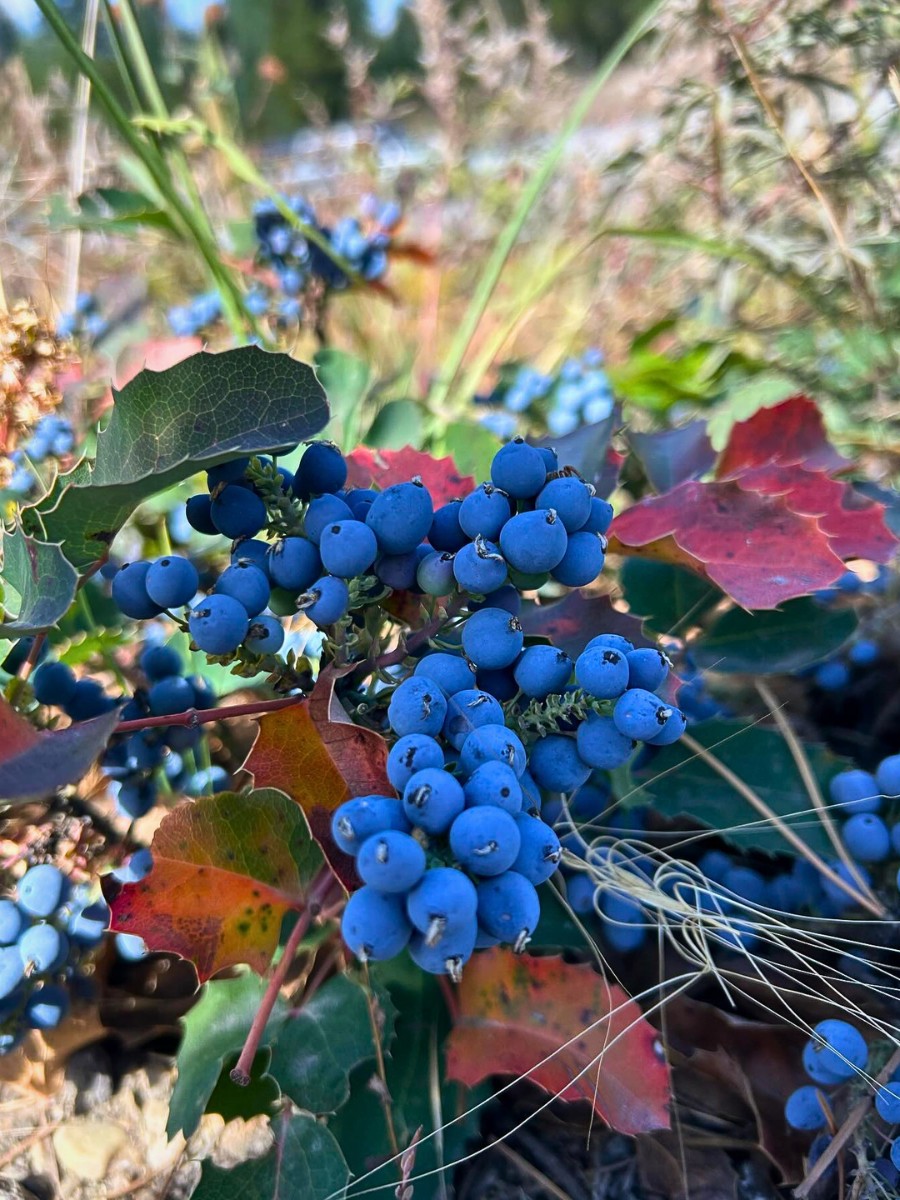
They are, however, quite art and astringent when eaten raw, which is why most people choose to cook or process them rather than eat them straight from the plant. Made into jelly, jam, juice, or wine, the berries become really pleasant, with a flavor that some compare to a tart grape or a concentrated wild berry. The roots contain berberine, an alkaloid with a long history of medicinal use across many cultures, though this is not something to experiment with casually without proper guidance.
As a culinary ingredient, the focus is on the berries, and those are safe and enjoyable when prepared considerately. Away from the kitchen, the roots of Mahonia repens plants have traditionally been used to produce a yellow dye, particularly for baskets and natural fibers, which is an appealing detail for those interested in natural craft materials.
Ecological Value Makes It More Than Just a Pretty Groundcover
It would be easy to focus only on the practical garden uses of this plant and miss what else makes it worth growing. Creeping Oregon grape mahonia repens, is an ecologically rich plant that supports a web of wildlife interactions across all four seasons. In spring, the bright yellow flower clusters are an early and important nectar source for bees, butterflies, moths, and hummingbirds.
The flowers appear before many other garden plants have even broken dormancy, filling a gap in the early pollinator food supply that few other plants address as reliably. By late summer, the blue-black berry clusters are food for birds, including robins, waxwings, and thrushes, as well as small mammals. The berries can persist on the plant well into winter, providing food at a time when other sources are scarce.
In its native range, the evergreen foliage also serves as winter browse for deer and elk, though in garden settings its partial deer resistance is more often celebrated than its palatability. The plant's dense, low growth also provides shelter for ground-nesting birds and beneficial insects. Its rhizomatous habit stabilizes slopes and prevents erosion.
And because it handles dry shade and does not require heavy fertilization or watering once established, it fits beautifully into water-conscious and low-input landscapes. Worth noting is that Mahonia repens is not just a plant for western native gardens.
Its combination of shade tolerance, drought resilience, year-round foliage, edible fruit, and wildlife value makes it ideal for any garden in its hardiness range. It is a plant that tends to go unnoticed until it has been growing in the yard for a few years, and then one realizes how much it is contributing every season. This evergreen is, therefore, worth trying out in your garden.
Featured and header image by Oregon Department of Transportation.