Anigozanthos, commonly called Kangaroo Paw, has been used by florists for years. For a time, it held a strong position in floral design as a filler flower. Then, gradually, its role declined as it began losing ground to more familiar varieties. Nowadays, while floral designers still use it in their work, it isn't relied upon as much as previously. Many often opt for other varieties to do the job.
Breeder De Ruiter may be known for their exquisite roses, but they also breed other flowers, and Kangaroo Paw is one of them. Working with a few growers in Kenya, the breeder is changing this narrative, as they seek to put Anigozanthos back into its former important role in the floral scene. How are they doing it?
Anigozanthos and Its Important Role in Modern-Day Floristry
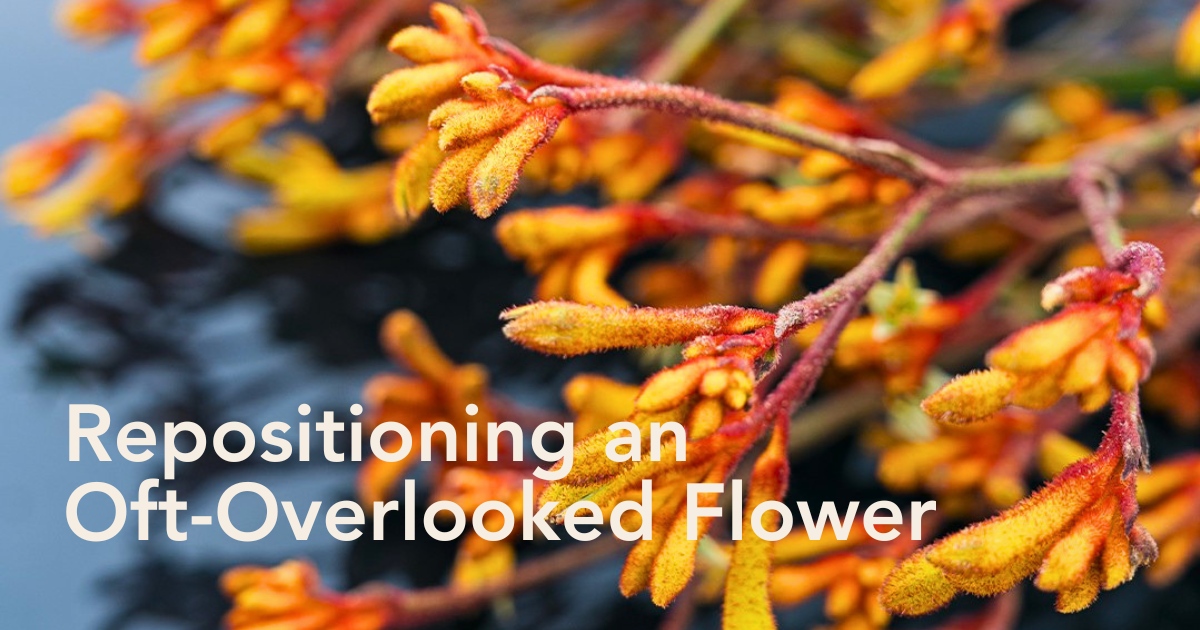
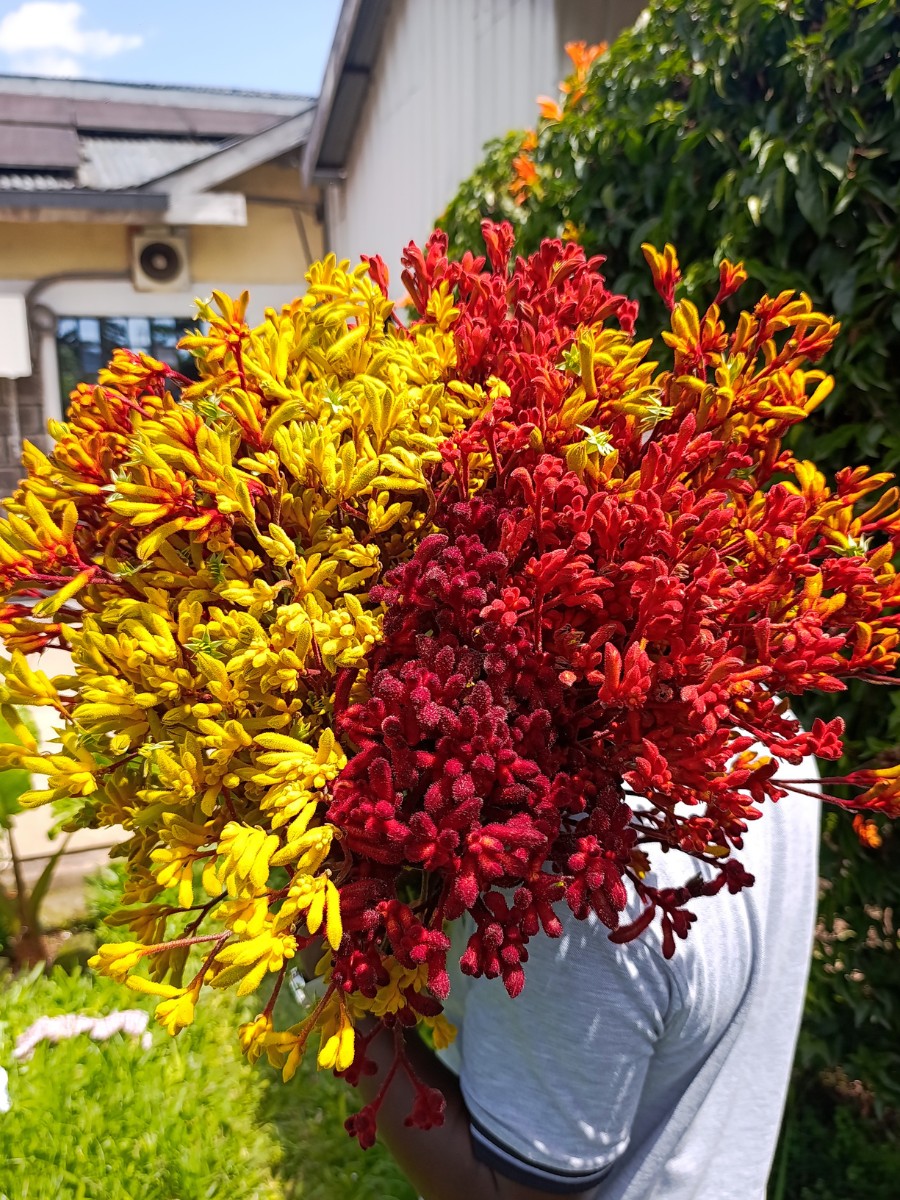
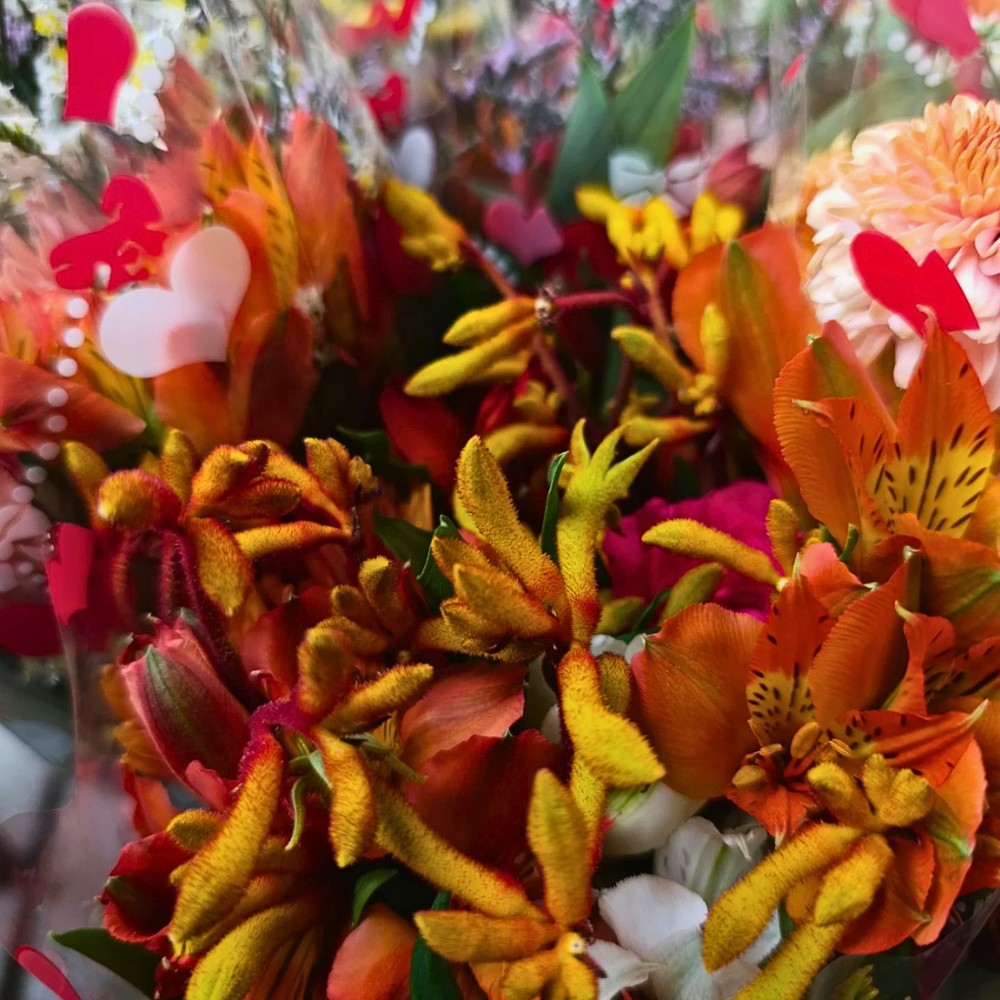
Native to southwestern Australia, Anigozanthos has been the floral emblem of Western Australia since 1960. It features tubular flowers covered in dense, velvety hair that open into six claw-like tips, giving the stem a tactile quality rarely seen in standard cut-flower assortments.
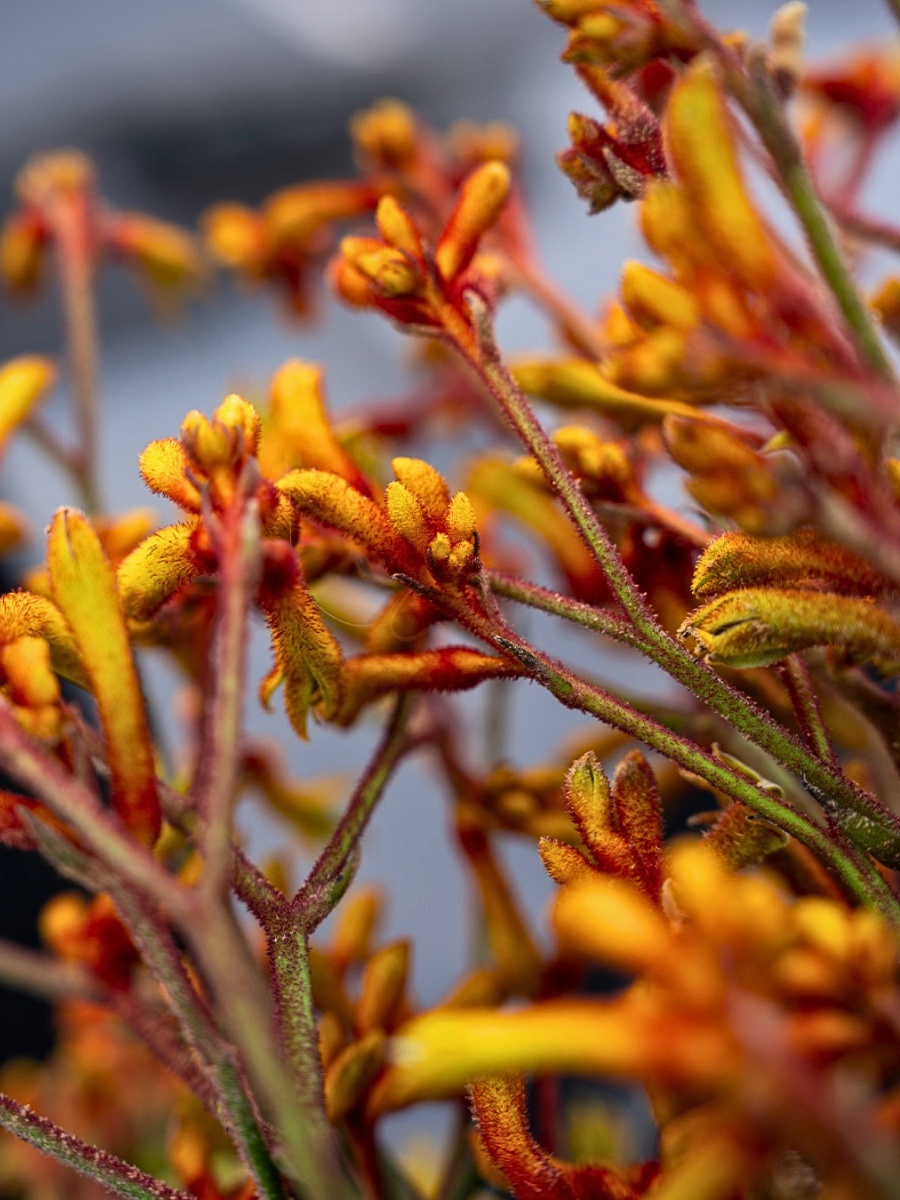
Its stems are long, upright, and architectural. It works as a strong contemporary line flower that adds height and movement to designs whenever used. Its color range includes reds, oranges, yellows, bi-colors, purples, pinks, greens, and even blues, and its vase life usually lasts 7 to 14 days with proper care.
Despite those qualities, Anigozanthos has drifted into use as an occasional accent, and hardly a deliberate design component. Rob Letcher, Managing Director at De Ruiter East Africa, noting the continued decline in its use, says nowadays, people do not treat it as much of a key flower as it should be, a challenge that intensified in the 1980s. But this shouldn't be the case.
Repositioning Kangaroo Paw in the Floral Trade
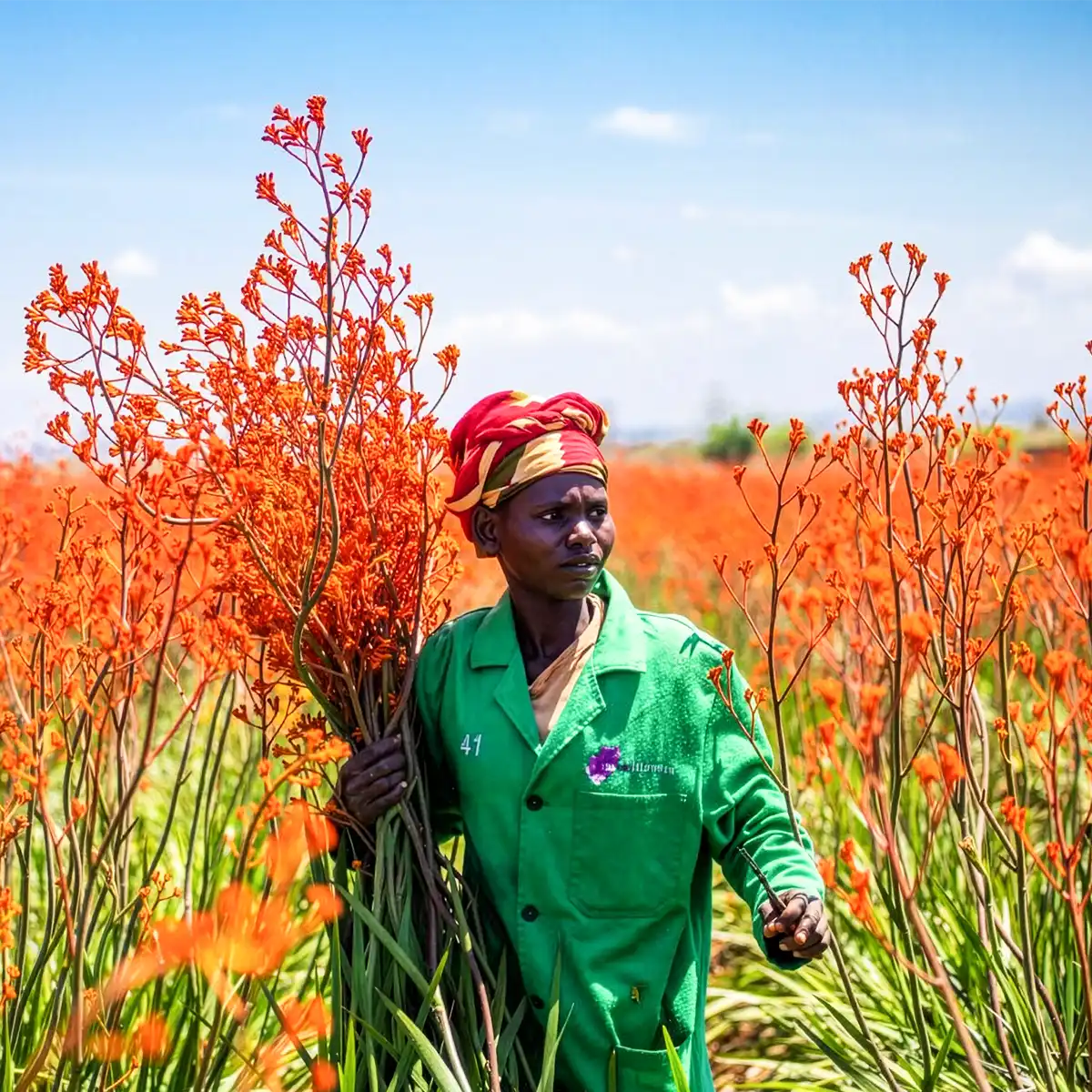
The Kangaroo Paw Collective is a collaborative initiative by De Ruiter East Africa (DREA), partnering with Kenyan growers Imani Flowers, Exceptional Africalla, and Growtech Flowers to build the production and market case for this flower.
The goal is not quite to introduce Anigozanthos to the scene, but to reposition it within the floral design community as a key flower that could anchor an arrangement, carry a bouquet, and deliver a distinctive impact, not just as an afterthought filler or novelty, but as a regular, premium design element with year-round availability.
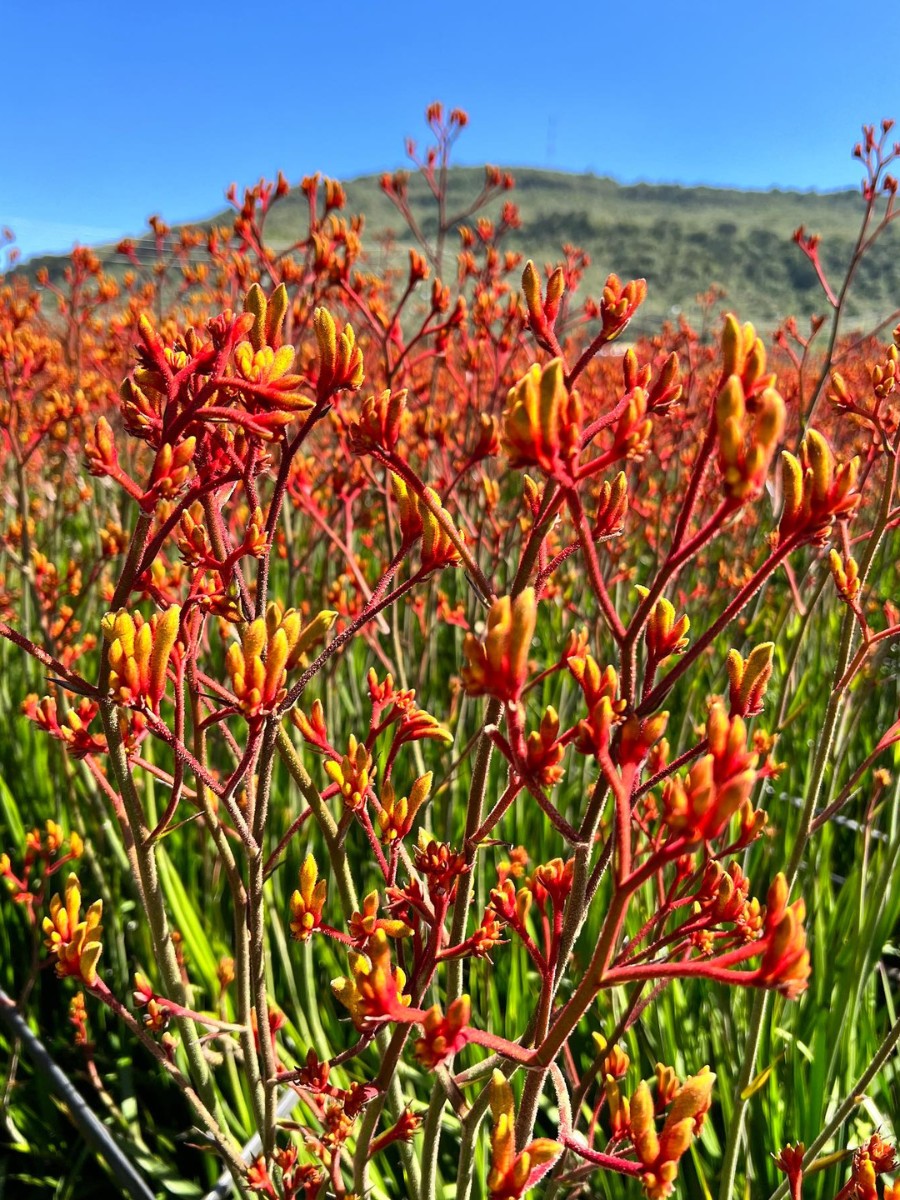
For some reason, not many growers strictly specialize in these flowers. But it has a huge opportunity that many often overlook. Kangaroo Paw's long stems, for instance, work well as line elements in contemporary and structured designs, and its branching habit and velvety texture suit looser, garden-style designs well.
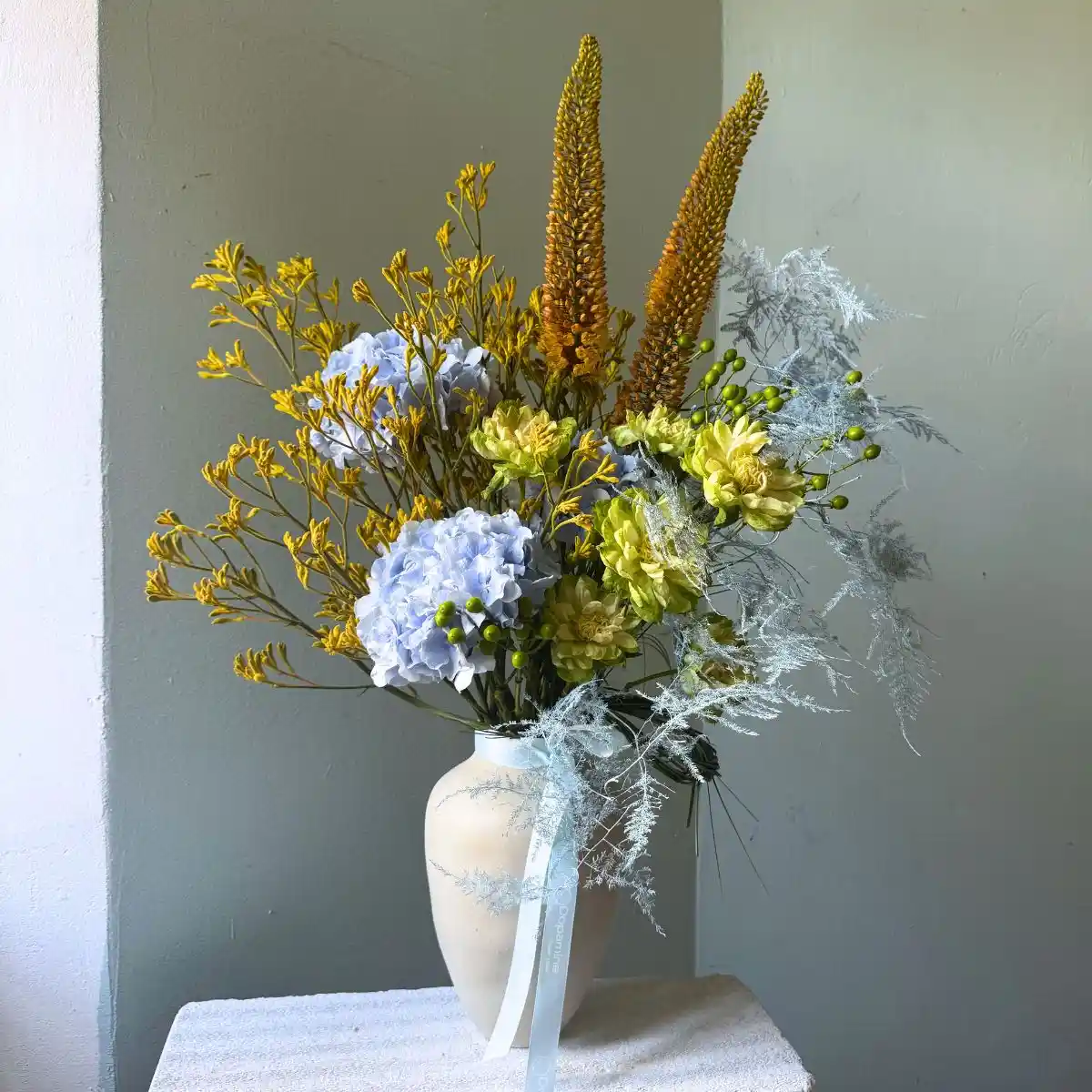
It works beautifully with other textured natives like Banksia, Waxflower, and Blushing Bride, or with broad-leaved tropical exotics like Anthurium for modern, eye-catching bouquets. It also pairs naturally with others, like Hydrangea, Cymbidium, Craspedia, Ilex, and many more.
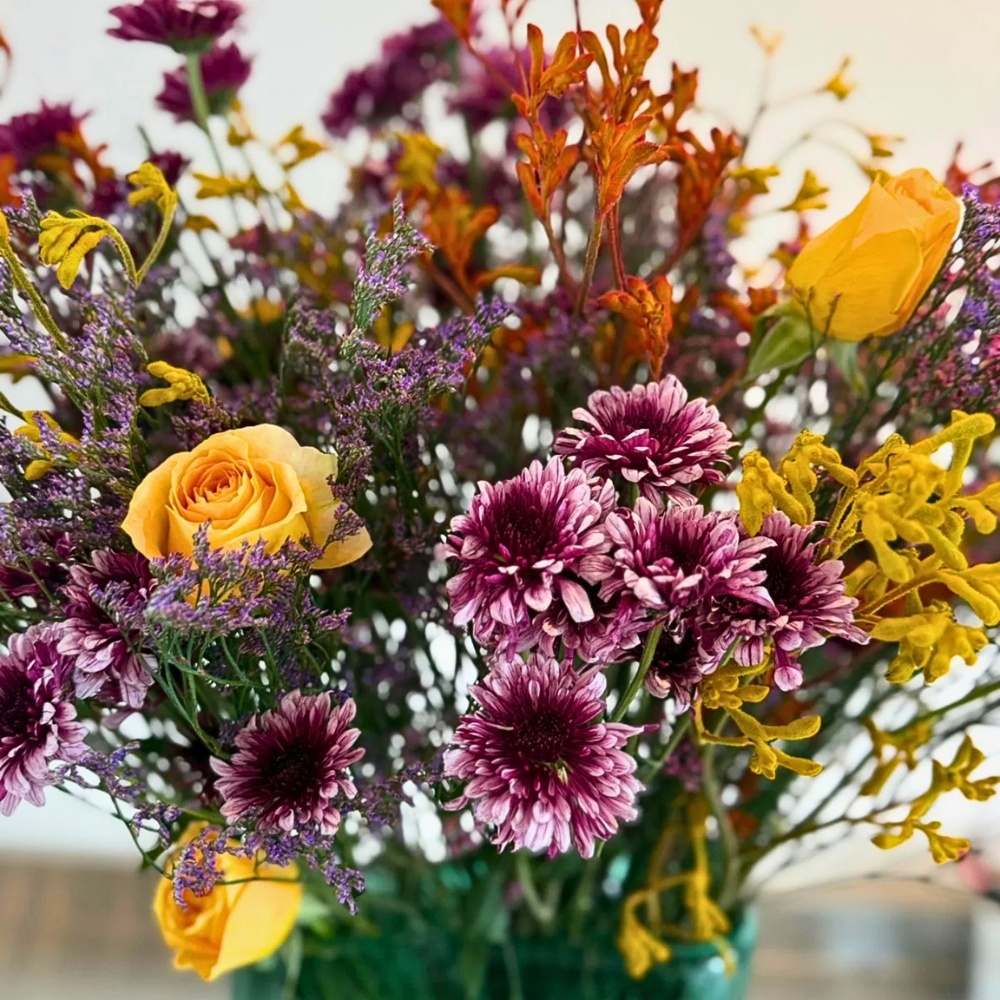
At the same time, its color range suits autumn palettes, spring schemes, and elaborate modern compositions. Still, it could work well as the tallest element in ikebana-inspired asymmetrical compositions. Essentially, it has almost infinite possibilities in designs, which the Kangaroo Paw Collective seeks to bring all back, to give this flower its groove back. Here's what you'd want to know about these growers and their history with Anigozanthos.
Imani Flowers
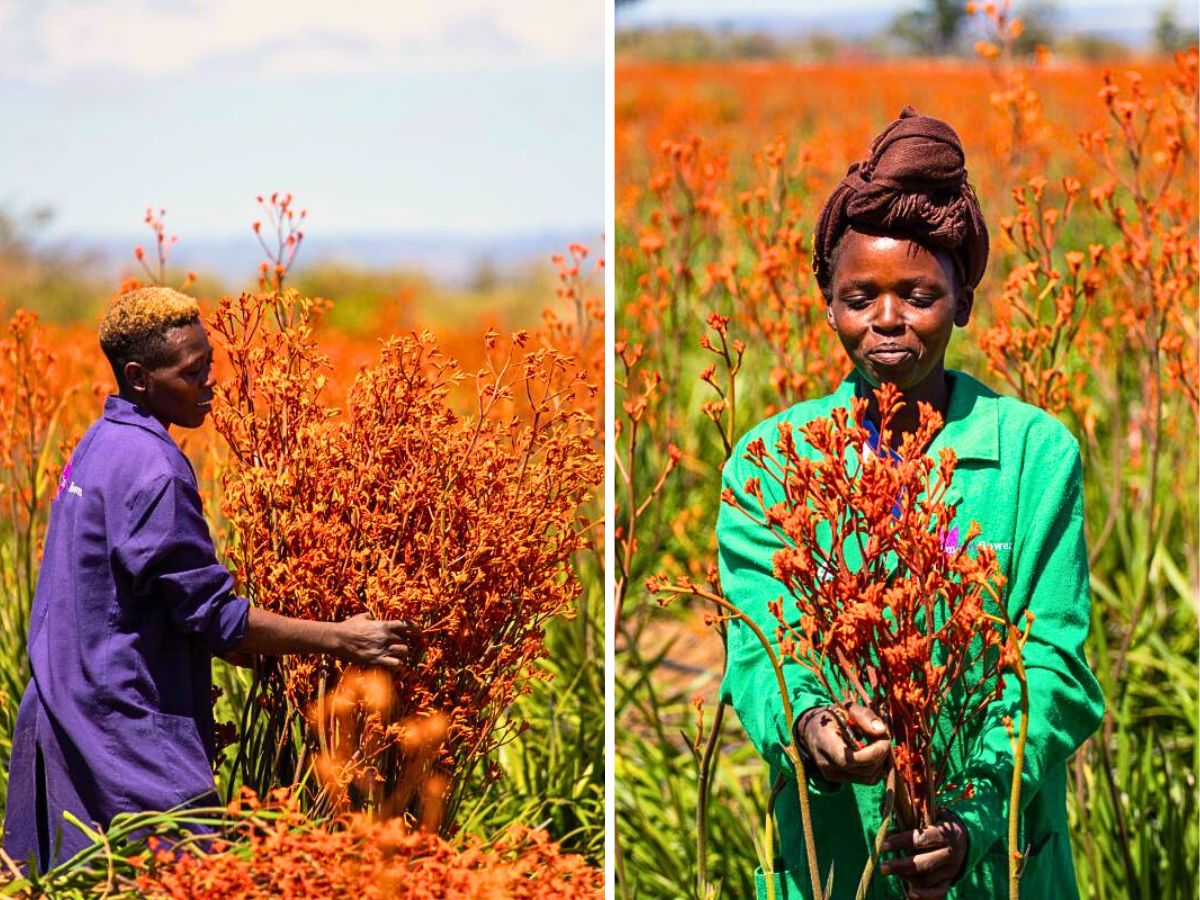
Imani Flowers was among the first farms in Kenya to grow Anigozanthos commercially, starting in 2016 when production knowledge was scarce, and few regional growers were exporting it. Roy Gichohi, the grower’s Managing Director, notes that they were one of the very few growers who pioneered it in Kenya.

Roy:
“We learnt (side by side with De Ruiter), through trial and error, how to nurture the crop, and over time I believe we have become well versed in its mannerisms, although it sometimes surprises us with some new characteristic, behavior, or expression.”
Through their partnership with DREA, Imani grows varieties like Sienna Gold, a tall, beautiful orange variety whose color beckons autumn; Gold Fever, an orange/yellow bi-color that steals the show in a bouquet; and Early Spring, a show-stopping, velvety red that exudes luxury. Imani Flowers even got international recognition, winning the Floriade Expo contest in 2022 for best Early Spring.
The grower has more varieties still in development, including Merlot (purple) and Princess (pink). Roy describes the flower as one of the most peculiarly beautiful varieties; its wild and untamed nature defies rule and order, and one has to learn to work with it as such.
Roy:
“Its silky textures and appearance give it a luxury feel, its curious flowering makes it unique/peculiar, and its sturdy stems and wild branching give it a character of its own. You just need to embrace the wild and untamed and not follow the rules with this flower.”
Exceptional Africalla
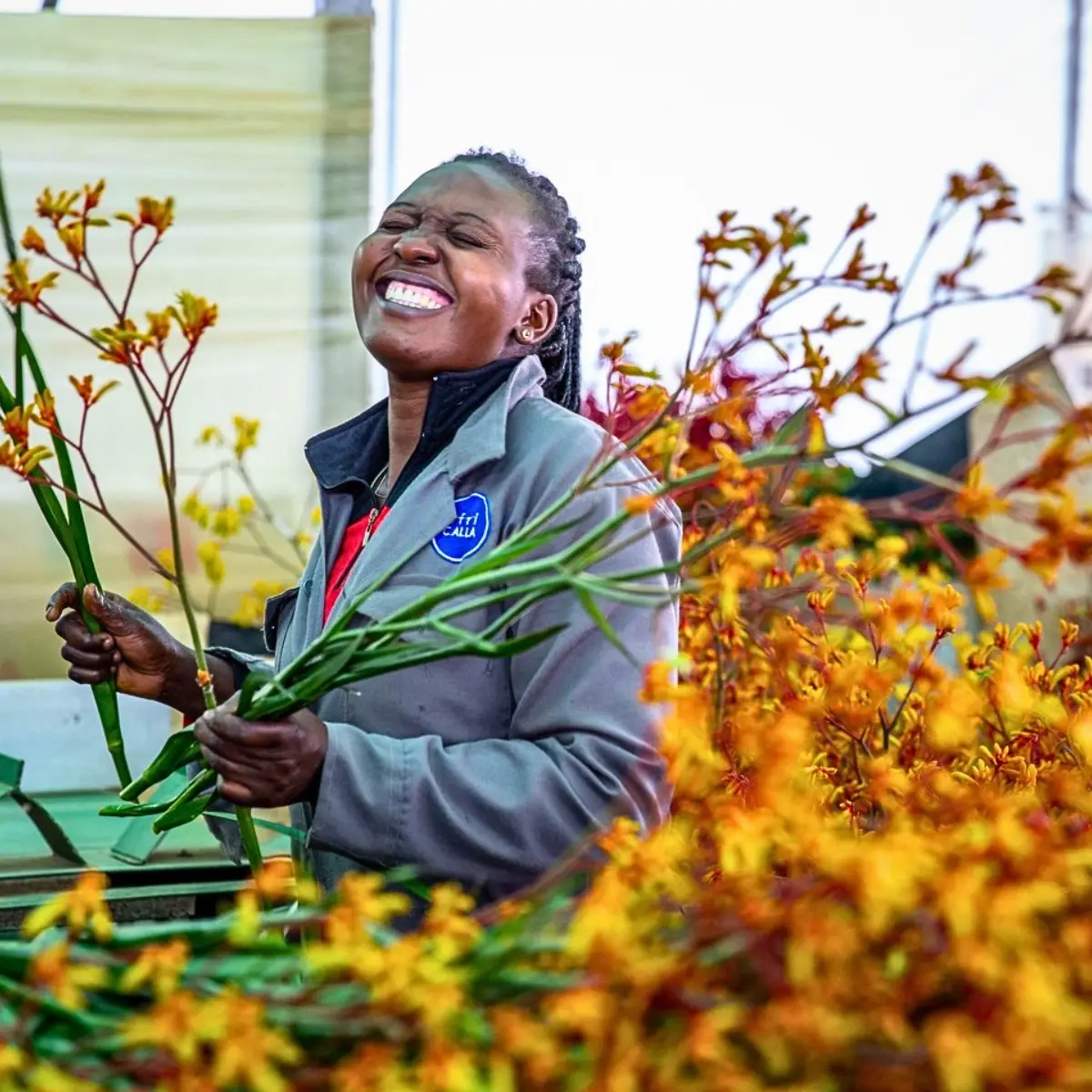
Geert Rooijakkers, the Managing Director, Exceptional Africalla, entered Anigozanthos production through a collaborative initiative with De Ruiter to develop the crop further under Kenyan growing conditions and introduce it more strongly into the international cut flower market.
Geert says:
“We started with several trial varieties to evaluate performance, productivity, stem quality, and market acceptance. Over time, this developed into a broader commercial program. Today, we are not focused on a single variety, but on building a diverse and balanced assortment.”
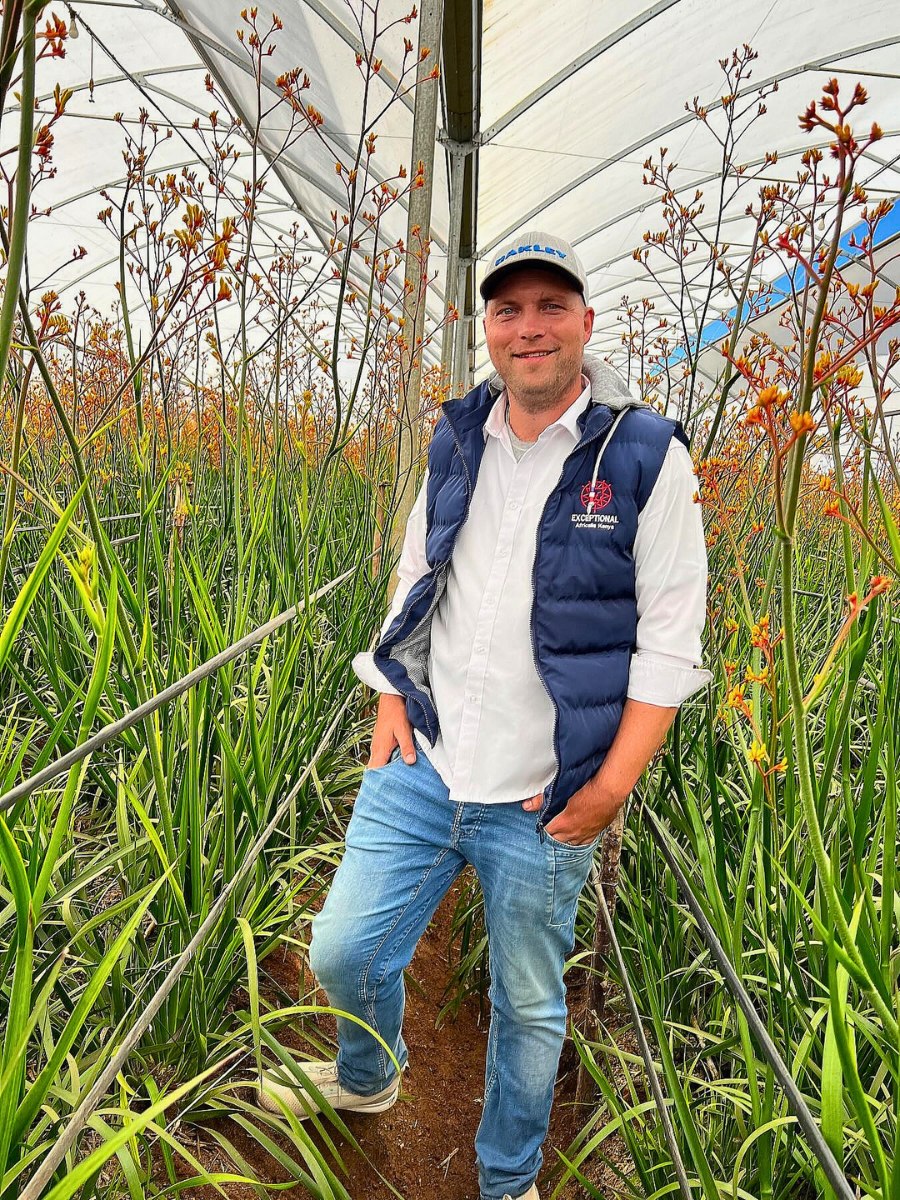
Africalla grows varieties like Gold Fever (yellow/orange), Bindi (deep red), Yindi (yellow), Alinta (orange), Bush Merlot (purple), Bush Princess (pink), Bush Diamond (grey), Bush Blitz (orange/purple), Celebrations Aussie Spirit (green), and Celebrations Bush Fire (blue). They are actively evaluating and preparing the introduction of new genetics, like Bush Flamingo. The strategy is to cover as much of the color spectrum as possible, giving designers a range of choices.
Kangaroo Paw, Geert believes, has the potential to be a standard design flower, much like other established focal or line flowers. Its exotic appearance, vibrant colors, and versatility make it suitable for varied floral styles, from modern retail bouquets to high-end event work. And as florists seek distinctive products that help them stand out, it perfectly fits into that trend.
Geert:
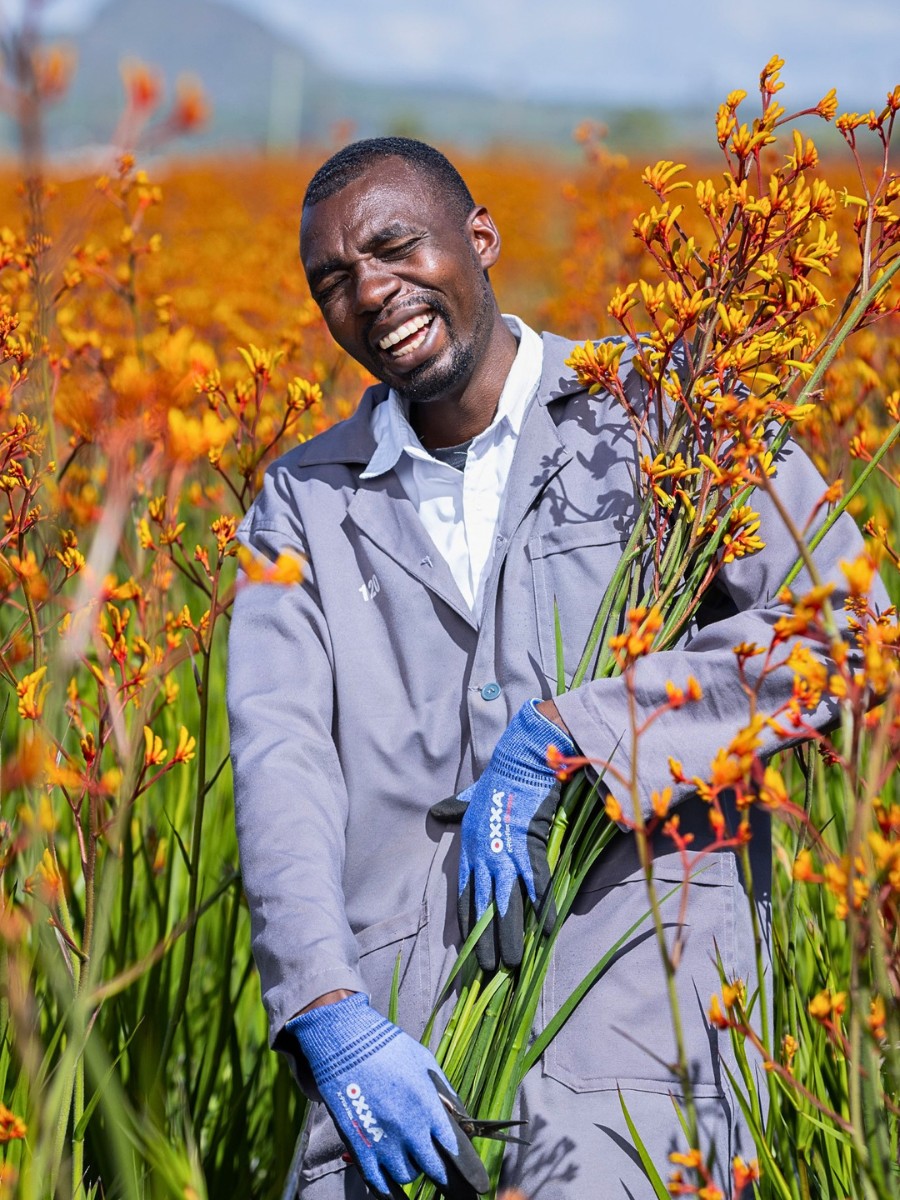
“We expect wholesalers and designers to increasingly embrace the flower as availability and familiarity continue to grow. We already see strong interest from customers looking for something unique and premium. Education and exposure will play an important role, but we believe the flower naturally speaks for itself once designers start working with it.”
This collaborative initiative, he indicates, represents innovation within the Kenyan floriculture industry. Kenya is already globally recognized for quality flower production, and introducing newer crops like Anigozanthos helps diversify the assortment and opens new market opportunities.
Growtech Flowers
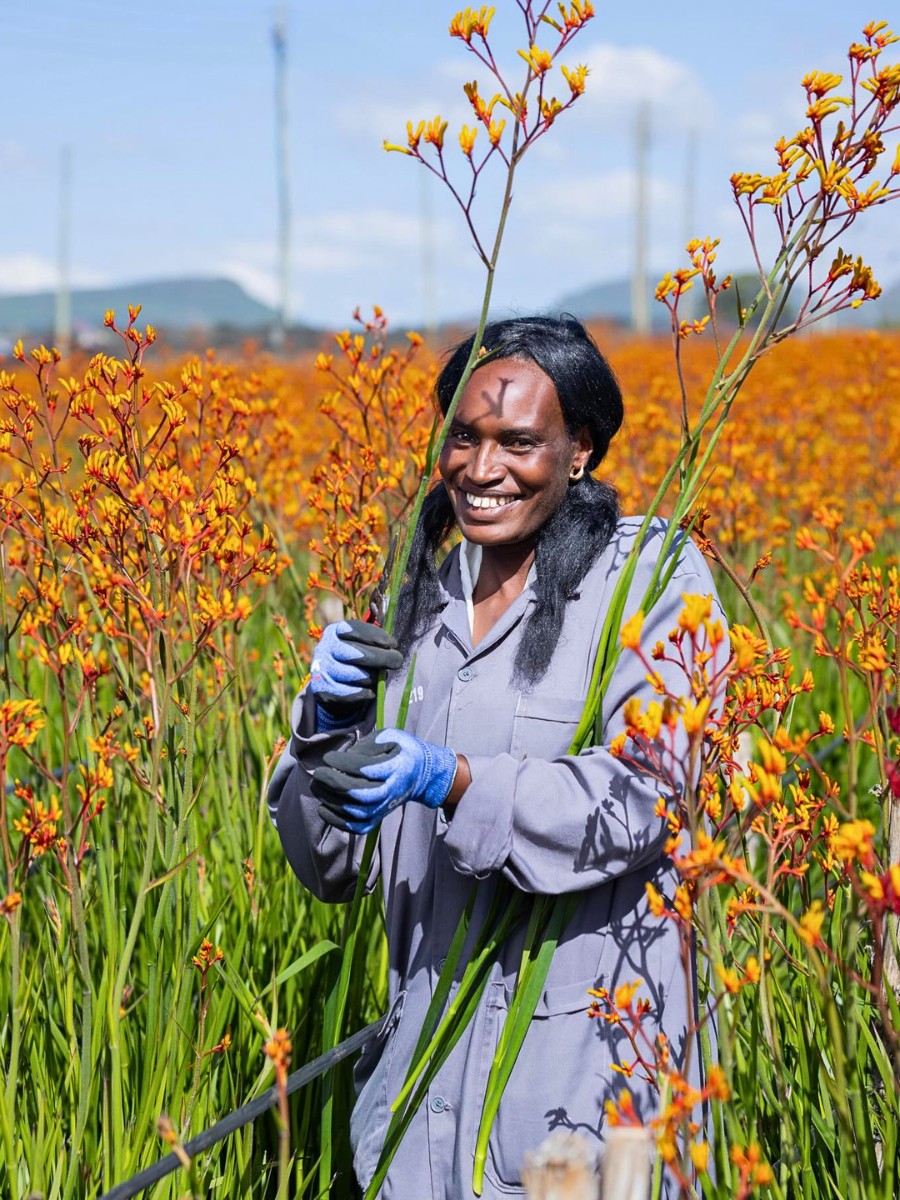
For Xavier Bowen of Growtech Flowers, their work with Anigozanthos is tied to their background in plant tissue culture propagation, a major part of their business since 2015. Partnering with DREA has also been instrumental in developing their Kangaroo Paw program, given DREA's expertise in breeding, genetics, and variety development, which aligns with their background.
Having begun by propagating high-quality seedlings for growers (from breeders), Growtech built their knowledge in plant development and genetics, so their commercial flower production naturally evolved accordingly, allowing them to supply planting material while also growing specialty flowers.
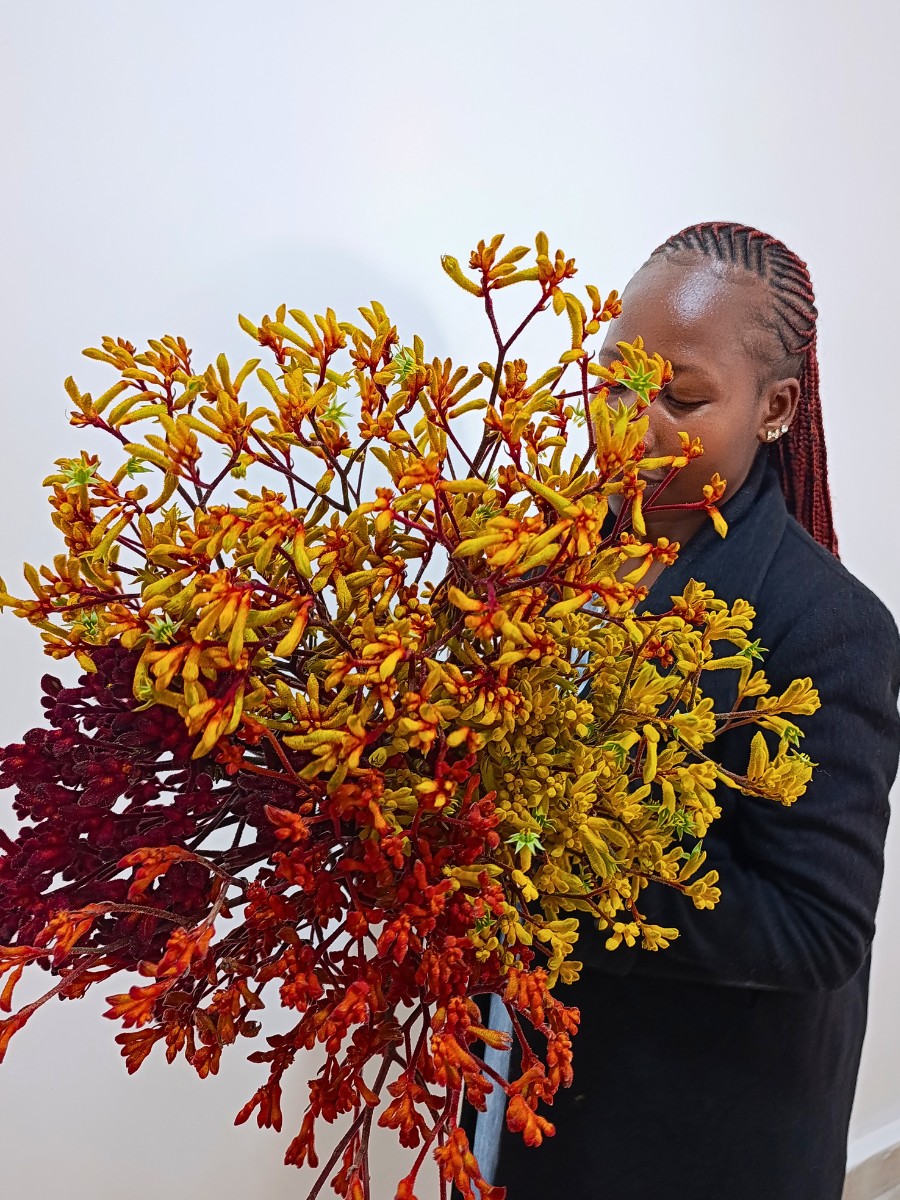
Xavier says:
“Anigozanthos quickly stood out to us as an exceptional flower. Its texture, movement, vibrant colors, and unique form make it unlike anything else in the cut-flower market. We saw strong potential for it as a premium design flower capable of bringing something fresh and distinctive to designers.”
Starting, the grower initially used a few commercially proven varieties to evaluate their performance under local growing conditions and understand market response. As interest and demand increased, they gradually brought in a wider assortment of colors and varieties.
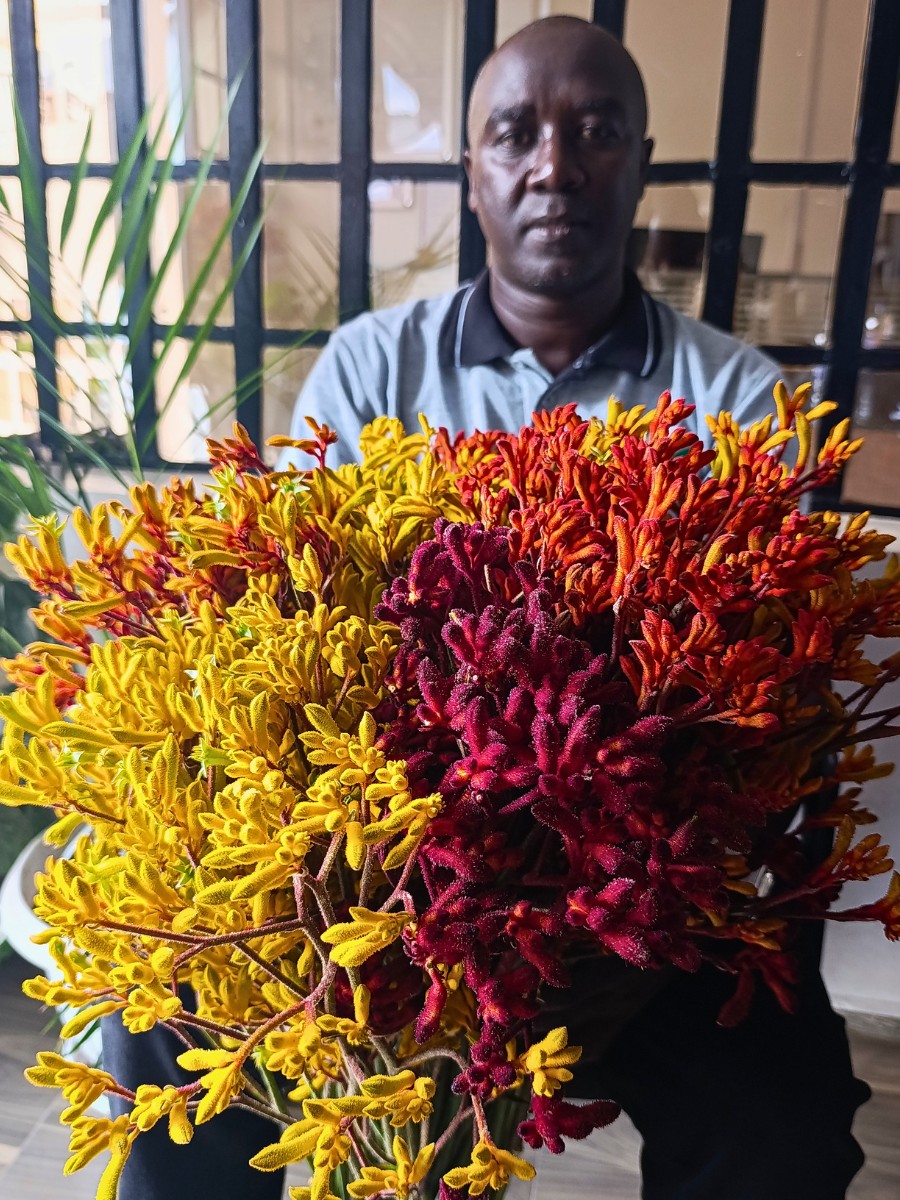
They now have a strong Kangaroo Paw program that combines high-quality plant production with premium commercial flower growing, where Anigozanthos forms the innovative and creative direction of their business. Their variety range is wide, tailored for the premium cut-flower market. They keep trialing new genetics to meet dynamic design trends and customer preferences.
Xavier:
“We continue to propagate high-quality seedlings for growers and breeders, supporting the floriculture industry with clean and uniform planting material. This integration of propagation and commercial production gives us a unique advantage in maintaining consistency, plant health, and long-term crop performance.”
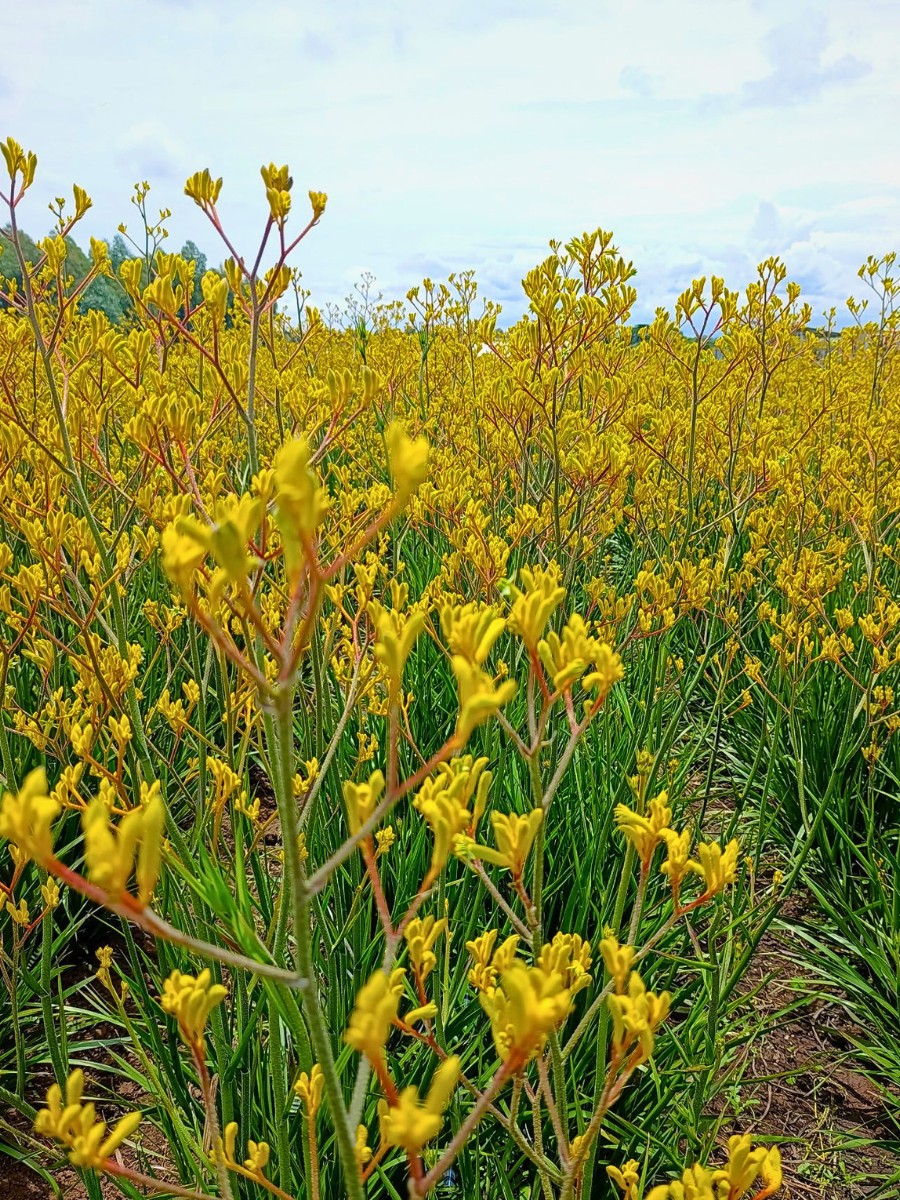
Xavier believes Kangaroo Paw can be a mainstream design flower alongside others like Proteas, tulips, Ranunculus, and orchids, given its versatility and strong visual identity, and the way it works beautifully across contemporary, luxury, garden-style, tropical, and artistic designs.
Since modern floristry increasingly moves toward originality and expressive design, he opines that Kangaroo Paw fits naturally into that trend. And as more designers work with the flower, it will become a recognizable and essential premium design component.
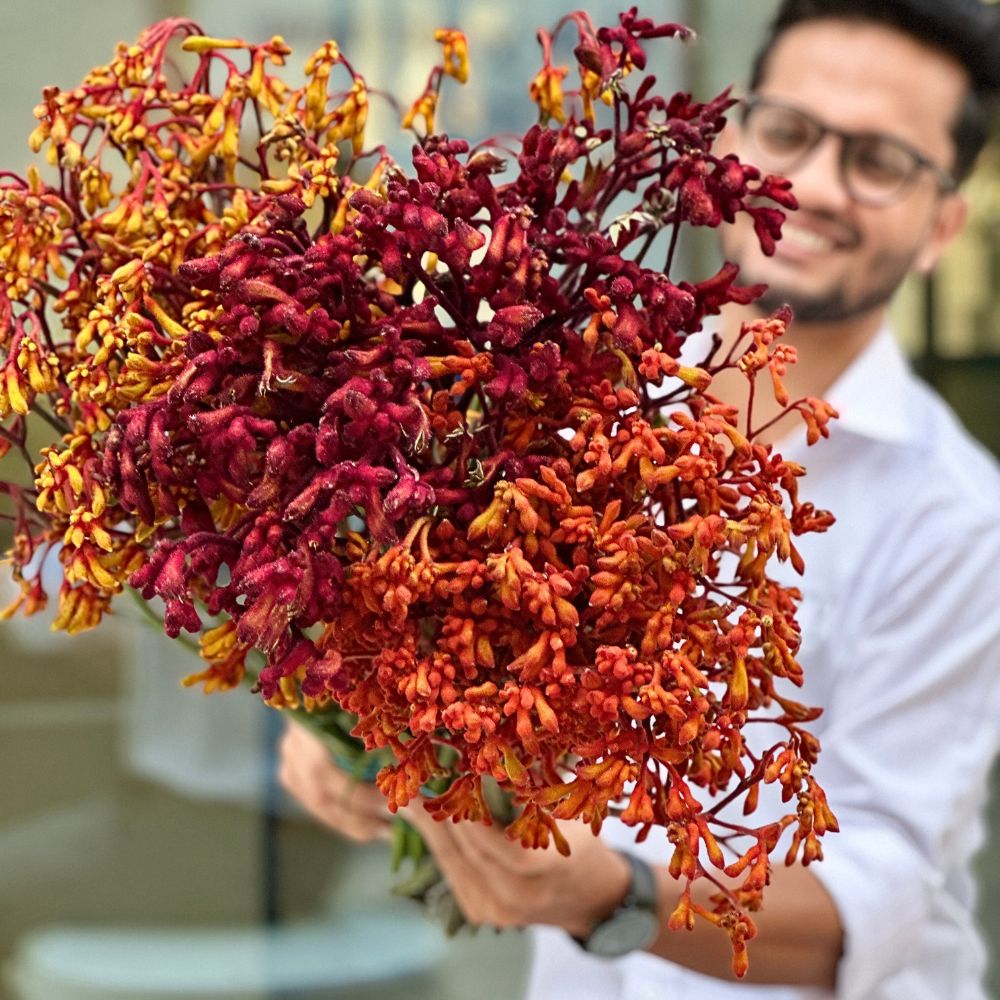
He says:
“We are optimistic about the future of Kangaroo Paw within the floral industry. Designers today seek flowers that create distinction, texture, and personality in their work, and Anigozanthos offers that.”
Featured image by Growtech Flowers. Header image by @stgabrielcz.