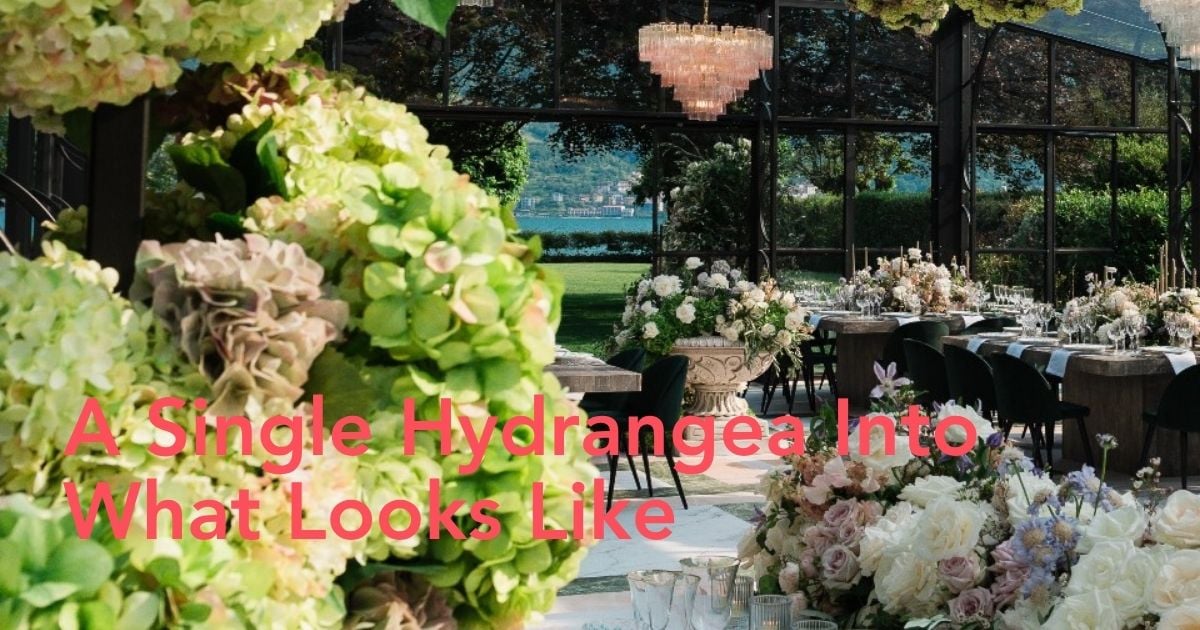
There is a trick that garden designers have been quietly using for decades, and it has nothing to do with rare cultivars or expensive stonework. It's reflection. A well-placed reflective surface can double the apparent size of a courtyard, throw light into a shaded corner where nothing wants to bloom, and turn a single hydrangea into what looks like a small hedge of them.
Reflection is not a gimmick. Used carelessly, it looks like a shop window. Used well, it becomes the moment in the garden that people stop and photograph.
Why Reflection Works So Well With Planting
Plants move. That's the whole point. A mirror or a still pool captures that movement twice, and the eye reads the doubled motion as depth rather than trickery. Grasses are the obvious candidate here. A stand of Calamagrostis 'Karl Foerster' in front of a reflective panel reads as a meadow rather than a clump of six plants.

Colour behaves differently too. Reflected blooms sit slightly further away in the visual field, so their tones soften. Deep burgundy dahlias, which can look heavy against a fence, become velvety and atmospheric when seen at one remove. Pale flowers do the opposite. White cosmos, night-scented stock and Nicotiana sylvestris practically glow when their reflection catches evening light.
The Foliage Question
Flowers get the attention, but foliage does the heavy lifting in reflective schemes. Leaves last months rather than weeks, and their texture is what stops a reflective surface from looking flat and hard.
Look for contrast in leaf shape. Big, glossy Fatsia japonica leaves next to fine-cut ferns create a rhythm that reflects beautifully. Silver-leaved plants such as Stachys byzantina or Artemisia are particularly effective because they pick up and bounce light themselves, essentially working in partnership with the reflective panel behind them.
Choosing and Placing Your Reflective Surface
Water is the traditional option, and a still, dark-bottomed pool is unbeatable for reflecting sky. But water needs space, maintenance and a decent depth to stay clear. For most urban gardens, mirrors do the job with a fraction of the fuss.
The practical route is to have garden mirrors cut to size so the panel fits the space rather than forcing the space to accommodate a standard rectangle. An awkward alcove between a shed and a boundary wall, a gap under a pergola beam, the back of a raised bed: these are exactly the spots that benefit most, and they are rarely standard dimensions.
A few rules that experienced designers stick to:
Never reflect the viewer. If people can see themselves clearly, the illusion collapses. Angle the panel five to fifteen degrees away from the main sightline.
Reflect greenery, not hard surfaces. A mirror facing a brick wall just gives you two brick walls.
Break the edges. Ivy, climbing hydrangea, or a trained pyracantha creeping across the frame stops the panel from announcing itself.
Watch the sun. Direct midday sun on a large mirror can scorch nearby leaves and is uncomfortable to sit near. North and east-facing walls are safest.
Think about birds. Position mirrors below eye level, behind planting, or somewhere without a clear flight path. Wildlife charities estimate that reflective surfaces cause a significant share of garden bird collisions, and a few strands of climbing plant across the surface solves it.
Building the Moment
A reflective feature needs a reason to exist. That reason is usually a place to stop.
Set a bench, a single chair or a small table at the point where the reflection reads best. Walk the garden at different times of day and mark where the effect is strongest. In most gardens that's roughly two hours before sunset, when light rakes sideways rather than falling straight down.
Planting the Approach
The route to the reflective moment matters as much as the moment itself. Keep the planting along the path lower and quieter, then build height and interest as you arrive. Scent works brilliantly here. Lavender, rosemary or a brushing hedge of Salvia along the way primes the senses before the visual reveal.
Seasonal layering keeps the spot worth visiting year-round. Try snowdrops and hellebores at the base for February, tulips and alliums through spring, then a summer succession of salvia, echinacea and cosmos. Finish with hydrangea heads and grasses left standing through winter, which look extraordinary reflected on a frosty morning.
Small Gardens, Big Returns
Courtyards under 30 square meters gain the most. A single panel roughly 1.2 meters wide, set at the far end behind a tree fern or a multi-stem amelanchier, can make a walled yard feel twice its size.
Balconies benefit too. A narrow vertical mirror behind a trough of trailing pelargoniums and ferns creates the impression of a garden continuing past the railing.
The best reflective gardens share one quality: nobody notices the mirror first. They notice the light, the depth, the flowers appearing to go on longer than they should. Then they work out why.