Come October, long lilac streaks of aster cut across the lawn in front of Berlin's Natural History Museum. They look oddly regular, almost computed. That's because they were. The planting is Pollinator Pathmaker, a living artwork by Alexandra Daisy Ginsberg, and its layout was drawn up by an algorithm that only cares about what bees and other insects want.
The Berlin plot went in during 2023, partly commissioned by the LAS Art Foundation, and it has bloomed again every year since. The project started out as a commission for the Eden Project in Cornwall, UK. Since then it has spread to large plantings such as the one at the Serpentine in London, plus 'DIY editions' that you can plant at home.
A Garden Designed for Bees, Not for You
Most gardens are planned around what people find pretty. Ginsberg flipped that. Each edition gets its own planting plan, worked out by software that ranks plants by how useful they are to pollinators rather than how good they look to people. The whole project grew out of one question she asked: what would an artwork look like if it were made for another species?
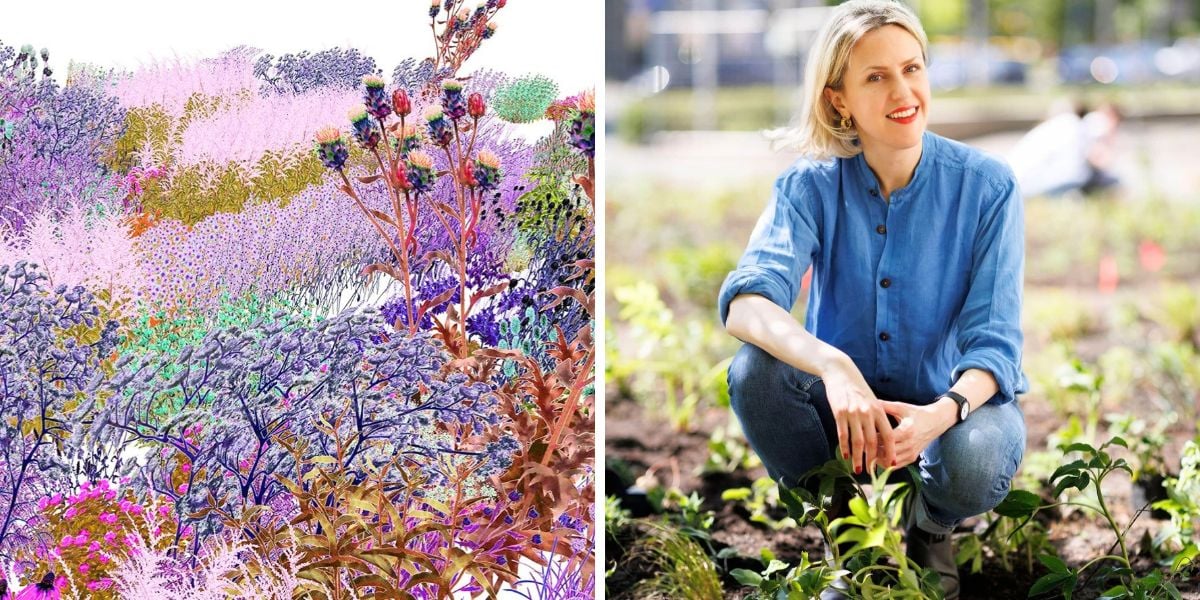
You can try it yourself on pollinator.art. Hit start and you land on an empty digital plot. Tell it where you live and how much space you have, and it lays out a planting scheme for you. It might not be the border you'd have picked. The bees will like it, though.
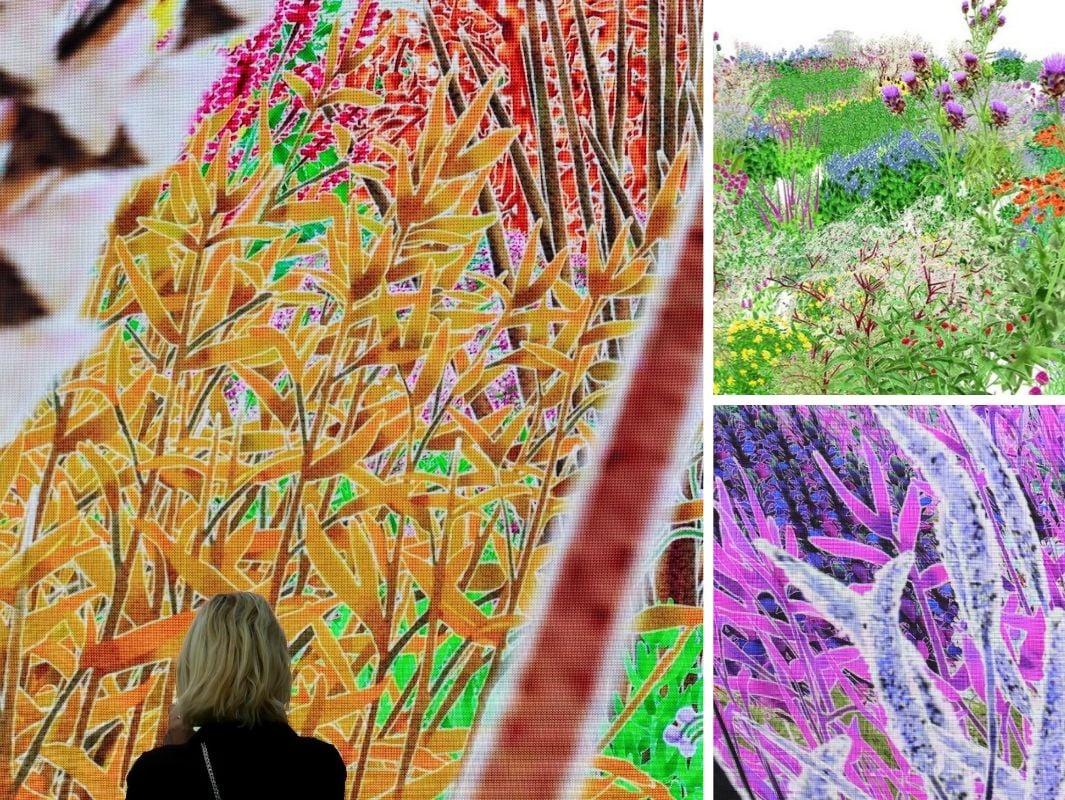
A digital rendering of the Pathmaker created earlier in September
The software picks from a 'Plant Palette' for each region: a shortlist of local plants that draw the most pollinators. Ginsberg builds every list with insect and horticulture specialists who know that part of the world, and each new commission adds another regional palette to the site. Editions now grow across Europe and in the United States. Museums, neighborhood groups, families, and school classes have planted them, and the project has branched out into prints, tapestries, and films.
An extensive explanation of the Pollinator Pathmaker and how it works
Do the Bees Actually Come Back?
They do, and there's data to show it. Scientists have studied the Eden Project edition and the Berlin plot, and Ginsberg also won a UK research grant to follow the project in a Cornish village with the universities of Exeter and Edinburgh.

In Berlin, a specialist counts the wild bee species that visit. A spot in the city that's already labeled pollinator-friendly usually hosts somewhere between 30 and 50 species. The museum plot logged 83 in its very first year. Wild bees are the ones to watch because they're a good gauge of how other pollinators are doing, too.
Numbers like that back up the thinking behind the work. If you design a space around insects instead of people, insects show up.

How the Berlin Edition Came Together
LAS Art Foundation, which stages art about technology and moves between venues such as Kraftwerk in Berlin and the Ateneo Veneto in Venice, signed on early. Curator Sophie Korschildgen says the foundation was the project's first partner outside the UK, even before the Eden Project planting. Germany sits in a different climate zone from Britain, so the plant list had to be reworked for central Europe. The foundation teamed up with the museum, which already ran a research line with LAS on how people, other species, and technology can live together.
Korschildgen is keen to point out that it's an algorithm, not AI, doing the design. People still matter, just in a different role: they're the caretakers. And the plot needs a lot of care. More than a million people visit the museum each year, the benches out front are popular, and stray seedlings keep turning up. For a couple of years, there were even tomato plants, most likely grown from lunch leftovers tossed into the beds. They got weeded out with the rest.
The Berlin edition now has company. There are 20 DIY editions around the city, one in every district, so 21 in total with the museum plot. Visit in October, and you'll catch the aster 'October Skies' in full lilac bloom. Could your own garden spare a corner for the bees?
Photos and video by Alexandra Daisy Ginsberg.