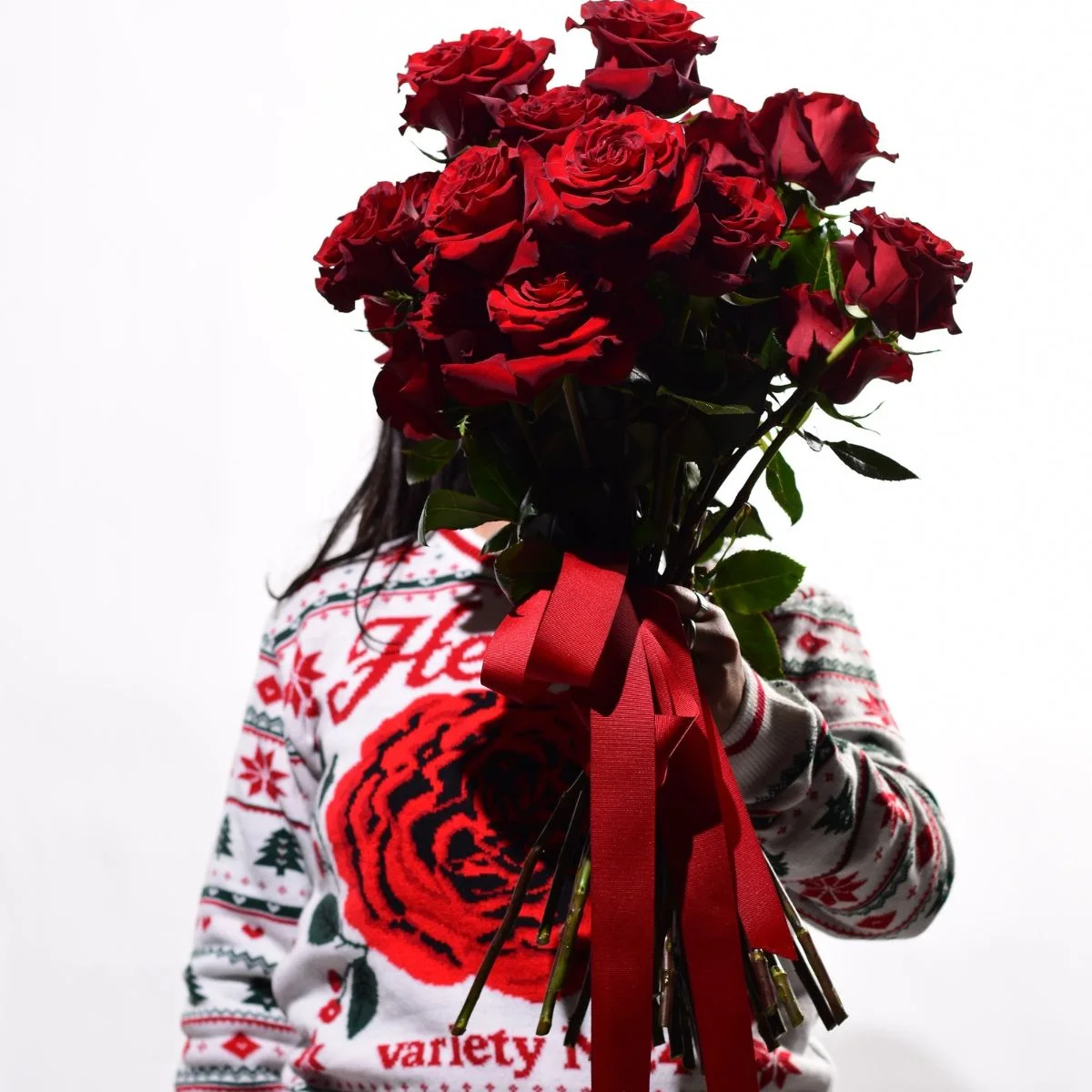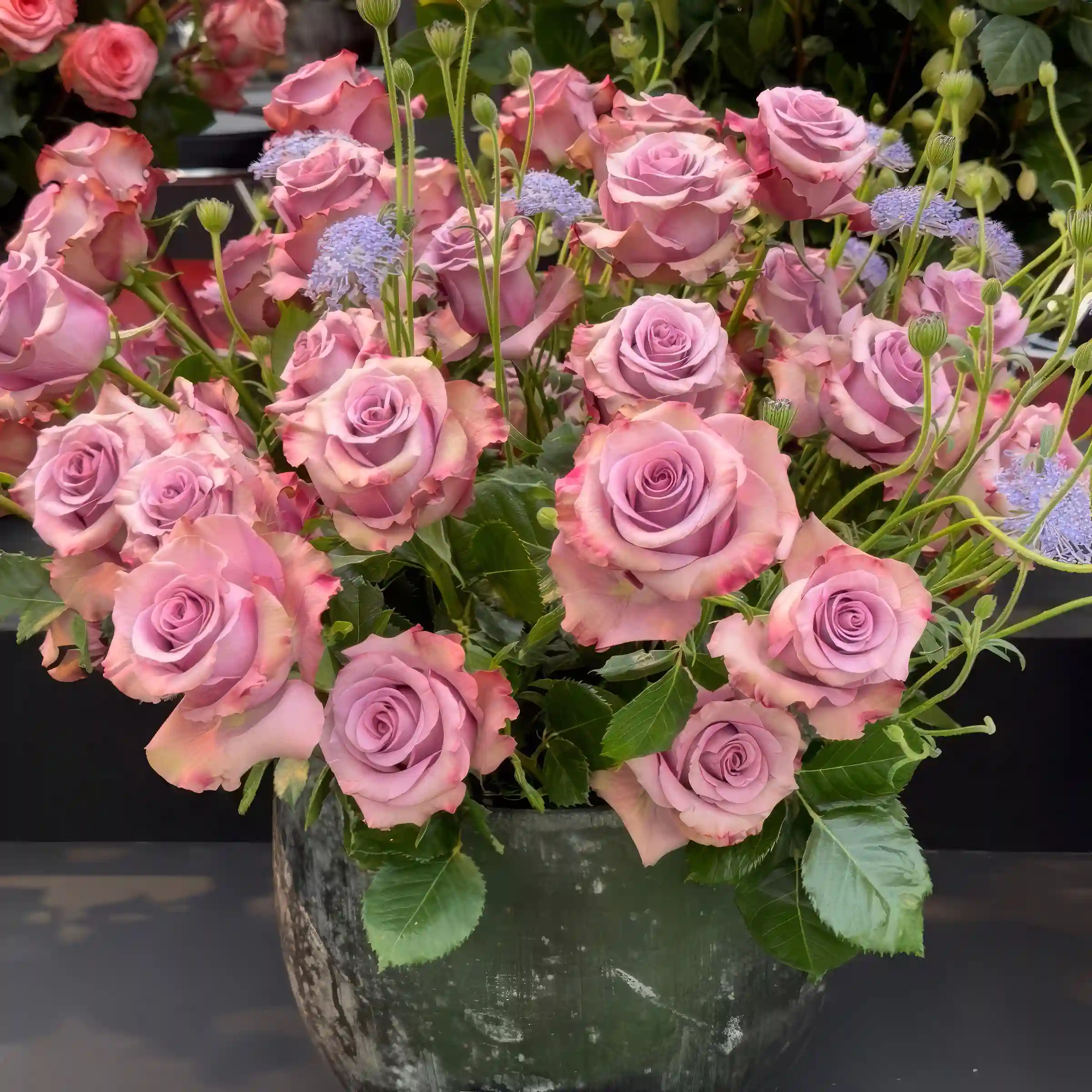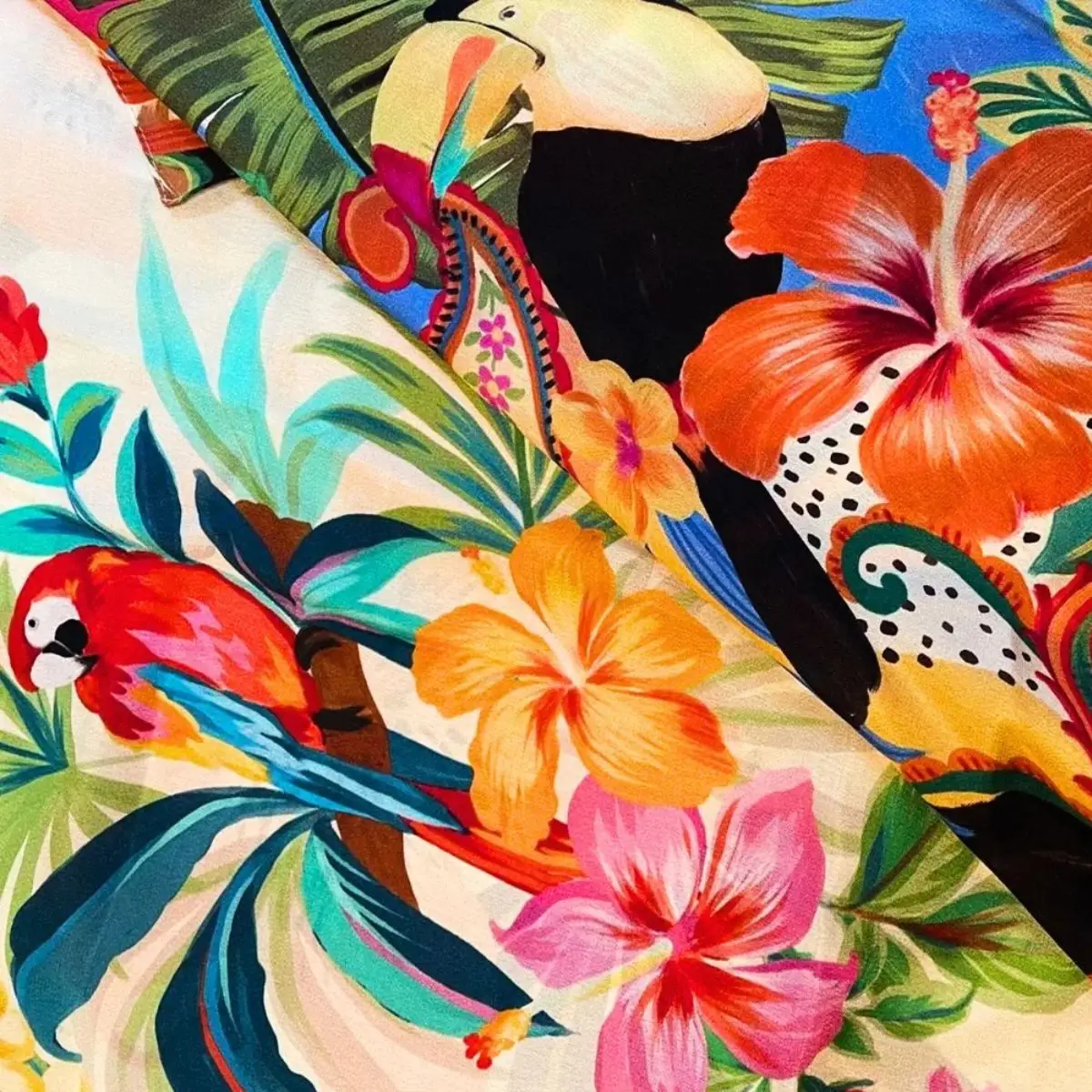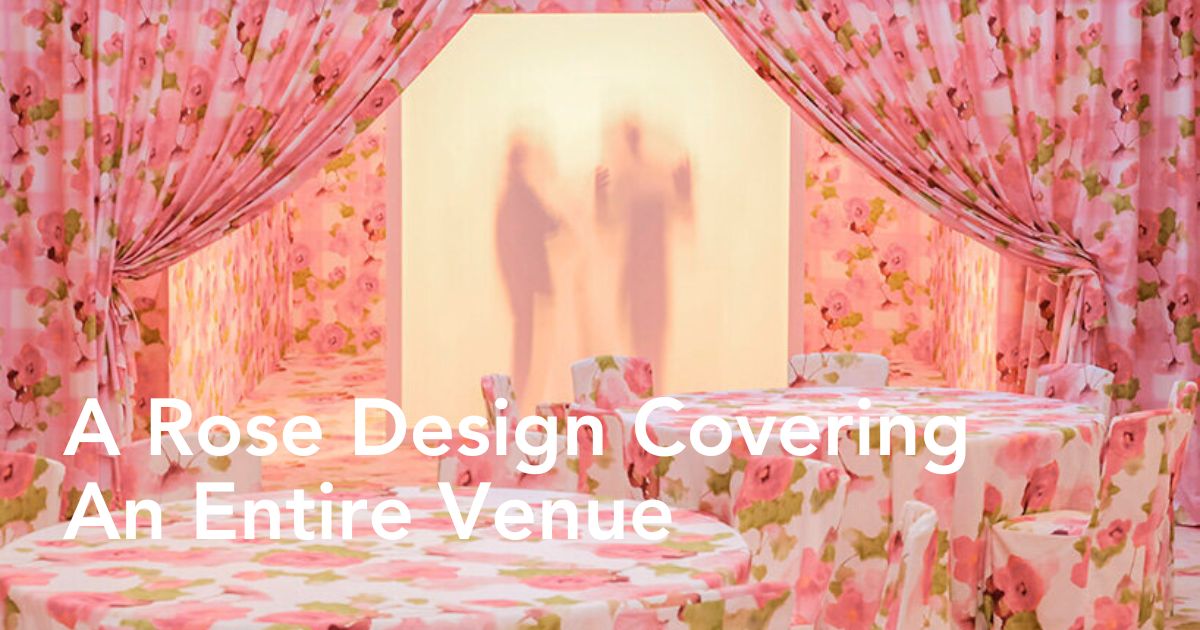
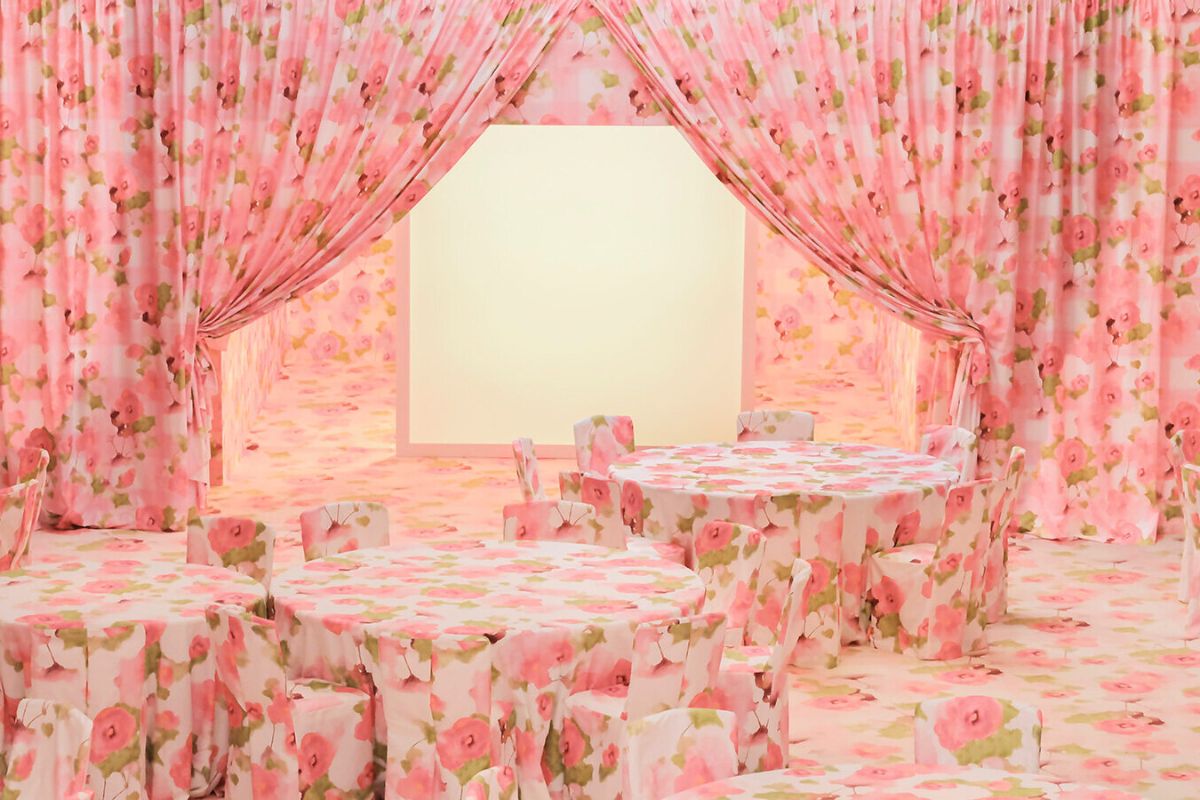
One small Persian rose, blown up until it covers the walls, the ceiling, the tables, and the curtains. That's what you walked into at 'Rose, c’est la vie', a secret dining room that India Mahdavi created for Art Basel Paris 2025. There was no sign outside, just a plain door in the 7th arrondissement. Push it open and the art fair's buzz gave way to pink.
Mahdavi, an architect and designer who works in Paris, made it with Luca Pronzato. He founded the traveling dining collective We Are Ona, and Mexican chef Jesús Durón joined them. For one week, an old car workshop became a speakeasy where you ate surrounded by roses. Mahdavi has a name for the feeling she was after: 'the seriousness of happiness'.
How India Mahdavi and We Are Ona Built Rose, C’Est la Vie
We Are Ona invites chefs, artists, designers, and architects to shape a meal in their own way. Pronzato had wanted to work with Mahdavi for years. She came back with a clear brief for herself. The world feels harsh right now, she said, so she wanted to give people a bit of beauty and a happy memory to take home.
The idea grew over calls between Paris and Mexico, and it ended up as a speakeasy that's openly feminine and feminist. That was on purpose. Most of the collective's earlier projects had been led by men and looked hard-edged and minimal. Mahdavi wanted to break with that look and keep the same high standard. She also wanted the surprise to begin before you even sat down: on the street, at the door, in not quite knowing where you were headed.
A Rose Garden Inside a Car Workshop
Pronzato's team showed her somewhere between five and ten possible venues. The winner was an old carrosserie, a body shop that had since been turned into offices but still felt rough and industrial. That roughness was the point. Against that hard industrial shell, a room dressed head to toe in flowers hits even harder.
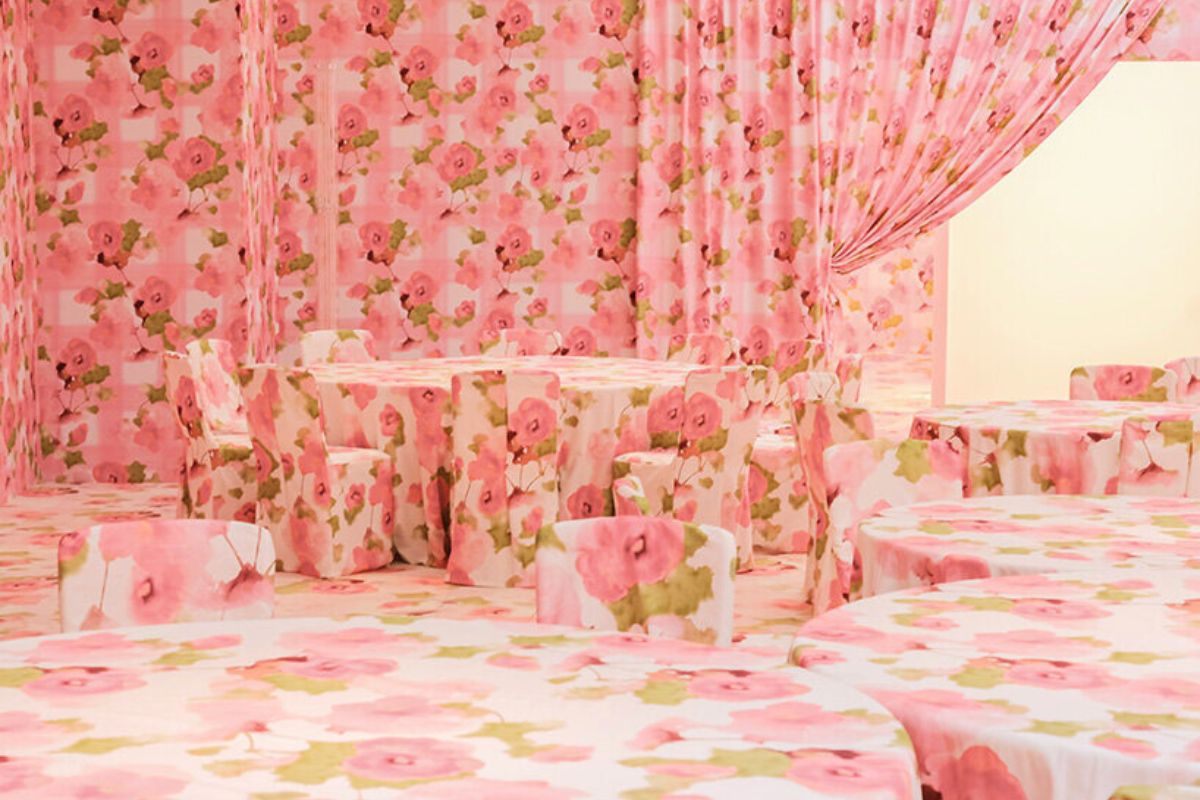
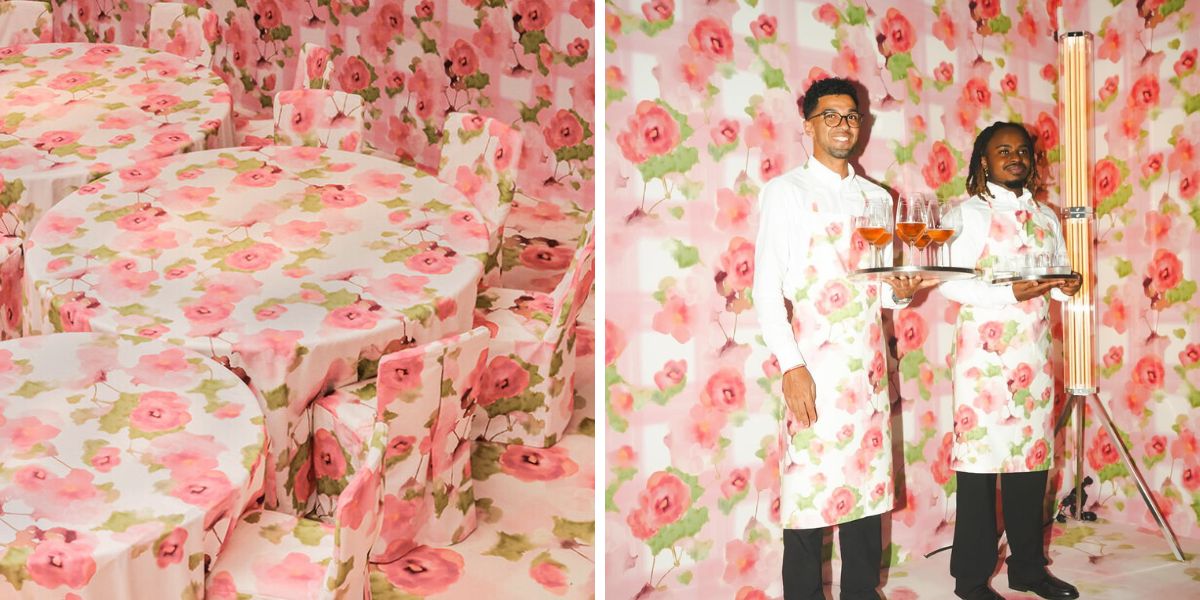
The flower behind it all is the Rose d’Ispahan, named after the city of Isfahan in Iran. It's a small pink damask rose, loved for its strong scent and a favorite motif in Persian decorative art. Mahdavi was already drawing a range of fabrics for the French textile house Pierre Frey. So she took her rose print, enlarged it, and had it made specially for the room. Then it went on everything. She explained what she wanted guests to feel:
"It would be nice to have this feeling of being embraced by your grandmother, in a way."
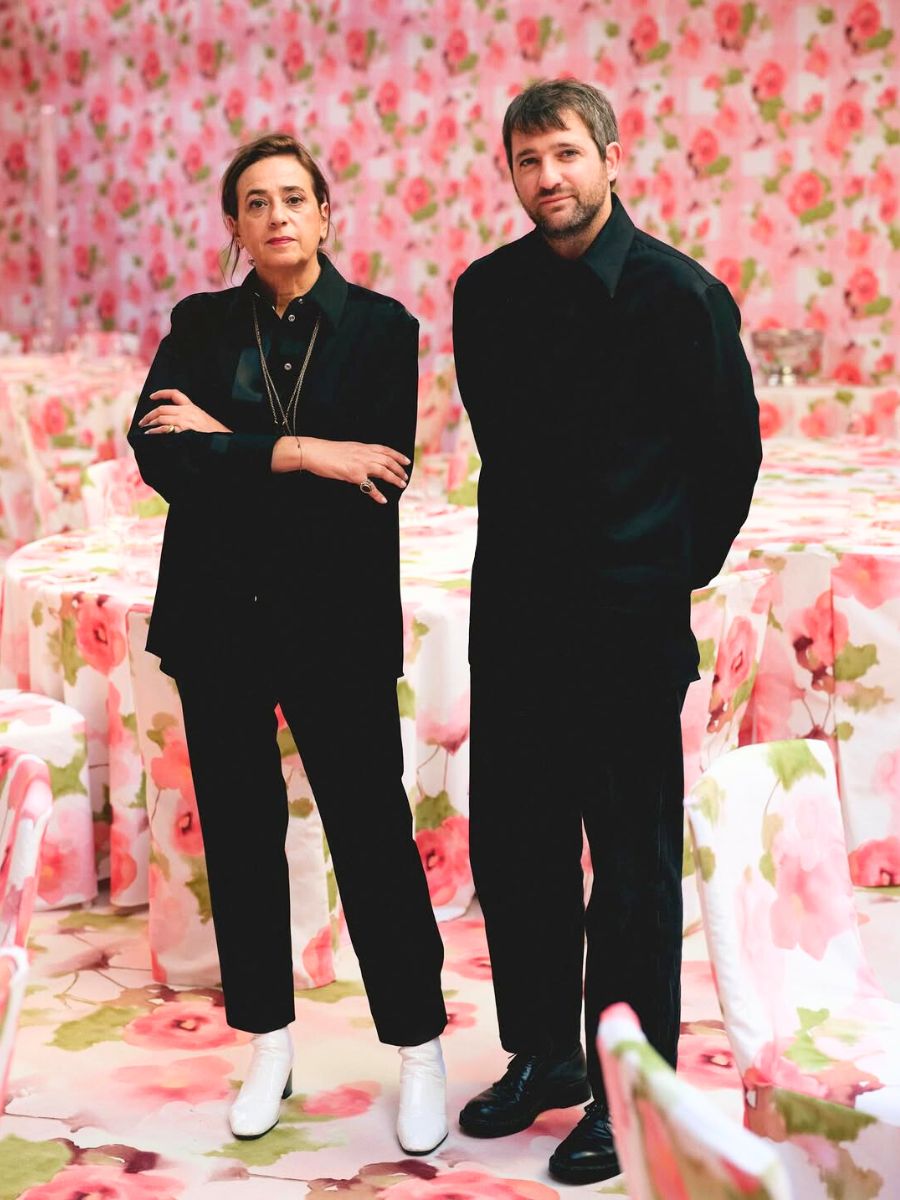
Pattern has long been part of how Mahdavi works. She designs prints for fabric and wallpaper, and she uses ornament to give a space a new personality fast. Everyone knows a granny-style floral room. Covering a whole building in one is something else. She calls it a kind of soft power: gentle in a single cushion, overwhelming when it's everywhere.
Softness, Happiness, and a Seat Next to a Stranger
Nothing was left to chance. Pronzato says the tables and their linen, the plates, the glasses and cutlery, and even the staff's aprons were agreed with Mahdavi. There were a few rose surprises, too. In the kitchen, Durón, a rising talent who used to cook at Pujol in Mexico City, brought the food.
The experience in a video
For Mahdavi, being there in person was the whole idea. You scroll past so many pictures every day that it's hard to tell what's real, she argued. The only proof is to live something yourself. So guests sat at long shared tables next to people they'd never met. They talked about design, food, and whatever else came up. Can you think of a better way to spend an evening during a busy art fair than under a ceiling of roses?
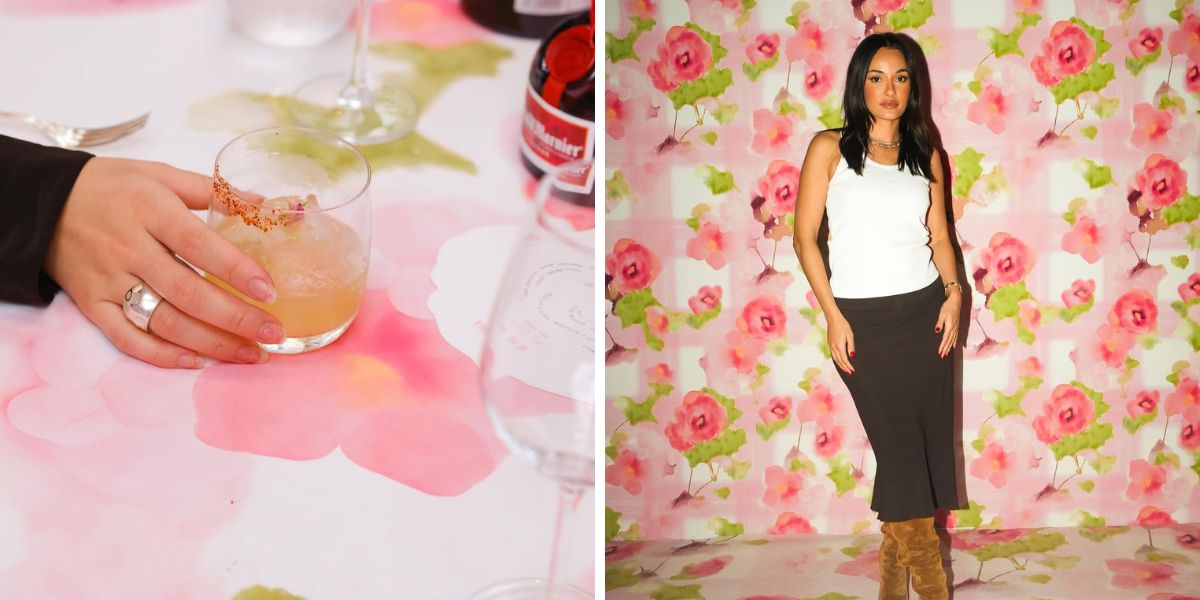
Photos by: @laurent_gia and @lfvrobin.