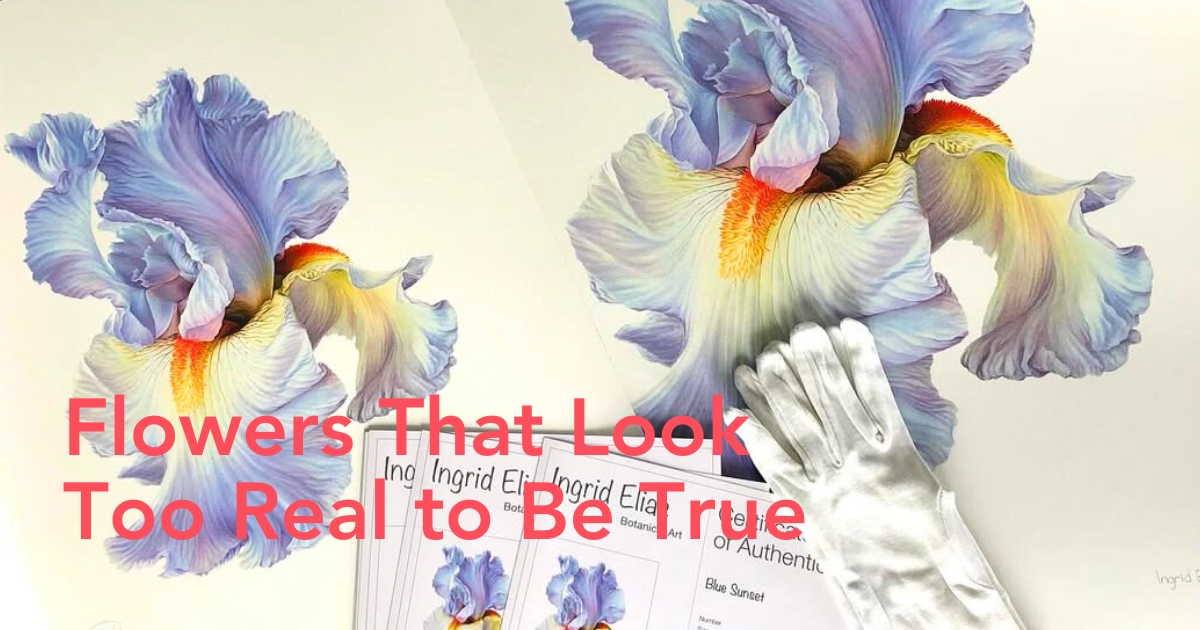
Ingrid Elias, born in 1968 in the Netherlands, works with watercolor to bring botanical subjects to life on paper. She begins each piece by carefully observing a live flower - none of her work starts from a photo. The process unfolds slowly: she sketches first, then applies multiple thin washes of paint onto stretched watercolor paper. Each painting can take hundreds of hours and several months to complete. The result feels as real as nature, yet unmistakably shaped by the artist's hand.
Watercolor Art Between Science and Expression by Ingrid Elias Botanical Art
Ingrid's work is inspired by scientific visualization, but it also explores the emotive area. She investigates how a petal bends and how light passes through a stem. She then transforms these findings into layered tones that imply movement and structure while avoiding excessive detail. Her work demands close attention - a viewer may feel as if they could touch the petal.
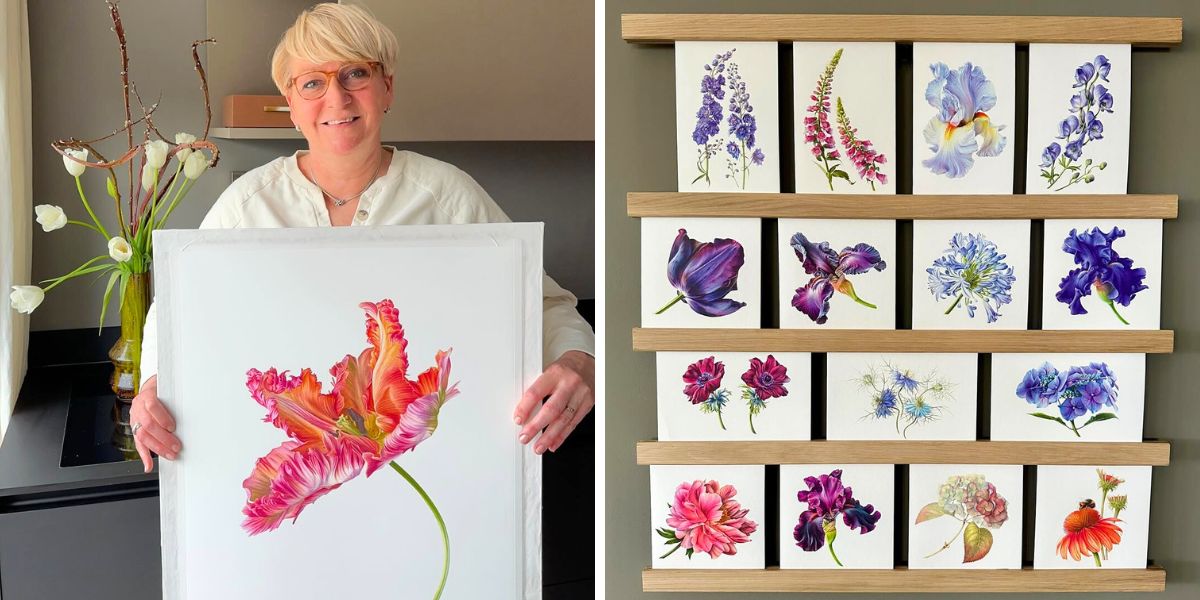
The artist's botanical artwork is offered as original one-of-a-kind paintings or limited-edition prints (each signed and limited to 25 pieces), making high-quality work affordable while maintaining exclusivity. These prints are acquired worldwide and bring a thoughtful, natural accent to rooms.
The process of painting a tulip
The watercolor expert has exhibited in institutions such as the Shirley Sherwood Gallery at Kew Gardens in London, the Noordbrabants Museum in the Netherlands, Museum De Zwarte Tulp in Lisse, and the FlowerArt Museum in Aalsmeer. These collaborations place her work at the intersection of botanical study and contemporary art.
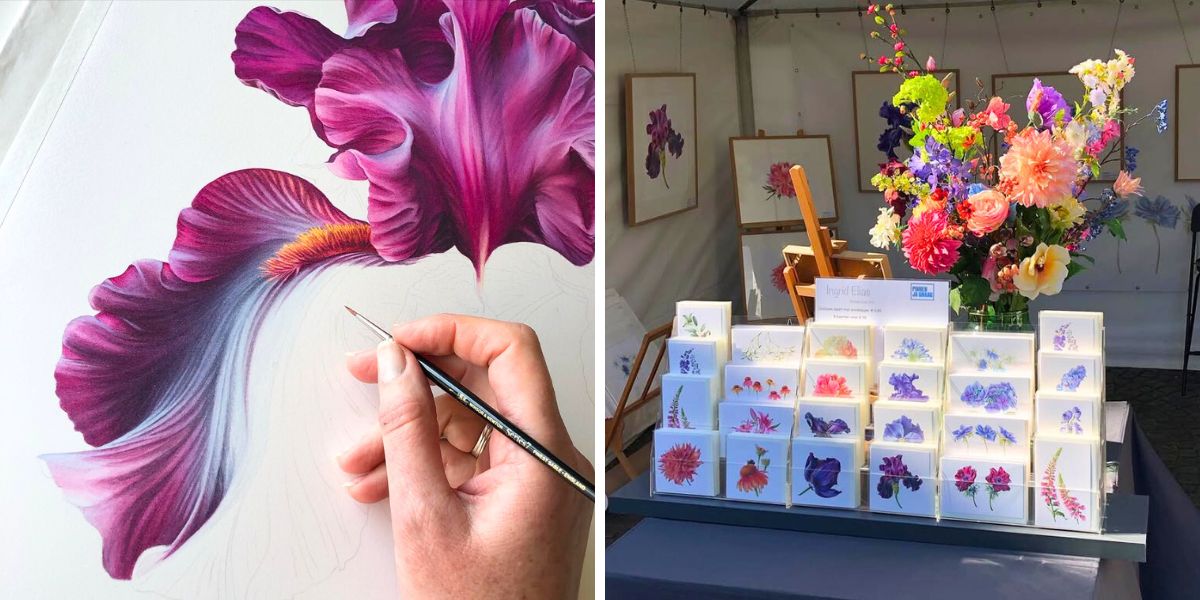
Ingrid Elias Paints What Grows
What draws people to her pieces is the way they portray a moment in nature - with a single stem, a leaf-edge, or the gesture of a petal captured in motion. Her paintings, besides merely representing a plant or flower, bring forward presence and form. Works like her study of the dark 'Queen of Night' tulip carry an intensity in their deep tones.
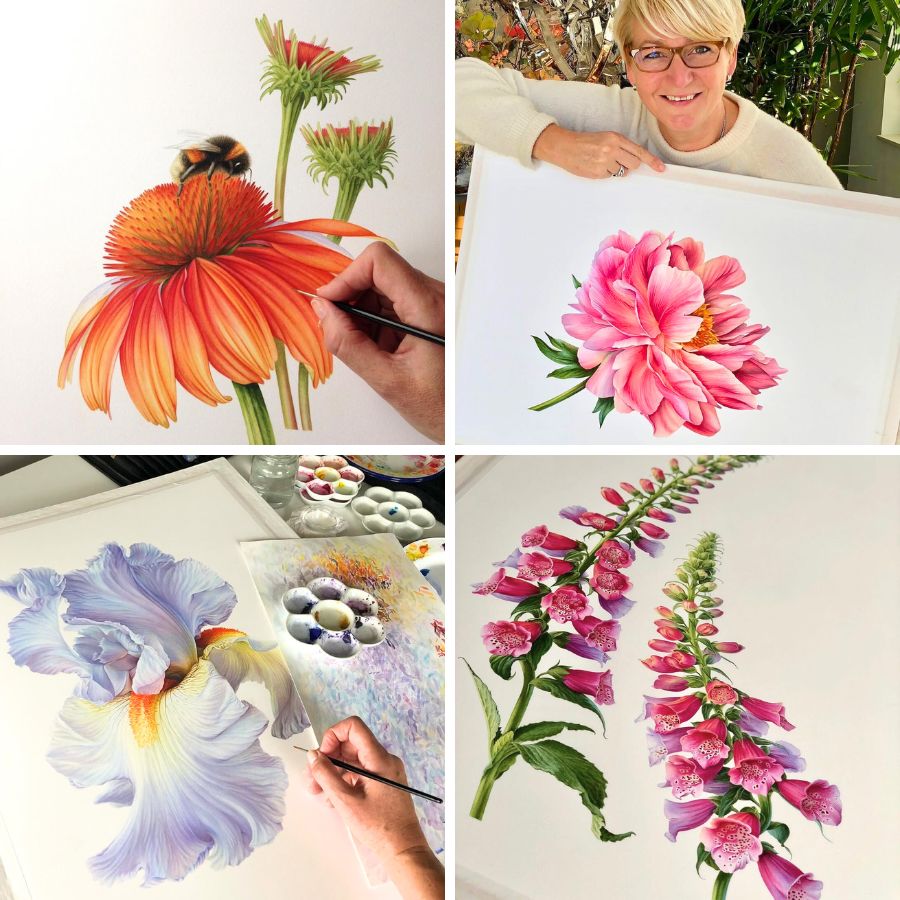
Elias's technique is exacting. She begins with live observation, sometimes photographing or sketching on-site, and then layers paint in transparent stages to recreate texture and shape. Her notice of tone gradients, edges, and shading emulates how light behaves in natural forms. The result is artwork that appears alive, nuanced, and still.
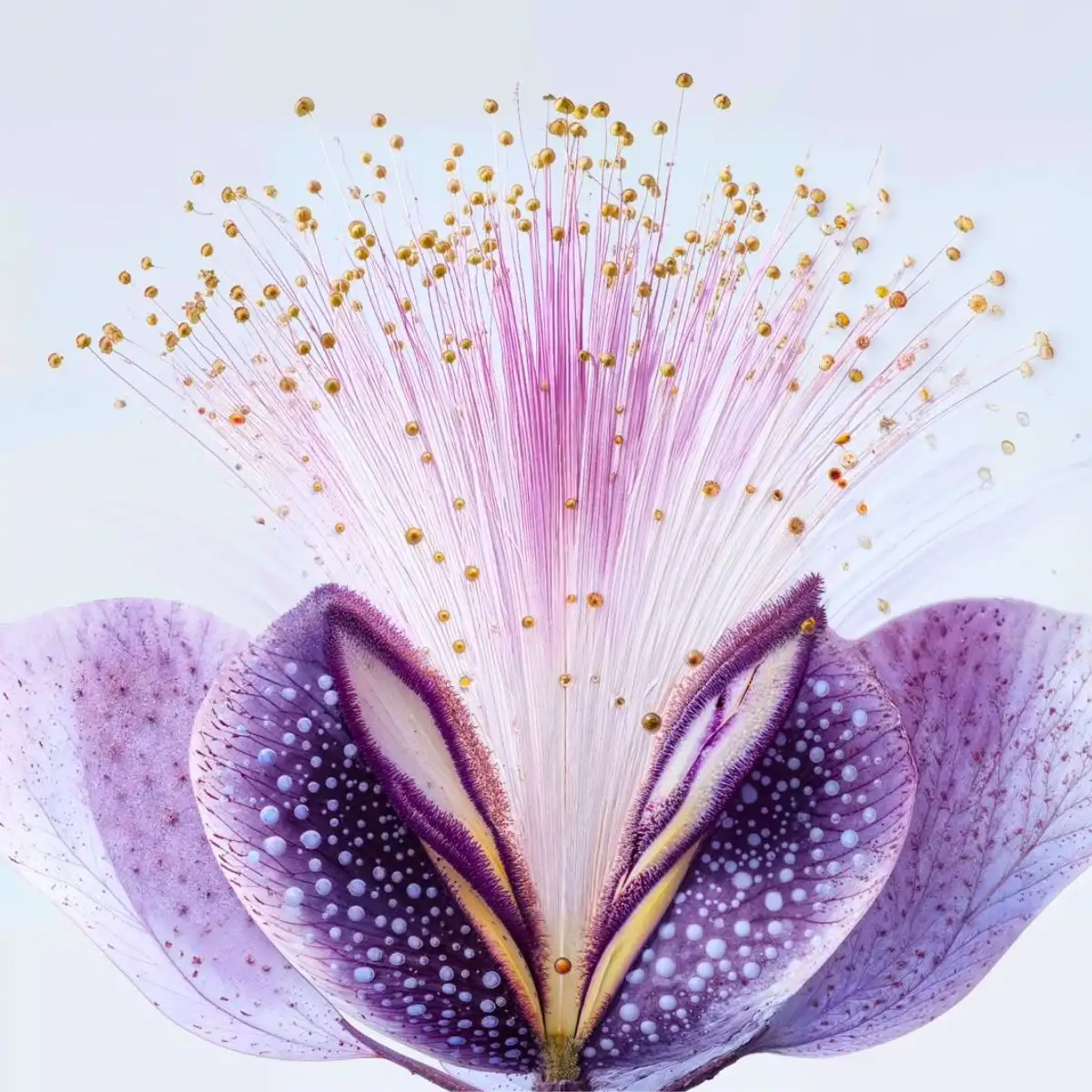
A complete artwork of an Iris flower
Display the Subjects True to Nature
The whole process is challenging yet joyful, and often she loses herself in her concentration, experiencing it as a meditative one, after which she sometimes surprises herself with the result. Her paintings are tools for reflection and an innate love and appreciation for what surrounds us: nature. Each composition invites the viewer to pause - to see structure, shade variation, and movement. Her images reveal visual complexity and human connection to botanical life.
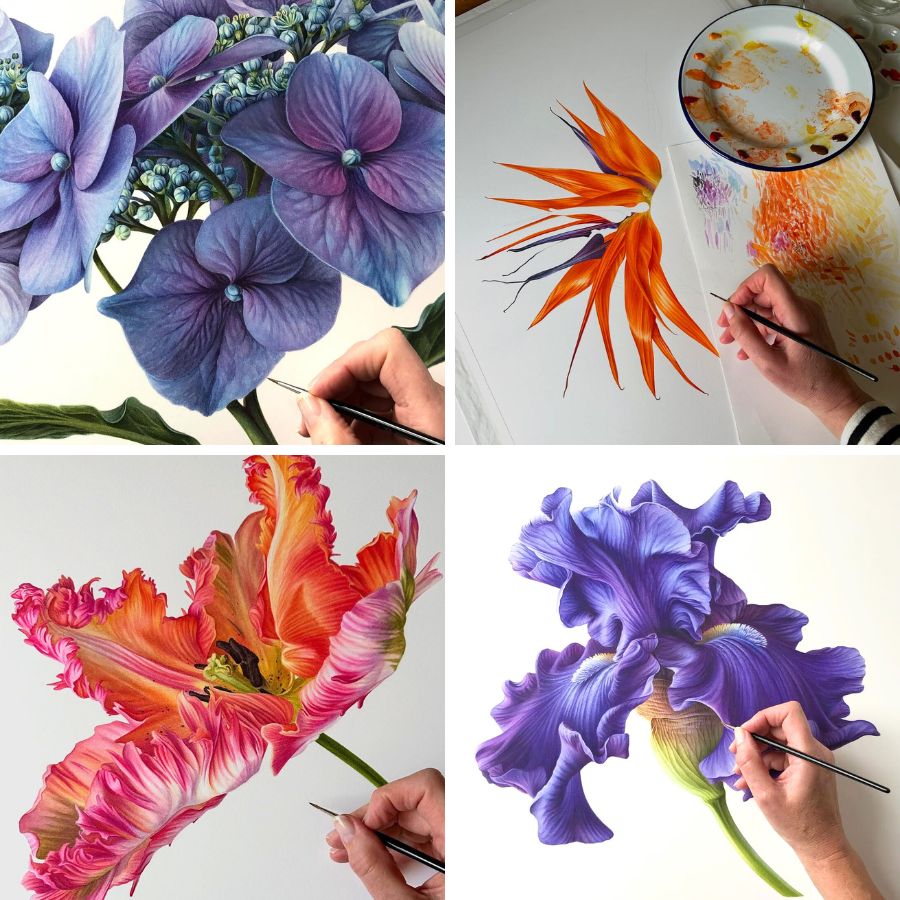
Ingrid Elias creates works you can't physically smell or touch, but see again with interest. Gallery curators and collectors praise how her pieces bring botanical clarity into modern interiors. They exist as fine art, scientific reference, and personal meditation on nature - all guided by her disciplined process and singular vision.
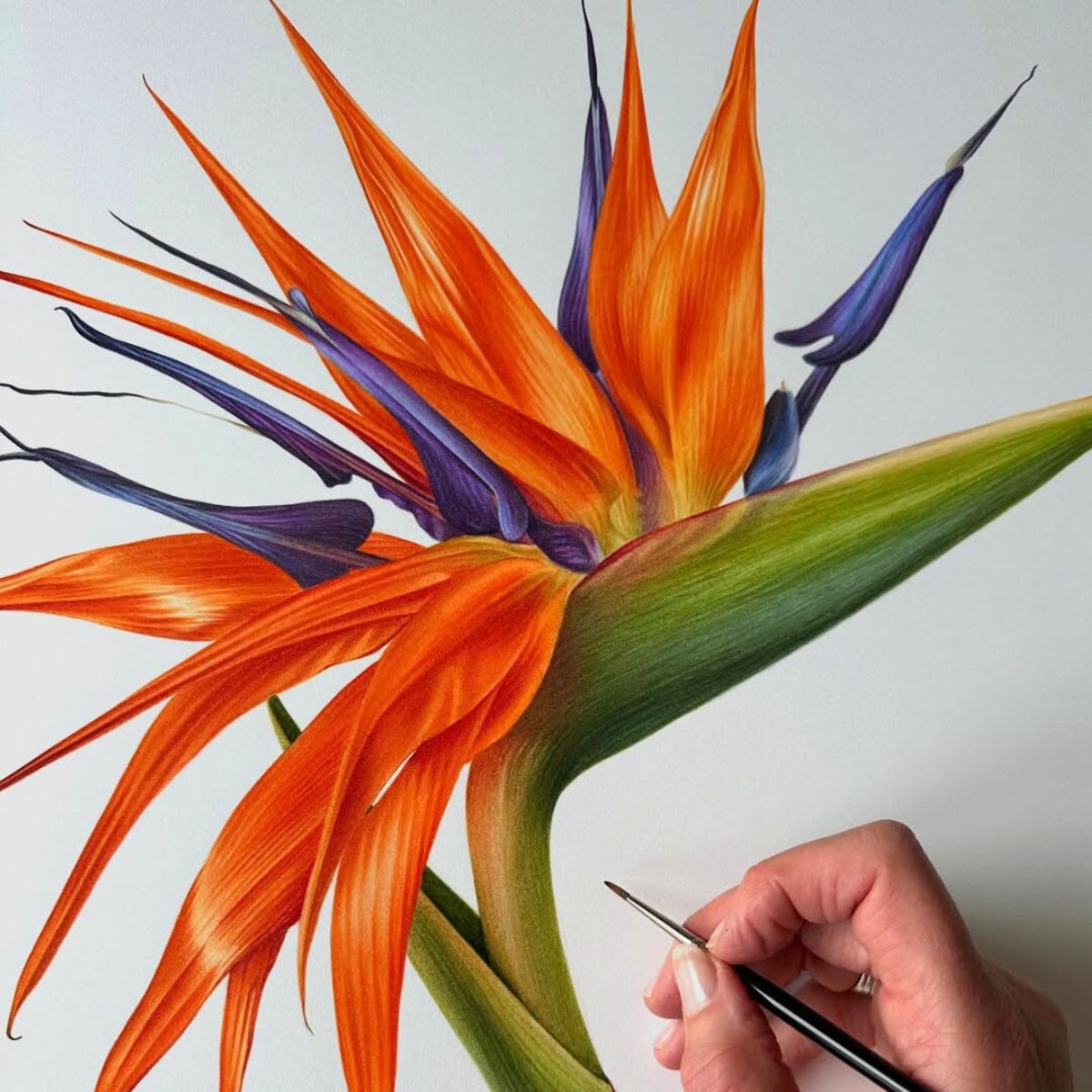
If you wish to see more of her work, don't hesitate to visit Ingrid's Instagram account.
Photos by: @ingrid.elias_botanicalart.