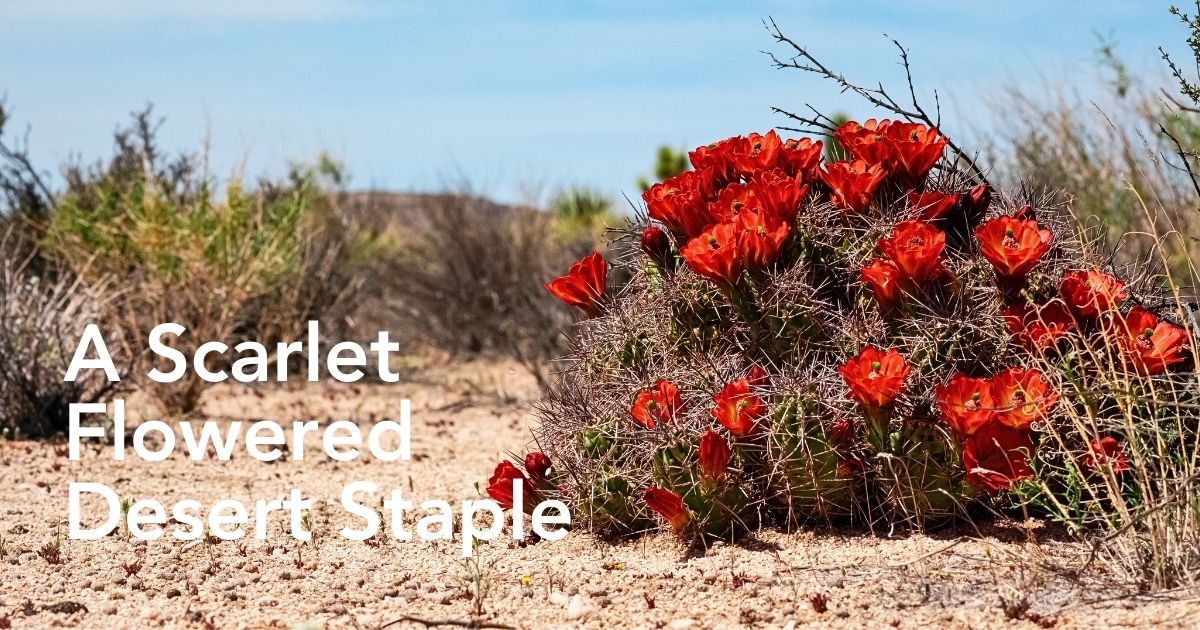
Kingcup cactus, also called Echinocereus triglochidiathus, could be considered the desert's answer to a ruby gemstone. While many succulents may play hard to get, this distinctively rugged variety is surprisingly quite easily found, and a sight to behold at that. It is one of nature's toughest performers in harsh desert environments.
This cactus attracts attention with its scarlet flowers, which seem impossibly bright against the arid landscape. It not only survives but thrives, greeting hikers with scarlet flowers that always seem to call for attention. Knowing about this mounding cactus will definitely change how you view dry gardens.
Origins of Echinocereus Triglochidiathus AKA Kingcup Cactus
The Cactaceae family is full of survivors, but few are as widespread and adaptable as the Kingcup cactus. This plant is a staple of the Southwestern United States and Northern Mexico. Still, it thrives in regions from western Colorado south through New Mexico, Arizona, and Utah, extending into Mexico's eastern portion. It has carved out a niche on rocky slopes and within pinyon-juniper woodlands where other plants might wither.
The Kingcup cactus goes by several common names depending on location. You might hear it called claret cup cactus, claret cup hedgehog, crimson hedgehog, red-flowered hedgehog cactus, strawberry cactus, hedgehog cactus, crimson cactus, Arizona hedgehog cactus, strawberry cactus, King's crown cactus, or Mojave Kingcup cactus. Each name references either the plant's growth habit or its showy and beautiful flowers.
Taxonomists and botanists often discuss the chromosome number of this species because it varies significantly, with several varieties recognized based on spine characteristics and geographic distribution. Moreover, because its chromosome number varies across populations, there has been debate over whether certain forms represent distinct species or simply regional variations.
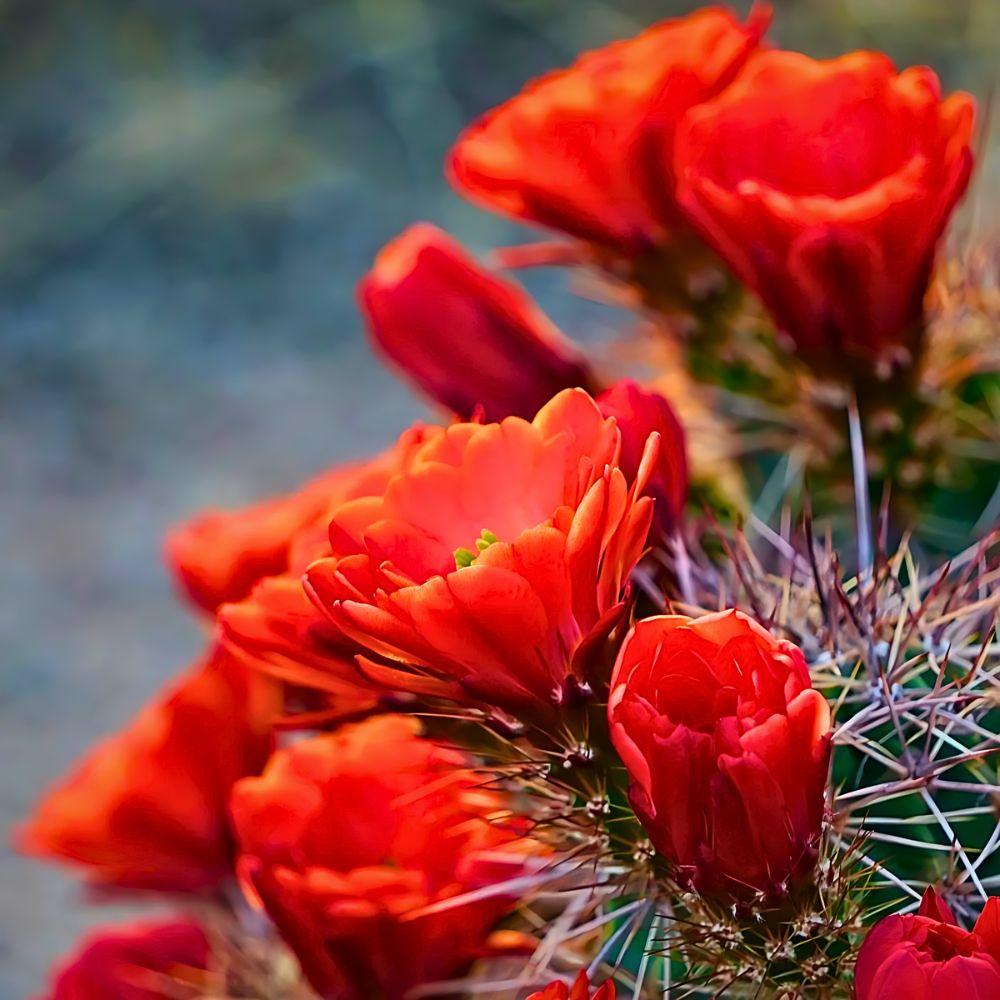
You might, for instance, find diploid populations in one area and tetraploid ones in another, a genetic flexibility allowing the Kingcup cactus to thrive in varied habitats, ranging from the low desert floor to the high-altitude mountain ridges. The fact that it is one of the most widespread of the Echinocereus genus shows just how it knows how to handle diverse environments. Notably, according to the succulent journal literature, this mounding cactus adapts differently depending on whether it grows in the low desert or higher elevations.
Also, while the International Union for Conservation of Nature Red List of Threatened Species (IUCN Red List) generally categorizes it as a species of least concern due to its massive range, local populations can still be sensitive. Habitat loss has led to some local populations being listed as threatened species on the IUCN Red List, particularly in areas experiencing rapid development. While not a particularly endangered species overall, one should always treat its wild populations with respect.

Where Does Kingcup Cactus Grow in the Wild?
Where the Kingcup cactus grows tells you a lot about its toughness. You can replicate those conditions to produce it in your home. You will find it widespread through the Eastern portion of California through Utah, Arizona, New Mexico, Western Colorado, and down into Texas and Mexico, where it colonizes rocky slopes, cliffsides, and gravelly soils across varied habitats from 3,000 to 10,000 feet elevation.
In Arizona, you'll find it in both desert lowlands and pine forests. Kingcup cactus Arizona populations, in particular, show this species' adaptability. Plants growing in exposed desert locations develop differently from those in partial shade at higher elevations. Some populations feature completely spineless stems (the spineless hedgehog form), while others produce densely spiny clusters with fierce, sharp spines projecting outward from cylindrical stems.

Essentially, this is one of the hardiest cacti available. The winter environment, combined with dry soil, does not faze it. Some varieties can withstand snow and freezing temperatures, making them the easiest species for gardeners in colder climates who still want a desert aesthetic. This beautiful plant occupies such diverse territories that many sometimes joke that the only uniting factor across populations is those orange-red to bright red floral displays, be it in the low desert heat or the chilly heights of the Rockies.
Identifying the Kingcup Cactus
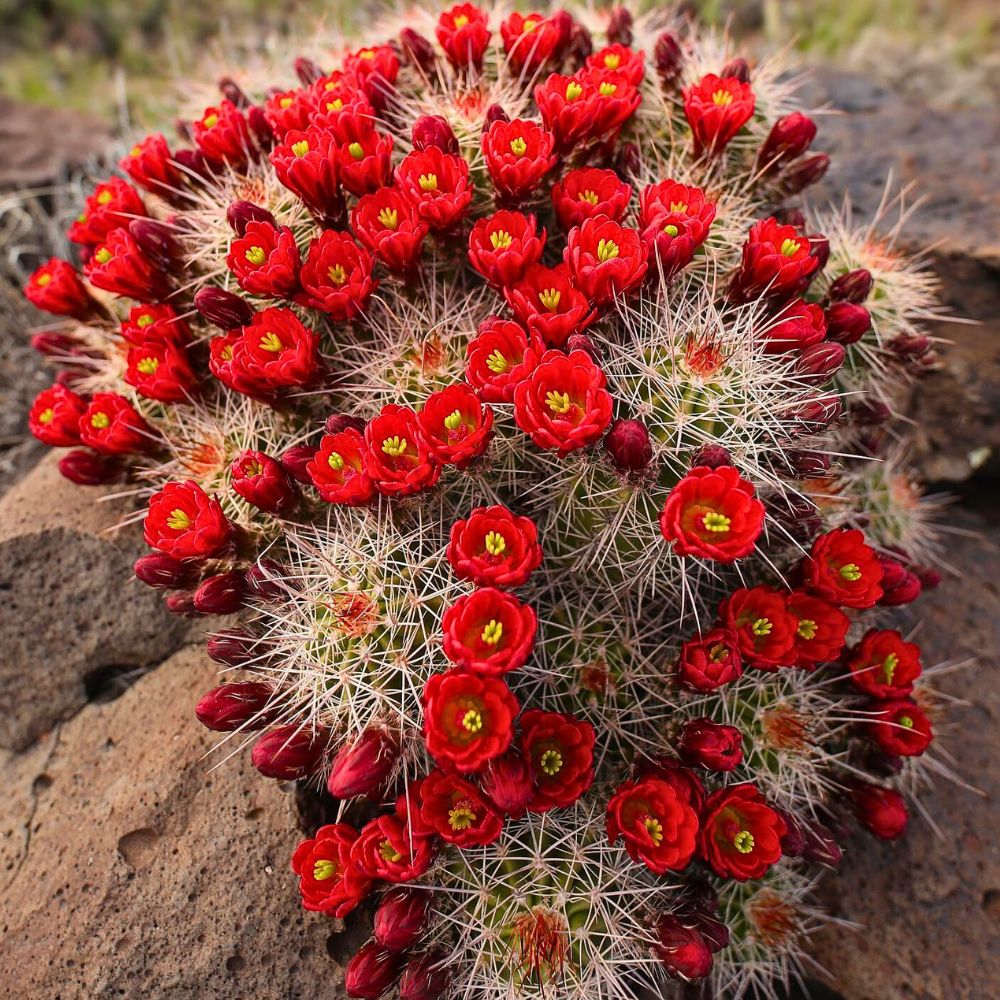
Recognizing an Echinocereus triglochidiathus in the wild is a treat. The growth habit is unique; starting as a single stem, it quickly multiplies, forming bulbous piles of cylindrical stems. Over time, these mounds become massive, sometimes numbering hundreds of heads in a single cluster. You now know why many locals refer to it as the mound hedgehog cactus or the Mojave mound cactus!
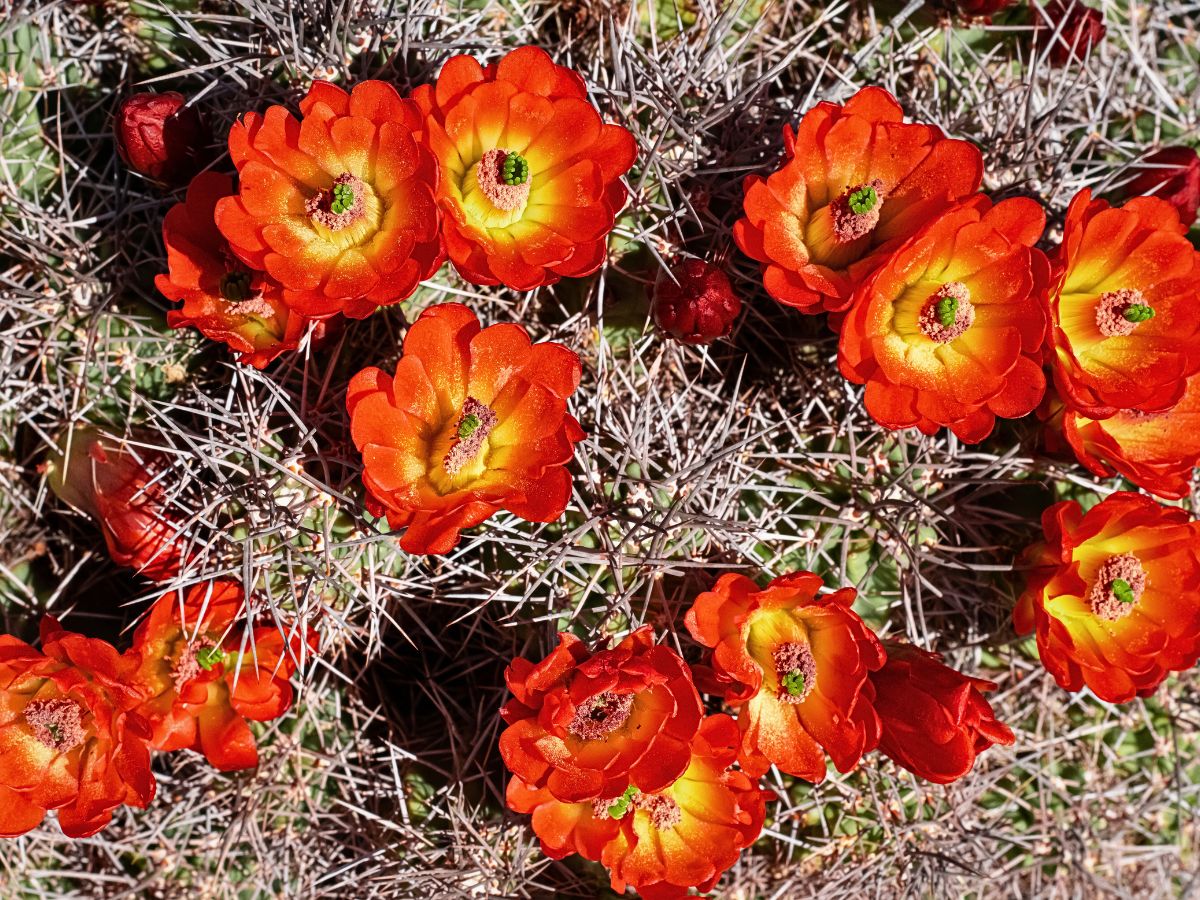
The stems' skin is usually yellow-green to deep green, providing a solid backdrop for the spines. When it comes to its spination, some variations are densely spiny, armed with sharp radial spines and central spines that protect the plant from thirsty herbivores. However, there is a variety known as Kingcup cactus inermis that is completely spineless and smooth, almost friendly, making it a favorite for high-traffic garden areas.
In some populations, the plant exhibits deciduous spines, meaning older spines may fall off as the corky stem ages. Regardless of which you look for, the cylindrical stems and clustering habits are your best clues.
Kingcup Cactus Adaptations
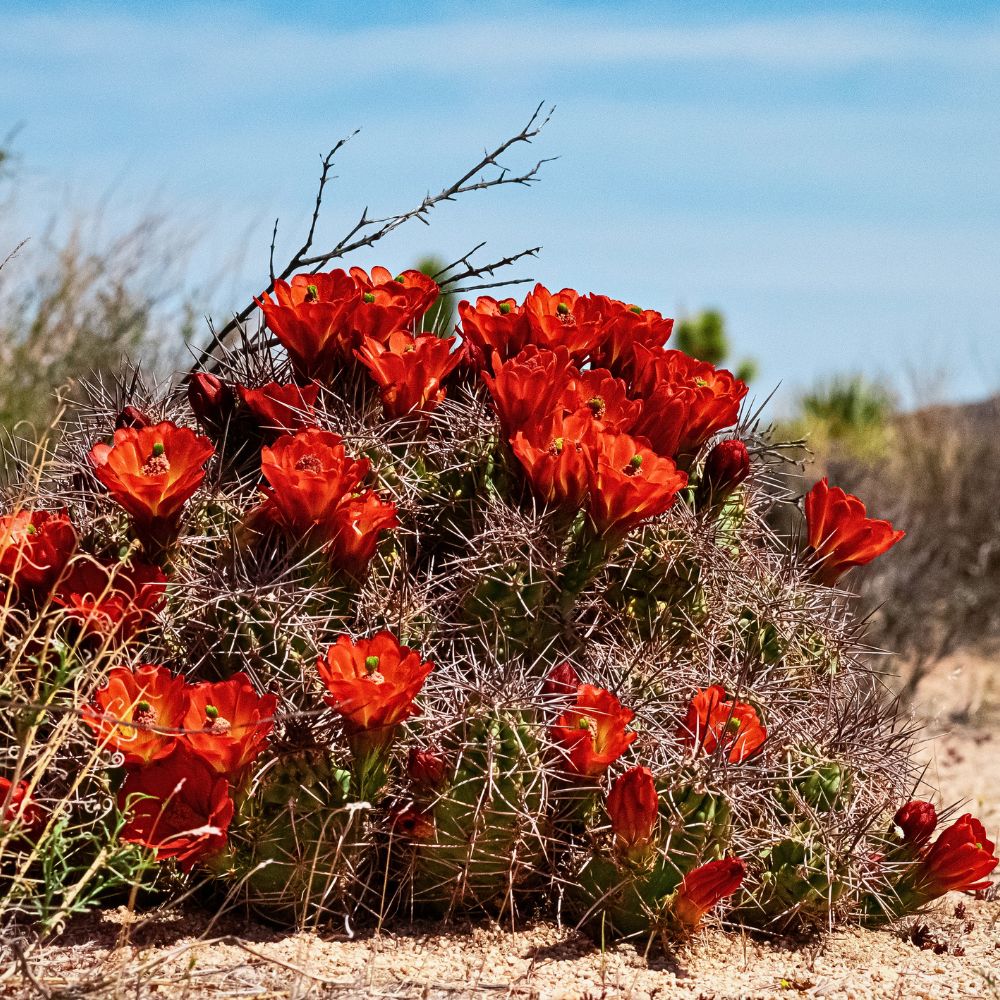
Kingcup cactus adaptations reflect millions of years of desert evolution. It forms bulbous piles of stems that cluster together, conserving moisture and providing mutual shade. Each stem stores water in succulent tissues that swell after rain and shrink during drought.
The spine arrangement provides essential protection and climate control. Central spines grow longer and thicker than radial spines, creating a defensive barrier against herbivores. Some have deciduous spines that drop off mature plants, leaving stems smooth and yellow-green. Others maintain their armament throughout life. The waxy coating on the stems seals water in, allowing the plant to survive prolonged droughts.

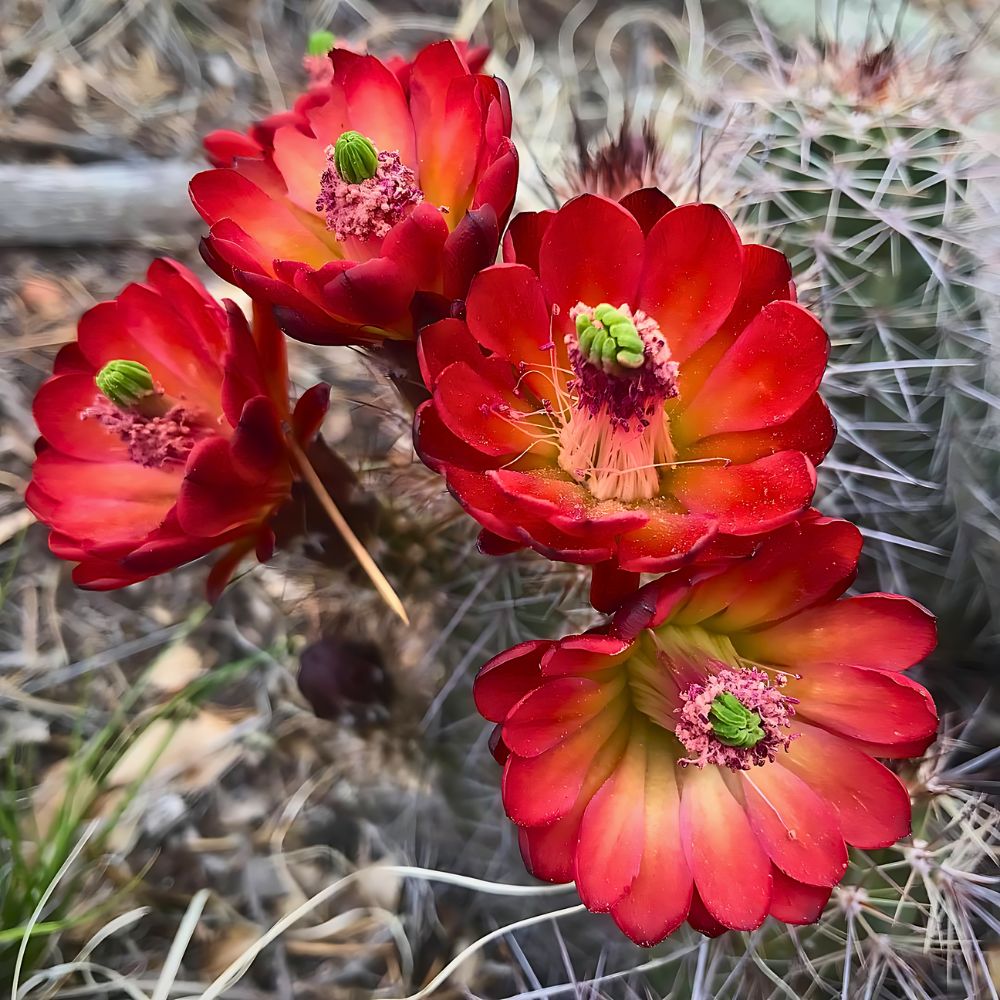
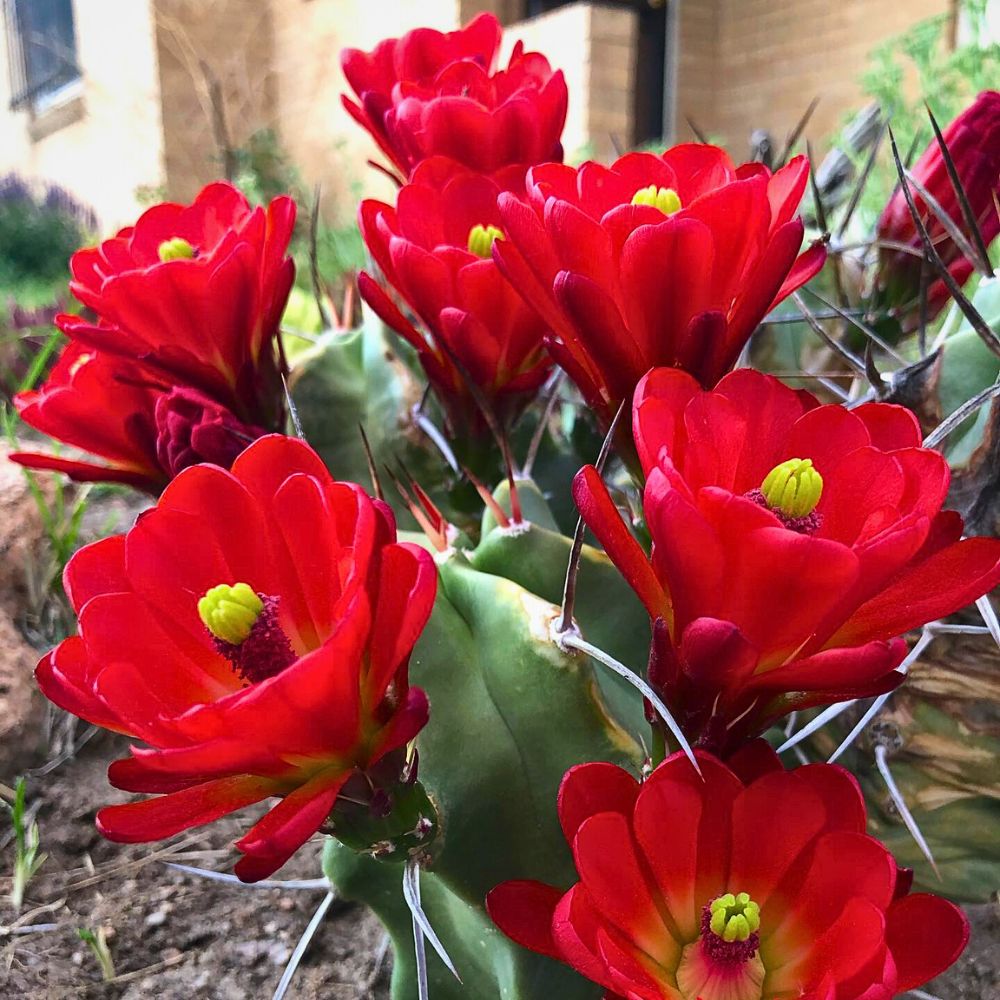
Its root system is shallow but wide, designed to capture fleeting rainfall from summer monsoons. The scarlet flowers, with their rounded petals, also feature a thick nectar chamber that attracts hummingbirds, the plant's reliable primary pollinators. The flowers typically stay open for several days, providing maximum light exposure and also attracting the passing birds.
Echinocereus Triglochidiathus Benefits, Functions, and Uses
Kingcup cactus has many practical purposes. The flowers support native pollinators, especially hummingbirds, while the dense stems provide shelter for small reptiles and insects. In restoration projects, this species helps stabilize disturbed soils on slopes.
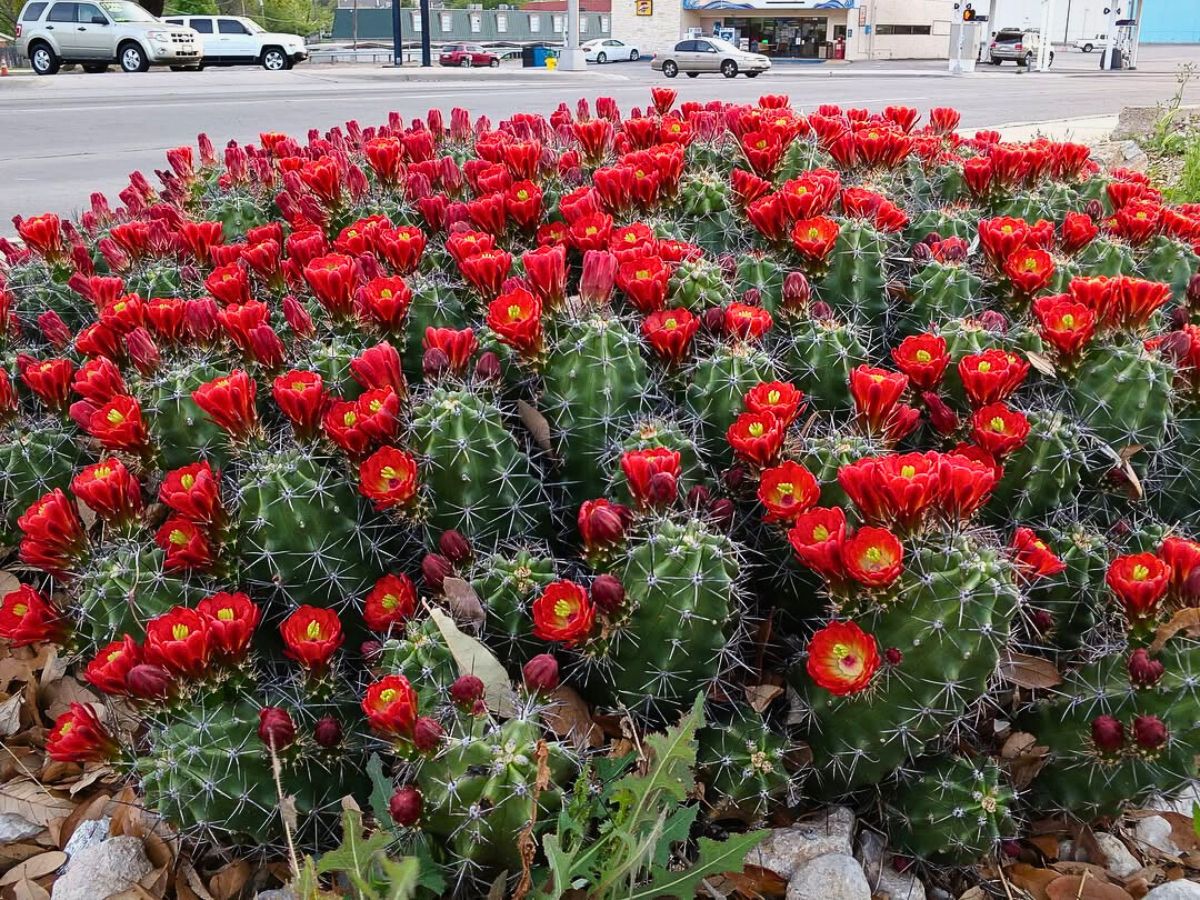
For landscaping, few plants deliver this kind of drama with less maintenance. Mass plantings create bold displays, particularly when combined with complementary desert species like penstemon or desert marigold. Its textured form and compact habit also work well in rock gardens.
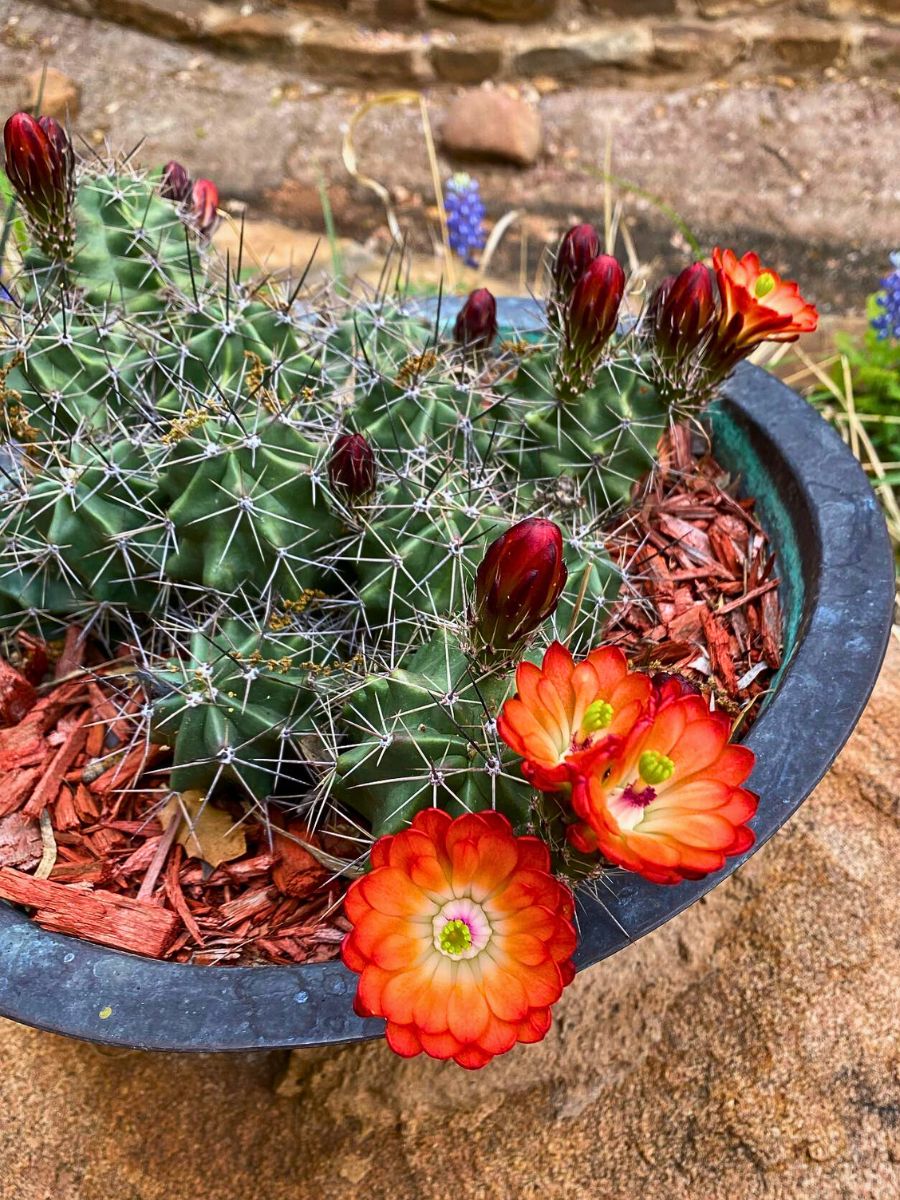
As container specimens, smaller varieties suit desert-themed patio collections and windowsill gardens. The manageable size and reliable flowering make this an excellent choice for indoor cultivation if you can provide adequate light.
Xeriscaping designs rely heavily on tough performers, such as claret cup cactus. Here, designers love it because it serves as a structural anchor with minimal needs. The plant needs virtually no supplemental irrigation once established in suitable climates, making it perfect for sustainable landscapes. Its long lifespan also means one planting can provide decades of beauty.

Also, because it forms bulbous piles, it looks excellent when planted near large boulders. The contrast between the yellow-green stems and gray rocks is easy to spot. When the crimson hedgehog flowers appear, the color is visible from down the street.
For those in colder regions, this cactus is a one-time purchase that pays off. Unlike tender succulents that die in winter, the claret cup cactus persists, which is why it is one of the most widely cultivated species. You can, practically, plant it and forget about it, aside from occasional weeding.

Kingcup Cactus Cultivation and Propagation Methods
Growing Kingcup cactus from seed requires patience. Seeds germinate readily in spring with bottom heat and consistent moisture. Sow on the surface of sterile cactus mix, mist regularly, and provide bright indirect light. Seedlings grow slowly, requiring 3 to 5 years to reach flowering size.
Stem cuttings provide faster results. In spring or early summer, remove an offset stem by cutting at the base. Let the cut surface dry for a week, then pot in barely moist cactus mix. Roots develop within a month, after which you can begin regular watering. This method maintains the parent plant's characteristics.
Division works well for established clumps. Carefully separate stems with roots attached and replant immediately. This works best in spring as growth resumes. Each division should include at least three stems for quick reestablishment. While unnecessary for this species, grafting could speed the growth of rare varieties. Young seedlings grafted onto faster-growing rootstock reach maturity in half the expected time.
Kingcup Cactus Care Requirements
Kingcup cactus care is easy for such a dramatic plant. It ranks among the easiest species of hedgehog cactus to maintain if you match its basic needs. The widespread cultivation of this succulent is due to its resilience (of course, alongside its showiness).
Start with good drainage. This cannot be stressed enough. Mix standard potting soil with coarse sand, pumice, or perlite at a 50-50 ratio. A mix of 50% to 70% mineral grit and potting soil will also work. In ground plantings, plants thrive in naturally gravelly or sandy soils. Clay soils spell certain doom unless you amend heavily or plant on slopes where water runs off quickly.
Light requirements vary by form and origin. Most Kingcup cactus varieties want full sun for best flowering and healthy appearance, though mountain forms need afternoon shade in hot climates. The intense sunlight of desert summers poses no problem for plants that acclimate gradually. If grown indoors, a south-facing window is ideal, though they truly perform best outdoors. Without enough light, the stems stretch, lose their healthy appearance, and fail to produce their scarlet flowers well.
Water moderately during the growing season (spring through early fall), allowing soil to dry between waterings. Reduce winter watering to just enough to prevent excessive stem shrinkage, since overwatering kills more cacti than any other factor. When in doubt, skip the watering.
Temperature tolerance spans a wide range. Most forms handle cold well when dry, with some mountain populations surviving below zero. The summer heat of 45°C (110°F) poses no stress when roots are adequately moist. The key is keeping plants dry during cold periods and well-watered during really hot periods.
Fertilization needs remain minimal. A light application of balanced cactus fertilizer once in spring supports growth and flowering. Overfertilizing produces weak, unnatural growth prone to pest problems. Keep an eye out for mealybugs and scale. Even so, a healthy appearance usually keeps pests at bay, but stress can make them vulnerable.
When Does Kingcup Cactus Flower?
Often, novice gardeners wonder when their Kingcup cactus will flower because the seasonal display is so memorable. For this succulent, its main flush of color comes in spring - generally, Kingcup cactus flowers from March through June, with lower-elevation plants flowering first. Desert populations might start in late February, while mountain plants could wait until May or even early June.
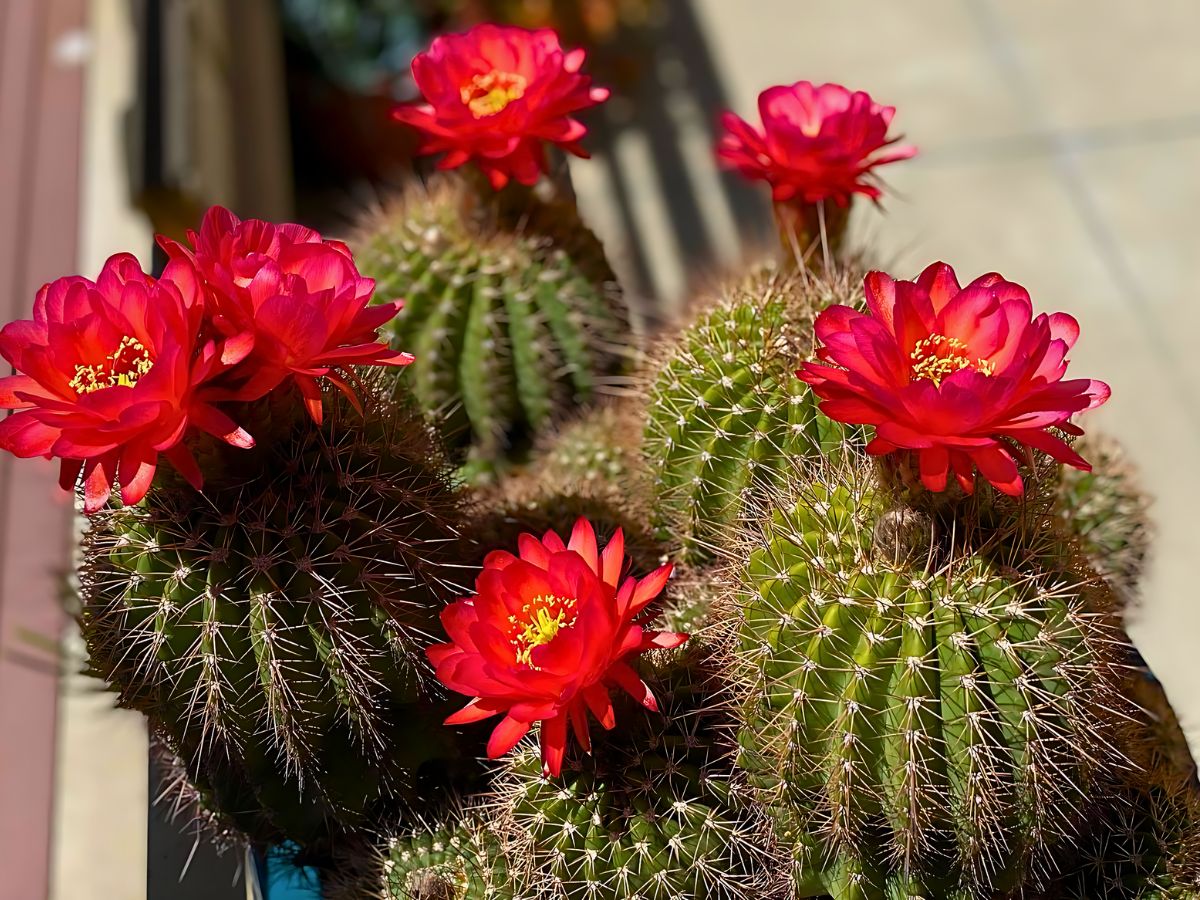
A winter-like environment combined with some spring moisture triggers the show. The plants need a cool dormant period followed by warming temperatures and adequate soil moisture. In cultivation, you can encourage flowering by providing a cold, dry winter rest period with temperatures dropping at night.
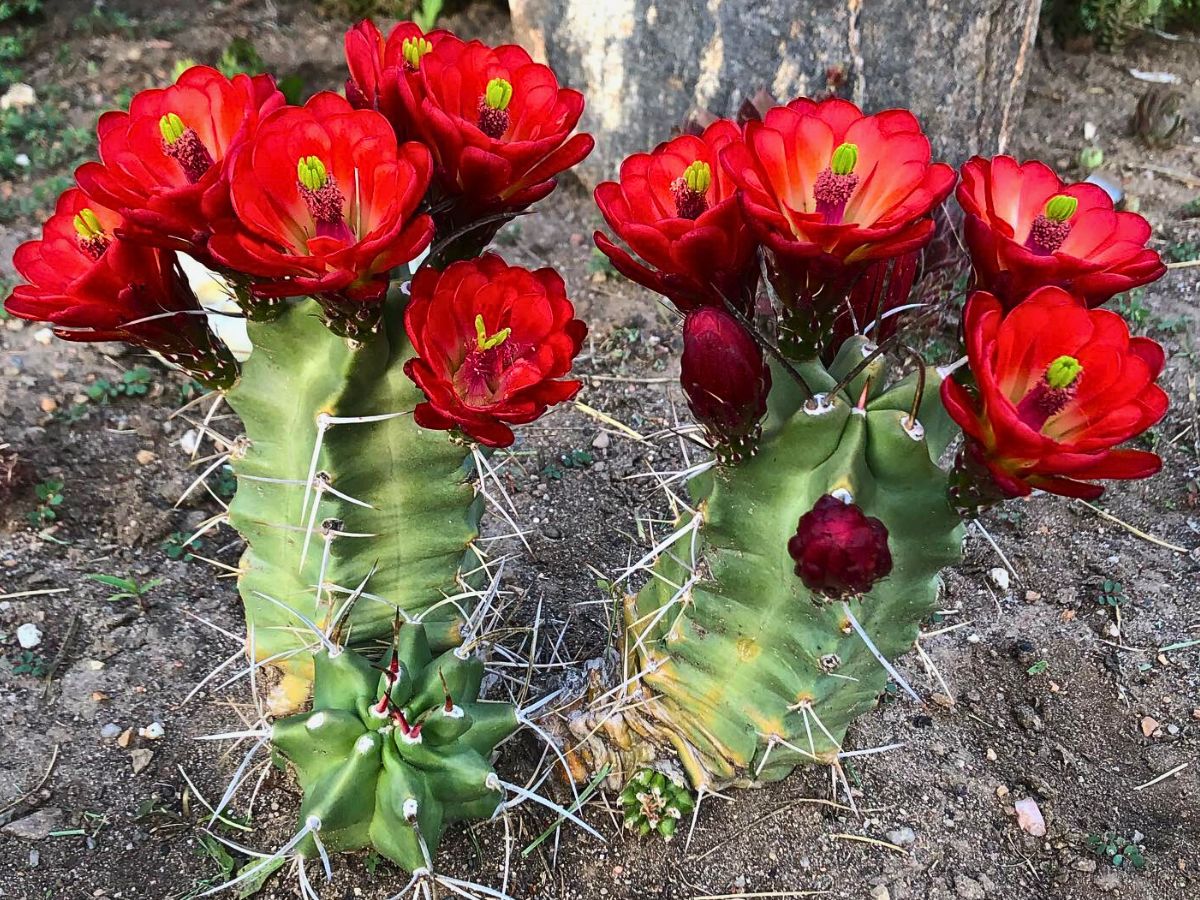
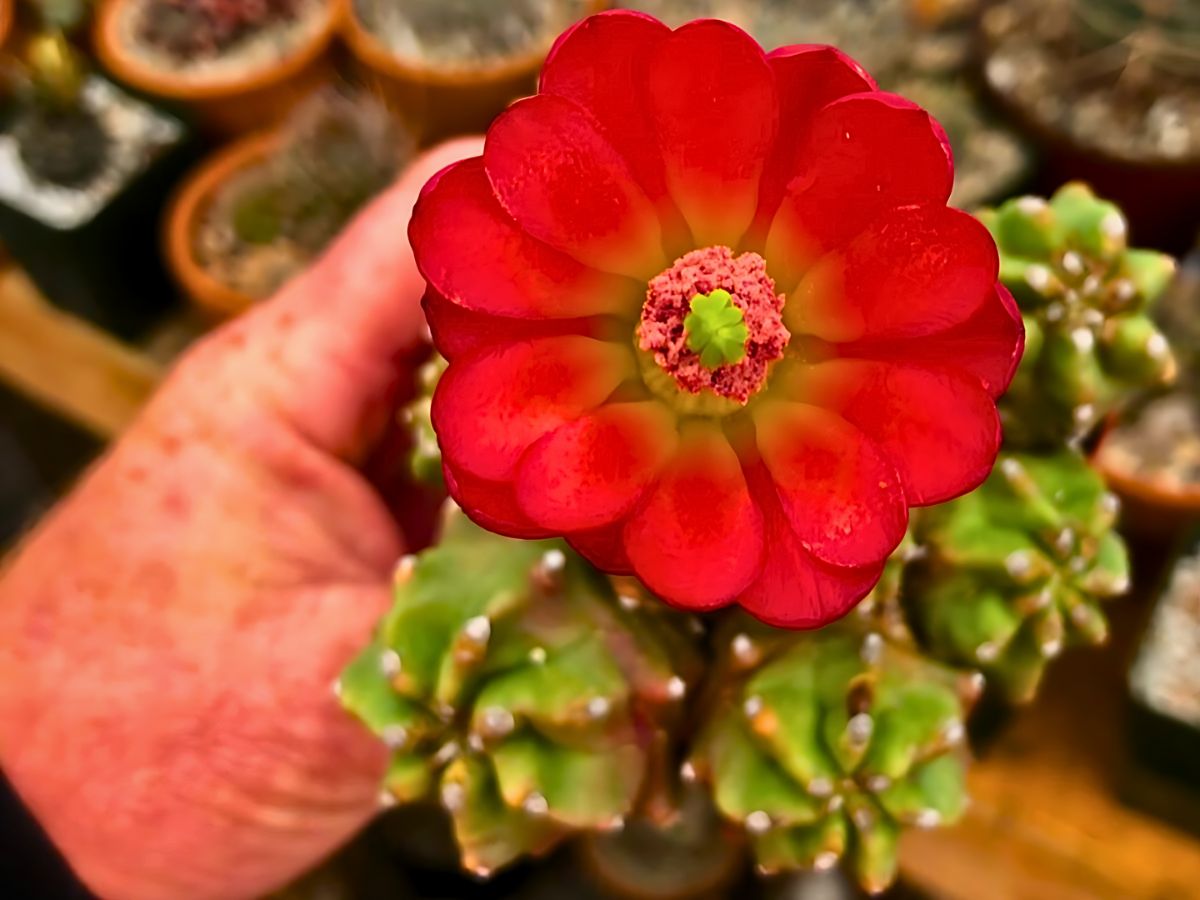
When in flower, a healthy claret cup cactus typically produces numerous flowers per stem tip. Mature plants with dozens of stems can create displays of many flowers opening at once. Their bright color ranges from pure scarlet to orange-red, occasionally showing hints of purple or pink on rounded petals that overlap.

The flowers stay open day and night for several days, unlike the fleeting flowers of other cacti, ensuring pollination. Once pollinated, the plant produces a spiny fruit that turns reddish when ripe and tastes sweet, reminiscent of a strawberry, which is where the moniker strawberry cactus comes from. So, yes, you can now go ahead and find one or more Echinocereus triglochidiathus plants for your xeriscaping or desert-themed garden!
Feature image by @csgsucculents. Header image by Joshua Park National Park.