Mid-to-late summer always has a different rhythm compared to the early weeks of the season. Of course, the summer feel is still there, but the light seems to soften, a mellowed feel seems to descend into the air, the fields are not as vibrant as they were at the start, and the flowers tend to be the sturdier, more architectural varieties; the ones likely to maintain their shape just as much as they catch the eye.
Yet floral designer Krisztián Kövér seems to know just how this subtle transition works and creates designs alongside it. His Botanical Structures Collection, made with Marginpar's specialty summer cut flowers, shows how best he does this.
Building Structure Through Repetition and Not So Much Abundance
Whereas early-summer season work tends to lean on the abundance of late spring to early season, it is not so much for these latter designs that he made for the Botanical Structures series. The designs have a flower, perhaps an Eryngium, Craspedia, Agapanthus, or a mix of seasonal varieties, and somehow repeat it, creating structure out of this repetition. In a way, it is a fitting approach when summer is just past its peak.
Put simply, an ideal floral design, especially one made for this point in the season, has to factor in what to lean on when the floral abundance of early summer has thinned out. Yet Kövér's response across these four pieces looks much like the repetition idea, where he takes one flower, or a small handful of varieties, reuses them enough times that the pattern itself is then the point of the design.
The armature used is important, just as well. Test tubes, wooden modules, wire, and handmade natural bases all show up, but in each case, it is the flower used that carries the substance of the design. So here’s a much closer look at the pieces featured in the collection.
Repetition in Design
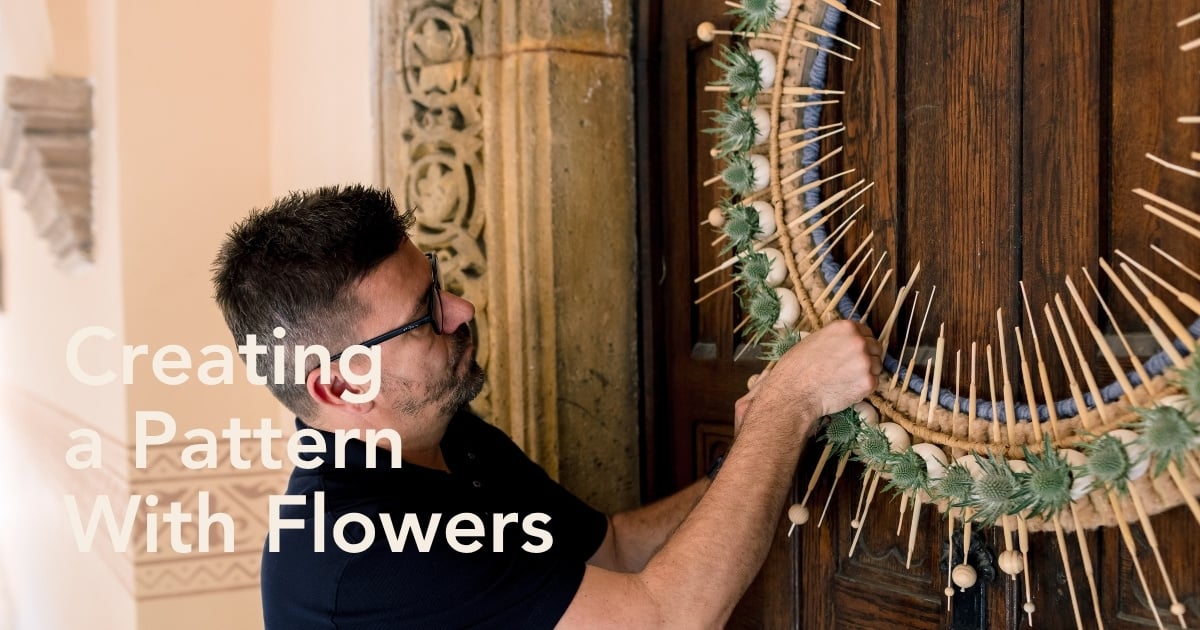
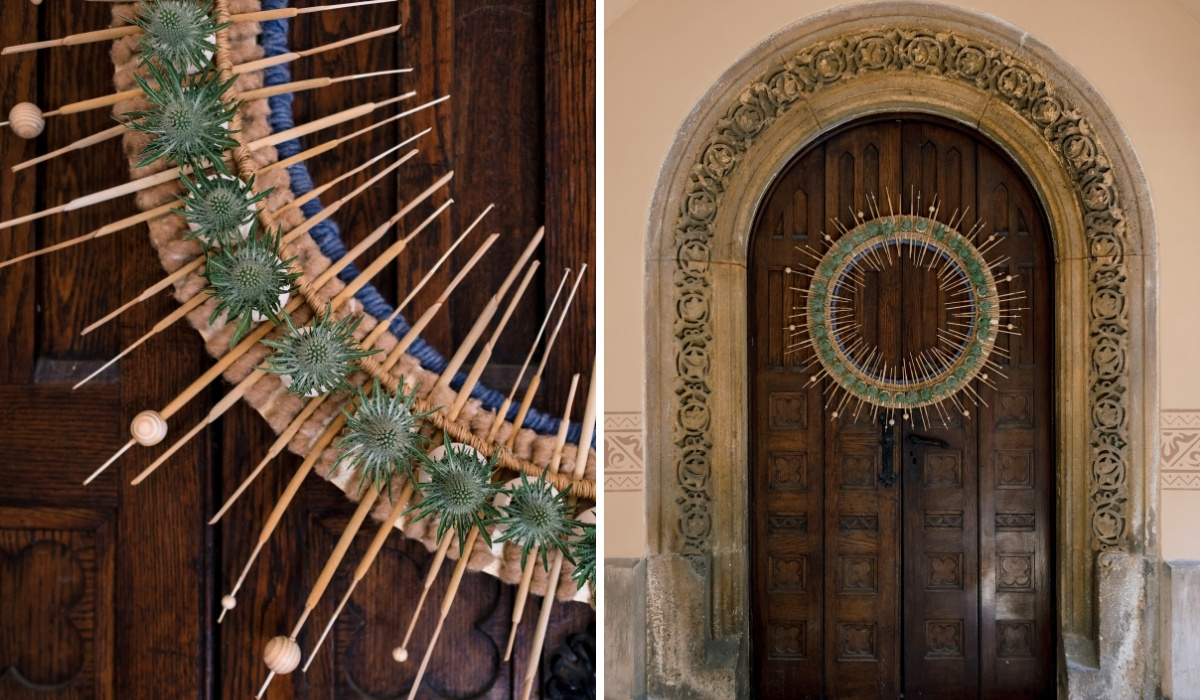
Typically, Eryngium is often viewed as a supporting flower, brought in to add texture or a spiky counterpoint elsewhere in an arrangement. But in this piece, this flower is the main attraction. The Eryngium Gemini Questar®'s distinctive spiky form and unusual tones make it easily recognizable, where it works as a color accent just as much as it is a structural element. It does not just accompany other elements in the design.
Kövér shapes the piece into a circle, one of the oldest and most familiar forms in floristry, but keeps the structure open, not quite like a dense, floral wreath. The openness of the structure guides the eye around the piece instead of stopping flat at its surface. The circular form makes it stable, but also full of movement.
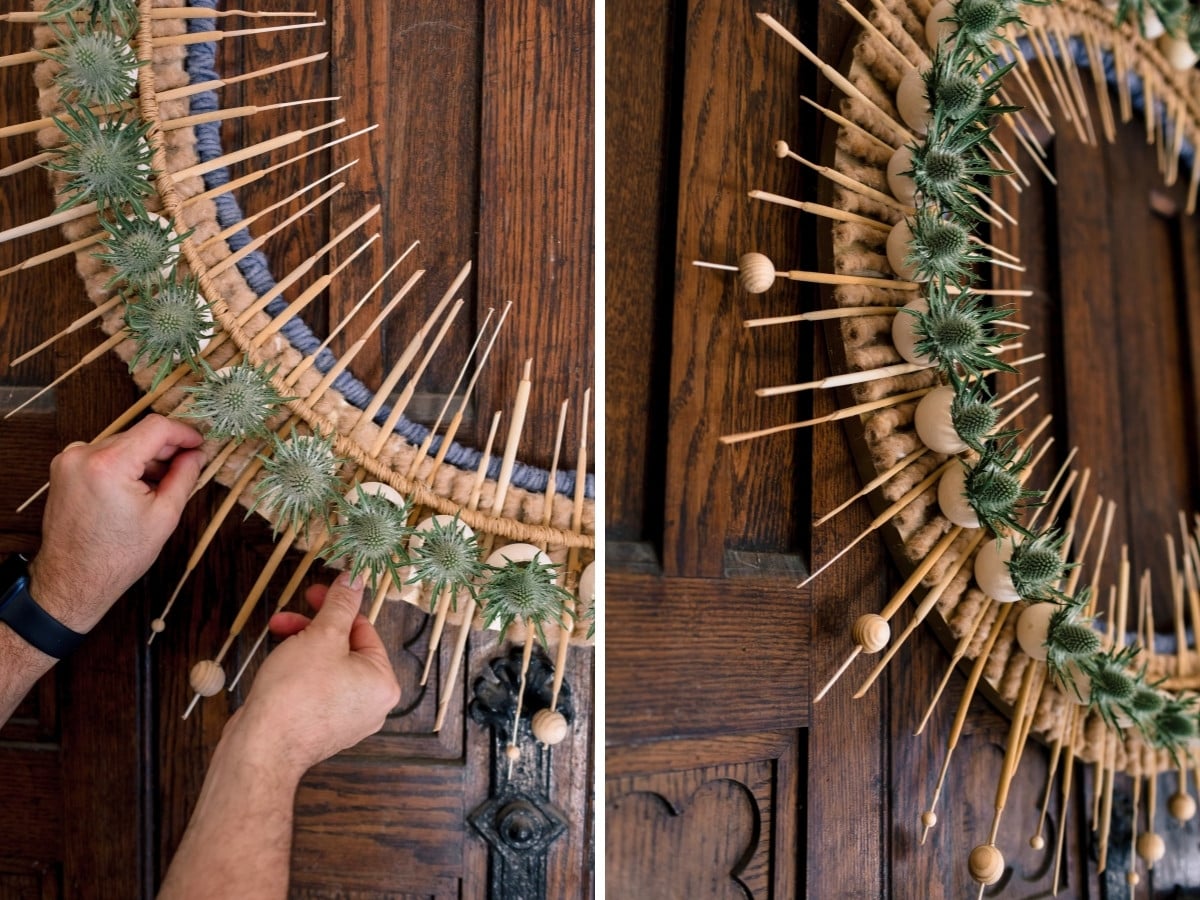
In this piece, the excellently durable Eryngium Gemini Questar®’s spherical flower heads create rhythm while visually connecting the different parts of the arrangement. It pairs well with natural, textured materials like dried elements or wool, as its strong character remains prominent among them. The flower’s durability makes it a reliable choice for event work and larger installations. It is just the ideal flower that holds up in summer, and just as the season starts to fade, this installation easily suits the late-season mood.
Lightness With Craspedia
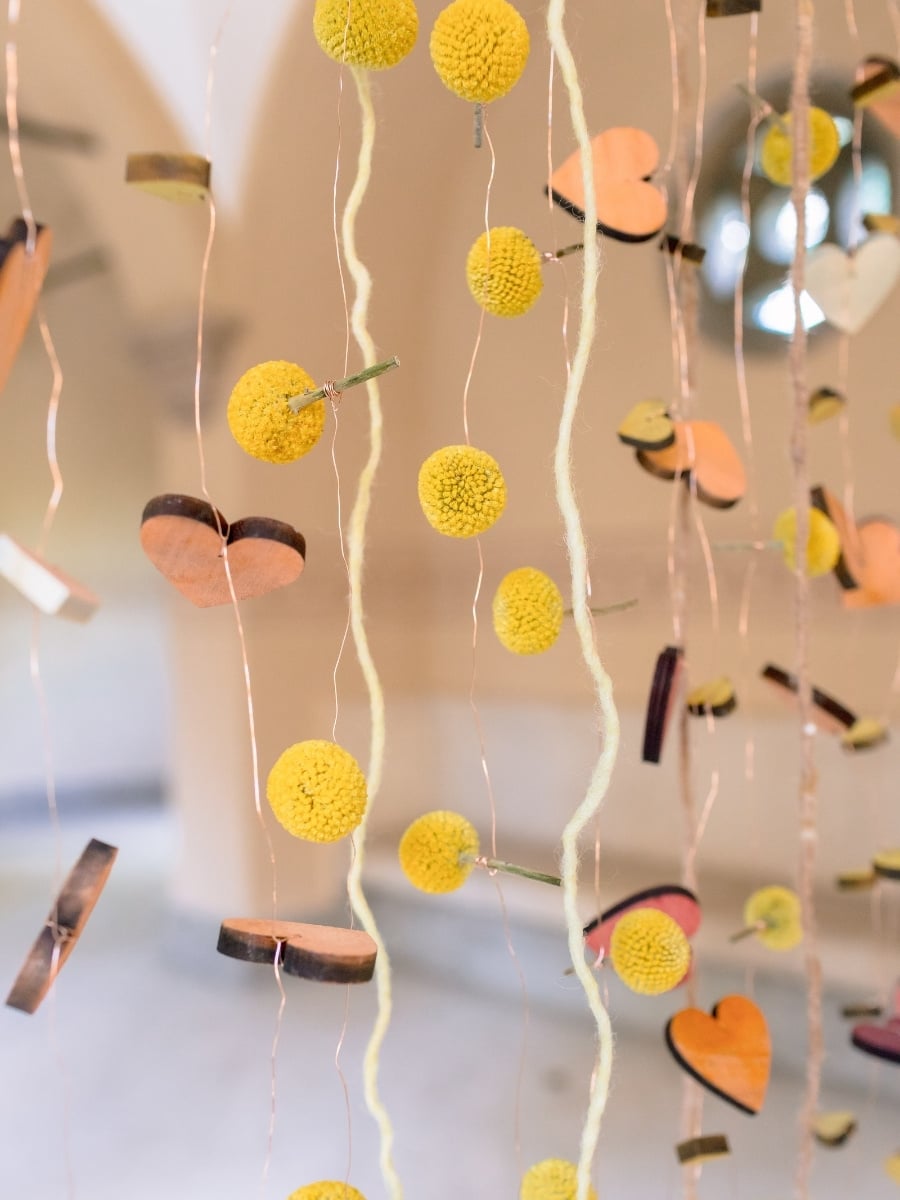
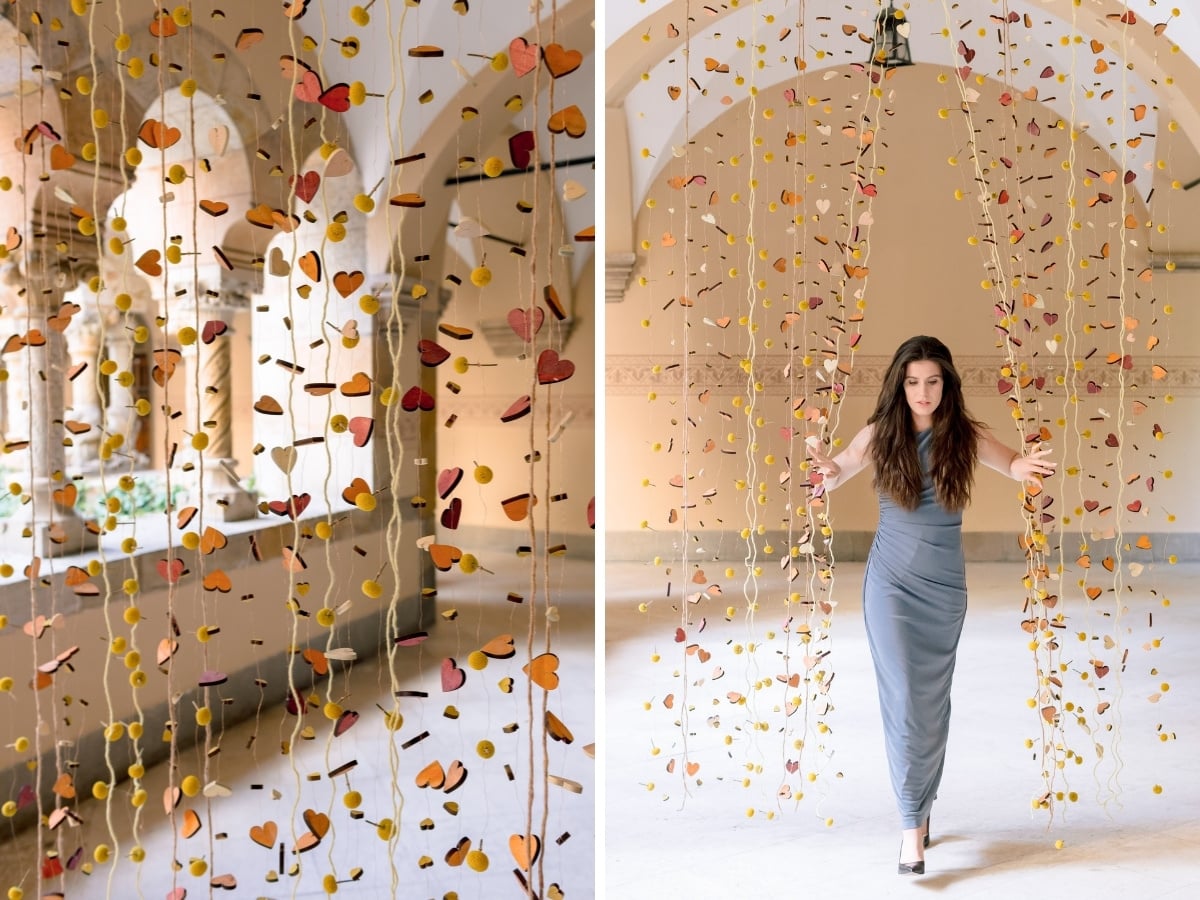
If Repetition in Design shows what one flower can do at a larger, architectural scale, Lightness with Craspedia shows what a flower can do through restraint. Craspedia Paintball Pop is one of the most distinctive spherical flowers available to floral designers. Its vibrant yellow color easily draws the eye, creating a natural focal point even when seen from afar.
In this installation, the flower heads are arranged to appear as floating points suspended in space, their clean and perfectly geometric shapes set intentionally against surrounding organic materials for contrast. It is a design that makes a point about simplicity late in the season, when even a relatively small number of flowers create a strong visual impact. Restraint is also part of what makes the piece work as well as it does.
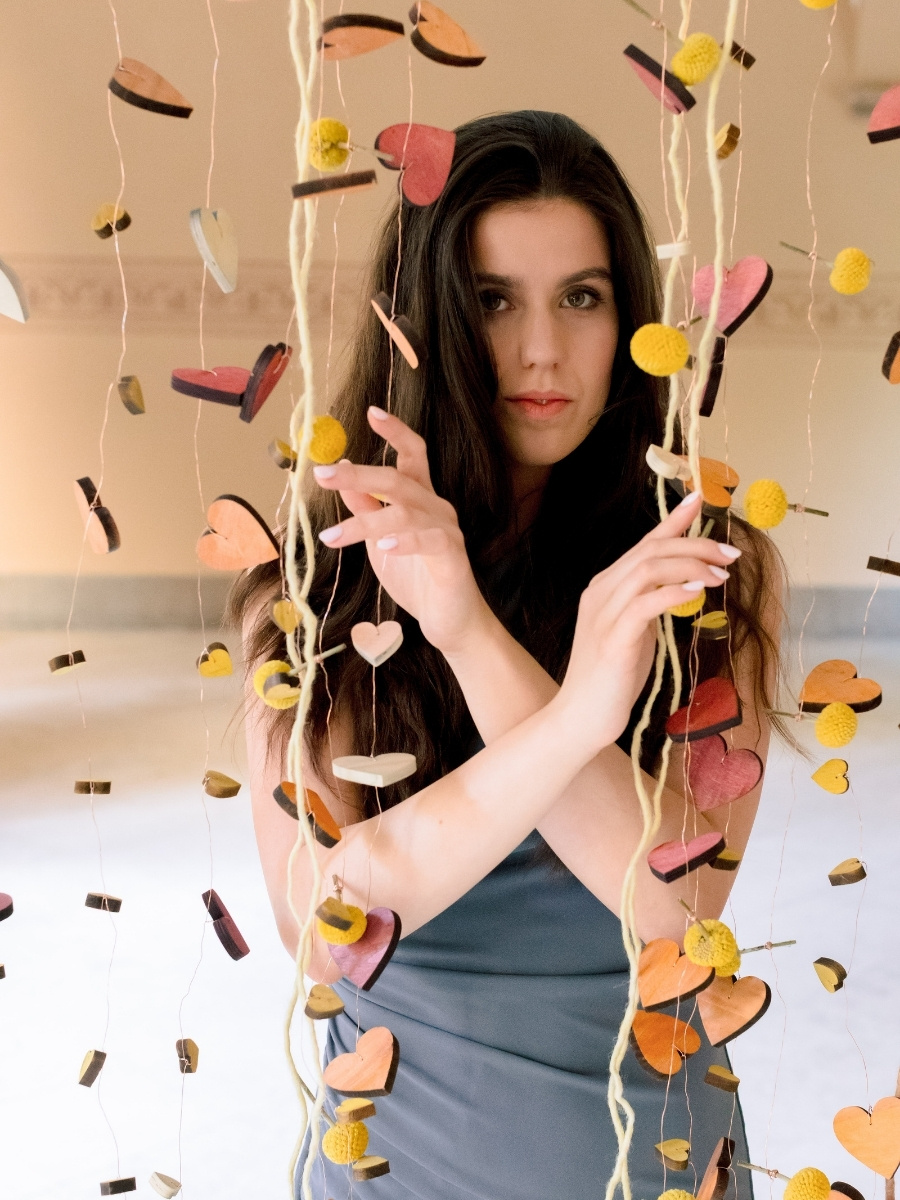
Also, thanks to its long vase life, Craspedia performs equally well fresh or dried, a useful trait throughout the season, and even as one season transitions to the next, when florists start reaching for varieties that will steadily hold a design. Notably, with Craspedia, even a relatively small number of flowers can create a strong visual impact. Its simplicity is one of its greatest strengths.
Vertical Movement
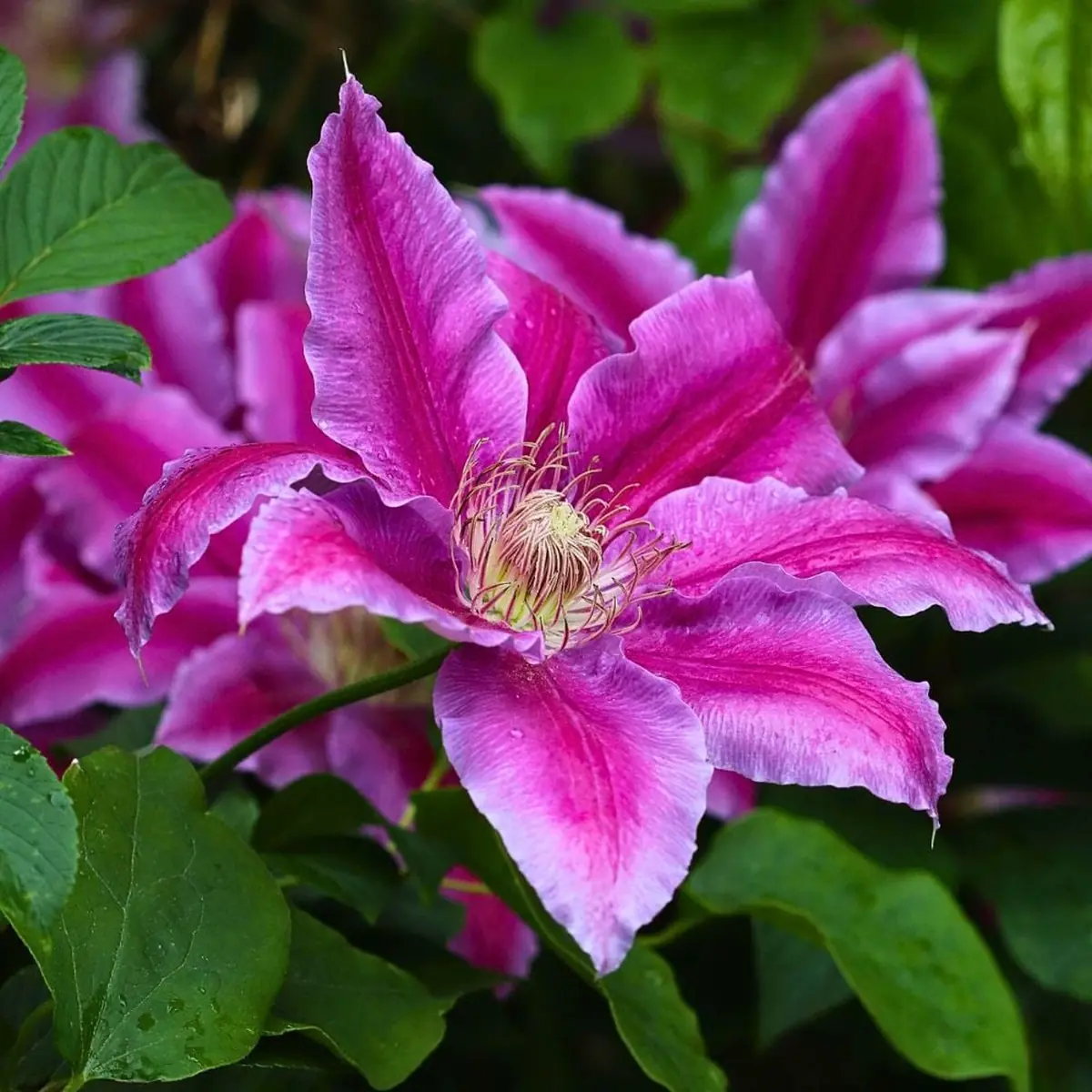
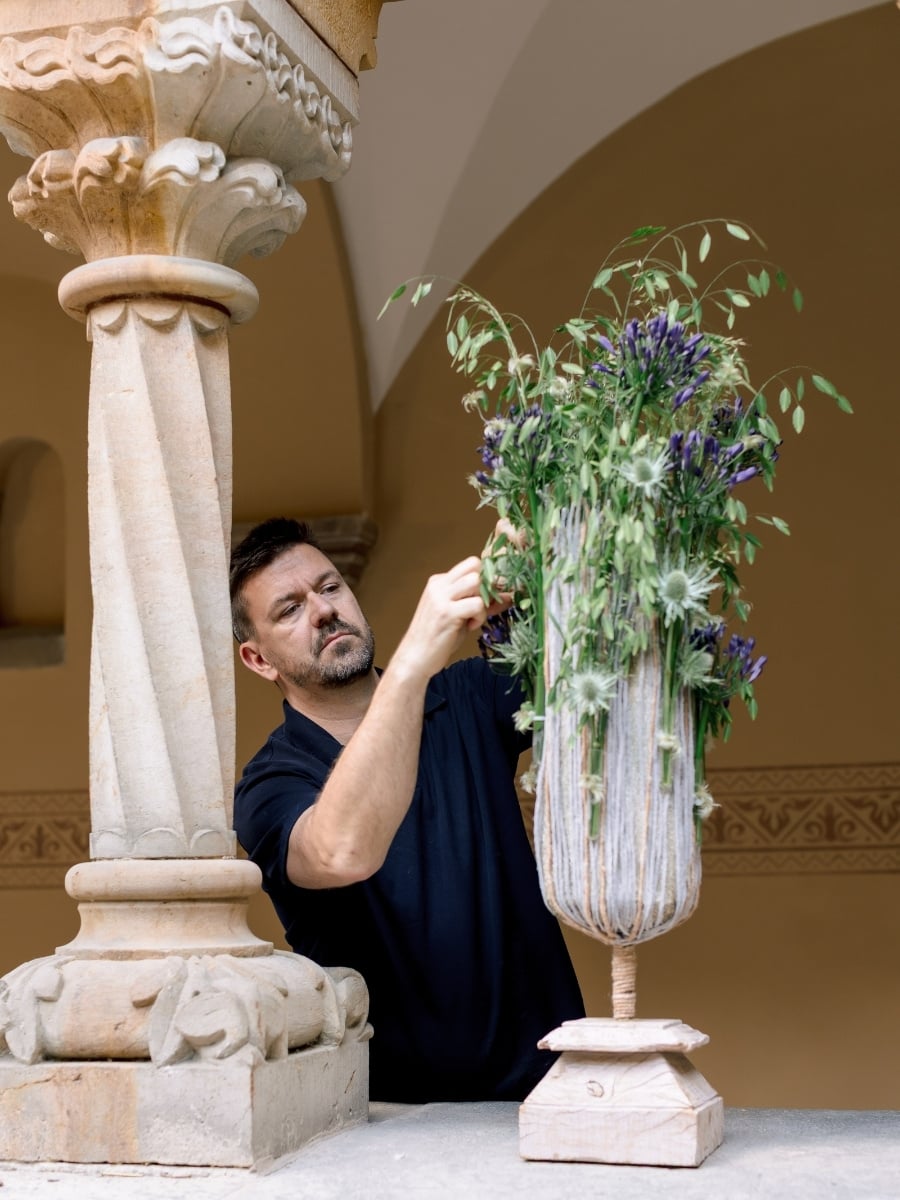
Vertical compositions naturally guide one’s eye upward through a space, and this piece fully feeds into that instinct. Its elongated lines emphasize height and give the arrangement elegance. In the design, the spherical forms of Agapanthus Poppin' Star and Agapanthus Eyfori Blue, together with Eryngium Gemini Questar®, and the fluffy, ball-like structure of the Clematis Amazing® Kibo, interrupt the vertical structure just enough to introduce rhythm.
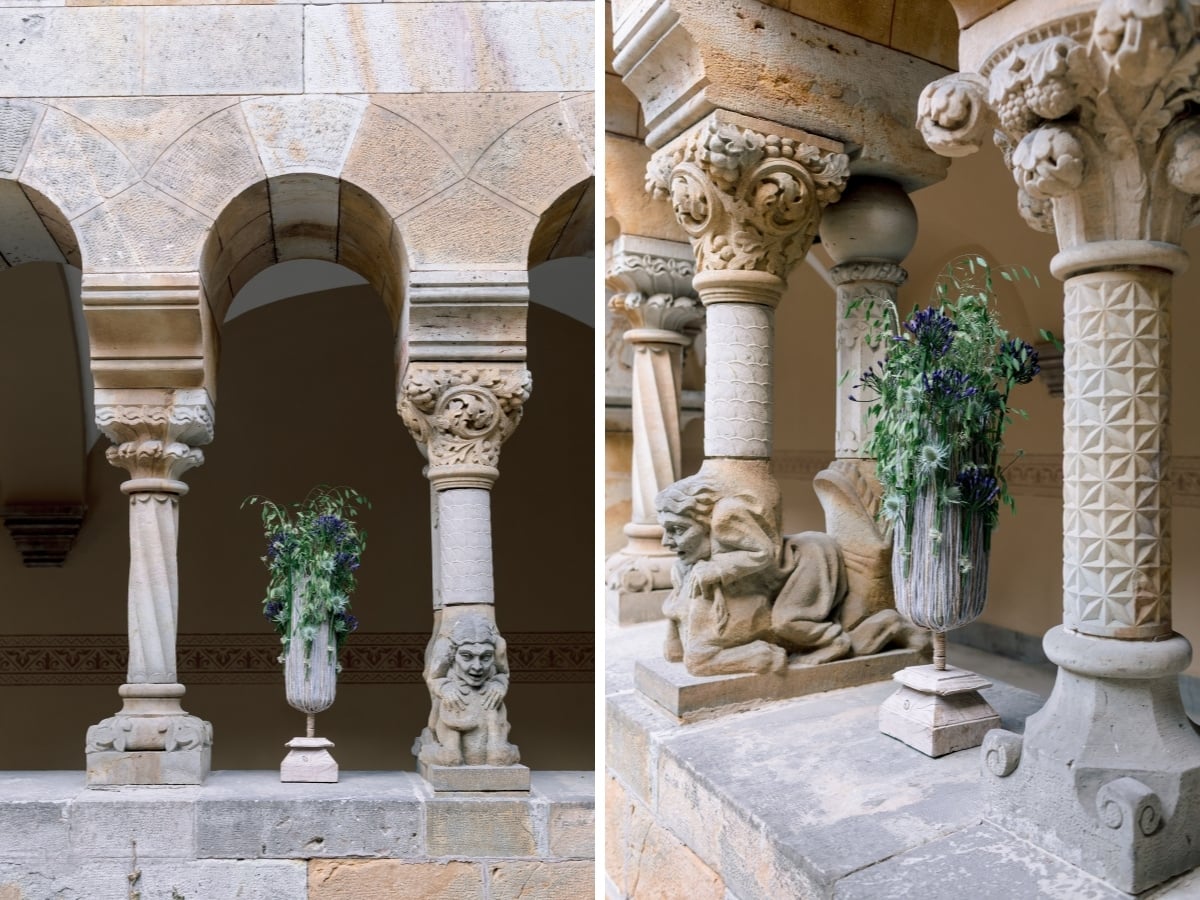
Ornamental grasses and the loose, oat-like texture of Chasmanthium Mantis soften the breaks further, preventing the design from looking too rigid or formal. The flowers positioned at different heights also add depth and visual interest. The base itself stays true to a natural (and sustainable) approach, built from yarn, string, and natural adhesives; nothing synthetic.
This installation is designed for spaces where its height is noticeable. Kövér himself notes that it works particularly well in venues with high ceilings. Set within surrounding architecture, the composition highlights the space around it as well as the individual beauty and character of the flowers used.
Variation Through Wooden Modules
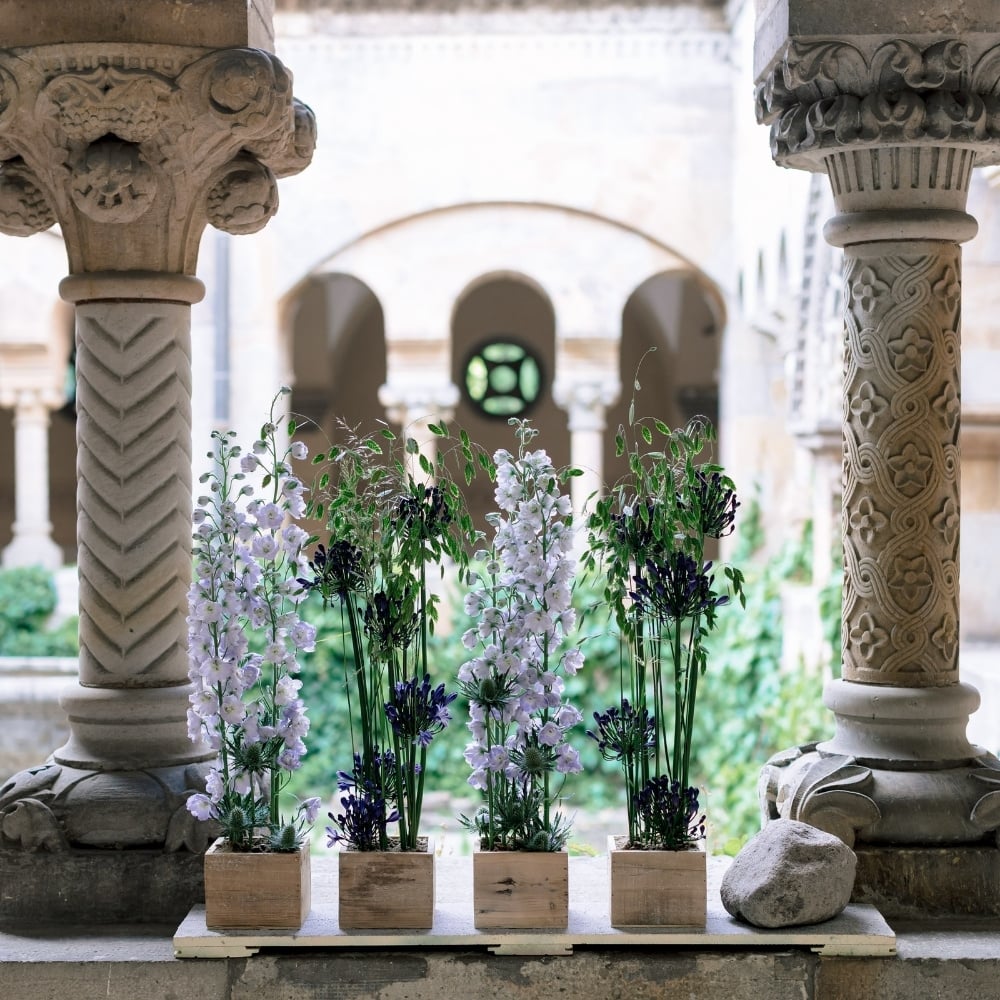
In this design, the idea of repetition is used to create a full spatial composition. On their own, simple wooden boxes may look fairly ordinary, but when they are arranged thoughtfully, with varying heights and distances between them, they form a complex, layered structure.
The arrangement creates new relationships between individual groups of flowers depending on how far apart or how high they are placed. Seasonal varieties including Agapanthus Poppin' Star, Agapanthus Eyfori Blue, Delphinium Triton Lavender, and Eryngium Gemini Questar® provide the strong visual appeal within each part, while Chasmathium Mantis softens the boxes' geometric edges.
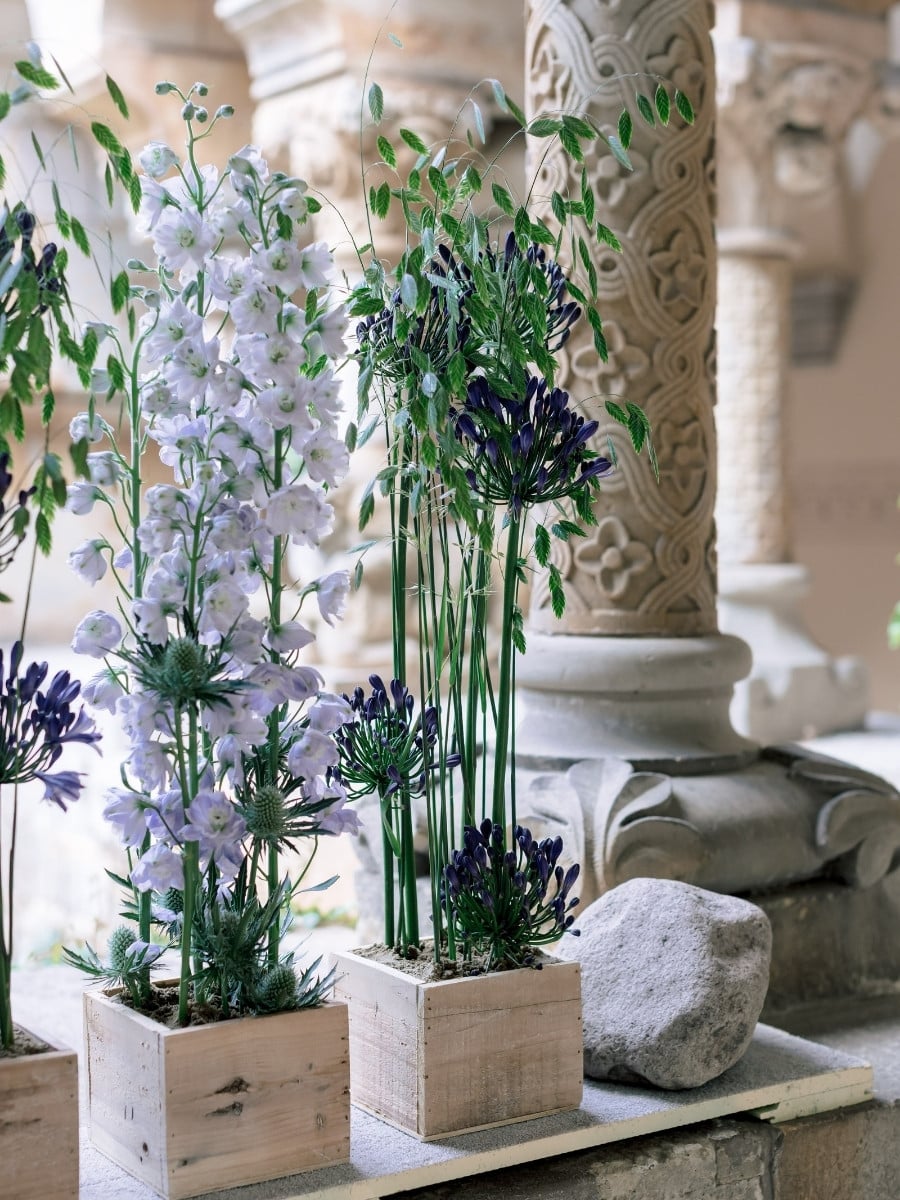
One of the design's biggest assets is that it reveals a different perspective from every viewing angle, so it never looks quite the same way twice. This idea (and its modularity) makes it practical in that it can easily be adapted to suit any venue's layout, which is part of what makes it especially useful for event decoration.
What Binds These Four Designs Together
Perhaps you’ve noticed that across these designs, there is a consistent idea of how much every one flower, or a few varieties used together, is able to carry on its own in the design, through the season and even transition to the next one. The designs by Kövér try to put all that into perspective.
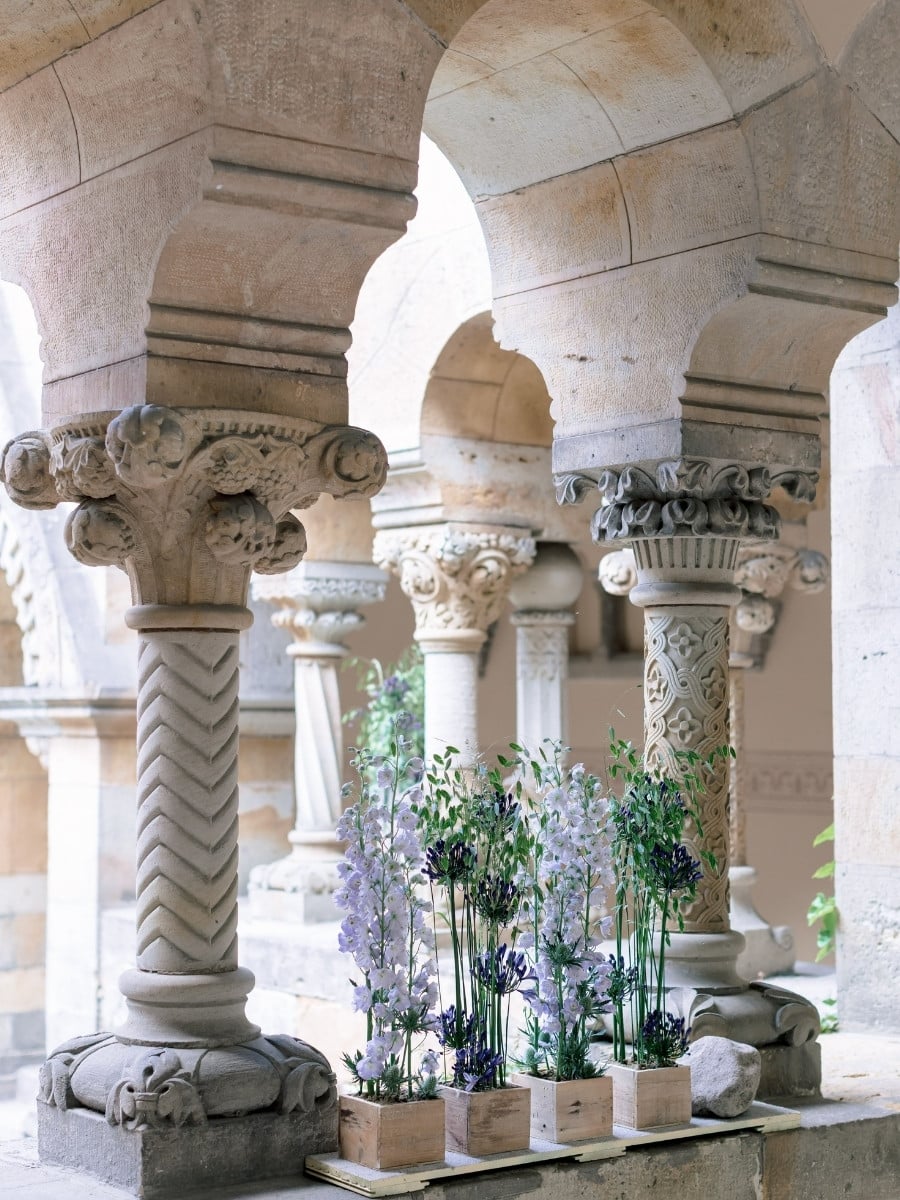
Marginpar’s Eryngium is, for instance, used as an accent just as much as it is the armature. Craspedia shows how even a handful of its flowers can hold a design. Agapanthus and its companions build height and rhythm, and wooden modules used alongside the flowers make a simple case of repetition; an idea that changes when viewed from every angle.
Botanical Structures Credits: Flowers: Marginpar (@Marginpar) | Design: Krisztián Köver (@botanicart.kover.krisztian) | Photographer: András Rabloczky (@rabloczkyandras) | Assistant: @rovidzsuzsi, @richterkriszta | Model: @ekhanna0221 | Make up: @szilviadobrovitz | Sponsors: @hr.thewireman, @dunavirag_centrum, @salababv, @magyarszarazviragkft.