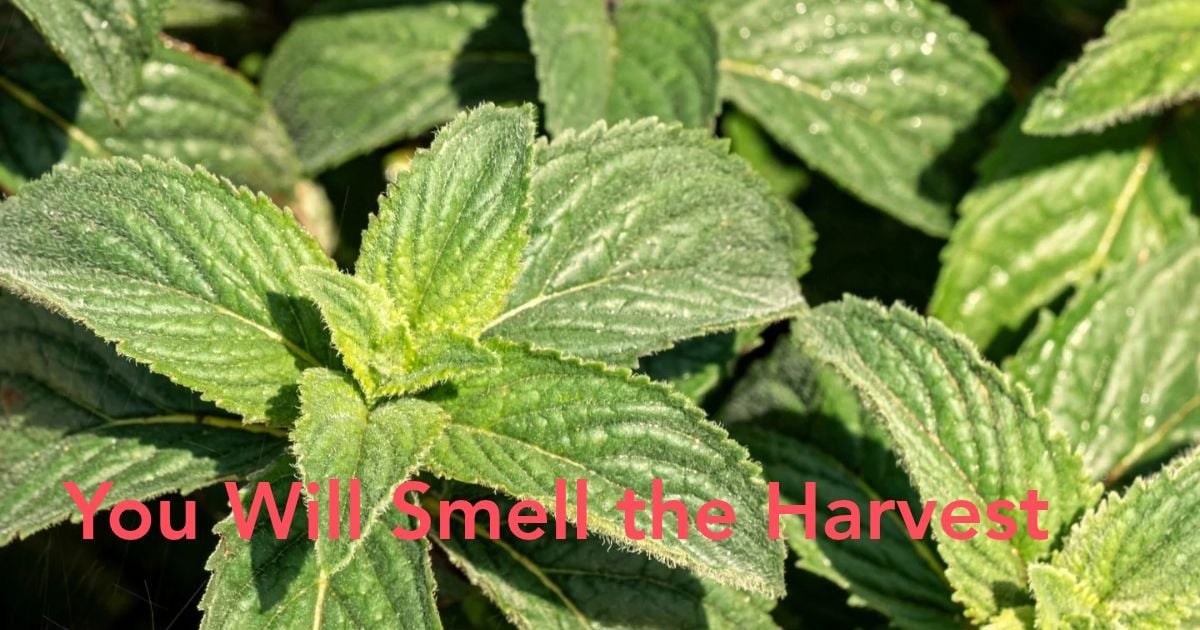
Drive through the Yakima Valley in Washington State in late July and you will smell the harvest before you see it. Mint is cut like hay, left to wilt in the field for a day, then chopped into sealed steel tubs and trucked to a still, where steam pushed through the crop carries the oil out with it. A good field gives up a few dozen kilograms of mint oil per hectare, and nearly all of it leaves the farm in drums bound for buyers most consumers never think about. Mint is one of the few herbs grown at genuine industrial scale, and the plant that florists tuck into a summer arrangement or a grower sells in a four-inch pot is the retail tip of a very large commercial crop.
Two species do most of the work. Peppermint, Mentha × piperita, is a sterile hybrid of watermint and spearmint that cannot be grown from seed and is propagated from root cuttings instead, which is why a single peppermint variety, Black Mitcham, has dominated the trade for well over a century. Spearmint, Mentha spicata, comes in two commercial forms, Native and Scotch, with different flavor profiles and different buyers. A third plant, cornmint or Japanese mint, Mentha arvensis, is grown mostly in India and is the world's main source of natural menthol. Between them these three plants feed a set of industries that stretches from toothpaste factories to hookah lounges.

Oral Care: The Biggest Buyer of Mint Oil
The single largest buyer of peppermint oil is the oral care industry. Toothpaste, mouthwash, dental floss, and breath strips all depend on it, and the big consumer-goods companies contract directly with growers and distillers years in advance to lock in supply. The reason is that mint is not just a flavor in these products; it is the signal of cleanliness itself. A toothpaste that did not taste of mint would struggle to convince anyone it had worked, and the industry has spent a hundred years training the world to read menthol's cooling as "clean." That makes oral care a steady, price-insensitive customer, and it is the reason American peppermint acreage has stayed concentrated in the Pacific Northwest and the Midwest despite competition from cheaper origins.
Chewing Gum and Confectionery
Spearmint has a different master. Its sweeter, less sharp profile is what the chewing gum industry was built on, and the two big spearmint types exist largely to serve it: Native spearmint for the classic gum flavor, Scotch spearmint for a softer, rounder note used in gum, candy, and some toothpastes. Confectionery more broadly, from peppermint creams to candy canes to after-dinner mints, is the second big block of demand, and it is highly seasonal, with buyers building stocks ahead of the winter holidays. Gum makers in particular are exacting about oil quality, because a slight off-note in the mint shows up immediately in a product with almost no other flavor to hide behind.
Pharmaceuticals and Personal Care
Peppermint oil has a long record as a digestive remedy, and enteric-coated peppermint oil capsules remain one of the few herbal treatments with mainstream clinical acceptance, for irritable bowel symptoms in particular. Menthol, whether distilled from cornmint or synthesized, goes into cough drops, chest rubs, muscle balms, lip products, and topical pain relief, where its cooling action on skin nerves is the whole point. Add shampoos, shower gels, and shaving products, where mint reads as "fresh" the way it reads as "clean" in toothpaste, and personal care is a third large and growing end market. The reasoning is the same one behind the other herbs used in skin care, where a plant aromatic has to work as scent and active ingredient at once.

The Menthol Question
The mint trade's biggest structural shift in recent decades has been the rise of synthetic menthol. A handful of chemical companies now manufacture menthol at scale from petrochemical or pine-derived feedstocks, and for many industrial uses it competes directly with the natural menthol crystallized from Indian cornmint oil. That competition keeps a ceiling on prices and has pushed natural mint toward the applications where a full, complex oil matters more than a single cooling molecule: premium oral care, confectionery, food flavoring, and the growing "natural" segment of personal care. For growers, the lesson has been that peppermint and spearmint oils, with their rounded flavor, are more defensible crops than cornmint, which sells closer to a commodity.
Tobacco, Hookah, and the Flavored-Smoke Market
One of the largest and least discussed buyers of mint flavor is the tobacco industry. Menthol cigarettes have been under regulatory pressure in several markets, but mint flavoring has moved rather than disappeared, and nowhere is it more dominant than in hookah tobacco, the molasses-based shisha smoked through a water pipe in cafes across the Middle East, Europe, and North America. In that category mint is not one flavor among many; it is the default. According to one US retailer's analysis of a full year of hookah sales, mint and cooling flavors made up 34 percent of units across its 160 best-selling tobacco products, and a single mint product accounted for 11 percent of every unit it sold. For a flavor house, that is a market where spearmint and peppermint notes are the price of entry rather than an option, and it is one of the reasons mint oil demand has held up even as cigarette menthol has come under pressure.
Food, Drink, and the Fresh Market
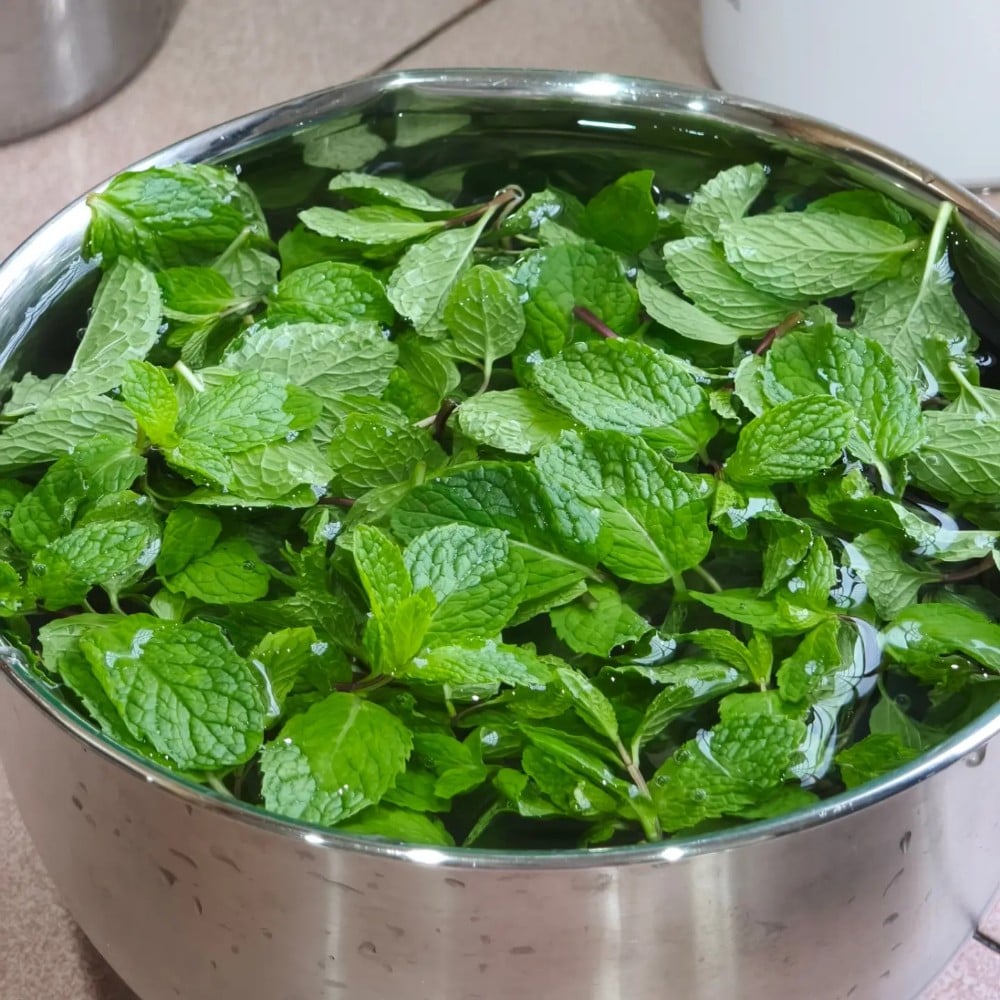
Then there is the mint people can actually see. Fresh culinary mint for supermarkets, restaurants, and the cocktail trade is a different crop again, grown under cover or in the field for leaf rather than oil, cut young and sold within days. The mojito and the mint julep between them account for a remarkable share of fresh-mint demand in bars, and the rise of Middle Eastern and South Asian cooking in Western cities has pulled fresh mint into mainstream produce aisles. Tea is another large outlet: peppermint tea is among the best-selling herbal infusions in Europe and North America, and Moroccan mint tea, made with green tea and fresh spearmint, is a cultural institution across North Africa. Mint is also one of the easiest crops for an indoor edible garden, which keeps the plant in front of consumers all year. For growers already in the ornamental and herb-pot trade, this is the most accessible end of the market, because it values freshness and appearance over oil chemistry.
What It Means for Growers and Florists
For the flower and plant trade, mint is worth understanding as more than a filler herb. Potted mint sells on scent and the promise of use, which makes it one of the easiest herbs to move at retail in spring and early summer, and the diversity of the genus, with chocolate mint, apple mint, pineapple mint, and the variegated forms, gives a grower a shelf of distinct products from one easy crop. The wider family is larger still, and ornamental relatives such as anise hyssop, a fragrant herb in the mint family, share the same square stems and carrying scent. In floral work, mint's upright stems, textured leaves, and strong fragrance make it a useful foliage element in loose, garden-style arrangements, and it conditions well if cut into water quickly. It is also, unlike most foliage, something the customer can take home and eat.
The commercial lesson is the one every mint buyer already knows. Mint is not a fashion. The oral care companies, the gum makers, the pharmaceutical firms, the tea blenders, and the hookah tobacco houses all buy it because their customers expect it and would notice its absence, and that kind of demand does not come and go with trends. For a grower deciding what to plant, or a florist deciding what to keep in the cooler, there are few plants with a safer market behind them.