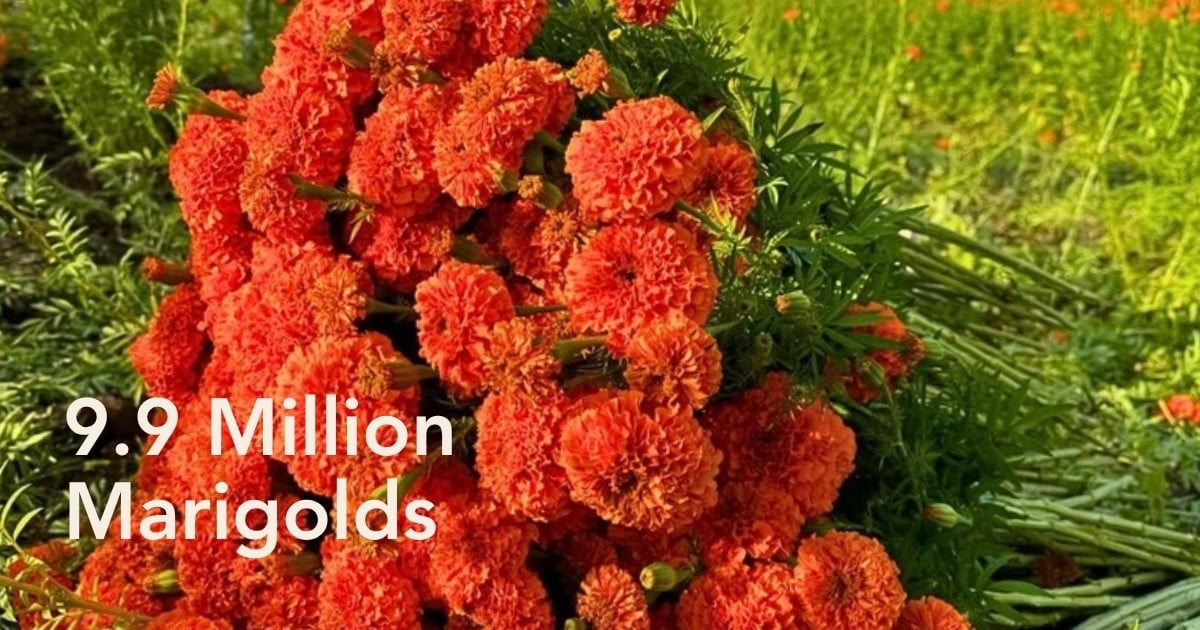
If you're in Mexico City this week, you can't miss the orange. Marigold production in the capital jumped 55% this year, from almost 6.5 million plants in 2025 to 9,924,300 in 2026. Mexico City's Head of Government Clara Brugada announced the number on 20 October in San Luis Tlaxialtemalco, in Xochimilco. The plants were grown by 596 growers on the city's conservation land, up from 460 last year. And one of the biggest buyers of the season is the city itself. About 100,000 of those plants go to a 32-meter Catrina in the Zócalo.
How Did Mexico City's Marigold Production Grow 55%?
More growers, and more plants per grower. By our math, the average grower raised about 16,700 plants this year, against roughly 14,100 in 2025. That's the part we like. 136 new growers joined, and the ones already in it planted more. People decided the crop was worth more of their land.
Money helped. 87.6% of the growers get support from Altépetl Bienestar, the city's program for sustainable farming and forestry. Brugada said more than 8 million pesos went into direct support this season: technical advice, pots, compost, seed, road repairs, and help getting the harvest out of the field.
Look at that list again. Pots, compost, and a road the truck can actually use. Ask any grower what decides whether a crop reaches the market, and you'll hear something very close to it.

Straight From the Field to the City Center
The city wants the money to land with the growers, and it says so out loud. "We want the flowers of the Conservation Zone to reach the center of the city, straight from the hands that grow them," Brugada said in Xochimilco, where much of the crop grows around the old chinampa farmland.
So where do you buy? At the Xochimilco markets of San Luis Tlaxialtemalco, Madre Selva, Cuemanco, and Palacio de la Flor. On Paseo de la Reforma, from the Glorieta del Ahuehuete, until 2 November. And at sales points in several of the city's boroughs.
The price is the part florists elsewhere will look at twice. A pot of marigolds costs 15 to 30 pesos, depending on its size, said Environment Secretary Julia Álvarez Icaza. That's less than two US dollars. She also asked people to buy directly at the plots, to skip the middlemen.
That's a government telling its citizens to buy from the farmer. For a small grower, every peso that doesn't go to a trader stays on the farm. Whether it works is something we'd love to hear from the growers themselves after 2 November.
A 32-Meter Catrina Built on 100,000 Plants
Now for the showpiece. The center of this year's Ofrenda Monumental in the Zócalo will be a Catrina made of cartonería, Mexican papier-mâché, standing 32 meters (105 feet) tall. The city wants to beat the 28-meter mark it credits to Puerto Vallarta and set a Guinness World Record.
Culture Secretary Ana Francis López Bayghen said the installation will include a field of marigolds, axolotl figures painted by artists and community collectives, and themed lighting on the buildings around the square. For the setup, the city will buy about 100,000 plants grown on its own conservation land. Do the math, and the Catrina alone takes about one in every hundred plants the city grew this year.

The figure honors the engraver José Guadalupe Posada, who first drew her more than a century ago as a skeleton in a fancy hat. Brugada said the Catrina also questions appearances and classism, which was Posada's joke from the start. Her own summary: "It's a Mexican way of looking death in the face and celebrating life."
Where to See the Marigolds in Mexico City This Season
The Catrina isn't the only orange stop on the map. All activities organized by the city government and the boroughs are free.
- Night bike ride, 24 October. About 26 km (16 miles) along Paseo de la Reforma and through Chapultepec, with a costume contest and free bike loans. More than 200,000 people joined in 2025, and the city hopes for 250,000.
- Marigold Trail in Chapultepec, 30 October to 1 November. From 14:00 to 22:00, with drones, light installations, music, and food. The Environment Ministry expects around 2 million visitors.
- The Day of the Dead Parade, 31 October. The tenth edition runs from the Diana Cazadora to the Zócalo, with 12 floats, two giant balloons, and more than 4,000 participants. It honors Nelly Campobello, Juan Rulfo, Juan Gabriel, and Emilio "El Indio" Fernández. For the first time, the floats were picked through an open call, which drew 60 proposals.
- Alebrijes on Reforma, until 8 November. The giant fantasy creatures stand between the Diana Cazadora and the Auditorio Nacional.
- Xochimilco. Six La Llorona plays on the canals, and the Xochitepec cemetery, which welcomes more than 160,000 visitors in these days, according to borough mayor Circe Camacho Bastida.
City officials expect more than half a million tourists and visitors over the season. Plenty of them will go home with a pot under their arm.
Why a City Buying Its Own Flowers Matters to the Trade
Most of the world reads Día de Muertos as a holiday. Growers read it as a season with one deadline and no second chance. Mexico City has now put money on every link of that season at once: support in the field, fixed places to sell, a price the public can see, and a showpiece that buys 100,000 plants from its own growers.
It's a small crop next to Puebla, the country's largest marigold producer, as you can read in our guide to Day of the Dead flowers and what each one means. But it's a clear example of flowers working as public infrastructure, and the story behind the marigold only adds to it. Its Nahuatl name means flower of 20 petals, and the Aztecs believed its scent guides the spirits home.
Want to see where the season starts? Our visit to the marigold fields of Puebla and our list of native Mexican flowers are good places to begin. And a question for you: would your city buy 100,000 plants from its own growers for one square?
Source: La Crónica de Hoy, "CDMX aumenta 55% la producción de cempasúchil; anuncia Catrina de 32 metros en el Zócalo", 20 October 2026. Quotes translated from Spanish by Thursd.
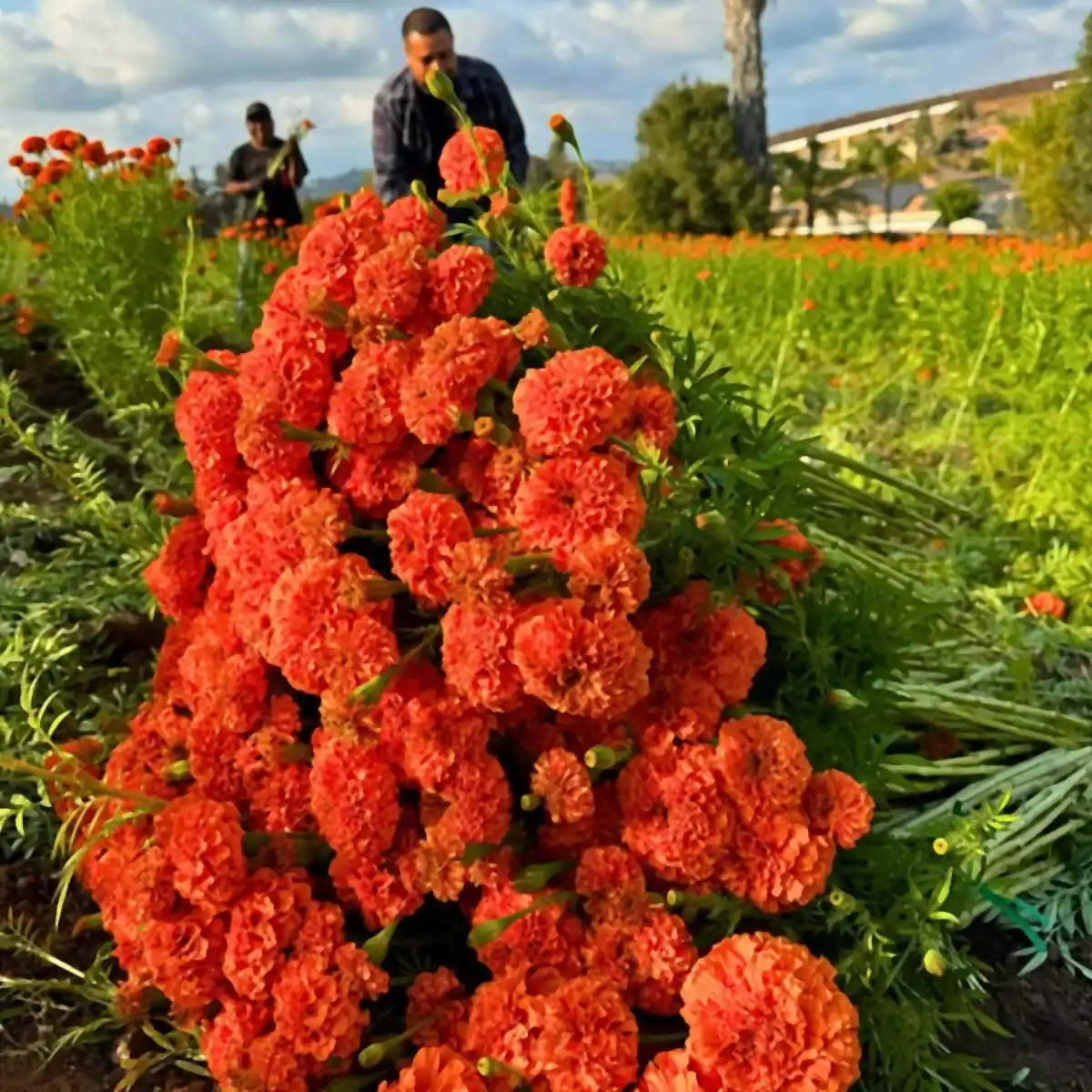
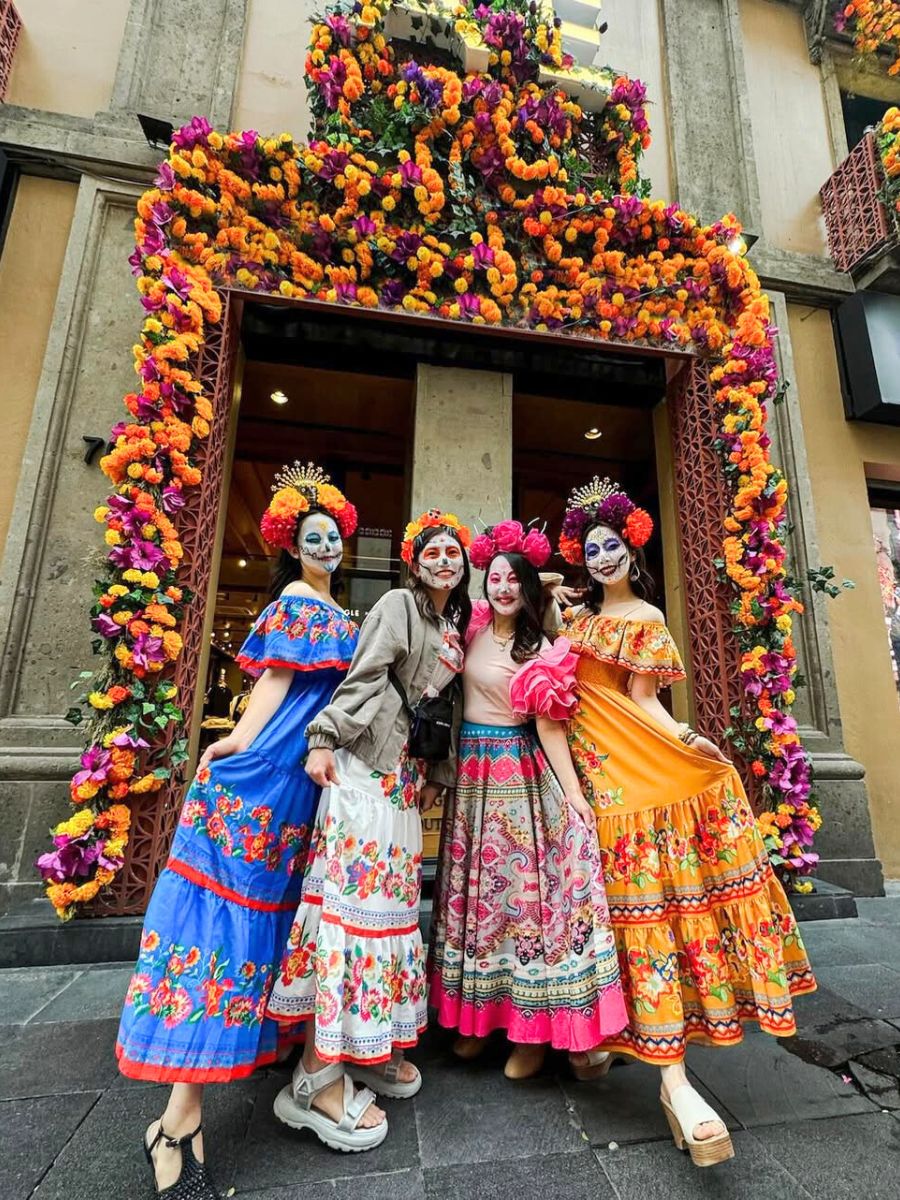
Featured image: a Catrina with marigolds, photo by @lacatrinaandante. Header image: freshly harvested marigolds, photo by Arango Green (@arangogreengrowers).