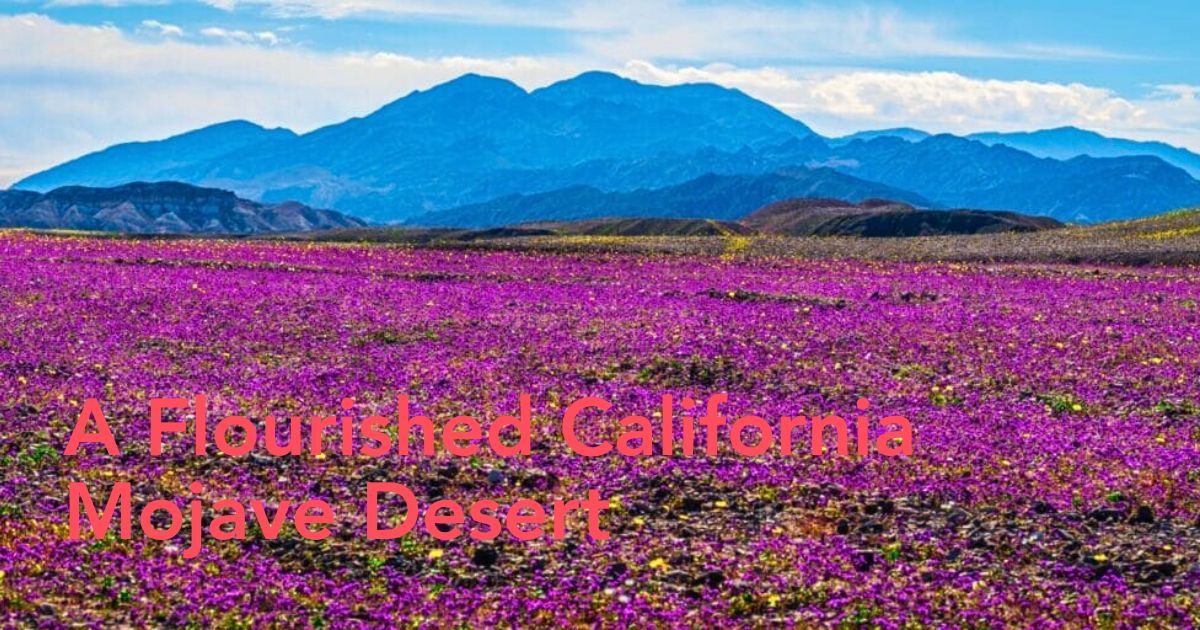
Along with its reputation as the driest and lowest national park in the U.S., Death Valley is also one of the hottest places on Earth. It holds the air temperature record of 56 degrees Celsius (134 degrees Fahrenheit), recorded in 1913. But despite its macabre name, Death Valley is anything but lifeless. And over the past couple of weeks, a rare 'superbloom' demonstrates just how vivacious it can be.
A Rare Superbloom in Death Valley Photographed by Dr. Elliot McGucken
For photographer Dr. Elliot McGucken, who focuses on landscapes and nature, the visual cacophony of wildflowers foregrounding the Mesquite Flat Sand Dunes or dramatic mountains like Telescope Peak is an endless source of fascination. Death Valley’s predominant flower displays are magenta and yellow – Phacelia and Desert Gold, respectively. There are also Mojave Stars, Brown-eyed Primrose, Five Spot, Sand Verbena, Brittlebush, and the uniquely named Gravel Ghost.
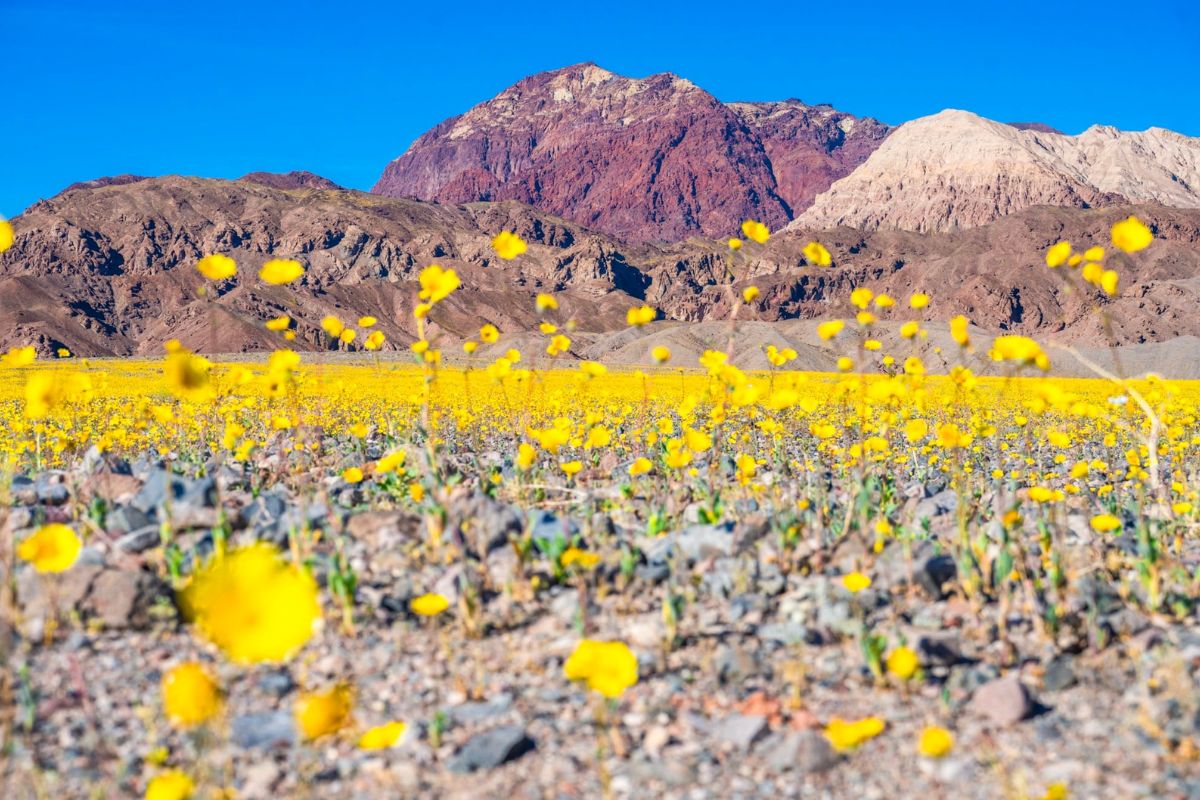
McGucken was photographing at Yellowstone National Park when he learned that Death Valley had experienced record rainfall over the past few months and was primed for a superbloom. Not wanting to miss it, as they only happen occasionally – the last ones occurred in 2016, 2005, and 1998 – he drove to California.
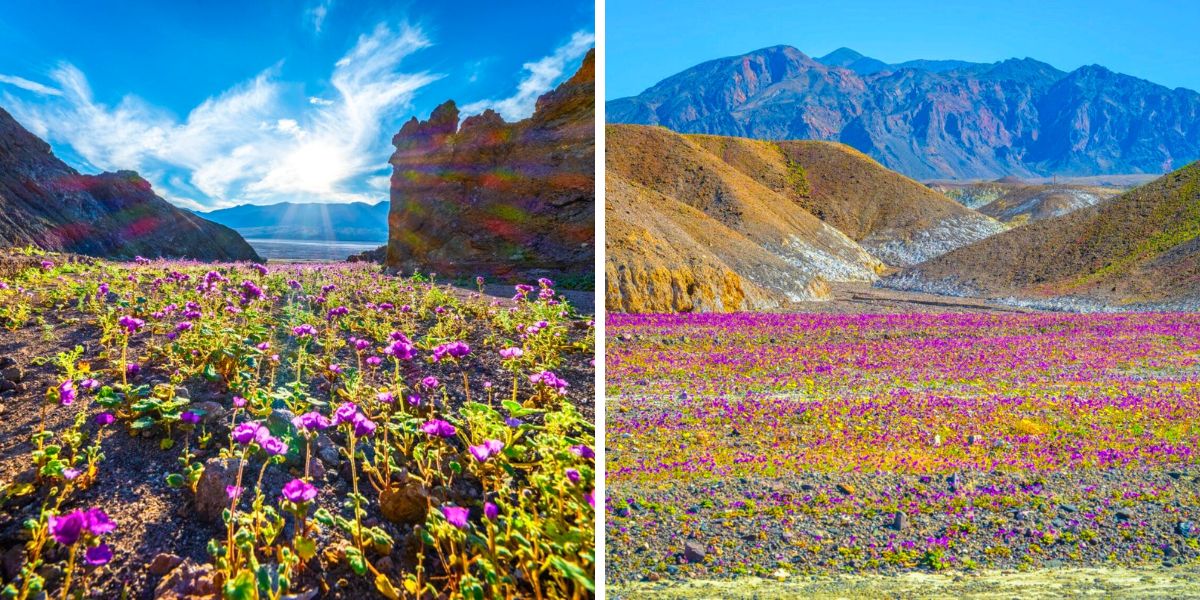
He shared:
“As nature photographers, we’re often waiting for those ‘hell yes’ moments to pack up and move out, and this was a "hell yes" moment. I traveled from minus 10 degrees Fahrenheit to over 90 degrees in a day!"
Best Superbloom in Over a Decade
At the beginning of March, Death Valley National Park announced one of its most impressive superblooms in nearly a decade, drawing attention from nature lovers and travelers alike. These rare events occur when a precise combination of rainfall, temperature, and sunlight aligns, allowing dormant wildflower seeds, sometimes lying in the soil for years, to suddenly burst into life across the desert landscape.
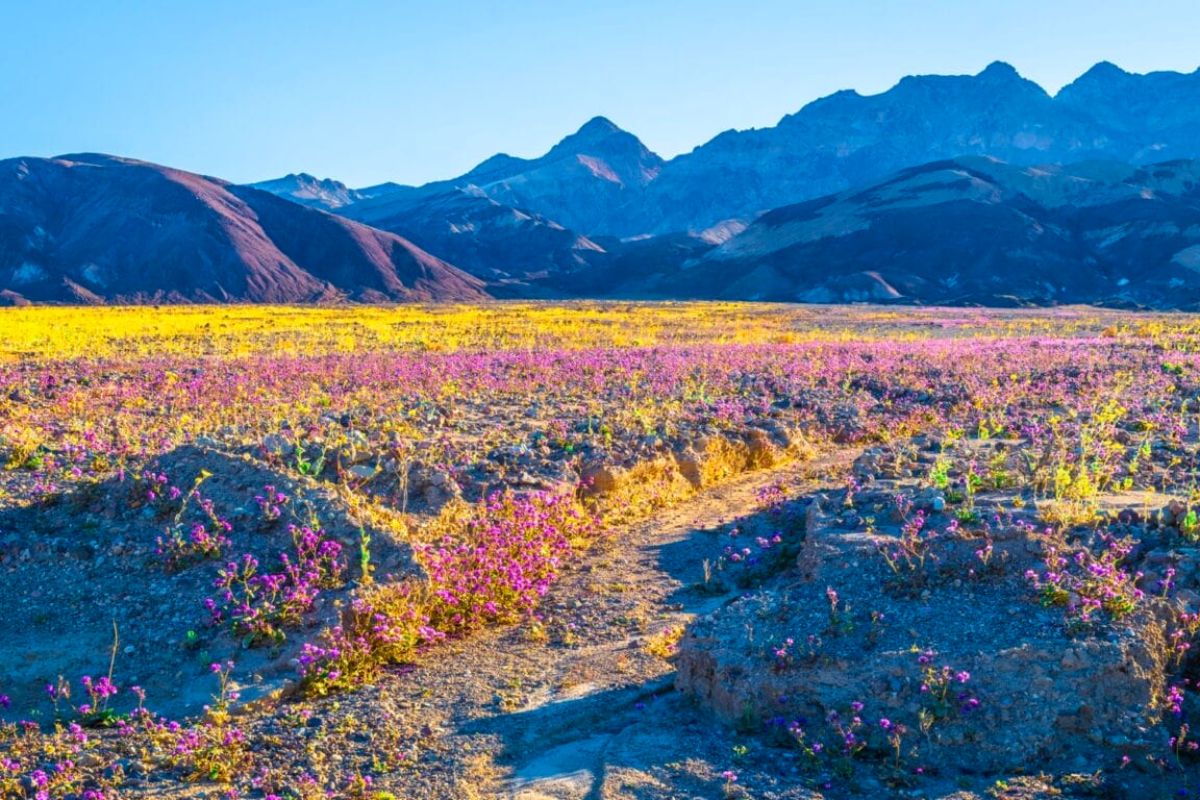
At lower elevations within the park, wildflowers typically begin blooming in early March. If weather conditions remain favorable, meaning mild temperatures, light winds, and no extreme heat, the display can last through mid-March. During this time, the desert floor transforms into fields full of yellows, purples, pinks, and whites, creating a huge contrast against the otherwise arid terrain.
As the season progresses, the bloom 'moves' upward. Higher elevations, which experience cooler temperatures, see wildflowers emerge later, usually from April through June. The exact timing depends heavily on altitude and microclimates within the park. Areas at mid-elevation may peak in April, while the highest regions can continue flourishing into early summer, extending the overall wildflower season for several months.
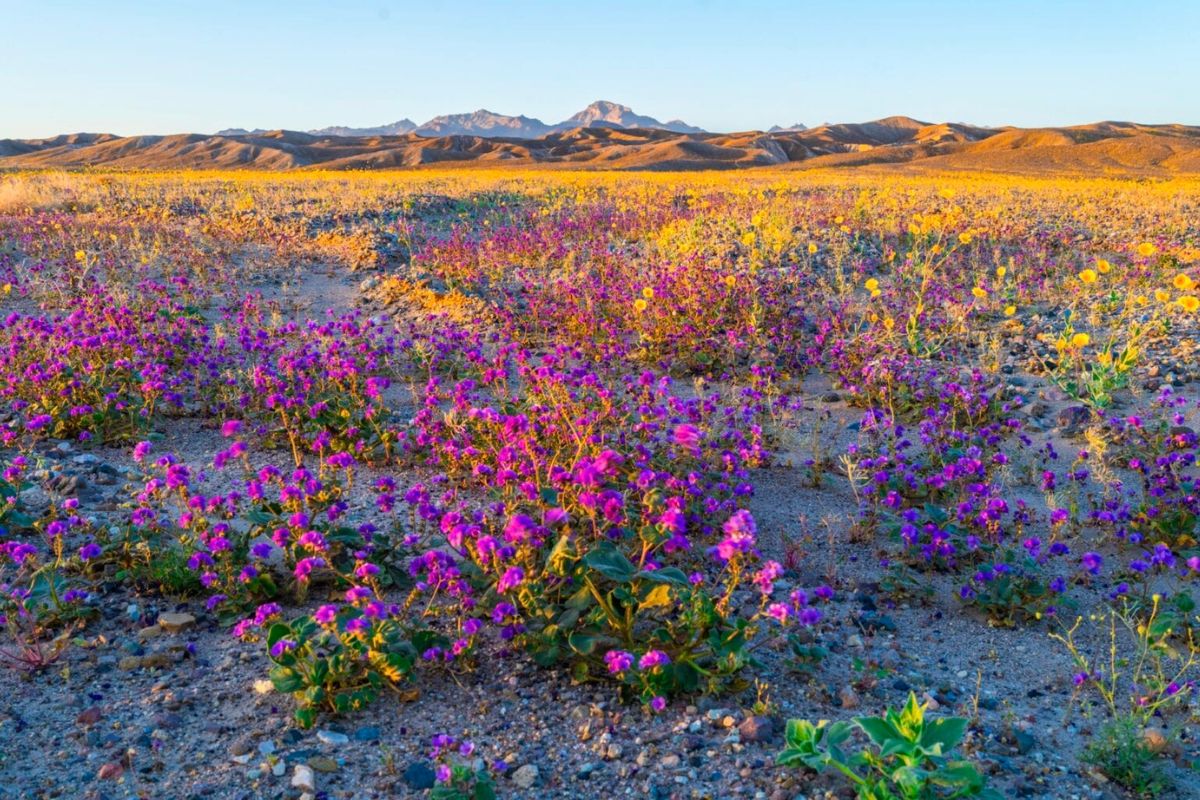
Dr. Elliot mentions:
“While I had photographed a smaller bloom in the Panamint Valley back in 2024, I had never seen so much greenery in the lower parts of the park, from Stovepipe Wells to the Mesquite Dunes to Furnace Creek to Badwater. I have been photographing for the last few days, making the most of the once-in-decade event.”
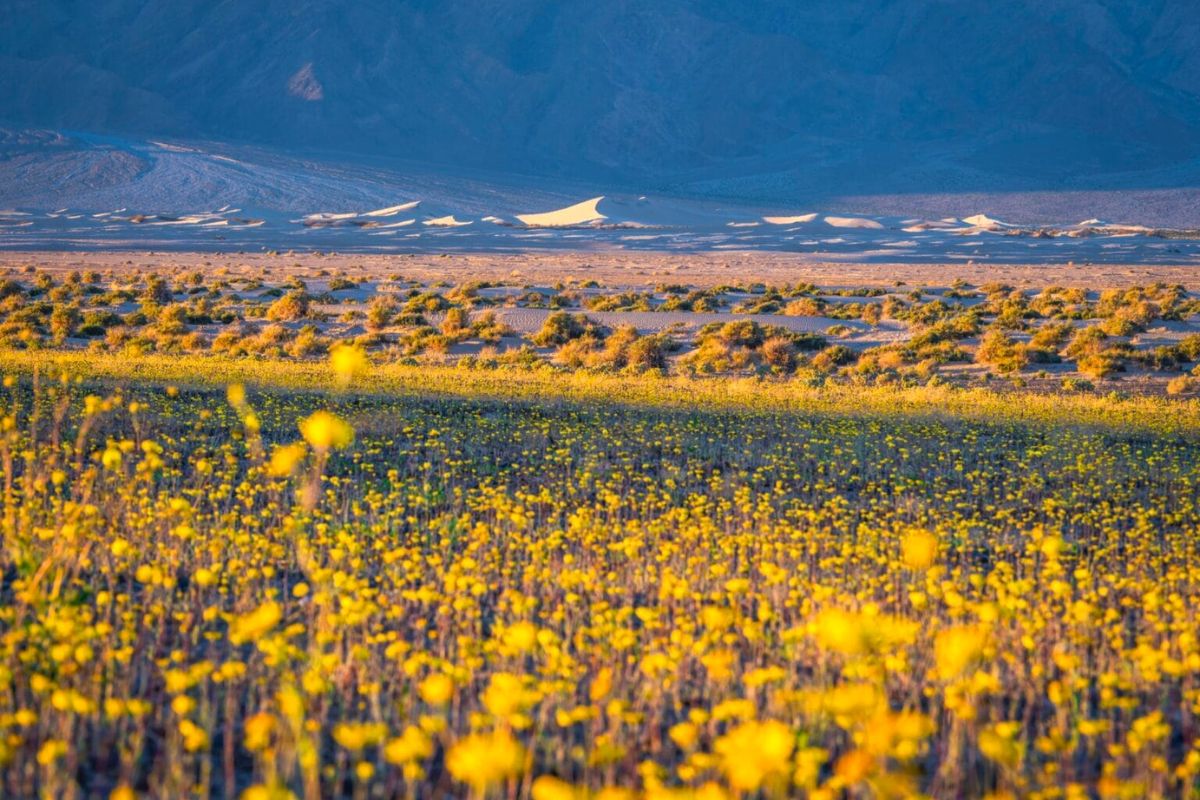
The photos here were taken over the course of several days, including March 16. While the superbloom is now considered past peak, there are still some displays in certain areas of the park. You can see more on McGucken’s Instagram.
Photos: @elliotmcgucken.