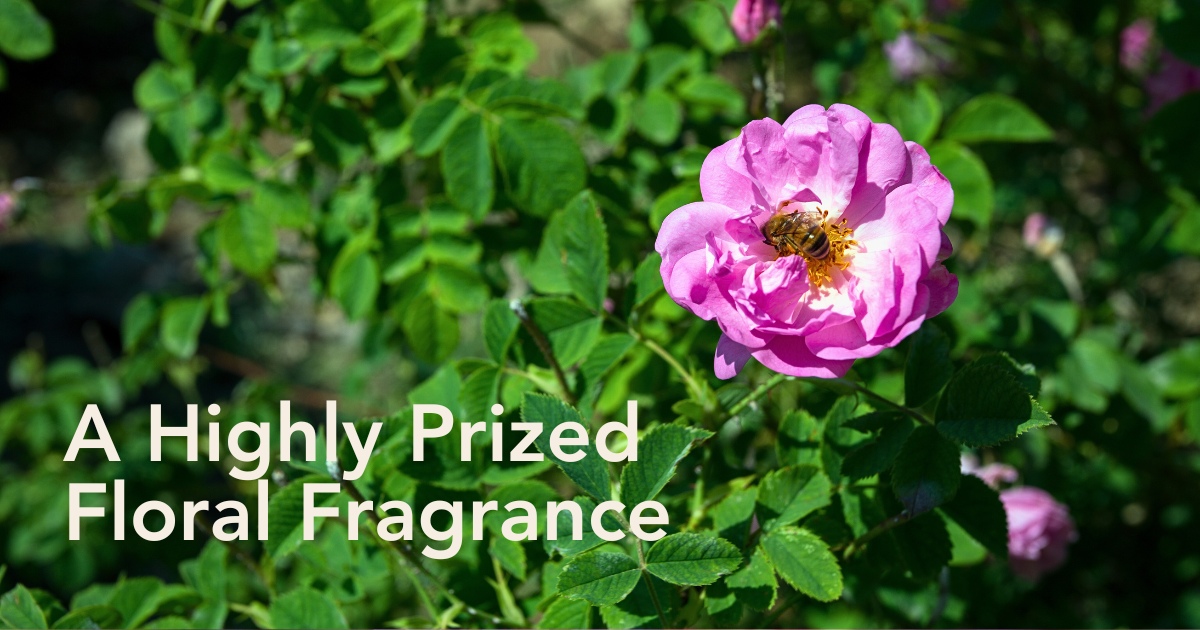
Taif, known as the ‘City of Roses’, is perched high in the Hejaz Mountains of Saudi Arabia. Here, the air, albeit for a few weeks each year, fills with the fragrance of roses. The city sits at about 1,800 meters above sea level. While it has often been considered a premier summer retreat from the scorching heat of the Arabian Peninsula, a big part of its attraction is its roses, called Taif roses (Rosa damascena trigintipetala).
The Taif rose is not your ordinary rose. It is a 30-petaled Damask rose renowned for its intense, sweet scent, often used in luxury perfumes by brands like Chanel, Givenchy, and Hermès. Roses mean a lot to the perfume industry. And from Taif's roses come, perhaps, the most expensive natural fragrance oil, also called attar.
A City With a Story Worth Knowing
Taif is not a small town that suddenly stumbled upon fame. It has real historical weight, sitting in the Mecca Province of southwest Saudi Arabia, with a population of well over a million people. Its history stretches back thousands of years, serving as a summertime capital of sorts, where royals, merchants, and travelers sought refuge from the heat of the Arabian Peninsula's lower elevations.
This city was once a major agricultural center prized for its fertile soil and fresh water sources. The cooler temperatures and fertile soil made it uniquely suited for agriculture, and over time, its orchards of pomegranates, figs, grapes, and honey became famous across the region. Today, while parts of the city have changed, much of its traditional farming soul remains alive, especially through the Taif Rose.
The Taif Rose
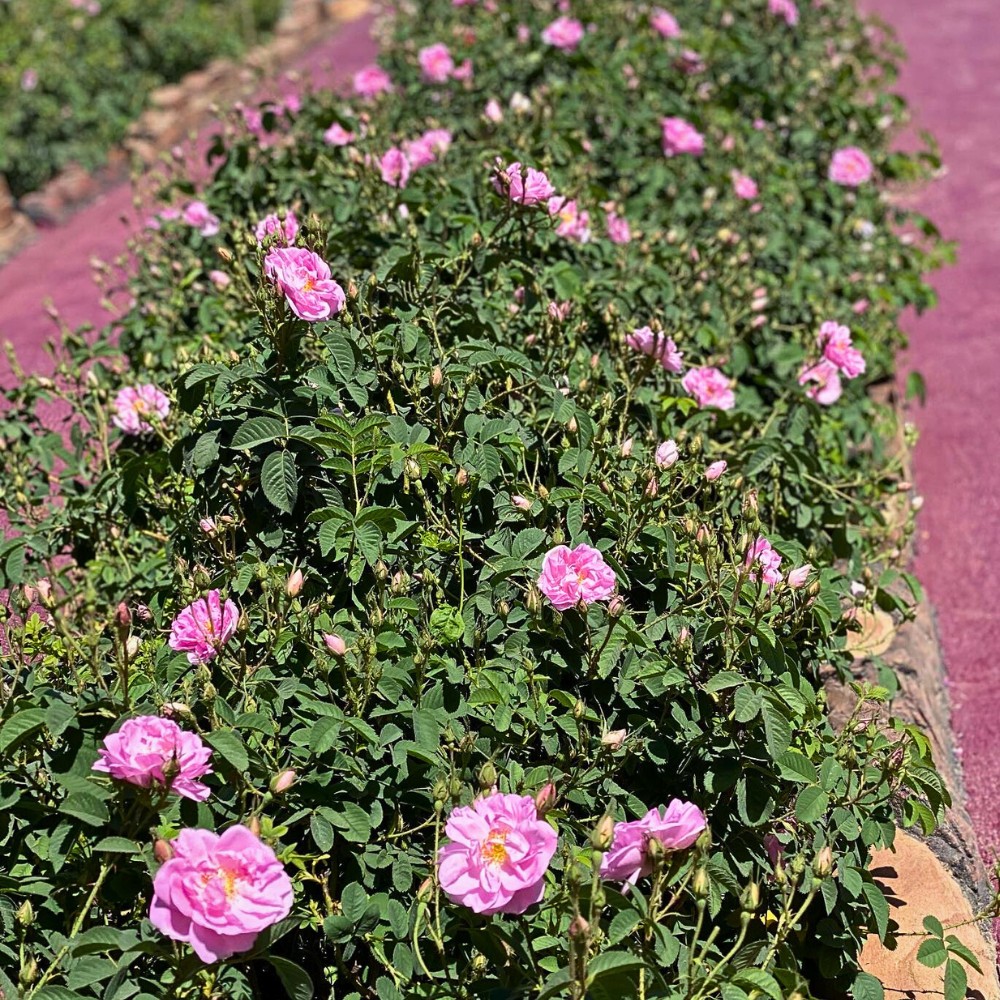
Rosa damascena trigintipetala, a type of Damask rose, locally known as Ward Taifi (literally, ‘Taif Rose’), is not quite the same as any other Damascus rose found elsewhere around. Each spring, from March to early May, this rose fills more than 900 farms in and around with color as millions of soft pink petals bloom.
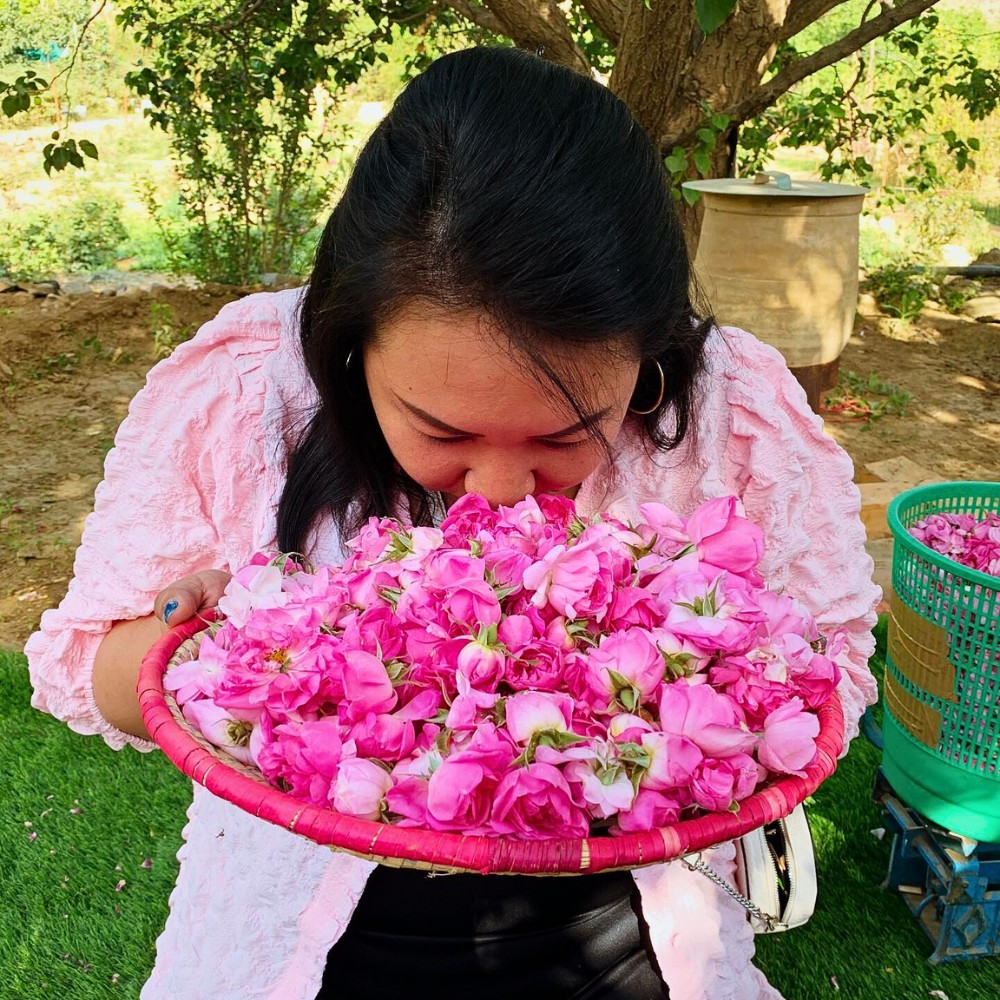
These roses are known for their practically unsurpassed fragrance. Their scent is rich, layered, and slightly spicy, which makes them prized among perfumers. Many claim that even a single flower can fill a room with enough perfume. But these roses have a short flowering window, which makes their flowering season important.
The rose’s petals are a soft, dusty pink, and the fragrance is deep and layered. Perfumers often describe it as warm, powdery, and intensely floral, with sweetness almost edible. It is no accident that the Taif rose oil is among the most expensive floral oils in the world.
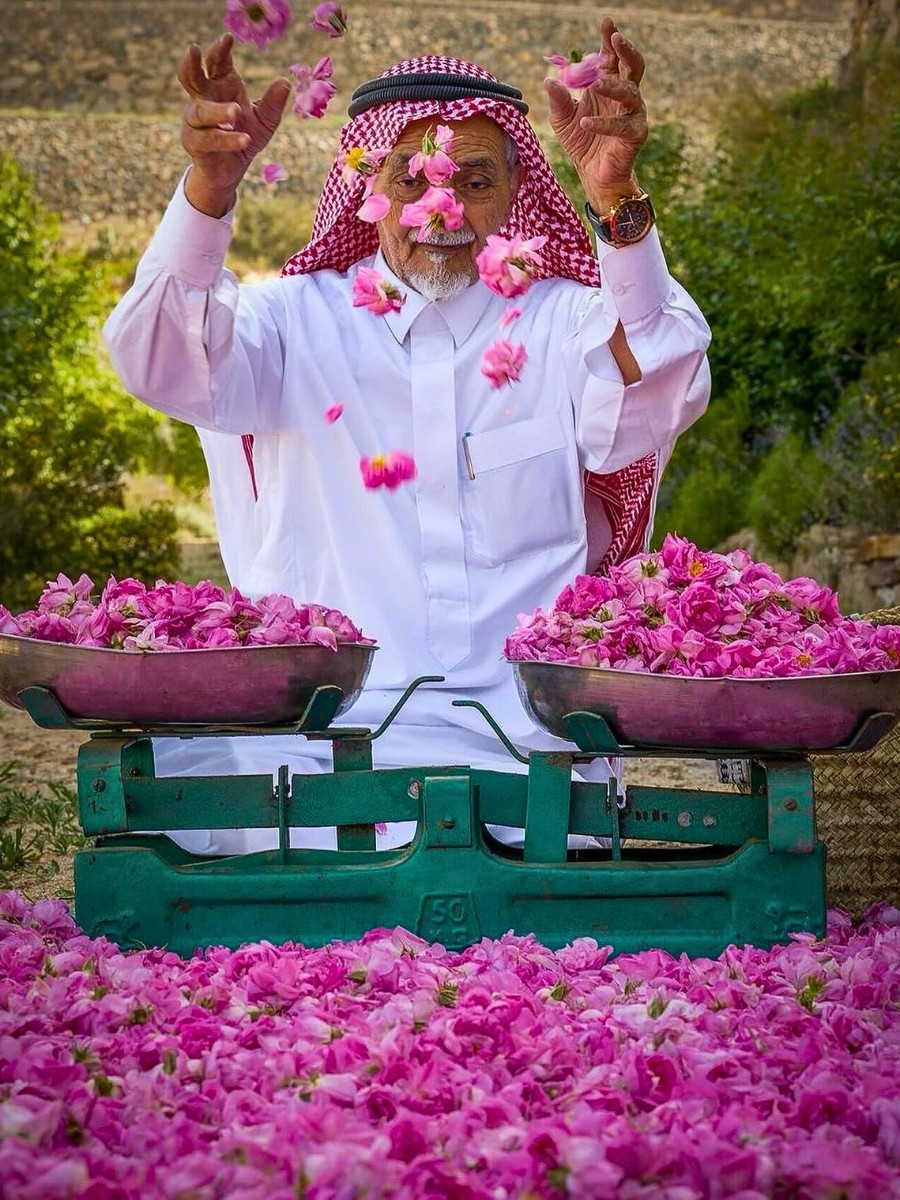
Rosa damascena trigintipetala thrives in Taif because of a combination of factors that is not easy to replicate elsewhere. The high altitude means cooler nights, which slow the flower's growth and concentrate its essential oils. The soil in the surrounding valleys is mineral-rich. And the local farmers have been doing this for so long that the knowledge of when and how to pick and process the roses is well-nigh inherited at birth.
A Harvest Season Offering Just a Few-Weeks Window
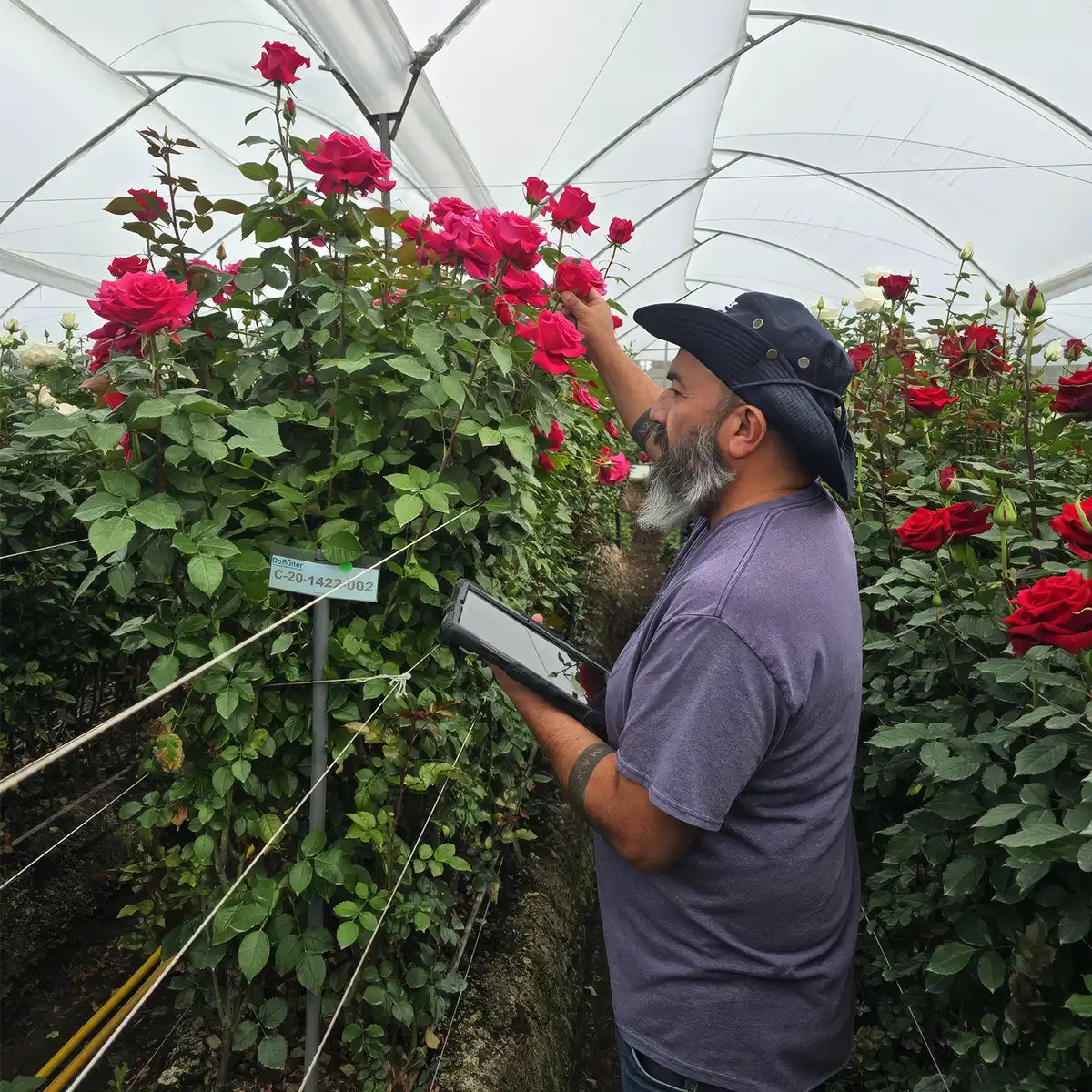
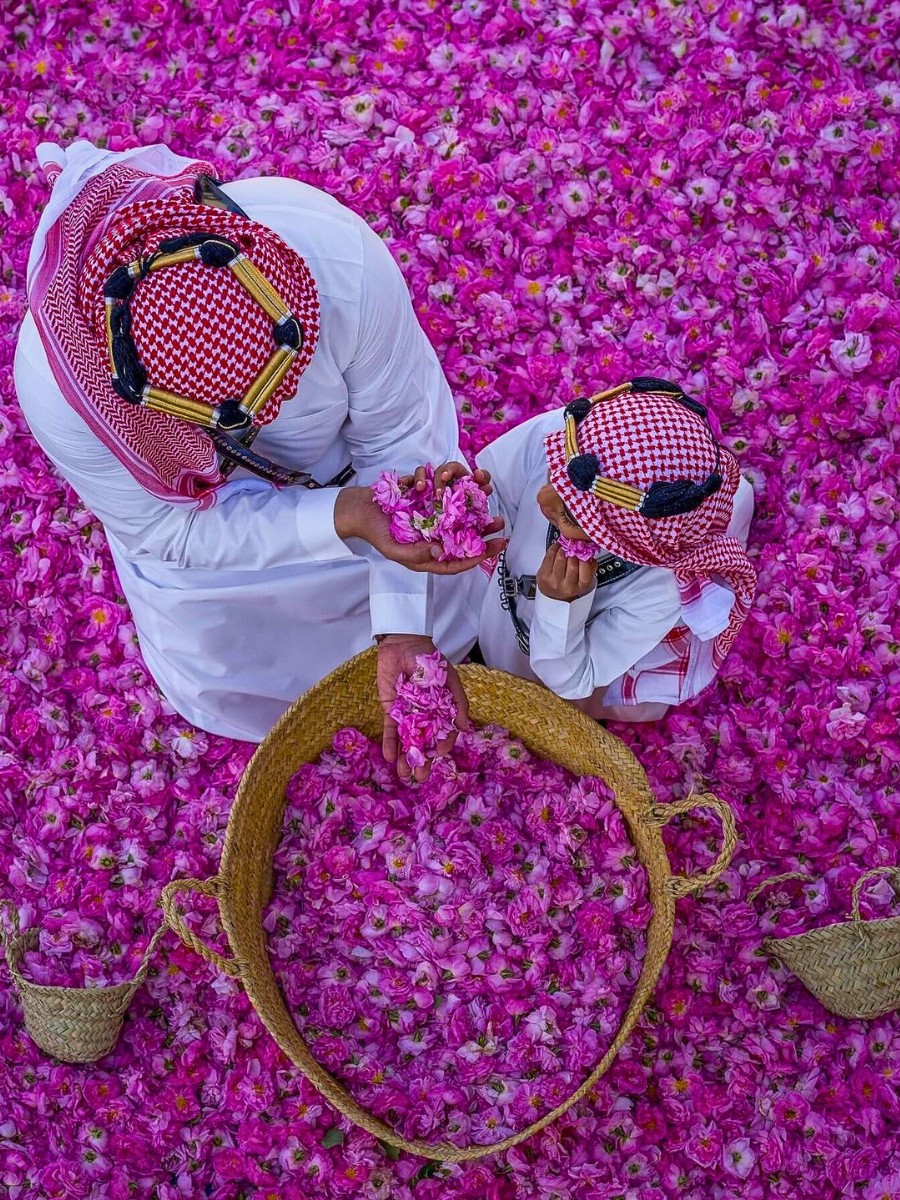
The process of harvesting Taif roses has changed little for generations. But it only happens once a year, and the window is really short. Every spring, usually between late March and mid-April, the roses come into full flower. Families rise before dawn to pick the flowers by hand. The reason for the early hour is that once the sun climbs high enough to warm the petals, some of the precious aromatic compounds begin to evaporate.
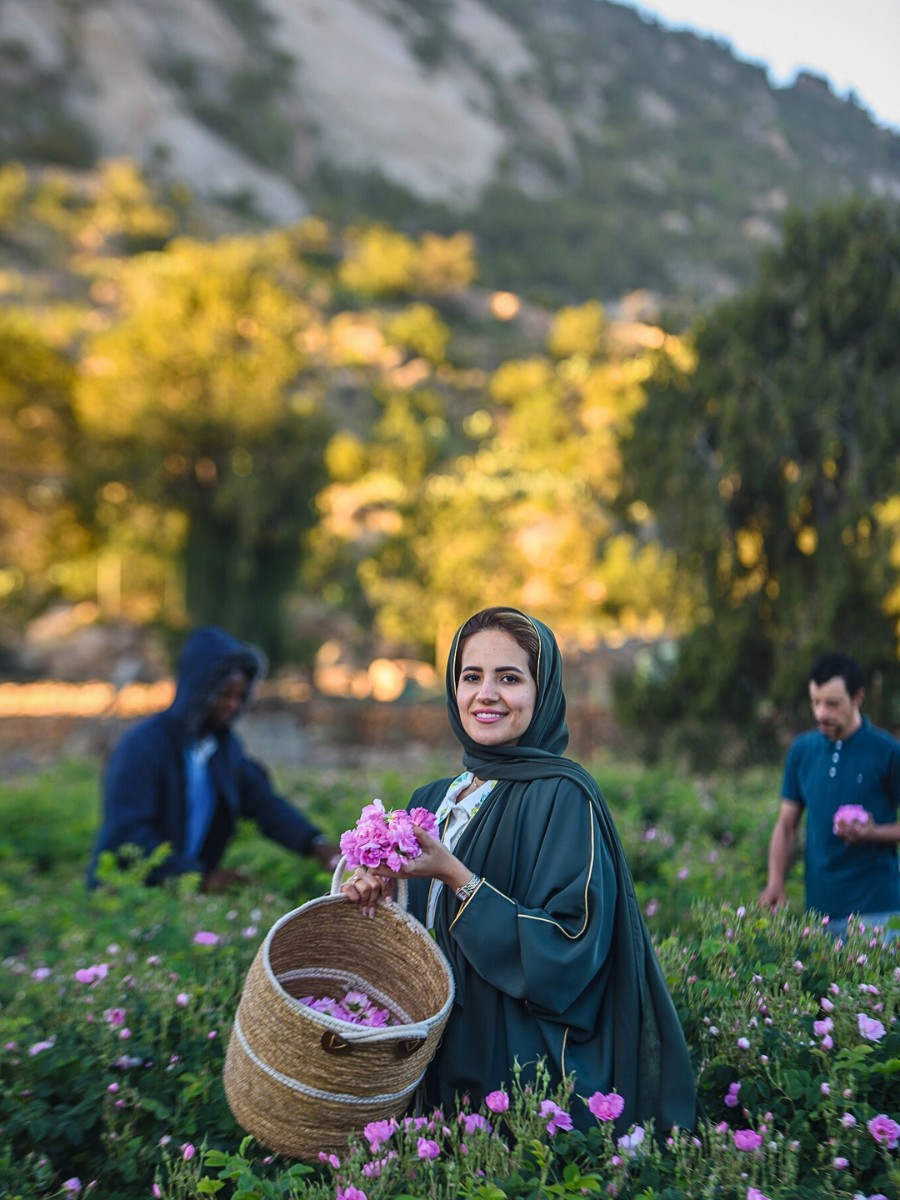
There is no mechanized harvesting of the Taif rose. Each flower is picked individually, entirely by hand. On a productive day, a skilled picker might collect several kilograms of petals, but the math of distillation is well… humbling. Producing just one liter of pure Taif rose oil requires somewhere between three and five tons of petals. That number says much about why the oil costs what it does.
But the harvest season turns parts of Taif into an extraordinary spectacle. The valleys around the Al-Hada and Al-Shafa areas, which are the heartland of its rose cultivation, fill with the scent of fresh flowers. Local markets display bundles of roses, rose water in glass bottles, and small vials of oil. There is always a sense of community in the whole thing that feels as much like a festival as it does like work.
Distilling the Petals to Perfume
Once the petals are picked, the rose petals begin to lose their fragrance within hours, so they are promptly taken to local distilleries, many of which are small, family-owned operations that have been running for generations. The traditional method used in Taif is steam distillation, where petals are placed in copper stills, and steam is passed through them.
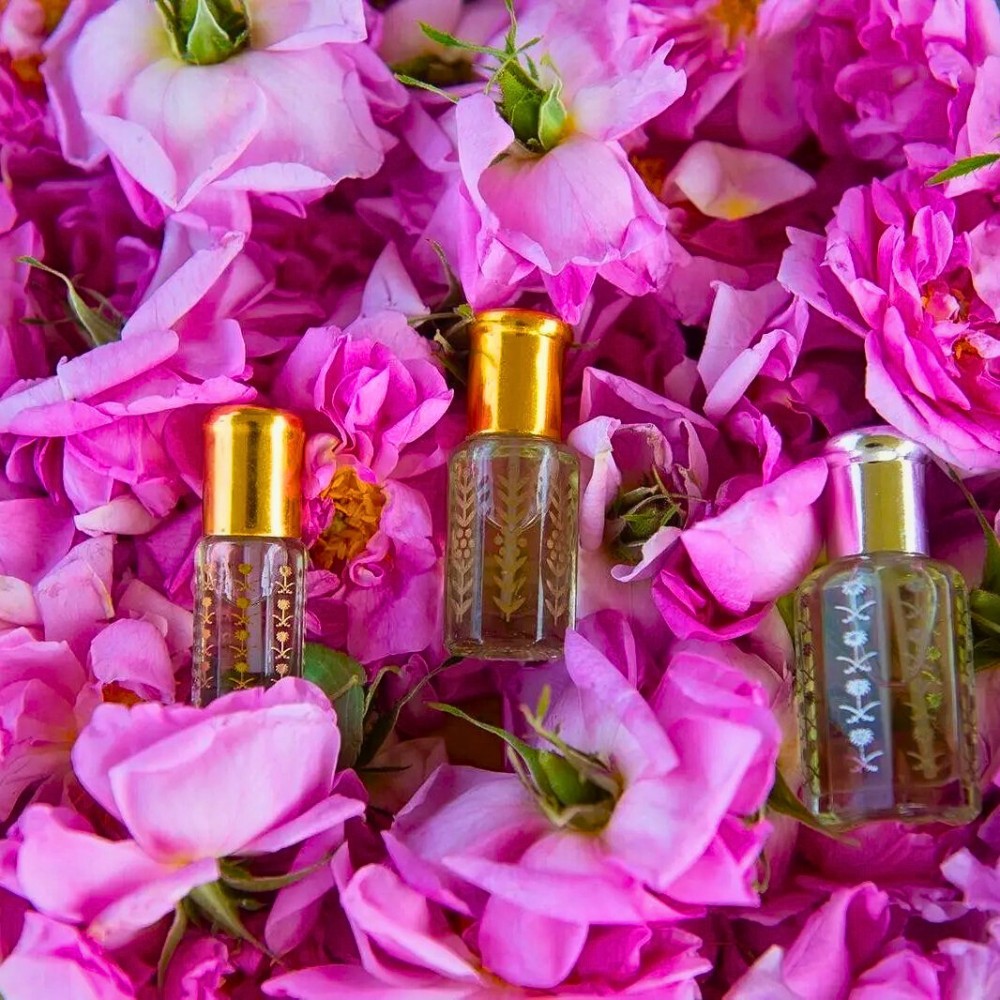
The steam carries the volatile aromatic compounds out of the petals, and when it cools and condenses, it separates into two products: rose water (attar al-ward) and the concentrated rose oil that sits on top. It takes roughly 12,000 roses to produce just a small vial of this precious essence. Taif rose oil, being one of the world's most expensive natural perfumes, makes sense even more!
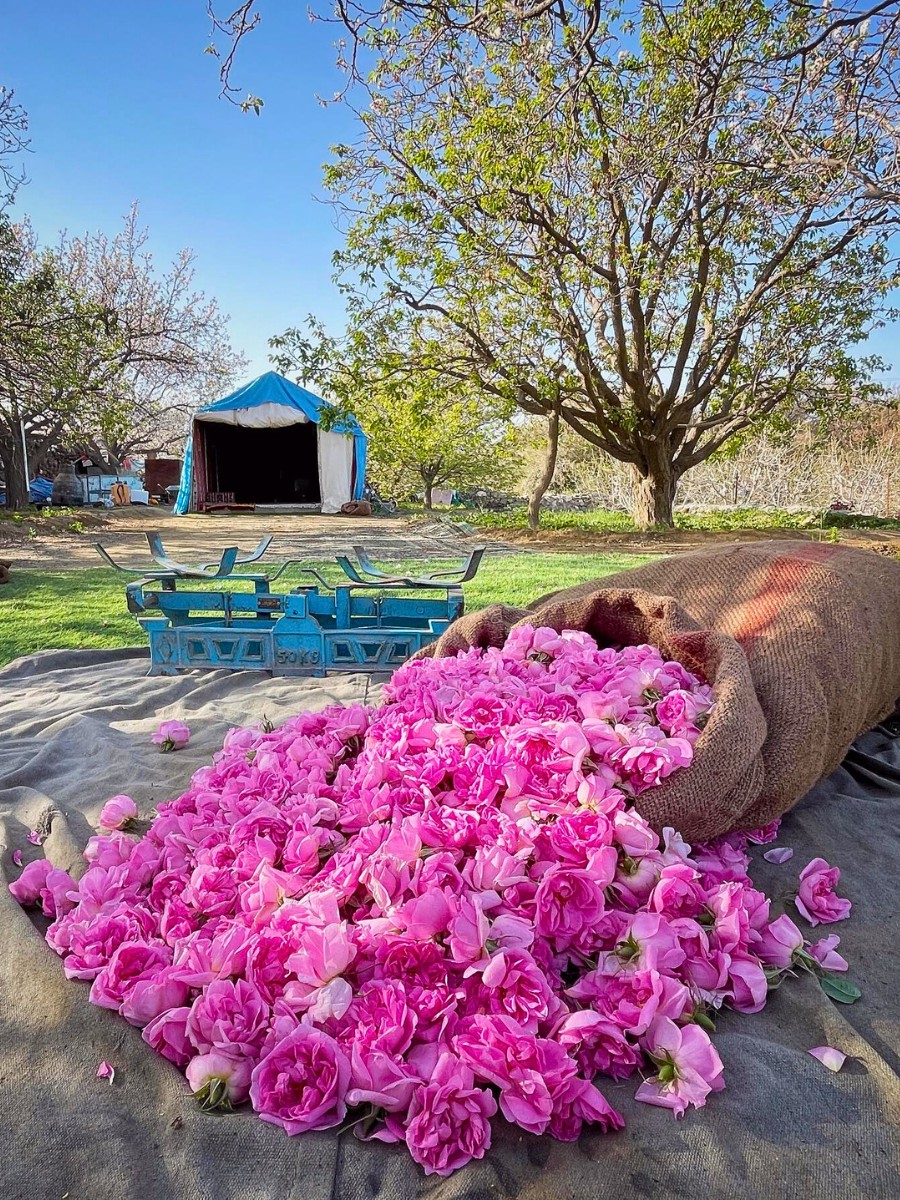
Rose water from Taif is, nonetheless, a product that has many everyday uses. It flavors sweets, scents homes, welcomes guests, and is used in religious and ceremonial contexts. The more concentrated oil, however, is the real prize. In perfumery, Taif rose oil is an ingredient of serious standing. Some of the most celebrated perfumes in the world, from luxury Western houses to the great attars of the Gulf, use it as a primary ingredient.
Cultural Significance of the Taif Rose
To understand Taif much more, you have to appreciate that the rose is not just an agricultural product here; it is woven into the cultural identity of the city and the wider region. Offering rose water to a guest is an act of hospitality, using it in religious rituals ties the flower to years of Islamic tradition, and gifting rose oil is an expression of true generosity.
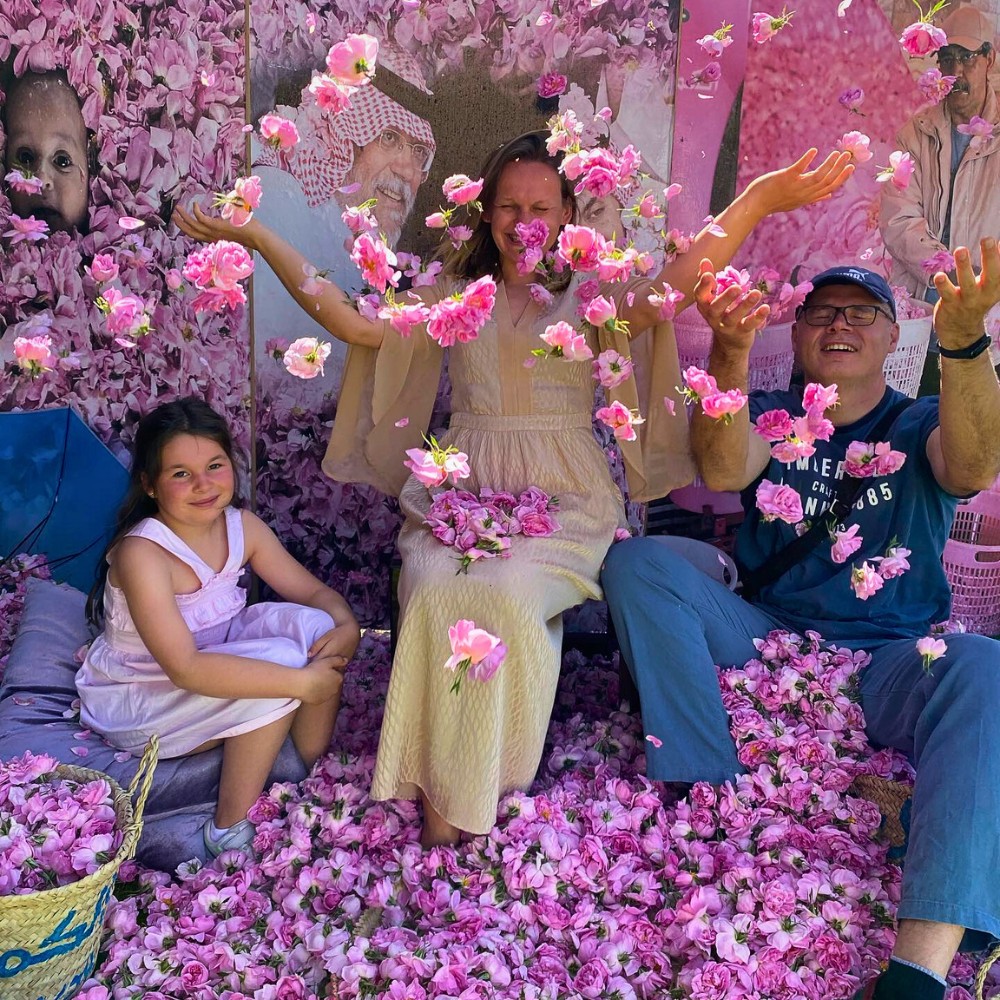
To honor the season's harvest, Taif holds an annual Rose Festival, where families, artists, and flower enthusiasts gather to celebrate the beauty and spirit of the rose. The streets are often filled with floral art, traditional music, and stalls overflowing with rose products, from oils and soaps to jams, teas, and waters.
There are also exhibitions, farm tours, demonstrations of distillation, and markets where you can buy rose products directly from the people who make them. It is the kind of event where the product and its story are conjoined. Among the most well-known establishments are Al Gadhi and Madawi. And many often describe walking through these establishments' rose gardens as a memory they want to bottle, much like the rose essence itself.
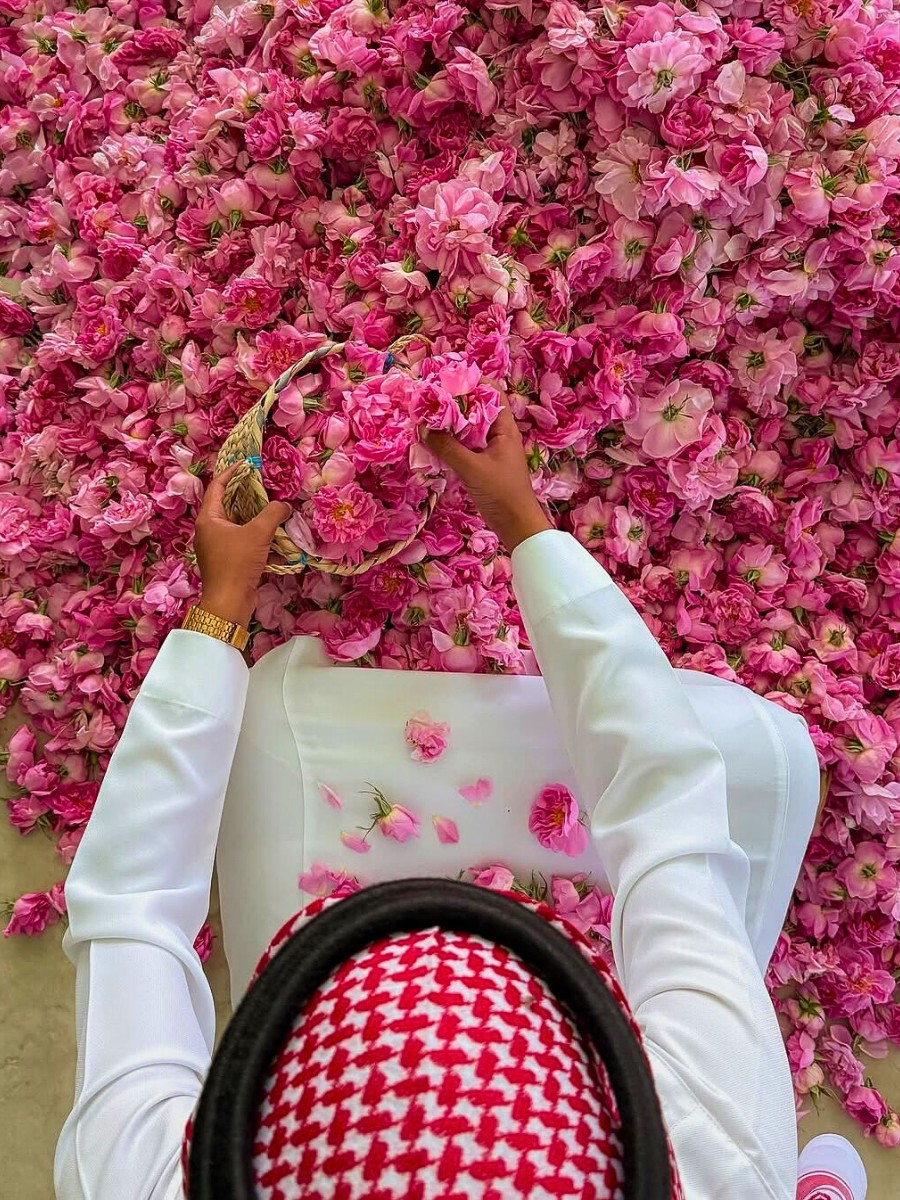
The acme of the Rose Festival is, definitely, the dazzling parade where floats covered in roses wind through the city, and locals wear rose garlands around their necks. For many, it is much of a recap of community pride and connection to the land, as it is a celebration of the rose harvest.
Saudi Vision 2030 has even placed Taif's rose industry within the wider context of cultural tourism and economic development, acknowledging that the city's rose heritage is not just a local event but a thing of real potential globally. Much is, as a result, happening to preserve and expand Taif's rose heritage through eco-friendly farming and tourism.
Moreover, new generations are studying ways to modernize production without losing the cultural authenticity of the process. Agricultural cooperatives and government projects are also supporting farmers to sustain the industry through climate-smart methods and global branding.
Feature image by @voguearabia. Header image by Mostafameraji.