
Often in the spring season, you’d see stretches of Texas roadside turn a soft shade of blue as fields of small, hardy flowers open in the sun. If you ever wondered what these flowers are, they are bluebonnets, the official Texas state flower. The annual arrival of the Texas bluebonnet is one of the Lone Star State's most anticipated seasonal events. But even then, this simple wildflower’s being has a long backstory, legislative debates, even folklore, and statewide pride. Here’s what you’d want to know about bluebonnets and what they mean to Texans.
First. What Is the Bluebonnet?
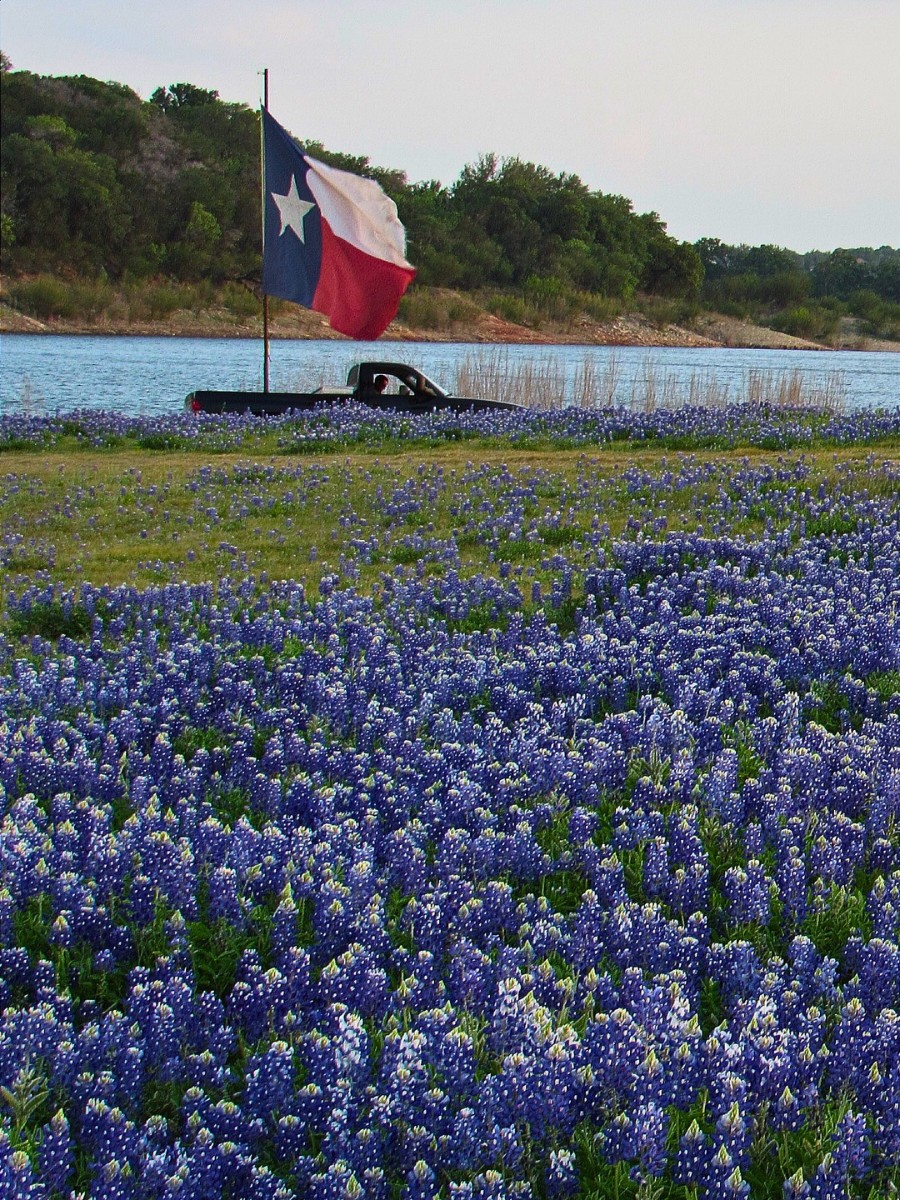
The bluebonnet belongs to the genus Lupinus and is part of the legume family. The flower’s common name comes from its shape and color, as the upper petals resemble the bonnets worn by pioneer women, and the most familiar species display a deep blue-purple hue, often tipped with white or red.

The plant grows relatively low to the ground, typically reaching 30.5 to 71 cm in height, and produces dense spikes of small, pea-shaped flowers. Bluebonnets are winter annuals, meaning their seeds germinate in the fall, the plant grows slowly through the cooler months, and their flowering occurs in spring, typically from mid-March through April.
They prefer well-drained, somewhat alkaline soils and full sun, and they are well adapted to the dry conditions found across much of Texas. Once established in an area, the bluebonnets reseed readily, returning every other year with minimal intervention.

What many people do not realize is that there is not just one species recognized as the official Texas state flower. Six different species of bluebonnet are native to Texas, including Lupinus subcarnosus, Lupinus texensis, Lupinus havardii, Lupinus perennis, Lupinus plattensis, and Lupinus concinnus. All six hold official status as the Texas state flower. This is a detail rooted in a debate that took place over several decades.
Why Is the Bluebonnet the Texas State Flower?
When the Texas Legislature took up the question of a state flower in 1901, the bluebonnet was far from the only contender. Two other options carried significant weight in the discussion. One lawmaker argued strongly for the cotton boll, a pointer to cotton's central role in the Texas economy at the time.

Another, a young legislator from Uvalde, made an impassioned case for the cactus, praising its toughness and the beauty of its flowers. His speech was so memorable that he earned the nickname Cactus Jack, a name that stayed with him for the rest of his life. That legislator was John Nance Garner, who later became Vice President of the United States under Franklin D. Roosevelt.
The Texas bluebonnet's journey to victory came largely through the efforts of the National Society of the Colonial Dames of America in Texas. This group of women championed the bluebonnet for its natural beauty and its long-standing presence across the Texas landscape. Their advocacy ultimately swayed the legislature's decision.
But aside from that (the legislative debate), the bluebonnet carried symbolic weight that resonated with the Texas identity. Its hardiness in difficult soils and dry conditions mirrored the resilience associated with the state itself. Its presence across open prairies and along early roadways made it a familiar and beloved sight to generations of Texans, way back before it even received any official designation.

When Was the Bluebonnet Named the Texas State Flower?
The bluebonnet was officially designated the Texas state flower on March 7, 1901, when Governor Joseph D. Sayers signed the bill approved by the 27th Texas Legislature. The original legislation specifically named Lupinus subcarnosus, commonly known as the sandyland bluebonnet, as the official species.
However, the choice of this particular species did not settle the matter. Many Texans felt that Lupinus texensis, the variety with larger, more vivid blue flowers commonly seen across Central Texas, was a more fitting representative of the state's natural beauty. This disagreement persisted for several more years.
On March 8, 1971, the Texas Legislature resolved the issue by amending the original statute. The amendment added Lupinus texensis to the official designation, along with the phrase covering any other variety of bluebonnet not previously recorded. This effectively extended official status to all bluebonnet species native to Texas, resulting in the unusual situation where the Texas state flower legally refers to six separate species and not just one flowering plant.

The Bluebonnet and Texas Highways
One of the most significant chapters in the bluebonnet's history involves the Texas Department of Transportation, then known as the Texas Highway Department. Beginning in the 1930s, the department launched a wildflower beautification program that included scattering bluebonnet seed along roadways throughout the state.
The program was driven in part by simple practicality. Wildflowers like the bluebonnet required little maintenance, controlled erosion on roadside slopes, and added natural beauty to highway corridors at minimal cost. Over the following decades, the program expanded significantly and became a defining feature of road travel in Texas during the spring months.

The Texas Department of Transportation continues to manage roadside wildflower programs, and the sight of the bluebonnets stretching along highway medians and shoulders every spring remains one of the most recognizable images associated with the state. The timing of peak bloom varies somewhat by region and yearly rainfall, but mid-March through April remains the most reliable window for viewing in most parts of the state.
How Do Texans Connect With the Bluebonnet as Their State Flower?
For many Texans, the arrival of bluebonnet season every spring comes with a sense of tradition that goes well beyond just appreciation of a flower. Families across the state make a point of visiting bluebonnet fields, and one of the most lingering customs involves photographing children sitting among the flowers. This practice has been passed down through generations and is still widely observed today.

The bluebonnet also has a place in Texas folklore. According to one well-known story tied to the Comanche people, a young girl sacrificed her most treasured possession during a time of hardship, and the following morning, the land was covered in blue flowers as a result. Stories like this have helped give the bluebonnet a meaning that extends outside of its botanical classification, connecting it to themes of sacrifice, renewal, and the land itself.
The flower's reach extends into place names and local festivals as well. The city of Ennis holds the official designation of Texas Bluebonnet City and is home to the Texas Bluebonnet Trail, while Chappell Hill hosts an annual Bluebonnet Festival that draws visitors from across the state. Texas has even designated an official bluebonnet tartan and an official bluebonnet song, which emphasizes just how deeply the flower is woven into the Lone Star State's formal identity.
How Does One Grow the Texas State Flower in Home Gardens?
If you love the flower and would perhaps want to grow it, you should plan around the plant's natural fall-to-spring cycle. Seeds are best sown in September or October, allowing the roots to establish before winter sets in. Bluebonnet seeds have a hard outer coating, and some growers scarify the seeds or treat them with a specific inoculant before planting to improve germination rates.
Well-drained soil and full sun are essential for its successful germination and growth. Bluebonnets do not perform well in heavy clay or in areas that retain excessive moisture, and overly rich soil can lead to excessive leaf growth at the expense of flowers.

Once a patch is established, allowing the seed pods to mature and disperse naturally before mowing will help ensure the flowers keep coming back the following year and every other year. Many home gardeners and municipalities across Texas plant bluebonnets along roadsides, in meadow areas, and in dedicated wildflower beds.
The flowers are mainly grown for their beauty and for their low-maintenance and drought-tolerant nature. As a legume, the bluebonnet also has the added benefit of fixing nitrogen in the soil, which can improve conditions for other plants grown nearby.
Header and Feature image by @mycurlyadventures_