
FlorEvent returned to Nantes for its 10th edition on March 8 and 9, 2026, at Exponantes-La Beaujoire, keeping the format tight and trade-focused: sourcing, ideas, and real conversations on the floor. Entry was free with registration, and the show stuck to what matters for pros: a curated exhibitor mix, on-stage demos, competitions, and enough space to actually talk business. Here's a total recap.
FlorEvent in One of France's Greenes Cities
Nantes, the 2013 European Green Capital, has maintained its commitment to the environment over the past decade. Nantes continues to live up to its motto 'Make the City a Garden', with a wide variety of accessible green spaces in the city centre, including the famous Jardin des Plantes. And this March weekend, the city added FlorEvent to that green rhythm.

For some exhibitors, Nantes is not just an attractive destination but also a practical place to meet the right people. Rosedor Penja's Deputy Director, Marie Leclercq, explained why the event fits their map so well:
"We are already based in Nantes, with a flower depot on the local wholesale market, so this is naturally a good place for us to meet customers at a local level. At the same time, it also gives us the chance to speak with prospects and even connect with producers who could become part of our offer. It is the kind of event we genuinely appreciate taking part in, because the conversations are concrete and useful."

Farell Legendre from the French Federation of Florist Artisans pointed out the professionalism of the visitors:
"There are a lot of qualified people visiting this event, both seasoned professionals and students. All are coming to take the feeling of the business."
And, although Farrell was visibly happy with the attendance, the FFAF president also had a critical remark on the French horticulture industry:
"The French have to step up in various ways. In meeting international sustainability goals, such as FSI. And we need the next generation of growers and florists. We need a good educational program for the grower. We now have the burden of the age pyramid, growers retire, and there is little follow-up."
Testimonials From a Real Florist Fair
FlorEvent once again proved to be a solid stop for florists, floral designers, home decor shop owners, and floral students. The promise is simple: meet a focused selection of suppliers, including growers, wholesalers, and service partners. This is the place to spot product updates and leave with contacts you will actually use. The exhibitor mix spans cut flowers and plants, dried and preserved materials, containers and decor, gifts and fragrance, packaging, training, software, plus services and networks that support day-to-day business.
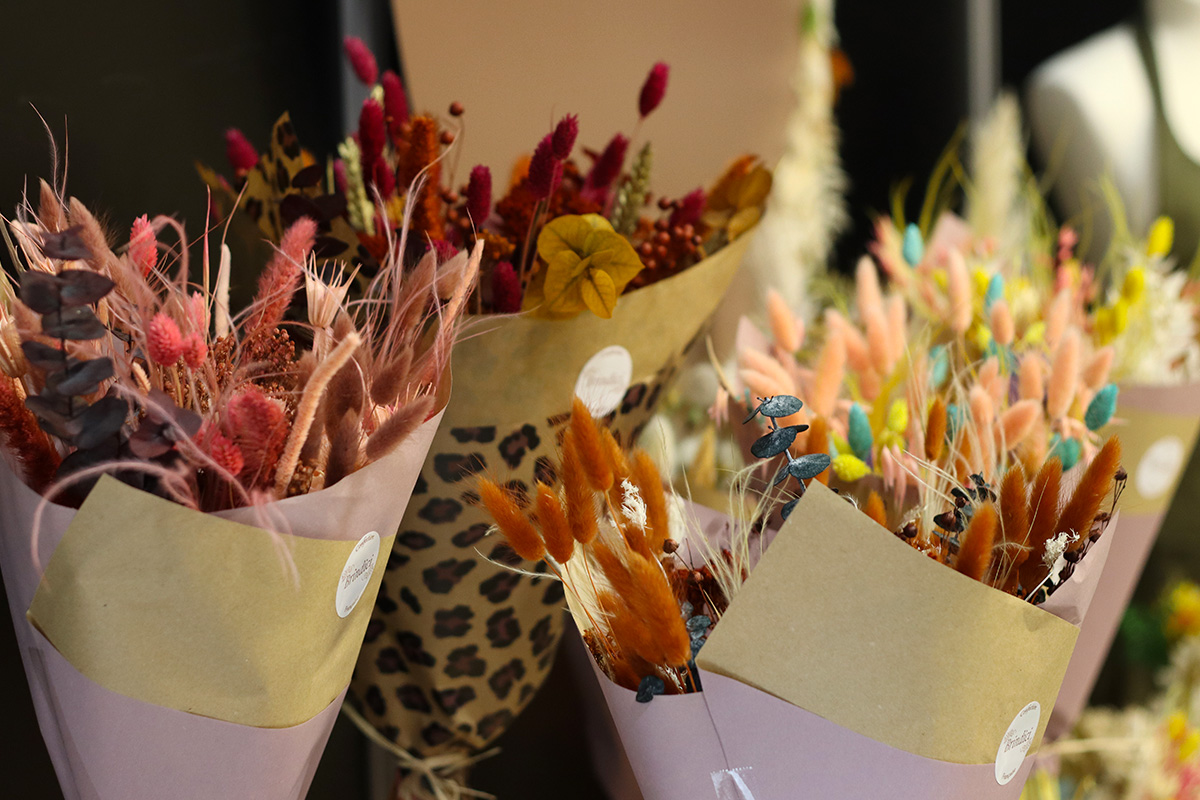
A lot of exhibitors described their goals in clear, practical terms: see current clients, meet new ones, and go home with momentum. Brindici's Antoine Morin put it simply:
"First of all, we are here to see our existing customers, and then to meet new prospects. We are here to sell, to make ourselves known, and to show what we do with preserved and dried flowers from our base in Nantes. And when the cost of the stand has paid for itself, that is when we know the show has really worked."
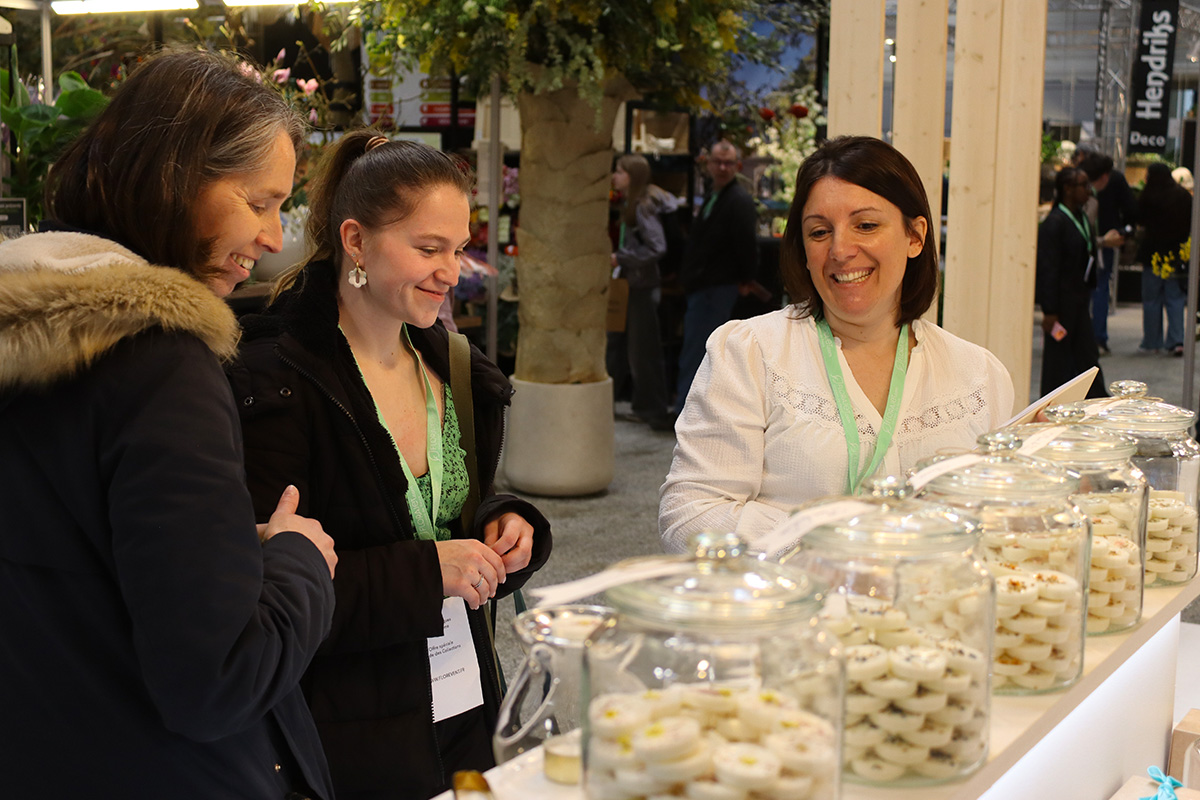
That same practical mindset came through at Bertille & Camomille, where CEO Adeline Pretet talked about the reality of today’s flower shop:
"Our target customers are mainly florists, so that is the reason we are here. I think that today most florists have to sell more than only flowers or only plants, because customers expect a wider offer in-store. For us, being visible matters, letting people discover the fragrances matters, and this kind of fair helps prospects come and meet us in person."
Florajet was equally direct about why the show matters. Network Manager Jade de Bohan said:
"We are here to meet our member florists and also new florists who are not yet part of our network. What makes this event interesting is that it is very national and very focused, because the visitors here are florists and professionals only. If in two days we sign around ten new contracts, then we are happy, because that means the fair has done exactly what we came for."

Demos and Trends
The two days were full of demos by designers such as Frédéric Dupré, Gaétan Jacquet, Cathy Devaud, Max Hurtaud, Stéphane Chanteloube, Benoît Barbin, and Olivier Seghin, both at stands and on the main stage.
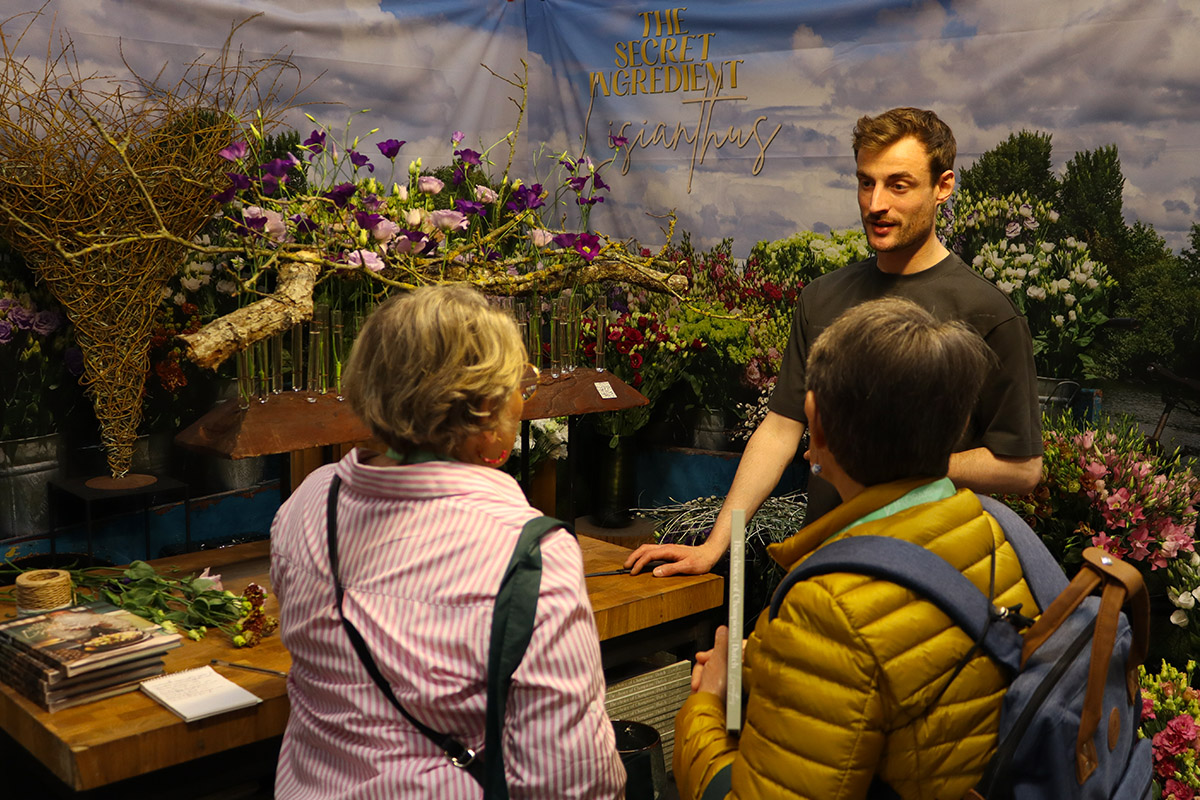
From the show's category listings, the cut flower and plant mix included recognizable names and collectives such as Hortisud, Florajet, Rosedor Penja, and Collectif de la Fleur Française. Product groups were also present to promote Chrysanthemums, Gerberas, Liliums, and Lisianthus.

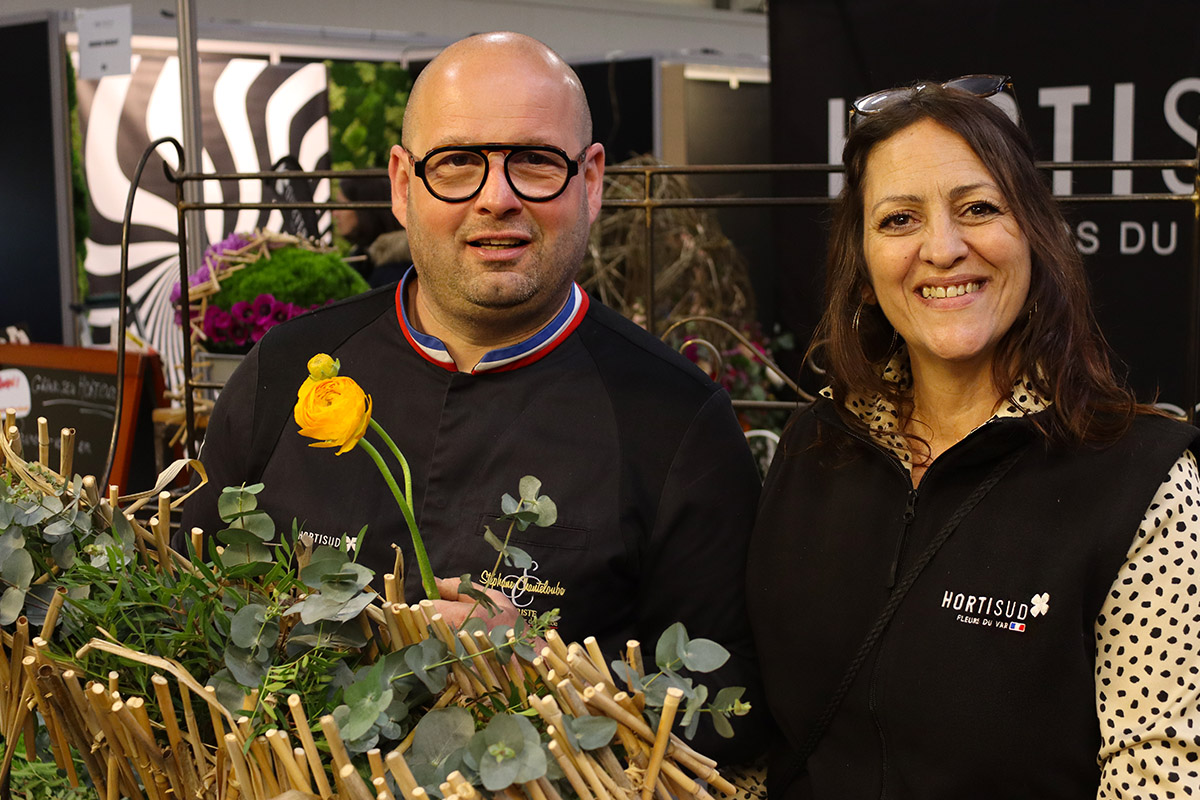
Sunday’s stage program leaned into craft and store-ready inspiration, with demos and a trends session designed to translate into daily shop work. Meilleur Ouvrier de France Stéphane Chanteloube delivered a floral demonstration featuring seasonal flowers supplied by Hortisud, focusing on clean technique and ideas that work for real customers.
For Hortisud, that visibility links directly back to what they want to be known for: tested quality and vase life. Communications Officer Frédérique Couniou explained:
"Hortisud is the quality label for flowers from the Var, created by growers themselves to distinguish their flowers on the market through a real quality charter. We test vase life under consumer-like conditions, including transport simulation, so the promise is not just marketing. We guarantee at least seven days of vase life, and on many products, the average is closer to ten or even fifteen days, which is why it is important for us to explain everything behind the brand."
Belgian floral designer Max Hurtaud also took the stage, bringing a contemporary design approach linked with Flower Circus.
That broader 'full shop workflow' angle also showed up beyond flowers and plants. Bertille & Camomille’s Adeline Pretet tied it back to retail reality:
"I think most florists today need to offer other product categories alongside flowers and plants. Customers already expect that, so it becomes part of the business model. For us, FlorEvent is a way to build visibility and let florists experience the products directly instead of only hearing about them."
Education for the Next Generation of Floral Designers
Training also had a clear place on the floor. At Piverdie, based in France, but with schools all over the globe, Marion Marquet described why the school keeps showing up at events like this:
"Our core business is training, from the CAP [entry-level] and BP [advanced] florist programs and further courses and visual merchandising. We are here to meet partners, meet clients, and take time for conversations we do not always get to have in daily work. Right now we are very happy, because there has been a steady flow of people and we have barely had time to walk around ourselves."

Her colleague Florence Cornet added another layer to that story, pointing to the range of what Piverdie now covers:
"We are a training center, so of course we teach floristry, but we also organize professional courses and have developed internationally with schools in places like Hong Kong and Taiwan. We also work on competitions and specialist programs, which keep us connected to both apprentices and experienced professionals. It means our presence here is not only about recruitment, but also about staying linked to how the trade is evolving."
To make the experience complete for established and upcoming floral designers, Manuel Rucar of Chlorosphère presented a 2026 trends conference, framed around aesthetics, consumer expectations, and creative levers florists can use in-store.
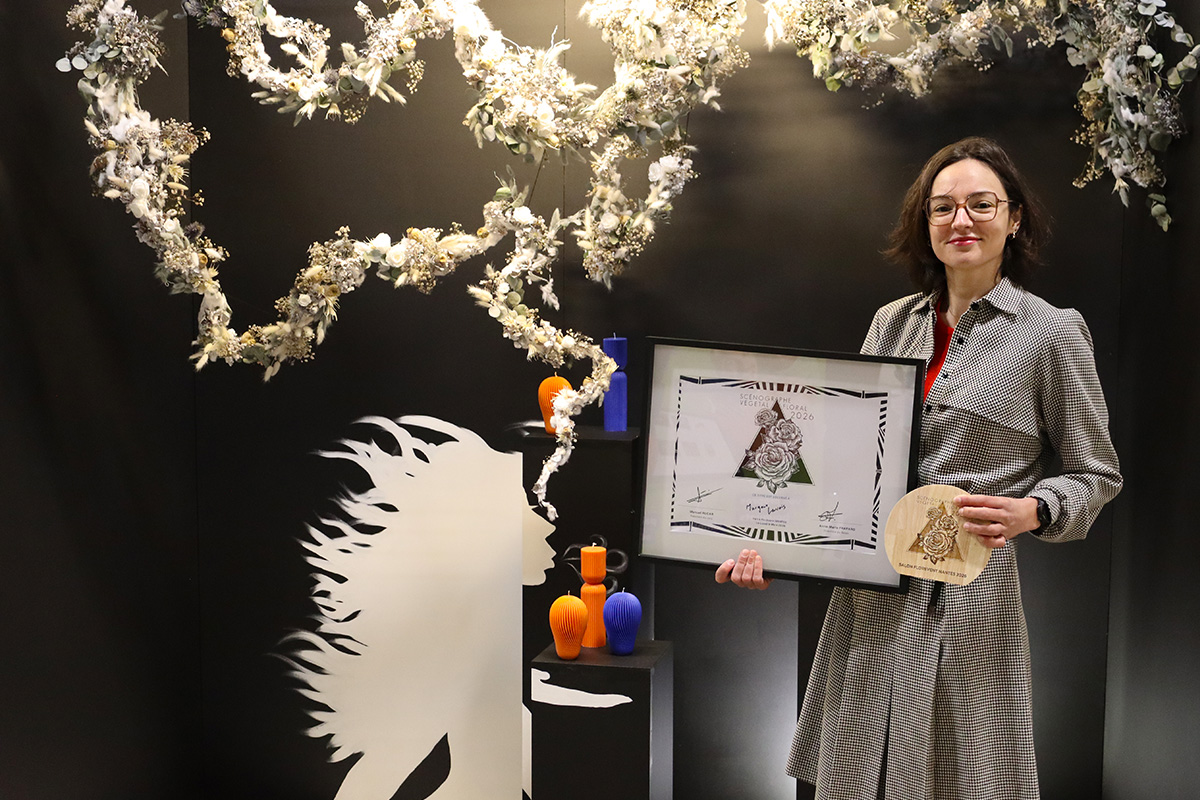
Lined up with the Chlorosphère trends was the Scénographe Végétal Floral competition, in which designers were challenged to create a trendy shop window that would make any passerby stop and stare. Young designer Margaux Louvois was awarded the trophy for best shop window
The Importance of Product Knowledge for Every Industry Pro
Throughout the expo, various stands were doing generic promotions to bring more AIDA (Attention, Interest, Desire, Action) to the florists. Awareness and knowledge trigger turnover.
At the Coloured by Gerbera stand, doing generic product group promotion, the focus was on helping French florists look beyond the familiar minimix of Gerberas. Project leader Christine Strijbis said:
"We are here to reach florists and to bring Gerbera more strongly to the French market. In France, Gerberas are often still used one or two stems at a time in a bouquet, while we see room to grow that usage and show much more of the assortment. Florists are often surprised by the specials, the doubles, and the smaller varieties, so part of our role here is simply to widen the picture of what Gerbera can be."

Like in previous years, a collective of Dutch chrysant producers drew attention to the diversity of this particular product group. At the JustChrys stand, Marie Legendre spoke openly about the long image shift Chrysanthemums have had to make in France:
"At the beginning, the message was mostly, "Look how many kinds of Chrysanthemum there are." Now the conversation is more commercial: how can this flower create value for a florist, and why can it be interesting in daily shop work? The old funeral-only image is still there for some people, but younger florists are already using it in weddings, events, and mixed bouquets, so you can clearly see that the story is moving forward."
She also pointed to one of the flower’s most practical strengths:
"For florists, Chrysanthemum is a very strong product with very little waste in the chain. That matters a lot in real shop life, because durability and low loss are part of profitability. So beyond image, there is also a very concrete business argument for using it more."
The French-origin conversation was never far away, and the President of the Collectif de la Fleur Française, Hélène Taquet, did not water down her position:
"For me, French flowers come first, because we still have a huge amount of rural economic ground to recover. We are starting from very little, with only a small share of what florists sell actually produced in France, so there is a lot to rebuild in terms of jobs, skills, and visibility. That said, I am not saying it must be 100%, because there is room for French flowers, room for European flowers, and room for imports too, but the balance today is not where it should be."
She also made clear that growth has to come with stronger production standards.
"One of the real challenges is quality and technical knowledge, because many new growers are not from an agricultural background. We need more training, more harmonization, and more confidence in production, because quality is what will make florists buy more French flowers. If growers trust their own technique and can deliver consistently, then quantity will follow much more naturally."

A Packed Topic on Monday Morning: French-Grown vs. Foreign Production
In 2025, French growers accounted for around 5% of the total global production (12% within the EU). According to Farell Legendre of the French Federation of Florist Artisans, about 60% are exported. Flowers like Ranunculus, Anemone, and Paeonias, and foliage like Pistacia, are very popular abroad. However, this production is not enough to cover the needs of the French florist, because Hélène Taquet from the Collectif de la Fleur Française says that an average florist only has 10% French flowers in their assortment. So, data show that France is a major importer in the horticultural market.
And therefore, one of the most-attended stage moments took place on Monday morning: a roundtable on floral sourcing, seasonality, and imports.
The topic itself already explained why it pulled people in: few questions are as current for French florists as how far local production can go, where imports remain necessary, and how to explain those choices honestly to customers. According to the session summary, the panel brought together voices from production, wholesale, fair-trade import, and the florist trade, giving the discussion a practical edge rather than turning it into a simple pro-France versus pro-import debate.
What made the discussion land was that it stayed close to everyday shop reality. The panel returned to a basic fact: French production, at around 185 million stems, still accounts for only a small share of a market that consumes about 2 billion stems, so imports remain essential. At the same time, seasonality was presented as a real sales tool rather than a limitation, especially when florists use it for storytelling, regional identity, and customer education. In that sense, the round table connected directly with what many exhibitors were already saying at their stands: local flowers matter, but a workable assortment still depends on complementarity.

That balance came through strongly in the arguments on both sides of the sourcing discussion. Hélène Taquet, as heard elsewhere on the floor, argued for rebuilding French production and making it more visible to consumers and florists alike. But the roundtable summary also showed a more nuanced line from the wider panel: French flowers are a strong seasonal resource that deserves greater visibility, while imported flowers can still play a complementary role in meeting year-round demand, particularly when they are certified and traceable.
The panel also touched on the sector's remaining friction points: logistics, the loss of 4,000 florist shops over the last decade, the evolution of direct-to-consumer from some growers, and the need for better coordination among growers, wholesalers, and florists. Just as important, speakers pushed back against misinformation about environmental impact, arguing that the profession needs better facts and better communication, not slogans. That probably explains why this Monday session drew so much attention inside the event program: it was not an abstract debate, but one that touched pricing, supply, values, and the future of French floristry all at once.
‘Fleur de l’Année’ Competition
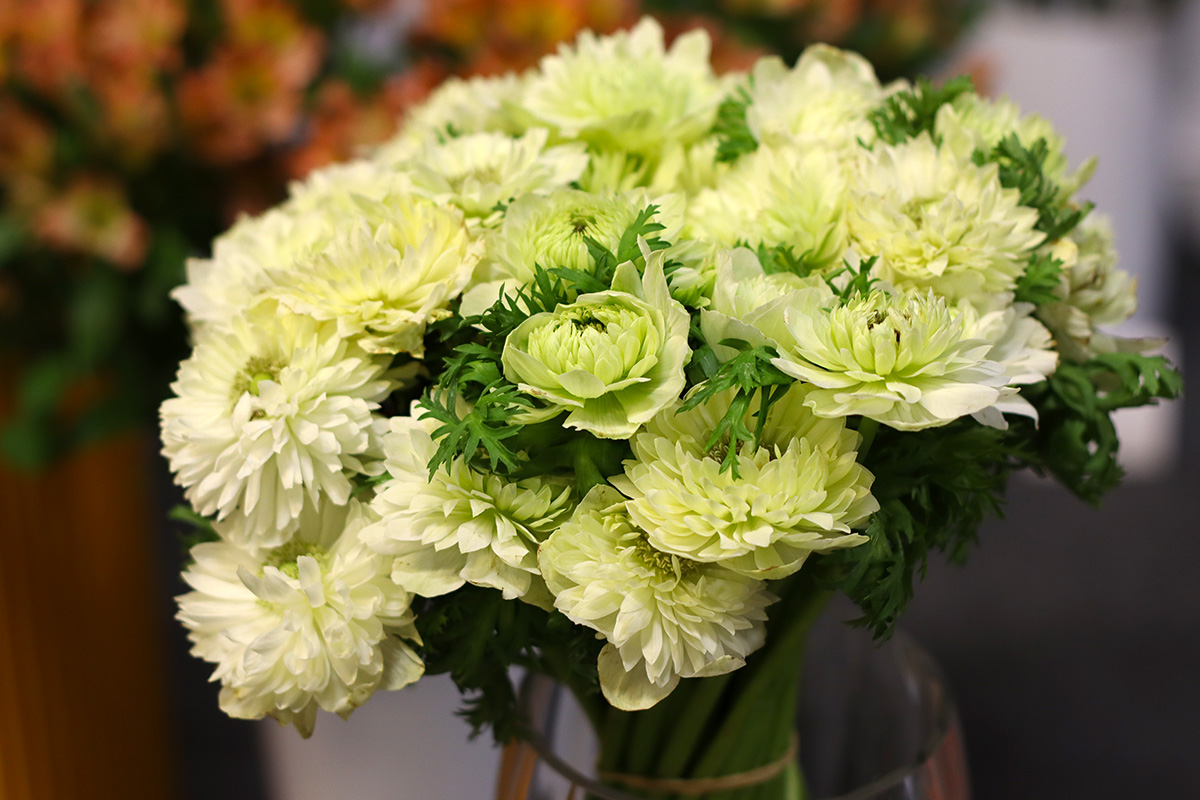
Twenty cut flowers were nominated to become the 'Fleur de l'Année' (Flower of the Year). Not the biggest or boldest flower took the title, but a very specific version of a familiar one: the Anemone Levante, presented by Agora. With its heavy petal count and different look, it felt like an Anemone pushed into a new chapter.
Battle Des Écoles: The ‘Flower Games’
The Battle des Écoles ran multiple times on Monday and was built as three timed challenges without a jury, scored by objective results.
The Three 2026 Challenges:
- ‘Poids’: A portable handbag design packed with maximum plant material, scored by weight.
- ‘Cube’: An airy, high-volume structure, scored by the volume of the 'imaginary box' containing it.
- ‘Fil’ Final: The longest continuous botanical garland, built without rigid support, scored by length.
From the three participating schools, one winner remained: Lycée Paul Langevin from La Seyne-sur-Mer, trained by Caroline Hadjadj-Auphan.
Next Stop: Nice
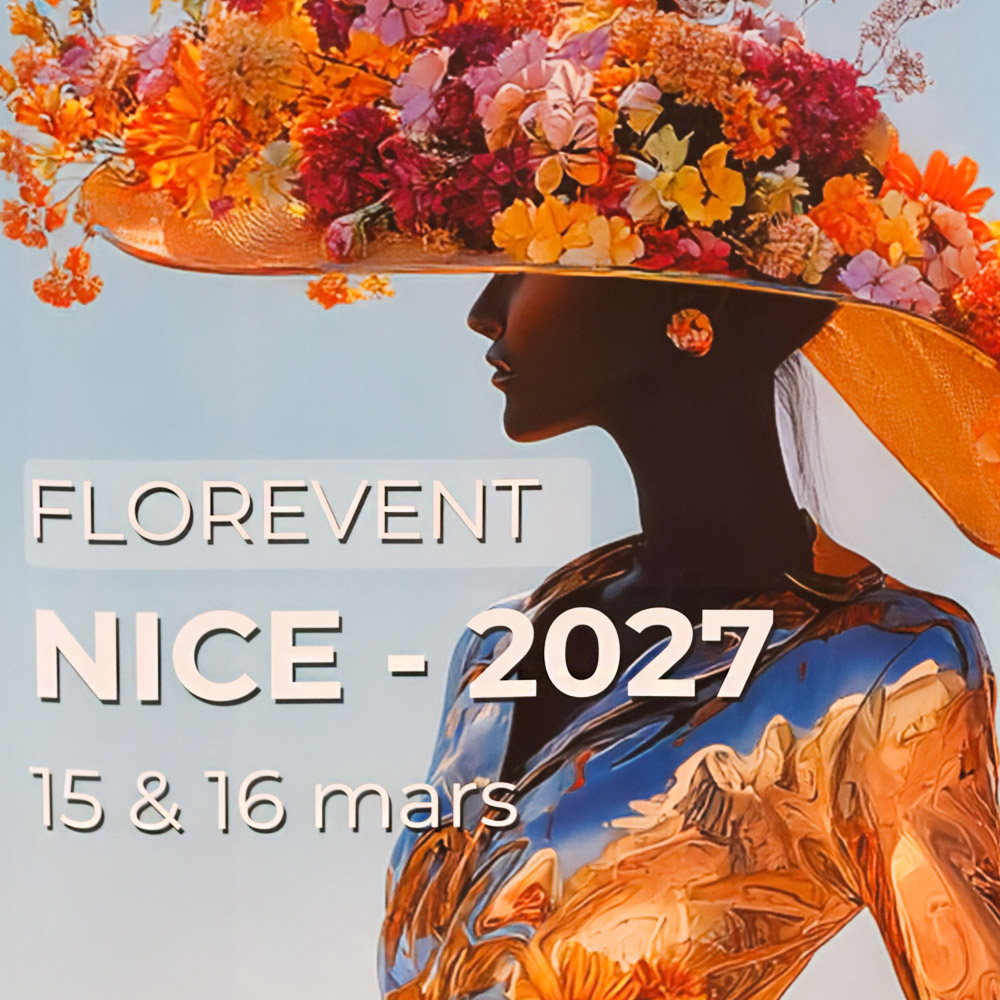
Yes, it is going to be very Nice. On March 15 and 16, 2027, FlorEvent will head to Nice on the French Côte d’Azur. If this Nantes edition showed anything, it is that the format works best when it stays close to the trade: people who grow, people who sell, people who design, and people who are still learning the craft, all in one place and actually talking to each other.
Some figures from this year's event:
1,635 trade visitors, including:
- 82% florists (shops, event planners, and other floral businesses)
- 13% students in floral design programs
- 5% other professionals (buyers, garden centers, landscapers, miscellaneous)
These figures confirm the industry's interest in and commitment to this event.
Header image: Olivier Seghin – demonstrator for Love Lilies.