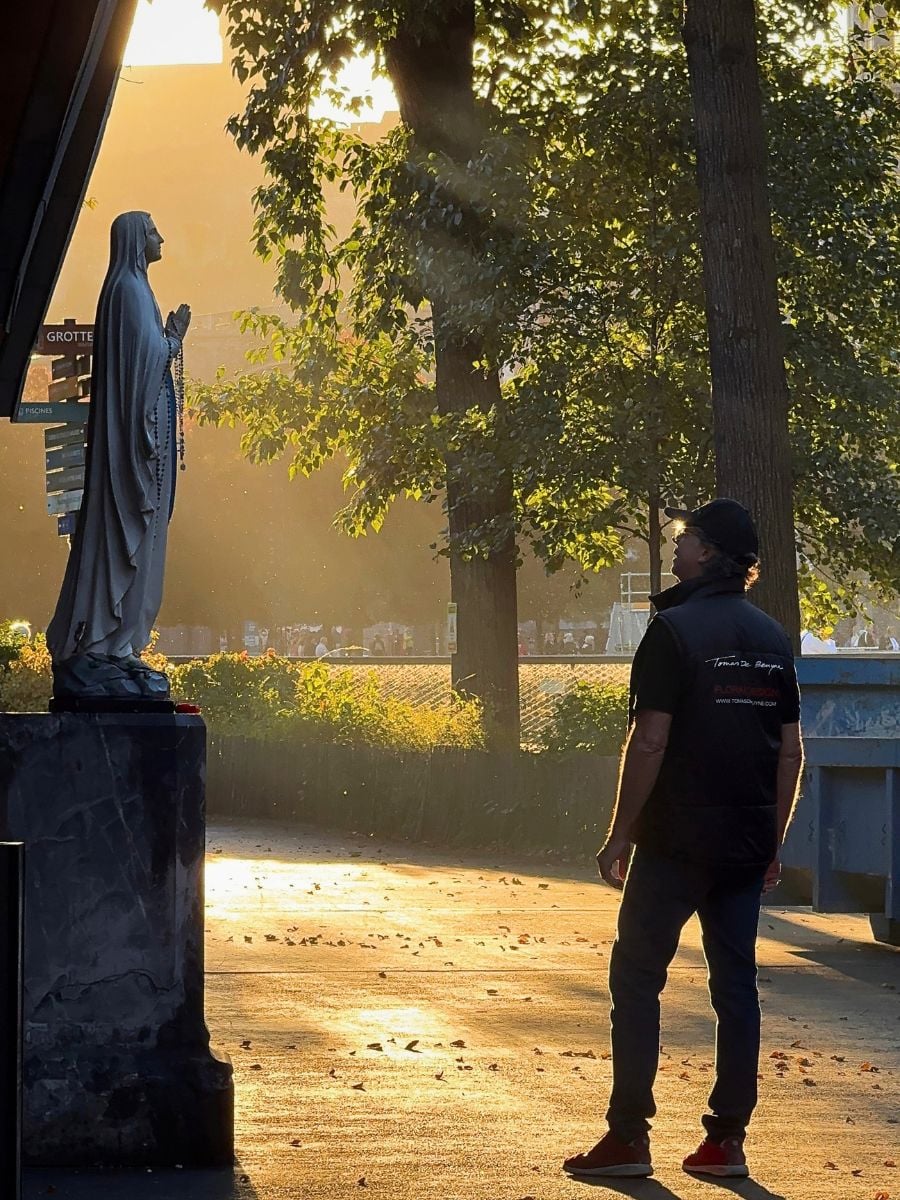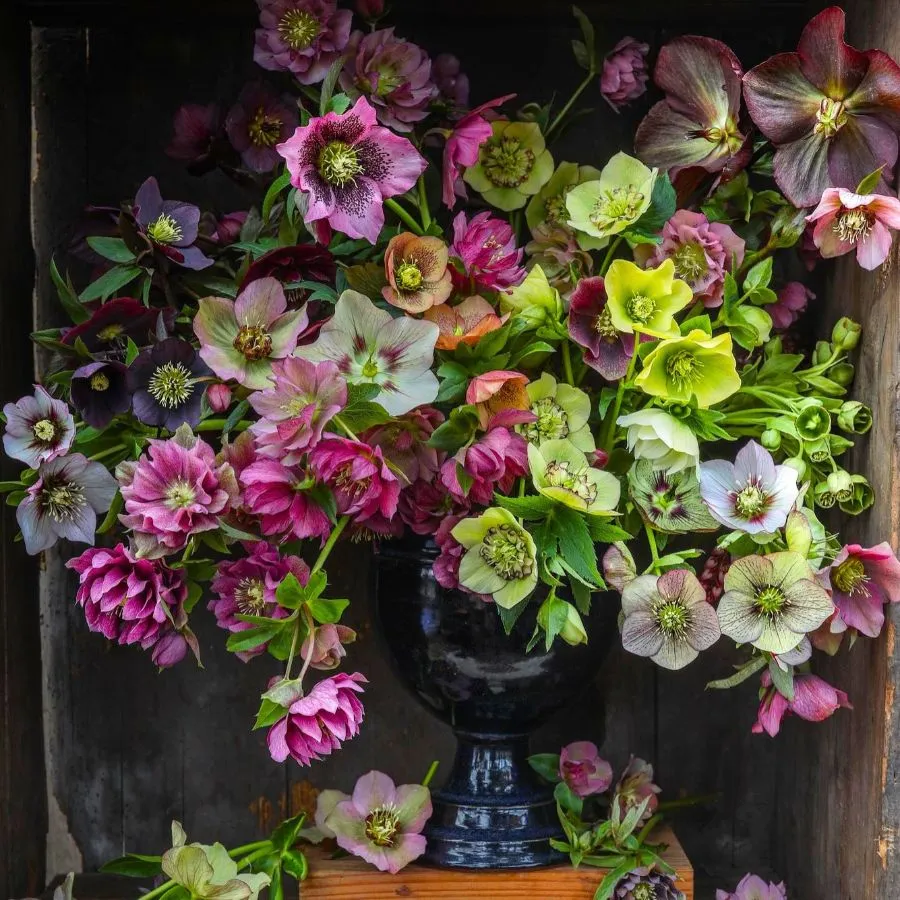
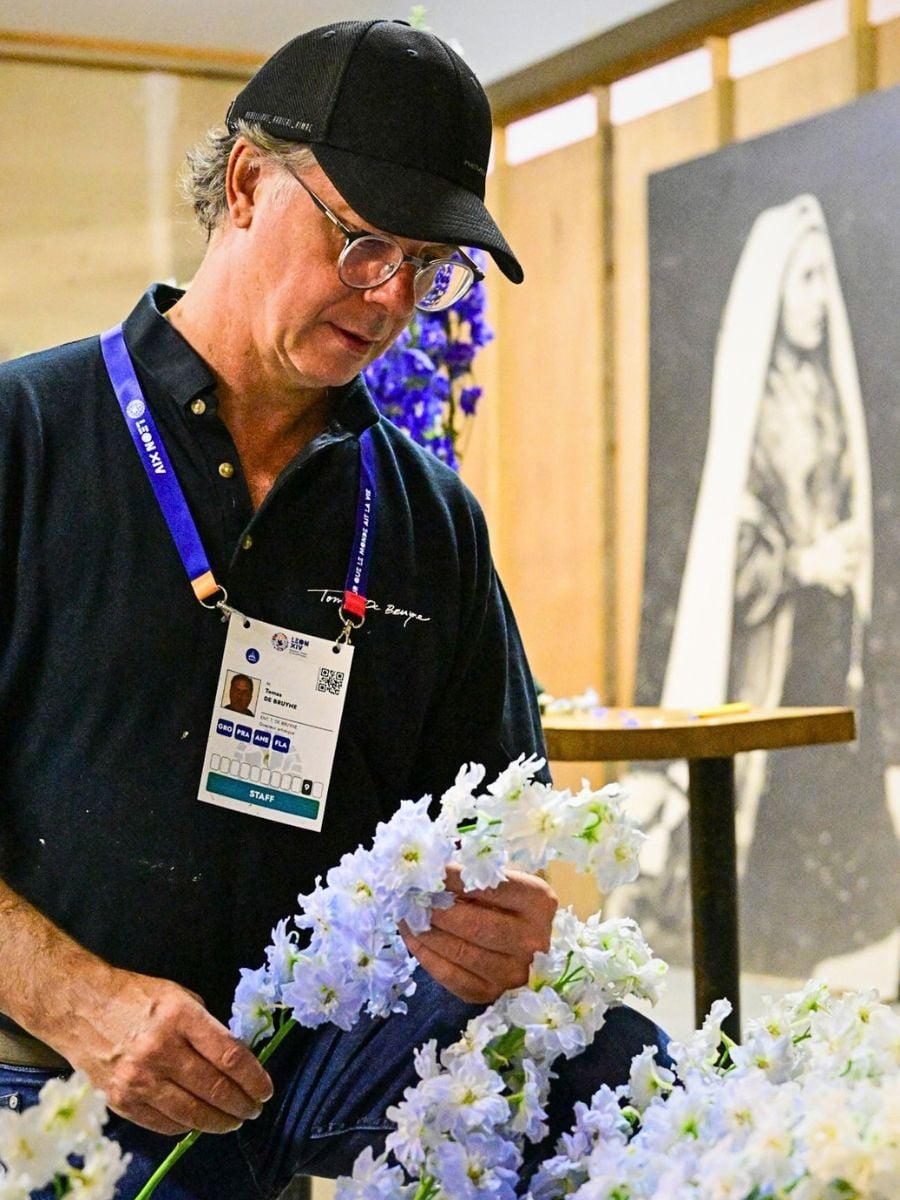
For the Mass celebrated by Pope Leo XIV, Tomas De Bruyne designed a floral setting with a clear purpose: to draw attention to the heart of the celebration. The choices behind it offer florists a closer look at how design works.
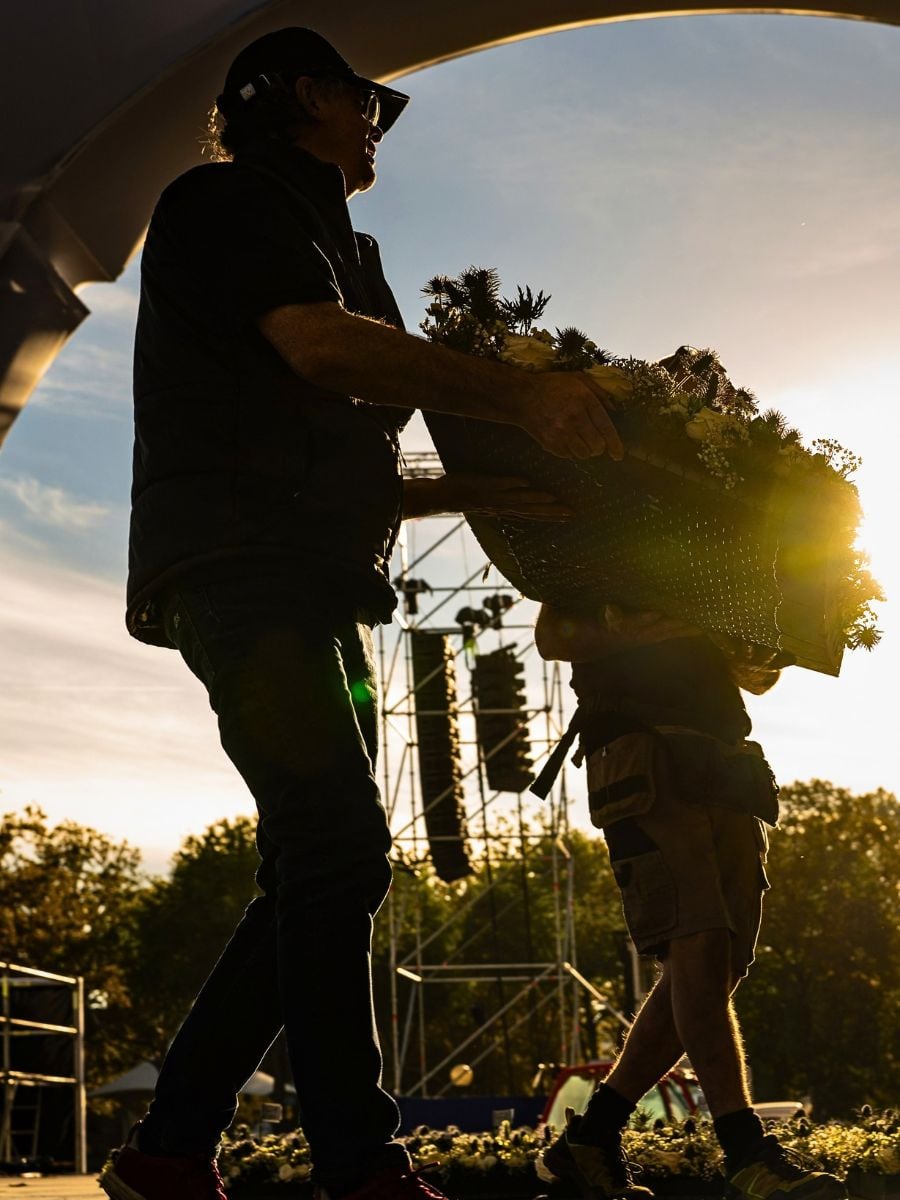
On 27 September 2026, Pope Leo XIV celebrated Mass at the Sanctuary of Our Lady of Lourdes. Approximately 25,000 fresh flowers shaped the setting. The white and blue, the scale, and the atmosphere were immediately visible. Less apparent were the decisions that guided where people looked and how they experienced the space.
The Invisible Decisions Behind the Flowers.
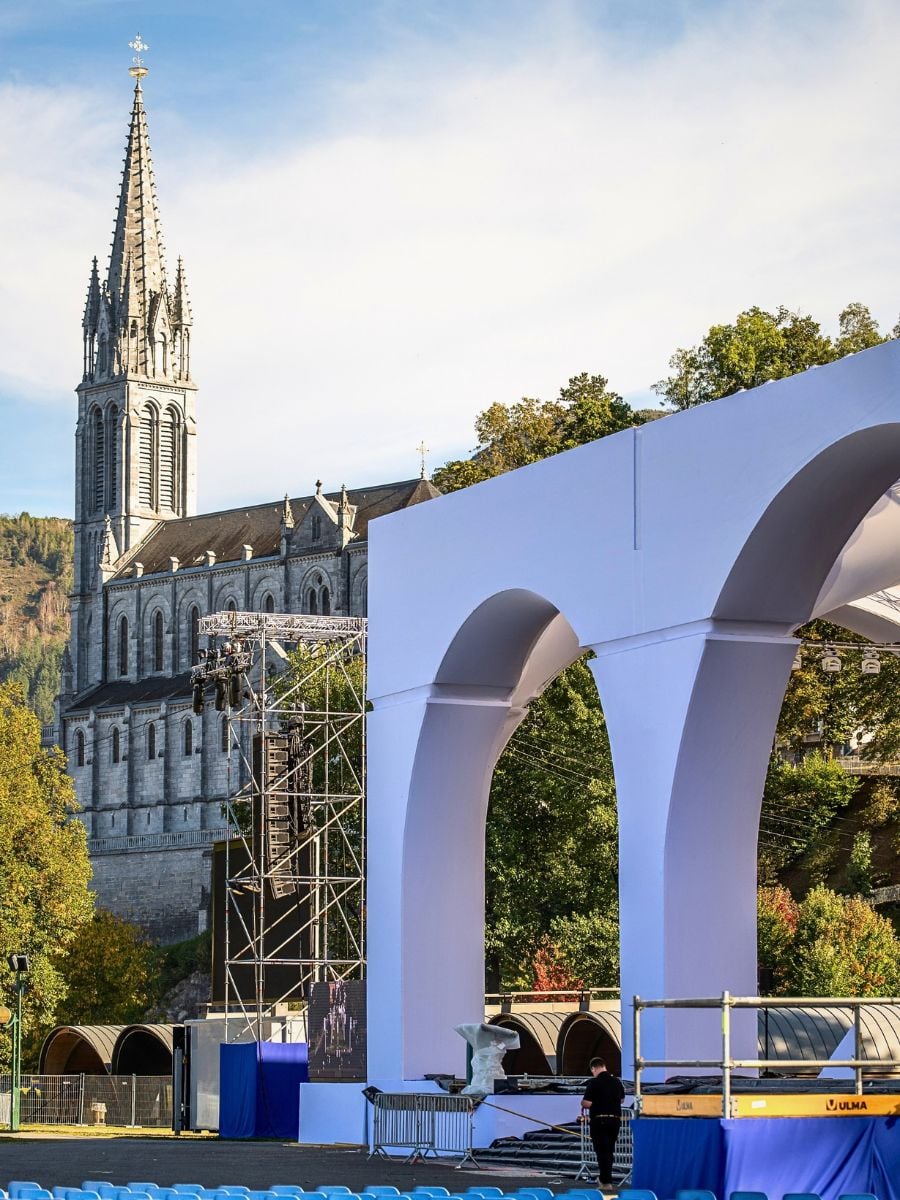
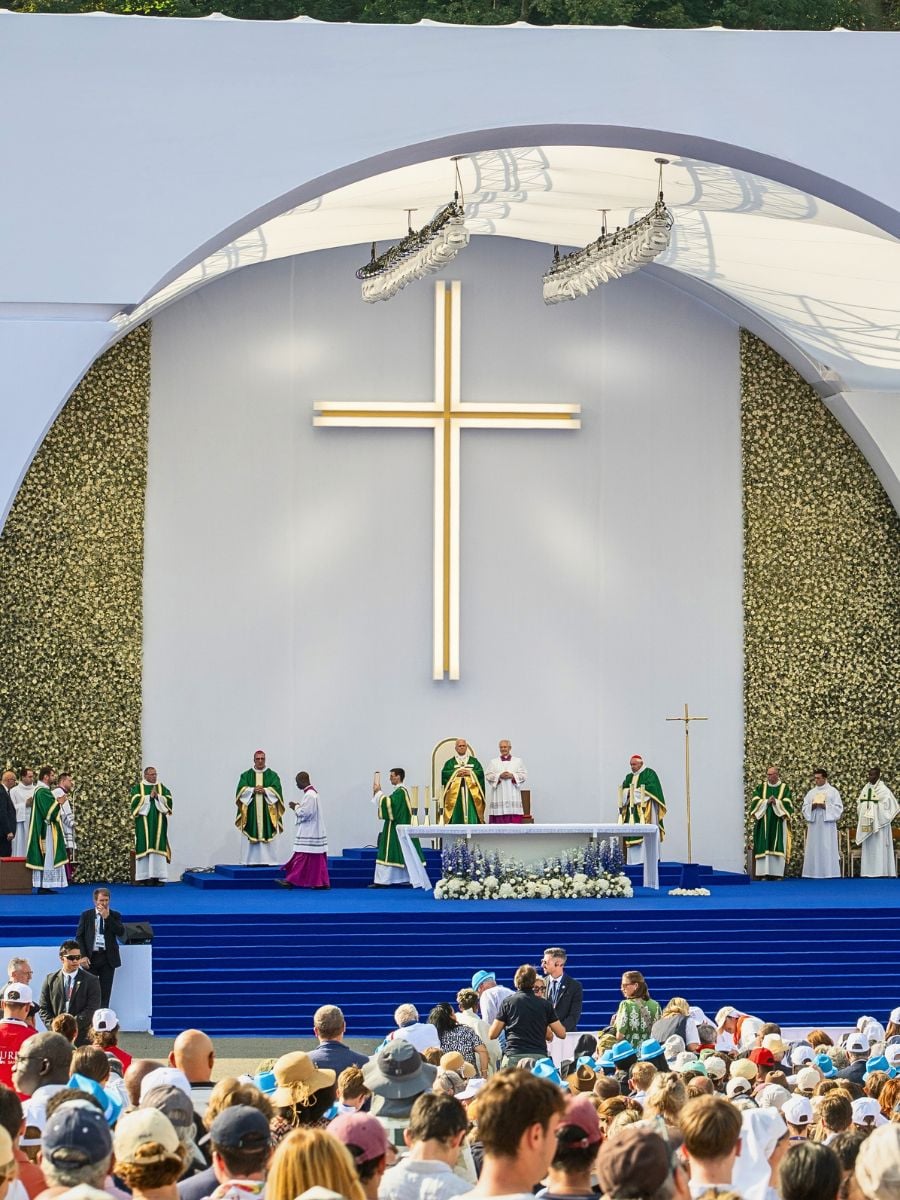
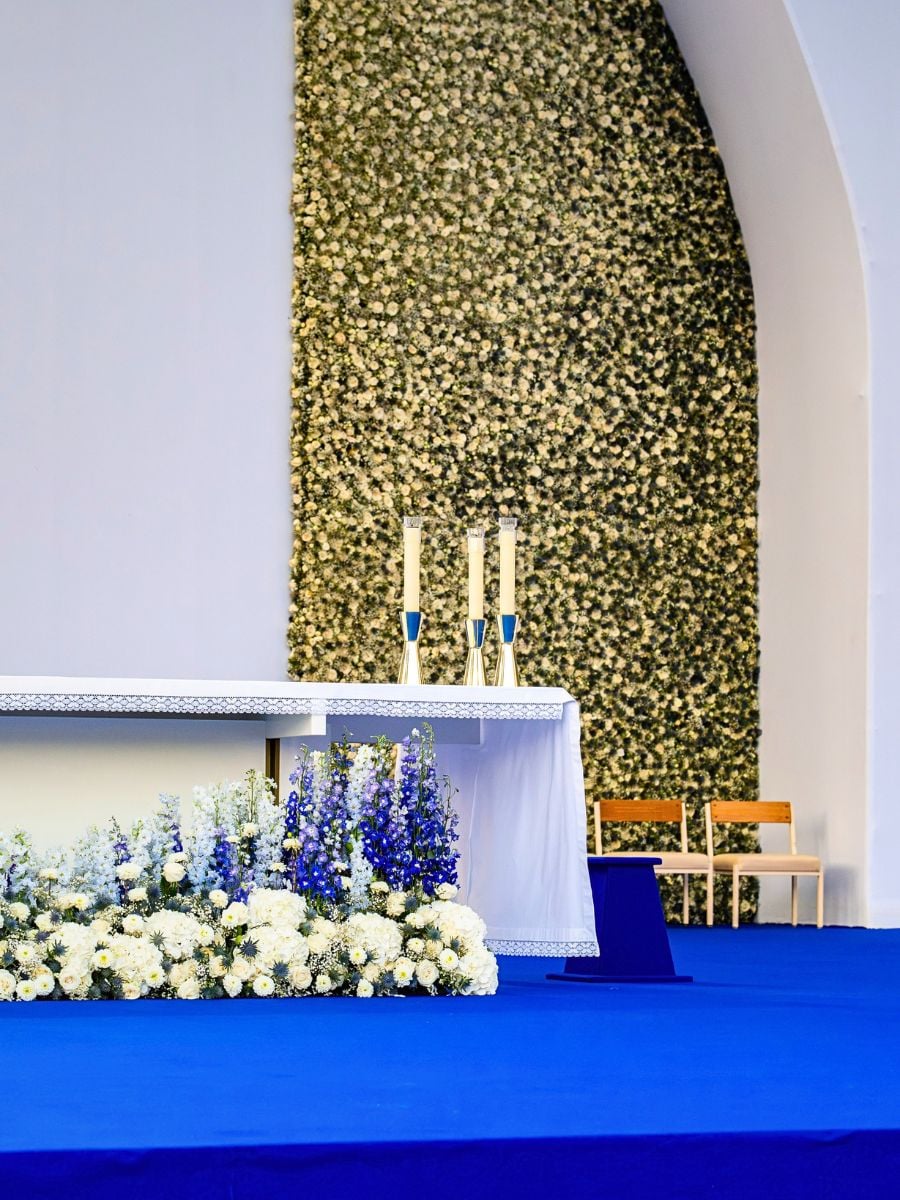
One of the most consequential decisions concerned the backdrop. The original design had three blue arches. De Bruyne, invited as artistic director for the floral design, proposed making the middle arch white. If all three had remained blue, they would have carried similar visual weight. The white center, framed by blue, gave the eye a focal area: the place where the Mass would unfold and where the Pope would stand.
Working with his Belgian team and local volunteers, De Bruyne carried that decision through the flowers themselves. It is an example of the question that also guides his work as lead instructor at EMC, the European Master Certification:
"How can a florist move beyond making something beautiful and begin to shape what people perceive?"
Where Should the Eye Go First?
The arches are part of the recognizable architectural language of the Sanctuary. Rather than compete with them, De Bruyne used them to establish a visual hierarchy. The white middle arch created emphasis; the deeper blue arches on either side provided framing and balance.
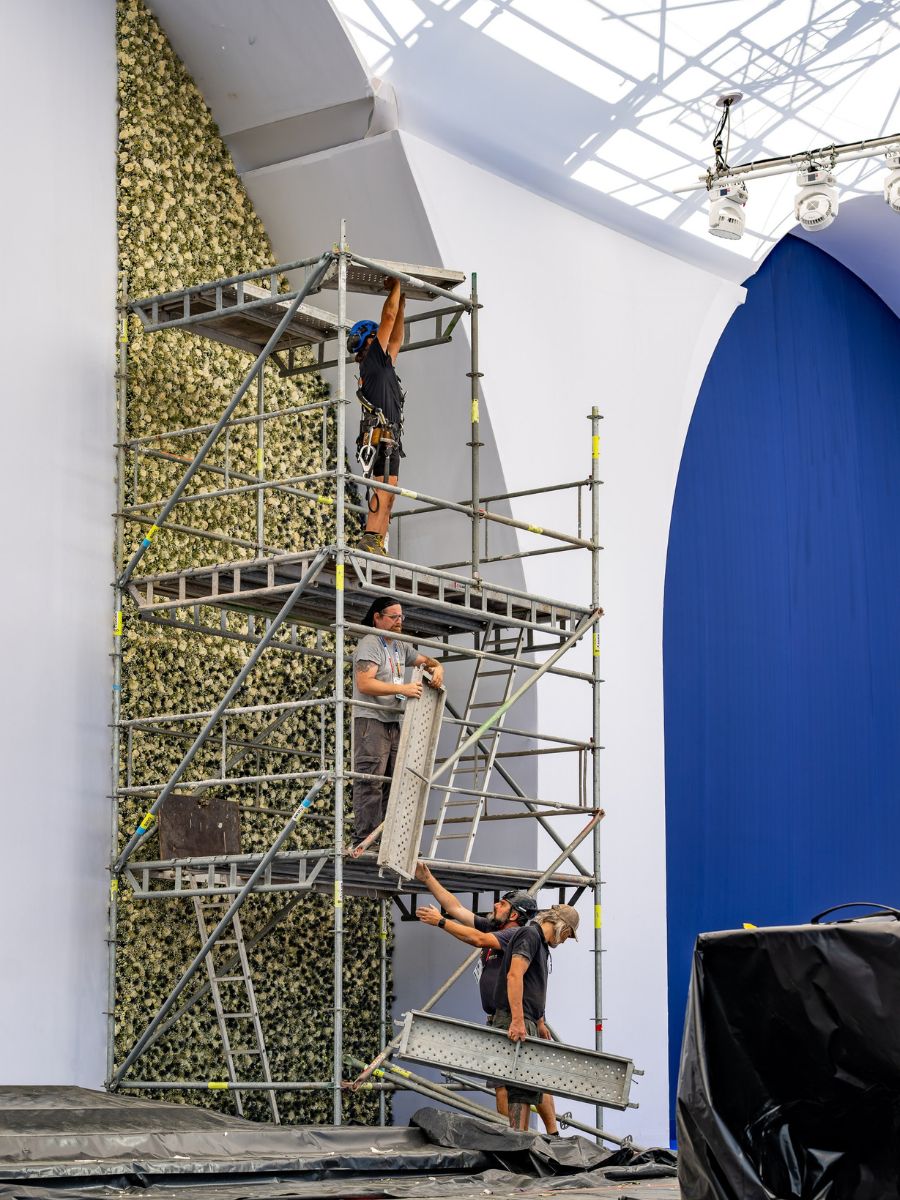
Photo by Alex Mateiu
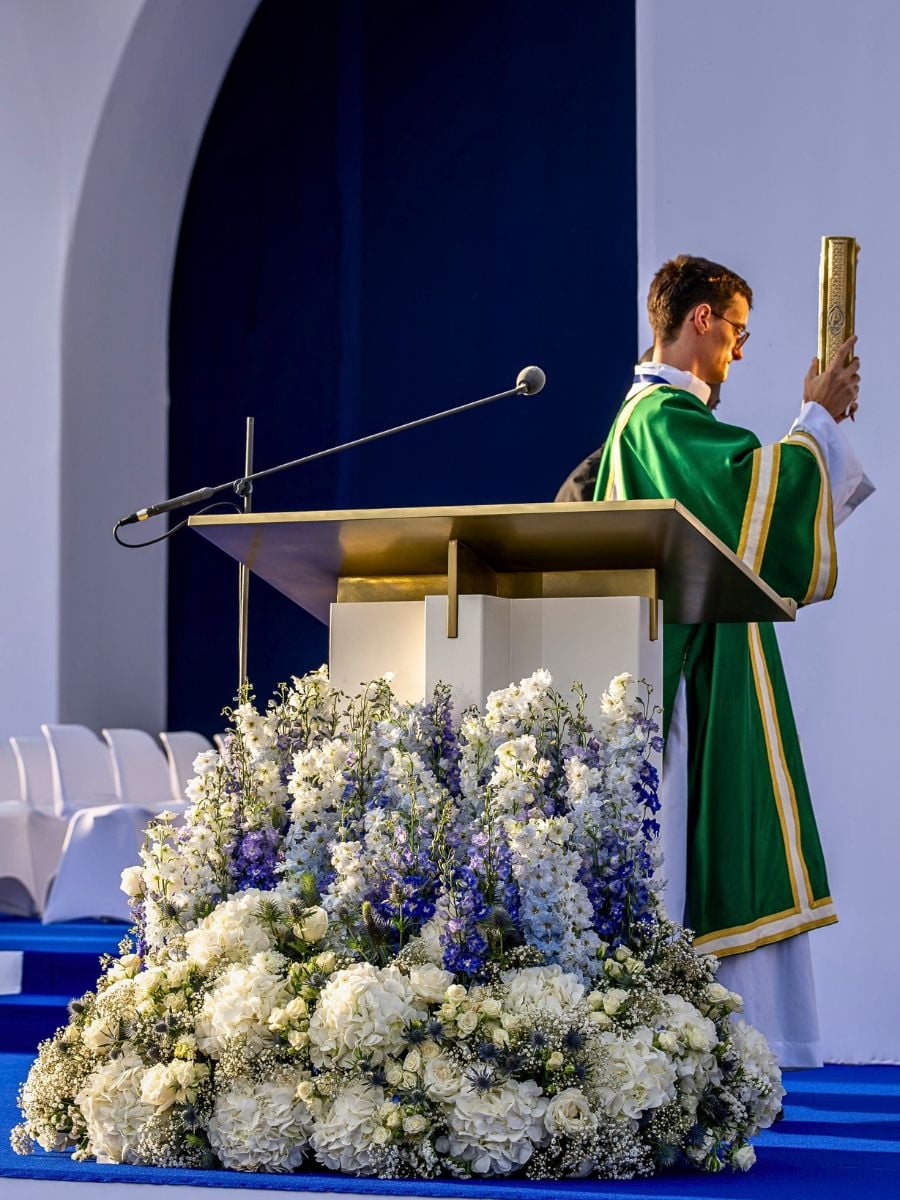
The floral composition around the altar followed the same direction. It rose higher at the sides and remained lower in the middle. Darker blue gave weight to the outer areas, while white opened the center. The silhouette preserved a clear view of the focal area and led the eye towards the Pope. Viewers did not need to analyze its height or color to feel its effect.
For a floral designer, these are practical applications of the principles of design. Emphasis identifies what matters most. Contrast makes it visible. Balance gives the composition stability, while rhythm carries the eye through repeated lines, colors, and forms. Each choice has an effect on how a space is read.
What Can Density Do?
Color alone does not create impact. Its placement and density matter just as much. If every part of an installation is equally full, the eye has nowhere to pause. Concentrated areas of flowers can establish presence from a distance; lighter passages allow the architecture and the central action to breathe.
At Lourdes, a dense flow (dynamic of continuation) of blue read differently from individual blue stems scattered across the setting. Likewise, broad areas of white became more luminous against the deeper color surrounding them. The design relied on changes in concentration to create movement between blue and white.
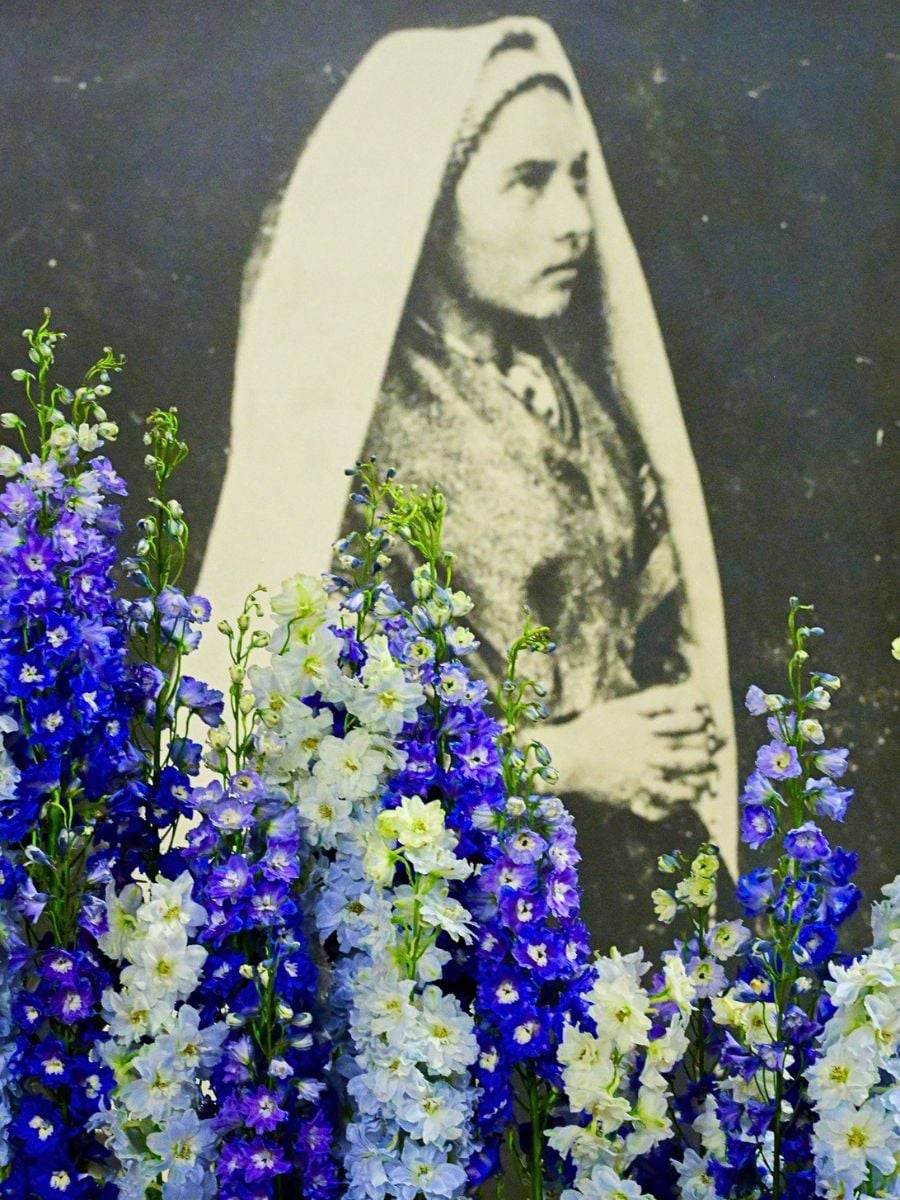
The flowers supplied by Blooming Innovations each played a specific part in that movement. Delphiniums brought strong vertical lines and a gradual transition from dark blue to white, making them especially suited to the setting. White Statice added strength and detail, while Limonium gave the composition a looser edge. Large white Hydrangeas created generous areas of abundance around the altar and in the two arrangements in front. Together, their blooms formed a white visual mass that could be read across the space.
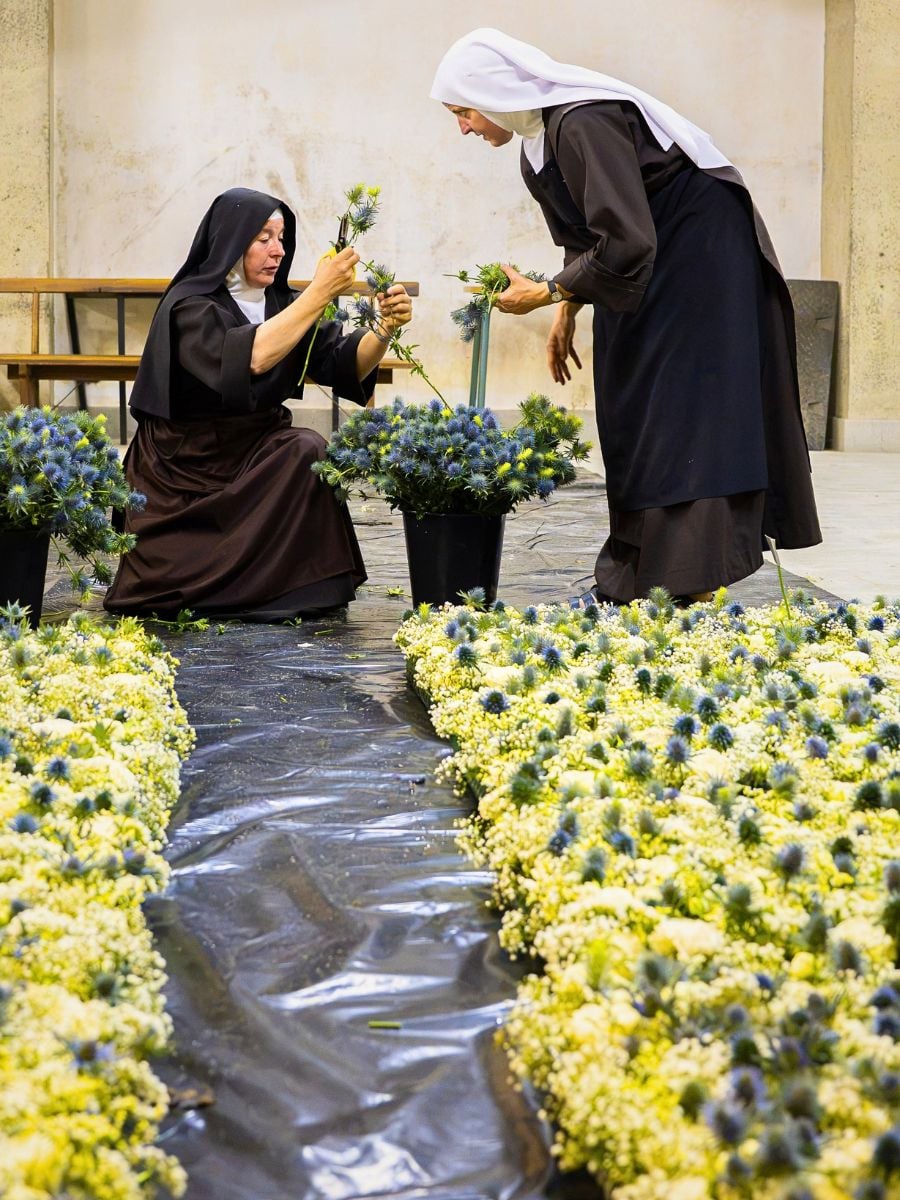
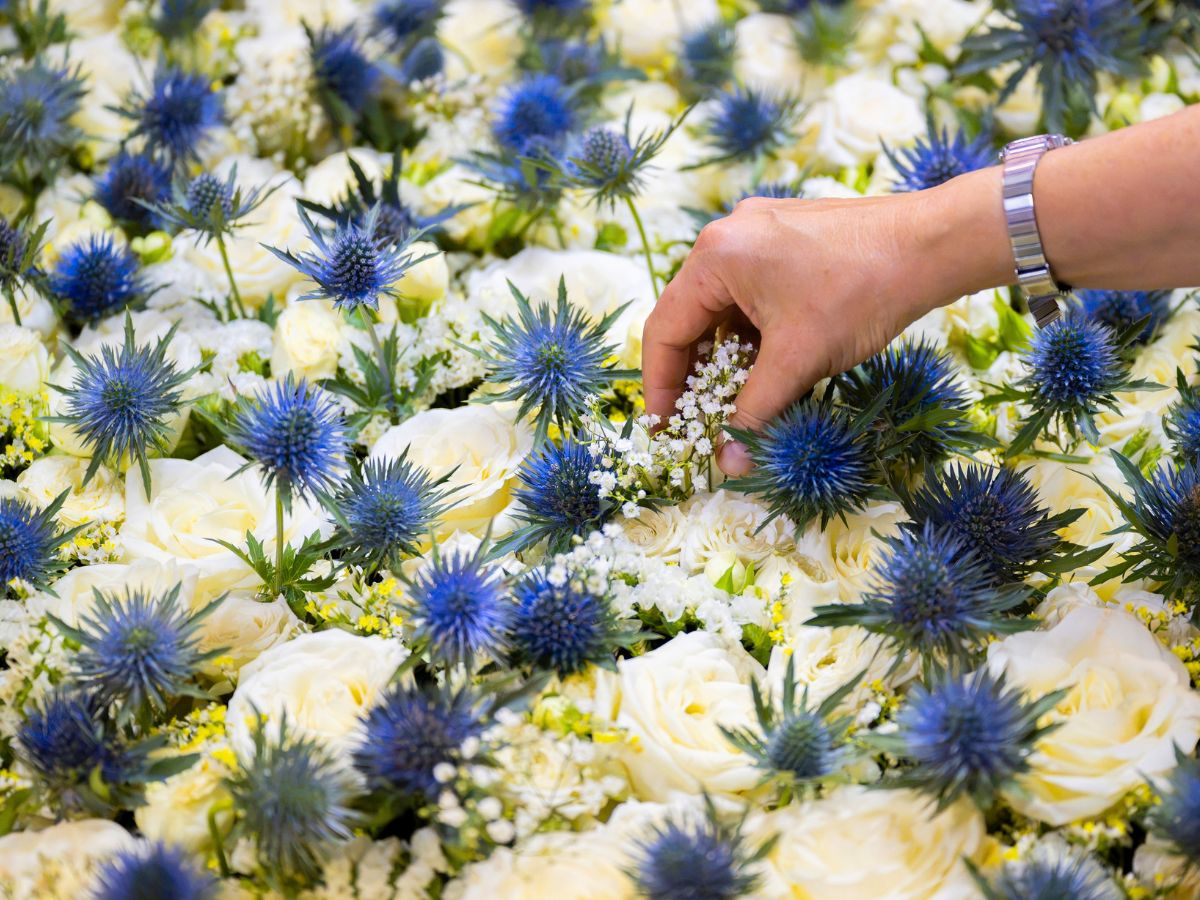
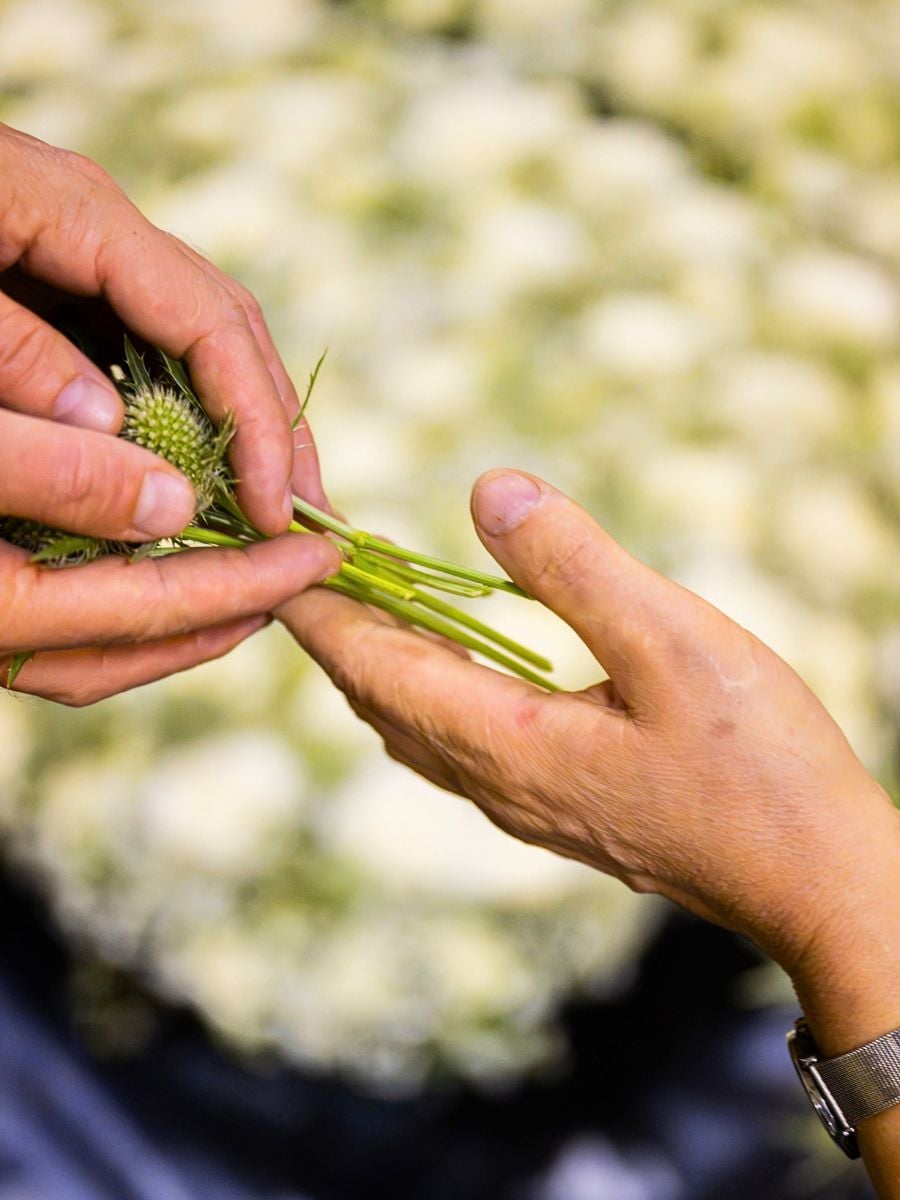
Four Eryngium selections from Marginpar (three blue and one white) added texture and a range of blue tones to the floral carpets on the back wall of the stage. Their differing shades helped carry the color transition from the outer blue arches towards the white center.
Avalanche roses from Meijer Roses brought substantial, almost white single blooms. The Avalanche rose was chosen for its near-white color, generous bloom, elegant form, and reliable quality; all very essential qualities for a large-scale event.
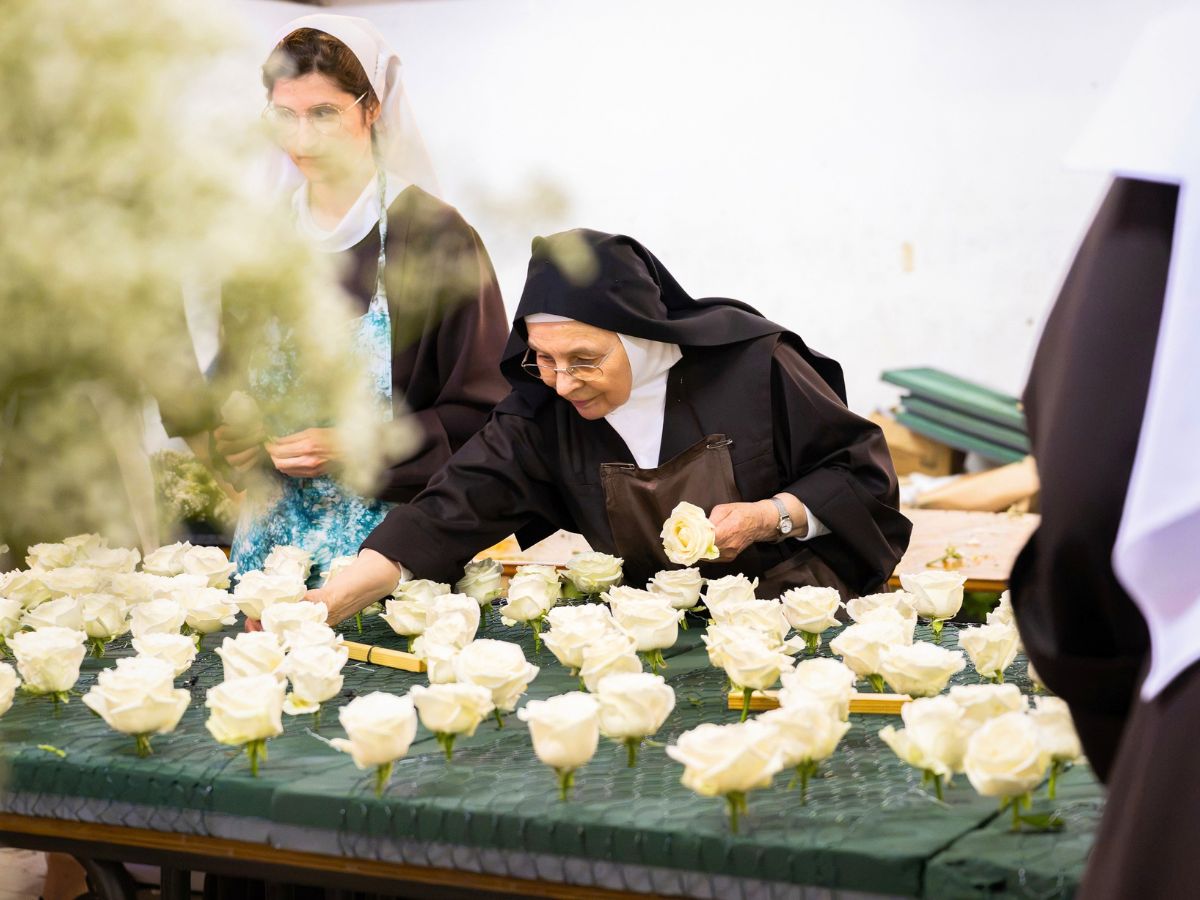
Smaller spray roses offered a different scale and shape, allowing the floral forms to vary. Parfum Flower Company and Subati Group supplied spray roses, with World of Spray Roses also among the project partners. Garden roses from Karen Roses introduced another character within the rose family.
My Dahlia Society supplied dahlias for their distinctive character, shape, and texture.
Gypsophila from Coloríginz was placed slightly above the other flowers rather than tucked among them. It formed an airy, translucent layer, like a cloud through which the colors beneath remained visible. Its position created the effect.
Line, shape, color, texture, space and scale are elements available to every florist. The way they are combined determines whether a composition feels calm, abundant, solemn or restless. Choosing the flower is one decision; deciding where to concentrate it, where to repeat it and where to leave space is the work of design.
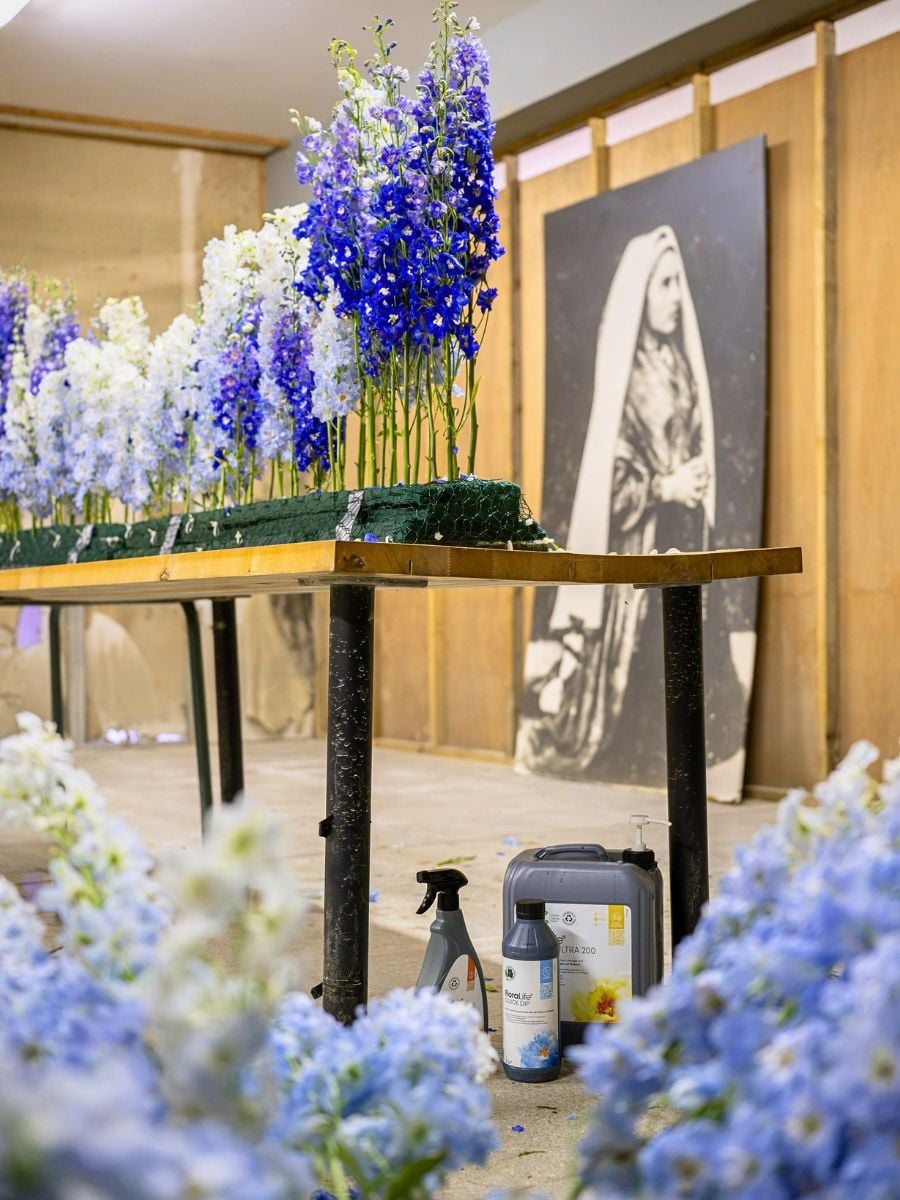
That work also depends on preparation. OASIS Floral Products Benelux supported the project with design sheets, floral foam and flower care products, including Quick Dip and Floral Fresh, to help the flowers remain in good condition through installation and the celebration.
Pascal Matla coordinated the collection of materials in Aalsmeer and their export to Lourdes. The visible result depended on mechanics, flower care and logistics, as well as the work of the Belgian team and local volunteers who brought the design into the space.
Where Does a Design Begin?
For De Bruyne, the starting point was the intention of the occasion. Lourdes already had its own visual language in white and blue and held profound meaning for those gathered there. The flowers needed to serve that place and the celebration taking place within it. Their scale could support the moment without drawing attention away from its center.
The same thinking applies to a commission in a flower shop. A client who asks for something "natural" or "elegant" has offered a starting point, not a complete design direction. Does "natural" mean loose movement, visible stems, seasonal material, or a softer palette? What does the client hope someone will feel on receiving the flowers? As the intention becomes clearer, decisions about silhouette, density, proportion and focal point become more precise.
This is the thinking EMC aims to inspire and activate. Its teaching connects the elements and principles of design with observation, technique, mechanics and personal judgment. Students learn to ask why a choice works, test it with flowers and recognize its effect. The purpose of sharing knowledge is to help each designer develop the confidence to make decisions and build a visual voice of their own. EMC expresses that commitment in its guiding line:
“Your knowledge. Your success. Our passion.”
Who Is the Florist of the Future?
De Bruyne explored that question further at NOVAFLEUR in Reims on 4–5 October 2026, where he was scheduled to speak about floristry's evolution and the role of AI in the creative process. Images can now be generated in seconds, and information about flowers and design is more accessible than ever. An image, however, cannot carry the responsibility of deciding what belongs in a particular place, what answers a client's expectations, or what can be realized with the available time, materials, and people.
De Bruyne distinguishes between knowledge and knowing. Knowledge is information that can be gathered and shared. Knowing grows through practice: seeing how an idea behaves in a real space, working with actual flowers and learning from the result. AI can help a designer explore possibilities. The designer must judge which possibility has meaning, why it serves the occasion, and how to make it real.
The changed arch at Lourdes makes that distinction tangible. The important decision was not simply to create a beautiful blue and white setting. It was to see that three blue arches would give the eye no clear center, then make one arch white and shape the flowers to support it.
Every florist can begin with that kind of attention. On the next commission, where should the eye go first? Which areas need density, and which need space? What silhouette suits the setting? What should someone feel before they notice any individual flower?
The answers will change with every project. Learning how to find them is where a florist begins to think as a designer.
Tomas De Bruyne is the lead instructor at EMC (European Master Certification). Explore EMC's floral education at emcprogram.com or europeanmastercertification.com. Email: admin@EMCprogram.com.
Header photo created by Atelier Argo, Direction Artistique for pape-france.fr