From the perspective of a company operating in Poland, business has always existed in constant motion. Political and economic shifts, market liberalisation, the IT revolution, rising operational costs, competitive pressure, and geopolitical uncertainty continue to reshape the European landscape. Entrepreneurs must constantly adapt.
Running a company today is less about executing a fixed long-term plan and more about recalibrating, reassessing, and responding to the current reality.
Floristry as a Reflection of Market Change
Floristry reflects these transformations clearly. Flower shops looked different a century ago, and even ten years ago. Supply sources have evolved. Distribution channels have changed. Customer decision-making has accelerated. Yet the product remains the same. Customers still buy flowers. What has changed is the context, expectations, and pace surrounding the purchase.
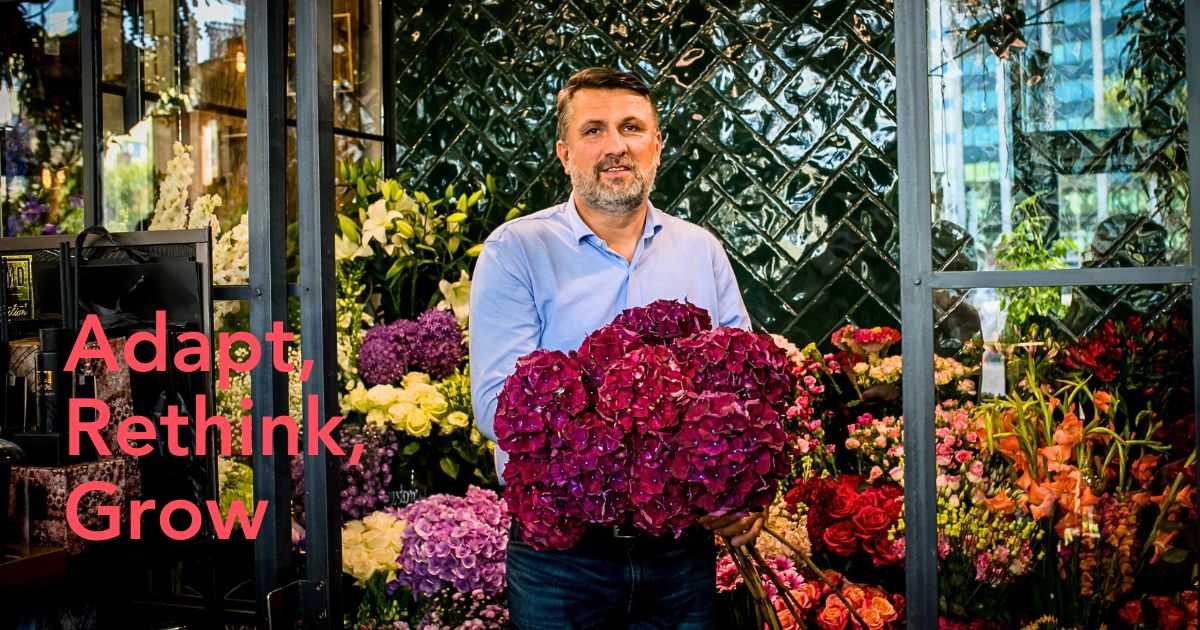
When the environment changes, business thinking must change as well. Over nearly thirty years in floristry, my views have shifted many times. Ideas I once dismissed later proved valuable under new conditions. Experience, new tools, and new arguments forced me to reassess earlier conclusions. Revisiting rejected concepts often revealed unexpected opportunities.
Not Every Customer Is “My” Customer
At the beginning, I believed success meant reaching every customer in the local market. Over time, I realised this was neither realistic nor efficient. Today, I know exactly who my offer is designed for, and I shape marketing and presentation accordingly.
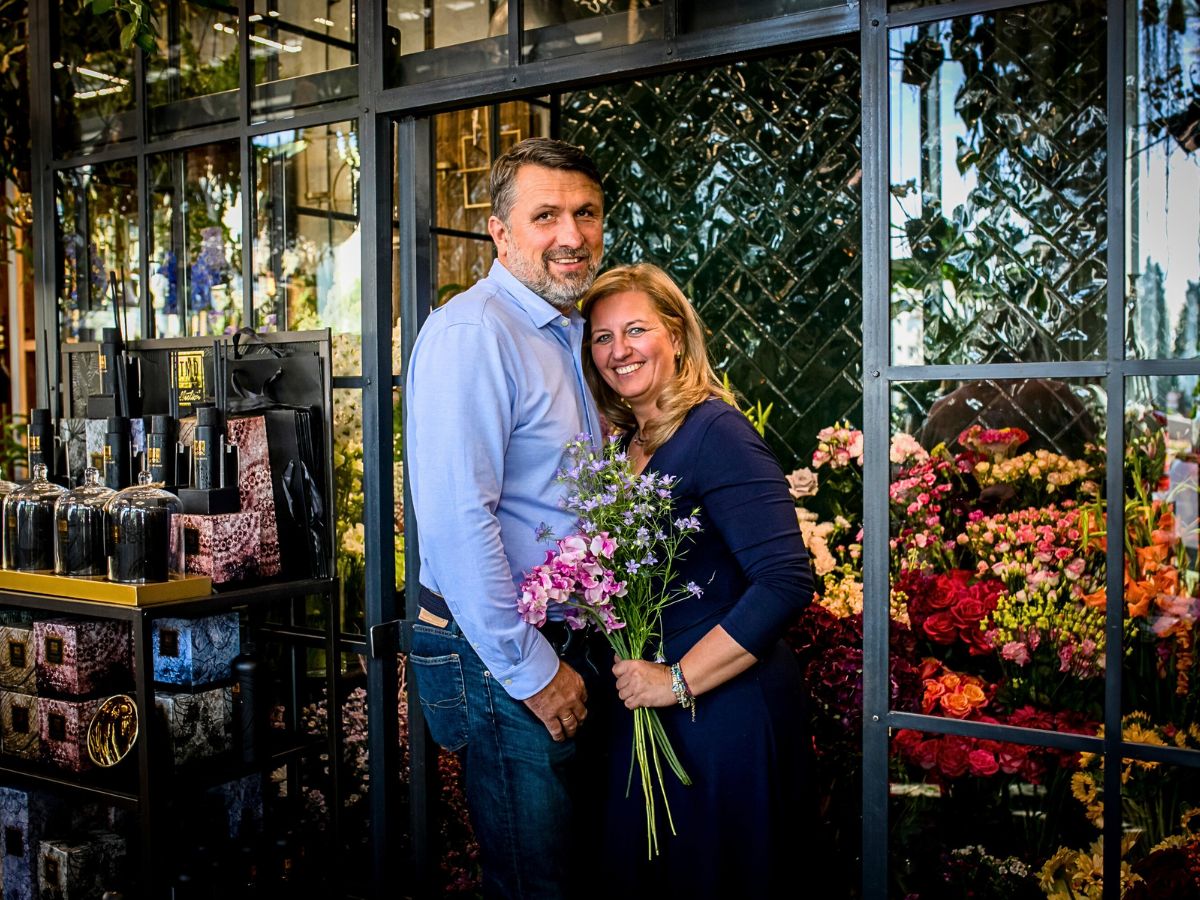
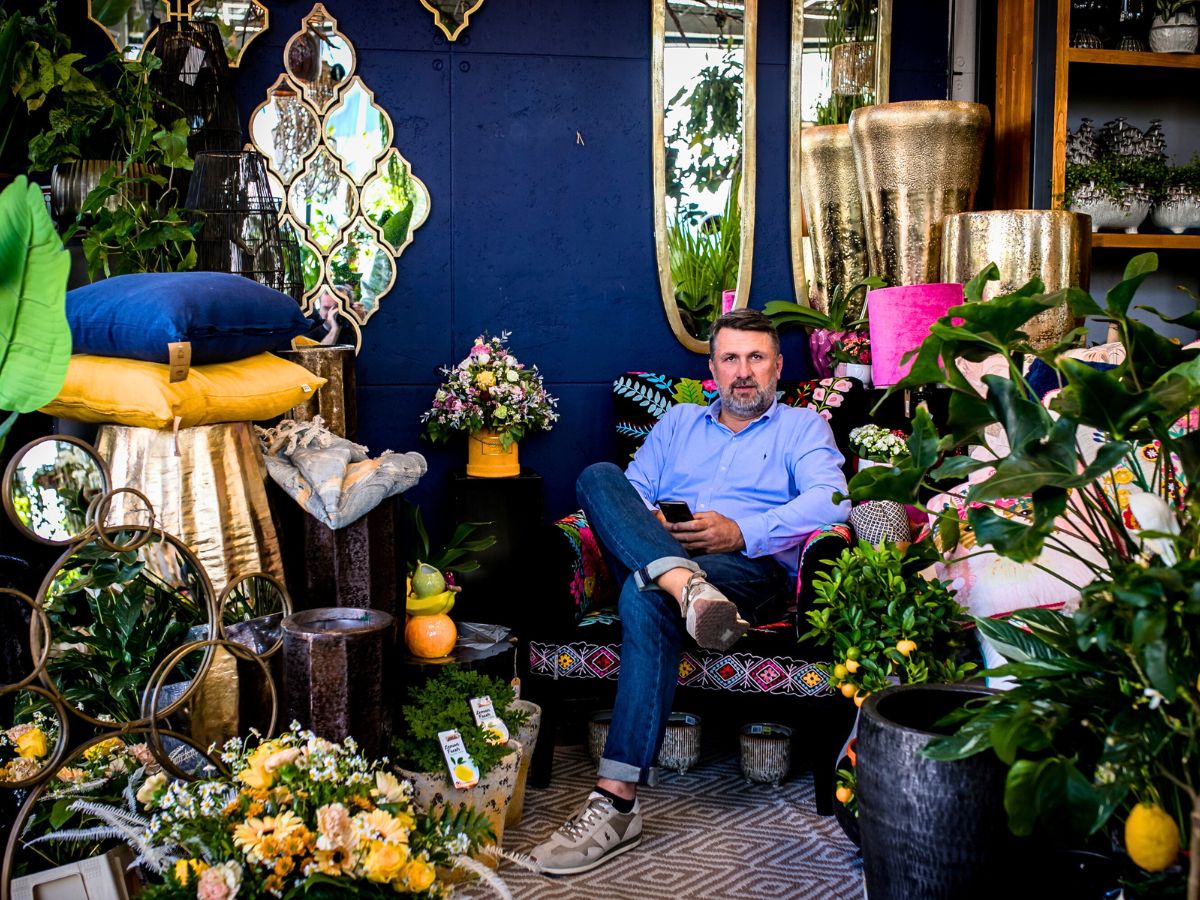
This clarity works. Customers entering our flower shops feel aligned with the space. They find what they expect and return. Florists often speak about the lack of premium customers. In many cases, the issue lies in communication. If a shop visually focuses on funeral arrangements, it will not attract customers searching for modern bouquets, plants, or design-oriented products. The sales space defines the customer profile. Presentation shapes perception.
Removing Barriers Instead of Creating Them
In the beginning, all flowers stood behind the counter. The concern was damage or careless handling. Eventually, we moved the displays forward and allowed customers to touch and choose. This shift changed everything. Customers who participate in selection feel involved. They choose what appeals to them visually, often selecting fully open roses rather than technically perfect ones. That moment clarified something important. The role of the entrepreneur is to remove barriers, not build them.

I experienced a similar shift regarding ready-made bouquets. For years, I believed every bouquet should be prepared individually. Over time, I recognised the operational value of prepared options. During peak periods, speed directly affects revenue. Many customers prefer an immediate choice with visible pricing instead of an extended consultation.
Cold storage was another internal debate. For a long time, I resisted introducing it because it felt like a barrier. We relied on fast turnover instead. The pandemic and the launch of a large shop during a hot summer forced reconsideration. I ultimately designed a solution adapted to our needs. It was more costly than catalogue versions, but appropriate for the new conditions.
Automated Sales as a New Customer Touchpoint
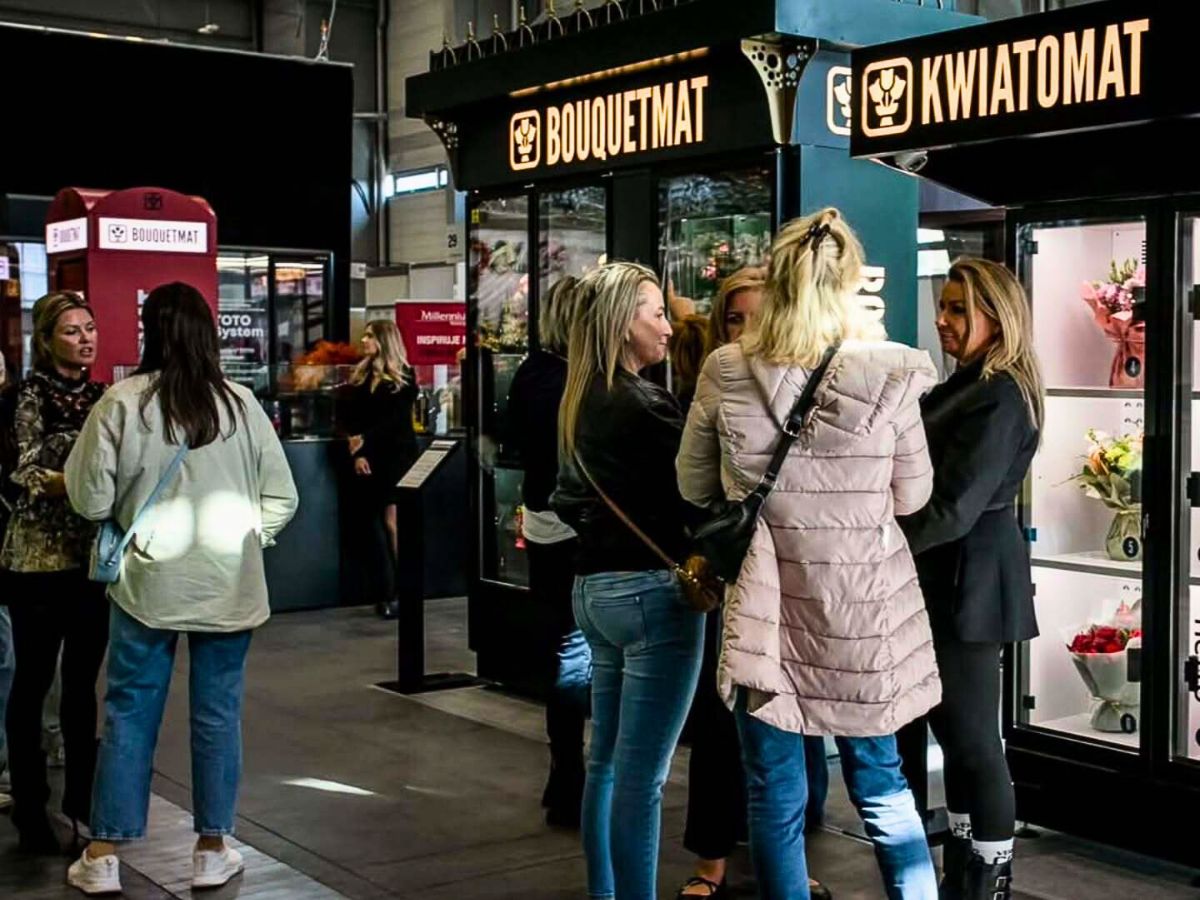
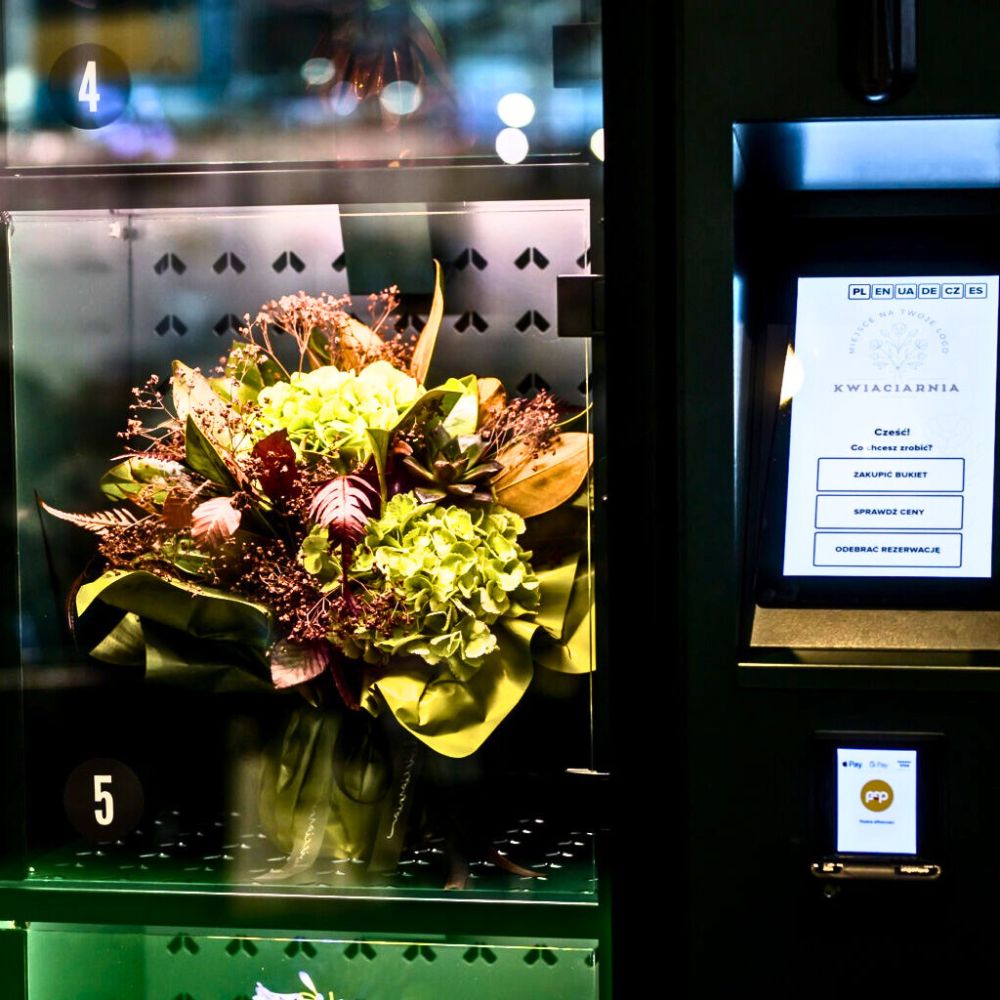
Automated bouquet sales raised similar doubts. When shops are open long hours, a vending machine seems unnecessary. The breakthrough came when I stopped viewing it purely as a sales channel. Placed strategically and available twenty-four hours a day, it became an additional customer touchpoint and marketing tool. Integrated into daily routines, it strengthened visibility and accessibility without replacing traditional retail.
New Models for Flower Delivery
The flower delivery market has also evolved. Intermediary models emerged that often disadvantaged florists. In response, alternative approaches aiming for greater transparency began to develop. One example is kupbukiet.pl, created to reduce intermediaries and give florists more control. Such initiatives bring challenges, but they represent efforts to rebalance cooperation within the industry.
Change Is Not Chaos
Is changing one’s perspective a weakness? I believe the opposite is true. When conditions shift and new tools appear, adapting becomes essential. The pandemic, war, energy crises, and inflation have demonstrated how little control we have over external forces. What remains within our control is our ability to respond.
Ideas once rejected may later become appropriate solutions. Change is not chaos. It is a natural element of business development and a prerequisite for sustainable growth.
Change looks different from every perspective. Many florists and entrepreneurs across Europe have likely faced similar moments of doubt and reassessment. If this reflection resonates with your experience, I invite you to share your thoughts or reach out for a conversation. Exchange strengthens the industry as much as adaptation does.
All pictures courtesy of @wsparcieflorystow.pl.